
能源安全新战略

Search documents
国新国证期货早报-20260324
Guo Xin Guo Zheng Qi Huo· 2026-03-24 02:11
Report Overview - The report is the morning report of Guoxin Guozheng Futures on March 24, 2026, covering multiple futures varieties [1] Index Futures - On March 23, the three major A - share indexes weakened. The Shanghai Composite Index dropped 3.63% to 3813.28 points, the Shenzhen Component Index fell 3.76% to 13345.51 points, and the ChiNext Index declined 3.49% to 3235.22 points. The trading volume of the Shanghai, Shenzhen, and Beijing stock markets reached 2.45 trillion yuan, an increase of 145.4 billion yuan from the previous trading day [1] - The CSI 300 Index was weak on March 23, closing at 4418.00, a decrease of 149.02 compared to the previous day [2] Coke and Coking Coal - On March 23, the weighted index of coke oscillated stronger, closing at 1867.8, a rise of 117.3 compared to the previous day [2] - The weighted index of coking coal was strong on March 23, closing at 1323.6 yuan, a rise of 122.3 compared to the previous day [3] - Coke: Coking profit is average, and daily production slightly increases. Coke inventory changes little, and the purchasing willingness of traders slightly improves [4] - Coking coal: The customs clearance volume of Mongolian coal is 1461 vehicles. The resumption of work in coal mines is good, the weekly production level continues to rise slightly, the spot auction transactions within the week are good, and the transaction price has increased. The total inventory of coking coal has increased slightly, and the inventory at the production end has decreased slightly [4] - Policy: According to the "15th Five - Year Plan" outline, by 2030, China's comprehensive energy production capacity will reach 5.8 billion tons of standard coal. Coal will play a long - term role in ensuring energy security and economic stability [4] Zhengzhou Sugar - The Zhengzhou Sugar 2605 contract oscillated and rose slightly on March 23. Affected by the rise of US sugar on Friday and the increase in spot quotes in the morning, the futures price oscillated higher, and then oscillated lower due to the sharp decline in the stock market. At night, it oscillated lower due to the news of the talks between the US and Iran in Pakistan [5] - From January to February 2026, China's imports of syrup and white sugar premixed powder were 830,000 tons and 592,000 tons respectively, an increase of 75,000 tons and 266,000 tons year - on - year. The total import volume was 1.422 million tons, an increase of 341,000 tons or 31% year - on - year [7] Rubber - Due to the large short - term decline, the Shanghai Rubber oscillated and rose slightly on March 23. At night, it oscillated and rose slightly due to the news of the talks between the US and Iran in Pakistan [7] - In January 2026, the US imported 23.48 million tires, a year - on - year increase of 2.6% and a month - on - month increase of 2.5%. Among them, the import of passenger car tires increased 1.2% year - on - year to 14.03 million, a month - on - month decrease of 0.3%; the import of truck and bus tires decreased 4.1% year - on - year and 3.4% month - on - month to 4.72 million [7] Soybean Meal - In the international market on March 23, the CBOT soybean main contract closed at 1164.5 cents per bushel, a rise of 0.34%. As of the week of March 19, the US soybean export inspection was 1,101,730 tons, in line with market expectations. The export inspection volume to China was 664,967 tons, accounting for 60.36% of the total inspection volume. As of last Thursday, the Brazilian soybean harvest rate was 68%, behind 80% of the same period last year [7] - In the domestic market on March 23, the soybean meal main M2605 contract closed at 3007 yuan per ton, a decline of 0.73%. With the relaxation of the inspection of weeds and pests on imported Brazilian soybeans in China, it is expected that many soybeans stranded at ports will complete customs clearance one after another. After the soybean inventory of oil mills is replenished, the soybean meal production will remain high, and the tight supply situation of soybean meal will be alleviated [7] Live Pigs - On March 21, the live pig main contract LH2605 closed at 9980 yuan per ton, a decline of 2.35%. The slaughter plan of large - scale breeding enterprises in March increased significantly compared to the previous month, the slaughter rhythm accelerated significantly, the market supply was sufficient, and the sales were active. The supply of suitable - weight standard pigs was loose. On the demand side, it is in the seasonal off - season, the sales of downstream white - striped pork are weak, the operating rate of slaughtering enterprises is low, and the demand - side carrying capacity is insufficient, providing limited support for pig prices. Although frozen product segmentation warehousing and some secondary fattening have formed a certain bottom - support, it is difficult to reverse the pattern of strong supply and weak demand as a whole [7] Palm Oil - On March 23, benefiting from the rise of crude oil prices over the weekend, the palm oil on the Dalian Commodity Exchange oscillated stronger. The main contract P2605 closed with a large positive line with a lower shadow. The highest price was 9960, the lowest price was 9650, and the closing price was 9942, a rise of 2.31% compared to the previous trading day [8] - As of March 20, 2026 (the 12th week), the commercial inventory of palm oil in key regions across the country was 808,200 tons, a decrease of 33,800 tons or 4.01% compared to the previous week, and an increase of 419,900 tons or 108.14% compared to 388,300 tons of the same period last year [8] Shanghai Copper - The main contract of Shanghai Copper opened at 94,510, reached a high of 94,740, a low of 91,500, and closed at 92,100, with a settlement price of 92,870. The trading volume was 215,827 lots, and the open interest was 204,413 lots. Macro - suppression: The hawkish stance of the Federal Reserve and the strengthening of the US dollar suppress commodities. The fundamentals are weak: High smelting operation rate, increased imports, and rising bonded - area inventory; the demand in the "Golden March" is lower than expected, and the spot premium has narrowed. The spot price of Yangtze River Non - ferrous 1 copper is 93,190 yuan per ton, a decrease of 2,700 yuan per ton; the premium to CU2605 is 120 - 160 yuan per ton [8] Cotton - The main contract of Zhengzhou Cotton closed at 15,316 yuan per ton at night on March 23. The cotton inventory decreased by 16 lots compared to the previous trading day. Entering the peak season of "Golden March and Silver April", downstream textile enterprises purchase as they use [8] Iron Ore - On March 23, the main contract of iron ore 2605 oscillated and closed up, with a rise of 0.92% and a closing price of 819 yuan. The iron ore shipment increased month - on - month, the arrival volume decreased again, the port inventory continued to accumulate, the demand for molten iron from steel mills' resumption of production increased, and the short - term iron ore price was in an oscillating trend [8] Asphalt - On March 23, the main contract of asphalt 2606 oscillated and rose, with a rise of 4.27% and a closing price of 4661 yuan. Domestic refineries reduced production due to unstable raw material supply, the inventory increased slightly, the downstream demand has not started, the refinery's shipping volume decreased month - on - month, and it is in a situation of weak supply and demand. The short - term asphalt price may follow the oil price [8] Logs - The main contract of logs 2605 opened at 825 on March 23, with a low of 819, a high of 832, and a closing price of 822, with an increase of 702 lots in open interest. The spot price of 3.9 - meter medium - grade A radiata pine logs in Shandong was 770 yuan per cubic meter, unchanged from the previous day, and the spot price of 4 - meter medium - grade A radiata pine logs in Jiangsu was 780 yuan per cubic meter, unchanged from the previous day [8][9] Steel - On March 23, rb2605 closed at 3154 yuan per ton, and hc2605 closed at 3330 yuan per ton. The military strikes launched by the US and Israel against Iran on March 23 entered the 24th day, and the transportation interruption in the Strait of Hormuz continued, and high oil prices will last longer. On the one hand, the energy substitution effect is strengthened, the shipping cost rises, and the prices of black - series raw fuels are pushed up. On the other hand, the global inflation expectation heats up, the liquidity tightens, the risk - aversion sentiment spreads, and the global economic growth is impacted. In the short term, driven by high costs, steel prices may oscillate stronger [9] Alumina - On March 23, ao2605 closed at 3093 yuan per ton. On the supply side, the new production capacity is being put into operation at an accelerated pace. The 1.2 million - ton project of Guangxi Long'an Hetai will be put into trial production in April, and another new production capacity is expected to be put into operation at the end of March. Coupled with the high arrival volume of imported alumina from March to April (about 250,000 tons per month on average), the subsequent supply pressure is becoming increasingly prominent, which will effectively suppress the upward space of prices. On the demand side, the consumption improvement space is limited, and the spot trading atmosphere is average. Although the slight recovery of downstream consumption and the firmness of the spot provide a bottom support for alumina, the commissioning of new projects in many places and the increase in raw material arrivals have established the expectation of loose supply [10] Shanghai Aluminum - On March 23, al2605 closed at 23,555 yuan per ton. On the macro - level, the geopolitical situation in the Middle East continues to escalate. The US threatens to expand attacks on Iran's power generation facilities, and Iran responds firmly. The inflation risk caused by geopolitics intensifies, further leading to a collapse in demand and a shrinkage in investment. The market sentiment of trading recession remains. The precious metals and non - ferrous metal markets continue to decline. Attention should be paid to the adjustment of Guinea's bauxite export policy. On the supply side of the fundamentals, the operation is stable, the molten aluminum ratio has increased slightly, and the social inventory has decreased slightly. Attention should be paid to the arrival of the inventory inflection point. On the demand side, the receiving situation continues to improve. The absolute price has dropped to an ideal range, and downstream and terminal buyers increase their purchases at low prices, which continues to strengthen the support for the spot [10]
甲醇日报:地缘局势下,回落之后继续强势对待-20260305
Guan Tong Qi Huo· 2026-03-05 11:18
Report Summary 1. Report Industry Investment Rating No information provided regarding the report industry investment rating. 2. Core View of the Report The report suggests that after the conflict between the US and Iran and the initial high - level drop of methanol prices following Iran's announcement of not closing the Strait of Hormuz, methanol remains in a pattern where it is more likely to rise than fall. It should be treated with a strong - market mindset, and attention should be paid to opportunities after price drops. Technically, the filling of the previous gap should be monitored, and the external situation should be closely tracked [3]. 3. Summary by Relevant Catalogs Fundamental Analysis - As of February 25, 2026, the total methanol port inventory in China was 144.67 million tons, an increase of 1.45 million tons compared to the previous data. The inventory in East China decreased slightly by 0.05 million tons, while that in South China increased by 1.50 million tons. The port inventory accumulated slightly after the holiday, due to limited提货 during the holiday and normal unloading speed of foreign vessels [1]. - In Jiangsu, some warehouses along the Yangtze River had vessel - supported提货, but truck - transport提货 was weak, leading to inventory accumulation under foreign - vessel supply; in Zhejiang, the downstream was stable, and less vessel unloading led to a decline in inventory. In South China this week, the inventory increased slightly. In Guangdong, both imported and domestic cargoes arrived during the period, and the提货 volume in mainstream warehouses decreased significantly due to the holiday, resulting in inventory accumulation. In Fujian, there was no cargo replenishment, the downstream start - up rate decreased, the consumption speed slowed down, and the提货 was normal, leading to a slight decrease in inventory [1]. Macroeconomic Analysis - On the morning of the 5th local time, Amir Heydari, the deputy commander of Iran's Khatam al - Anbiya Central Command, stated that Iran has not blocked the Strait of Hormuz and is handling vessels passing through the strait according to international rules and established agreements [2]. - The draft of the 14th Five - Year Plan proposes to implement the new energy security strategy, accelerate the construction of a clean, low - carbon, safe, and efficient new energy system, and build an energy - strong country. It also promotes the reliable and ordered replacement of fossil energy with non - fossil energy, advocates the combination of wind, solar, hydro, and nuclear energy, and implements a ten - year doubling action for non - fossil energy [2]. - According to Iranian state media, the commander of the Iranian Revolutionary Guard Navy said that Iran will target US and UK vessels flying any flag and transporting goods for Israel in the Persian Gulf [2]. - Minister of Industry and Information Technology Li Lecheng said to consolidate and deepen the previous "anti - involution" achievements and strengthen production - capacity monitoring, early - warning, and comprehensive governance [2]. Futures and Spot Market Analysis After the US - Iran conflict and the potential energy crisis caused by the possible closure of the Strait of Hormuz, methanol prices dropped from a high level. Currently, methanol is still in an upward - prone pattern, and opportunities after price drops should be focused on. Technically, the filling of the previous gap should be monitored, and the external situation should be closely tracked [3].
刘涛:以党的二十届四中全会精神为引领 不断开创煤炭高质量发展新局面
Zhong Guo Dian Li Bao· 2026-02-25 01:36
Core Viewpoint - The article emphasizes the importance of high-quality development in the coal industry, guided by the spirit of the 20th National Congress of the Communist Party of China, focusing on energy security and the transition to a modern coal industry system [1][3][9]. Group 1: Achievements and Developments - During the "14th Five-Year Plan" period, the coal industry has achieved historic accomplishments by adhering to high-quality development and implementing energy security strategies, resulting in significant changes in coal production and consumption methods [3]. - The total coal production capacity is expected to reach 4.83 billion tons by 2025, an increase of over 900 million tons compared to 2020, ensuring stable energy supply [3]. - The number of coal mines has decreased to over 4,000, with large coal mines (over 1.2 million tons/year) accounting for 85% of total capacity, indicating a trend towards larger and more efficient operations [3]. Group 2: Technological Advancements - The coal industry is advancing in intelligent construction, with over 65% of coal production capacity expected to be automated by the end of 2025, significantly improving safety and efficiency [4]. - New technologies, such as large-scale intelligent mining equipment, have been developed, placing China's coal machinery manufacturing at the forefront globally [4]. Group 3: Environmental and Clean Utilization Efforts - The industry is focusing on clean and efficient coal utilization, with policies aimed at reducing pollution and carbon emissions while enhancing energy efficiency [5][12]. - By 2025, coalbed methane production is projected to reach 15.5 billion cubic meters, 2.3 times that of 2020, contributing to natural gas supply [6]. Group 4: Future Plans and Strategic Goals - The coal industry aims to achieve a good start in the "15th Five-Year Plan" by focusing on stable supply and industry transformation, with a goal of peak coal consumption [9][10]. - The establishment of five major coal supply bases is planned, which will account for approximately 80% of national coal production capacity, ensuring a robust supply chain [3][10]. Group 5: Innovation and Standards - The industry is committed to integrating new technologies and promoting innovation, with a focus on artificial intelligence and smart mining solutions [11]. - Efforts are being made to enhance the standardization of the coal industry, improving the overall quality and efficiency of coal production [11].
能源开新局|推动“十五五”初步建成新型能源体系
Zhong Guo Dian Li Bao· 2026-02-24 02:22
Core Viewpoint - The article emphasizes the importance of establishing a new energy system in China by the end of the 14th Five-Year Plan and outlines the strategic direction for the 15th Five-Year Plan, aiming to build an energy powerhouse and adapt to global energy trends [1][2]. Group 1: Achievements of the 14th Five-Year Plan - The 14th Five-Year Plan successfully completed 14 key indicators, 19 major strategic tasks, and 34 significant projects, laying a solid foundation for the new energy system [2]. - Primary energy production exceeded 5 billion tons of standard coal, with a self-sufficiency rate maintained above 80%, ensuring stable energy supply [2]. - Nearly half of the energy demand increase during the 14th Five-Year Plan was met by non-fossil energy, with its share in total energy consumption surpassing 20% [2]. Group 2: New Challenges and Requirements - The global energy landscape is undergoing significant changes, with a shift towards green and low-carbon transitions, presenting both internal and external challenges for China's new energy system [4][5]. - Increased uncertainty in energy security due to geopolitical tensions and competition over resources, alongside domestic energy demand growth, complicates energy system management [5][6]. Group 3: Goals for the 15th Five-Year Plan - The 15th Five-Year Plan aims to establish a new energy system, with a focus on enhancing energy supply security, optimizing energy structure, and promoting green and low-carbon energy consumption [7][8]. - Specific targets include increasing the share of non-fossil energy consumption to 25% and raising the proportion of electricity in final energy consumption by approximately 1 percentage point annually [7][8]. Group 4: Key Tasks and Infrastructure Development - Key tasks include building new energy infrastructure, enhancing the non-fossil energy supply system, and developing a resilient energy supply chain [8]. - Major projects will focus on strategic energy infrastructure, including wind, solar, and nuclear energy bases, as well as electric vehicle charging networks and zero-carbon parks [8].
国家能源局煤炭司司长刘涛:加快构建现代煤炭产业体系 努力实现“十五五”良好开局
Zhong Guo Dian Li Bao· 2026-02-24 01:45
Core Viewpoint - The article emphasizes the importance of high-quality development in the coal industry, guided by the spirit of the 20th National Congress of the Communist Party of China, aiming to establish a modern coal industry system that ensures energy security and promotes green and intelligent development [2][4]. Group 1: Achievements and Developments - During the "14th Five-Year Plan" period, the coal industry has achieved historic accomplishments by focusing on high-quality development and implementing supply-side structural reforms, leading to significant changes in coal production and consumption methods [4]. - By 2025, the national output of raw coal is projected to reach 4.83 billion tons, an increase of over 900 million tons compared to 2020, establishing a solid foundation for stable energy supply [4]. - The number of coal mines has decreased to over 4,000, with large coal mines (producing over 1.2 million tons) accounting for 85% of total capacity, indicating a significant improvement in production scale and efficiency [5]. Group 2: Technological Advancements - The coal industry is advancing in intelligent construction, with over 65% of coal production capacity expected to be automated by the end of 2025, significantly enhancing safety and production efficiency [6]. - New technologies, such as large-scale intelligent mining equipment, have been developed, achieving international leading levels in technical standards [6]. Group 3: Environmental and Clean Utilization Efforts - The industry is focusing on clean and efficient utilization of coal, with policies aimed at reducing pollution and carbon emissions while enhancing energy efficiency [7]. - By 2025, coalbed methane production is expected to reach 15.5 billion cubic meters, 2.3 times that of 2020, contributing to natural gas supply [7][8]. Group 4: Future Plans and Strategic Goals - The coal industry aims to achieve a good start in the "15th Five-Year Plan" by ensuring stable coal supply and focusing on industry transformation and governance improvements [10]. - The establishment of five major coal supply guarantee bases is planned, which will account for approximately 80% of national coal production capacity, ensuring a stable supply [5][11]. - The industry will continue to promote technological innovation and the integration of digital technologies to enhance traditional coal production processes [12].
国家能源局规划司司长任育之:推动“十五五”初步建成新型能源体系
Zhong Guo Dian Li Bao· 2026-02-24 00:40
Core Viewpoint - The article emphasizes the importance of establishing a new energy system during the "14th Five-Year Plan" and the upcoming "15th Five-Year Plan," highlighting the need for energy security and the transition to a low-carbon economy as key national strategies [2][4][10]. Group 1: Achievements of the 14th Five-Year Plan - The "14th Five-Year Plan" successfully completed 14 major indicators, 19 strategic tasks, and 34 significant projects, laying a solid foundation for the new energy system [4]. - Primary energy production exceeded 5 billion tons of standard coal, with a self-sufficiency rate maintained above 80%, ensuring stable energy supply [4]. - Non-fossil energy accounted for over 20% of total energy consumption, with nearly half of the energy demand increase during this period met by non-fossil sources [4]. Group 2: Challenges and New Requirements - The global energy landscape is undergoing significant changes, with increased uncertainty affecting energy security, including intensified competition for resources and market access [7]. - Domestic energy demand is growing rigidly, with peak load characteristics becoming more pronounced, complicating energy system management [7][8]. - Achieving carbon peak targets presents challenges, requiring a shift towards non-fossil energy sources and the establishment of market mechanisms reflecting the diverse values of different energy types [8][9]. Group 3: Goals and Strategies for the 15th Five-Year Plan - The primary goal for the "15th Five-Year Plan" is to establish a new energy system, with specific targets for energy supply security, structural optimization, and technological innovation [11][12]. - The plan aims for non-fossil energy to constitute 25% of total energy consumption and for electricity to account for an increasing share of end-use energy consumption [12]. - Key tasks include building resilient energy infrastructure, enhancing the non-fossil energy supply system, and promoting green and low-carbon energy consumption [12][13]. Group 4: Major Projects and Infrastructure Development - The article outlines the importance of strategic major projects, including the construction of renewable energy bases and the optimization of energy transmission corridors [13]. - Emphasis is placed on developing smaller, innovative projects such as electric vehicle charging networks and zero-carbon parks to support the transition to a green energy system [13].
新华财经早报:2月24日
Xin Hua Cai Jing· 2026-02-24 00:05
Group 1 - The National Energy Administration of China plans to implement a new energy system and sector-specific energy plans by 2026, aiming to enhance energy security and support the modernization of socialism [1] - The Ministry of Commerce of China is evaluating the implications of the U.S. Supreme Court's ruling on tariff lawsuits and is closely monitoring potential trade investigations by the U.S. [1] - China's film box office has surpassed 8 billion yuan in 2026, leading the global market, with the Spring Festival box office exceeding 5.7 billion yuan [1] Group 2 - The U.S. Customs and Border Protection announced the cessation of additional import tariffs under the International Emergency Economic Powers Act, effective from February 24, following an executive order by President Trump [3] - Federal Reserve Governor Waller indicated that strong employment data in February may lead to a pause in interest rate cuts, with inflation nearing the 2% target [3] - The European Parliament's vote on U.S.-EU trade agreements is likely to be delayed, affecting the timeline of related processes [3]


中国电网覆盖全球第一
Xin Lang Cai Jing· 2026-02-22 08:41
Core Insights - China's electricity consumption is projected to exceed 10 trillion kilowatt-hours for the first time in 2025, reaching 10.37 trillion kilowatt-hours, solidifying its position as the world's largest electricity consumer [1][2] - The country has achieved a leapfrog development in the electricity sector, characterized by scale, green initiatives, and innovation, contributing to global energy transition [2][5] - China leads globally in electricity generation, with an estimated total generation of over 10.6 trillion kilowatt-hours, accounting for about one-third of the world's total generation [4] Group 1: Electricity Consumption and Generation - By 2025, China's total electricity consumption will be more than double that of the United States and greater than the combined consumption of the EU, Russia, India, and Japan [2] - Since 2011, China has maintained its position as the world's largest electricity producer, with a generation capacity that far exceeds that of G7 countries [4] Group 2: Clean Energy Development - China has built the world's largest and most diverse clean energy system, achieving simultaneous development and emission reduction [5] - Solar power generation capacity reached 1.2 billion kilowatts, growing by 35.4%, while wind power capacity reached 640 million kilowatts, increasing by 22.9% [7] Group 3: Technological Advancements - China has developed a comprehensive and advanced ultra-high voltage (UHV) transmission network, with the largest scale and most stable operation globally [11][12] - The country is the only one in the world to fully master and implement UHV transmission technology on a large scale, showcasing its engineering capabilities [12] Group 4: Market Reforms and Innovations - The electricity market reform initiated in 2015 has significantly enhanced the efficiency of electricity resource allocation, with market transactions increasing from 1.1 trillion kilowatt-hours in 2016 to 6.6 trillion kilowatt-hours by 2025 [19][21] - This reform has also facilitated the large-scale integration of renewable energy and provided strong support for reducing costs in the real economy [21] Group 5: Global Leadership and Future Outlook - China's achievements in the electricity sector reflect its modernization advantages, technical strength, and development wisdom, positioning it as a leader in global green transition and energy security [21][22] - The country is poised to play a crucial role in supporting AI technology breakthroughs and maintaining global energy security [22]
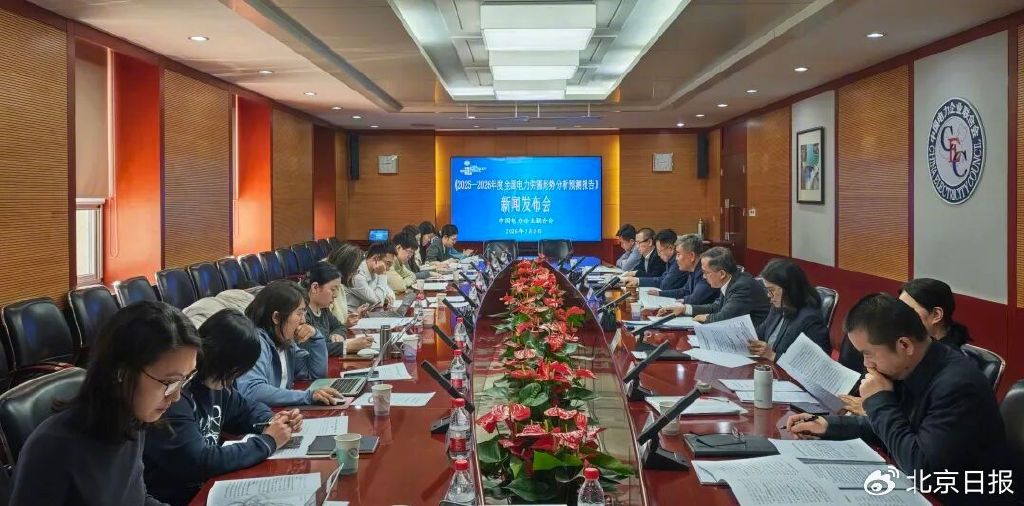
重要通知!国家能源局发布
中国能源报· 2026-02-09 07:07
Core Viewpoint - The article discusses the organization of the sixth batch of applications for major technical equipment in the energy sector, emphasizing the importance of technological breakthroughs and the support for energy security and carbon neutrality goals [1][2]. Group 1: Application Conditions - The projects must represent significant technological breakthroughs in the energy sector, possess independent intellectual property rights, and not have achieved mass market performance [3]. - Focus areas include advanced renewable energy, new power systems, safe and efficient nuclear energy, green and efficient fossil energy development, new energy storage, pumped storage, hydrogen energy, energy system digitalization, and energy efficiency improvement [3]. - The technical equipment must be ready for engineering application, with conditions for signing contracts within one year and starting construction within two years [3]. Group 2: Application Procedures - Provincial energy authorities and central enterprises are responsible for organizing applications, with a maximum of eight projects recommended per provincial authority and three per centrally planned municipality [4][5]. - Additional recommendations may be granted based on previous evaluation results and the implementation of supportive policies for major technical equipment [5][6]. - Applications must be submitted individually for each technical equipment, with restrictions on the number of user and research units involved [7]. Group 3: Requirements and Deadlines - Applications for increasing recommendation quotas must be submitted by March 6, 2026, with confirmation feedback by March 20, 2026 [10]. - Required materials include a recommendation letter and application documents, which must be submitted by April 24, 2026 [12][14]. - Incomplete or late submissions will not be accepted [15].

学习规划建议每日问答丨为什么要建设能源强国
Xin Hua She· 2026-02-02 08:55
Group 1 - The core viewpoint emphasizes the importance of building an energy powerhouse as a fundamental requirement for modernizing the country and ensuring energy security, especially in the context of global changes and the need for a green low-carbon transition [1][2] - The construction of an energy powerhouse is aligned with the new energy security strategy proposed by the government, which includes promoting energy consumption, supply, technology, and institutional revolutions, as well as enhancing international cooperation [2] - The urgency of enhancing energy security capabilities is highlighted due to increasing geopolitical risks and the politicization of energy issues, necessitating the development of a robust energy supply chain and innovation system [3] Group 2 - The need for green low-carbon development is identified as a strategic priority for enhancing global competitiveness, with a focus on transforming energy production and consumption patterns to achieve carbon neutrality goals [4] - China has made significant progress in energy supply capabilities since the proposal to build an energy powerhouse in 2021, with substantial increases in energy production expected by 2024, including coal, oil, and natural gas [5] - China is recognized as a leader in renewable energy, with the largest installed capacity for wind and solar power globally, and a complete supply chain for clean electricity, although there are challenges related to high dependence on foreign oil and gas [5]