行业规范

Search documents
“春节上门喂猫赚16万元”背后,我们需要什么?
Nan Fang Du Shi Bao· 2026-02-19 05:26
Core Viewpoint - The rise of the "cat-sitting" profession highlights both the potential rewards and inherent risks associated with this emerging industry, emphasizing the need for professional standards and consumer trust [1][2][3] Group 1: Industry Overview - The cat-sitting service has gained popularity, with reports of individuals earning significant income, such as a 90s-born male earning 160,000 yuan during the Spring Festival [1] - This profession combines emotional labor and professional service, as it involves not only feeding and caring for pets but also ensuring their health and safety [1] - The influx of inexperienced and untrained part-time workers into the market has diluted service quality and increased the likelihood of disputes, which can harm consumer rights and the industry's reputation [2] Group 2: Consumer Trust and Risks - Consumers face trust issues when entrusting their homes and pets to strangers, relying on social media reviews rather than formal qualifications [2] - The lack of formal agreements in short-term services complicates the resolution of disputes, leaving workers vulnerable to challenges in proving their case [2] - Legal experts suggest that clear agreements on rights and responsibilities are necessary, but the practicality of formal contracts in casual transactions is often overlooked [2] Group 3: Recommendations for Industry Improvement - The concept of "corporatization" is proposed to enhance the professionalism of the industry, suggesting that service providers should operate through platforms that offer standardized training and insurance [3] - Establishing basic professional standards, such as pet first aid and hygiene protocols, is essential for ensuring safety and accountability in the industry [3] - The need for a balanced approach to regulation is emphasized, advocating for the establishment of industry standards without stifling the flexibility of gig employment [3]
平湖市市场监管局经开分局开展“三小”检查回头看
Xin Lang Cai Jing· 2026-01-22 23:17
Core Viewpoint - The article discusses the ongoing regulatory actions taken by the Pinghu Market Supervision Bureau to enhance the operational standards of small beauty shops, pharmacies, and clinics, ensuring the safety of drug and cosmetic use for the public [1][2]. Group 1: Regulatory Actions - The Pinghu Market Supervision Bureau has initiated a special rectification action to enforce compliance among small beauty shops, pharmacies, and clinics, focusing on the responsibility of business operators [1]. - The "look-back" inspections are based on previous routine checks and identified issues, targeting specific areas for in-depth review [1]. Group 2: Inspection Focus - Key inspection areas include verifying the implementation of cosmetic procurement record systems, checking for expired or unregistered cosmetics, ensuring proper storage conditions for drugs, and confirming that prescription drugs are sold only with a prescription [1]. - Specific attention is given to small beauty shops regarding the completeness of cosmetic procurement records and the presence of products without Chinese labels or that are expired or unregistered [1]. - For small pharmacies, there is a strict crackdown on non-compliant prescription drug sales, particularly issues like "selling first and providing prescriptions later" [1]. - Small clinics are scrutinized for medical device procurement records, drug storage conditions, and traceability of dispensed drugs [1]. Group 3: Education and Future Actions - During inspections, enforcement personnel combine law enforcement with legal education, informing business operators about relevant laws such as the Drug Administration Law and the Medical Device Supervision Regulations [2]. - The Pinghu Market Supervision Bureau plans to consolidate the results of the rectification actions, focusing on persistent issues and establishing a regular monitoring mechanism to promote the standardization of operations in the "three small" industries [2].
党建引领固本强基,金融护航行稳致远
Xin Lang Cai Jing· 2026-01-22 17:07
Core Viewpoint - The Jining Banking Association aims to promote the healthy and stable development of the banking industry in Jining by focusing on four key areas: party leadership, industry norms, risk prevention, and consumer rights protection, with multiple initiatives leading the province in various aspects [2] Group 1: Party Leadership and Organizational Development - The association emphasizes the integration of party work with business operations, establishing a clear and efficient party work system [3] - It has implemented a structured annual learning plan for party members, enhancing their theoretical knowledge and practical application in regulatory and service roles [3] - The association has made progress in standardizing party organization, including the establishment of a committee and the completion of member evaluations to promote exemplary conduct [3] Group 2: Service Enhancement and Industry Activation - The association focuses on serving regulators, members, and society, having successfully held its eighth member congress and completed leadership transitions [4] - It has organized events to facilitate connections between financial institutions and local enterprises, resulting in multiple cooperation agreements [4] - The association has initiated a series of training and promotional activities to enhance financial knowledge and prevent illegal financial activities [5] Group 3: Self-Regulation and Market Order - The association has developed a self-regulatory governance model to improve market competition and prevent risks, achieving significant results in areas like mortgage commissions [6] - It has implemented a tiered supervision mechanism for deposit business, promoting a shift from price competition to service quality improvement [6] - The association has played a key role in risk prevention, successfully addressing potential debt risks for local enterprises [6] Group 4: Consumer Protection and Dispute Resolution - The association has established a dispute resolution brand and innovative mechanisms to enhance consumer rights protection [7] - It has set up a mediation service station and developed a fast-track resolution process for small disputes, improving efficiency in conflict resolution [7] - The association has built a professional mediation team and implemented management systems to standardize mediation processes [7]

万孚生物2026年困局将持续?25年四季度亏损进一步扩大 回款疑似恶化
Xin Lang Cai Jing· 2026-01-16 10:29
Core Viewpoint - The performance decline of Wanfu Biological is attributed to the dual constraints of centralized procurement and industry regulations in the IVD sector, significantly impacting pricing and sales volume [1][13][17]. Financial Performance - Wanfu Biological's 2025 earnings forecast indicates a net profit of 46 million to 69 million yuan, representing a year-on-year decline of 87.71% to 91.81% [1][14]. - For the first three quarters of 2025, the company reported a main revenue of 1.69 billion yuan, down 22.52% year-on-year, and a net profit of 134 million yuan, down 69.32% [2][15]. - The third quarter alone saw a main revenue of 445 million yuan, a decline of 26.66% year-on-year, with a net loss of approximately 55.46 million yuan [2][15]. Market Conditions - The IVD market in China experienced a 5.9% decline in size during the first three quarters of 2025, with the biochemical and immunological sectors showing the most significant downturn [20]. - The A-share IVD sector reported total revenue of 27.62 billion yuan, down 14.5% year-on-year, and a net profit of 4.49 billion yuan, down 26.4% [20]. Pricing and Procurement Impact - The IVD industry is facing significant price pressure due to centralized procurement, with some product prices dropping by over 70% [17]. - As of 2024, five rounds of provincial alliance centralized procurement have been completed, covering core products and regions [17]. Regulatory Environment - New policies from the National Health Commission aim to standardize inspection and testing results across medical institutions, which may further impact sales volumes by reducing unnecessary repeat tests [5][19]. - The "minimum necessary" principle has been emphasized in recent regulations, mandating a review of clinical necessity for various testing projects [6][19]. Accounts Receivable Concerns - Wanfu Biological's accounts receivable have surged, with turnover days increasing from 32 days in 2022 to 172 days in 2023, raising concerns about potential impairment risks [12][22]. - As of the last report, accounts receivable amounted to 1.046 billion yuan, accounting for approximately 60% of the company's revenue [22]. Business Segmentation - Chronic disease detection is the largest business segment for Wanfu Biological, contributing 44.66% of revenue, while infectious disease detection accounts for 34% [22][23]. - Both segments have seen significant revenue declines, with chronic disease management revenue dropping by 26.06% and infectious disease revenue by 21.14% year-on-year [22]. Future Outlook - The impact of centralized procurement is expected to persist until 2026, with ongoing challenges anticipated for Wanfu Biological's performance [1][21]. - The company is focusing on stabilizing its overseas business, which is seen as a crucial support for sustainable growth [25].

经济日报:职业规范怎能“玩梗”?丨头条热评
Xin Lang Cai Jing· 2026-01-06 12:15
Core Viewpoint - The incident involving a tea shop employee creating "handmade milk tea" videos has sparked significant discussion, highlighting the need for industry professionals to maintain a sense of respect for their roles and adhere to professional standards rather than prioritizing entertainment value [1] Industry Concerns - The actions of the involved employees blurred the lines between personal entertainment and professional identity, as they were seen in uniforms performing staged actions, which could mislead consumers about the brand's image [1] - The incident has raised concerns about the lax safety awareness among some industry practitioners, emphasizing that food safety is a non-negotiable standard that should not be compromised for the sake of viral content [1] Legal and Regulatory Implications - Legal experts have pointed out that even using discarded materials for entertainment purposes violates food safety laws and operational regulations, indicating potential legal repercussions for such actions [1] Brand Reputation - Although the involved brand acted quickly to address the situation, the ongoing public discourse serves as a reminder that a brand's core competitiveness stems from long-term quality assurance and the trust established with consumers, rather than from gimmicks aimed at attracting attention [1]
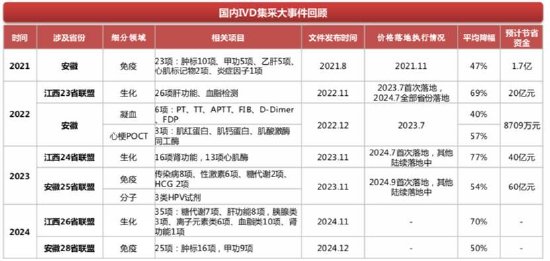
高额退订费成消费“隐形陷阱”
Xin Lang Cai Jing· 2025-12-23 20:12
Core Viewpoint - The article highlights the challenges consumers face regarding refund policies in the online service industry, particularly in travel, entertainment, and hospitality sectors, where strict no-refund policies and high penalties for cancellations are prevalent [1] Group 1: Consumer Experiences - A consumer named Chen faced a non-refundable policy for a tour package, despite the cancellation not affecting the travel agency's ability to regroup [1] - Another consumer, Guo, encountered difficulties in obtaining a refund for movie tickets, with the platform initially refusing to process the request based on its own rules, which were later contradicted by the cinema [1] - Wang, who had to cancel a hotel reservation due to a medical emergency, was initially denied a full refund by the platform but succeeded after directly contacting the hotel [1] Group 2: Legal and Regulatory Insights - A court case in Haidian District ruled against a strict no-refund policy, emphasizing that businesses should not impose excessive penalties when consumers cannot fulfill their contracts due to unforeseen circumstances [1] - Legal experts argue that consumer protection laws prohibit unfair terms that limit consumer rights, suggesting that clauses stating "no cancellations under any circumstances" are invalid [1] - Recommendations include the establishment of tiered refund policies by industry associations or regulatory bodies to balance consumer rights and business costs, promoting fair practices in the industry [1]
磷酸铁锂材料分会发通知规范行业发展 设报价底线防恶性竞争
Jing Ji Guan Cha Bao· 2025-11-20 08:51
Core Viewpoint - The Lithium Iron Phosphate (LFP) Materials Subcommittee of the China Chemical and Physical Power Industry Association has issued a notice to its members to standardize industry development and set a price floor to prevent vicious competition [1] Group 1: Industry Challenges - The industry has faced continuous overall losses and disordered competition for several years [1] - There is a significant issue of low-price competition leading to internal market turmoil [1] Group 2: Regulatory Measures - Members are required to use the cost range for specific specifications of LFP materials disclosed on November 18 as a pricing reference, which is between 15,714.8 yuan/ton and 16,439.3 yuan/ton, excluding lithium carbonate costs and taxes [1] - Members must report production capacity and other data by the 5th of each month [1] - The notice advises caution in capacity expansion to curb vicious competition and promote healthy industry development [1]
行业协会将建议设成本红线规范报价!磷酸铁锂行业推进反内卷
Zhong Guo Zheng Quan Bao· 2025-11-20 08:41
Core Viewpoint - The lithium iron phosphate industry in China is facing continuous overall losses, leading to chaotic competition and low-price undercutting, threatening the survival and sustainable development of the entire industry [1] Industry Developments - The China Chemical and Physical Power Industry Association will issue a notice regarding the reference cost index for lithium iron phosphate and the standardization of industry development [1] - The notice suggests that companies should use the industry average cost range disclosed by the association on November 18 as an important reference for pricing, avoiding price dumping that exceeds cost thresholds [1] - Starting this month, the association will disclose the industry average cost range monthly, providing authoritative regulatory guidance for company pricing [1] Data Reporting Requirements - The association recommends that companies fulfill their obligation to report information, requiring them to submit accurate and complete data on capacity, output, and inventory to the association on a monthly basis [1] - This data will serve as an important reference for resource allocation within the industry [1]
健身行业乱象亟待规范
Jing Ji Ri Bao· 2025-11-11 22:12
Core Insights - The fitness industry is facing challenges due to low entry barriers, inadequate training, and chaotic certification management, which harm consumer rights and confidence [1][2] - The lack of unified and authoritative industry standards leads to a disordered environment, allowing profit-driven entities to exploit the situation [1] - There is a pressing need to establish a systematic and effective industry regulation framework to enhance the professional image of fitness trainers [1] Industry Standards - A clear and strict entry threshold for fitness trainers should be established, including core knowledge, practical skills, and ethical standards [1][2] - Collaboration between relevant departments and industry organizations is essential to create a nationally recognized mandatory qualification system [1] Training and Certification - A nationwide unified training and assessment standard should be developed, emphasizing subjects like exercise physiology, injury prevention, and emergency response [2] - A regular supervision and evaluation mechanism for training institutions must be implemented to ensure compliance and quality [2] - The credibility of professional qualification certificates needs to be restored by regulating issuing bodies and processes, and by establishing a recognized core certification system [2]
周大生:随着行业经营环境进一步规范,市场份额将向头部企业集中
Sou Hu Cai Jing· 2025-11-05 00:49
Group 1 - The new tax regulations on gold trading provide significant tax cost advantages for companies that are members of the Shanghai Gold Exchange compared to non-member companies [1] - Over the long term, the industry operating environment is expected to become more standardized, leading to market share concentration among leading companies with qualification, scale, and brand advantages [1] - This concentration of market share creates a more favorable operating environment for the business development of the company [1]