
风险转移

Search documents
我,35岁,遇到了比婚内出轨更渣的操作!
洞见· 2026-03-05 12:35
Core Viewpoint - The article emphasizes the importance of being prepared for unexpected life events, particularly health crises, and the financial implications they can have on families [47][54]. Group 1: Personal Experiences and Challenges - A reader shares her struggles after her husband lost his job, leading to financial instability and the need for her to find work while facing discrimination as a mother [10][11]. - The reader's mother is diagnosed with cervical cancer, resulting in unexpected medical expenses that escalate quickly, highlighting the financial burden of serious illness [14][19]. - The emotional toll of the situation is compounded by family disagreements over selling their home to cover medical costs, illustrating the strain on relationships during crises [21][22]. Group 2: Financial Implications of Health Crises - The article discusses the high costs associated with cancer treatment, which can exceed hundreds of thousands, not including ongoing recovery expenses [19][50]. - Many families find themselves in dire financial situations, often having to deplete savings or incur debt to cover medical bills, which can lead to long-term financial instability [52][54]. - The narrative stresses that without proper financial planning and insurance, families may struggle to cope with the financial aftermath of health emergencies [47][54]. Group 3: Importance of Insurance and Financial Planning - The article advocates for proactive financial planning and insurance as essential tools for mitigating risks associated with health crises [53][54]. - It highlights the need for tailored insurance solutions that consider individual family circumstances and financial needs, emphasizing the complexity of choosing the right coverage [56]. - The author shares a positive experience with a platform that provides personalized insurance planning services, which can help families navigate their options effectively [58][61].


指数的幻觉:个股崩塌时,市场真的安全吗?
美股研究社· 2026-02-28 11:38
Core Viewpoint - The current state of the U.S. stock market reflects a structural risk where individual stocks are declining while major indices remain stable, indicating a divergence in market breadth and a potential hidden risk [1][6][10]. Group 1: Market Structure and Behavior - Recent data shows a record sell-off of $8.3 billion in individual stocks, suggesting that funds are not leaving the market entirely but are shifting from individual stocks to indices [3]. - The stability of indices like the S&P 500 and Nasdaq is largely due to the concentration of funds in a few major stocks, with the top ten stocks in the S&P 500 nearing historical highs in terms of weight [5]. - The phenomenon of individual stocks suffering while indices remain stable is indicative of a structural change in fund flow, where institutions are selling off smaller, more volatile stocks while maintaining exposure through ETFs [6][10]. Group 2: Risks of Concentrated Investment - The liquidity of ETFs, while appearing robust, is actually built on the liquidity of underlying assets, which can become problematic in times of market stress [8]. - A paradox arises where concentrated investment in indices, perceived as safer, can lead to systemic risk; if sentiment shifts, the rush to redeem ETF shares could exacerbate market volatility [9][10]. - The current market structure suggests that the risk is not from valuation bubbles but from crowded positions, where a consensus among investors can lead to a lack of market elasticity [10][13]. Group 3: Historical Context and Future Implications - Historical patterns show that similar market structures have occurred before, such as during the early pandemic and the tech stock adjustments in 2022, but the macroeconomic context differs each time [6][12]. - The current situation is characterized by institutions reducing active risk exposure, indicating a defensive posture rather than outright panic [12][14]. - The potential for a market unwind is present, as crowded trades typically revert to the mean, but the trigger for such a shift remains uncertain [14][16]. Group 4: Investment Strategy and Outlook - Investors should be cautious of the illusion of safety provided by index funds, as the concentration of investments can lead to significant risks [16]. - Future market dynamics may not follow a uniform pattern of rise and fall but could instead exhibit extreme differentiation, presenting opportunities in overlooked stocks with solid fundamentals [16].

深夜,一场下跌被世界无视了
Sou Hu Cai Jing· 2026-02-04 00:17
Group 1 - The core observation is that the market is experiencing a "risk transfer" day, with gold and silver rebounding while U.S. stocks and Bitcoin are declining, indicating a significant underlying shift in market sentiment [2][3] - The software sector is identified as a major area of concern, with a nearly 4% drop in one day, reflecting a crowded trade that is now facing a structural issue rather than a change in market outlook [3] - Bitcoin's decline is attributed to its role as a pure expression of risk appetite, suggesting that it often leads declines in other assets [3] Group 2 - Gold and silver are rising but doing so hesitantly, indicating that the current price movements are more of a technical recovery rather than the start of a new bullish trend [4] - The stability of the U.S. dollar and Treasury yields suggests that the market is still in a phase of reducing positions rather than making definitive conclusions about future movements [4] - The current market environment is characterized as one that tests risk tolerance rather than delivering a sudden market shock, reminiscent of conditions seen in 2018 [5]
ING Groep(ING) - 2025 Q4 - Earnings Call Transcript
2026-01-29 11:02
Financial Data and Key Metrics Changes - The lending book grew by EUR 57 billion in 2025, representing an 8% increase compared to the previous year, which was double the growth rate of 2024 [2] - Total deposits, including savings and current accounts, increased by EUR 38 billion, a growth of 6% [2] - Net profit reached EUR 6.3 billion with a return on equity of 13.2% and a capital ratio of 30.1% [6] Business Line Data and Key Metrics Changes - The asset management and e-brokerage segment saw significant growth, reaching EUR 278 billion, a 60% increase compared to 2024 [3] - Fee income grew by 15%, amounting to EUR 4.6 billion, driven by investment products and wholesale banking activities [5] Market Data and Key Metrics Changes - The company reported over 1 million primary customers in 2025, with a total of over 15 million primary customers out of 41 million total customers [1] - The company is recognized as a top three mortgage provider in Europe, with EUR 376 billion in mortgages [2] Company Strategy and Development Direction - The company aims to diversify its business profile beyond traditional lending, focusing on asset management and e-brokerage [3] - There is a strategic emphasis on becoming a primary bank for customers, enhancing customer interaction and service offerings [6] Management's Comments on Operating Environment and Future Outlook - Management expressed confidence in the growth trajectory, highlighting the need to deepen and broaden customer relationships [66] - The company acknowledges the competitive landscape with digital innovators and aims to close the gap in customer experience [68] Other Important Information - The company is transitioning from expert-based models to data-driven models in response to ECB supervision, which is expected to enhance risk management and capital efficiency [12][19] - The company is cautious about the risks associated with SRTs (synthetic risk transfers) and emphasizes the importance of diversification in risk management [24][25] Q&A Session Summary Question: What can we expect from the SRD strategy and growth? - Management indicated that growth is expected to continue, with improvements in data-driven models enhancing precision in capital management [11][12] Question: How does the company view competition from neobanks like Revolut? - Management acknowledged the competition from neobanks and emphasized the need to enhance customer experience and tailor services to specific customer segments [43][68] Question: What is the company's approach to SME banking? - The company is developing a digital SME bank in Germany, focusing on current accounts and payments for self-employed individuals, with plans for gradual growth [77][83]

大家不要倒在黎明之前!
洞见· 2026-01-19 12:35
Core Viewpoint - The article emphasizes the importance of risk awareness and the necessity of having a solid financial safety net to protect families from unexpected hardships, particularly in the context of health crises and economic instability [47][49]. Group 1: Personal Financial Challenges - The narrative describes a family's struggle with financial difficulties due to job instability and medical emergencies, highlighting the emotional toll and the urgent need for financial support [14][15][28]. - The protagonist's mother suffers from a serious health condition, leading to significant medical expenses that the family cannot afford, illustrating the potential financial burden of health crises [27][30]. Group 2: Importance of Risk Management - The article stresses that many individuals lack risk awareness and do not prepare adequately for unforeseen events, which can lead to severe financial consequences for families [49][50]. - It advocates for proactive measures, such as insurance, to mitigate financial risks associated with health issues and other emergencies, emphasizing that every family member should have adequate coverage [51][52]. Group 3: Insurance and Financial Planning Services - The article introduces a platform that offers personalized insurance and financial planning services, which can help families identify their coverage needs and optimize their financial protection [54][60]. - It highlights the benefits of tailored insurance solutions that consider individual family circumstances, ensuring comprehensive coverage at reasonable costs [61][65]. Group 4: Promotional Offer - The article concludes with a promotional offer for readers to access free financial planning services, encouraging them to take advantage of this opportunity to secure their family's financial future [66][72]. - It emphasizes the limited availability of this offer, urging readers to act quickly to benefit from the services provided [71][79].

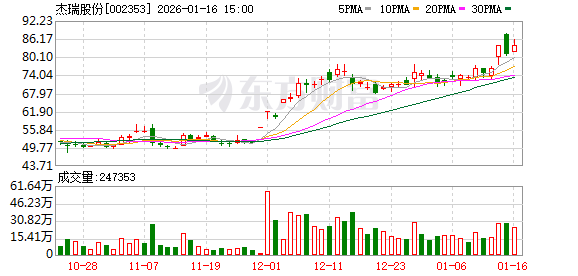
最多2000万元 零利息 最长可借6年!3倍大牛股公司借钱给高端人才群体一起创业
Mei Ri Jing Ji Xin Wen· 2026-01-18 14:02
Core Viewpoint - Jerry Holdings has introduced an innovative talent incentive plan, offering up to 20 million yuan in interest-free loans to core technical talents and industry experts to support their investment in emerging business areas, which has sparked market interest in new talent binding models [2][4][14]. Group 1: Loan Details - The total loan amount is capped at 20 million yuan, with a maximum individual loan of 800,000 yuan and a repayment period of up to 6 years [4][5]. - The loan is strictly limited to specific high-end groups, excluding related parties and individuals with credit issues, and can cover a maximum of 25 employees out of 7,098 total [4][5]. - The funds must be used for investments in emerging business areas, differing from previous employee loan programs for housing [4][5]. Group 2: Employee Concerns - Many employees express concerns about the debt risk associated with the plan, particularly the obligation to repay the principal even if the project incurs losses [2][14]. - The average pre-tax income for employees in 2024 is projected at 189,100 yuan, which raises concerns about the repayment burden, as even lower loan amounts could significantly impact their disposable income [8][13]. Group 3: Financial Performance - Jerry Holdings is a leading player in the domestic oil and gas equipment and services sector, with projected revenues of 13.35 billion yuan in 2024, despite a slight decline from 13.91 billion yuan in 2023 [6]. - The company is expected to achieve a net profit of 2.62 billion yuan in 2024, reflecting a year-on-year growth of 7.03%, marking three consecutive years of positive growth [6]. Group 4: Market Reactions - The market response to the incentive plan is mixed, with some industry professionals questioning the rationale behind offering interest-free loans instead of direct investments by the company [14][15]. - Experts have differing opinions on the plan's effectiveness, with some viewing it as a risk transfer to employees, while others see it as a flexible and practical approach to employee incentives [3][15].

如何开展长寿风险管理?业内人士这样说……
券商中国· 2025-12-17 04:35
Core Viewpoint - Longevity is a significant indicator of social progress and development, but managing and diversifying longevity risks presents new challenges for society [2]. Group 1: Longevity Risk Definition and Challenges - Longevity risk refers to the risk of individuals or groups living longer than expected, leading to increased long-term payment obligations for pension and insurance institutions, thereby causing financial pressure [2]. - China has entered a moderately aging society, with the elderly population (aged 60 and above) reaching 310 million by the end of 2024, accounting for 22.0% of the total population [2]. - The commercial annuity insurance market, as a tool for hedging longevity risk, faces significant challenges due to the accelerated aging trend and the combined impact of longevity risk and interest rate changes [2]. Group 2: Long-term Insurance Business Challenges - The long-term insurance business is a core functional area for the insurance industry in addressing population aging, but it faces major challenges such as interest rate risk in a low-interest environment [3]. - The insurance industry must adopt a multi-faceted approach to manage risks associated with mortality, expense, and interest rate differentials, including precise pricing and risk management [3]. Group 3: International Practices in Longevity Risk Management - Mature markets like the UK are actively exploring pension de-risking solutions, with an expected market risk transfer transaction volume of £70 billion by 2025, including £50 billion in longevity co-insurance transactions [4]. - The concept of longevity risk swaps, where direct insurers transfer longevity risk to reinsurers, has been practiced in Europe since the mid-2000s [5]. Group 4: Local Exploration of Longevity Risk Diversification - In China, the exploration of financial tools for transferring longevity risk faces challenges such as data availability, regulatory environment, and market structure [7]. - Recommendations for improving longevity risk transfer in China include establishing a mortality index, conducting pilot projects under regulatory sandboxes, and developing simpler products to ease pricing and execution difficulties [7]. Group 5: Academic and Market Developments - The rapid aging process in China is pushing longevity risk to the forefront of actuarial considerations, with new models being developed to predict mortality improvements [8]. - The Shanghai International Reinsurance Registration Center is working on building a longevity risk index to support reinsurance transactions and product innovation [8].

Federal Agricultural Mortgage (NYSE:AGM) FY Conference Transcript
2025-11-19 16:57
Summary of Federal Agricultural Mortgage Corporation (Farmer Mac) FY Conference Call Company Overview - **Company Name**: Federal Agricultural Mortgage Corporation (Farmer Mac) - **Ticker Symbol**: AGM - **Market Capitalization**: Approximately $2 billion - **Total Assets**: About $40 billion, with $31 billion in business volume - **Employee Efficiency**: Core earnings per employee at approximately $900,000 [6][7][12] Core Business Segments - **Agricultural Finance**: Accounts for about two-thirds of business volume, with core farmland mortgages at $18.2 billion [14] - **Infrastructure Finance**: Comprises one-third of business volume, including power and utilities, renewable energy, and broadband infrastructure [16][19] Financial Performance - **Revenue and EPS Growth**: Low double digits compound annual growth rate over the last 10 years [7] - **Net Effective Spread**: Increased from 90 basis points to 120 basis points over five years [21] - **Cumulative Losses**: Only 12 basis points of cumulative losses in agricultural finance loans [28] Market Dynamics - **Agricultural Sector**: Challenges in soybean, cotton, and rice markets due to reliance on exports, particularly to China [42][45] - **Renewable Energy**: Significant growth in renewable energy financing, particularly solar and battery projects, with expectations for continued expansion [17][18] - **Broadband Infrastructure**: Focus on providing liquidity for telecommunication services and data centers, with strong growth anticipated [20] Strategic Initiatives - **Diversification**: Expanded into corporate agricultural finance and infrastructure to mitigate risks and enhance growth [9][15] - **Securitization**: Completed six securitization transactions totaling $1.8 billion, with plans for more [34][35] - **GSE Funding Advantage**: Access to capital markets similar to other government-sponsored enterprises, providing competitive rates [39][40] Risk Management - **Asset Liability Management**: Focus on matching interest rate risk and maintaining liquidity with $8 billion in liquidity reserves [12][31] - **Credit Quality**: Strong credit metrics with no significant sector concerns, supported by diversification across commodities [28][29] Shareholder Returns - **Dividend Growth**: 14 consecutive years of dividend increases, with a current yield of 3.5% [36][49] - **Future Outlook**: Optimistic about market opportunities and potential for continued dividend growth as business matures [37][49] Conclusion - **Unique Positioning**: Farmer Mac is a mission-driven public company with a unique focus on providing liquidity across agriculture and infrastructure sectors, supported by a strong GSE funding advantage and disciplined risk management practices [38][49]

保险和信托在财富规划上有哪些差异?
Sou Hu Cai Jing· 2025-08-11 16:29
Group 1 - The core viewpoint of the articles emphasizes the distinct roles of insurance and trust in wealth planning, highlighting their unique mechanisms and characteristics in wealth protection, inheritance, and management [1][2]. - Insurance is fundamentally a risk transfer mechanism, providing financial compensation to beneficiaries upon the occurrence of specified risk events, with a focus on risk protection [1]. - Trust is a property management system that allows the trustor to delegate their property rights to a trustee, who manages the assets for the benefit of the beneficiaries, emphasizing flexibility in wealth management and inheritance [2]. Group 2 - From a risk perspective, insurance products have standardized contract terms, with risks primarily associated with the insurance company's operational risks, which are subject to strict regulatory oversight [2]. - Trust assets are independent of the trustor, trustee, and beneficiaries' personal properties, providing effective protection against creditor claims, but the success of a trust depends on the trustee's competence and the design of the trust plan [2]. - In terms of liquidity, certain short-term insurance products offer good liquidity, while long-term insurance products may incur losses upon early termination; trust products generally have lower liquidity due to complex procedures for asset transfer [3]. Group 3 - Tax treatment varies by region for insurance and trust, with insurance payouts often being tax-exempt, while trust income tax obligations can be complex and depend on the type of trust and local tax regulations [3].
董责险规模扩张“保单价值”进阶
Zheng Quan Ri Bao· 2025-08-08 07:24
Core Viewpoint - The D&O insurance market in China is experiencing significant growth, evolving from a simple risk transfer tool to an important corporate governance mechanism, yet it still faces challenges such as low market penetration and insufficient awareness [1][2][3]. Group 1: Market Growth and Trends - The D&O insurance market has expanded significantly since the implementation of the new Company Law, with 1,397 listed companies purchasing D&O insurance in 2024, marking a historical high and a 5 percentage point increase from 2023 [2][3]. - The proportion of listed companies with an A-level information disclosure rating that have purchased D&O insurance is 42.8%, significantly higher than the market average of 28.4%, with state-owned enterprises reaching a rate of 60.6% [5][6]. Group 2: Factors Driving Adoption - Three main factors are driving the increase in D&O insurance adoption: heightened risk awareness due to major litigation cases, the role of D&O insurance in enhancing corporate governance and risk management, and regulatory encouragement for independent directors to be insured [3][4]. - Investor awareness and the legal framework have also contributed to the growth of the D&O insurance market, with the new Company Law explicitly allowing companies to purchase insurance for directors against liabilities incurred during their tenure [2][3]. Group 3: Challenges and Recommendations - Despite the growth, the D&O insurance market faces challenges such as low overall market size, price competition leading to insufficient rates, and a lack of transparency in information disclosure [7][8]. - Recommendations for market improvement include establishing mandatory information disclosure systems and enhancing talent development within the industry [7][8]. Group 4: Value Proposition of D&O Insurance - D&O insurance is increasingly recognized for its multi-dimensional value, including covering legal costs and liabilities, attracting talent by providing risk protection, and enhancing corporate image by signaling a commitment to risk management and compliance [5][6]. - The introduction of D&O insurance can also improve investor confidence by providing a mechanism for compensation in the event of securities litigation, thereby mitigating potential stock price volatility [6][8]. Group 5: Future Outlook - The market penetration of D&O insurance is expected to continue rising as new securities and company laws are implemented, with D&O insurance playing a more significant role in corporate governance frameworks [9].