首发经济

Search documents
中国中免,净利创五年来新低
Shen Zhen Shang Bao· 2026-03-31 06:40
Core Viewpoint - China Duty Free Group reported a decline in revenue and net profit for 2025, indicating ongoing challenges in the duty-free retail sector, with a focus on strategic initiatives to enhance competitiveness and adapt to market changes [1][2][4]. Financial Performance - In 2025, the company achieved operating revenue of 53.694 billion yuan, a year-on-year decrease of 4.92% [1]. - The net profit attributable to shareholders was 3.586 billion yuan, down 15.96% year-on-year, marking the lowest net profit in nearly five years and the second consecutive year of double-digit decline [2]. - The net cash flow from operating activities was 6.059 billion yuan, reflecting a decrease of 23.69% compared to the previous year [1]. Business Operations - The company primarily engages in duty-free tourism retail, offering a range of products including tobacco, alcohol, cosmetics, watches, jewelry, clothing, electronics, and food [3]. - In 2025, the company emphasized its commitment to strategic development, focusing on core competencies and high-quality growth, while leveraging the historical opportunity of Hainan's full island closure to enhance sales [3]. - The company successfully bid for 16 duty-free store operating rights at major airports, including Shanghai Pudong and Beijing Capital International Airport [3]. Strategic Initiatives - The company announced a significant overseas acquisition, agreeing to purchase DFS's retail business in Greater China, which is expected to enhance its competitive edge in the Hong Kong and Macau markets [4]. - The company is expanding its presence in the overseas market, including entering Vietnam and signing supply agreements for ten years [4]. - A focus on launching flagship stores and introducing over 140 new products in 2025 aims to cater to diverse consumer needs and strengthen the brand's market position [4]. Market Challenges - The decline in performance is attributed to weakened domestic consumption, structural changes in consumer behavior, and increased competition from luxury brands moving towards direct sales [5][6]. - The company's operating profit margin and net profit margin have both declined, indicating a decrease in shareholder return efficiency [6]. - A significant increase in R&D expenses by 352.74% was reported, driven by accelerated digital transformation efforts [7].



茅台稳增长、李宁领赛道、霸王茶姬上市,毕马威解码 2025 消费零售新变局
Sou Hu Cai Jing· 2026-03-24 02:01
Core Insights - In 2025, China's economy reached a new level with GDP exceeding 140 trillion yuan, growing by 5.0%, and consumer spending became the main driver of economic growth [2] - KPMG's report outlines the development trends in China's retail industry, highlighting "scale expansion, structural optimization, and innovation breakthroughs" as key themes [2] - The retail market is expected to see a dual increase in scale and quality, with total retail sales of consumer goods surpassing 50 trillion yuan, a year-on-year increase of 3.7% [4] Economic Overview - The per capita disposable income of residents reached 43,377 yuan in 2025, with both nominal and real growth rates at 5.0% [7] - The average urban unemployment rate was 5.2%, lower than expected, and consumer confidence index rose to 76.6, up 4.1 from the previous year [7] - CPI remained stable, with core CPI showing a year-on-year increase for four consecutive months, supporting steady market development [7] Sector Performance - The luxury goods sector saw significant growth, with retail sales of gold and silver jewelry increasing by 37.6% year-on-year in October, driven by high gold prices [9] - The apparel and footwear sector experienced a year-on-year retail sales increase of 3.2%, with sportswear leading the market [11] - The health and beauty sector rebounded, with retail sales reaching 4,653 billion yuan, a year-on-year increase of 5.1% [13] - The food and beverage sector saw retail sales grow by 9.3%, with a notable shift towards health-conscious and functional products [15] - The restaurant industry generated 57.982 billion yuan in revenue, a year-on-year increase of 3.2%, with a focus on digital transformation [17] Investment Trends - The investment landscape in the retail sector is improving, with a focus on long-term value and stable returns [18] - The luxury goods sector experienced a strong rebound in IPOs, while health and beauty mergers reached a five-year peak [18] - Policy support, including tax incentives and consumption-boosting measures, is expected to further enhance industry growth [18] Future Outlook - Despite uncertainties, policies aimed at expanding domestic demand and stabilizing employment will continue to unlock consumer potential [19] - Key trends for 2026 include technological empowerment, health and functionality as core demands, market and channel expansion, and a shift towards rational consumption and sustainability [19] - Brands need to align with consumer demands and focus on technology, health, market penetration, and sustainability to achieve long-term growth in a large-scale market [20]

前两月消费增速大幅回升,国家统计局预判后期走势
第一财经· 2026-03-17 03:07
Core Viewpoint - The article highlights the significant recovery in consumer spending in China during the first two months of 2023, driven by government policies and the extended Spring Festival holiday, indicating a positive trend in both service and goods consumption [3][5]. Group 1: Consumer Spending Data - In January-February 2023, the total retail sales of consumer goods reached 86,079 billion yuan, a year-on-year increase of 2.8%, accelerating by 1.9 percentage points compared to December 2022 [3]. - Service retail sales grew by 5.6% year-on-year, slightly up from the previous year's overall growth [3]. - Domestic travel during the Spring Festival saw nearly 600 million trips, with total spending exceeding 800 billion yuan, both setting historical records [3]. Group 2: Goods Consumption Trends - Retail sales of staple food and clothing categories increased by 10.2% and 10.4% respectively in the first two months [5]. - The demand for high-quality and green food products is driving the growth in basic living goods, with gold and jewelry retail sales rising by 13% [5]. - The "old-for-new" consumption policy continues to show effects, with retail sales of communication equipment growing by 17.8% [5]. Group 3: Online Consumption Growth - Online retail sales of goods and services increased by 9.2%, outpacing the overall retail sales growth [5]. - Online goods retail sales grew by 10.3%, indicating a strong influence on overall consumption [5]. - Online service retail sales rose by 7.3%, also exceeding the growth rate of total service retail sales [5]. Group 4: Future Consumption Outlook - Analysts predict that the upgrading of consumer structure and the emergence of new consumption drivers will continue to influence consumption growth positively [6]. - Government policies aimed at stimulating consumption are expected to further support this growth trajectory [6]. - The focus on enhancing domestic market strength and consumer spending is emphasized in government reports, aiming to address the imbalance between supply and demand [7].
“4.5%—5%”,从积极务实里看见更多发展空间
券商中国· 2026-03-05 06:04
Core Viewpoint - The government work report sets the economic growth target for 2026 at 4.5% to 5%, reflecting a pragmatic approach to economic development while aiming for higher quality growth [1][2]. Group 1: Economic Growth Target - The growth target of 4.5% to 5% is designed to balance immediate needs with long-term goals, supporting a vision of doubling GDP or per capita income by 2035, requiring an average annual GDP growth rate of 4.17% during the 14th and 15th Five-Year Plans [2]. - The target acknowledges the natural "convergence" of growth rates as the economy scales, while also considering a "front high, back stable" economic rhythm [2]. Group 2: Policy Measures - Fiscal policy is set to be more proactive, with public budget expenditures expected to reach 30 trillion yuan, an increase of approximately 1.27 trillion yuan from the previous year, focusing on optimizing structure and supporting key areas like consumption and investment [2]. - Monetary policy will maintain a moderately loose stance, utilizing tools like reserve requirement ratio cuts and interest rate reductions to promote stable economic growth and reasonable price recovery [2]. Group 3: Long-term Development Focus - Setting a pragmatic growth target allows for more focus on foundational and long-term projects, emphasizing the development of new productive forces as a core strategy for optimizing economic structure and fostering new growth drivers [3]. - The approach aims to guide local governments in concentrating resources on nurturing and expanding new economic drivers, such as artificial intelligence and green economy initiatives [3]. Group 4: Societal Implications - A scientifically grounded growth target serves as a stabilizing force, signaling a commitment to development that prioritizes structural optimization and quality enhancement, ultimately aiming to meet the public's aspirations for a better life [4].

“4.5%—5%”,从积极务实里看见更多发展空间
证券时报· 2026-03-05 04:25
Group 1 - The core viewpoint of the article emphasizes the pragmatic setting of the economic growth target for 2026 at 4.5%—5%, reflecting a balance between immediate realities and long-term aspirations [1][2] - The government aims to achieve a GDP annual growth rate of 4.17% during the "14th Five-Year Plan" and "15th Five-Year Plan" periods to meet the long-term goal of doubling the economic total or per capita income by 2035 [2] - The article highlights that the pragmatic growth target does not imply a reduction in the strength of macroeconomic policies, which remain robust and focused on efficiency [2][3] Group 2 - The article discusses the importance of setting a realistic growth target to allow for more foundational and long-term initiatives, particularly during a critical transition to high-quality development [3] - It notes the rise of new growth points such as artificial intelligence, the silver economy, and green economy, which are essential for optimizing economic structure and fostering new growth momentum [3] - The pragmatic growth target serves as a guiding principle for society, signaling a commitment to development that prioritizes structural optimization and quality improvement [3]
西安2025年引入品牌首店376家
Sou Hu Cai Jing· 2026-02-28 01:17
Group 1 - The core viewpoint of the articles highlights that Xi'an is set to introduce 376 new brand flagship stores by 2025, including 3 national first stores, 171 regional first stores, and 13 provincial first stores [1] - The city will host 264 launch events, comprising 41 national launches, 60 regional launches, and 7 provincial launches [1] - Non-standard flagship stores are gaining popularity, with 72 such stores expected to be introduced, accounting for 19% of the total flagship stores [1] Group 2 - Xi'an's flagship store market shows a clear trend of "local foundation, international acceleration," with 46 international flagship stores from 13 countries and regions introduced last year [1] - The distribution of flagship stores in Xi'an exhibits a "central concentration, peripheral emergence" pattern, with Yanta District leading with 138 stores, representing 37% of the total [1] - The city is transitioning from a traditional single-pole model to a multi-polar and differentiated commercial landscape, leveraging its unique regional characteristics to enhance consumer ecosystems [2]
【西安】2025年引入品牌首店376家
Shan Xi Ri Bao· 2026-02-27 23:42
Group 1 - The core viewpoint of the articles highlights that Xi'an is set to introduce 376 new brand flagship stores by 2025, including 3 national first stores, 171 regional first stores, and 13 provincial first stores [1] - The city will host 264 launch events, comprising 41 national launches, 60 regional launches, and 7 provincial launches [1] - Non-standard flagship stores are gaining popularity, with 72 such stores expected to be introduced, accounting for 19% of the total flagship stores [1] Group 2 - Xi'an's flagship store market shows a clear trend of "local foundation, international acceleration," with 46 international flagship stores from 13 countries and regions introduced last year [1] - The distribution of flagship stores in Xi'an exhibits a "central concentration, peripheral emergence" pattern, with Yanta District leading with 138 stores, representing 37% of the total [1] - The commercial landscape in Xi'an is evolving from a traditional single-pole model to a multi-polar and specialized approach, leveraging local characteristics to shape a differentiated consumer ecosystem [2]
千家烟火特色小店等你来
Xin Lang Cai Jing· 2026-02-21 20:16
Core Insights - Sichuan province is implementing five major actions to boost consumption, aiming to create a "big consumption" ecosystem [1] Group 1: Service Consumption Enhancement - Special support policies will be developed for inbound consumption and the automotive aftermarket [1] - Aiming to cultivate a number of "never-sleeping Tianfu" benchmark scenarios and projects [1] - At least 1,000 unique local shops and 30 regional specialty brands will be launched [1] - Expansion of the "Chuan" branded senior tourism train [1] Group 2: Product Consumption Upgrade - Optimization of the trade-in policy for consumer goods, focusing on local industries such as automobiles, home appliances, and smart home products [1] - The fifth Panda Consumption Festival will be held, along with the "Chuan Superior Products 100" branding initiative [1] - Collaborative promotional packages for events like "Chuan Super" and marathons will be introduced [1][4] Group 3: New Consumption Development - Focus on enhancing emotional value experiences and developing sectors like the debut economy, silver economy, youth economy, self-care economy, and ticket economy [1] - Exploration of new consumption pilot zones and the establishment of the Tianfu New Consumption Research Institute [1] Group 4: Scene Innovation and Environment Optimization - High-standard creation of 40 new scenes, 15 innovative consumption clusters, and 10 new Tianfu landmarks [2][4] - Expansion of the rural trade-in program to include more merchants [2] - Addition of 300 new departure tax refund stores [2] - Regulation of the scrapping and recycling industry for vehicles, with exploration of carbon reduction and trading standards [2]
在南京玄武,过个“首发”喜庆年
Xin Lang Cai Jing· 2026-02-17 08:03
Core Insights - The article highlights the innovative "first launch economy" in Nanjing's Xuanwu District, which enhances traditional New Year celebrations with modern experiences and cultural depth [1][12] Group 1: First Launch Economy - The "first launch economy" has become a new trend in consumer behavior during the Spring Festival, with a projected sales figure of 26.24 billion yuan for Deji Plaza in 2025, maintaining its position as the top shopping destination in China [4] - Local high-end brand "Three Little Goats" opened its first store in Jiangsu at Deji Plaza, marking a significant recognition of Xuanwu's consumer capacity and the advancement of local premium products into higher markets [4] - Various first-launch products and stores, such as Lola Rose's limited edition K-gold watches and Brooks' innovative running shoes, have attracted many consumers seeking unique shopping experiences [4][5] Group 2: Immersive Experience - The integration of technology and creativity has transformed the Spring Festival experience in Xuanwu, shifting consumer engagement from mere shopping to immersive experiences [8] - Interactive installations, such as AR technology showcasing ancient mythical creatures, have created engaging environments for visitors, enhancing the festive atmosphere [8][9] - Cultural events, like the "Cultural Flip Card" and "Zhuangyuan Sends Blessings," have merged shopping with artistic experiences, allowing consumers to enjoy both commerce and culture seamlessly [8][9] Group 3: Culinary Innovations - The Spring Festival has also seen the introduction of various new culinary offerings, with Deji Plaza featuring multiple first-launch food and beverage outlets that have become popular among consumers [12] - Notable food establishments include BLACK TREE·Thai Tea and Chuntian Mature Tea House, which have attracted significant attention for their unique flavors and presentation [12] - A dedicated section for 87 local agricultural products at Deji BHG Supermarket has enhanced the local food scene, providing fresh and meaningful options for consumers [12]
深圳东门步行街大变样:传统商圈如何寻到新活力|新春走基层
证券时报· 2026-02-16 04:26
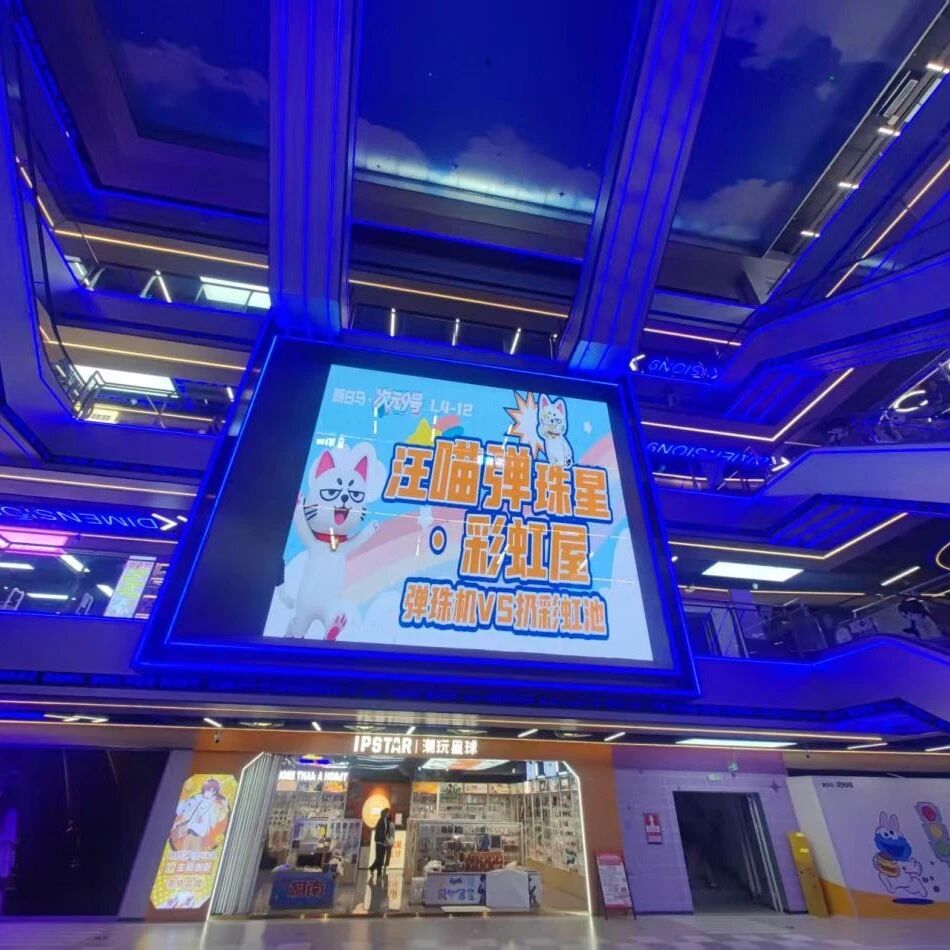
Core Viewpoint - The article highlights the transformation of Dongmen Pedestrian Street in Shenzhen, emphasizing its ability to adapt and rejuvenate while maintaining its traditional charm, particularly in the context of the upcoming Spring Festival [1][5]. Group 1: Transformation and Development - Dongmen Pedestrian Street has undergone significant renovations, including building upgrades, underground utility improvements, and the establishment of a smart business district, all aimed at revitalizing the area without major demolitions [1][5]. - The street has seen an increase in foot traffic, becoming a popular destination during the festive season, showcasing its successful transformation [1][5]. Group 2: New Commercial Concepts - New commercial spaces are being developed, such as the "New White Horse·Dimension 9," which focuses on a blend of anime, gaming, and virtual idols, catering to the interests of the younger generation [3][5]. - The introduction of the "谷子经济" (Guzi Economy), which targets the "二次元" (two-dimensional) demographic, is a strategic move to foster new consumption growth points in Shenzhen [5]. Group 3: Market Positioning and Strategy - The revitalization strategy of Dongmen emphasizes "micro-renovations" to preserve local culture while integrating modern technology and cultural elements, thus finding a new market position [5][6]. - Industry experts suggest that traditional commercial areas like Dongmen should leverage nostalgia and innovative planning to attract customers and differentiate themselves in a competitive market [5][6].