
高质量城市更新

Search documents
安徽省政协委员:好房子不追求大户型、高价位
Zhong Guo Xin Wen Wang· 2026-02-06 09:15
Core Viewpoint - The focus on urban renewal should prioritize safety, comfort, sustainability, and intelligence over large sizes and high prices in housing [1] Group 1: Urban Renewal Strategy - Urban renewal should begin with a thorough assessment of existing conditions and clear identification of needs to ensure targeted updates [2] - The construction of "good houses, good communities, good neighborhoods, and good urban areas" is essential for effective urban renewal [2] - Utilizing digital intelligence as a support for industry transformation is recommended, promoting efficient matching of idle assets with market demands [2] Group 2: Importance of Urban Renewal - The significance and objectives of urban renewal have profoundly changed over the past decade, now recognized as a national strategy [2] - Urban renewal is viewed as a dynamic governance process that spans the entire lifecycle of a city, emphasizing the importance of meeting public needs [2] Group 3: Cultural and Environmental Considerations - It is crucial to establish and implement guidelines for maintaining the aesthetic integrity of urban areas during renewal processes [4] - Preventing homogenization and highlighting local cultural characteristics are essential for successful urban renewal [4] - Urban renewal should enhance living quality, promote green transformation, and preserve historical context while increasing urban resilience [4] Group 4: Agricultural Integration in Urban Renewal - Urban renewal is not only about improving living environments but also about implementing central policies on urban-rural integration and new urbanization [4] - In ecological updates, prioritizing local plant species and integrating agricultural elements into functional updates is recommended [4]

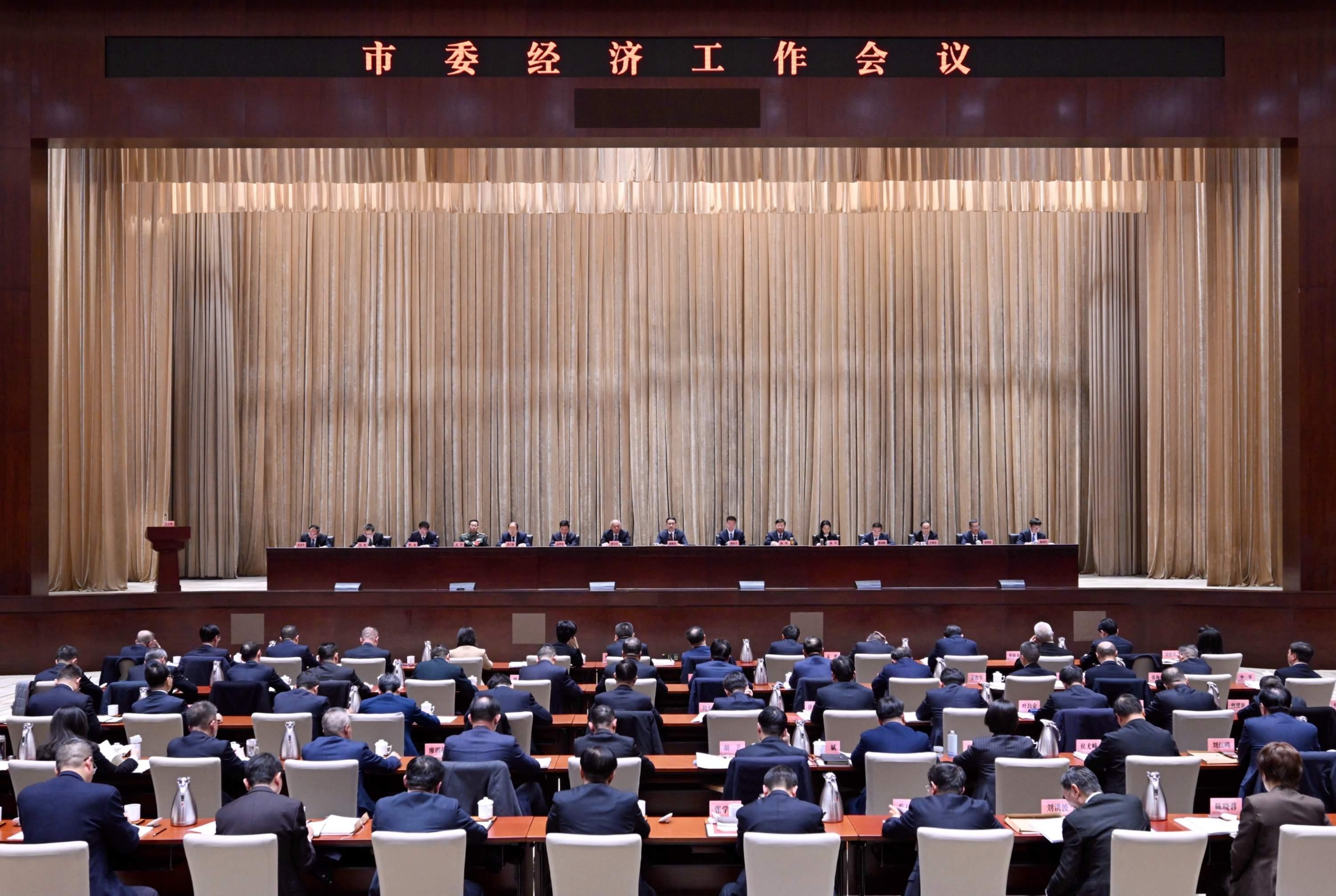
市委经济工作会议召开:坚定信心、鼓足干劲、奋发进取,确保实现“十五五”良好开局,盛阅春熊征宇讲话
Chang Jiang Ri Bao· 2025-12-28 00:34
Core Viewpoint - The meeting emphasized the importance of economic work for the upcoming year, which is crucial for the long-term development and aims to ensure a good start for the "15th Five-Year Plan" [5][9]. Economic Performance Summary - The city has successfully implemented policies to stabilize growth, promote transformation, improve people's livelihoods, and mitigate risks, resulting in accelerated growth and positive economic indicators [4]. - Traditional industries have recovered, and the transition to new growth drivers has gained momentum, with significant improvements in urban renewal and overall living standards [4]. Key Focus Areas for 2026 Economic Work - The meeting outlined five key areas for economic development in the coming year: 1. **Expanding Domestic Demand**: Prioritize consumption, implement income-boosting plans, and enhance the business environment to attract investment [6]. 2. **Promoting Technological and Industrial Innovation**: Foster a modern industrial system and enhance the overall effectiveness of the innovation system [7]. 3. **Enhancing Open Economy**: Strengthen high-level openness and develop a hub economy to boost regional collaboration [7]. 4. **Urban Renewal**: Accelerate urban renewal efforts to improve city management and ecological quality [8]. 5. **Improving Livelihoods**: Focus on employment stability, social security, and public service enhancement to ensure community well-being [8]. Implementation and Leadership - The meeting stressed the need for strong leadership in economic work, emphasizing the importance of responsibility, ambition, and effective execution of policies [9][10]. - It called for a focus on foundational and long-term projects, with a commitment to addressing challenges and enhancing the political environment for development [9].
明年着力稳定房地产市场:去库存 推动高质量城市更新
Di Yi Cai Jing· 2025-12-11 12:50
Core Viewpoint - The new model for real estate development in China will focus on "de-inventory" and "stabilizing the housing market," with supply-side reforms emphasizing "controlling increments, de-inventory, and optimizing supply" [1][2] Group 1: Policy Directions - The Central Economic Work Conference highlighted the importance of stabilizing the real estate market as a key task for the upcoming year, emphasizing tailored policies for different cities [1] - The conference called for encouraging the acquisition of existing housing stock for use in affordable housing projects, indicating a shift towards utilizing existing inventory [2] - The focus on "de-inventory" reflects the ongoing pressure to reduce housing stock, with the current de-inventory cycle for 100 cities reaching a historical high of 27.4 months as of November [2] Group 2: Urban Renewal and Quality Development - High-quality urban renewal is identified as a new strategy for stabilizing the housing market, aiming to enhance living standards and improve urban aesthetics while ensuring sustainable business models [2][3] - The approach to urban renewal should prioritize systematic planning and phased implementation, focusing on optimizing urban structures and enhancing quality of life [3] - The government aims to integrate urban renewal with safety hazard elimination and housing market stabilization efforts [3] Group 3: Housing Fund Reforms - The housing provident fund system is recognized as a crucial financial tool in the real estate sector, with calls for reforms to enhance its effectiveness, particularly in cities with low loan uptake [4] - The need for institutional reforms is emphasized to support the dual model of rental and purchase housing, enhancing the role of the provident fund in this context [4] Group 4: Market Outlook - The real estate market is expected to exhibit characteristics of dual-track policy stability and market differentiation by 2026, with a focus on high-quality development and rational housing expectations [4] - Companies are advised to adapt to the new development model and focus on improving product quality, while buyers should prioritize high-quality housing in core cities [4]
市委常委会召开会议:纵深推进政法队伍突出问题集中教育整治,实施“五改四好”,推进高质量城市更新
Chang Jiang Ri Bao· 2025-10-27 12:17
Core Points - The meeting emphasized the importance of implementing Xi Jinping's important speech and aligning local actions with the central government's strategic deployment for the "14th Five-Year Plan" [1][2] - The city aims to enhance the management of deliberative coordination institutions to better fulfill their roles and responsibilities [2] - A focus on high-quality urban renewal is highlighted, with the "Five Reforms and Four Goods" initiative as a primary direction for urban development [3] Group 1: Implementation of Central Policies - The meeting stressed the need to unify thoughts and actions with the central government's assessments and strategic plans for the "14th Five-Year Plan" [1] - It called for high-quality planning that aligns with the spirit of the 20th National Congress, focusing on major goals, tasks, reforms, and projects [1] Group 2: Management of Deliberative Coordination Institutions - The meeting highlighted the importance of accurately understanding the roles of deliberative coordination institutions and enhancing their organizational effectiveness [2] - It emphasized the need for strict management and effective policy measures to improve the quality of deliberative work [2] Group 3: Urban Renewal Initiatives - The meeting reviewed the "Five Reforms and Four Goods" action plan for high-quality urban renewal from 2025 to 2027, aiming to transform urban development methods [3] - It stressed the importance of addressing core challenges such as funding, land, and procedures to support urban renewal efforts [3] - The plan includes selecting "small but beautiful" projects to explore diverse development models tailored to local conditions [3]
每周精读 | 北京五环外购房不限套数;7月发行1020亿地产类债券,七成投向土地储备(8.2-8.8)
克而瑞地产研究· 2025-08-09 10:39
Core Viewpoints - The article discusses the ongoing debt restructuring in the real estate sector, highlighting the increasing debt reduction ratios and the prevalence of debt-to-equity swaps as mainstream solutions to facilitate risk clearance in the industry [5]. Group 1: Debt Restructuring - Real estate companies are entering a deep-water zone of restructuring, with a focus on enhancing debt reduction ratios and adopting debt-to-equity swaps as a primary strategy [5]. - The restructuring plans vary significantly among companies, indicating a tailored approach to address specific financial challenges [5]. - The overall trend is pushing the industry towards a clearer risk landscape, as companies work to stabilize their financial positions [5]. Group 2: Market Dynamics - In July 2025, the top 100 real estate companies achieved a sales turnover of 211.16 billion yuan, indicating a robust performance despite market challenges [22]. - The land acquisition amounts in July showed a decrease compared to the previous month but an increase year-on-year, suggesting a more favorable comparison to last year's average levels [22]. - The issuance of real estate bonds reached 102 billion yuan in July, with 70% allocated for land reserves, reflecting a strategic focus on land acquisition amidst ongoing market adjustments [15]. Group 3: Policy and Market Adjustments - Beijing has lifted restrictions on the number of properties that can be purchased outside the Fifth Ring Road, aiming to better meet residents' housing improvement needs [10]. - High-frequency policies related to urban renewal are emerging as a new engine for industry stabilization, with a focus on optimizing housing fund policies [14]. - The supply constraints in August are expected to keep new home transaction volumes stable at low levels, with some cities like Hangzhou, Tianjin, and Changsha showing signs of recovery [14]. Group 4: Corporate Strategies - Companies like Vanke and China Resources are undergoing structural adjustments, indicating a shift towards more efficient organizational management [18][19]. - The trend of "light asset" operations is gaining momentum, with a focus on monetizing professional capabilities rather than merely expanding capital scale [11]. Group 5: Land Transactions - In August 2025, 17 key cities plan to auction 67 plots of land, with a total starting price of 35.4 billion yuan, reflecting ongoing land market activity [19]. - The supply of land increased significantly, with a 39% week-on-week growth in building area, indicating a responsive approach to market demand [20]. - The transaction volume also saw a 54% increase in building area, although the transaction amount experienced a slight decline of 2.9% [21].



近期宏观与资本市场重要事件研判
GOLDEN SUN SECURITIES· 2025-08-04 01:20
Group 1 - The July Politburo meeting decided to hold the Fourth Plenary Session of the 20th Central Committee in October to discuss the formulation of the "14th Five-Year Plan" [1][16] - The meeting emphasized the need for macro policies to focus on "implementation and detail," removing references to "timely reserve requirement ratio cuts and interest rate reductions," indicating a shift from "quantity" to "quality" [1][16] - The "de-rolling" policy was officially included in the policy framework, with a focus on "key industries" and a shift away from price-related discussions [1][17] Group 2 - The manufacturing PMI for July was reported at 49.3%, a decrease of 0.4 percentage points month-on-month, indicating a contraction [2][18] - Recent supply-demand policies have led to price increases in some commodities, which may boost PPI expectations, but historical data suggests that strong expectations do not always translate into strong realities [2][19] - The PPI's improvement will depend on both supply-side adjustments and demand stabilization [2][19] Group 3 - The recent China-US-Sweden trade talks resulted in a 90-day extension of tariff measures, indicating limited short-term impact from Trump's tariff policies [3][22] - Long-term risks from reciprocal tariffs should not be underestimated, as the outcomes of the trade talks did not exceed expectations and merely postponed risk points [3][24] - Historical experiences from the 2018 trade war suggest that Trump's stance can be unpredictable, which may affect future trade relations [3][24] Group 4 - The A-share market has seen a significant improvement in funding, with financing balances exceeding 2024 levels and creating a new high [4][26] - The relationship between the bond market and the stock market is characterized by a "see-saw" effect, where funds may shift from bonds to stocks, potentially driving A-share market performance [4][26] - However, the risk of diminishing incremental funding remains, and financing balances should be viewed as a synchronous indicator rather than a leading one [4][27] Group 5 - The overall profit expectations for A-shares in 2025 are likely to be weak, with a downward trend expected in the second and third quarters, followed by a potential rebound in the fourth quarter [5][29] - The A-share profit cycle showed improvement in the first quarter of this year, but the recovery may face constraints due to pressure on revenue growth [5][29] - The main driver of profit growth in Q1 2025 is expected to be the year-on-year increase in net profit margins, while revenue growth remains under pressure [5][29] Group 6 - The upcoming mid-year report disclosures in August are expected to increase the importance of performance trading [6][34] - Stocks with characteristics of "high growth in performance + high opening" are likely to yield good returns, especially when combined with relative performance growth screening [6][34] - Key industries for August include motorcycles, optical electronics, traditional Chinese medicine, lighting equipment, and agriculture [6][34]




8 月策略观点与金股推荐-20250803
GOLDEN SUN SECURITIES· 2025-08-03 11:24
Group 1 - The July Politburo meeting decided to hold the Fourth Plenary Session of the 20th Central Committee in October to discuss the "14th Five-Year Plan" proposals, emphasizing the need for "solid foundation and comprehensive efforts" for achieving socialist modernization [12][13] - The macro policy focus has shifted from "quantity" to "quality," with the removal of phrases like "timely reserve requirement ratio and interest rate cuts," indicating a more cautious approach to economic stimulus [12][13] - The "de-rolling" policy has been officially defined, with a focus on "key industries" and a shift away from real estate-related discussions, reflecting a new development model in the real estate sector [13] Group 2 - The manufacturing PMI for July was reported at 49.3%, a decrease of 0.4 percentage points, indicating a contraction in the manufacturing sector, with both supply and demand showing signs of decline [14] - Recent supply-demand policies have led to price increases in some commodities, which may boost PPI expectations; however, historical data suggests that price increases driven by strong reality tend to be more sustainable than those driven by strong expectations [14][15] Group 3 - The recent US-China trade talks have resulted in a temporary suspension of tariffs, but the long-term risks associated with reciprocal tariffs should not be underestimated, as the situation remains fluid and subject to change [17][20] - The trade talks have not yielded unexpected results, merely postponing risk points by 90 days, and the experience from the 2018 trade war indicates that the US stance can be unpredictable [20] Group 4 - The A-share market has seen a significant improvement in liquidity, with financing balances exceeding 2024 levels, indicating a potential for continued market performance [22] - The relationship between the stock and bond markets is characterized by a "see-saw" effect, where funds are shifting from the bond market to the stock market, driven by improved expectations for fundamentals [22][23] Group 5 - The overall profit expectations for A-shares in 2025 are likely to be weak, with a downward trend expected in the second and third quarters, followed by a potential recovery in the fourth quarter [25] - The profit growth in A-shares is primarily driven by year-on-year net profit margin increases, while revenue growth remains under pressure, indicating a challenging demand environment [25][27] Group 6 - The upcoming mid-year report disclosures in August are expected to enhance the importance of performance trading, with stocks showing high growth and strong opening characteristics likely to yield good returns [30] - Key industries to focus on in August include motorcycles and others, optical electronics, traditional Chinese medicine, lighting equipment, and agriculture [30][36] Group 7 - The recommended stocks for August include Lu'an Huanneng, which is positioned as a top choice for coking coal due to its resilient demand and potential for production capacity increases [37][38] - China Aluminum is highlighted for its strong position in the global aluminum industry, with expected profit increases driven by rising production volumes [37]






重磅会议定调!这样的房子更不友好了
Sou Hu Cai Jing· 2025-08-01 05:05
Core Viewpoint - The article emphasizes the importance of high-quality urban renewal in the real estate market, indicating a shift towards improving living standards and addressing urban issues rather than merely increasing housing supply [2][3][9]. Urban Renewal Direction - The recent central urban work conference highlighted the need for high-quality urban renewal, focusing on creating livable, resilient, and smart cities to address urban problems affecting people's quality of life [3][4]. - The emphasis is on not just large-scale demolition and construction but on enhancing the quality of urban living environments [3][4]. Market Implications - The push for high-quality urban renewal is expected to lead to the introduction of smarter, greener, and more advanced housing options in the market [6][10]. - A significant decrease in land use density has been observed across various cities, suggesting a future trend towards low-density housing products [7]. - Developers are likely to incorporate higher-quality amenities and designs previously associated with luxury properties into new developments [8][9]. Future Market Changes - As new high-quality homes emerge, older high-density second-hand properties may become relatively cheaper, potentially shifting buyer expectations towards lower-priced second-hand markets [11][12]. - The transition to a more quality-focused market will take time and will vary by city [13]. Specific Case Analysis - In Shenzhen, new high-density developments, particularly from urban renewal projects, are facing challenges due to high construction costs and regulatory hurdles, resulting in high floor area ratios [15][16]. - For instance, the "Happiness City" project in Longhua has a floor area ratio of 8.79, which may struggle against lower-density competitors in the future [16][23]. - Nearby low-density land parcels are expected to attract buyers seeking better living conditions, which could impact the sales of high-density projects like Happiness City [23][25].

二季度政治局会议传递积极信号
水皮More· 2025-07-31 10:37
Core Viewpoint - The article emphasizes the continuation of a stable yet progressive macroeconomic policy, focusing on maintaining policy stability while enhancing flexibility and timely adjustments to stimulate economic recovery [1][3]. Fiscal Policy - The fiscal policy aims for detailed implementation, emphasizing structural optimization, with a focus on enhancing social welfare and targeted spending for specific groups [4]. - The government plans to accelerate the issuance of long-term special bonds, with net financing reaching 7.66 trillion yuan in the first half of 2025 [4]. Monetary Policy - A moderately loose monetary policy is anticipated, with potential interest rate cuts to lower overall financing costs for society [5]. - The central bank has already implemented a 10 basis point interest rate cut and a 50 basis point reserve requirement ratio reduction, with further easing expected [5]. Industry Policy - The industry policy focuses on fostering technological innovation and promoting healthy competition, with an emphasis on emerging industries and strategic sectors [6][8]. - Key areas for support include quantum computing, artificial intelligence, and biotechnology, with a push for collaboration between research institutions and enterprises [6]. Real Estate Policy - The real estate policy highlights the importance of high-quality urban renewal and managing local government debt risks, with a focus on stabilizing the housing market [9]. - Recent data shows a decline in property sales, with June's sales area and revenue down by 5.5% and 10.8% year-on-year, respectively [9]. Domestic Demand Expansion - The strategy for expanding domestic demand involves enhancing both consumption scenarios and consumer capacity, with potential policies to optimize social security contributions and tax structures [11][12]. - Recent retail sales data indicates a 4.8% year-on-year growth, but a decline in consumer confidence remains a concern [11]. Employment and Social Welfare - The employment policy prioritizes job creation for key demographics, including recent graduates and migrant workers, while ensuring social safety nets are in place [13]. - The approach combines development with safety nets to stabilize society and rebuild consumer confidence [13]. Capital Market - The capital market is encouraged to enhance its attractiveness and inclusivity, with recent positive performance in A-shares and Hong Kong stocks [14]. - The government has introduced various supportive measures to stabilize and invigorate the capital market, including optimizing monetary policy tools [14]. High-Level Opening Up - The policy aims to maintain a stable foundation for foreign trade and investment, with measures to support foreign trade enterprises and promote integrated development of domestic and foreign trade [15]. - The focus is on enhancing the resilience of enterprises and the support capabilities of open platforms in a complex external environment [15].
重阳问答︱如何解读中央城市工作会议
Jing Ji Guan Cha Bao· 2025-07-23 09:36
Core Insights - The Central Urban Work Conference held on July 14-15 in Beijing marks a significant event, occurring nearly a decade after the last one in 2015, with the General Secretary delivering a key speech to set the direction for future urbanization in China [1] - The focus of urbanization has shifted from rapid growth to stable development, emphasizing quality improvement and efficiency in existing urban areas rather than large-scale expansion [1] - The meeting highlighted the need for a new development model to adapt to demographic changes such as declining birth rates, aging population, and regional disparities, promoting "group-style urban agglomerations" to enhance urban governance and resource allocation [1] Urban Development Strategies - High-quality urban renewal is emphasized as a key strategy, moving away from large-scale demolition and construction towards creating comfortable and livable cities, including gradual urban village renovations and infrastructure safety improvements [2] - The conference prioritizes innovation in urban construction, aiming to build vibrant, innovative cities as a core task, with technology innovation seen as a crucial means to counteract demographic and geopolitical challenges [2] - The reliance on infrastructure and real estate to drive economic growth is deemed outdated, with future urban development expected to focus more on technological innovation and industrial advancement [2]