
Token

Search documents
2026年AIDC展望:国内外共振,电源液冷有望迎来爆发式增长
2026-02-24 14:16
徐强 国泰海通分析师: 好的,各位投资者大家下午好,欢迎参加我们国泰海通电新团队春节不打烊的系列电话会 议。我是国泰海通的环保电新首席徐翔,今天我和我们孙潇浩孙老师一起给各位领导做去 做一些 AIDC 方面的汇报。明天就是这个第一个交易日了,那在此,我们国泰海通电新团 队祝大家开市大吉,业绩长虹。这个假期期间,我们围绕了 AIDC、太空算力、太阳翼、 锂电供应链,然后开展了一系列的这个电话会议和专家的这个交流。那这今天下午的电话 会议主要是汇报 A I D C 硬件端的这些投资机会。 然后同时,今天晚上我们还安排了这个卫星载荷的专家,然后来交流一下太空算力以及太 阳翼的这一方面的一个,这个投资内容。今晚 8 点,也欢迎大家这个就是按时接入。首先 我们一直从这个去年开始吧,去去年,24 年底,前年开始,就一直在推荐 AIGC 的这些投 资机会。市场,其实对于 IPC 的这些投资的持续性,持,一直是存,一直在质疑当中,这 个不断的这个提升预期的。那包括像现在。大家对于这个北美地区,像 Oracle 他们的一 个投资的持续性,以及北美这些算力是否存在泡沫,一直有比较大的一个争议。 但是,近期我们在在使用,包括像 O ...





产品涨价、股价飙升,中国AI大模型龙头“爆”了
Mei Ri Jing Ji Xin Wen· 2026-02-22 13:45
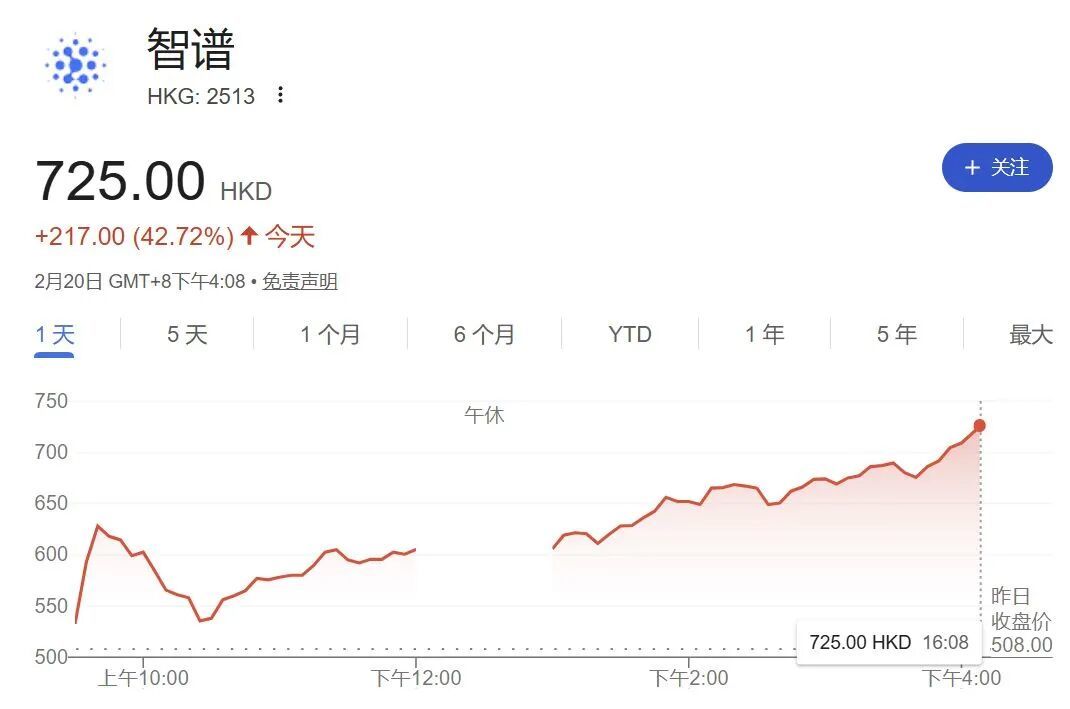
2月20日,港股马年首个交易日,有"全球大模型第一股"之称的智谱收涨超42%,市值突破3232亿港元。2月以来,该公司股价累计涨幅超过220%,上市 以来的涨幅则达到523%。 另一家人工智能大模型企业MiniMax也延续了节前的强劲走势,当天收涨超14%,市值也超过3000亿港元。自上市以来,MiniMax已经累计上涨 487.88%。 目前,两者市值已超越携程和快手,逼近泡泡玛特(3279亿港元)与百度(3548亿港元)。 然而,狂热之下,两家公司仍处于亏损状态,市销率高达700倍,远超OpenAI的65倍。市场究竟在为何种未来下注? 市值双双突破3000亿港元 2月20日,农历马年的第一个交易日,当恒生科技指数大跌近3%,众多传统科技股表现疲软时,两家AI大模型初创公司——智谱和MiniMax,成为了市场 中为数不多的亮点。 当天,智谱收报725港元/股,涨幅高达42.72%,市值突破3232亿港元,单日市值增长超过967亿港元。MiniMax同样表现不俗,收盘上涨14.52%,报970港 元/股,市值达3042亿港元,2月累涨超105%。 值得注意的是,这两家公司登陆港交所的时间并不长。智谱于2026 ...

产品涨价、股价飙升,中国AI大模型龙头“爆”了!
Mei Ri Jing Ji Xin Wen· 2026-02-22 13:05
Core Insights - The two AI companies, Zhipu and MiniMax, have seen significant stock price increases, with Zhipu rising over 42% on the first trading day of the Year of the Horse, and MiniMax increasing over 14% on the same day, leading to market capitalizations exceeding 300 billion HKD [1][2][7] - Both companies have experienced substantial growth since their IPOs, with Zhipu's stock price increasing by 523% and MiniMax's by 487.88% within a month of their listings [1][7] - Despite their high valuations, both companies are currently operating at a loss, with a price-to-sales ratio (PS) exceeding 700, significantly higher than OpenAI's 65 [2][17] Company Performance - Zhipu's stock closed at 725 HKD per share, with a market capitalization surpassing 323.2 billion HKD, while MiniMax closed at 970 HKD per share, reaching a market cap of 304.2 billion HKD [2][11] - Zhipu's cumulative losses from 2022 to mid-2025 amount to approximately 6.238 billion CNY, while MiniMax reported a net loss of 512 million USD (around 3.605 billion CNY) for the first nine months of 2025 [17][20] Market Position - Zhipu and MiniMax's market capitalizations have surpassed those of major companies like Ctrip and Kuaishou, and are approaching the valuations of Pop Mart and Baidu [2][11] - The market's enthusiasm for these companies is attributed to their technological advancements and product breakthroughs, particularly in AI model development [12][19] Technological Advancements - Zhipu launched its flagship model GLM-5, which has shown over a 20% performance improvement compared to its predecessor, while MiniMax introduced M2.5, designed for full-stack programming development [12][13] - Both models have achieved significant performance metrics in industry benchmarks, with MiniMax M2.5 being the most called model in a recent week, reaching 3.07 trillion tokens [14][16] Pricing Strategy - Following the launch of GLM-5, Zhipu raised the prices of its coding plans by 30% in China and over 100% internationally, indicating strong demand for its services [12][19] - MiniMax's pricing for token usage is significantly lower than that of competitors like Claude Opus 4.6, making it an attractive option for users [14][15] Future Outlook - The market is betting on the future potential of these companies, as the demand for AI capabilities continues to grow, particularly in areas requiring high token consumption for complex tasks [19][20] - Analysts suggest that the transition of AI from simple tasks to more complex operations will drive up token consumption, positioning these companies favorably in the evolving AI landscape [19]

未知机构:申万互联网传媒计算机国内海外云均涨价Agent和多模态需求推高重视卖水-20260213
未知机构· 2026-02-13 02:30
Summary of Conference Call Notes Industry Overview - The conference call discusses the cloud computing industry, highlighting recent price increases by major players such as AWS and Google Cloud, as well as domestic companies like UCloud [1][2]. Key Points and Arguments - Recent price hikes by AWS and Google Cloud reflect rising upstream hardware costs and confirm strong downstream demand [3]. - The demand for Agents and multimodal applications is driving a surge in Token consumption, particularly with the popularity of OpenClaw (Clawdbot) [3]. - The proliferation of multimodal AI applications, such as Seedance 2.0, is expected to further accelerate Token consumption, leading to increased usage of cloud computing resources and guaranteed revenue for cloud providers [3]. Important Companies Mentioned - **Kingsoft Cloud**: Recommended as a core cloud provider within the Xiaomi-Kingsoft ecosystem, noted for its high elasticity [4]. - **Baidu Group**: Recognized for its full-stack AI capabilities and control over Kunlun Chip [4]. - **Alibaba**: Identified as a leading domestic cloud provider with strong technical capabilities in full-stack AI and significant cost advantages from self-developed chips [4]. - **Tencent Holdings**: Mentioned for achieving profitability in Tencent Cloud after 25 years, with differentiated competition and SaaS products contributing to 25% of revenue [4].



重视token的巨大需求
2026-02-11 05:58
Summary of Conference Call Notes Industry Overview - The focus is on the AI industry, particularly the role of cloud service providers and the implications of large models like CloudBot and C-DAS 2.0 on token consumption and software industry dynamics [1][2][5][12]. Key Points and Arguments Demand for Tokens - There is a significant demand for tokens due to high-frequency calls to AI models, with weekly consumption potentially reaching tens of millions [1][4][13]. - The transition from dialogue-based interactions to tool invocation has increased token usage, necessitating more computational power [2][12]. Role of Cloud Service Providers - Cloud providers are crucial in the AI era, offering mirrored services that lower user entry barriers and determining which large models can be accessed [1][5]. - Renting cloud services, such as Tencent Cloud, allows users to utilize complex models without significant changes to their infrastructure [5]. Risks Associated with AI Tools - There are potential security risks when installing plugins or skills, as some may disguise malicious software that can consume server resources [6]. - Users must be cautious to avoid issues similar to those seen in the early internet era, such as virus infections [6]. Impact on Software Industry - AI technology is diminishing the value of traditional software entry points, particularly in the SaaS sector, where Chinese companies lag behind their U.S. counterparts [7][8][9]. - The software industry is expected to face new challenges and opportunities as AI-based platforms gain prominence [7]. Advantages of Chinese Software Companies - Chinese A-share software companies focus on customized development and customer service, making them suitable partners for AI technology [11]. - These companies possess industry-specific knowledge that complements AI's general capabilities, allowing for a synergistic relationship [11]. Future of Cloud Computing and Token Consumption - The importance of cloud providers will increase as models like C-DAS 2.0 require substantial computational resources and token consumption [12][20]. - Major companies like ByteDance and Alibaba anticipate a tenfold increase in token consumption in the coming years, indicating that charging for large model usage will become standard [14]. Recommendations for Investment - Infrastructure-related companies, such as NetSpeed, are recommended due to the growing demand for efficient data transmission in AI applications [15]. - In the AI video production sector, companies like Zhao Chi and Wanxing Technology are highlighted for their innovative tools that enhance production efficiency [18]. - IDC firms should focus on partnerships with major platforms, with recommendations for companies like Dongyangguang and Runze in the ByteChain ecosystem, and Century Internet Data Port in the AliChain ecosystem [19]. Prospects for Domestic Computing Chips - Domestic computing chips like Haiguang and Cambrian are expected to have a positive long-term outlook despite current market pessimism [20]. - The increasing demand for computational power due to rising token consumption presents a buying opportunity for stocks in these companies [20]. Other Important Insights - The transition to AI tools is reshaping the software landscape, with a shift away from reliance on single software applications towards integrated AI solutions [9][10]. - The response time of CloudBot is noted to be longer compared to other models, indicating a need for improvement in processing speed [16].





春节AI大战只是表现?摩根大通:token消耗量将进入高速增长期,五年或增长370倍!
Hua Er Jie Jian Wen· 2026-02-10 11:23
Core Insights - Morgan Stanley highlights that the intense competition among major tech giants during the Spring Festival is merely a surface phenomenon, with deeper structural changes in consumer information acquisition and content consumption driving a long-term surge in Token consumption [1] Group 1: AI Application Strategies - Major tech companies are adopting distinct strategies during the Spring Festival, focusing on capturing user habits rather than just traffic [2] - Tencent is implementing a "growth-first" strategy with a 1 billion RMB red envelope campaign to quickly increase the installation and activation of its AI features [2] - Alibaba's approach involves a 3 billion RMB "Spring Festival Treat Plan" aimed at integrating various services to foster AI-driven transaction habits, thereby improving conversion efficiency [2][3] - Baidu is investing approximately 500 million RMB in a combined strategy of "AI assistant + search distribution" to embed AI into more intent-driven search conversations [3] Group 2: Token Consumption Forecast - Morgan Stanley predicts that China's AI inference Token consumption will surge from approximately 10 trillion in 2025 to about 3,900 trillion by 2030, marking a growth of around 370 times over five years [4] - This explosive growth is driven by increased penetration of AI in consumer and enterprise workloads, as well as the expansion of application scenarios from simple conversational AI to complex intelligent agents and multimodal outputs [4] - The structure of inference demand is expected to change significantly, with the proportion of conversational AI in total consumption decreasing from nearly half in 2025 to single digits by 2030, while "knowledge worker AI agents" and "multimodal AI" will gain prominence [4]
做不到“绝对公正”与“全网比价”的AI购物助理,都不会成功
虎嗅APP· 2026-02-07 10:10
Core Viewpoint - The article discusses the impact of AI development on e-commerce platforms, particularly focusing on the competitive dynamics between companies like Amazon, Alibaba, and Pinduoduo, emphasizing the importance of consumer trust and value delivery in the retail sector [6][29]. Group 1: AI and E-commerce Dynamics - The daily token consumption in China is projected to increase from 100 billion at the beginning of 2024 to 40 trillion by September 2025, representing a growth of over 400 times [7]. - Major US tech companies are significantly increasing their capital expenditures for AI infrastructure, with Google estimating its 2026 CapEx to be between $175 billion and $185 billion, nearly double its 2025 spending [8]. - Amazon's projected capital expenditure for 2026 is $200 billion, primarily focused on AWS AI infrastructure, while Microsoft anticipates around $150 billion in spending [9]. Group 2: Competitive Analysis of E-commerce Platforms - Amazon's 2025 GMV is estimated at approximately $700 billion, with AI assistant Rufus contributing $12 billion in annual transaction volume, accounting for 1.67% of total GMV [11][12]. - The article critiques the effectiveness of AI assistants in enhancing user experience, suggesting that they often serve as high-level customer service rather than providing significant incremental value [17]. - Pinduoduo's business model emphasizes "lowest price" as a prerequisite for advertising, contrasting with Amazon and Alibaba, which rely on advertising revenue from brand merchants [20][21]. Group 3: Consumer Trust and Value Proposition - The article argues that platforms like Costco succeed because they prioritize consumer trust and value, contrasting with Amazon and Alibaba, which may not always align with consumer needs [22]. - The effectiveness of AI shopping assistants is questioned, particularly in their ability to deliver on consumer expectations for price and quality, with the assertion that they cannot change the underlying business models of platforms like Alibaba [22][23]. - The article concludes that the future of AI in e-commerce will likely favor companies that can maintain consumer trust and deliver genuine value, with Apple and WeChat identified as potential leaders in this space due to their business models [27][28].





阿里云(2):Token 爆发在即,看好全栈玩家突围
Changjiang Securities· 2026-01-31 14:58
Investment Rating - The report maintains a "Positive" investment rating for the industry [11] Core Insights - The development path of the overseas AI industry shows a two-year lag from significant capital expenditure (Capex) investments in 2023 to the explosion of token usage in 2025. Domestic companies are expected to start their AI capital expenditure cycle in the second half of 2024, one year behind their overseas counterparts [3][6][7] - The report highlights that cloud service providers (CSPs) will be the first to benefit from the token explosion, as they serve as the backbone for AI applications. Companies with a full-stack AI layout are likely to achieve a positive cycle of AI investment returns more quickly [3][9] Summary by Sections Overseas Observation - The overseas AI industry is expected to experience a three-stage cycle: high Capex investment in 2023, revenue growth for cloud providers in 2024, and a surge in token usage in 2025. The high Capex investments are primarily directed towards model training, which is costly [6][21][36] Domestic Observation - Domestic companies are lagging behind their overseas counterparts by about a year in terms of investment. The leading domestic cloud provider, Alibaba Cloud, is projected to see its revenue growth rebound significantly starting in the second half of 2024, with a year-on-year growth rate expected to rise from 3% to 26% [7][48] Domestic Forecast - The report predicts that the domestic token explosion will occur in 2026, following the overseas pattern. As of now, the leading cloud provider, Alibaba Cloud, has begun to realize revenue growth, primarily driven by training demand, while inference demand is gradually increasing [8][52] Cloud Computing as the Core of AI - Cloud computing is described as the "blood" of applications, set to benefit first from the token explosion. The demand for cloud services is expected to shift from resource pricing to value pricing, potentially increasing gross margins for cloud resources [9][56] Competitive Landscape - The competition among major players in the AI space will hinge on two factors: the capability of their models and the ability to form effective business closed loops. Companies with a full-stack AI layout are better positioned to convert model advancements into business revenue or barriers [9][60][61]
唐杰、杨植麟、林俊旸、姚顺雨:他们眼中的 AGI 三个转折点
虎嗅APP· 2026-01-11 09:52
Core Insights - The article discusses the evolving landscape of Artificial General Intelligence (AGI) and highlights three key trends shaping its future development in China and the U.S. [10] Group 1: Trends in AGI Development - Trend One: Beyond Scaling, a New Paradigm is Emerging - The discussion around Scaling has shifted from whether to continue expanding model sizes to questioning the value of such investments. Efficiency has become a critical concern as the marginal returns on increased computational power diminish [14][15]. - Trend Two: Token Efficiency is Becoming a Decisive Factor - Token efficiency has emerged as a crucial variable in determining the potential of large models. The ability to utilize tokens effectively is now seen as essential for achieving higher intelligence levels and completing complex tasks [20][22][24]. - Trend Three: Diverging Evolution Paths for Chinese and American Models - The development of large models in the U.S. is increasingly focused on productivity and enterprise applications, while in China, the emphasis is on cost sensitivity and stability. This divergence reflects different market demands and cultural approaches to research and development [26][28][29]. Group 2: Key Discussions and Insights - The AGI-Next summit gathered leading figures in AI to discuss the future of AGI, emphasizing a shift from application-level discussions to foundational questions about the direction of next-generation AGI [6][10]. - The consensus among researchers indicates that the next phase of AGI development will require a reevaluation of existing paradigms, with a focus on efficiency and the role of token utilization in model performance [10][11][20]. - The cultural differences between U.S. and Chinese AI research environments contribute to the distinct paths taken by their respective large model developments, with U.S. labs often pursuing high-risk, high-reward projects, while Chinese labs focus on practical applications and efficiency [29].
X @CoinMarketCap
CoinMarketCap· 2025-12-23 17:51
Pick a token and check out its trending posts.Price, rank, 24h change, and ticker sit right next to each post, so you never lose context.Follow sharp community members. Do better research.4/5 https://t.co/vMIkVSVV5b ...