VLA技术

Search documents
智能出行新浪潮,全球Robotaxi商业化提速
CMS· 2026-03-24 06:04
Investment Rating - The report maintains a "Recommended" investment rating for the Robotaxi industry, indicating a positive outlook for investment opportunities in this sector [3]. Core Insights - The Robotaxi industry is accelerating towards large-scale commercialization, driven by advancements in autonomous driving technology, favorable policies, and the maturation of the business ecosystem. Key players are rapidly iterating technologies and expanding globally, suggesting significant investment opportunities [1][10]. - Robotaxi represents a core application scenario for Level 4 (L4) autonomous driving, characterized by high technical challenges, clear business models, and substantial cost restructuring potential. The industry is expected to enter a phase of large-scale investment and application expansion from 2026 to 2030 [1][10]. Summary by Sections 1. High-Level Autonomous Driving Penetration - Autonomous driving is categorized from Level 0 to Level 5, with L3 and L4 being the focus of global regulatory and competitive landscapes. By 2025, the penetration rate of passenger cars with Level 2 and above in China is projected to reach approximately 66%, with significant growth in higher-level L2++ vehicles [14][21]. - The report highlights that the penetration of L2 and above vehicles is expected to cross 60% by 2025, marking a pivotal point for the widespread adoption of advanced driving assistance systems [21][22]. 2. Industry Catalysts - Multiple catalysts are propelling the Robotaxi industry towards commercialization: - **Policy Improvements**: Countries like China and the U.S. are gradually opening regions for L4 level paid operations, removing mandatory safety driver requirements, thus facilitating commercial operations [2][32]. - **Technological Advancements**: Hardware and algorithm iterations are enhancing safety redundancies, with companies like Waymo and Tesla leading the way in sensor fusion and vision-based approaches [2][32]. - **Cost Reductions**: The BOM (Bill of Materials) cost for vehicles has decreased significantly, enabling large-scale fleet deployments and reducing overall operational costs [2][32]. - **Unit Economics**: Robotaxi can save over 70% in labor costs, with some leading companies already achieving profitability in select cities, indicating a shift towards commercial viability [2][32]. 3. Competitive Landscape - The Robotaxi industry is characterized by a "U.S.-China dominance with multiple strong competitors" framework. In the U.S., Waymo and Tesla are leading, while in China, companies like Pony.ai, WeRide, and others are expanding aggressively [7][10]. - The report notes that the Robotaxi fleet size is increasing, with leading companies already operating fleets of over a thousand vehicles and expanding into more cities for paid operations [7][10]. 4. Market Size - The global autonomous driving mobility service market is projected to grow from $140 million in 2025 to $67.3 billion by 2030, with a compound annual growth rate (CAGR) of approximately 232.7%. In China, the market is expected to grow from $70 million to $39.4 billion during the same period, with a CAGR of about 253.6% [8][10].



一个假期新增四家百亿独角兽,具身智能"大脑"赛道正在抢走本体公司的风头
Sou Hu Cai Jing· 2026-02-25 11:56
Core Insights - The article highlights the emergence of a new batch of unicorn companies in the embodied intelligence sector, particularly focusing on the "embodied brain" niche, with four companies achieving valuations exceeding 10 billion yuan shortly after the Spring Festival [1] Group 1: Company Developments - Zivariable has completed multiple rounds of financing, raising over 3 billion yuan, and has a total of around 30 billion yuan in funding since its inception, making it the highest-valued company in the embodied intelligence sector for 2026 [3] - Qianxun Intelligent has secured nearly 2 billion yuan in two recent financing rounds, achieving a post-investment valuation exceeding 10 billion yuan, with notable investors including Sequoia China and Chongqing Industrial Investment [3] - Zhihui Square, founded by a former chief scientist at XPeng Motors, has raised over 1 billion yuan in its B round, with a total of 5 financing rounds completed [4] - Xinghaitu, established by a former employee of Waymo, has also completed 8 rounds of financing, with its latest B round raising 1 billion yuan [4] Group 2: Market Trends - The focus of capital investment in the embodied intelligence sector is shifting from "body" companies to "brain" companies, as the latter's technology and commercialization capabilities have matured [5] - The market is witnessing a significant increase in the predicted sales of humanoid robots in China, with Morgan Stanley raising its forecast for 2026 to 28,000 units, doubling previous estimates and representing a 133% year-on-year growth compared to 2025 [5]


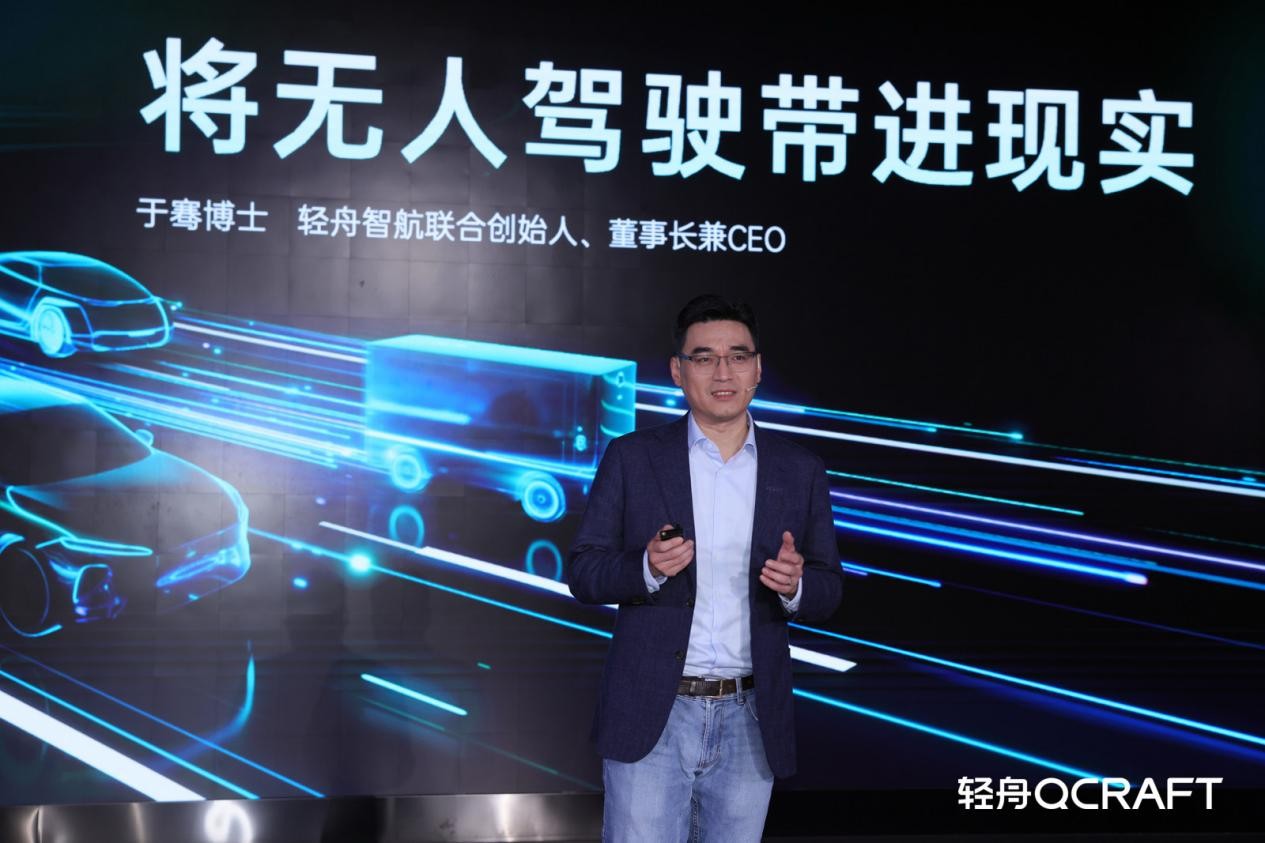
轻舟智航CEO于骞:智驾市场会留存4-5家企业|36氪专访
3 6 Ke· 2026-01-26 05:57
Core Insights - The autonomous driving industry is at a critical transition point, with a shift towards mass production and lower vehicle price segments while also pursuing advanced levels of automation like L3 and L4 [3][4] - The company, Lightyear, has survived previous industry eliminations by making strategic decisions that balance dependence and independence in partnerships with automakers and chip manufacturers [4][5] Company Strategy - Lightyear has transitioned from focusing on L4 capabilities to delivering L2 mass production software, becoming one of the first companies to relieve itself of the "technical burden" associated with L4 [3][4] - The company maintains a close yet independent relationship with automakers and chip manufacturers, allowing it to adapt to various platforms while developing its own algorithms and simulation tools [4][30] Market Position - Lightyear's passenger vehicle assistance systems have surpassed one million units in deployment, with expectations to exceed 50 models by 2026, nearly all featuring urban NOA capabilities [5][6] - The autonomous driving market is expected to retain 4-5 leading companies, similar to the engine or battery industries, rather than consolidating into a monopoly [6][37] Product Development - Lightyear plans to expand its L2 product offerings and increase investments in L4 technologies, including applications in unmanned logistics [6][44] - The company has outlined a product matrix with three tiers: Air, Pro, and Max, targeting various market segments and price points [9][12] Technological Focus - The company emphasizes an end-to-end solution that optimizes resource use for better user experience, avoiding unnecessary complexity in models and hardware [8][23] - Lightyear is exploring advanced technologies like VLA and world models, focusing on enhancing model generalization and virtual training capabilities [12][14] Industry Trends - The penetration rate of autonomous driving is currently below 5% but is projected to rise to 50% in the coming years, driven by the electrification of vehicles [35] - The trend of integrating autonomous driving features into lower-priced vehicles is expected to continue, making advanced safety and convenience features accessible to a broader audience [36]
VLA+RL技术交流群来啦~
具身智能之心· 2026-01-08 04:23
Group 1 - The article introduces a new technical exchange group focused on VLA technology, inviting participants interested in VLA models, VLA+RL, and lightweight deployment [1]

VLA+RL技术交流群来啦~
具身智能之心· 2025-12-23 03:34
Group 1 - The article introduces a new technical exchange group focused on VLA technology, inviting participants interested in VLA models, VLA+RL, and lightweight deployment [1]

英伟达开源最新VLA,能否破局L4自动驾驶?
Tai Mei Ti A P P· 2025-12-02 13:01
Core Insights - NVIDIA has officially open-sourced its latest autonomous driving Vision-Language-Action (VLA) model, Alpamayo-R1, which can process vehicle camera images and text instructions to output driving decisions [2][3] - The Alpamayo-R1 model emphasizes "explainability," providing reasons for its decisions, which aids in safety validation and regulatory review [3][4] - The VLA model is seen as the next core technology in intelligent driving, with various companies, including Li Auto, Xpeng Motors, and Great Wall Motors, already implementing it in production [3][4] Group 1: Model Features and Benefits - Traditional end-to-end models are often "black boxes," making them difficult to interpret, especially in complex scenarios [4] - VLA introduces a language modality as an intermediary layer, enhancing the model's ability to handle complex situations and providing a more human-like decision-making process [4][5] - The Alpamayo-R1 model has shown significant performance improvements, including a 12% enhancement in trajectory planning performance and a 25% reduction in near-collision rates [5][6] Group 2: Industry Impact and Ecosystem Development - NVIDIA aims to position itself as the "Android" of the autonomous driving sector, moving beyond being just a hardware supplier [6][8] - The company has announced plans to deploy 100,000 Robotaxis starting in 2027, collaborating with firms like Uber and Mercedes to create the world's largest L4 autonomous driving fleet [7][8] - The open ecosystem proposed by NVIDIA could facilitate data sharing among companies, potentially accelerating technological advancements in the industry [8][9] Group 3: Challenges and Future Considerations - Despite the advancements, the Alpamayo-R1 model requires high-performance hardware to meet automotive-grade latency, indicating a dependency on NVIDIA's hardware solutions [10][11] - The effectiveness of VLA technology is still under evaluation, and there are concerns about the limitations imposed by NVIDIA's platform on developers [11][12] - The successful commercialization of L4 autonomous driving will also depend on regulatory frameworks and the ability to balance data privacy with operational safety [11][12]


VLA和VLN技术交流群来啦!
具身智能之心· 2025-08-26 00:03
Group 1 - The establishment of multiple VLA and VLN related communities by the company aims to facilitate discussions on developments in academia, industry, and product implementations [1] - The company encourages individuals interested in VLA/VLN to join the community by adding a specific assistant on WeChat [2]

继理想后,第二家半年度盈利的新势力诞生
Di Yi Cai Jing· 2025-08-19 01:29
Core Viewpoint - Leap Motor has achieved profitability in its mid-term results and has raised its annual net profit guidance to between RMB 500 million and RMB 1 billion, while also increasing its annual sales target to 580,000 to 650,000 units [1][2] Group 1: Financial Performance - In the first half of 2025, Leap Motor reported a net profit of RMB 30 million, with an adjusted net profit of RMB 330 million [1] - The company delivered 221,700 vehicles in the first half of 2025, marking a 155.7% increase compared to the same period in 2024 [1] - Revenue reached RMB 24.25 billion, a 174% increase year-on-year, with a gross margin of 14.1% [1] - The gross margin decreased from 14.9% in Q1 to below 14% in Q2 [1][2] Group 2: Sales and Production Goals - Leap Motor aims for a monthly sales target of 60,000 units in the next five months to meet its revised annual sales goal [2] - The company has completed sales of 271,800 units in the first seven months of the year, indicating a significant ramp-up in sales for the latter half of the year [2] - Leap Motor plans to challenge a sales target of 1 million units in the following year [2] Group 3: Strategic Initiatives - Leap Motor has initiated a strategic cooperation with China FAW to jointly develop new energy passenger vehicles and components [2] - The company has exported 24,980 vehicles in the first seven months, with strong performance in the European market [2] - Leap Motor plans to establish a localized production base in Europe by the end of 2026 to enhance its global market presence and optimize cost structure [2]

VLA和VLN技术交流群来啦!
具身智能之心· 2025-08-06 08:30
Group 1 - The establishment of multiple VLA and VLN related communities by the company aims to facilitate discussions on developments in academia, industry, and product implementations [1] - The company encourages individuals interested in VLA/VLN to join the community by adding a specific assistant on WeChat [2]

自动驾驶之心VLA技术交流群成立了~(数据/模型/部署等方向)
自动驾驶之心· 2025-08-02 11:49
Core Viewpoint - The establishment of the VLA technology exchange group aims to facilitate discussions on various aspects of VLA, including dataset creation, one-stage VLA, hierarchical VLA, end-to-end solutions based on large models, VLM+DP-based solutions, mass production implementation, and job opportunities [1] Group 1 - The VLA technology exchange group invites interested individuals to join and share insights related to VLA [1] - The group will cover topics such as VLA dataset production and implementation strategies [1] - Participants can connect through WeChat by adding the assistant with specific identification [1]