
数字经济

Search documents
工业富联:首次覆盖报告AI算力龙头启航,成长确定性凸显-20260302
GUOTAI HAITONG SECURITIES· 2026-03-02 00:30
Investment Rating - The report initiates coverage with a "Buy" rating for the company, targeting a price of 72.57 CNY per share, compared to the current price of 55.70 CNY [5][11]. Core Insights - The company is positioned as a leading global supplier of AI computing infrastructure, benefiting from the AI capital expenditure wave and the ramp-up of new platforms like GB200/300, which is expected to enhance growth momentum [2][11]. - The company has successfully transitioned from traditional OEM manufacturing to becoming a high-end AI computing leader, leveraging over 30 years of precision manufacturing expertise [11][26]. - The dual drivers of AI servers and high-speed networking equipment are expected to create a clear growth engine, with significant revenue increases anticipated in the coming years [11][15]. Financial Summary - Total revenue is projected to grow from 476.34 billion CNY in 2023 to 1,837.24 billion CNY by 2027, with a compound annual growth rate (CAGR) of 24.8% [4][17]. - Net profit attributable to shareholders is expected to rise from 21.04 billion CNY in 2023 to 70.98 billion CNY in 2027, reflecting a CAGR of 23.1% [4][22]. - Earnings per share (EPS) is forecasted to increase from 1.06 CNY in 2023 to 3.57 CNY in 2027 [4][22]. Revenue and Profit Forecast - The cloud computing segment is anticipated to see revenue growth rates of 80%, 90%, and 30% from 2025 to 2027, with gross margins improving slightly [15][17]. - The communication and mobile network equipment segment is expected to grow at rates of 15%, 14%, and 10% over the same period, maintaining a gross margin of 9.6% [16][17]. Valuation Analysis - The report employs both PE and PS valuation methods, concluding a reasonable valuation of 14,410 billion CNY based on a 25x PE for 2026 [18][22]. - The company is compared with peers such as Zhongji Xuchuang and Luxshare Precision, with an average PE of 27.2x for 2026, supporting the valuation conclusion [19][25]. Strategic Transition - The company has established a comprehensive industry chain covering cloud, network, and terminal sectors, positioning itself as a core supplier in the AI infrastructure landscape [26][29]. - The "2+2" strategy aims to enhance core businesses while exploring new growth areas in semiconductors and robotics, ensuring long-term resilience [37][38].

龙腾光电等9家显示公司发布2025年业绩快报
WitsView睿智显示· 2026-02-28 06:24
Core Viewpoint - In February 2025, nine companies in the display industry chain released their performance reports, highlighting varying revenue growth and profitability trends across the sector [1]. Group 1: Company Performance Summaries - Longteng Optoelectronics reported a revenue of 2.499 billion yuan, a decrease of 26.79% year-on-year, with a net profit of -208 million yuan, indicating operational challenges due to a competitive market environment [4][5]. - Luvi Optoelectronics achieved a revenue of 1.155 billion yuan, up 31.94% year-on-year, and a net profit of 251 million yuan, driven by strong downstream demand and improved operational management [6][7]. - Lite Optoelectronics recorded a revenue of 552 million yuan, a 17.05% increase, with a net profit of 220 million yuan, attributed to rising sales of OLED terminal materials [8][9]. - Aolaide reported a revenue of 577 million yuan, an 8.27% increase, but a net profit decline of 11.09% due to increased marketing and R&D expenses [10][11]. - Jinghe Integration achieved a revenue of 10.885 billion yuan, a 17.69% increase, with a net profit of 696 million yuan, supported by high demand in the semiconductor sector [14][15]. - Weida Optoelectronics expected a revenue of 212 million yuan, a decrease of 2.28%, with a significant net profit decline of 159.51% due to increased production costs and lower average selling prices [17][19]. - Eight Billion Space reported a revenue of 871 million yuan, an 18.13% increase, with a net profit of 78.32 million yuan, despite a decline in net profit after excluding non-recurring items [21][23]. - Tiande Yu achieved a revenue of 2.19 billion yuan, a 4.17% increase, but a net profit decline of 15.05%, influenced by market demand fluctuations [25][26]. - Shihua Technology reported a revenue of 1.087 billion yuan, a 36.75% increase, with a net profit of 399 million yuan, primarily due to increased product sales [28][29]. Group 2: Industry Trends and Insights - The display industry is experiencing a restructuring of the supply chain, with companies focusing on innovation in emerging applications such as electronic paper and AI displays to enhance product value [5]. - The semiconductor sector's recovery is positively impacting companies like Jinghe Integration, which is expanding its production capacity and product applications [15]. - Companies are increasingly investing in R&D to maintain competitive advantages and adapt to market changes, as seen in Aolaide's increased expenses for marketing and development [10][11].



双城记:基于aβγδ模型的上海与香港经济动力结构比较及未来展望
Jing Ji Guan Cha Wang· 2026-02-28 02:45
Core Insights - The article introduces the "aβγδ economic power structure" model to analyze the economic dynamics of Shanghai and Hong Kong, focusing on their unique growth drivers and innovation paths in the context of digital economy [1] Group 1: α - Development Power Structure - Shanghai operates as a "scale application engine" driven by national strategy, characterized by comprehensive factor aggregation and large-scale application [3] - Hong Kong functions as a "high-value hub engine," emphasizing capital and information density, high-end services, and networked nodes [5] Group 2: β - Operational Power Structure - Shanghai's operational structure reflects a strategic collaborative governance model, integrating top-down planning with market vitality [9] - Hong Kong's operational structure is based on a rule-of-law market autonomy, prioritizing market mechanisms and transparency [10] Group 3: γ - Innovation Power Structure - Shanghai's innovation is centered around the Real Data Asset (RDA) paradigm, focusing on the integration of operational data with physical assets [14] - Hong Kong is developing a Real World Asset (RWA) framework, utilizing blockchain to enhance the liquidity and efficiency of traditional assets [17] Group 4: δ - Coupling Power and Future Trends - The future development of Shanghai and Hong Kong will be shaped by national strategies, presenting a scenario of both competition and complementarity [18] - The interrelationship between RDA and RWA will serve as a critical coupling point, facilitating a complete value cycle in the digital economy [19]
财经视角解读德国总理访华,五大看点背后有哪些深意?
Huan Qiu Wang· 2026-02-28 01:31
Group 1 - The core message of the news is that German Chancellor Merz's visit to China signifies a renewed commitment to the comprehensive strategic partnership between China and Germany, emphasizing mutual benefits and deepening cooperation [1][2][3] - The visit is marked by the largest business delegation since Merkel's era, indicating Germany's urgent need to explore the Chinese market amid economic pressures [2][3] - The bilateral trade volume between China and Germany reached 251.8 billion euros in 2025, with China surpassing the US as Germany's largest trading partner [2][6] Group 2 - Merz's delegation includes executives from about 30 leading German companies, such as Volkswagen, BMW, and Siemens, focusing on sectors like automotive, chemicals, and machinery [2][3] - The visit aims to strengthen ties between high-level officials, businesses, and civil society, providing new ideas for future cooperation and better trade conditions for German companies [2][3] - The emphasis on cooperation in emerging fields like AI, digital economy, and green technology reflects a shift in focus from traditional manufacturing to innovative sectors [5][9] Group 3 - German companies view China as a stable investment opportunity, with a significant increase in direct investments exceeding 7 billion euros in the previous year, marking a 50% growth compared to 2024 [6][7] - A survey indicated that 93% of German companies operating in China have no plans to withdraw from the market, with 53% planning to increase investments in the next two years [7][8] - The collaboration between Chinese and German industries is characterized by high complementarity, creating substantial commercial value and contributing to global supply chain stability [8][10] Group 4 - The visit included discussions on maintaining global supply chain stability and exploring new trade policies, including the China-EU Free Trade Agreement [3][11] - The presence of high-profile executives from various sectors indicates a strategic shift towards local production in China to serve both domestic and global markets [6][7] - The partnership is expected to foster new job opportunities in high-end manufacturing and cross-border project management, enhancing the talent landscape in both countries [11]
中国国际贸易学会常务理事何伟文:在多边舞台上深化中德协作
Huan Qiu Wang· 2026-02-28 01:23
Core Insights - The visit of German Chancellor Merz, accompanied by executives from 30 leading German companies, aims to strengthen high-level communication and practical cooperation between China and Germany amidst complex international circumstances [1][2] - The stability and development of Sino-German relations are crucial not only for the two countries but also for maintaining the global multilateral trade system and supply chain security [1][2] Political Trust Enhancement - Understanding Sino-German economic relations requires a political perspective, with Merz's visit reaffirming the cooperative tone of the comprehensive strategic partnership [2] - Despite existing differences, the primary focus remains on maintaining multilateralism and international order, with the visit solidifying this political foundation [2] Economic Cooperation - The delegation included executives from major German companies such as Volkswagen, BMW, Siemens, and Bayer, indicating significant economic discussions and potential outcomes [2] - The bilateral trade volume between China and Germany is projected to reach €251.8 billion by 2025, with China surpassing the U.S. as Germany's largest trading partner [3] Industry Collaboration - Sino-German industrial cooperation has evolved into a deep integration phase, characterized by mutual dependency and collaboration across various sectors, including automotive, chemicals, and machinery [3][4] - German companies like Merck have established R&D centers in China, contributing to a robust global supply chain and enhancing the interconnectedness of both countries' industries [4] Practical Cooperation Pathways - There is a strong cooperative atmosphere, with local leaders showing respect and willingness to collaborate with German enterprises [4] - Suggestions for enhancing service to German companies include dedicated project tracking and support mechanisms, as demonstrated by successful practices in Anhui province [4] Global Governance and Multilateral Cooperation - The cooperation between China and Germany extends to global governance, emphasizing the importance of supporting the multilateral trade system centered around the WTO [5][6] - There is significant potential for collaboration in climate change and green transition, as well as in the digital economy, where both countries can jointly establish international rules [6][7] Conclusion - Merz's visit represents a significant diplomatic action amidst rising protectionism, highlighting the deepening and broadening of Sino-German cooperation across multiple dimensions, including political trust, economic integration, and global governance [7]


实现良好开局 郑州这么做
Zheng Zhou Ri Bao· 2026-02-28 01:04
Core Insights - The city of Zhengzhou aims for high-quality economic development with a focus on project construction and investment expansion, targeting a GDP growth of 4.7% and a fixed asset investment growth of 10.6% in 2025 [25] - The city plans to enhance its modern service industry, with a goal of achieving a revenue of 625.6 billion yuan and a growth rate of 20.3% in the service sector [16] - Zhengdong New District is set to attract major enterprises and expedite project implementation, with a target of 415 key projects and an investment of approximately 500 billion yuan by 2026 [23] Investment and Economic Growth - Zhengzhou's GDP surpassed 1.52 trillion yuan last year, with a significant increase in policy-driven funding by 65% year-on-year [14] - The city aims to complete fixed asset investments of over 530 billion yuan in 2025, with a focus on major projects [14] - New projects in Zhengdong New District include a total investment of 228.4 billion yuan across 37 policy-driven projects [22] Industry Development - The city is focusing on modernizing its industrial system, targeting an 8.5% growth in industrial output value [14] - New economic models such as micro-short dramas and live-streaming are being promoted to boost service sector growth by 5.5% [14] - The Central Plains region is enhancing its digital economy by leveraging its supercomputing capabilities [14] Project and Infrastructure Initiatives - Zhengzhou plans to accelerate the construction of 3709 policy-driven projects, ensuring that 20% of provincial funding is allocated to the city [14] - The city is also focusing on improving its business environment through reforms and the application of artificial intelligence in bidding processes [15] - In 2025, the city aims to complete 182 major projects in the first quarter alone [14] Consumer Market and Tourism - Newmi City is targeting a GDP of 731.4 billion yuan with a growth rate of 6.1% and aims to enhance its retail sector with a 12.7% growth [20] - The city plans to host over 60 large-scale events to stimulate consumer spending and aims for a retail sales total of 272 billion yuan by 2026 [20] - Efforts to integrate cultural tourism with local consumption are expected to attract 30 million visitors and generate 12 billion yuan in revenue [21]
中国企业社会化用工趋势分析报告
艾瑞咨询· 2026-02-28 00:06
Core Viewpoint - The trend of socialized employment is expanding, driven by macroeconomic pressures and the need for flexible labor arrangements in various industries, particularly in manufacturing and retail sectors [1][2][6]. Group 1: Concept and Environment - Socialized employment refers to various forms of labor relationships outside standard employment, including outsourcing, labor dispatch, hourly pay, platform-based flexible employment, and shared employment [3][4]. - The macroeconomic environment is characterized by a decline in the working-age population, leading to labor shortages and rising costs for companies, particularly in labor-intensive sectors like manufacturing and retail [1][16]. Group 2: Trends and Policy - The scale of socialized employment continues to grow, with supportive policies expected to improve further [2][9]. - The relationship between individuals and organizations is shifting from dependency to symbiosis, requiring diverse skill sets [2]. Group 3: Industry-Specific Insights - In the retail sector, socialized employment is used to manage sales fluctuations and market changes, with a significant portion of employment being flexible [1][29]. - The manufacturing sector employs socialized labor to address capacity fluctuations and strategic focus, with foreign and leading private enterprises showing a preference for this model [1][44]. Group 4: Employment Characteristics - Socialized employment in retail is characterized by high employee turnover, with rates exceeding 30% for frontline positions, leading to management challenges [37]. - In manufacturing, the recruitment process is a critical pain point, especially during peak periods, affecting production stability [52]. Group 5: Technological and Talent Dynamics - Digital technology is reshaping employment relationships, fostering new forms of platform-based flexible work that enhance labor resource allocation efficiency [12]. - The demand for cross-disciplinary and composite talents is increasing in manufacturing, driven by the need for skills in emerging technologies [54].

继续舍得干 再上新台阶
Xin Lang Cai Jing· 2026-02-27 22:33
Core Insights - The article highlights the ongoing construction and economic development efforts in Suining, Sichuan, emphasizing the importance of project completion and investment to drive growth [2][3][4]. Group 1: Infrastructure Development - The construction of the Suian Industrial Avenue aims to reduce travel time between Suining's Anju District and the main urban area to approximately 10 minutes, with plans to complete the roadbed before the flood season [2]. - A total of 297 key projects have been identified for 2026, covering infrastructure, modern industries, public welfare, and ecological protection, with an annual planned investment exceeding 700 billion yuan [3]. Group 2: Industry Growth - The Sichuan Yingchuangli Electronics Technology Co., Ltd. reported a 30% increase in printed circuit board orders compared to the previous year, indicating strong demand in the electronics sector [2]. - The establishment of the green building materials industrial park in Suining is expected to meet the city's construction material needs, with a planned area of approximately 24,100 square meters [3]. Group 3: Emerging Industries - The signing of a project for a mobile hospital production facility by Sichuan Yifu Medical Technology Co., Ltd. marks a breakthrough in Suining's high-end medical equipment sector, with an expected annual revenue of over 400 million yuan upon reaching full production [5]. - The focus on future industries includes the development of a West Future Aerospace Industrial Park, aiming to establish Suining as a hub for light aircraft manufacturing and drone logistics by 2030 [6]. Group 4: Economic Performance - Suining's tourism sector experienced significant growth during the recent Spring Festival, with 6.01 million visitors generating a total revenue of 2.688 billion yuan, reflecting a year-on-year increase of 17.83% and 25.4% respectively [7]. - The city aims for a 5.5% increase in total retail sales of consumer goods for the year, supported by initiatives to boost large-scale consumption [7]. Group 5: Social Development - Plans are in place to create over 30,000 new urban jobs and increase per capita disposable income for urban and rural residents by 4.4% and 6.2% respectively [8]. - The government is committed to enhancing the business environment, aiming to optimize administrative services and promote economic efficiency [8].
写入谷子经济,这份文件“新”在哪?
Xin Lang Cai Jing· 2026-02-27 22:32
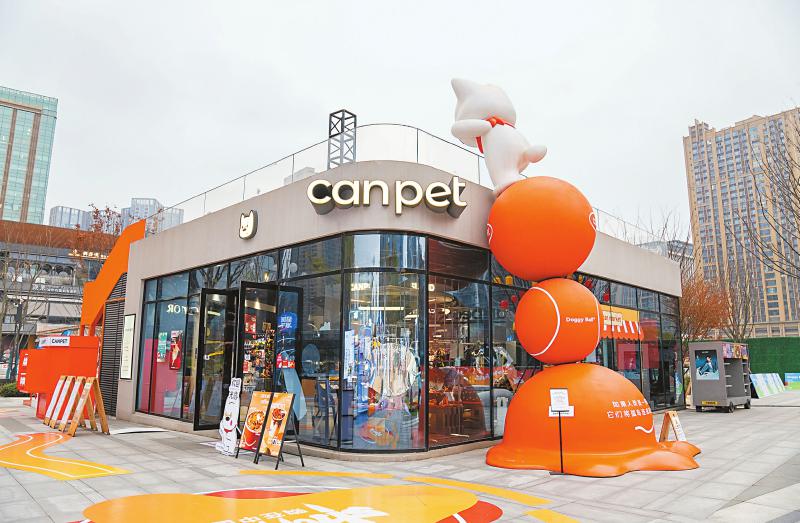
Core Viewpoint - Sichuan Province aims to transform its service industry from "scale-leading" to "quality and efficiency-leading" through the implementation of a new policy framework that focuses on innovation and structural upgrades in various service sectors [2][3] Group 1: Policy Objectives - By 2030, the proportion of the value added by the productive service industry to the total service industry value added is targeted to reach approximately 45% [3] - The retail sales of services are expected to account for about 45% of total consumption, establishing Sichuan as an international consumption destination [3] - The goal is to achieve a service industry value added of 5 trillion yuan, accelerating the construction of a strong service economy in the province [3] Group 2: Key Areas of Focus - The policy outlines three main areas: strengthening the productive service industry, upgrading the lifestyle service industry, and enhancing the supporting service industry [3] - The productive service industry will focus on eight sectors, including technology services and data information services, while the lifestyle service industry will target nine sectors such as integrated dining and experiential travel services [3] - The supporting service industry will improve quality and expand capacity in three dimensions: direct financing, modern logistics, and platform economy [3] Group 3: Innovation and New Business Models - The policy emphasizes innovation as a core driving force, promoting new business models and applications in the service industry [3] - New initiatives include the introduction of "computing power vouchers," "scene vouchers," and "model vouchers" to stimulate the AI industry and support small and medium-sized enterprises [3] - The policy also incorporates emerging trends such as "millet economy" and "pet economy," encouraging the development of related services and products [3] Group 4: Integrated Support System - A comprehensive policy support system is established to cover various aspects such as scene creation, entity cultivation, brand building, and regulatory openness [3] - The policy includes a tiered and diversified reward system to incentivize different types of service industry entities, from large enterprises to small businesses [3] - Specific implementation details and annual work lists will be developed to ensure effective execution of the policy and avoid obstacles in implementation [3]
龙腾光电(688055.SH)业绩快报:2025年净亏损2.08亿元
Ge Long Hui A P P· 2026-02-27 13:57
Core Viewpoint - The company, Longteng Optoelectronics, reported a challenging performance in 2025 due to a complex global trade environment and intensified competition in the small-sized display sector, leading to a significant decline in revenue and net profit [1][2] Financial Performance - The total revenue for the company was 2.499 billion yuan, a decrease of 26.79% compared to the same period last year [1] - The net profit attributable to the parent company was -208 million yuan, down 9.40% year-on-year [1] - The net profit attributable to the parent company, excluding non-recurring gains and losses, was -211 million yuan, showing an improvement of 14.61% compared to the previous year [1] - As of December 31, 2025, total assets amounted to 6.712 billion yuan, an increase of 2.00% from the beginning of the reporting period [1] - The equity attributable to the parent company was 4.080 billion yuan, a decrease of 4.86% from the beginning of the reporting period [1] Strategic Initiatives - The company is focusing on strategic upgrades and refined management to adapt to the expanding market for emerging display applications such as smart terminals, smart cockpits, and virtual reality [2] - There is an emphasis on technological innovation and increased investment in green and low-carbon initiatives, health-focused products, electronic paper, smart cockpits, and AI display sectors [2] - The company aims to broaden its business development space while enhancing product value and quality to achieve sustainable high-quality growth [2]