
文化创新

Search documents
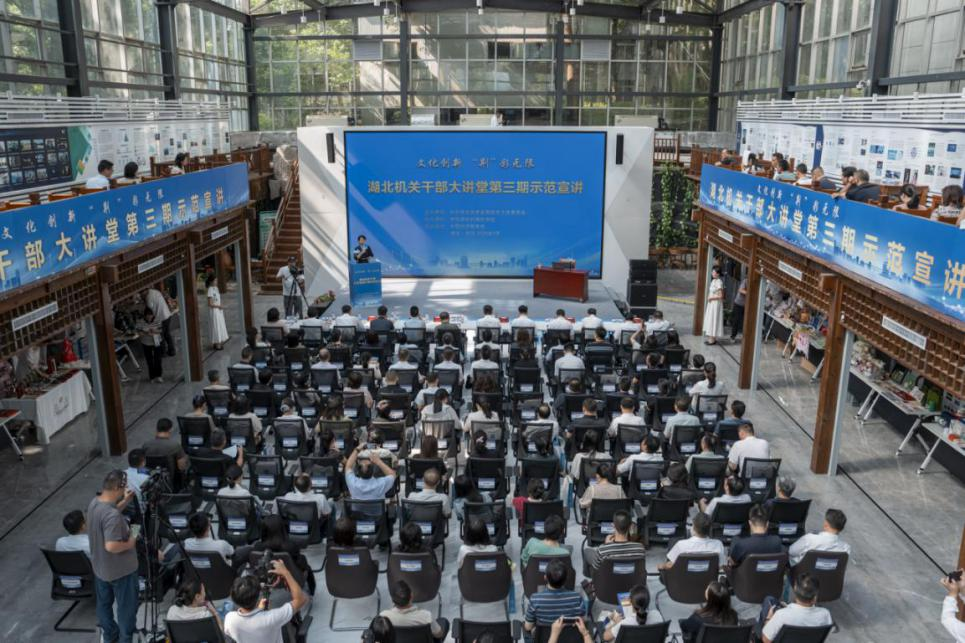
湖北机关干部大讲堂第三期开讲 15家文旅企业现场秀创新
Zhong Guo Jin Rong Xin Xi Wang· 2025-07-17 10:56
Group 1 - The event "Cultural Innovation 'Jing' Color Infinite" was held in Wuhan, integrating thematic lectures with cultural tourism enterprise innovation showcases, featuring 15 representative cultural tourism enterprises from Hubei [1][3] - The event attracted over 150 participants, including provincial party members and enterprise representatives, providing an immersive experience of Hubei's cultural tourism innovations [1][3] - The keynote speaker, Fan Zhou, discussed the theoretical and practical aspects of cultural innovation and proposed six development paths for Hubei's high-quality cultural tourism development during the 14th Five-Year Plan [1][3] Group 2 - Hubei Cultural Tourism Group showcased advanced technologies such as VR glasses and AI photography machines, highlighting its diverse business layout aimed at becoming a leading cultural tourism enterprise [5] - Wuhan Dashi Smart Technology Co., Ltd. presented its "AI + real scene 3D" technology for cultural heritage protection, particularly the immersive VR experience of Wudang Mountain [5] - Hubei Provincial Museum has achieved significant success in the cultural innovation sector, ranking high in sales among provincial museums, with popular IPs appealing to younger audiences [5] Group 3 - Wuhan Gifts is integrating resources through an innovative business model that combines brand revival, cultural creativity, and internet marketing to promote the transformation and sustainable development of Wuhan's cultural tourism industry [6] - Hubei Beiyue Cultural Creative Co., Ltd. has developed three sub-brands focusing on cultural tourism, education, and publishing, adhering to the principle of "innovation, creativity, and creation" [7] - The Wuhan Postal Company has created a cultural product system featuring stamps and postcards, blending traditional postal elements with modern design [7] Group 4 - Hubei Yueyou Cultural Creative Development Co., Ltd. provides comprehensive services for cultural brand creation and product development, with its product "Yellow Crane Ancient Rhythm Rotating Lamp" recognized as one of Wuhan's top ten souvenirs [8] - The event featured traditional crafts such as clay sculptures and paper-cutting, showcasing the rich cultural heritage of Hubei and attracting international interest [9][10] - China International Travel Service (Hubei) is promoting new travel routes, aiming to establish a new development pattern of "provincial micro-circulation + international macro-circulation" in Hubei's cultural tourism sector [12]

汕尾善美书院:文化传承与创新并重的综合性文化空间
Nan Fang Nong Cun Bao· 2025-07-15 04:02
Core Viewpoint - The article highlights the establishment and significance of Shanwei Shanmei Academy as a comprehensive cultural space that emphasizes both cultural heritage and innovation, aiming to serve various community needs and promote cultural exchange [1][4][11]. Group 1: Location and Structure - Shanmei Academy is located in Haicheng Town, Hai Feng County, Shanwei City, Guangdong Province, adjacent to the historical site of Hai Feng Red Palace [2]. - The main structure is a Qing Dynasty building, Liu's Family School, which is a municipal cultural heritage site, showcasing a rich cultural background with its "Nine Packages and Five" layout [3][7]. Group 2: Cultural Mission and Activities - Since its opening in January 2025, Shanmei Academy has adhered to a multi-faceted cultural education philosophy, integrating historical exhibitions, intangible cultural heritage transmission, and cultural activities [4][5]. - The academy has hosted 33 public welfare activities, including traditional cultural experiences and red gene inheritance, which have been well-received by the community [21][24]. Group 3: Facilities and Resources - The total area of the academy exceeds 1,000 square meters, housing a collection of 10,622 books related to political affairs, arts and crafts, history, and Lingnan culture, which are shared with the local library to enhance resource utilization [9][10]. - Facilities include reading areas, exhibition spaces, lecture halls, and leisure management zones, designed to foster educational training, research exchange, and cultural services [11][19]. Group 4: Future Plans - The academy plans to improve organizational management, strengthen communication with relevant departments, and seek more policy support and resources [25][26]. - There are intentions to introduce third-party companies to integrate with the 4A-level scenic area of Red Palace, aiming to create a comprehensive cultural entity that enhances visitor engagement and economic conversion [26][27].

沛华集团王沛之的品牌重塑之道:长期主义视角下的白酒行业价值投资
Sou Hu Cai Jing· 2025-07-07 02:10
Group 1 - The core theme of the 2025 Yabuli China Entrepreneurs Forum is "Embracing AI: Openness and Rationality," focusing on innovation and breakthroughs in China's consumption sector in the AI era [1] - Wang Peizhi, General Manager of Peihua Group, emphasizes the importance of long-term value investment and cultural innovation in reshaping traditional brands, using the liquor industry as a case study [3][5] Group 2 - The liquor industry is currently in a downturn, but there are hidden opportunities for acquiring quality brands during this low cycle, as high-quality liquor has financial attributes that appreciate over time [3] - Peihua Group has completed the acquisition of three time-honored liquor factories in 2023, all of which have a history of over several decades and possess strong cultural narratives and product differentiation [3] - Wang Peizhi proposes a new positioning of liquor as the "best pairing wine for Chinese cuisine," breaking the traditional perception of liquor being solely for social occasions [3] Group 3 - The company focuses on mid-to-high-end pricing strategies, avoiding low-end market competition, and aims to create a competitive barrier through "extreme quality + high cost performance" [4] - Plans for international expansion include opening a pop-up store in New York's Times Square, modeled after "Chinese version of Vodka," targeting overseas Chinese and foreign consumers who accept low-alcohol beverages [4] - Wang Peizhi believes that today's young people will appreciate the taste of aged liquor in 20 years, reflecting a deep understanding of consumer cycles [4] Group 4 - The transformation of traditional industries should not aim to overturn history but rather activate cultural genes with new perspectives, allowing time to become the best ally for brands [5] - Peihua Group's corporate values emphasize a commitment to the liquor industry, long-termism, quality foundation, customer orientation, and co-creation and sharing [5]

从红色基因到诗画乡村!察右前旗北疆文化的时代绽放
Nei Meng Gu Ri Bao· 2025-06-25 15:18
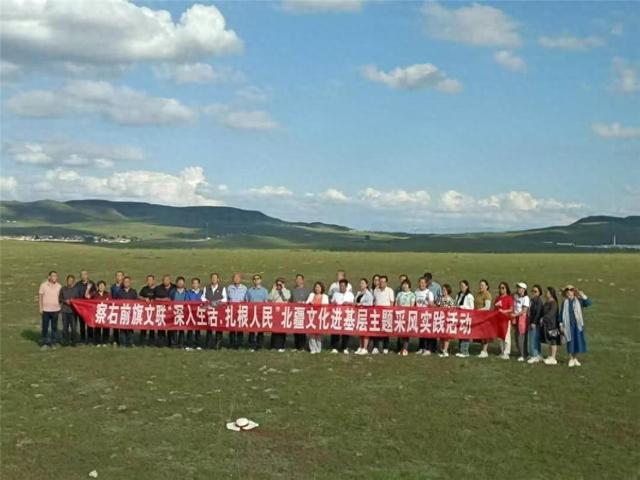
Core Viewpoint - The article highlights the cultural richness and historical significance of Chayouqi, Inner Mongolia, emphasizing the efforts in preserving and innovating local culture, particularly red culture and poetry, to enhance community spirit and tourism development [1][3][4]. Group 1: Cultural Heritage and Red Culture - Chayouqi is recognized as an important birthplace of northern frontier culture, with a deep historical and cultural background that showcases unique humanistic charm and vitality [1]. - The region has a significant red revolutionary history, with notable figures like Ji Songling contributing to the anti-Japanese efforts during the war, embodying the patriotic spirit of the local people [1][3]. - Recent initiatives focus on protecting and transmitting red culture through the collection and compilation of revolutionary historical materials, enriching the cultural narrative of the area [3][4]. Group 2: Cultural Innovation and Community Engagement - Since the 18th National Congress, there has been a strong emphasis on cultural development, leading to the establishment of a poetry association in 2016, which has engaged over 40 poetry enthusiasts in community activities [4][6]. - The construction of a 100-meter poetry culture wall in Nancun village aims to expand the influence of poetry culture, integrating various art forms and enhancing local cultural tourism [6]. Group 3: Integration of Culture and Tourism - The Inner Mongolia Jingxi Agricultural Technology Development Company is developing a cultural tourism landmark that combines agriculture, tourism, and entertainment, showcasing the region's cultural heritage [8]. - The Jingxi Bull Village is set to launch a summer carnival project in 2024, blending traditional Mongolian festivities with modern urban cultural elements, attracting a diverse audience [8][9]. - The region aims to deepen the integration of culture and tourism, continuously innovating cultural development models to draw more visitors and showcase the unique charm of Chayouqi [9].
文化产业与旅游经济发展的双向促进
Xin Hua Ri Bao· 2025-06-18 21:09
Core Insights - The integration of culture and tourism is becoming increasingly important as the economy develops and living standards rise, transforming tourism into a pursuit of cultural experiences and spiritual enjoyment [1] - The dual promotion of cultural industries and tourism economies can inject vitality into related sectors such as transportation, dining, and accommodation, while enhancing cultural identity and pride among citizens [1] Group 1: Local Resource Exploration - Local cultural and tourism authorities should systematically explore rich historical and cultural resources, exemplified by Shanxi Province's efforts to protect and restore historical sites while preserving traditional architectural styles [2] - Engaging visitors through local customs and traditional crafts enhances their understanding of regional culture, as seen in the diverse cultural activities of the Dai ethnic group in Yunnan [2] Group 2: Red Culture Resources - Red culture resources embody significant historical and revolutionary spirit, with local tourism authorities focusing on the protection and restoration of sites like Jinggangshan to ensure historical authenticity [3] - Cross-regional tourism resource integration can leverage the unique advantages of different areas, as demonstrated by the collaboration among Beijing, Tianjin, and Hebei to create a rich tourism service system [3] Group 3: Cultural Innovation - A new model of cultural tourism emphasizes the equal relationship between culture and tourism, urging industry professionals to innovate and incorporate local cultural elements into tourism experiences [4] - Promoting traditional culture through various media and designing specialized tourism routes can deepen the integration of culture and tourism [4] Group 4: Incorporating Modern Elements - Local cultural and tourism authorities should embrace modern technologies like AI, IoT, and big data to support the development of the cultural tourism industry [5] - Examples include the use of immersive technologies in performances and virtual reality experiences to enhance visitor engagement and enjoyment [5] Group 5: Night Economy - The night economy represents a new form of cultural tourism development, where local authorities can integrate cultural elements to create unique cultural brands, as seen in Xi'an's "Daming Unnight City" [6] Group 6: New Business Models - Government policies should support the attraction of talent in the cultural tourism sector through housing subsidies and talent exchange platforms [7] - Educational institutions are encouraged to develop interdisciplinary curricula and collaborate with industry to enhance practical skills and international perspectives for students [7]
二〇二五年文化和自然遗产日南京主会场活动奏响传承序曲 以创新点亮文化发展新动能
Nan Jing Ri Bao· 2025-06-17 03:03
Group 1 - The main event for the 2025 Cultural and Natural Heritage Day in Nanjing was successfully held from June 13 to 15, attracting nearly 50,000 participants and generating over 300,000 yuan in consumption related to intangible cultural heritage and its derivatives [1] - The event featured 17 activities, combining cultural performances, hands-on experiences, and city-wide engagement, establishing a multidimensional platform for dialogue between traditional culture and modern life [1] - The activities included performances of local cultural heritage such as "Jasmine Flower" and various folk songs, transforming historical depth into immersive audio-visual experiences [1] Group 2 - Concurrently, the event included workshops for seniors and youth to learn about traditional crafts, enhancing the appeal of intangible cultural heritage [2] - Archaeological exhibitions showcased significant discoveries, allowing citizens to engage with the history of the city through artifacts and archaeological findings [2] - A city-wide cultural linkage was created through various activities, promoting the integration of traditional skills with modern innovations [2] Group 3 - Nanjing Metro launched a month-long promotional campaign featuring themed posters and installations, reaching an average daily traffic of over 3 million, thereby enhancing public awareness of cultural heritage [3] - The event was organized by multiple governmental and cultural institutions, highlighting a collaborative effort in promoting cultural heritage [3] - Support from local banks and transportation authorities further emphasized the community's commitment to cultural preservation and promotion [3]
人工智能赋能文化创新(人文茶座)
Ren Min Ri Bao· 2025-06-14 21:42
Core Viewpoint - The integration of artificial intelligence (AI) into cultural industries is transforming creative processes and expanding cultural applications, enhancing efficiency and accessibility for creators and consumers alike [1][2][4]. Group 1: Impact on Cultural Creation - AI is significantly changing the way cultural content is created, with applications in music, painting, writing, and film, leading to increased efficiency and lowered barriers for entry into creative fields [1][2]. - The emergence of a new era of mass culture is facilitated by AI, allowing ordinary individuals to engage in cultural creativity [1][2]. Group 2: Expansion of Cultural Application Scenarios - AI technologies, such as VR and XR, are creating immersive experiences that enhance cultural consumption and innovation, allowing users to interact with cultural artifacts in novel ways [2]. - AI is also aiding in the preservation and interpretation of historical artifacts, such as oracle bones and rock carvings, thus expanding cultural engagement [2]. Group 3: Overcoming Cultural Communication Barriers - Language barriers that previously hindered the global dissemination of Chinese culture are being addressed through advancements in AI translation and voice recognition technologies [2]. - AI-driven content creation and translation are becoming essential tools for the internationalization of Chinese cultural products, such as online literature and games [2]. Group 4: The Role of Human Creativity - While AI serves as a powerful tool for assisting in creative processes, it cannot replace the human element, which is crucial for true creativity and emotional depth in artistic expression [3]. - The essence of life and human experience, which fuels cultural creation, cannot be replicated by AI, as it relies on data-driven simulations rather than genuine human experience [3]. Group 5: Attitude Towards AI in Culture - The approach towards AI should be one of active application without complete reliance, recognizing that technological advancements can drive cultural innovation while still valuing human creativity [4].
记者手记丨让中华文明在交融互鉴中更加焕发光彩
Xin Hua Wang· 2025-06-08 23:12
Core Viewpoint - The article emphasizes the importance of cultural exchange and innovation in revitalizing Chinese civilization, particularly through the lens of ceramic art in Jingdezhen, which has become a hub for international artists and cultural collaboration [1][2][3]. Group 1: Cultural Exchange and Talent Attraction - Jingdezhen has seen a significant influx of foreign talent, with a peak of 5,000 international artists, known as "yangjingpiao," drawn to the city for its rich ceramic culture [2]. - The local government has established service stations to support foreign talents, providing policy consultation and community activities, which has led to recognition for foreign experts in China [2][3]. Group 2: Cultural Innovation and Economic Development - The article highlights initiatives such as the establishment of talent service bureaus and innovation platforms aimed at attracting both domestic and international talents to contribute to the contemporary expression of ceramic culture [3][5]. - The revitalization of ancient cities in China is presented as a model for enhancing local quality of life while preserving historical heritage, transforming these areas into vibrant cultural hubs [3][5]. Group 3: Global Recognition of Chinese Culture - Chinese cultural products, such as the game "Black Myth: Wukong" and the animated film "Nezha," have gained international acclaim, showcasing the global appeal of Chinese traditional culture [4]. - The expansion of Chinese tea brands in Malaysia illustrates the successful integration of traditional culture with modern consumer preferences, resonating with local populations [4]. Group 4: Philosophical Perspective on Civilization - The article references the idea of viewing China as a civilization entity rather than merely a political one, suggesting that this perspective can foster a more profound understanding and appreciation of Chinese culture globally [4][5].
警惕文化数字化过程中的“数字橡皮擦”现象
3 6 Ke· 2025-06-06 02:08
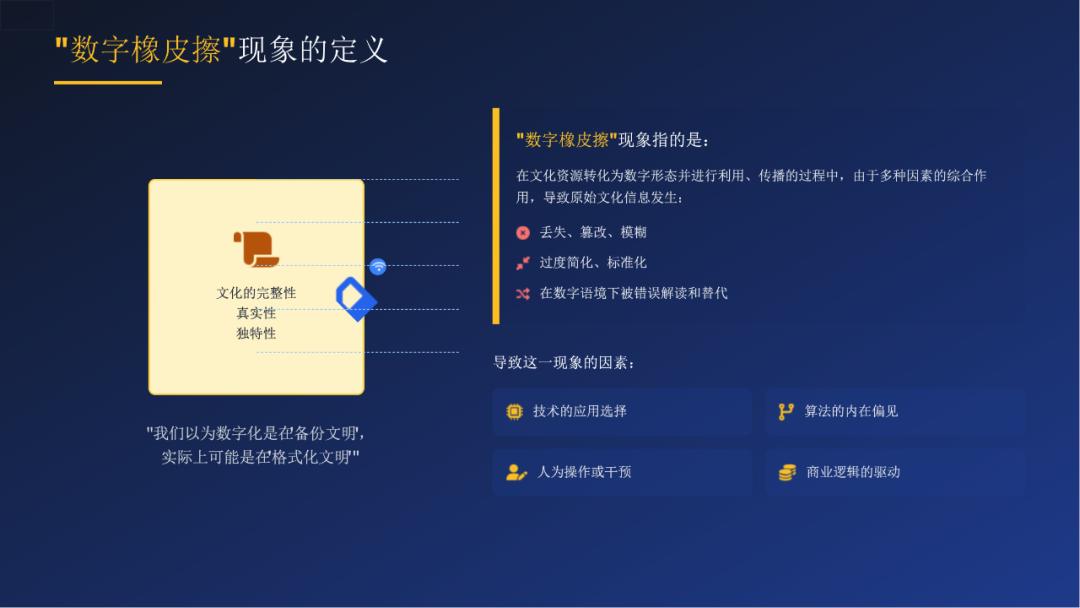
Group 1 - The "digital eraser" phenomenon refers to the loss, alteration, or oversimplification of original cultural information during the digitization process, which poses a threat to the integrity and authenticity of culture [1][2][5] - The digitalization of culture should drive innovation, but if it becomes mere "formal replication," it can lead to a loss of foundational creativity [2][12] - The phenomenon can result in information distortion and loss, where cultural data may be modified or fabricated, leading to a misrepresentation of cultural elements [5][8][10] Group 2 - The use of AI in cultural restoration can lead to aesthetic homogenization, where unique historical values and meanings of artifacts are lost in pursuit of visual perfection [7][11] - Cultural homogenization occurs as digital platforms favor popular content, marginalizing local and diverse cultural expressions [11][12] - The digitalization process may neglect traditional methods of cultural transmission, leading to a disconnection from cultural roots and a decline in recognition among younger generations [12][13] Group 3 - The underlying logic of the "digital eraser" phenomenon includes a focus on efficiency over cultural depth, resulting in a superficial treatment of cultural resources [16][18] - Technical limitations and a lack of standardized practices can lead to data loss and inaccuracies in cultural representation [19][20] - Profit-driven motives may lead companies to prioritize easily digitizable cultural projects, neglecting those with significant cultural value [21][23] Group 4 - Algorithmic biases and data monopolies can suppress cultural diversity by favoring mainstream content, effectively erasing minority cultural expressions [24][26] - The need for a collaborative mechanism that integrates technology, humanities, and institutional frameworks is essential to ensure that cultural digitization respects cultural values while meeting technical standards [29][31]
艺术为舟 向新而行
Ren Min Ri Bao· 2025-06-02 22:02
Group 1 - The exhibition "Its Fate is New - Guangdong Art Century Exhibition" showcases over 160 classic works from the Lingnan School, highlighting the historical development of Guangdong art and the cultural connection between Guangdong and Hong Kong [1] - The exhibition aims to serve as a window for the world to see the modern transformation of Chinese civilization, a bridge for cultural identity between the two regions, and a call for a new generation of artists to continue the artistic legacy in the Greater Bay Area [1] - The prominent feature of modern Guangdong art is its innovation, with the Lingnan School advocating for a blend of Eastern and Western styles and ancient and modern influences [1] Group 2 - The exhibition includes a section on the "Dagger and Spear - New Woodcut Movement and Comics," reflecting on the wartime art and its significance in patriotic education [2] - Historical materials displayed in the exhibition emphasize the deep-rooted relationship between the mainland and Hong Kong, showcasing the evolution of Guangdong art from 1916 to 2024 [2] - The exhibition design incorporates both cultural relics and contemporary art, featuring works from young artists from both regions, thus aligning with popular culture [2] Group 3 - The ongoing exchanges between artists from Guangdong and Hong Kong are fostering an open and innovative cultural landscape in the Greater Bay Area, with the exhibition providing new opportunities for cultural and artistic outreach [3] - The establishment of regular cooperation mechanisms, such as the "Greater Bay Area Artists Alliance," is enhancing the cultural ties between Guangdong and Hong Kong [3] Group 4 - The collaboration through art is seen as a means to explore and advance cultural prosperity and development in the region [4]