汽车电动化转型

Search documents
【环球财经】英国8月份电动汽车市场份额升至26.5%
Xin Hua Cai Jing· 2025-09-06 01:34
Core Insights - The share of electric vehicle registrations in the UK has steadily increased in August due to government infrastructure investments and a wider selection of new models available [1] - The number of new electric vehicle registrations in August reached 21,969, representing a year-on-year increase of 14.9% [1] - Electric vehicles now account for 26.5% of all new car registrations in August, up nearly 4 percentage points compared to the same month last year [1] - The overall UK car market is experiencing a contraction, with new car registrations down 2.0% year-on-year [1] - The UK government has reintroduced electric vehicle purchase subsidies, offering up to £3,750 for eligible electric cars starting from July [1] - Mike Hawes, CEO of the Society of Motor Manufacturers and Traders (SMMT), noted that August was the best month for electric vehicle market share in the UK [1] - The availability of a diverse range of electric vehicle models and the reintroduction of purchase subsidies are expected to encourage consumers to switch to electric vehicles, contributing to economic growth and decarbonization efforts in the UK [1]
瑞银:Robotaxi预计2030年代全面普及 催生激光雷达和自动驾驶芯片千亿元市场规模
Zhong Guo Qi Che Bao Wang· 2025-09-05 04:40
Group 1 - Joint venture automakers in China have seen a significant decline in market share, dropping from 60% in 2020 to an expected 30% by 2025, leading to strategies of scaling down and cost reduction [1] - The global automotive industry's innovation and trends are rapidly shifting towards China, as evidenced by the increasing scale of Chinese auto shows compared to traditional ones in Europe and North America [1] - China currently accounts for over 30% of global automotive production and sales, with domestic brands holding over 20% market share and over 60% in the electric vehicle sector [2] Group 2 - UBS identifies three core opportunities for the Chinese automotive industry: the domestic market share is expected to rise from 70% to 90% by 2030, indicating strong competitive growth for local brands [3] - The acceleration of brand premiumization is evident as more domestic brands target the high-end market, challenging the dominance of Western automakers [3] - The export market is expanding, particularly through the Belt and Road Initiative, with annual growth of 1 million units, facilitating a transition to electric vehicles in developing countries [3] Group 3 - The Robotaxi market is projected to have significant potential, with estimates suggesting a market size of $8 billion in first-tier cities and $183 billion nationwide by the 2030s [4] - The key driver for Robotaxi development is cost reduction, with expectations that costs will fall below 300,000 RMB by the second half of 2025, enabling profitability for operators [4] - By 2029-2030, the market for lidar and autonomous driving chips is expected to reach around 50 billion RMB, with Chinese companies leading in product development and cost optimization [5][6] Group 4 - The Greater Bay Area has seen a shift in market dynamics, with local brands like BYD dominating the Hong Kong market, where electric vehicle penetration has reached 70% [6]
全新伊兰特6.98万元 北京现代“真·质好车”亮相2025齐鲁秋季车展
Qi Lu Wan Bao· 2025-09-05 03:19
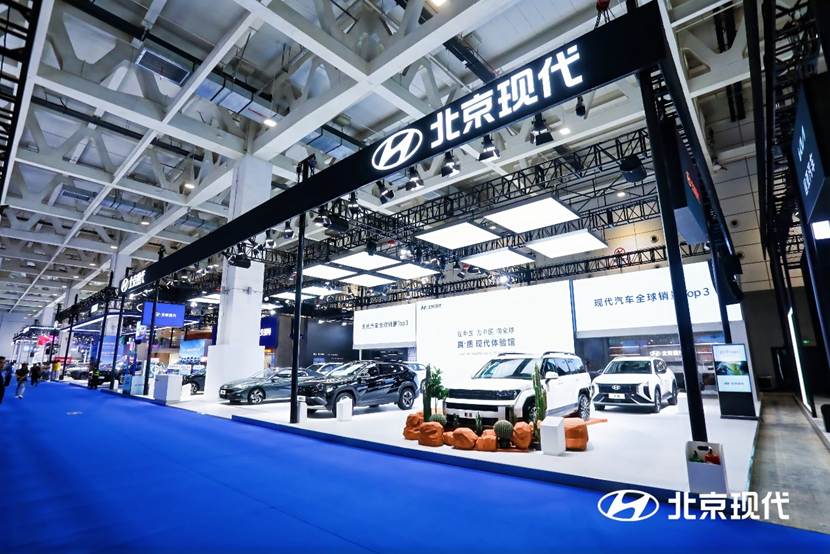
Core Viewpoint - The 2025 Qilu Autumn Auto Show showcases over a hundred automotive brands, with Beijing Hyundai presenting its popular models and promotional activities to attract consumers during the peak buying season [1][2]. Group 1: Event Overview - The 2025 Qilu Autumn Auto Show is held at the Shandong International Convention and Exhibition Center, featuring a luxurious experience for car enthusiasts and buyers [1]. - Beijing Hyundai highlights several new models including the fifth-generation Santa Fe, all-new Tucson L, and the eleventh-generation Sonata, among others [1][2]. Group 2: Promotional Activities - Beijing Hyundai offers a "factory price direct sales" promotion during the auto show, along with various trade-in subsidies to enhance consumer purchasing power [2][4]. - The prices for key models are as follows: fifth-generation Santa Fe at 173,800 yuan, all-new Tucson L at 119,800 yuan, and the eleventh-generation Sonata at 115,800 yuan [4]. Group 3: Product Features - The all-new Tucson L is designed for mature users, featuring a 1.5 TCVVD engine and an 8AT transmission, emphasizing spaciousness, aesthetics, and high configuration [6]. - The Kustu MPV model is recognized for its family-friendly design, achieving a 61.8% industry-leading axle ratio, making it a top choice for family travel [8]. - The all-new Elantra, a global best-seller, caters to younger consumers with its stylish design and sporty features, while the eleventh-generation Sonata is built on the i-GMP platform, focusing on quality and performance [10]. Group 4: Safety and Quality - Beijing Hyundai emphasizes safety and quality at the auto show, showcasing a dissected fifth-generation Santa Fe to highlight its structural integrity and material quality [11][13]. - The fifth-generation Santa Fe utilizes advanced materials, with 75% high-strength steel and 53.5% ultra-high-strength steel, enhancing safety and comfort for users [13]. Group 5: Market Performance - In August, Beijing Hyundai's sales of fuel vehicles reached 14,971 units, marking a 15% year-on-year increase, while the company continues to advance its electrification strategy with the upcoming launch of the EO (ELEXIO) electric SUV [14].

新平台首款电动车将亮相慕尼黑,宝马“赌上全部身家”
Guan Cha Zhe Wang· 2025-09-03 09:24
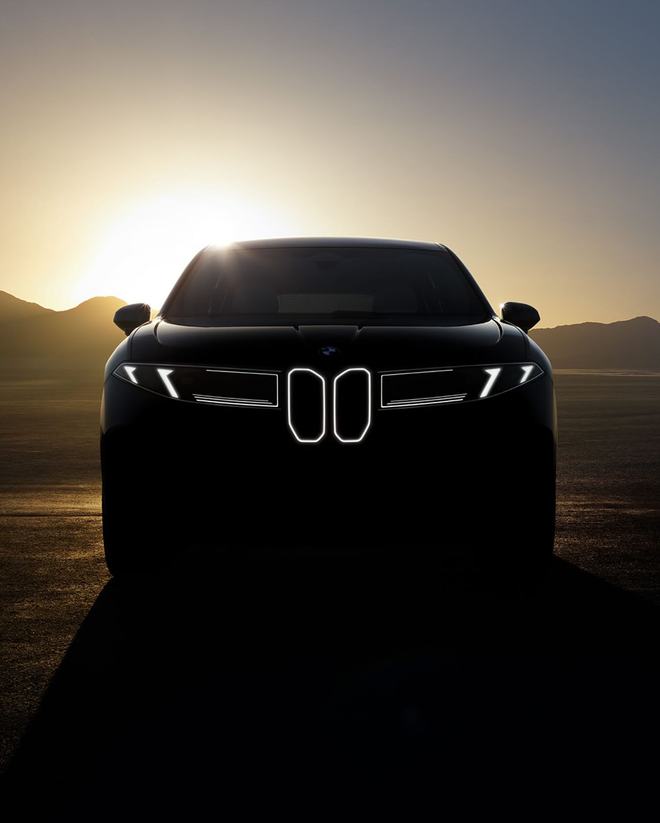
Core Insights - The all-new BMW iX3 will debut at the 2025 Munich Auto Show, marking the first model developed on the Neue Klasse platform, which was introduced four years ago [1][3] - BMW CEO Oliver Zipse stated that the iX3 will set a benchmark in the industry, showcasing significant advancements in all relevant technology areas [3] Neue Klasse Platform - The Neue Klasse platform, conceptualized in 2021, supports electric, fuel, and hybrid vehicles, and is designed for various models including sedans and SUVs [4] - Key features of the platform include a 20% increase in energy density, a 30% improvement in range (up to 900 km), a 30% faster charging speed, and a 50% reduction in production costs [4] - The platform utilizes an 800V architecture, allowing for 300 km of range to be charged in just 10 minutes [4] - It incorporates a high-performance computing system referred to as the "super brain," which manages core user functions such as entertainment, autonomous driving, and vehicle dynamics [4] Production and Market Strategy - The first production model based on the Neue Klasse platform is set to be manufactured in Hungary in 2025, with production in Shenyang, China, starting in 2026 [6] - The new iX3 will maintain the design language of the Vision Neue Klasse X concept, featuring dimensions of 4780 mm in length, 1895 mm in width, and 1635 mm in height, with a drag coefficient of 0.25 Cd [6] Technological Advancements - The iX3 will feature a panoramic iDrive display with a near-field projection technology that creates a nearly 40-inch, 4K resolution image on the windshield [8] - It will be powered by a sixth-generation powertrain, achieving a WLTP range of 800 km and providing over 350 km of range in just 10 minutes of charging [8] - The vehicle will utilize large cylindrical batteries co-developed with CATL and EVE Energy, enhancing energy density and charging speed [8] Electric Vehicle Sales and Market Position - BMW has achieved a global cumulative sales milestone of over 3 million electrified vehicles, with pure electric models exceeding 1.5 million [9] - In the first half of the year, electrified models accounted for over 25% of BMW's total global sales, outperforming competitors like Mercedes and Volkswagen in Germany [9] - The European market has seen rapid growth, with electric vehicles making up over 40% of BMW's sales, and a notable 18.3% year-on-year increase in South Korea [9] Investment in Technology - BMW has invested significantly in smart and electric technologies, including a €300 million investment in a future mobility development center in Sokolov, Czech Republic [10] - The company is advancing AI applications across various sectors, with hundreds of cutting-edge AI use cases already in place [10] - Since 2019, BMW has established centers for battery cell technology, manufacturing, and recycling, covering the entire battery lifecycle [10] Future Outlook - Analyst Stephen Reitman suggests that the Neue Klasse platform could represent a "giant leap" for BMW, potentially transforming the automotive industry and perceptions of Western automakers' software capabilities [11] - However, BMW faces significant challenges in regaining market dominance in the world's largest automotive market, particularly against leading Chinese electric vehicle manufacturers [11]
一汽奥迪换帅:郭永锋接棒李凤刚 直面市场挑战
Zhong Guo Jing Ying Bao· 2025-09-02 06:57
Core Viewpoint - The appointment of Guo Yongfeng as the new Executive Vice President of FAW Audi Sales Co., effective September 1, 2025, is part of a strategic shift to address the challenges of sales and profit growth faced by the company [1][3]. Group 1: Leadership Transition - Guo Yongfeng has extensive experience in management, marketing, and operations within FAW-Volkswagen and has previously held various leadership roles [2]. - Li Fenggang, the outgoing executive, will transition to a new role as the Party Secretary and General Manager of FAW Fuhua Ecological Co., Ltd. [1][2]. Group 2: Current Challenges - FAW Audi is experiencing pressure on sales and profit growth, with a reported vehicle sales of 135,800 units in August, a year-on-year increase of 4.2%, contributing 45,800 units from FAW Audi [3]. - The company faces a decline in cumulative sales for the first half of 2025, with over 90% of its total sales of 611,100 units in 2024 relying on traditional fuel vehicles, while the penetration rate of new energy vehicles in China reached 47% [3]. Group 3: Strategic Initiatives - FAW Audi is accelerating its electric vehicle offerings and has launched the Q6L e-tron and A5L models, which incorporate Huawei's advanced driving technology [3][4]. - The company is implementing a new "fusion direct sales" model to enhance customer experience by integrating online and offline sales processes, addressing issues such as price negotiation and information asymmetry [5].
中国品牌霸榜,特斯拉危险了
Zhong Guo Qi Che Bao Wang· 2025-08-29 09:49
Core Insights - Global electric vehicle sales increased by 22% year-on-year in June, surpassing 1.8 million units, with pure electric vehicle sales growing by 24% to over 1.1 million units [1] - The global electric vehicle market share reached 28% in June, up from 24% in the first half of the year [1] - BYD and Tesla continue to lead the market, but the competitive landscape is shifting with brands like Geely and new entrants like Leap Motor and Xiaomi gaining traction [1] Market Overview - In China, automotive production and sales exceeded 15.6 million units in the first half of 2025, marking a year-on-year growth of 12.5% and 11.4% respectively [3] - New energy vehicles (NEVs) accounted for 44.3% of total sales, with production and sales of NEVs reaching 6.968 million and 6.937 million units, reflecting growth rates of 41.4% and 40.3% [3] - The export of NEVs saw a significant increase, with a 75.2% year-on-year growth, contributing to the overall automotive export growth of 10.4% [3][4] European Market Dynamics - In Europe, electric vehicle sales rebounded, with pure electric vehicle sales reaching 1.19 million units in the first half of the year, a 24.9% increase [5] - The market share for pure electric vehicles in Europe reached 17.47%, while plug-in hybrid vehicles saw a 21.2% increase in sales [5] - The decline in gasoline and diesel vehicle sales has been significant, with diesel vehicle market share dropping below 10% [6] Brand Performance - BYD maintained its position as the top-selling brand globally, with nearly 2 million units sold in the first half of the year, while Tesla's sales fell to approximately 720,000 units [15][16] - Geely and Wuling also performed well, with Geely's Star Wish and Panda Mini contributing to its rise to third place [16] - Chinese brands accounted for 17 out of the top 20 electric vehicle models sold globally, with BYD having 10 models on the list [12][14] U.S. Market Insights - In the U.S., electric vehicle sales reached a record high, with pure electric vehicle sales growing by 1.5% to 607,000 units [9] - Anticipation of the expiration of federal tax credits has led to a surge in sales, with July seeing a 20% year-on-year increase [9][10] - Tesla remains the market leader in the U.S., but its market share has declined from 50.1% to 44.7% [10]


大众汽车携手中国一汽推进捷达电动化转型 加速布局入门级智能电动出行市场
Zheng Quan Ri Bao Wang· 2025-08-29 01:46
Group 1 - The core viewpoint of the news is that Volkswagen Group, in collaboration with China FAW Group and Chengdu Economic and Technological Development Zone, has signed a cooperation agreement to launch four new energy vehicles under the Jetta brand by 2028, targeting the entry-level market [1][2] - The first model is expected to be launched in 2026, featuring competitive electric, digital, and advanced driver-assistance systems (ADAS) while maintaining strong price competitiveness [2] - Volkswagen Group plans to introduce approximately 50 new energy vehicles in China by 2030, including around 30 pure electric models, marking its largest scale of new energy product push in China [2] Group 2 - Chengdu is recognized as a key automotive hub in Southwest China, with a strong new energy vehicle industry cluster, playing a significant role in the electrification transformation of China's automotive industry [3] - A new Jetta company will be established to integrate existing resources and attract local investment, enhancing regional industrial synergy and speeding up market response [3] - The goal for the new Jetta company is to create a trillion-yuan industry value chain by 2030, further deepening the brand's integration within the automotive ecosystem in Sichuan Province and solidifying its position as a leading enterprise in the region [3]
铃木投资80亿美元巨资“豪赌”这一市场,能否“赌”赢?
Zhong Guo Qi Che Bao Wang· 2025-08-28 03:29
Group 1 - Suzuki plans to invest 700 billion rupees (approximately 8 billion USD) in India over the next five to six years to increase production, launch new models, and strengthen market share [2][3] - The Maruti Suzuki plant in Gujarat aims for an annual production capacity of 1 million units and will serve as the global production center for its first electric vehicle, the e-Vitara, which will be exported to over 100 countries [2][3] - The Indian market is crucial for Suzuki, being its largest single market and a key hub for future electric vehicle production, marking a strategic shift towards electrification [3][4] Group 2 - The Indian government's "Make in India" initiative provides policy support for Suzuki's investment, and the company plans to localize about 80% of the battery value chain in collaboration with Toshiba and Denso [3][4] - Despite the ambitious plans, challenges such as a shortage of rare earth materials have already impacted e-Vitara's production, reducing output by nearly two-thirds in the first half of the year [4][6] - The competition in the Indian electric vehicle market is intense, with Tata holding over 68% market share, while Suzuki's electric vehicle sales remain significantly lower [7][8] Group 3 - Historically, Suzuki has faced ups and downs in the Indian market, having once held a market share of 47.7% but now facing declining shares due to increased competition and changing consumer preferences [5][6] - The shift in consumer demand towards mid-size SUVs has left Suzuki lagging, with only a 12% share in this segment, while the overall SUV sales in India are expected to exceed 40% in 2024 [6][8] - To regain market share, Suzuki plans to enhance its mid-size SUV lineup and potentially double its annual production capacity in India from 2 million to 4 million units [7][9] Group 4 - Understanding market demands and consumer preferences is critical for success in the Indian automotive market, where price, practicality, and economy are key factors for consumers [8][9] - Companies entering the Indian market should conduct thorough market research to develop products that meet local needs, focusing on affordability and reliability [8][9] - The experience of other automakers, such as Hyundai, in adapting to the Indian market through strategic acquisitions and local production systems serves as a valuable lesson for Suzuki [9]

过去一年,德国汽车业裁员逾5万人!
Zhong Guo Qi Che Bao Wang· 2025-08-28 02:15
Group 1 - The German automotive industry is facing severe challenges due to factors such as increased tariffs in the U.S., resulting in a significant reduction of approximately 51,500 jobs, which accounts for nearly 7% of total jobs in the sector [3][4] - As of June 30, the overall German industrial workforce has decreased by 114,000 jobs year-on-year, representing a 2.1% decline, with cumulative job losses since pre-pandemic levels reaching about 245,000, or 4.3% [4] - The automotive sector's revenue has declined for eight consecutive quarters, with a 1.6% drop in Q2, attributed to weak sales, intense competition from China, and high costs associated with the transition to electric vehicles [4] Group 2 - The U.S. tariffs have increased export costs for German car manufacturers, compressing profit margins, with Audi's after-tax profit down 37.5% and Porsche's operating profit plummeting 91% in Q2 [4] - The tariffs have also raised the prices of German cars in the U.S. market, weakening their competitiveness and leading to a decline in sales, particularly after the announcement of the tariff policy in March [4][5] - Despite a new agreement reducing tariffs by 15%, the increased consumer costs may further suppress demand for German vehicles [4] Group 3 - Major German automakers are implementing significant layoffs and cost-cutting measures, with Mercedes-Benz planning to encourage voluntary departures to save €5 billion by 2027, affecting up to 30,000 employees [8] - Volkswagen aims to cut over 35,000 jobs in Germany by 2030, while Bosch has announced multiple rounds of layoffs, including 7,000 positions in the automotive supply sector [8][9] - ZF Friedrichshafen plans to reduce up to 14,000 jobs in Germany by 2028, reflecting the broader trend of job cuts across the industry [9] Group 4 - The current crisis in the German automotive industry is not solely due to external shocks like U.S. tariffs but is also indicative of a structural crisis, as stated by German Chancellor Olaf Scholz [11] - The industry faces intensified competition, particularly from China's rapidly advancing electric vehicle sector, which has established a complete supply chain and is achieving cost-effective production [11][12] - German automakers are lagging in the transition to electric vehicles compared to U.S. and Chinese competitors, with companies like Porsche struggling to meet demand and shifting their battery production plans [11][12]

乘联分会:8月1-24日全国乘用车市场零售128.5万辆 同比增长3%
智通财经网· 2025-08-27 08:48
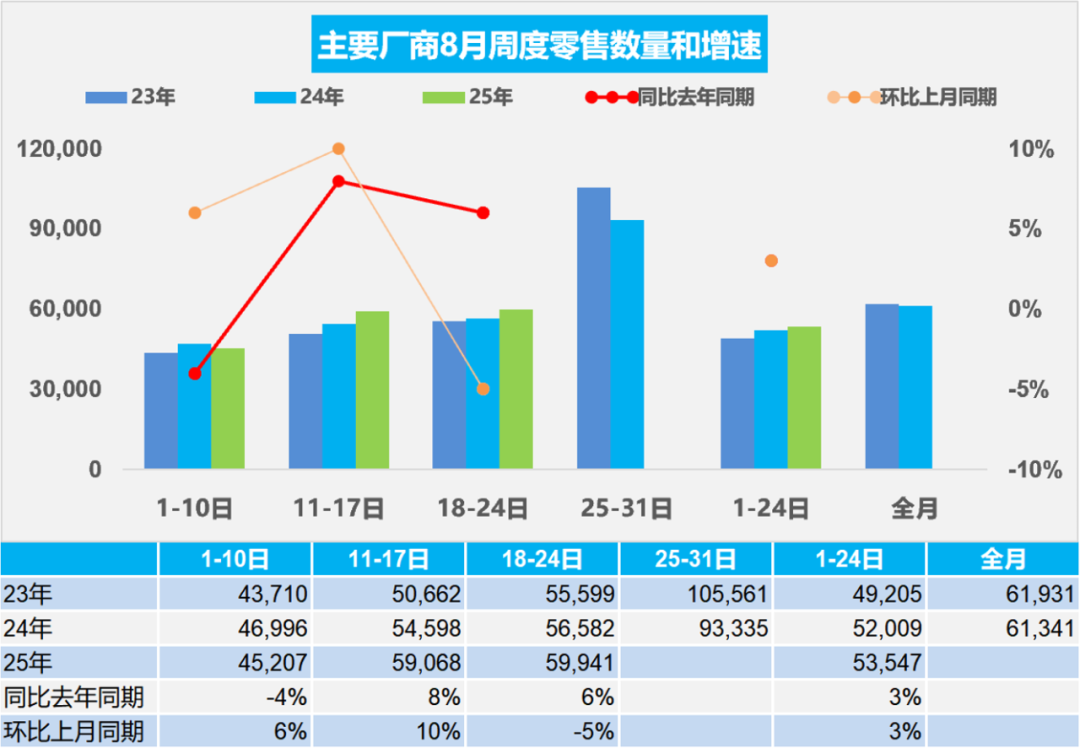
Core Insights - The retail sales of passenger cars in China from August 1 to 24 reached 1.285 million units, representing a year-on-year increase of 3% and a month-on-month increase of 3% [1][4] - Cumulative retail sales for the year have reached 14.031 million units, showing a year-on-year growth of 10% [1][4] - The wholesale of passenger cars during the same period was 1.341 million units, with a year-on-year increase of 12% and a month-on-month increase of 5% [1][9] Retail Market Performance - The average daily retail sales for the first three weeks of August were 45,000, 59,000, and 60,000 units respectively, with year-on-year changes of -4%, +8%, and +6% [3][4] - The retail penetration rate for new energy vehicles (NEVs) reached 56.6% during this period, with NEV retail sales totaling 727,000 units year-to-date, a 27% increase year-on-year [1][4] Wholesale Market Performance - The average daily wholesale for the first three weeks of August was 40,000, 63,000, and 71,000 units respectively, with year-on-year changes of +16%, +22%, and +2% [6][7][8] - Cumulative wholesale for the year stands at 16.866 million units, reflecting a year-on-year growth of 13% [1][9] Economic Context - China's economy grew by 5.3% in the first half of the year, easing pressures on local economic growth and supporting the automotive market [4] - Recent promotional policies and subsidies have been implemented to stimulate car sales, particularly in the context of the "trade-in" policy [4] Inventory and Production Trends - As of the end of July, the inventory of passenger cars was 3.29 million units, a decrease of 30,000 units from the previous month and a decrease of 40,000 units year-on-year [16] - The overall inventory pressure has decreased, with a sales-to-inventory ratio of 47 days, down from 53 days in July 2023 and 51 days in July 2024 [16]