
现代化产业体系建设

Search documents
贵州“十四五”以来国资国企改革成效显著
Sou Hu Cai Jing· 2025-12-04 08:55
Core Viewpoint - The Guizhou provincial government has reported significant achievements in state-owned enterprise (SOE) reform and development during the "14th Five-Year Plan" period, highlighting improvements in operational efficiency, industrial layout, reform depth, technological innovation, and regulatory effectiveness. Group 1: Operational Efficiency - The total assets of state-owned enterprises (excluding provincial financial enterprises) in Guizhou increased from 8.56 trillion yuan in 2020 to 11.23 trillion yuan in 2024, with an average annual growth rate of 7% [2] - Operating revenue rose from 569.4 billion yuan to 783.5 billion yuan, achieving an average annual growth rate of 8.3% [2] - Total profit increased from 84.1 billion yuan to 115 billion yuan, with an average annual growth rate of 8.1% [2] - The assets of enterprises under the supervision of the Provincial State-owned Assets Supervision and Administration Commission (SASAC) grew from 1.54 trillion yuan to 2.25 trillion yuan, with an average annual growth rate of 9.9% [2] Group 2: Industrial Layout Optimization - Guizhou has focused on developing the real economy and optimizing the layout of state-owned capital, completing strategic reorganizations of several major groups [3] - Investments by SASAC-supervised enterprises exceeded 373.7 billion yuan, targeting key areas such as "Four Modernizations" and "Six Major Industrial Bases" [3] - The restructuring has led to the emergence of large enterprises with clearer business structures and enhanced core functions, strengthening the influence and control of state-owned capital in critical sectors [3] Group 3: Depth of SOE Reform - Continuous promotion of SOE reform actions has released the vitality of state-owned enterprises, with comprehensive implementation of governance reforms [4] - The proportion of centralized and unified supervision of provincial operating state-owned assets reached 99.6% [4] - The implementation of term systems and contractual management for managerial staff has been fully achieved, enhancing the motivation of employees [4] Group 4: Technological Innovation - Guizhou has prioritized technological innovation, with SASAC-supervised enterprises investing a total of 18.2 billion yuan in R&D, increasing the R&D intensity from 0.4% to 1.23% [5] - Research teams from major enterprises have successfully undertaken significant national and provincial research platform tasks, leading to multiple breakthroughs in technology [5] - The introduction of high-quality talent has been emphasized, with 173 individuals recruited under the "Hundred-Thousand-Ten Thousand" talent introduction plan [5] Group 5: Regulatory Effectiveness - The regulatory framework has been enhanced, focusing on key business areas and operational management, with a series of institutional documents developed [6] - A national asset regulatory big data platform has been established, improving the precision and effectiveness of regulatory measures [6] - The digital and intelligent level of regulation has significantly improved, enabling real-time and effective oversight [6]

中国银行:以金融之力服务实体经济,助力现代化产业体系建设
Ren Min Ri Bao· 2025-12-03 21:52
Core Viewpoint - The 20th Central Committee of the Communist Party of China emphasizes the construction of a modern industrial system and the strengthening of the real economy, with China Bank aligning its services to support these national development goals [1] Group 1: Support for Traditional Industries - China Bank is increasing resource investment and optimizing financial services to promote the transformation and upgrading of traditional industries towards high-end, intelligent, and green development [2] - As of Q3 2025, the loan balance for advanced manufacturing in traditional industries is nearly 600 billion, while high-tech manufacturing loans amount to nearly 700 billion [2] - The bank has signed over 350 billion in equipment renewal projects, with loan disbursements exceeding 130 billion, supporting traditional industries' transformation [2] - China Bank is actively supporting the petrochemical industry's upgrade projects and has successfully provided fixed asset loans for equipment renewal to a major industrial enterprise in Jiangxi [2][3] Group 2: Support for Emerging Industries - China Bank is focusing on the development of strategic emerging industries, with loans for these sectors exceeding 3 trillion, reflecting a continuous increase in their proportion of total loans [4] - The bank supports the aerospace sector through a "loan-equity linkage" model, aiding Blue Arrow Aerospace in achieving key technological breakthroughs [4] - In the semiconductor sector, China Bank has tailored financial service plans for Jiangxi Zhao Chi Semiconductor Co., providing comprehensive support for their R&D and project construction [5] Group 3: Infrastructure Development - China Bank is deeply involved in major cross-regional infrastructure projects, particularly in the Guangdong-Hong Kong-Macao Greater Bay Area and the Yangtze River Delta [6] - The bank's loan balance for infrastructure exceeds 4.5 trillion, with over 1.8 trillion allocated to major transportation infrastructure [6] - China Bank has provided significant financial support for key projects like the Hong Kong-Zhuhai-Macao Bridge and the Shenzhen-Zhongshan Channel [6] Group 4: Cross-Border Financial Services - China Bank is leveraging its cross-border financial capabilities to support Chinese enterprises in undertaking significant overseas infrastructure projects, including financing for a light rail project in Mexico [7] - The bank is committed to integrating its development with the construction of a modern industrial system, aiming to provide high-quality financial services and innovative products [7]

龚正主持召开上海市“十五五”规划经营主体和基层代表座谈会 12位代表参会
Xin Lang Cai Jing· 2025-11-28 12:52
Core Viewpoint - The Shanghai government is actively planning the "14th Five-Year Plan" to enhance economic and social development, focusing on strategic initiatives and projects that align with the city's characteristics and future development goals [1] Group 1: Strategic Planning - The meeting emphasized the importance of implementing the spirit of the 20th Central Committee and the significant speech by General Secretary Xi Jinping during his visit to Shanghai [1] - The goal is to transform the grand blueprint outlined by Xi Jinping for Shanghai into actionable plans and visual representations [1] Group 2: Stakeholder Engagement - Various representatives from different sectors, including Shanghai Petrochemical, Shanghai Electric, and other local enterprises and institutions, provided suggestions on the construction of the "Five Centers," modern industrial system, and rural revitalization [1] - The discussions highlighted the need for enhancing technological innovation capabilities, building a modern industrial system, and strengthening grassroots foundations [1]
学习规划建议每日问答丨如何理解实施服务业扩能提质行动
Xin Hua Wang· 2025-11-27 23:41
Core Viewpoint - The implementation of the "Service Industry Capacity Expansion and Quality Improvement Action" is crucial for enhancing the development capabilities and levels of the service industry, accelerating the construction of a modern industrial system [1] Group 1: Current State of the Service Industry - Since the 18th National Congress, China's service industry has seen significant growth, with the value added of the service sector increasing from 24.5 trillion yuan in 2012 to 76.6 trillion yuan in 2024 [1] - By 2024, the service industry's value added is expected to account for 56.7% of the GDP, contributing 56.2% to national economic growth [1] - The service industry employs 48.8% of the total workforce, highlighting its role as a primary channel for job creation [1] Group 2: Challenges Facing the Service Industry - The service industry faces challenges such as insufficient quality service supply, a need for enhanced innovation capabilities, and inadequate openness, indicating a gap with high-quality development requirements [1] Group 3: Key Tasks for Implementation - The action plan emphasizes expanding service industry openness, aligning with international high-standard trade rules, and increasing market access [3] - It calls for improving regulatory governance, enhancing data security management, and innovating regulatory methods to adapt to new service industry models [3] - The plan aims to cultivate a group of internationally competitive leading enterprises in key service sectors while supporting the development of specialized small and medium-sized enterprises [3] Group 4: Focus Areas for Development - The action plan prioritizes enhancing the quality of supply and output efficiency in the service industry, particularly in productive services and life services [2] - It aims to improve innovation capabilities by fostering a new system of high-quality service industries and supporting the growth of leading and platform enterprises [2] - The plan also seeks to promote the integration of modern services with advanced manufacturing and modern agriculture, enhancing the overall development level of the service industry [3]
推动制造业数字化、智能化转型 浙江台州壮大实体经济根基
Jing Ji Ri Bao· 2025-11-26 22:36
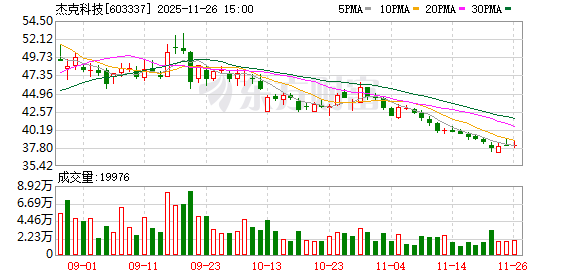
Core Insights - Jack Technology Co., Ltd. from Taizhou, Zhejiang, recently launched the AI sewing machine "Aitu Ai 10" and humanoid robots, showcasing the city's innovation capabilities in high-end equipment [2] - Taizhou has focused on developing its real economy, promoting digital and intelligent transformation in manufacturing, leading to a solid foundation for the real economy [2] - In the first nine months of this year, Taizhou's industrial output value above designated size increased by 8.3% year-on-year, with high-tech industry investment, manufacturing investment, and industrial technological transformation investment growing by 15.1%, 14.4%, and 24.1% respectively [2] Industry Developments - The Taizhou Bay New Area has established Zhejiang's first provincial-level low-altitude economy industry fund, with over 80 upstream and downstream enterprises gathering for development [2] - The second phase of the 10GWh solid-state lithium battery industrialization project by Qingtai Energy, a major industrial project in Zhejiang, is progressing rapidly in the Chengjiang Industrial Zone of Huangyan Economic Development Zone [2] - The CNC and Intelligent Manufacturing Technology Innovation Center, co-established by Taizhou's Yuhuan City and Tianjin University, has become a model for regional collaborative innovation, with a current achievement transformation rate exceeding 75% [2] Strategic Direction - The Secretary of the Taizhou Municipal Committee, Shen Mingquan, stated that the city will leverage its vibrant private economy, diverse manufacturing sectors, and numerous listed companies to systematically advance the construction of a modern industrial system [2] - The focus will be on intelligent, green, and integrated development, with practical measures aimed at enhancing the quality, efficiency, and resilience of growth [2]
全省各地各部门学习习近平总书记视察广东和出席第十五届全国运动会开幕式重要讲话重要指示精神更好地回应人民群众的信任和期盼
Nan Fang Ri Bao Wang Luo Ban· 2025-11-23 01:42
Core Viewpoint - The meetings across various regions in Guangdong emphasize the importance of implementing Xi Jinping's directives to promote high-quality development and modernize the economy, aligning with the "14th Five-Year Plan" and national strategies [1][2][3][4][5][6][7][8] Group 1: Health Sector - The Guangdong Provincial Health Commission aims to scientifically plan the health sector's "14th Five-Year Plan" and implement the "Hundred Million Thousand Project" to enhance health service accessibility and equity [1] - The focus is on responding to public expectations and improving health governance through digital empowerment [1] Group 2: Market Regulation and Intellectual Property - The Guangdong Provincial Market Supervision Administration is tasked with developing the "14th Five-Year Plan" for market regulation and intellectual property, ensuring alignment with national strategies and local economic needs [2] - Emphasis is placed on creating a market-oriented, law-based, and international business environment while integrating resources to support modern industrial systems [2] Group 3: Regional Development Initiatives - Various cities, including Shantou, Heyuan, and Yangjiang, are focusing on high-quality development, integrating into the Guangdong-Hong Kong-Macao Greater Bay Area, and enhancing local economic structures [3][4][7] - The "Hundred Million Thousand Project" is highlighted as a key initiative to boost county economies and improve urban-rural environments [3][4][6][7] Group 4: Infrastructure and Innovation - Meetings stress the need for improved infrastructure connectivity and innovation collaboration within the Greater Bay Area to foster a competitive and vibrant economic environment [2][4][7][8] - The importance of deepening reforms and expanding high-level openness is underscored to enhance social vitality and development momentum [6][7][8]
政策力推新质生产力!价值ETF(510030)上涨0.45%!机构:高股息资产或具备配置价值
Xin Lang Ji Jin· 2025-11-20 02:43
Group 1 - The value ETF (510030) showed stable performance with a 0.45% increase and a trading volume of 2.1 million yuan as of 10:19 AM on November 20 [1] - Among the constituent stocks, China Bank, Minsheng Bank, and Everbright Bank had notable performances with increases of 3.5%, 2.2%, and 1.67% respectively [1] - Conversely, China Merchants Energy, Lu'an Environmental Energy, and SAIC Motor experienced declines of 1.72%, 1.07%, and 1.05% respectively [1] Group 2 - CITIC Securities indicated that by 2026, the industry style will become more balanced, with cyclical and technology growth sectors advancing together [2] - The recovery of global manufacturing, U.S. interest rate cuts, and domestic policies against "involution" are favorable for cyclical styles [2] - The consumer sector is expected to benefit from a "systematic slow bull" wealth effect and increased domestic demand policies, particularly in food and beverage and social services [2] - Traditional industries such as basic chemicals and machinery will benefit from the emphasis on capacity optimization in the "14th Five-Year Plan" [2] - The value ETF (510030) passively tracks the 180 Value Index, with top ten weighted stocks including China Ping An, China Merchants Bank, and Industrial and Commercial Bank of China [2]
谋良策 建真言 凝共识——省政协聚焦中心工作提升履职质效
Liao Ning Ri Bao· 2025-11-20 02:25
Group 1 - The provincial political consultative conference emphasizes high-quality development as a primary task, leveraging its role as a specialized consultative body to support the government's initiatives [1] - A recent salon focused on promoting the development of the private economy, where business leaders and experts discussed local regulations to enhance the business environment [1] - Various forms of consultation and collaboration have been initiated to optimize the business environment, including specialized meetings and research on the needs of private enterprises [1] Group 2 - The provincial political consultative conference is actively working on the transformation and upgrading of traditional industries while fostering strategic emerging industries to build a modern industrial system [2] - Specific initiatives include promoting the integration of digitalization with manufacturing and enhancing the innovation capabilities of enterprises through systemic reforms [2] - The conference has established key industry clusters in fine chemicals, advanced non-ferrous metal materials, and power equipment, focusing on practical solutions to industry challenges [2] Group 3 - Enhancing the well-being of the populace is identified as the fundamental purpose of development, with the provincial political consultative conference engaging deeply with grassroots communities [3] - A collaborative platform named "Liaoning Matters" has been created to address local issues, facilitating communication between various departments to resolve housing and property challenges for residents [3] - By the end of 2024, the platform is expected to have generated a significant number of proposals and conducted numerous consultation activities aimed at solving real-life problems for the community [3]
庄建球主持召开“十五五”规划专家座谈会 深入学习领会党的二十届四中全会精神 高质量完成我市“十五五”规划编制工作
Zheng Zhou Ri Bao· 2025-11-18 08:51
Core Insights - The "14th Five-Year Plan" expert seminar was held in Zhengzhou to gather opinions and suggestions for the upcoming "15th Five-Year Plan" [1][2] - Experts discussed key areas such as modern industrial system construction, high-quality agricultural development, high-level opening up, and the construction of the Zhengzhou metropolitan area [1] - The city leadership emphasized the importance of aligning the plan with national directives and local realities to ensure high-quality development [2] Group 1 - The seminar was chaired by Mayor Zhuang Jianqiu, who expressed gratitude for the experts' contributions and highlighted their theoretical and practical insights [1] - Experts included Zhang David, Shi Dan, Wei Houkai, and others, who provided diverse perspectives on Zhengzhou's development strategies [1] - The city aims to incorporate valuable suggestions into the "15th Five-Year Plan" to reflect the needs and aspirations of the people [1] Group 2 - Zhuang Jianqiu stressed the significance of the "15th Five-Year Plan" in the context of achieving socialist modernization [2] - The city will focus on a target task system of "1+2+4+N" to guide the planning process [2] - The leadership is committed to ensuring that the plan aligns with central government policies and meets the expectations of the populace [2]
老场馆 新功能 利共享
Jing Ji Ri Bao· 2025-11-15 01:46
Group 1 - The article highlights the renovation and upgrade of existing sports venues in Guangdong to host the 15th National Games, emphasizing sustainability and cost-effectiveness [1][2] - The Guangzhou Tianhe Sports Center has undergone significant upgrades using energy-efficient materials and smart lighting systems, enhancing its functionality for upcoming events [1] - The approach taken for the National Games includes utilizing over 90% of existing venues, avoiding the construction of new large-scale facilities, which effectively reduces hosting costs [1] Group 2 - The Dinghu New District Sports Center in Zhaoqing has made small-scale upgrades to meet event requirements, including creating a spectator experience area with equipment suitable for children [2] - The 21-year-old Huizhou Sports Center has transformed its outdoor space into a children's playground and skate park, promoting social and fitness activities [2] - The upgrades to sports facilities and the creation of public spaces are seen as enhancing the quality of life for residents, driven by the hosting of the National Games [2] Group 3 - Guangdong's robust industrial system supports the strategy of upgrading existing venues rather than building new ones, aligning with the province's focus on manufacturing and modern industrial competitiveness [2] - During the 14th Five-Year Plan period, Guangdong aims to develop nine trillion-level industrial clusters and has a significant number of national and provincial manufacturing champions [2]