
种业振兴

Search documents
三亚崖州湾科技城高新区靠创新起家、让创新当家
Hai Nan Ri Bao· 2025-12-24 02:16
Core Viewpoint - Sanya Yazhou Bay Science and Technology City High-tech Zone is transforming into a hub for innovation, focusing on the development of deep-sea technology and seed industry, leveraging its unique geographical and policy advantages to foster a robust ecosystem for emerging industries [4][12]. Group 1: Port Transformation - Sanya Nanshan Port has evolved from a minor cargo port to China's first public scientific research vessel mother port within three to four years, becoming a popular choice in the domestic scientific research community [3][4]. - The port has achieved over 1,000 scientific research vessel calls in just two years, with expectations to exceed 2,000 calls by 2025, positioning itself as one of the busiest scientific research mother ports globally [7][10]. Group 2: Economic Growth - The deep-sea industry has seen a revenue increase of 341.7% year-on-year in the first three quarters of 2025, highlighting the significant growth and potential of the blue economy in the region [10]. - The establishment of 11 deep-sea equipment research and operation bases and the development of 28 production lines indicate a strong clustering effect in the deep-sea technology sector [10]. Group 3: Seed Industry Development - China Seed Group has signed a strategic cooperation agreement with Beidahuang Kenfeng Seed Industry Co., focusing on core technology breakthroughs and market expansion in the seed industry [11]. - The technology city has established 20 research platforms in the seed industry, making it the largest and most comprehensive in the country, with an annual output value exceeding 18 billion yuan [12].


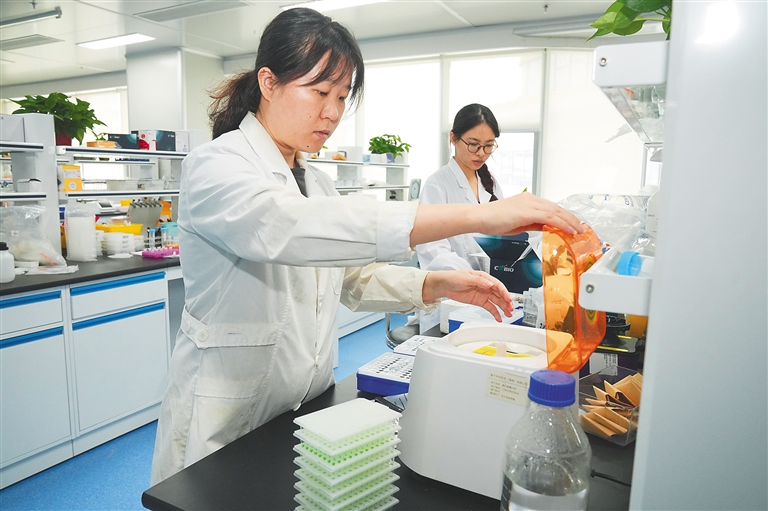
【杨凌】科技赋能 育种提速
Shan Xi Ri Bao· 2025-12-24 00:35
Group 1 - The article highlights the advancements in seed breeding technology in Yangling, Shaanxi, focusing on the development of high-quality tomato and oilseed rape varieties [1][2] - Shaanxi Jinpeng Seed Industry Co., Ltd. has cultivated 20 influential tomato varieties, emphasizing the long breeding cycle of five to six years for new varieties [1] - The use of molecular detection technologies has made the breeding process more controllable, reducing the randomness associated with traditional breeding methods [1] Group 2 - The Shaanxi Hybrid Rapeseed Research Center has developed oilseed rape varieties with oil content exceeding 60%, with nearly 10 million acres of new varieties promoted [2] - Since the 14th Five-Year Plan, over 500 new plant varieties have been registered in the Yangling Demonstration Zone, indicating a strong focus on seed industry revitalization [2]
“海南自由贸易港” 概念:最有望翻倍的10家公司(名单)
Sou Hu Cai Jing· 2025-12-23 01:21
Core Insights - The article discusses the launch of the Hainan Free Trade Port, which will officially start operations on December 18, 2025, featuring a policy framework centered on "zero tariffs, low tax rates, and simplified tax systems" [1] - The policy is expected to create a unique economic zone with benefits across various sectors, including duty-free consumption, cross-border trade, cross-border finance, and high-end manufacturing [1] Market Expansion Effects - In 2024, Hainan is projected to welcome 1.11 million inbound tourists, a year-on-year increase of 115.6%; post-closure, international visitors are expected to exceed 5 million, significantly boosting sectors like duty-free, tourism, and transportation [1] - The range of zero-tariff goods will expand from 1,900 items to 6,600 items, covering 74% of tax categories, leading to a substantial reduction in import costs for businesses [1] Investment Logic - Focus on policy-driven industries (duty-free, logistics, infrastructure), high-growth sectors (new energy, pharmaceuticals, cross-border finance), and resource monopoly targets (land, ports, shipping routes), while selecting stocks with visible performance and reasonable valuations [1] Company Highlights 1. **Shennong Seed Industry** - Core themes: Agricultural revitalization, Hainan's specialty agriculture, value-added processing with duty-free benefits - Highlights: Expected export volume to increase by 60% by 2025, with seed processing value tripling after being included in the "30% value-added duty-free" pilot program [4] 2. **Kangzhi Pharmaceutical** - Core themes: Medical special zone, three-child policy, flu concept - Highlights: As a leading domestic children's medicine provider, benefiting from the Hainan "medical special zone" policy, with raw material costs down by 20% and gross margins expected to exceed 35% [7] 3. **Jinpan Technology** - Core themes: Global transformer leader, zero-tariff policy, North American orders - Highlights: Import costs for core components from Germany reduced by 18%, with smart transformer gross margins rising to 35%; revenue expected to grow by 42% year-on-year by Q3 2025 [9] 4. **Intercontinental Oil & Gas** - Core themes: Oil and gas exploration, Hainan energy base, cross-border asset management - Highlights: Import duties on exploration equipment will be eliminated post-closure, reducing costs by 12%; production expected to increase by 25% in 2025 through collaboration with Southeast Asian countries [11] 5. **Antong Holdings** - Core themes: Multimodal transport, logistics in Qiongzhou Strait, RCEP benefits - Highlights: Controlling 30% of cargo volume in Qiongzhou Strait, with a projected 40% revenue growth in cross-border logistics post-closure [13] 6. **Hainan Ruize** - Core themes: Green building materials, infrastructure, environmental transformation - Highlights: Leading market share in ready-mixed concrete; demand expected to grow by 20% due to the construction of the island-wide tourism highway in 2025 [15] 7. **Hainan Airport** - Core themes: Traffic at three major airports, duty-free rental income, international routes - Highlights: Control over three major airports with international routes expected to increase to 280 by 2025, and a 55% year-on-year increase in passenger throughput in Q3 [18] 8. **Xinlong Holdings** - Core themes: Non-woven fabric leader, cross-border business transformation - Highlights: Production costs reduced by 15% due to the "30% value-added duty-free" policy, significantly enhancing export competitiveness [20] 9. **Hainan Huatie** - Core themes: High-end equipment leasing, hydrogen energy industry chain - Highlights: As the only high-end equipment leasing platform in Hainan, with rental costs down by 20% post-closure; orders expected to grow by 60% in 2025 through collaboration with Haima Automotive [22] 10. **Hainan Expressway** - Core themes: Infrastructure, land reserves, island-wide tourism - Highlights: Involved in major projects like the expansion of the island-wide expressway, with a projected 45% year-on-year growth in infrastructure orders by 2025 [24]

中经评论:跑好种业振兴接续奋斗这一棒
Jing Ji Ri Bao· 2025-12-23 00:03
Core Viewpoint - The Chinese seed industry has made significant progress over the past five years, with a focus on achieving self-reliance in seed technology and ensuring seed source security, which is now considered a matter of national security [1][2]. Group 1: Policy and Strategic Framework - The Central Economic Work Conference in December 2020 emphasized the importance of addressing seed and arable land issues, aiming to revitalize the seed industry [1]. - The "Seed Industry Revitalization Action Plan" was approved in July 2021, highlighting the commitment to seed industry revitalization, which has been included in the 20th National Congress report and the 14th Five-Year Plan [1]. - The revitalization plan outlines a timeline of "one year to start well, three years to lay a foundation, five years to see results, and ten years to achieve major breakthroughs," reflecting respect for scientific and industrial laws [1]. Group 2: Achievements and Innovations - The protection and utilization of germplasm resources have improved, with China now holding the world's largest total of preserved germplasm resources and a rising identification ratio [2]. - Over 95% of self-bred crop varieties are now domestically sourced, with domestic market shares for livestock, aquaculture, and vegetables exceeding 80%, 85%, and 91% respectively [2]. - The selection of 270 leading seed companies from over 30,000 has strengthened the competitive landscape, with companies like Syngenta and Longping High-Tech ranking among the top 10 globally [2]. Group 3: Global Competition and Future Outlook - The global seed industry is characterized by high technology, high investment, and high market concentration, with multinational corporations holding a significant share of core patents and market segments [3]. - China is working to enhance its research and development capabilities, as approximately 80% of its seed technology resources and talent are still concentrated in research institutions [3]. - The next five years are crucial for the second half of the "ten-year sword polishing," with a shift towards "smart breeding" characterized by biotechnology and artificial intelligence [3].
跑好种业振兴接续奋斗这一棒
Jing Ji Ri Bao· 2025-12-22 22:00
Core Viewpoint - The next five years are crucial for the seed industry, marking the second half of a decade-long effort to innovate and improve seed production, with artificial intelligence leading the way in smart breeding [1][4]. Group 1: Industry Development - The central government emphasizes the importance of seed and arable land issues, aiming to achieve self-sufficiency in seed technology and resources, which is now considered a matter of national security [1][2]. - The seed industry has made significant progress over the past five years, with key achievements in breeding and resource management, indicating a positive trend in the sector [2][3]. Group 2: Innovation and Research - The seed breeding process is lengthy, often taking 6 to 20 years depending on the crop, which reflects the need for a structured timeline for achieving breakthroughs in the industry [2]. - The "Seed Industry Revitalization Action Plan" outlines a timeline of one year to start, three years to lay the foundation, five years to see results, and ten years for major breakthroughs, aligning with scientific and industrial principles [2]. Group 3: Competitive Landscape - The global seed industry is highly competitive, with major companies like Syngenta and Longping High-Tech ranking among the top ten worldwide, showcasing the effectiveness of revitalization measures [3]. - Despite advancements, the industry faces challenges due to high market concentration and the dominance of multinational corporations, which control a significant portion of core patents and market share [3]. Group 4: Future Outlook - The integration of artificial intelligence in breeding processes is expected to enhance the capabilities of the Chinese seed industry, with aspirations to replicate the rapid growth seen in the electric vehicle sector [4].
粮油总产、单产创近3年新高
Xin Lang Cai Jing· 2025-12-22 20:23
Group 1 - The core viewpoint of the articles highlights the significant increase in grain and oil crop production in Haibei Prefecture, with grain output reaching 70,300 tons and oilseed output at 47,900 tons, marking the highest levels in three years [1][2] - Grain yield per mu (0.067 hectares) is reported at 220.11 kg, a 12.3% increase from 2022, while oilseed yield per mu is 109.23 kg, up 11.46% from the previous year [1] - The prefecture has established 1,030.33 hectares of high-standard farmland to ensure stable and high yields, alongside implementing measures to reduce chemical fertilizer and pesticide use over 58,400 hectares [1] Group 2 - The implementation of crop yield enhancement and seed industry revitalization actions has led to the promotion of high-yield and resilient varieties, such as the new barley variety "Beiqing 15," achieving yields exceeding 1,000 kg per mu [2] - The establishment of 1,166.67 hectares of crop seed breeding bases and 15 "ten-thousand, thousand, hundred, ten" breeding bases has maintained a crop seed coverage rate of over 98% [2] - The total area of intensive cultivated land in the prefecture has reached 18,670 hectares, with a social service area of 13,500 hectares, resulting in an intensive cultivation rate of 34% [2]
中国在北纬18度探寻种业“振兴密码”
Xin Hua She· 2025-12-22 18:00
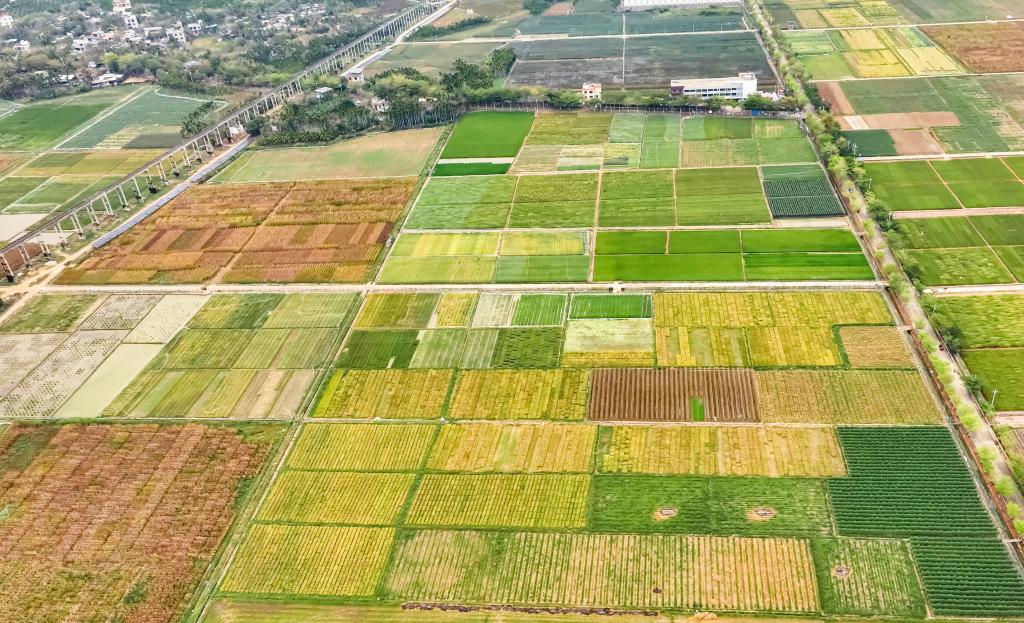
新华社三亚12月22日电 题:中国在北纬18度探寻种业"振兴密码" 新华社记者张源培、赵颖全、罗江 12月,中国大部分地区已入冬,地处北纬18度的海南三亚温暖依旧。崖州湾国家实验室大豆种子创新团队首席科学家田志喜奔波于试验田和实验 室,探寻大豆增产的"基因密码"。 "中国大豆单产水平与美国、巴西等国相比还有差距,我们希望努力赶上。"田志喜说,他的团队围绕中国各大豆主产区的不同特点,正在培育更 加高产、稳产的大豆新品种。 中国用占世界9%的耕地养活了世界近五分之一的人口。在这背后,农业"芯片"种子功不可没。作为科研育种的理想之地,位于海南的国家南繁科 研育种基地见证了无数好种子的诞生。 "中国大部分地区一年只能种一季大豆,到海南多种一两季,大幅缩短了育种流程。"田志喜说。 大豆杂交后要获得性状稳定的新品种,通常要经过七到八代的繁殖和选择。田志喜说,在南繁培育、聚合多种优良性状的育种材料已在10多个省 份持续开展种植测试。 俯瞰海南省三亚市崖州区国家现代农业(种业)产业园(3月28日摄,无人机照片)。新华社发 "南繁"是一个农业术语,指的是利用南方温暖气候实现多季繁育,缩短育种周期。20世纪50年代起,中国各地科 ...
科学与健康|实现精准设计!科研新范式打造种业“中国芯”
Xin Hua She· 2025-12-22 12:38
Core Insights - The article highlights the significant breakthroughs achieved in China's seed industry through the "Seed Precision Design and Creation" project, which has been ongoing for six years and aims to enhance food security and agricultural modernization [2][3]. Group 1: Achievements of the Seed Project - The project has achieved a comprehensive breakthrough in precision breeding, covering theory, technology, and products, leading to a 10% to 20% increase in yield, a 15% to 20% reduction in input, and a 15% to 20% reduction in losses for various plant and animal varieties [3]. - The "Zhongke Fa" series of rice, developed for specific regions, has shown over a 20% yield increase compared to local varieties, with "Zhongke Fa 5" achieving over 600 kg per mu in saline-alkali land [3]. - A total of 37 leading varieties have been created under the "one increase, two reductions" model, with 14.48 million mu of new crop varieties promoted, demonstrating significant socio-economic benefits [3]. Group 2: Addressing Challenges in Food Security - The project has developed advanced multi-gene editing technologies that allow for the creation of high-yield, disease-resistant wheat varieties, marking a significant achievement in crop genetic editing [4]. - A comprehensive pan-genome map for soybeans has been created, leading to the development of ten new high-yield, high-nutrition soybean varieties to address the challenges of high import volumes and low domestic production [4]. - The project has also pioneered a new method for rapid domestication of wild rice, providing strategic technological reserves for global food security [4]. Group 3: Innovations in Agricultural Practices - The project has transformed breeding from a lengthy, unpredictable process into a precise, programmable, and customizable research endeavor, addressing key agricultural issues such as excessive fertilizer use and pest outbreaks [6]. - The "Zhongke 166" high-yield wheat variety has been developed to maintain stable yields with a 20% to 30% reduction in nitrogen fertilizer, significantly reducing pesticide usage [6]. - The "Zhongke 6" candidate variety of silver crucian carp has shown a 25% increase in growth rate and a 66.5% increase in survival rate compared to its predecessor, demonstrating advancements in aquaculture [6].

以金融担当筑牢种业振兴根基
Zheng Quan Ri Bao· 2025-12-21 16:24
Core Insights - The Ministry of Agriculture and Rural Affairs aims to achieve significant results in seed industry revitalization by 2025, emphasizing the importance of seed security for national food safety [1] - Financial institutions are encouraged to develop targeted financial services to support the long-term needs of the seed industry, addressing its unique challenges such as long R&D cycles and slow returns [1] Financial Support Strategies - Establish a comprehensive funding supply system to support the entire seed industry chain, including long-term loans for basic research and flexible working capital loans for seed production companies [1] - Collaborate with local governments to launch special credit plans focused on modernizing national seed production bases and enhancing supply capabilities [1] Innovation and Technology - Focus on activating financial momentum for technological transformation in the seed industry, with banks shifting their service focus towards supporting technological innovation [2] - Develop a diversified financial support system combining credit, equity, and funds to lower innovation costs for seed companies and facilitate the commercialization of research outcomes [2] Intellectual Property Financing - Innovate financial services around intellectual property, as traditional collateral-based lending does not meet the needs of seed companies whose core assets are often intangible [2] - Establish a specialized valuation system for seed industry intellectual property to assess market value and expected returns, enabling better financing options [2] Risk Management and Ecosystem - Strengthen risk control capabilities and create a supportive market environment for the seed industry, including establishing a credit evaluation system for seed companies [3] - Ensure that financial resources are directed towards compliant and innovative seed industry entities, promoting high-quality development [3] - Emphasize the need for long-term financial support and precise risk management to ensure the sustainable growth of the seed industry [3]
衣林牧渔行业研究:猪价持续承压,看好牧业大周期
SINOLINK SECURITIES· 2025-12-21 14:08
Investment Rating - The report indicates a neutral investment rating for the agricultural sector, with expectations of limited price fluctuations in the near term [9]. Core Insights - The agricultural sector index has shown a slight increase of 0.79% week-on-week, but it has underperformed compared to the Shanghai Composite Index [13]. - The pig farming industry is currently facing a downward price trend, with an average pig price of 11.58 yuan/kg, indicating ongoing losses across the sector [22][23]. - Poultry farming is experiencing a stabilization at the bottom of the price cycle, with white feather chicken prices at 7.35 yuan/kg, reflecting a slight recovery in profits [29]. - The beef market is expected to see price increases as it enters the consumption peak season, with live cattle prices in Shandong at 26.68 yuan/kg [36]. - The planting industry is witnessing a tightening supply-demand situation, with corn prices rising to 2244.29 yuan/ton, indicating potential for price increases [41][42]. - Feed prices have stabilized, with pig feed at 3.33 yuan/kg, while aquatic product prices are showing upward trends [55]. Summary by Sections 1. Pig Farming - The average weight of pigs at market is 130.18 kg, with ongoing losses in the industry prompting a reduction in production capacity [23][22]. - The report anticipates further price declines in the short term, but a potential recovery in the medium to long term due to improved profit margins for leading companies [23][22]. 2. Poultry Farming - White feather chicken prices are under pressure, while yellow feather chicken prices are showing resilience due to improved demand and reduced supply [29]. - The overall profitability in poultry farming is expected to improve as consumer demand recovers [29]. 3. Livestock - The beef market is poised for price increases, supported by a seasonal demand surge and reduced supply from imports [36]. - Dairy prices are stabilizing, with average purchase prices for raw milk at 3.02 yuan/kg, indicating a potential for recovery in the dairy sector [39]. 4. Planting Industry - Corn prices are on the rise, with a current price of 2244.29 yuan/ton, reflecting a tightening supply situation [41]. - The report highlights the potential for improved conditions in the planting sector if there are significant reductions in crop yields due to adverse weather [42]. 5. Feed and Aquaculture - Feed prices have stabilized, with pig feed at 3.33 yuan/kg, while aquatic product prices are trending upwards, particularly for shrimp and fish [55][60].