
经济高质量发展

Search documents
中国浦东干部学院经济高质量发展研究中心主任胡云超:重视以内生消费增长模式推动经济高质量发展
Shang Hai Zheng Quan Bao· 2025-12-28 19:10
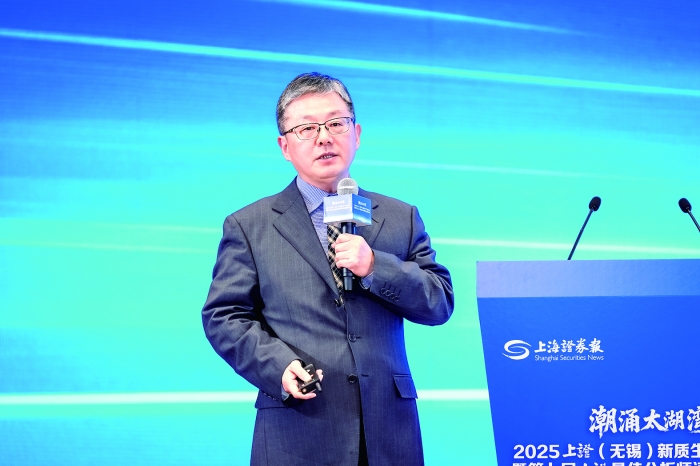
胡云超说,中国曾长期将经济发展重心偏向生产和投资,对消费重视度不够,近年来,这一点正在发生 改变。《中华人民共和国国民经济和社会发展第十四个五年规划和2035年远景目标纲要》提出,要依托 强大国内市场,贯通生产、分配、流通、消费各环节,形成需求牵引供给、供给创造需求的更高水平动 态平衡,促进国民经济良性循环。"十五五"规划建议强调"强大国内市场是中国式现代化的战略依托", 确立"内需主导、消费拉动、内生增长"的经济发展模式。2025年中央经济工作会议把扩大内需定为2026 年排在首位的重点任务,进一步引导提振国内消费。 胡云超说,改革开放以来,外向型经济发展战略是中国经济发展的重要支撑,中国出口规模及全球占比 节节攀升,为经济发展和人民富裕奠定基础。中国是全球第二大经济体,目前我国对外依存度在30%以 上,而发达国家在10%左右的平均水平,这种情况易引发各类经贸摩擦。 胡云超 中国浦东干部学院经济高质量发展研究中心主任胡云超: 重视以内生消费增长模式推动经济高质量发展 ◎记者 秦春刚 在12月26日举行的2025上证(无锡)新质生产力研讨会暨第七届上证最佳分析师评选颁奖仪式上,中国 浦东干部学院经济高质量发展 ...

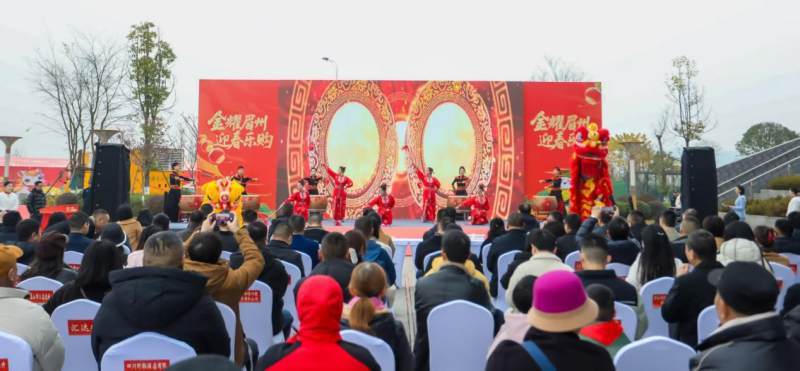
眉山市2026“金耀眉州”迎春消费季活动启动仪式在彭山区举行
Sou Hu Cai Jing· 2025-12-28 08:15
Core Viewpoint - The "Golden Shine Meizhou" Spring Consumption Season in Meishan City aims to stimulate market vitality and promote high-quality economic development through various consumer activities and incentives [1][6]. Group 1: Event Overview - The event is organized by the Meishan Municipal Bureau of Commerce and the Municipal Bureau of Culture, Broadcasting, Television, and Tourism, with the support of the Pengshan District Government [1]. - The consumption season will run from December 27, 2026, to March 31, 2026, featuring over 1,000 market entities and more than 100 diverse supporting activities [1]. - A total of 20 new consumption scenarios will be launched, along with the distribution of 20 million yuan in consumer vouchers to benefit citizens and tourists [1]. Group 2: Pengshan District Activities - Pengshan District has launched a series of activities themed "Golden Shine Meizhou: Longevity Town Shopping" to leverage its cultural heritage as "China's Longevity Town" [3]. - The opening ceremony included performances of intangible cultural heritage and a symbolic ceremony to promote prosperity [3]. - Local tourism resources, such as Pengzu Mountain, were promoted, and tickets to scenic spots were distributed to attendees [3]. Group 3: Market Engagement - The "Longevity Town Shopping" Spring Market opened with nearly 200 vendors offering a variety of goods, including traditional foods and cultural products, attracting significant public participation [5]. - The district plans to implement special consumer vouchers to support various sectors, including home appliances, retail, dining, and cultural tourism [5]. - Future activities include a special product market during New Year's at Pengzu Mountain West Square and a "Beautiful Life Festival" from January to March 2026, focusing on youth trends and family interaction [5]. Group 4: Comprehensive Activities - The "Golden Shine Meizhou" Spring Consumption Season includes eight major activities, such as New Year's celebrations, promotional events for exchanging old consumer goods, and a food carnival [6]. - Each district will conduct unique promotional and cultural tourism activities to create a strong consumption atmosphere throughout the city [6].
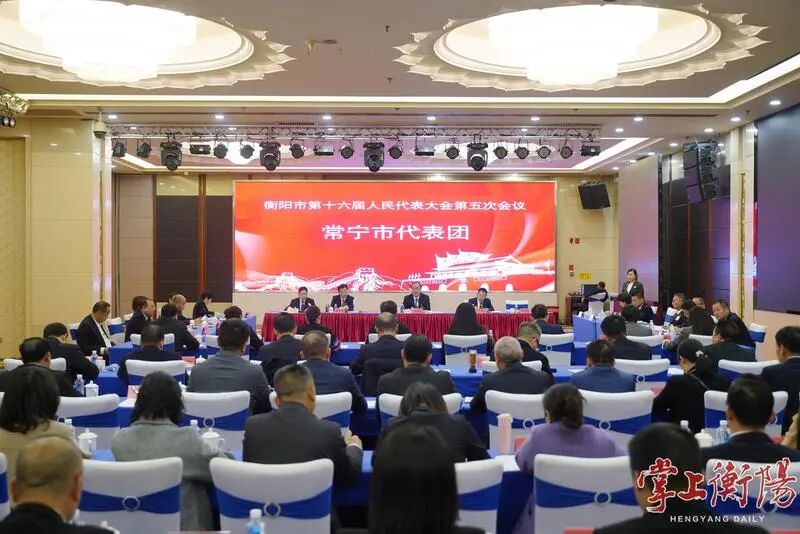
朱健参加常宁市代表团分团审议时强调:常宁要争当全市经济高质量发展的“领头雁”
Xin Lang Cai Jing· 2025-12-28 02:56
Group 1 - The core message emphasizes that Changning aims to be a leader in high-quality economic development within the city, contributing to the establishment of a higher-level national regional key city and provincial sub-center city [1][3]. - Nine representatives discussed the highlights of the "Government Work Report" and the draft outline of the "14th Five-Year Plan," focusing on aspects such as strengthening industrial chains, supporting youth entrepreneurship, and attracting technology talent [3][5]. - The past year has seen positive changes in various aspects of Changning's development, with core indicators maintaining a good trend, and the Shuikoushan copper-lead-zinc industrial cluster being recognized as a national characteristic industrial cluster for small and medium-sized enterprises [3][5]. Group 2 - The "14th Five-Year Plan" outlines systematic planning and strategic deployment for the city's economic and social development, aiming to establish Changning as a key growth pole for high-quality development in the province and a bridgehead for integration into the Guangdong-Hong Kong-Macao Greater Bay Area [5][6]. - Key focus areas include stabilizing the economy, boosting industrial growth, accelerating project investments, promoting private investments, and expanding foreign investment, particularly in the non-ferrous metals and textile industries [5][6]. - Emphasis is placed on practical and effective governance, ensuring employment stability for key groups such as college graduates and returning migrant workers, and fostering a vibrant and orderly cadre system to enhance productivity [6].
新疆招商引资区外到位资金首破万亿元
Xin Hua Wang· 2025-12-27 11:28
Core Insights - Xinjiang's implementation of investment attraction projects reached 4,511 by 2025, with external funds exceeding 1 trillion yuan for the first time, totaling 10,655.71 billion yuan, a year-on-year increase of 13.9% [1] Group 1: Investment Overview - External funds in Northern Xinjiang amounted to 6,295.18 billion yuan, a year-on-year increase of 13.66% [1] - Southern Xinjiang (including Turpan and Hami) attracted external funds of 4,360.52 billion yuan, growing by 14.25% year-on-year [1] Group 2: Sectoral Investment Distribution - The secondary industry remains the primary focus, attracting external funds of 7,634.76 billion yuan, with a year-on-year growth of 12.62% [1] - The tertiary industry showed strong growth, bringing in external funds of 2,850.9 billion yuan, a year-on-year increase of 17.59% [1] Group 3: Investment Sources - Private investment accounted for nearly 70%, reaching 68.57%, with 7,307.13 billion yuan directed mainly towards wind and solar power, real estate, and commercial logistics [2] - State-owned enterprises invested 3,348.58 billion yuan, a year-on-year increase of 34.06%, primarily in energy-related sectors [2] Group 4: Regional Investment Sources - Funds from the eastern region constituted 66.46% of the total, with Beijing accounting for 41.09% of the eastern region's funds [2] - 19 aid-providing provinces and cities contributed 7,190.25 billion yuan, representing 67.48% of total funds, with a year-on-year growth of 12.69% [2]
市委常委会召开会议:认真谋划做好明年经济工作,着力推动国有企业高质量发展
Chang Jiang Ri Bao· 2025-12-27 00:30
Group 1 - The meeting emphasized the importance of understanding Xi Jinping's significant instructions regarding state-owned enterprises, recognizing their responsibilities and missions to strengthen and optimize state capital and enterprises for high-quality economic development in the city [2] - The focus is on key areas such as technological innovation, industrial development, urban renewal, and social welfare, with an aim to enhance the core functions and competitiveness of different types of state-owned enterprises [2] - The meeting called for deepening state-owned enterprise reforms, improving modern corporate systems, and enhancing market-oriented operational mechanisms to boost development vitality [2] Group 2 - The meeting highlighted the need for systematic planning of next year's economic work, establishing clear development goals, and preparing major projects and policies in advance to ensure a good start for the "15th Five-Year Plan" [3] - It stressed the importance of high-quality party building to lead economic and social development, emphasizing the implementation of strict party governance responsibilities and enhancing grassroots party organization construction [4] - The meeting also addressed the significance of improving ethnic and religious work, promoting national unity, and ensuring social harmony through legal governance of ethnic affairs and religious work [4]
加严环境空气质量标准是否不利于经济发展?生态环境部回应
Nan Fang Du Shi Bao· 2025-12-26 08:13
Core Viewpoint - The Ministry of Ecology and Environment has released a draft for stricter air quality standards, raising concentration limits for PM2.5, PM10, SO2, and NO2, which may impact economic and social development, but past experiences suggest that stricter standards can improve air quality and promote high-quality economic growth [1][2]. Group 1: Air Quality Improvement - The revision of air quality standards has significantly improved national air quality, with a 36% decrease in average PM2.5 concentration and a 68% reduction in heavy pollution days over the past decade, while GDP increased by 63% and the number of vehicles rose by 111% [1]. - The implementation of stricter air quality standards has led to four strategic shifts in air pollution control: from total pollutant emission control to air quality improvement, from single pollutant control to multi-pollutant coordination, from industrial source control to comprehensive management of various pollution sources, and from local pollution control to regional joint prevention and control [2]. Group 2: Economic and Social Development - The revised standards are expected to have a limited direct impact on production activities, as air quality standards focus on goal orientation and strategic guidance rather than strict emission limits [2]. - The process of achieving air quality standards is gradual, with supporting policies, funding, and technologies being implemented progressively to ensure a smooth transition without disrupting economic stability [2]. - Long-term benefits of stricter standards include further reductions in PM2.5 levels, improved public health outcomes, and the promotion of new production capacities in sectors like electric vehicles and clean energy, facilitating a green and low-carbon transition in industries [3].
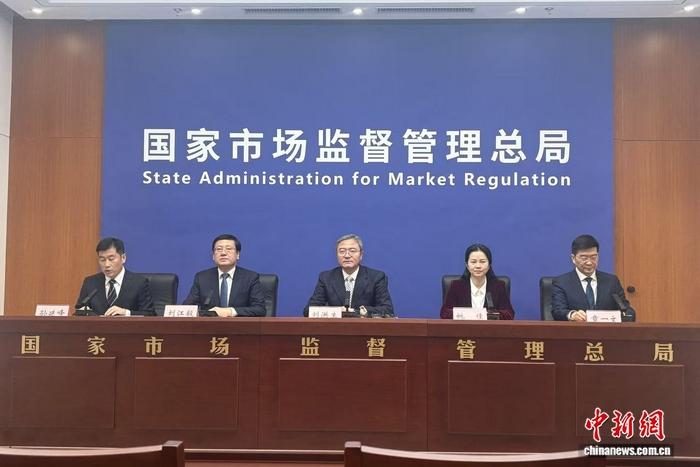
市场监管总局:2026年推动完成1800余项传统产业标准制修订
Zhong Guo Xin Wen Wang· 2025-12-26 07:43
Core Viewpoint - The State Administration for Market Regulation is focusing on optimizing traditional industries, promoting high-quality development in the service sector, and boosting consumption through the revision and formulation of over 1,800 standards by 2026 [1][2]. Group 1: Traditional Industry Standards - The initiative will involve updating standards for ten traditional industries including petrochemicals, machinery, light industry, steel, non-ferrous metals, building materials, textiles, shipbuilding, automotive, and electric power [2]. - The focus will be on intelligent, green, and integrated development to support the transformation of these industries [2]. Group 2: Consumer Goods Standards - There will be an acceleration in the upgrade of consumer goods standards to meet new consumer demands for safety, quality, green products, intelligence, and health [2]. - A new consumer goods standards system will be established to enhance the compatibility of supply and demand, thereby stimulating consumption potential [2]. Group 3: Service Standards - The development of service standards will be strengthened, with guidelines to be issued for production services, life services, and public services [2]. - This aims to address urgent needs in both traditional and emerging service sectors, promoting high-quality and efficient service development [2]. Group 4: Mandatory Standards - There will be an increased focus on the development of mandatory national standards, particularly in areas related to life and property safety [2]. - The initiative includes updating standards for thermal insulation materials, hazardous chemicals, special equipment, and the recycling of power batteries, converting relevant recommended standards into mandatory ones [2].
环境空气质量标准修订对经济高质量发展发挥积极作用(答问八)
Xin Lang Cai Jing· 2025-12-26 05:40
Core Viewpoint - The recent revision of the air quality standards by the Ministry of Ecology and Environment aims to tighten the concentration limits for pollutants such as PM2.5, PM10, SO2, and NO2, which is expected to positively impact economic development and public health despite concerns about potential negative effects on economic growth [1][2]. Group 1: Impact on Air Quality and Economy - The revision of air quality standards has historically led to significant improvements in air quality, with a 36% decrease in average PM2.5 concentration and a 68% reduction in heavy pollution days over the past decade, while GDP increased by 63% and vehicle ownership rose by 111% [1]. - The implementation of stricter air quality standards has facilitated a strategic shift in pollution control, moving from total emissions control to a focus on air quality improvement, and from single pollutant management to multi-pollutant coordination [1][2]. Group 2: Implementation and Long-term Benefits - The revised standards will be implemented in phases to minimize the impact on economic and social stability, allowing for a gradual transition to meet the new requirements [2]. - Long-term benefits of stricter standards include further reductions in PM2.5 levels, improved public health outcomes by decreasing the incidence of cardiovascular and respiratory diseases, and the promotion of green technologies in industries such as new energy vehicles and clean energy [2].
1至11月西藏涉税经营主体超39万户
Sou Hu Cai Jing· 2025-12-25 03:00
Core Insights - The tax revenue in Tibet exceeded 80.6 billion yuan from January to November, showing a year-on-year growth of 11.1%, indicating a stable and sustainable increase in revenue [1] - The number of tax-related business entities in Tibet surpassed 390,000, marking a 20% increase year-on-year, with over 70,000 new entities added, reflecting a 77.1% growth [1] - The tourism industry in Tibet has shown significant recovery, with 63.7 million domestic and international visitors received in the first three quarters, representing an 11.2% year-on-year increase [1] Tax Administration and Enforcement - The tax authorities in Tibet have implemented a transparent enforcement approach, adhering to the principle of "integrating law and reason, balancing leniency and severity," with over 9,000 pieces of information published on the enforcement information platform [1] - A total of 50 enterprises involved in tax fraud and 84 high-risk gas stations were investigated from January to November, maintaining a high-pressure stance against tax fraud [2] - The tax authorities have provided legal protection for compliant businesses by issuing tax inspection conclusions when no issues were found, thereby safeguarding the rights of lawful operators [2]
央行:增强外汇市场韧性 保持人民币汇率在合理均衡水平上的基本稳定
智通财经网· 2025-12-24 11:15
智通财经APP获悉,中国人民银行货币政策委员会2025年第四季度(总第111次)例会于12月18日召开。会 议研究了下阶段货币政策主要思路,建议发挥增量政策和存量政策集成效应,综合运用多种工具,加强 货币政策调控,根据国内外经济金融形势和金融市场运行情况,把握好政策实施的力度、节奏和时机。 保持流动性充裕,使社会融资规模、货币供应量增长同经济增长、价格总水平预期目标相匹配,促进社 会综合融资成本低位运行。强化央行政策利率引导,完善市场化利率形成传导机制,发挥市场利率定价 自律机制作用,加强利率政策执行和监督。从宏观审慎的角度观察、评估债市运行情况,关注长期收益 率的变化。畅通货币政策传导机制,提高资金使用效率。增强外汇市场韧性,稳定市场预期,防范汇率 超调风险,保持人民币汇率在合理均衡水平上的基本稳定。 中国人民银行货币政策委员会召开2025年第四季度例会 会议指出,要引导大型银行发挥金融服务实体经济主力军作用,推动中小银行聚焦主责主业,增强银行 资本实力,共同维护金融市场的稳定发展。有效落实好各类结构性货币政策工具,扎实做好金融"五篇 大文章",加强对扩大内需、科技创新、中小微企业等重点领域的金融支持。用好 ...