新型电力系统

Search documents
用统筹功夫建绿电园区
Jing Ji Ri Bao· 2025-08-19 22:09
Core Viewpoint - The development of green electricity parks is transitioning from a conceptual phase to practical implementation, driven by government policies aimed at promoting renewable energy consumption and establishing a new energy system [1][2]. Group 1: Policy and Development - The National Development and Reform Commission and the National Energy Administration have issued guidelines to promote the high-quality development of the renewable energy green power certificate market, advocating for a gradual increase in the proportion of green electricity consumption [1]. - The construction of green electricity parks emphasizes the use of clean energy sources such as solar, wind, and hydropower, aligning with the "dual carbon" goals to facilitate energy transition and industrial upgrades [1][2]. Group 2: Economic and Ecological Considerations - Green electricity parks should be developed based on local conditions, ensuring a strong supply of renewable energy while matching the energy needs of key industries like steel, non-ferrous metals, and data centers, thus addressing both energy surplus and shortage issues [2]. - The aim is to convert renewable energy advantages into economic benefits by optimizing land and capital costs, controlling scale, and enhancing ecological restoration, which can improve market competitiveness and attract investment [2]. Group 3: Collaborative Efforts - Accelerating the construction of green electricity parks requires significant investment and the mobilization of various stakeholders, with government support being crucial for guiding policy and promoting renewable energy development [3]. - The integration of multiple energy sources and the establishment of storage facilities are essential to address the volatility of renewable energy generation, enhancing the supply capabilities of green electricity parks [3].
电网行业研究框架培训
2025-08-18 15:10
Key Points Summary of the Electric Power Equipment Industry Research Industry Overview - The electric power equipment industry is divided into three main categories: transmission and transformation, distribution, and consumption, with transformers and switches being the core products, accounting for over 60% of the industry share [1][5][21] - Major companies like NARI and China XD Electric are gradually achieving full coverage, while international giants such as Siemens Energy and Hitachi Energy have covered all categories and voltage levels [1][6] Core Insights and Arguments - Downstream demand is concentrated in three areas: power generation, grid, and consumption, with the grid side dominated by the State Grid, whose capital expenditure is closely related to overall electricity consumption [1][7] - The construction of ultra-high voltage (UHV) systems is policy-driven, benefiting related companies significantly, as seen during the 2004-2008 500 kV backbone network construction period, which led to substantial revenue growth for equipment manufacturers [1][8] - The new power system faces challenges such as large deviations in generation load, poor generation stability, and a decrease in base load power sources. Solutions include energy storage, UHV, digital upgrades in grid dispatching, electricity market trading, and hybrid AC/DC distribution networks [1][10][11] Investment Trends - Grid investment is expected to continue growing, with a projected growth rate exceeding double digits in 2024 and a year-on-year increase of 14.6% in the first half of 2025, maintaining around 10% growth for the year [1][12] - The second half of 2025 will see a concentrated bidding for UHV projects, which will drive order increases [1][12] Order and Export Dynamics - In the first half of 2025, UHV bidding was limited, resulting in only a slight order growth of 5%. The transition period for metering equipment has led to a decline in bidding volume, while the export of transformers to North America, Europe, Asia, and Latin America has increased by over 50% year-on-year [1][13] Digitalization and AI in the Industry - The State Grid is continuously upgrading its dispatching system, with significant growth in new generation dispatching system application software. AI is becoming a key application area, with two rounds of AI server bidding in the first half of the year, totaling 293 units valued at 100 million to 200 million yuan [1][14] Market Changes and Future Outlook - The overseas market's reliance on Chinese manufacturing is increasing, with transformer imports to the US growing by 35% and to the EU by 15% year-on-year [1][20] - The electric power equipment industry is expected to see core changes, including significant growth in overseas markets, new equipment and business model opportunities, and progress in large engineering projects [1][21] Conclusion - The electric power equipment industry is poised for growth driven by policy support, technological advancements, and increasing global demand for Chinese manufacturing capabilities. Companies should focus on domestic and international order progress to seize investment opportunities [1][21]
申万公用环保周报:7月我国发电增速加快,全球气价回落-20250818
Shenwan Hongyuan Securities· 2025-08-18 03:45
Investment Rating - The report maintains a positive outlook on the power and environmental sectors, highlighting investment opportunities in various companies within these industries [2]. Core Insights - In July, thermal and photovoltaic power generation were the main contributors to the increase in electricity production, with total electricity generation reaching 926.7 billion kWh, a year-on-year increase of 3.1% [7][9]. - Global natural gas supply and demand are widening, leading to a decline in prices, with significant attention on geopolitical developments affecting gas prices [19][26]. - The introduction of the CCER methodology for agricultural and forestry biomass projects is expected to significantly enhance project profitability [2]. Summary by Sections 1. Power Sector - In July, thermal power generation was 602 billion kWh, up 4.3% year-on-year, while photovoltaic generation surged by 28.7% to 55.9 billion kWh [9][19]. - The overall electricity production in the first seven months of 2025 was 54,703 billion kWh, reflecting a 1.3% increase compared to the same period in 2024 [15]. - Recommendations include focusing on large hydropower, green energy, nuclear power, and thermal power companies such as Guotou Power, Chuan Investment Energy, and China Nuclear Power [17]. 2. Natural Gas Sector - As of August 15, 2025, the Henry Hub spot price was $2.98/mmBtu, reflecting a weekly decline of 1.75% [19][20]. - The report suggests that the current high inventory levels and weak demand in Europe are contributing to the decline in gas prices [26]. - Investment recommendations include companies like Kunlun Energy and New Hope Energy, which are expected to benefit from lower costs and improved profitability [44]. 3. Environmental Sector - The introduction of the CCER methodology is anticipated to improve the profitability of agricultural and forestry biomass projects, making them a viable alternative to traditional fossil fuels [2]. - The report highlights the potential for high-dividend stocks in the environmental sector, recommending companies such as China Everbright Environment and Hongcheng Environment [17]. 4. Company and Industry Dynamics - The report notes significant developments in the energy sector, including the Gansu Province's new market-oriented pricing reforms for renewable energy projects [52]. - Key company announcements include various financial management strategies and dividend distributions from companies like China Three Gorges Energy and Huadian International [55][56].
电力“软联通”解决了哪些关键问题?
Zhong Guo Dian Li Bao· 2025-08-18 03:13
Core Viewpoint - The establishment of the "1+6" foundational rule system for the electricity market in China is crucial for achieving the dual carbon goals and constructing a new power system, facilitating both "hard connectivity" and "soft connectivity" across provinces [1][4]. Group 1: Market Structure and Development - The "1+6" foundational rule system will extend the electricity market in both time and space dimensions, promoting long-term contracts and shorter trading intervals to stabilize supply and demand while accommodating the volatility of renewable energy [2][3]. - The system aims to create a unified national electricity market by enhancing interconnections and facilitating transactions across different grid operating areas, thus optimizing resource allocation [3][4]. Group 2: Addressing Market Challenges - The foundational rule system addresses the discrepancies in market models, trading sequences, and organizational structures that have emerged from local explorations, ensuring a cohesive framework for market operations [5][6]. - It resolves core contradictions in the market by clarifying the roles and responsibilities of inter-provincial and intra-provincial markets, thereby laying a solid foundation for a unified national market [6]. Group 3: Participation and Accessibility - The rule system standardizes the registration, measurement, and information disclosure processes for market participants, making it easier for them to engage in transactions across provinces [6]. - The implementation of a "one registration, multiple access" mechanism will simplify the participation of operators in the market, reducing barriers to entry [6]. Group 4: Balancing Security and Market Dynamics - The foundational rules are designed to balance the need for reliable electricity supply with the goal of market-driven price discovery, reflecting the diverse values of electricity in the context of energy transition [7][8]. - The long-term market plays a critical role in stabilizing market expectations and ensuring supply security, while the spot market provides real-time price signals based on supply and demand dynamics [8][9]. Group 5: Auxiliary Services and System Stability - The auxiliary services market incentivizes various flexible resources to participate in system regulation, ensuring the stability of the new power system [9]. - A capacity market mechanism will be established to compensate reliable capacity that supports system stability, guiding investments in adjustable power sources [9].
思源电气半年营收增37.8%力争全年185亿 股价四年半涨4倍摩根士丹利连续两季增持
Chang Jiang Shang Bao· 2025-08-18 00:07
Core Viewpoint - SiYuan Electric has achieved significant growth in both revenue and net profit in the first half of 2025, driven by innovation and expansion into international markets [1][2]. Financial Performance - In the first half of 2025, SiYuan Electric reported revenue of 8.497 billion yuan, a year-on-year increase of 37.80% [1][2]. - The net profit for the same period reached 1.293 billion yuan, up 45.71% year-on-year, while the net profit excluding non-recurring items was 1.236 billion yuan, reflecting a 47.04% increase [1][2]. - For the full year of 2024, the company achieved a revenue of 15.46 billion yuan, a 24.1% increase, and a net profit of 2.05 billion yuan, up 31.4% [3]. Market Expansion - SiYuan Electric has been actively expanding its overseas market presence, with overseas revenue reaching 2.862 billion yuan in the first half of 2025, accounting for 33.68% of total revenue [5]. - The company has seen consistent growth in overseas revenue from 1.201 billion yuan in 2020 to 3.122 billion yuan in 2024, with the overseas revenue share increasing from 16.28% to 20.2% during the same period [4][5]. Stock Performance - The stock price of SiYuan Electric reached a historical high of 87.45 yuan per share on August 15, 2025, representing a 408.73% increase from the lowest price of 17.19 yuan per share recorded in January 2021 [1][7]. - The company has attracted significant foreign investment, with Morgan Stanley becoming one of its top ten shareholders, holding 1.11% of the shares as of the end of Q2 2025 [8]. Order Growth - SiYuan Electric reported a new order intake of 21.457 billion yuan in 2024, marking a year-on-year growth of 29.94% [3]. - For 2025, the company plans to achieve new contract orders of 26.8 billion yuan (excluding tax), a 25% increase compared to the previous year [5].

每周股票复盘:威胜信息(688100)AI产品收入占比持续上升,积极布局MI2.0
Sou Hu Cai Jing· 2025-08-16 20:37
Core Viewpoint - The company is focusing on integrating AI technology into its products and solutions, particularly in the energy sector, to enhance operational efficiency and capitalize on emerging market opportunities driven by new energy policies and technological advancements [2][3][4][5][6] Company Performance - As of August 15, 2025, the company's stock price is 34.82 yuan, up 1.16% from the previous week, with a total market capitalization of 17.12 billion yuan, ranking 25th in the communication equipment sector [1] AI and Technology Integration - The company emphasizes its core competitiveness in "IoT + Chip + AI," focusing on applications such as energy digitalization, edge computing, and intelligent management of energy consumption [2] - The goal is to achieve comprehensive intelligent transformation, ensuring that every unit of electricity is optimized through AI [2] Policy Impact - Recent government policies in the energy sector are seen as crucial for promoting a new power system and green energy transition, providing a framework for market-oriented, low-carbon, and digital development [3] - The company plans to leverage these policies by enhancing its core technologies and solutions in the new energy sector, including electric vehicle charging and virtual power plants [3] AMI2.0 Development - The company is actively engaging in the development of AMI2.0, which enhances advanced metering infrastructure capabilities, focusing on edge computing, security, and customer engagement [4] - The strategic response to the global demand for clean energy and AMI2.0 development includes increased R&D investment and rapid product iteration [4] Collaboration with Huawei - The company is deepening its collaboration with Huawei's power digitalization team to provide targeted solutions for global green power supply and grid stability [5][6] - This partnership aims to address domestic and international market needs, particularly in areas like grid transparency and distribution network construction [6] Financial Returns - The company has distributed a total of 1.158 billion yuan in cash dividends since its listing and has repurchased shares worth approximately 200 million yuan, with a commitment to maintain a cash dividend payout ratio of 40% over the next five years [6]

产业变革中的商协会力量:把脉经济晴雨表,谋划突围新路径
2 1 Shi Ji Jing Ji Bao Dao· 2025-08-16 12:56
Core Insights - The role of industry associations in providing insights into the internal development of industries and connecting resources is emphasized during a recent seminar in Guangdong [1] - Guangdong's GDP reached 68,725.4 billion yuan in the first half of the year, showing a year-on-year growth of 4.2%, marking the third consecutive quarter of recovery since Q4 2024 [1] Economic Performance - Strategic emerging industries significantly contributed to Guangdong's industrial growth, becoming a core driving force for the economy [1] - The digital economy's core industry scale continues to expand, supporting the digital transformation of manufacturing [1] Industry Trends - In the electricity sector, renewable energy accounted for nearly 33% of the total installed capacity in Guangdong by mid-2025, indicating a robust development of a new power system focused on renewable energy consumption [2] - The logistics sector reported a cross-border e-commerce import and export total of 7,454 billion yuan in 2024, representing over one-third of the national total, with an annual growth rate of over 20% for cross-border air freight [2] Challenges - Supply chain security risks are prominent, with high dependency on foreign sources for key components in wind power and photovoltaic sectors [3] - Profit margins are shrinking across various industries, with the logistics sector experiencing declining profit rates and the electricity market facing increased competition and price declines [3] - A significant talent gap exists, particularly for high-end professionals such as power traders and chip design engineers, exacerbated by rapid industry growth [3] Recommendations for Improvement - To address supply chain bottlenecks, government investment and long-term commitment are necessary, as suggested by the integrated circuit industry association [4] - The logistics sector should enhance cross-border emergency logistics channels to mitigate geopolitical risks [4] - Companies are encouraged to adapt to market demands by driving technological innovation and strategic transformation [4] Talent Development - The electricity sector advocates for vocational skill recognition for power traders, while the integrated circuit sector calls for stronger collaboration between high-level universities and leading enterprises [5] - Increased investment in talent cultivation in artificial intelligence and robotics is recommended, promoting partnerships between educational institutions and industry associations [5] Future Outlook - Despite challenges, there is optimism for future economic development, with expectations for emerging companies to drive overall economic transformation in the coming years [5] - The government aims to leverage industry associations as a barometer for economic trends and a think tank for addressing key issues, enhancing service efficiency and optimizing the business environment [5]
建投能源: 河北建投能源投资股份有限公司向特定对象发行股票方案论证分析报告
Zheng Quan Zhi Xing· 2025-08-15 12:16
Group 1 - The company plans to issue shares to specific investors to raise funds for the construction of the Xibaipo Power Plant Phase IV project, aiming to enhance its capital strength and profitability [1][6][9] - The demand for electricity is expected to grow significantly, with a projected annual growth rate of about 5% during the 14th Five-Year Plan period, leading to increased electricity consumption in various sectors [2][3] - The company is positioned as a key player in the energy sector in Hebei, with a significant share of the coal-fired power generation capacity in the region [6][9] Group 2 - The project will not only meet electricity and heating demands but also enhance the grid's peak-shaving capacity and improve overall energy security in the region [6][9] - The company aims to optimize its capital structure and reduce its debt ratio through this fundraising initiative, which is crucial for its sustainable development and green transition [7][9] - The issuance of shares is in line with national industrial policies and is expected to improve the company's market competitiveness and profitability [8][9] Group 3 - The company will issue domestic listed ordinary shares (A shares) with a par value of RMB 1.00 each, and the total amount raised is expected to be no more than RMB 2 billion [8][16] - The issuance will be conducted in compliance with relevant regulations, ensuring that the process is legal and fair to all shareholders [10][19] - The company has established measures to mitigate the impact of share dilution on immediate returns for existing shareholders [20]

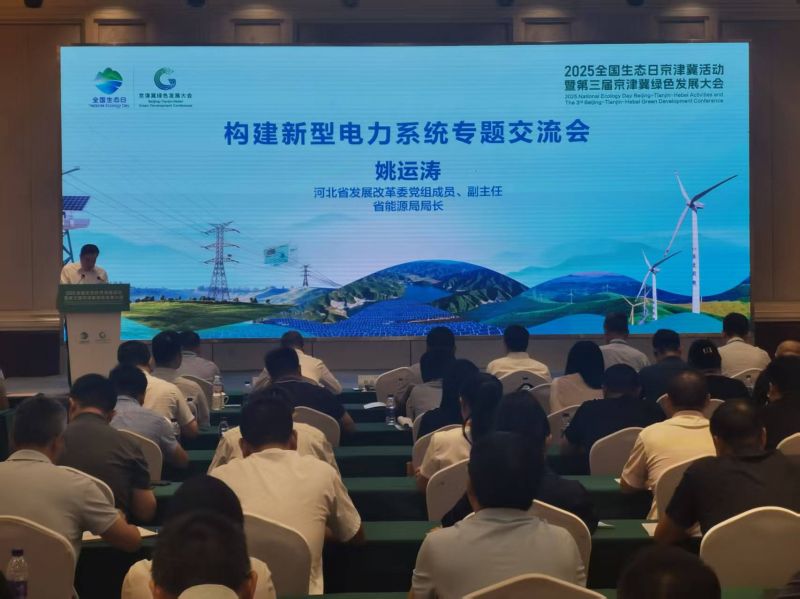
“绿”动京津冀 “电”亮新未来!构建新型电力系统专题交流会在保定召开
Zhong Guo Fa Zhan Wang· 2025-08-15 10:59
河北省发展改革委副主任、省能源局局长姚运涛强调,构建新型电力系统是实现"双碳"目标、保障能源安全的关 键支撑,河北正加快构建新型电力系统,推动能源绿色低碳转型。 中国发展网讯 刘珊珊 记者张晶报道 8月15日,构建新型电力系统专题交流会在河北保定召开。作为2025全国生态 日京津冀活动暨第三届京津冀绿色发展大会的分论坛,交流会邀请政府代表、专家学者、企业精英等各界嘉宾, 解读最新政策、展示技术成果、分享标杆案例,为京津冀构建安全、高效、绿色的新型电力系统探索新路径。 此外,多名电力和能源企业代表展示了储能、多能互补等技术创新和应用实践。 本次交流会既是一场绿色技术盛宴,也是京津冀深入推进能源革命的行动宣言。京津冀将持续向全国输出"安全可 靠、灵活高效、绿色低碳"的能源转型解决方案,加快构建新型电力系统,为实现"双碳"目标注入新动能。 多位行业专家分享了前瞻思考。中国电力企业联合会规划发展部主任张琳深入解读了新型电力系统建设的国家战 略布局与路径;电力规划设计总院、电力发展研究院院长李哲系统阐述了新型电力系统的主要特征、总体形态和 未来展望;北京大学能源研究院副院长杨雷分享了对新型电力系统商业模式的思考;清华大 ...

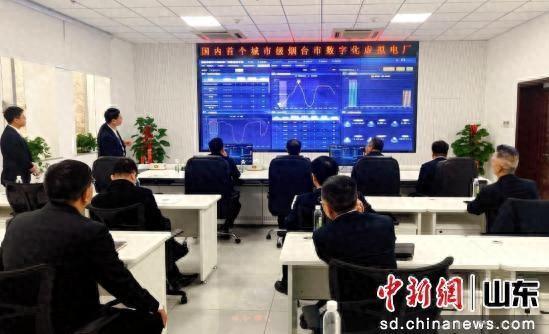
烟台虚拟电厂探索市场化治电 政策红利催生潜力新赛道
Zhong Guo Xin Wen Wang· 2025-08-15 09:22
中新网山东新闻8月15日电(初汶潼)在山东烟台东方电子产业园区内,数字化虚拟电厂运营中心的大屏 上,实时跳动着光伏电站出力、充电桩负荷等数据——这个集合了360余家用户、39万千瓦可调资源 的"无形电厂",正通过电力现货市场交易实现常态化盈利,成为中国新型电力系统市场化建设的鲜活样 本。 图为数字化虚拟电厂运 "政策破冰让虚拟电厂从概念走向盈利。"东方电子董事长方正基表示,山东电力现货市场正式运行后, 该公司承建的3家虚拟电厂首批入市,其中烟台项目3月收益8万元,6月因资源扩容增至15万元,预计第 三批资源接入后月收益将接近20万元,"收益的60%直接返还用户,从电费单中抵扣,这是市场化机制 的核心吸引力。" 不止于平台 全产业链能力成核心竞争力 在东方电子综合能源业务部总经理董文杰看来,虚拟电厂的核心并非仅为智慧管控平台——尽管该公司 自主研发的平台已实现发电侧(分布式光伏)与负荷侧(空调、工商业设备等)资源的协同调度。"60%至 70%的工作量在资源池建设,从摸查可调潜力到改造接入,考验全产业链能力。" 目前,烟台虚拟电厂已接入光伏、储能、海水淡化等12类资源,其中负荷侧资源为主力。董文杰解释, 存量分布 ...