
宠物经济

Search documents
“一带一路”上的张家港 ④丨英瑞世家:跨界焕新 “圈粉”海外市场
Sou Hu Cai Jing· 2025-06-11 01:52
Core Viewpoint - The article highlights how Jiangsu Yingrui Shijia Industrial Co., Ltd. leverages the Belt and Road Initiative to expand its market presence in various industries, including denim fabrics, high-end auto parts, and eco-friendly home appliances, while also exploring new opportunities in the pet economy. Group 1: Company Performance and Market Opportunities - The company has seen a 20% increase in denim fabric production compared to the previous year, driven by demand from customers in Belt and Road countries [1] - Jiangsu Yingrui has developed over 7,000 types of denim fabrics and established long-term partnerships with more than 60 international brands [1] - The company exports smart eco-friendly home appliances to 57 countries, including Russia, responding to both national and international market demands [1] Group 2: New Business Ventures - At the recent Canton Fair, the company showcased over 50 smart pet products, attracting significant interest from buyers in the Middle East and Southeast Asia [3] - A Turkish client expressed immediate interest in a new product, leading to discussions for future orders shortly after the fair [3] Group 3: Strategic Shifts and Innovations - The company is transitioning from semi-finished product processing to direct consumer engagement, aiming to create its own domestic brand [5] - The chairman emphasizes the need for continuous adaptation to market changes, indicating a strategic shift to develop products that directly address consumer needs [5] - The company has successfully launched its own brand of air purifiers, capitalizing on existing production and research capabilities [7] Group 4: Industry Trends and Future Outlook - The pet economy in China is projected to reach nearly one trillion yuan, showcasing significant growth potential [7] - The company aims to utilize its manufacturing advantages to innovate and capture opportunities in the pet market [7] - The article concludes with a broader perspective on the resilience and ambition of Chinese private enterprises in enhancing the global presence of "Made in China" products [8]

港股概念追踪|宠物经济发展强劲 头部宠企进入自有品牌快速扩张期(附概念股)
智通财经网· 2025-06-11 01:14
Group 1 - The pet economy is experiencing rapid growth, with pets becoming important emotional companions and family members, leading to an expanding pet consumption market [1] - As of June 10, the Wind Pet Economy Concept Index increased by 1.68%, indicating positive market sentiment [1] - Analysts predict that new consumption habits and brand strength will continue to foster the emergence of new consumer brands in the pet industry [1] Group 2 - According to Huaxi Securities, the urban pet consumption market in China is expected to reach 300.2 billion yuan in 2024, representing a year-on-year growth of 7.5% [1] - The market is projected to grow to 478.7 billion yuan by 2030, with a compound annual growth rate (CAGR) of 6.9% from 2024 to 2030 [1] - Pet medical consumption is the fastest-growing segment at a growth rate of 13.9%, while the food sector holds the largest share at 52.8% [1] Group 3 - Galaxy Securities anticipates that the pet industry in China will exceed 400 billion yuan by 2027, driven by changes in consumer trends such as emotional economy and rational pet ownership [2] - CITIC Securities expects continued growth in the pet sector's performance by 2025, highlighting the resilience of demand in this niche market [2] - The domestic market is characterized by a "large industry, small leaders" phase, with increasing concentration among leading companies through product innovation and brand development [2] Group 4 - Chaoyun Group has expanded its store count to 68 as of May 13, 2025, indicating growth in its physical retail presence [3] - The company is expected to improve its profitability model for pet offline stores through single-store model development and fixed cost sharing [3] - Chaoyun Group has developed two proprietary brands, covering pet supplies and pet food, with significant growth in online channels due to accelerated product development and increased channel promotion [3]
宠物行业发展动能强劲 板块投资机遇值得关注
Zhong Guo Zheng Quan Bao· 2025-06-10 20:52
Core Insights - The pet economy is experiencing rapid growth, with pets becoming important emotional companions and family members, leading to an expanding consumer market [1] - Analysts predict that new consumption habits and brand strength will continue to foster the emergence of new pet-related brands in the domestic market [1] Market Overview - The pet consumption market in China is projected to reach 300.2 billion yuan by 2024, with a year-on-year growth of 7.5%, and the number of urban pets (dogs and cats) expected to exceed 120 million [1] - The overall scale of the pet economy in China reached 592.8 billion yuan in 2023, marking a year-on-year increase of 20.1%, with expectations to grow to 1.15 trillion yuan by 2028 [1][2] Consumer Demographics - The post-2000 generation has become the core consumer group in the pet industry, with a pet ownership penetration rate of 24% among those over 20 years old, significantly higher than other age groups [2] - An estimated 15 million individuals will enter the 20+ age group annually over the next decade, which will further increase pet ownership rates [2] Company Strategies - Companies like Tianyuan Pet and Zhongchong Co. are actively expanding their product lines and enhancing their e-commerce capabilities to strengthen brand presence and sales channels [2][3] - Zhongchong Co. maintains a dual-channel sales strategy, utilizing both online and offline platforms, and collaborates with various retail chains to enhance market reach [3] - Yuanfei Pet is building a new domestic market team focused on e-commerce platforms, aiming to establish a dual-line strategy of "self-owned + agency" brands [3] Investment Opportunities - Pet food consumption is expected to account for approximately 52.8% of total urban pet spending in China by 2024, with pet medical services and products also showing significant growth potential [4] - The compound annual growth rates for pet food, pet supplies, pet medical services, and pet services from 2019 to 2024 are projected at 4.1%, 7.8%, 13.9%, and 4.2% respectively, indicating a robust growth trajectory for the pet medical sector [4] - The pet industry is anticipated to surpass 400 billion yuan by 2027, driven by evolving consumer trends such as emotional spending and rational pet ownership [4]
数据复盘丨美容护理、医药生物等行业走强 龙虎榜机构抢筹11股
Zheng Quan Shi Bao Wang· 2025-06-10 10:05
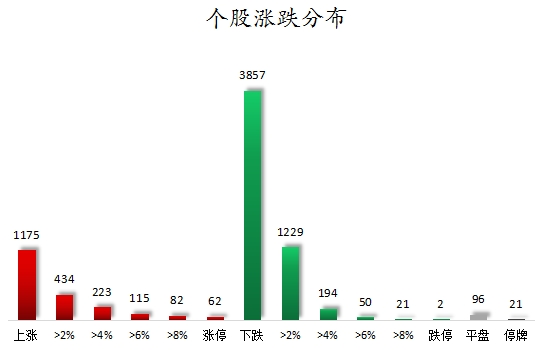
Market Overview - The Shanghai Composite Index closed at 3384.82 points, down 0.44%, with a trading volume of 557.43 billion yuan [1] - The Shenzhen Component Index closed at 10162.18 points, down 0.86%, with a trading volume of 857.95 billion yuan [1] - The ChiNext Index closed at 2037.27 points, down 1.17%, with a trading volume of 411.80 billion yuan [1] - The total trading volume of both markets was 1415.37 billion yuan, an increase of 128.96 billion yuan compared to the previous trading day [1] Sector Performance - Strong sectors included beauty care, biomedicine, and banking, while sectors like defense, computer, electronics, and communication saw declines [2] - The beauty care and biomedicine sectors showed significant gains, with ST United achieving nine consecutive limit-up trading days [5] - A total of 1175 stocks rose, while 3857 stocks fell, with 62 stocks hitting the limit-up and 2 stocks hitting the limit-down [2] Fund Flow Analysis - The net outflow of main funds from the two markets was 35.97 billion yuan, with the ChiNext experiencing a net outflow of 16.83 billion yuan [6] - Six sectors saw net inflows, with transportation leading at 320 million yuan, followed by public utilities and real estate [6] - A total of 2015 stocks experienced net inflows, with 26 stocks receiving over 100 million yuan in net inflows, led by Zhongke Shuguang with 569 million yuan [8] Individual Stock Highlights - Zhongke Shuguang had the highest limit-up order volume at 50.39 million shares, followed by Ningbo Shipping and Yiming Pharmaceutical [2] - The top stocks by net inflow included Zhongke Shuguang (1.98 billion yuan), Yiming Pharmaceutical (416 million yuan), and Ningbo Shipping (257 million yuan) [10] - The most significant net outflows were seen in Dongfang Wealth (768 million yuan) and Langchao Information (549 million yuan) [12] Institutional Activity - Institutions had a net sell of approximately 212 million yuan, with the highest net buy in Fuchun Co. at 48.92 million yuan [15] - The top net selling stocks included Kuaijingtong and Guangkang Biochemical, with net sells of 1.19 billion yuan and 1.05 billion yuan respectively [15]
新华视点·关注宠物经济丨看病比人贵 宠物保险靠不靠谱?
Xin Hua Wang· 2025-06-10 08:51
Core Insights - The increasing trend of pet insurance in China is driven by the rising number of pet owners and the high costs associated with pet medical care [2][3] - The pet insurance market is experiencing rapid growth, with a compound annual growth rate of 96.33% from 2016 to 2022, and a projected year-on-year growth of 129.5% in 2024 [3] Group 1: Market Trends - The penetration rate of pet ownership in China reached 22% in 2023, with over 120 million urban pets expected by 2024, marking a 2.1% increase from 2023 [2] - Pet medical expenses can be exorbitant, prompting more pet owners to seek insurance as a financial relief [2][3] Group 2: Insurance Products - The pet insurance market includes various products such as medical insurance, liability insurance, and accident insurance, with over 20 medical insurance options available [2][3] - Medical insurance premiums typically range from hundreds to thousands of yuan, with coverage amounts from several thousand to tens of thousands of yuan [3] Group 3: Challenges in the Industry - There are concerns regarding the complexity of insurance products, misleading sales tactics, and varying quality of customer service, which may lead to reduced coverage [4][5] - Many pet owners report difficulties in the claims process, with a significant number of complaints related to claim rejections and lengthy procedures [5][6] Group 4: Recommendations for Improvement - Industry experts suggest enhancing the regulatory framework for pet medical practices and establishing a shared information platform to improve claim assessments [7] - The use of advanced technologies such as biometric identification could streamline the insurance process and improve efficiency [7] - Clear communication regarding coverage, claims conditions, and exclusions is essential to protect consumer rights and enhance service quality [8]
合肥为何投建“宠物友好城市”|智库
Mei Ri Jing Ji Xin Wen· 2025-06-08 15:55
Core Insights - The "pet economy" is rapidly growing in China, with the number of pets expected to exceed 120 million by 2024, leading to a market size surpassing 300 billion yuan, reflecting a year-on-year growth of 7.5% [1][4] - Hefei is positioning itself as a "pet-friendly city" and aims to enhance its pet economy through a three-year action plan targeting a market scale of over 5 billion yuan by 2027 [2][4][7] - The city is leveraging its agricultural advantages to integrate pet economy development with rural revitalization, aiming to create a unique model that connects urban and rural resources [4][6] Industry Development - Hefei's government has recognized the pet economy as a significant new sector within modern agriculture, with strategic goals set for industry growth and innovation [7][10] - The city has established a complete industrial chain with over 50,900 pet-related enterprises, focusing on areas such as pet food, medical care, and grooming services [10][11] - Hefei is also investing in high-tech areas like smart wearables and vaccine development, aiming to transition from manufacturing to intelligent manufacturing [6][12] Challenges and Opportunities - Despite Hefei's strong momentum, it faces challenges in scaling up compared to leading cities like Shenzhen, which has a pet industry exceeding 10 billion yuan [15][16] - The local pet economy's service sectors, such as medical and insurance, are still fragmented, and there is a need for better integration with e-commerce and tourism [15][16] - Hefei must also address the lag in industry standards and attract high-end talent to ensure sustainable growth in the pet economy [13][16] Future Directions - Hefei can focus on climbing the value chain by advancing in precision pet healthcare and smart equipment [17] - The city should aim to establish industry standards and enhance cross-regional collaboration to expand its market influence [17] - Creating pet-friendly spaces and improving public services can help position Hefei as a unique city that balances technology with a warm lifestyle [18]

研判2025!中国宠物寄养行业市场政策、产业链、发展现状、竞争格局及发展趋势分析:犬猫寄养占比超80%[图]
Chan Ye Xin Xi Wang· 2025-06-08 02:10
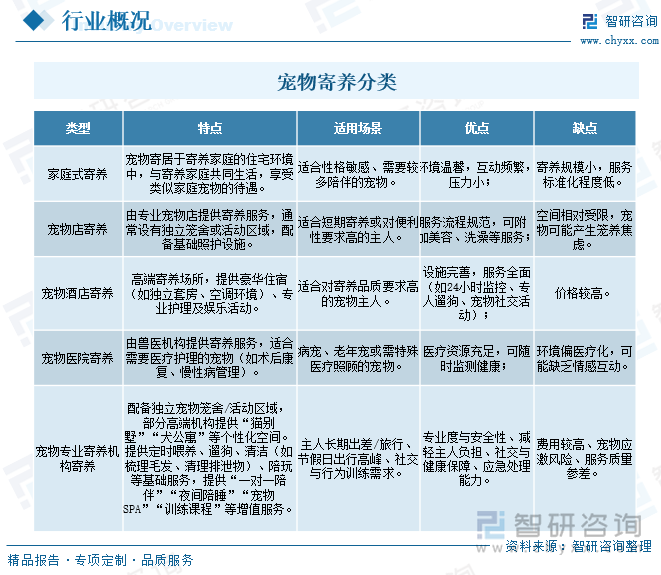
Overview - The pet industry has a long history in developed countries, while the domestic pet industry in China is relatively new but is rapidly growing due to rising consumer spending, changing attitudes, and demographic shifts such as aging population and single-child families [1][9] - The pet boarding sector, as a significant part of the pet industry, is experiencing a golden period of rapid development, with the market size expected to reach 2.81 billion yuan in 2024, representing a year-on-year growth of 24.91%, with over 80% of the market share attributed to dog and cat boarding [1][9] Development History - Pet boarding services began to gain attention in the 1990s as economic development and living standards improved, initially characterized by simple, home-based services [3] - In the 21st century, the focus shifted to service quality and user experience, expanding from basic care to include grooming, health care, and behavioral training, leading to the emergence of specialized boarding institutions [3] Industry Chain - The upstream of the pet boarding industry includes pet food, supplies, pharmaceuticals, and medical services [5] - The midstream consists of pet boarding service providers responsible for daily care, which may also offer medical care, grooming, and training services [5] - The downstream includes pet owners, whose demands directly influence industry development [5] Current Development - The number of pets in China is increasing, with pet cats expected to reach 71.53 million and pet dogs 52.58 million by 2024, contributing to the growth of the pet boarding industry [7][9] Competitive Landscape - The demand for pet boarding services is increasing, especially during holidays, attracting significant capital into the market, leading to intensified competition [11] - The market is primarily dominated by pet stores and veterinary hospitals, which account for over 60% of the market share [11] Key Companies - Beijing Petdog Technology Development Co., Ltd. has established a significant presence with 1,500 pet chain stores and a comprehensive pet education and training base [14] - Shenyang Qianxun Pet Medical Co., Ltd. focuses on animal rescue and offers a range of services including pet boarding, with all profits directed towards animal welfare initiatives [16] Future Trends - The pet boarding industry is expected to implement stricter standards and regulations to enhance service quality and ensure pet health and safety [18] - There will be a growing emphasis on personalized services based on individual pet characteristics, including tailored dietary plans and specialized activities [18]
宠物医疗发展提速 海正药业子公司新兽药获批
Zheng Quan Ri Bao Wang· 2025-06-07 00:43
Company Overview - Zhejiang Hai Zheng Pharmaceutical Co., Ltd. has received approval for its new veterinary drug, non-rocoxib chewable tablets, which are designed to alleviate pain and inflammation in dogs [1] - The approval of this drug marks a significant milestone in the company's strategic positioning within the veterinary medicine sector, enhancing its market competitiveness [1] Business Development - Hai Zheng Pharmaceutical has been focusing on the pet medicine sector, transitioning from its original emphasis on economic animals since 1992, and has made notable progress in recent years [2] - As of the end of 2024, the company operates two production bases with 25 production lines and has over 40 products with 71 approved registration numbers [2] - The company's e-commerce performance has surpassed 100 million yuan in 2024, with a cumulative growth of 11 times over five years, indicating a strong expansion in its pet medicine business [2] Financial Performance - In 2024, the revenue from anti-parasitic and veterinary products reached 713 million yuan, reflecting a year-on-year decline of 14.07%, although the gross profit margin increased by 1.55 percentage points due to improved cost control [2] - Despite not yet achieving profitability, the subsidiary Hai Zheng Animal Health reported a revenue increase of 3.21% to 410 million yuan [2][3] Industry Trends - The pet medical industry in China is experiencing rapid growth, with the market size reaching 94 billion yuan in 2024, a year-on-year increase of 14.49% [4] - The approval of 52 new pet drugs by the Ministry of Agriculture and Rural Affairs in 2024, with 31 being domestically produced, indicates a significant enhancement in domestic drug development capabilities [4] - The integration of AI technology in the pet medical field, exemplified by the launch of the Vet1 AI model, represents a breakthrough in the industry [4] Future Outlook - The pet medical market is expected to continue expanding as pet owners increasingly prioritize their pets' health, driven by technological advancements and new medical models [5] - Companies are encouraged to leverage opportunities through innovation, service upgrades, and strategic partnerships to enhance competitiveness and promote sustainable industry growth [6]

卖“毛孩子”食品一年赚1.8亿元,但佩蒂股份仍面临新抉择
2 1 Shi Ji Jing Ji Bao Dao· 2025-06-06 13:03
Core Viewpoint - The pet economy is experiencing rapid growth, with a market size exceeding one trillion yuan and an annual growth rate of over 20% [1] Company Overview - Petty Co., founded in 1992, initially focused on dog chew toys and has since expanded into various pet food categories, becoming a leader in the pet food industry [2][3] - The company went public in 2017, becoming the first pet food company listed on the A-share market [6] Financial Performance - In 2024, Petty Co. achieved a revenue of 1.659 billion yuan, a year-on-year increase of 17.56%, and a net profit of 182 million yuan, recovering from a loss in 2023 [8][10] - The company faced a decline in Q1 2025, with revenue dropping by 14.40% to 329 million yuan and net profit decreasing by 46.71% to 22 million yuan [2] Market Position - Petty Co. primarily relies on overseas markets, with over 80% of its revenue coming from exports, while domestic sales remain relatively small [10] - The company is competing in a crowded pet food market, where it has seen stock price fluctuations compared to peers like Guai Bao Pet and Zhong Chong Pet, which have experienced significant stock price increases [13][14] Strategic Direction - Petty Co. is at a strategic crossroads, deciding whether to continue focusing on overseas OEM advantages or to invest more heavily in domestic brand development [11][14] - The company has begun to emphasize its own brands, with a 33% increase in revenue from its proprietary brands in 2024, indicating a shift towards domestic market engagement [10][12]
6月6日午间收评:三大指数小幅下跌,算力概念股延续反弹
news flash· 2025-06-06 03:37
Market Overview - The market experienced a morning adjustment with the three major indices showing slight declines. The Shanghai Composite Index fell by 0.06%, the Shenzhen Component decreased by 0.18%, and the ChiNext Index dropped by 0.48% [1][1][1] Sector Performance - The computing power concept stocks continued to rebound, with companies like Nanling Technology, Meili Cloud, and Ningbo Construction hitting the daily limit [1] - Agricultural chemical stocks remained strong, with Su Li Co., Xian Da Co., and Changqing Co. also reaching the daily limit [1] - Cyclical stocks in oil and gas, as well as coal, saw gains, with Da You Energy, Ren Zhi Co., and Fu Da Alloy hitting the daily limit [1] - Conversely, sports concept stocks declined, with Jinling Sports and Kangliyuan dropping over 10% [1] Stock Movement - A total of 2,091 stocks rose, with 60 stocks hitting the daily limit; 2,792 stocks fell, with no stocks hitting the lower limit; 14 stocks experienced a "炸板" event, resulting in a 25% failure rate [1][1][1]