智能驾驶

Search documents
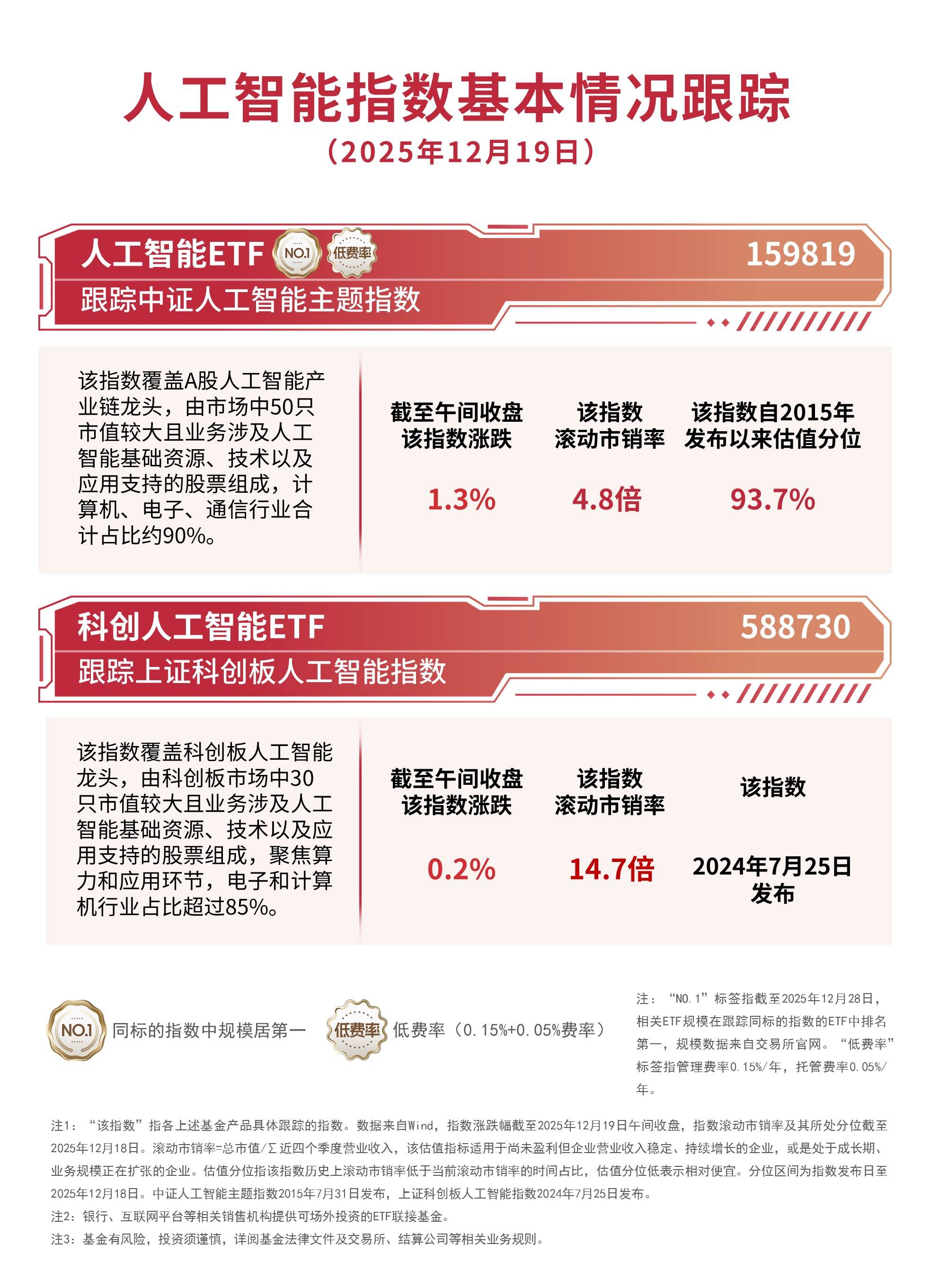
科技方向局部活跃,人工智能ETF(159819)标的指数半日涨超1%
Sou Hu Cai Jing· 2025-12-19 05:13
Group 1 - The technology sector is showing localized activity, with concepts such as CPO, intelligent driving, and automotive parts leading in gains [1] - As of the midday close, the China Securities Artificial Intelligence Theme Index increased by 1.3%, while the Shanghai Stock Exchange Sci-Tech Innovation Board Artificial Intelligence Index rose by 0.2% [1] - The Artificial Intelligence ETF (159819) recorded a trading volume exceeding 300 million yuan, indicating an increase compared to the previous day [1]

佑驾创新(02431.HK)入选恒生港股通电子主题指数,智驾板块持续走高
Ge Long Hui· 2025-12-19 05:10
近日,港股电子行业迎来重磅利好,恒生指数公司于18日正式推出「恒生港股通电子主题指数」,精准 聚焦港股通范围内的优质电子行业上市公司。 作为国内领先的智能驾驶及智能座舱解决方案供应商,佑驾创新(02431.HK)凭借扎实的业务实力与前瞻 的战略布局,成功入选该指数成份股,与地平线机器人-W(09660.HK)、速腾聚创(02498.HK)、黑芝麻智 能(02533.HK)等行业龙头共同跻身40家核心标的行列。 受此利好提振,佑驾创新股价表现强势,今日早盘一度暴涨超15%,充分彰显了资本市场对公司发展潜 力的高度认可。截至发稿,佑驾创新收涨12.22%,报12.580港元,成交额2.64亿港元,成为港股电子板 块的亮眼标的。 此次成功入选,不仅是恒生指数公司对佑驾创新在智能驾驶领域行业地位的权威认证,更体现了市场对 公司核心竞争力与发展前景的充分信赖。 在行业政策红利与技术创新的双重驱动下,佑驾创新凭借在汽车领域的技术沉淀与全维布局,有望持续 受益于行业发展浪潮,为推动中国智能驾驶产业高质量发展贡献力量。 据恒生指数公司公告显示,「恒生港股通电子主题指数」核心覆盖半导体及基本电子零部件、电信设备 及零件、资讯科 ...
A股,突变!重磅利好,直线拉涨停
Zhong Guo Ji Jin Bao· 2025-12-19 05:07
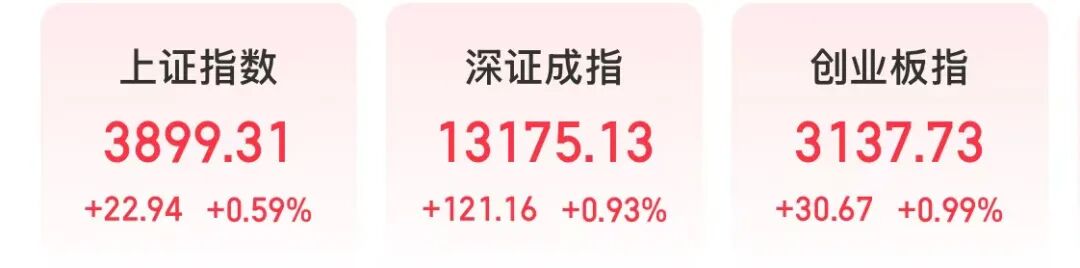
Market Overview - The A-share market experienced a collective rise with over 4,600 stocks increasing in value, leading to a positive performance across major indices. The Shanghai Composite Index rose by 0.59%, the Shenzhen Component Index by 0.93%, and the ChiNext Index by 0.99% [1][2]. Retail Sector - The retail sector led the market gains, with significant increases in stocks related to cross-strait integration, duty-free shops, and nuclear fusion concepts. The retail sector's performance was highlighted by a total trading volume of 1.1 trillion yuan in the morning session [2][6]. - Notable individual stock performances included Debi Group, which hit a 20% limit up, and several other retail stocks such as Central Plaza and Shanghai Jiubai, which also saw substantial gains [5][6]. Automotive Sector - The automotive sector showed strong activity, particularly in areas related to smart driving and vehicle-road collaboration. Stocks like Luochang Technology and Weidi Co. saw limit-up increases, while others like Aerospace Intelligence and Yunyi Electric rose by over 10% [7][8]. - The approval of L3-level conditional autonomous driving vehicles by the Ministry of Industry and Information Technology marks a significant step towards the commercialization of smart driving technology in China [9]. Real Estate Sector - The real estate sector also experienced gains, with stocks such as Sanxiang Impression and Hualian Holdings reaching their daily limit up. This reflects a positive sentiment in the real estate market amid ongoing developments [9][10]. Cross-Strait Integration - The cross-strait integration index saw a notable rise, with stocks like Haixia Innovation and China Wuyi experiencing significant increases in their share prices [10][11].

A股,突变!重磅利好,直线拉涨停
中国基金报· 2025-12-19 05:03
Market Overview - A-shares experienced a collective rise with over 4,600 stocks increasing in value, leading to a market turnover of 1.1 trillion yuan by midday [3][4] - Major indices showed positive performance, with the Shanghai Composite Index up by 0.59%, the Shenzhen Component Index up by 0.93%, and the ChiNext Index up by 0.99% [2] Retail Sector - The retail sector led the market gains, with significant increases in stocks related to cross-border e-commerce, duty-free shops, and new economic initiatives [4][8] - Notable individual stock performances included Debi Group reaching a 20% limit up, and several other retail stocks like Central Plaza and Shanghai Jiubai also showing strong gains [10][12] Automotive Sector - The automotive sector was notably active, with stocks related to smart driving and vehicle connectivity seeing substantial increases [14][19] - Key performers included Haoen Automotive and Weidi Co., both achieving over 10% gains, while Zhejiang Shibao experienced a four-day consecutive rise [16][17] Real Estate Sector - The real estate sector showed signs of recovery, with several stocks such as Sanxiang Impression and Hualian Holdings hitting their daily limit up [19][20] Cross-Strait Integration - The Cross-Strait Integration Index saw a significant midday surge, with stocks like Haixia Innovation and China Wuyi leading the charge [21][22]



A股震荡走强,沪指半日收涨0.59%
Sou Hu Cai Jing· 2025-12-19 04:49
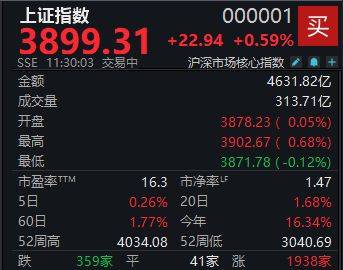
12月19日,A股震荡走强,截至上午收盘,上证指数涨0.59%报3899.31点,深证成指涨0.93%,创业板指涨0.99%,沪深300涨0.61%,北证50涨0.92%,科创 50涨0.69%,中证A500涨0.76%,A股半日成交1.1万亿元。 | 上证指数 | | 000001 | | | --- | --- | --- | --- | | | | +22.94 +0.59% | क्रे | | SSE 11:30:03 交易中 | | 沪深市场核心指数 / ■ + | | | 全额 | | | 4631.82亿 | | 成交量 | | | 313.71亿 | | | | | 3878.23 ( 0.05%) | | 重高 | | | 3902.67 ( 0.68%) | | 最低 | | | 3871.78 (-0.12%) | | 市智率TM | 市清流出 16.3 | | 1.47 | | 5日 | 0.26% 20日 | | 1.68% | | 60日 | 1.77% 今年 | | 16.34% | | 52周高 | 4034.08 52周低 | | 3040.69 | | 2505 | 22 ...
火爆!超4600只个股上涨,三大指数集体拉升!大消费全线爆发,1600亿免税龙头狂飙7%...
雪球· 2025-12-19 04:47
Market Overview - The market showed a strong upward trend in the early session, with the Shanghai Composite Index rising by 0.59%, the Shenzhen Component Index by 0.93%, and the ChiNext Index by 0.99% at the close [3]. - The total trading volume in the Shanghai and Shenzhen markets reached 1.09 trillion yuan, an increase of 42.1 billion yuan compared to the previous trading day, with over 4,600 stocks rising [4]. Consumer Sector Performance - The consumer sector experienced a collective surge, particularly in retail and dairy industries, with stocks like Central Plaza, Shanghai Jiubai, and Zhuangyuan Pasture hitting the daily limit [5][8]. - Notable stocks included Debi Group (+19.99%), Zhejiang Meida (+9.95%), and Zhongguo Zhongmian (+7.25%) [9][11][12]. Smart Driving Concept - The smart driving sector saw significant activity, with Zhejiang Shibao achieving a four-day consecutive limit-up, supported by strong buying interest [18]. - The Ministry of Industry and Information Technology announced the first batch of L3 level conditional autonomous driving vehicle approvals, marking a key step towards commercial application [18]. Commercial Aerospace Sector - The commercial aerospace sector showed renewed strength, with Aerospace Intelligence rising over 15% and several other stocks like Huati Technology and Aerospace Development also performing well [20][22]. - The upcoming period from December 2025 to early 2026 is expected to witness a series of maiden flights for reusable rockets, driven by private aerospace companies [22]. Policy Support for Consumption - Recent government policies aim to boost consumption through new business models and pilot programs in 50 cities, indicating a favorable environment for the consumer sector [15]. - Analysts express optimism regarding consumer spending, citing that disposable income growth is outpacing consumption growth, suggesting a recovery in consumer confidence [15].

突然集体拉升!发生了什么
Zhong Guo Zheng Quan Bao· 2025-12-19 04:28
Market Overview - A-shares experienced a sudden collective surge, with significant increases in real estate, innovative pharmaceuticals, and large financial sectors, particularly in securities and diversified finance, which are sensitive to interest rates [1] - The Shanghai Composite Index rose by 0.59%, the Shenzhen Component Index by 0.93%, and the ChiNext Index by 0.99%, with over 4,600 stocks rising and a half-day trading volume of 1.1 trillion yuan [1] Consumer Sector - The consumer sector continued to rise, led by retail and dairy industries, with stocks like Central Plaza and Shanghai Jiubai reaching their daily limit [2] Automotive Industry - The automotive supply chain showed strong performance, with segments such as auto parts, services, dismantling, and autonomous driving experiencing increases [3] - Notable stocks included Haoen Automotive (301488) up by 17.09%, Aerospace Intelligent Manufacturing (300446) up by 15.91%, and Zhengqiang Co. (301119) up by 14.10% [4] Autonomous Driving - The Ministry of Industry and Information Technology announced the first batch of L3 conditional autonomous driving vehicle approvals, marking a significant step towards commercialization [6] - The approved models are Changan SC7000AAARBEV and Arcfox BJ7001A61NBEV, which will undergo road trials in designated areas of Beijing and Chongqing [6] - Analysts predict that the commercialization of intelligent driving will accelerate by 2026, with L3 vehicles paving the way for future advancements [6][7] Controlled Nuclear Fusion - The controlled nuclear fusion sector saw gains, with companies like Liyuan Technology and Hongwei Technology experiencing significant stock increases [7] - The merger between Trump Media & Technology Group and TAE Technologies, valued at over $6 billion, aims to integrate capital channels and fusion technology to support AI development [10] - The industry is entering a capital expenditure expansion phase, with significant project bidding activity, particularly in the BEST project, which has a bidding scale of approximately 2.62 billion yuan [10]


深成指、创业板指涨超1%
Xin Lang Cai Jing· 2025-12-19 04:18
来源:上海证券报·中国证券网 上证报中国证券网讯 12月19日,深成指、创业板指涨超1%。截至10时14分,沪指涨0.57%,深证成指 涨1.01%,创业板指涨1.27%。盘面上看,可控核聚变、商业航天、智能驾驶等板块涨幅居前。 来源:上海证券报·中国证券网 上证报中国证券网讯 12月19日,深成指、创业板指涨超1%。截至10时14分,沪指涨0.57%,深证成指 涨1.01%,创业板指涨1.27%。盘面上看,可控核聚变、商业航天、智能驾驶等板块涨幅居前。 ...

港股午评:恒指涨0.65%,恒生科指涨1.14%,科技股普涨,医药类股集体活跃,中资券商股走强
Jin Rong Jie· 2025-12-19 04:17
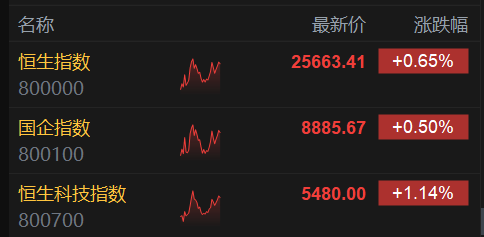
截至午间收盘,港股恒生指数涨0.65%,报25663.41点,恒生科技指数涨1.14%,报5480点,国企指数涨 0.5%,报8885.67点,红筹指数涨0.16%,报4056.3点。 大型科技股中,阿里巴巴-W涨0.76%,腾讯控股涨1.16%,京东集团-SW跌0.53%,小米集团-W涨 0.2%,网易-S涨1.51%,美团-W涨2.27%,快手-W涨0.99%,哔哩哔哩-W涨0.78%。 生物医药股普涨,药明康德涨超6%。北京时间12月18日凌晨,参议院官网显示,搭载修订版《生物安 全法案》的美国2026财年国防授权法案(2026NDAA)获通过。新版本生物安全法未具体点名任何一家 公司。有券商研究机构认为,2025年法案进展阶段性落地,行业回归中长期增量逻辑。 中资券商股走强,招商证券涨超3%。中信建投发布研报称,中金公司发布拟换股方式吸收合并东兴证 券,信达证券系汇金体系内券商牌照整合,换股吸收合并预案落地,中金为存续主体且不涉及配套募 资。合并后规模效应显著,三家机构核心能力形成协同互补,加之中金具备成熟并购经验,过往成功整 合中投证券,本次合并推进效率可期;合并之后,中金公司资本实力、区域服务能力 ...
异动盘点1219 |内房股普涨,智驾概念股继续走高;美股AI应用软件股走高,美光科技大涨10.21%
贝塔投资智库· 2025-12-19 04:01
Group 1 - The Hong Kong property stocks experienced a general rise, with Poly Real Estate Group increasing by 8.65%, China Jinmao by 2.48%, New Town Development by 3.9%, and China Aoyuan by 1.19% [1] - Heptagon Pharmaceuticals saw a nearly 7% increase after announcing a global strategic cooperation and licensing agreement with Bristol-Myers Squibb to discover and develop next-generation bispecific antibodies [1] - The stock of Ganwan rose nearly 6%, with a cumulative increase of over 36% this month, following the announcement of a zero-coupon convertible bond issuance of HKD 468 million (approximately USD 60 million) fully subscribed by LMR [1] - HashKey Holdings increased by over 3.3%, as HashKey Exchange became the first licensed virtual asset trading platform in Hong Kong for retail users [1] - Innovation Industry rose by 1.47%, with a report indicating that the company will achieve an electrolytic aluminum capacity of 788,000 tons and alumina capacity of 3.2 million tons by December 2025, with an alumina self-sufficiency rate exceeding 100% [1] Group 2 - Intelligent driving concept stocks continued to rise, with Zhejiang Shibao up 10.63%, Youjia Innovation up 12.58%, Zhixing Technology up 3.43%, and XPeng Motors up 5.34%, following the announcement of the first batch of L3-level conditional autonomous driving vehicle permits by the Ministry of Industry and Information Technology [2] - Zhiyuan Holdings rose over 7% after announcing a subscription agreement for the issuance of 515 million new shares [2] - CIMC Group increased by over 11% after announcing plans to increase the share repurchase quota to enhance shareholder rights and investor confidence [2] Group 3 - China Duty Free Group rebounded over 7% after winning the bid for duty-free store projects at Shanghai Pudong International Airport and Shanghai Hongqiao International Airport [3] - Changfei Optical Fiber and Cable rose over 10.5%, with a cumulative increase of over 30% in the last three trading days, driven by market attention on fiber optic cable price increases and a report indicating a recovery in ordinary cable business [3] Group 4 - AI application software stocks in the US rose, with Palantir up 4.74%, Reddit up 1.76%, and Applovin up 5.67%, as Benchmark raised Applovin's target price to USD 775 [4] - Eli Lilly increased by 1.45% after announcing positive results for its oral weight loss drug orforglipron in a Phase 3 clinical trial [4] - TSMC rose by 2.79% as it prepares to start mass production of its 2nm process by the end of the year, with a reported investment of USD 28.6 billion needed for new factories [4] - SoFi Technologies increased by 4.04% after launching a USD-backed stablecoin, SoFiUSD, to enhance its digital asset and payment infrastructure [4] Group 5 - Tesla rose by 3.45% as it began testing fully autonomous Robotaxi in Austin, marking a critical phase in its autonomous driving commercialization [5] - Computer hardware stocks fell, with HP down 4.01% and Dell Technologies down 3.87%, as analysts expressed caution over the cyclical challenges facing IT hardware companies [5] - Accenture fell by 1.38% despite exceeding market expectations in its Q1 earnings report [5] - Bitcoin-related stocks showed mixed results, with Strategy down 1.33% and Coinbase down 2.04%, while Circle rose by 2.26% and Robinhood by 1.17% [5] Group 6 - Trump Media & Technology Group surged by 41.93% after signing a final merger agreement with TAE Technologies, valuing the all-stock transaction at over USD 6 billion [6] - Micron Technology rose by 10.21% after reporting a 57% year-over-year increase in adjusted revenue for Q1, exceeding analyst expectations [6]