
绿色低碳转型

Search documents
CCER方法学加速扩容:一次性发布6项方法学征求意见,A股上市公司抢滩布局
Mei Ri Jing Ji Xin Wen· 2025-10-19 07:17
Core Points - The recent expansion of CCER methodologies from 4 to 13 indicates a significant shift towards including high-carbon to low-carbon transition areas, such as building energy efficiency and agricultural waste management [1][2][3] - Companies like Longyuan Power and Yueyang Forest Paper view the accelerated growth of the CCER market as an opportunity to diversify their business and enhance China's influence in global carbon governance [1][2] - The release of the fifth batch of methodologies aligns with national policies aimed at promoting green and low-carbon transitions, as well as external pressures from the EU's Carbon Border Adjustment Mechanism (CBAM) set to be implemented in January 2026 [1][5] Summary by Sections CCER Market Expansion - The Ministry of Ecology and Environment has released a total of 15 CCER methodologies this year, indicating a rapid expansion of the market [2][3] - The expansion signifies a transition from pilot projects to a more mature market that covers the entire industry chain [2][3] Company Responses - Longyuan Power has established a specialized carbon asset management company to handle CCER project development and trading, viewing it as an additional value to their clean energy business [3][4] - Yueyang Forest Paper sees CCER as a strategic tool for business transformation, aiming to integrate carbon asset development with traditional operations to enhance profitability [4][5] Challenges and International Integration - Experts caution that while the CCER market is expanding, it still faces challenges in meeting international standards, particularly regarding project verification and data transparency [6][7] - The current methodologies may not yet be ready for international carbon trading under the Paris Agreement due to differences in certification standards and the need for dynamic updates [6][7]


在绿水青山间追求共同现代化——中国推动共建清洁美丽世界的全球回响
Xin Hua She· 2025-10-18 15:53
Group 1 - The core viewpoint emphasizes China's commitment to ecological civilization and sustainable development, showcasing its efforts to harmonize economic growth with environmental protection [1][3][8] - During the 14th Five-Year Plan period, China's ecological environment quality has improved significantly, with PM2.5 concentration in cities decreasing by 16.3% compared to 2020, and the proportion of good water quality reaching 90.4% [3][6] - China has received numerous global honors in the field of ecological environment, reflecting international recognition of its green development philosophy and practices [3][4] Group 2 - The article highlights successful ecological projects in various regions, such as the green protective belt in the Taklamakan Desert and the transformation of energy sectors in Inner Mongolia [2][4] - China's ecological governance is characterized by practical actions rather than mere rhetoric, as evidenced by its collaborative efforts with developing countries to address environmental challenges [5][6] - The article discusses China's role in global ecological governance, emphasizing its commitment to multilateralism and cooperation in addressing climate change [6][7] Group 3 - By 2035, China aims to reduce greenhouse gas emissions by 7%-10% from peak levels and increase the share of non-fossil energy consumption to over 30% [6][7] - China has established the world's largest and fastest-growing renewable energy system, contributing significantly to global green development [7][8] - The article concludes with a call for international collaboration towards building a community of shared future for mankind, emphasizing the importance of sustainable development [8]
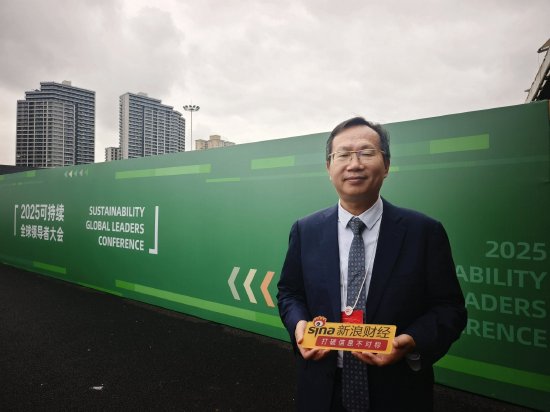
对话ISSB主席特别顾问张政伟:中国正在进入可持续信息披露事业高质量发展新阶段
Xin Lang Cai Jing· 2025-10-18 11:00
Core Viewpoint - The 2025 Sustainable Global Leaders Conference emphasizes China's unwavering commitment to green and low-carbon transformation since the announcement of the "dual carbon" goals in 2020, regardless of international circumstances [1][3]. Group 1: China's Green Transition Strategy - The concept of green and low-carbon development is a crucial part of sustainable development, and the advancement of sustainable information disclosure in China is equally steadfast [3]. - By 2030, China aims to establish a unified national sustainable information disclosure standard system, along with various policies and management systems related to carbon control and evaluation [3]. Group 2: Sustainable Information Disclosure - The introduction of high-quality sustainable information disclosure is seen as a new phase for the development of sustainable information in China, which will lead to better decision-making and the identification of high-quality investment opportunities [3][4]. - High-quality information disclosure serves a dual purpose: it acts as a "mirror" to filter out greenwashing and reveals real risks and opportunities [4]. Group 3: Future Outlook - The focus on high-quality information disclosure is expected to drive the growth of high-quality green, low-carbon, and sustainable investments in China, presenting significant opportunities for global investors [5].

新能源汽车在广交会上成外商“新宠” 中国智造为汽车“出海”提速
Zhong Guo Xin Wen Wang· 2025-10-18 01:57
第138届中国进出口商品交易会(广交会)正在广州举行,新能源汽车展区成为亮点之一。不少新能源车 企带来智能新品与全场景解决方案,其技术表现展现了当前出口的良好势头。 https://m.chinanews.com/wap/detail/chs/sp/10500392.shtml?params=eyJwbGF5TW9kZSI6InZlcnRpY2FsIn0= 在该展区记者看到,新能源车企展位上外商云集,有的正在排队上车体验车辆的全新性能,有的则与车 企工作人员了解车辆的出口详情。根据中国机电产品进出口商会数据,2025年前8个月,代表绿色低碳 转型的新能源汽车实现了明显增长。(记者 韦杰夫 蔡敏婕 广东报道) 视频请点击 ...
纵深推进产业强省建设 云南多点发力抓投资促转型
Jing Ji Ri Bao· 2025-10-17 21:43
Core Insights - Yunnan Province is focusing on resource endowment and distinctive features to enhance its resource economy, park economy, and port economy, with industrial development shifting towards a diversified support from traditional and emerging industries [1] - The proportion of industrial investment in fixed asset investment is projected to increase from 26.7% in 2020 to 52.1% in 2024 [1] - Traditional industries like energy and non-ferrous metals remain strong, while green aluminum, silicon photovoltaic, and new energy batteries are emerging as new growth engines [1] Group 1 - The added value of key resource industries accounts for approximately 45% of the regional GDP [1] - Yunnan is transitioning towards a green and low-carbon economy, with total installed power capacity rising from 103 million kilowatts in 2020 to 167 million kilowatts, including 150 million kilowatts of green power [1] - The construction of a green power certificate service platform at the Kunming Power Trading Center is expected to maintain an annual transfer scale of over 100 million green certificates, equivalent to more than 100 billion kilowatt-hours of electricity [1] Group 2 - Yunnan is accelerating the formation of a multi-point investment landscape, with significant projects like 203,000 tons of green aluminum driving the industry chain towards deep processing [2] - The output value of green energy and non-ferrous metal industries has surpassed 400 billion yuan, while tourism remains a trillion-yuan pillar industry [2] - Since 2022, Yunnan has held major industrial project scheduling meetings for 15 consecutive quarters, resulting in the implementation of over 9,000 major industrial projects [2] Group 3 - To stimulate private investment, Yunnan is advancing investment attraction and optimizing the business environment, with the share of private investment rising from 44% in 2021 to 45.2% in the first eight months of this year [2] - The proportion of industrial private investment in total private investment has increased from 42.6% to 67.5% [2]
节能风电(601016):三季度发电量点评:短期经营端承压,中长期风电面临多重催化,重视公司后续投资机遇
Huachuang Securities· 2025-10-17 13:55
Investment Rating - The report maintains a "Recommendation" rating for the company, indicating an expectation to outperform the benchmark index by 10%-20% over the next six months [1][17]. Core Insights - The company is currently facing short-term operational pressures, but the long-term wind power sector presents multiple catalysts for growth. The report emphasizes the importance of future investment opportunities for the company [1][6]. - The report highlights a significant decline in total power generation for Q3 2025, with a total of 25.86 billion kWh, down 7.81% year-on-year. However, offshore wind generation showed a notable increase of 27.03% [6]. - The report outlines that the wind power asset yield is expected to stabilize with the implementation of policy 136, and subsidy issues that have troubled the industry are anticipated to gradually resolve, improving cash flow for companies [6]. Financial Summary - Projected total revenue for 2024 is 5,027 million, with a slight decline expected in 2025 to 5,003 million, followed by an increase to 5,608 million in 2026 and 5,939 million in 2027. The year-on-year growth rates are projected at -1.7%, -0.5%, 12.1%, and 5.9% respectively [2][7]. - The net profit attributable to the parent company is forecasted to be 1,330 million in 2024, decreasing to 1,211 million in 2025, before rising to 1,538 million in 2026 and 1,626 million in 2027, with corresponding growth rates of -12.0%, -9.0%, 27.0%, and 5.7% [2][7]. - The report provides a target price of 4.3 yuan for 2026, which represents a potential upside of approximately 37% from the current price of 3.14 yuan [2][6]. Industry Outlook - The report emphasizes the clear goals for new energy development set by the government, aiming for non-fossil energy consumption to account for over 30% of total energy consumption by 2035, with wind and solar power capacity expected to increase significantly [6]. - Offshore wind power is identified as a potential growth opportunity, with government policies expected to drive development in this area. The report notes that offshore wind resources are primarily located in coastal provinces with high electricity demand, suggesting a favorable growth environment [6].

包钢电气公司“新产品、新技术交流推介会”举行
Xin Hua Cai Jing· 2025-10-17 11:59
Core Insights - The event held by Baogang Electric Company showcased the company's commitment to high-end, green, and intelligent industrial transformation, emphasizing its role as a key player in China's steel and rare earth industries [1][2] - Baogang Group has invested nearly 10 billion yuan in ultra-low emission modifications, becoming the first company in the region to achieve A-level environmental performance in the steel industry [1] - The company aims to integrate rare earth permanent magnet technology into various industry applications, promoting green and low-carbon transformation in the region [1] Summary by Sections Company Achievements - Baogang Electric Company has developed into the largest motor, generator, and transformer repair base in Northwest China, serving multiple industries including mining, metallurgy, and thermal power [1] - The company released four core achievements at the promotion meeting, including permanent magnet motors, energy-saving transformers, turbine generator energy-saving technology, and smart diagnostic technology [2] Future Goals - The company seeks to build a technological innovation ecosystem with industry peers and partners, aiming to deeply integrate technologies like rare earth permanent magnets and energy-saving transformers into various application scenarios [1][2]
碳市场周报-20251017
Jian Xin Qi Huo· 2025-10-17 10:09
Group 1: Report General Information - Report name: Carbon Market Weekly Report [2] - Date: October 17, 2025 [2] Group 2: Research Team - Energy and Chemical Research Team includes researchers for different areas such as crude oil and fuel (Li Jie, CFA), PTA/MEG (Ren Junchi), industrial silicon/polycrystalline silicon (Peng Haozhou), polyolefins (Peng Jinglin), and pulp (Liu Youran) [3] Group 3: Carbon Market Weekly Overview - In the third week of October, the national carbon market carbon quota price continued to decline. The weekly price was 53.99 yuan/ton, with a weekly decline of 7.23% [4] - The expected buying price of national carbon emission allowances (CEA) in October 2025 is 55.39 yuan/ton, the selling price is 60.63 yuan/ton, and the mid - price is 58.00 yuan/ton [4] - The expected buying price of national carbon emission allowances (CEA) in December 2025 is 62.10 yuan/ton, the selling price is 70.45 yuan/ton, and the mid - price is 66.28 yuan/ton [4] - The expected buying price of China Certified Emission Reduction (CCER) in October 2025 is 69.00 yuan/ton, the selling price is 76.83 yuan/ton, and the mid - price is 72.92 yuan/ton [4] Group 4: Market News - On September 24, 2025, at the China Carbon Market Conference, Deputy Minister Li Gao of the Ministry of Ecology and Environment released the "National Carbon Market Development Report (2025)", introducing the progress and achievements of the national carbon market since 2024. The Ministry will speed up the construction of a unified national carbon market, improve the system, expand the coverage, enhance market vitality, enrich trading varieties, and strengthen international cooperation [6] - Minister Huang Runqiu reported on China's work on climate change response, carbon peaking, and carbon neutrality. Although significant achievements have been made, challenges remain in green and low - carbon transformation. Some localities are still blindly launching "two high" (high - energy - consuming and high - polluting) projects, which is contrary to the goal of carbon peaking by 2030 [6]
证监会毕晓颖:引导上市公司做好高质量的可持续披露|资本市场
清华金融评论· 2025-10-17 09:11
Core Viewpoint - The article emphasizes the importance of sustainable information disclosure for listed companies in China, highlighting the progress made in the regulatory framework and the increasing rate of disclosure among companies [4][5][6]. Summary by Sections Sustainable Disclosure System - The China Securities Regulatory Commission (CSRC) has established a sustainable disclosure system for listed companies, which includes mandatory guidelines from stock exchanges and reference guidelines for best practices [4][6]. - The new "National Nine Articles" aims to enhance the sustainable information disclosure system for listed companies, marking the first systematic regulation in this area [4][6]. Disclosure Rate and Market Impact - In 2023, 1,869 listed companies disclosed their 2024 sustainable reports, achieving an overall disclosure rate of 34.7%, an increase of approximately 10 percentage points compared to the previous two years [5][6][7]. - The market capitalization of the disclosing companies accounts for about 70% of the total market [5][6]. Quality of Disclosure - The content of the disclosures has become more detailed and objective, with 99.3% of companies reporting quantitative indicators, and over 80% disclosing more than 25 indicators [7]. - There has been a significant increase in the disclosure of climate-related risks and greenhouse gas emissions, with 62.1% and 65.9% of companies respectively reporting these metrics [7]. Governance and Focused Topics - Companies are increasingly establishing governance structures for sustainability, with 67.3% having a governance framework and 63.9% disclosing strategic information [7]. - The introduction of guidelines has led to a more focused approach to sustainability topics, with increased attention on issues such as climate change and fair treatment of small and medium enterprises [7]. ESG Ratings Improvement - By the end of last year, one-third of companies in the Shanghai and Shenzhen stock markets saw improvements in their MSCI ESG ratings, with the proportion of companies rated AAA or AA rising from 0% five years ago to 7.2% [7]. Future Directions - The CSRC plans to continue refining the sustainable disclosure system by learning from international practices while adapting to local conditions [9][10]. - The focus will be on gradually implementing mandatory disclosures for key companies, with approximately 400 companies required to disclose by 2026, while encouraging voluntary disclosures from others [10][11]. - The emphasis will remain on high-quality development as the foundation for effective sustainable disclosures, with ongoing training and support for companies [11].
第十四届江苏(盛泽)纺织品博览会暨2025苏州湾时尚周开幕
Zhong Guo Jing Ji Wang· 2025-10-17 08:26
Core Insights - The 14th Jiangsu (Shengze) Textile Expo and 2025 Suzhou Bay Fashion Week opened on October 15, showcasing Shengze's reputation as a textile hub with over 2,500 textile enterprises, including two Fortune Global 500 companies, and an annual trading volume exceeding 200 billion yuan in the Oriental Silk Market [1][2] - The event highlighted Shengze's commitment to innovation and modernization in the textile industry, positioning it as a leader in China's textile modernization efforts, with a focus on sustainable and high-quality development [1][3] Group 1 - The opening ceremony featured the release of the Wujiang Textile Industry Transformation and Upgrade Strategy, the Shengze Textile Industry Transformation Platform, and the "Smart Green Together" initiative for low-carbon development [2] - The digital platform "Cloud Textile City" was launched, along with the signing of several projects aimed at enhancing green innovation and blockchain technology in the textile supply chain [2] - The event included the "Oriental Cup · 2025 China Women's Wear Design Competition," showcasing designs that utilized high-quality fabrics from Shengze, emphasizing the transformation from fabric to finished garments [2] Group 2 - The Shengze Textile Expo has evolved into a high-level platform for industry trends and global resource connections, featuring over 300 textile enterprises and more than 1,500 global buyers for a three-day supply-demand matching event [3] - The expo will host nine fashion shows, three top industry competitions, and two international conferences, reinforcing the theme "The World Fabric Looks at Shengze" and promoting high-end textile leadership [3] - Key figures from various textile and fashion associations, as well as government officials, attended the opening ceremony, highlighting the collaborative spirit of the industry [3]