
AI芯片

Search documents
景嘉微产品销量下降一年半亏2.53亿 拟2.2亿收购亏损公司溢价率3647%
Chang Jiang Shang Bao· 2025-08-19 23:26
Core Viewpoint - Jiangjiawei is facing significant operational pressure, leading the company to seek external acquisitions to enhance its overall strength amid declining performance metrics [1][3]. Financial Performance - In the first half of 2025, Jiangjiawei reported revenue of 193 million yuan, a year-on-year decrease of 44.78% [1][3]. - The net profit attributable to shareholders was a loss of 87.61 million yuan, a decline of 356.51% year-on-year [1][3]. - The net profit after deducting non-recurring gains and losses was a loss of 96.12 million yuan, down 550.44% year-on-year [1][3]. - Cumulatively, the company has incurred a total loss of 253 million yuan over the past year and a half [1][3]. Business Overview - Jiangjiawei specializes in the research, production, and sales of high-reliability electronic products, focusing on graphic display control, specialized radar, and chip sectors [2][3]. - The company experienced a significant decline in sales across its main product lines, with revenue from graphic display control, specialized radar, and chip sectors dropping by 62.91%, 18.84%, and 3.39% respectively in the first half of 2025 [3]. Strategic Initiatives - To counteract the operational challenges, Jiangjiawei is increasing its R&D investments and pursuing external acquisitions [4][5]. - The company plans to invest 220 million yuan in Wuxi Chengheng Microelectronics Co., Ltd., aiming to gain a controlling stake of 64.89% in the company [1][4]. - Jiangjiawei's R&D expenditure for the first half of 2025 was 153 million yuan, accounting for 79.40% of its revenue [5]. Acquisition Details - Chengheng Microelectronics focuses on edge AI chip design and has not yet achieved profitability, with a valuation of approximately 655 million yuan, reflecting a 3647% increase over its net asset value [6][7]. - The acquisition is expected to create a dual-driven development model combining GPU and edge AI chips, enhancing the company's competitive edge and shareholder returns [6].

亲自走了一趟北京后,黄仁勋终于明白,中方已不再需要英伟达
Sou Hu Cai Jing· 2025-08-19 21:10
Core Insights - Huang Renxun's visit to Beijing highlights that Nvidia's influence in the Chinese market has diminished significantly, as China no longer relies on Nvidia for AI chip technology [1][14] - The Chinese AI chip industry has rapidly developed, with companies like Huawei, Cambricon, and Alibaba producing competitive chips that can rival Nvidia's offerings [3][9] Industry Developments - The Chinese AI chip market has seen the emergence of strong domestic players, with Huawei's Ascend 910, Cambricon's Shiyuan 290, and Alibaba's Hanguang 800 leading the charge [3][5] - Major Chinese tech firms such as Baidu, Alibaba, and Tencent have shifted to using domestic chips for training AI models, previously reliant on Nvidia [7][9] Market Dynamics - Nvidia's attempts to continue selling in China with modified versions of their chips (A800 and H800) have not been well received, leading to a loss of trust among Chinese consumers [5][10] - The demand for Huawei's Ascend chips has surged, with orders reportedly extending into the second half of next year, indicating a supply shortage and competitive pricing compared to Nvidia [7][9] Strategic Implications - Huang Renxun's visit was intended to explore opportunities for collaboration, but the Chinese market has made it clear that it no longer needs Nvidia's products [9][14] - The development of a complete AI industry chain in China, from chip design to application, poses significant challenges for Nvidia to re-enter the market [9][10]


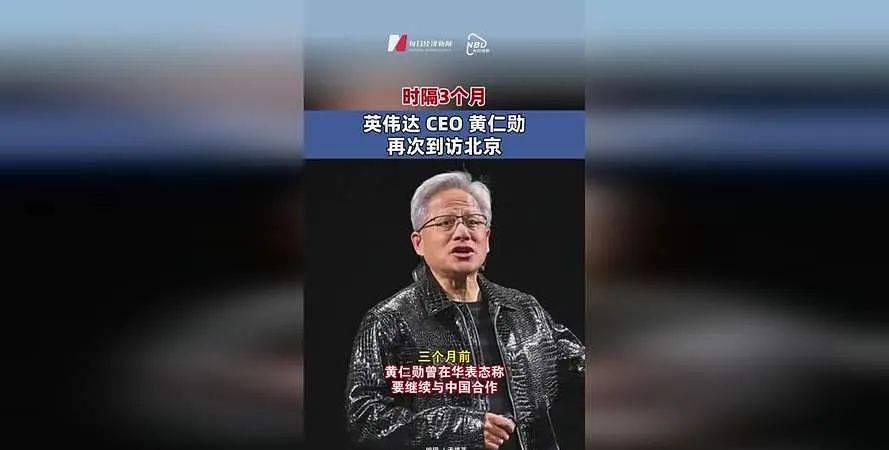
美股盘前要点 | 特朗普政府考虑入股英特尔!传英伟达为中国研发新AI芯片
Ge Long Hui A P P· 2025-08-19 12:40
Group 1 - US stock index futures showed mixed performance with Nasdaq futures down 0.11%, S&P 500 futures down 0.04%, and Dow futures up 0.13% [1] - European stock indices collectively rose, with Germany's DAX up 0.34%, UK's FTSE 100 up 0.35%, France's CAC up 0.95%, and the Euro Stoxx 50 up 0.75% [1] - Standard & Poor's Global Ratings confirmed the US sovereign credit rating at "AA+/A-1+" with a stable outlook [1] Group 2 - UBS raised its gold price target for March 2026 by $100 to $3,600 per ounce [1] - Reports indicate Nvidia is developing a new AI chip based on its latest Blackwell architecture for China, outperforming H20 [1] - The Trump administration is considering acquiring a 10% stake in Intel, potentially making it the largest shareholder; SoftBank agreed to invest $2 billion in Intel [1] Group 3 - Tesla launched a new six-seat electric SUV Model Y L in China, starting at 339,000 yuan, with expected delivery in September 2025 [1] - Gurman reported that India has achieved local production of the entire iPhone 17 series, including the Pro model [1] - Starbucks announced a 2% salary increase for all salaried employees in North America this year [1] Group 4 - Arm hired Amazon's AI chip director Rami Sinno to advance its plan for developing complete chips independently [2] - JD.com has provided social insurance for 150,000 full-time delivery riders and called for other platforms to fulfill their obligations [3] - iQIYI has hired an investment bank to arrange its secondary listing in Hong Kong, planning to submit the application in Q3 [4] - New Oriental issued a statement denying that CEO Zhou Chenggang is under investigation for related party transactions [5] Group 5 - Home Depot reported Q2 net sales of $45.28 billion, adjusted EPS of $4.68, and same-store sales growth of 1% [6] - BHP's FY2025 underlying profit fell over 25% year-on-year to $10.16 billion, slightly below expectations; the board announced a dividend of $0.60 per share, exceeding expectations [6] - Palo Alto Networks reported Q4 revenue growth of 16% year-on-year to $2.54 billion, with adjusted EPS of $0.95, exceeding expectations; optimistic guidance for Q1 [6] - XPeng Motors reported Q2 total revenue growth of 125.3% year-on-year to 18.27 billion yuan, with net loss narrowing to 480 million yuan and a gross margin of 17.3% [6]
氪星晚报|百度搜索接入荷兰国立博物馆、携程、同程等MCP;外卖全职骑手突破15万,京东为每人每月五险一金平均缴纳约2000元;欧洲专家:美国关税冲击欧洲出口
3 6 Ke· 2025-08-19 12:00
Group 1: Company Performance - Pop Mart reported a revenue of 13.88 billion yuan for the first half of 2025, representing a year-on-year growth of 204.4% [1] - Adjusted net profit for Pop Mart reached 4.71 billion yuan, with a year-on-year increase of 362.8% [1] - Revenue breakdown by region for Pop Mart shows: - China: 8.28 billion yuan, up 135.2% - Asia-Pacific: 2.85 billion yuan, up 257.8% - Americas: 2.26 billion yuan, up 1142.3% - Europe and others: 480 million yuan, up 729.2% [1] Group 2: Corporate Developments - Baidu's search platform has integrated with the Dutch National Museum, Trip.com, and Tongcheng, expanding its MCP offerings [2] - Apple is increasing iPhone production in India to supply new models to the U.S. market [3] - Dazhihui announced it has not engaged in stablecoin, virtual asset trading, or cross-border payment businesses [4] - SoftBank's Masayoshi Son reportedly discussed acquiring Intel's struggling foundry business prior to announcing a $2 billion investment [5] - New companies have been established, including a 1 billion yuan registered capital company by Ninebot in Changzhou [5] and a 1.6 billion yuan enterprise management company in Tianjin involving New City Holdings [6] Group 3: Market Trends - Arm Holdings has hired Amazon's AI chip director to develop its own chips, indicating a competitive move against Nvidia [7][8] - A new hedge fund founded by a former Goldman Sachs trader has secured $1 billion from Millennium Management [8] - European exports are being impacted by U.S. tariff policies, as noted by ING's macro research head [8] Group 4: Government Policies - Thailand is simplifying the process for tourists to exchange cryptocurrency for Thai baht to stimulate tourism [9] - Guangdong Province is encouraging companies to focus on key technologies in commercial aerospace, including reusable liquid rocket engines [9] - Hainan has optimized its personal income tax preferential policies for high-demand talent, adjusting the calculation method for residency days [10]



软银20亿美元押注英特尔:美国半导体迎来战略转折点?
3 6 Ke· 2025-08-19 05:28
Group 1 - Intel and SoftBank have announced a stock purchase agreement where SoftBank will invest $2 billion in Intel, marking a significant move to strengthen their positions in advanced technology and chip innovation in the U.S. [1] - SoftBank will purchase Intel's common stock at $23 per share, a discount from Intel's closing price of $23.66, leading to a 6% increase in Intel's stock price in after-hours trading [1] - The investment is seen as a vote of confidence in Intel's technology and reflects investor expectations for its foundry business, despite Intel's recent struggles in the AI chip sector and its costly foundry operations lacking major clients [1][3] Group 2 - Intel's stock has dropped 60% in 2024, its worst annual performance in over 50 years, but has rebounded 18% in 2025 under the leadership of new CEO Pat Gelsinger [3] - Intel's foundry business has yet to secure significant client orders, with external revenue only reaching $5.3 million by Q2 2025, highlighting a gap between its technological capabilities and market acceptance [5] - SoftBank's investment aligns with its broader strategy in the semiconductor industry, having previously acquired Arm for $32 billion and Ampere Computing for $6.5 billion, and participating in significant AI infrastructure projects [3][5] Group 3 - Intel's 18A process technology is in risk trial production and could be pivotal for its turnaround if it attracts orders from major tech companies like Amazon [6] - The U.S. government has provided $7.8 billion in subsidies for Intel's fabs in Ohio and Arizona, which will alleviate some financial pressures in this capital-intensive industry [6] - Intel's strategy in the AI sector focuses on two product lines: the Xeon 6 series processors and the Gaudi 3 AI accelerators, which aim to compete with AMD and NVIDIA products [5]


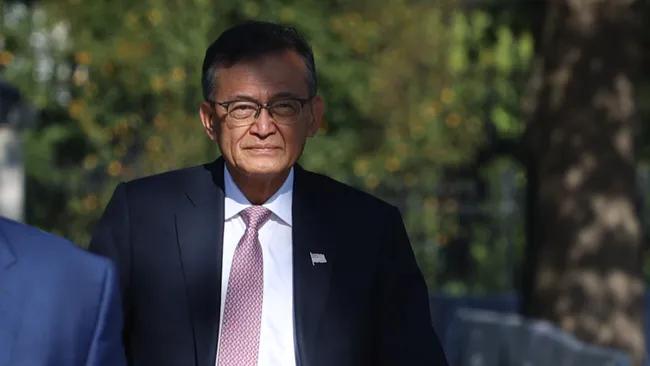
A股异动丨景嘉微午间收跌6.7%,上半年净亏损8761万元,同比转亏
Ge Long Hui A P P· 2025-08-19 03:52
Core Viewpoint - Jingjia Micro (300474.SZ) reported a significant decline in revenue and a net loss for the first half of 2025, alongside plans to enter the edge AI chip market [1] Financial Performance - The company achieved an operating revenue of 193 million yuan, a year-on-year decrease of 44.78% [1] - The net profit attributable to shareholders was -88 million yuan, indicating a shift from profit to loss compared to the same period last year [1] - In Q2, revenue was 91 million yuan, down 62.42% year-on-year, with a net profit of -33 million yuan, reflecting a transition to loss [1] Strategic Developments - Jingjia Micro announced plans to venture into the edge AI chip sector, indicating a strategic shift in its business focus [1]
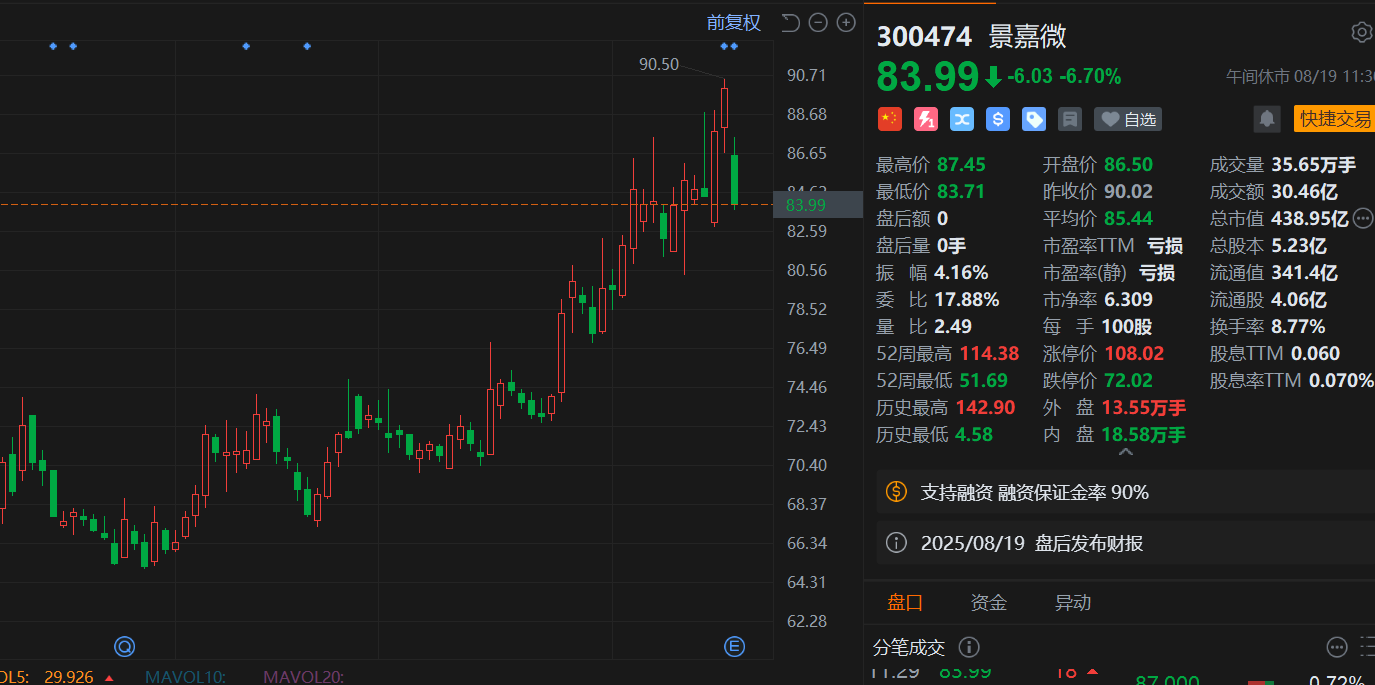
外媒爆ARM挖角亚马逊AI芯片掌门人,剑指自主芯片设计
Huan Qiu Wang Zi Xun· 2025-08-19 03:29
Core Insights - ARM has appointed Rami Sinno, former senior director of AI chips at Amazon, as senior vice president to lead its AI chip development project, marking a strategic shift from traditional IP licensing to a full-chain ecosystem of "IP + chip design + manufacturing" [1][4] - The hiring of Sinno is seen as a defensive strategy against the risk of major clients moving away from ARM architecture, as companies like Apple, Qualcomm, and NVIDIA explore custom architectures [4] Company Strategy - ARM's transition is not abrupt; it announced plans in July to invest part of its profits into the manufacturing of its own chips and components [4] - CEO Rene Haas has discussed the potential to go beyond design to build smaller, function-specific, and modular chip versions, as well as complete systems [4] Market Context - The recruitment of Sinno, who led the development of the Inferentia and Trainium chips at Amazon, is expected to complement ARM's strengths in low-power architecture and help overcome energy efficiency challenges in AI chips [4] - The compensation package for Sinno includes a $5 million annual salary, $20 million in restricted stock, and performance-based bonuses, indicating ARM's commitment to this strategic direction [4]
财联社8月19日早间新闻精选
Xin Lang Cai Jing· 2025-08-19 00:35
转自:智通财经 【智通财经8月19日早间新闻精选】 1、国务院总理李强8月18日主持召开国务院第九次全体会议。李强 强调,要抓住关键着力点做强国内大循环。持续激发消费潜力,系统清理消费领域限制性措施,加快培 育壮大服务消费、新型消费等新增长点。加力扩大有效投资,发挥重大工程引领带动作用,适应需求变 化更多"投资于人"、服务于民生,积极促进民间投资。纵深推进全国统一大市场建设,不断释放超大规 模市场红利。采取有力措施巩固房地产市场止跌回稳态势。 2、8月18日,沪指创近10年新高,北证50 创历史新高,深成指、创业板指均突破去年10月8日高点。沪深两市全天成交额2.76万亿,较上个交易 日放量5196亿,成交额再创年内新高。截至收盘,沪指涨0.85%,深成指涨1.73%,创业板指涨2.84%。 3、8月18日,A股市值历史首次突破100万亿元大关,年内新增14.5万亿元。板块方面,电子板块年内新 增规模超2.5万亿元,在所有板块中"断崖式领先"。 4、智通财经记者最新调研发现,多家券商营业部近 期迎来了客户咨询高峰。从咨询内容来看,这波行情客户主要咨询佣金调整,此外如银证转账、密码找 回、App使用以及权限开通 ...
8月18日晚间公告 | 景嘉微增资诚恒微进军边端侧AI芯片;中国船舶复牌
Xuan Gu Bao· 2025-08-18 12:02
一、复牌 1、中国船舶:已刊登异议股东收购请求权申报结果,股票复牌。 二、并购、定增 1、爱柯迪:拟发行股份及支付现金购买卓尔博71%股权。 2、引力传媒:拟定增募资不超过4.7亿元,用于全球社交营销云项目、内容创意云项目、补充流动资 金。 三、回购 1、山东玻纤:将股份回购价格上限由5.41元/股调整为10.22元/股。 2、二连板新天药业:正在筹划对参股公司汇伦医药追加股权投资。 3、特变电工:拟发行可转债募资不超过80亿元,用于准东20亿Nm3/年煤制天然气项目。 4、久吾高科:拟发行可转债募资不超过5.04亿元,用于班戈错盐湖年产2000吨氯化锂中试生产线BOT 项目、特种无机膜组件及装置生产线项目、补充流动资金。 5、蔚蓝锂芯:控股子公司淮安光电在马来西亚进行LED项目建设投资,项目总投资8388万美元,新建 LED CSP项目;项目全部建成达产后,预计将形成700KK芯片点测分选及CSP芯片封装月产能。 2、海正生材:拟将回购股份价格上限由12元/股(含)调整为17元/股(含),并同时对回购实施期限 延长6个月,延长至2026年2月27日止。 四、对外投资 1、景嘉微:拟2.2亿元增资诚恒微成为其 ...




路透社大爆料?英伟达H20整机真有后门
Hu Xiu· 2025-08-18 02:10
路透社爆料,美国政府悄悄在运往中国等地、装有高端AI芯片的服务器里头塞追踪器,戴尔、超威这 些厂商都中招。 ...