
产业升级

Search documents
聚焦中央经济工作会议 | 中央财办有关负责同志详解2025年中央经济工作会议精神
Xin Hua She· 2025-12-16 13:56
Core Viewpoint - The 2025 Central Economic Work Conference outlines China's economic performance and strategic priorities, emphasizing resilience and innovation in the face of challenges, while setting a roadmap for future growth and stability. Economic Performance and Outlook - The overall economic operation is stable with expected growth around 5% for the year, positioning China among the leading global economies, with a GDP target of approximately 140 trillion yuan [2] - Employment remains stable, with significant growth in foreign trade and diversified exports [2] - The construction of a modern industrial system is progressing, with advancements in technology and innovation, particularly in AI, biomedicine, and robotics [2] - Reforms and opening-up measures are advancing, with a focus on building a unified national market and addressing "involution" in competition [2] - Positive progress in risk mitigation in key areas, including local government debt management and the completion of housing projects [2] - Social welfare policies, such as childcare subsidies and free preschool education, are being implemented to enhance public welfare [2] Challenges and Strategic Responses - The conference acknowledges ongoing economic challenges, including external environmental changes and domestic supply-demand imbalances [3] - Despite these challenges, China's long-term economic fundamentals remain strong, supported by its socialist system, large market, complete industrial system, and rich talent resources [3] - The government plans to implement more proactive macroeconomic policies, including fiscal and monetary measures, to support economic recovery [4][5] Fiscal Policy - The fiscal policy will maintain necessary deficits and debt levels while addressing local fiscal challenges and ensuring sustainable finances [5][6] - Emphasis on optimizing fiscal expenditure structure to support major national strategies and enhance social welfare [6][7] Monetary Policy - The monetary policy will focus on stabilizing economic growth and ensuring reasonable price recovery, maintaining liquidity, and supporting key sectors like technology and small enterprises [8][9] - A flexible approach to monetary tools will be adopted to align financing growth with economic and price expectations [8][9] Domestic Demand and Investment - Expanding domestic demand is a top priority, with a focus on boosting consumption and investment, particularly in services and infrastructure [9][10] - The government aims to enhance consumer purchasing power and support new consumption models while increasing investment in social welfare and urban renewal projects [10] Regional Development and Coordination - The conference emphasizes the importance of regional coordination in development, with specific strategies for enhancing the roles of major economic provinces [19][20] - Plans include tailored support for local economies and promoting urban-rural integration [19][20] Green Transition and Employment - The government is committed to a green transition, with initiatives aimed at carbon peak and neutrality, alongside promoting green industries [21][22] - Employment policies will focus on stabilizing job markets, particularly for key demographics like graduates and migrant workers, while enhancing vocational training [23][24] Real Estate Market Stability - The real estate market is under scrutiny, with measures to stabilize housing prices and promote high-quality development [26][27] - Strategies include addressing supply-demand dynamics and supporting real estate companies in transitioning to new business models [27][28]
逐越鸿智22.82亿入主嘉美包装 科技赋能产业升级
Jing Ji Guan Cha Wang· 2025-12-16 13:44
Core Viewpoint - The acquisition of 54.90% of Jia Mei Packaging by Zhu Yue Hong Zhi aims to integrate strategic resources and promote industrial upgrades, with the total transaction value approximately 2.282 billion yuan [1] Group 1: Acquisition Details - Zhu Yue Hong Zhi plans to acquire 279,255,722 shares of Jia Mei Packaging at a price of 4.45 yuan per share, representing 29.90% of the total share capital [3] - Following the share transfer, Zhu Yue Hong Zhi will further increase its stake through a partial tender offer for an additional 233,491,406 shares, which is 25.00% of the total share capital [3] - After the completion of the acquisition, Zhu Yue Hong Zhi will hold 512,747,128 shares, equating to 54.90% of Jia Mei Packaging, changing the controlling shareholder to Zhu Yue Hong Zhi and the actual controller to Yu Hao [3] Group 2: Company Overview - Jia Mei Packaging operates a full industry chain service platform for beverage brands, providing research, design, production, and sales of beverage packaging containers [1][2] - The company has 17 subsidiaries covering various sectors, including tin printing, three-piece cans, two-piece cans, and beverage filling OEM services [2] - Major clients include well-known beverage brands such as Yangyuan Beverage, Wanglaoji, and Dali Group, showcasing Jia Mei Packaging's extensive market reach [2] Group 3: Industry Context - Jia Mei Packaging holds a market share of approximately 20% in the metal packaging market for beverages, significantly outperforming competitors [4] - The acquisition aligns with the recent regulatory encouragement for market-oriented mergers and acquisitions aimed at technological innovation and industrial upgrades [4] - The integration of traditional industries with technological innovation is becoming increasingly evident in the A-share market, indicating a shift towards high-quality development [4]

逐越鸿智22.82亿入主嘉美包装,科技赋能产业升级
Xin Lang Cai Jing· 2025-12-16 13:29
12月16日晚间,中国食品饮料金属包装头部企业嘉美包装(002969.SZ)发布公告,苏州逐越鸿智科技 发展合伙企业(有限合伙)(以下简称"逐越鸿智")拟通过协议收购、要约收购方式收购嘉美包装 54.90%股份,涉及交易总对价约22.82亿元。本次交易旨在通过引入产业资金整合战略资源,推动上市 公司产业升级。公司股票将于12月17日复牌。 本次并购交易实施之后,逐越鸿智将以22.82亿金额取得嘉美包装512,747,128股股份及对应表决权(占 上市公司总股本的54.90%),嘉美包装控股股东及实际控制人将发生变更,控股股东将由中包香港变 更为逐越鸿智,实际控制人将变更为俞浩。 嘉美包装作为本土包装行业龙头企业,三片罐产品在饮料用金属包装市场占有率约20%,显著高于竞争 对手,通过此次合理优化控制权,获得运营管理经验、产业技术资源,有望在全球行业竞争中占据主 动,进一步扩大市场份额。 2024年9月24日,中国证监会发布了《关于深化上市公司并购重组市场改革的意见》,鼓励科技创新、 产业升级和新质生产力的市场化并购战略方向。 目前,嘉美包装旗下拥有17家企业,业务涵盖印铁、三片罐、两片罐、ABC罐、TBC罐、S ...
嘉美包装:控股股东变更为逐越鸿智,拟以22.82亿元完成并购
Xin Lang Cai Jing· 2025-12-16 12:56
责任编辑:何俊熹 新浪科技讯 12月16日晚间消息,嘉美包装披露权益变动公告,公司控制权拟发生变更,苏州逐越鸿智 科技发展合伙企业(有限合伙)拟通过"协议转让+部分要约"方式收购公司股份,交易价格为4.45元/ 股。 公告显示,逐越鸿智拟先协议受让控股股东中包香港持有的29.90%股份,确立控制权。在此基础上, 进一步向上市公司全体股东发出部分要约,计划收购公司25.00%股份。目前,中包香港、富新投资及 中凯投资等主要股东已签署协议承诺预受要约,合计锁定股份比例达52.94%。 若其他股东足额接受要约,逐越鸿智拟合计持股最高将达54.90%,涉及交易总对价约22.82亿元。本次 交易旨在通过引入产业资金整合战略资源,推动上市公司产业升级。公司股票将于12月17日复牌。 新浪科技讯 12月16日晚间消息,嘉美包装披露权益变动公告,公司控制权拟发生变更,苏州逐越鸿智 科技发展合伙企业(有限合伙)拟通过"协议转让+部分要约"方式收购公司股份,交易价格为4.45元/ 股。 公告显示,逐越鸿智拟先协议受让控股股东中包香港持有的29.90%股份,确立控制权。在此基础上, 进一步向上市公司全体股东发出部分要约,计划收购公 ...
贵州省地方债务化解观察与展望:山重水复疑无路,柳暗花明又一村
Lian He Zi Xin· 2025-12-16 11:38
1. Report Industry Investment Rating No relevant content provided. 2. Core Viewpoints of the Report - In recent years, Guizhou Province's local debt has shown characteristics such as continuous growth in scale, heavy regional debt burden, differentiated debt pressure among cities, liquidity pressure on some urban investment enterprises, concentrated redemption of urban investment bonds, and persistent negative public opinions. Despite relatively weak debt - resolution resources, with strong policy support from the central government and increasingly diverse debt - resolution means, certain achievements have been made in debt resolution. However, issues such as high credit spreads of urban investment bonds and continuous short - term liquidity pressure on urban investment enterprises still need attention. - In the short term, with the continuous implementation of a package of debt - resolution and incremental debt - resolution policies, Guizhou, as a key province, will continue to benefit, and the liquidity risk is generally controllable within the policy protection period, but the principal and interest repayment pressure on urban investment enterprises remains high. - In the long run, debt resolution depends on the self - development of local governments and urban investment enterprises. Guizhou has obvious advantages in industries such as liquor, mineral deep - processing, digital economy, new energy, characteristic agriculture, and cultural tourism. With the construction of a modern industrial system and the improvement of high - quality development levels, Guizhou is expected to resolve its debt during development [4]. 3. Summary by Relevant Catalogs 3.1 Introduction - Guizhou is an important area in China's regional coordinated development, but due to factors such as terrain, transportation, and industrial structure, its economic aggregate ranks in the middle and lower reaches nationwide, with weak fiscal strength, heavy dependence on central subsidies, and a heavy local government debt burden. Since 2018, negative public opinions in Guizhou have attracted market attention. Under the support of policies such as the "package of debt - resolution", Guizhou has actively explored debt resolution [5]. 3.2 Debt Characteristics - **Continuous growth in local debt scale and heavy regional debt burden**: As of the end of 2024, Guizhou's local government debt balance was 1753.709 billion yuan, and the debt scale of urban investment enterprises was about 900 billion yuan. Its government debt ratio and broad - based government debt ratio rank in the upper - middle level nationwide, indicating a heavy regional debt burden [7]. - **Differentiated regional debt burden, with heavier debt burdens in Guiyang and Zunyi**: As of the end of 2024, the provincial - level government debt and urban investment enterprise debt in Guizhou accounted for less than 15% and about 11% respectively, while the debt of city (prefecture) - level, district - county - level, and park - level urban investment enterprises accounted for about 48%, 22%, and 18% respectively. The urban investment enterprise debt is mainly concentrated in Guiyang and Zunyi. Guiyang, Zunyi, and Liupanshui rely more on urban investment enterprise financing, and their broad - based government debt ratios are relatively high [9]. - **Large liquidity pressure on urban investment enterprises in some cities (prefectures)**: Although the debt structure of Guizhou's urban investment enterprises is relatively reasonable, urban investment enterprises in some areas such as Qiannan, Qiandongnan, and Tongren have small cash - like assets and large short - term debt repayment pressure [12]. - **Concentrated redemption of urban investment bonds**: The issuance of urban investment bonds in Guizhou is concentrated in Guiyang and Zunyi. The redemption scale of urban investment bonds in Guizhou increased year by year from 2021 to 2023 and then decreased significantly. However, the redemption scale of due bonds in Guiyang and Zunyi is still large [14]. - **Persistent negative public opinions**: Since 2018, non - standard negative events in Guizhou's urban investment enterprises have been the highest in the country, mainly concentrated in Zunyi and Qiannan. The number of urban investment enterprises with bill overdue in Guizhou ranked third in the country from 2022 - 2024, and as of the end of October 2025, there were still 16 enterprises in the continuous overdue list, mainly concentrated in Zunyi, Guiyang, and Liupanshui [16]. 3.3 Debt - Resolution Achievements 3.3.1 Debt - Resolution Resources - **Fiscal resources**: In 2024, Guizhou's comprehensive financial resources ranked 14th in the country, with general public budget revenue of 217 billion yuan (ranked 21st) and government - funded revenue of 231.528 billion yuan (ranked 8th). Its fiscal self - sufficiency rate is less than 35%. Although the scale of state - owned land transfer income has declined since 2021, the government - funded revenue has continued to grow. The coverage of government - funded revenue for government debt interest is at a medium - upper level in the country. As of the end of 2024, Guizhou's debt space exceeded 280 billion yuan, ranking first among key provinces [22][25]. - **Financial resources**: Since 2020, the balance of local financial institutions' deposits and loans in Guizhou has continued to grow rapidly. As of the end of 2024, the balance of local financial institutions' loans and deposits ranked 19th and 25th in the country respectively, and the loan - to - deposit ratio was the highest in the country. As of November 16, 2025, the total credit line of banks for bond - issuing enterprises in Guizhou exceeded 1 trillion yuan, and the credit lines of Guizhou Bank and Guiyang Bank accounted for more than 90% of the total. The total assets and deposits of Guizhou's city commercial banks rank 16th in the country, and their coverage of urban investment enterprise debt is at a medium level in the country [27][29]. - **Local state - owned enterprise resources**: Although the number of listed companies in Guizhou ranks relatively low in the country, the total market value is at a medium level. As of the end of September 2025, the total market value of Kweichow Moutai exceeded 1.8 trillion yuan, accounting for nearly 85% of the total market value of listed companies in Guizhou. The market value of listed companies held by local state - owned enterprises in Guizhou has a relatively high coverage of urban investment enterprise debt, but the reduction of Kweichow Moutai's equity is restricted [33]. 3.3.2 Debt - Resolution Measures - **Financial support for debt resolution**: It mainly includes debt restructuring, non - standard discounted repayment, and "unified borrowing and repayment". For example, in 2022, Zunyi Road and Bridge Construction (Group) Co., Ltd. carried out loan extension and interest - rate reduction restructuring; since 2023, there have been cases of non - standard discounted repayment in many cities in Guizhou; in February 2024, Guizhou first practiced "unified borrowing and repayment" nationwide, involving a bond amount of about 3.6 billion yuan [37][38]. - **Special refinancing bonds and special new special bonds**: In 2024, Guizhou was allocated a quota of 352.8 billion yuan for special refinancing bonds, and 800 billion yuan was arranged from new local government special bonds for five consecutive years starting from 2024 for debt resolution. Since 2024, the cumulative issuance amount of special refinancing bonds and special new special bonds in Guizhou ranks among the top in key provinces, and the early redemption amount of urban investment bonds exceeds 30 billion yuan [39]. - **Activating state - owned enterprise resources for debt resolution**: "Moutai debt resolution" is a typical case, which includes equity transfer and reduction of Kweichow Moutai, bond issuance by Moutai Group to acquire the equity of Guizhou Expressway, and financing and capital operation by the finance company to relieve the liquidity pressure of state - owned platforms [41]. - **Other methods**: These include setting up emergency funds, arranging various fiscal funds, transferring the right to state - owned asset income, and using operating income. Provincial state - owned platforms also provide support such as emergency loan transfer, credit support, and credit enhancement for urban investment enterprises [42]. 3.3.3 Debt - Resolution Performance - **Significant reduction in the debt scale of bond - issuing urban investment enterprises and improvement in the financing structure**: Since the end of 2022, the debt scale of bond - issuing urban investment enterprises in Guizhou has continued to decline. The scale of bank loans and bond financing has decreased, and the proportion of bank loans and other financing has increased to about 67% and 14% respectively, while the proportion of bond financing has decreased to about 19% [44]. - **Continuous net repayment of urban investment bonds and reduced concentrated redemption pressure**: Since 2021, urban investment bonds in Guizhou and most of its cities (prefectures) have been in a state of net repayment, with an annual net repayment scale of over 35 billion yuan from 2023 - 2024. As of the end of September 2025, the scale of outstanding urban investment bonds in Guizhou was about 138 billion yuan, and the maturity scale in the next four years is relatively balanced [47]. - **Significant narrowing of the credit spread of urban investment bonds**: Since the implementation of the package of debt - resolution plans, the credit spread of urban investment bonds in Guizhou has narrowed significantly since the end of 2023, but it is still at the highest level among key debt - resolution provinces. As of the end of October 2025, the credit spread has decreased by more than 300BP compared with the beginning of 2021. However, the cash - like assets' coverage of short - term debt has decreased, and the short - term liquidity of bond - issuing urban investment enterprises is still under pressure [49][51]. 3.4 Debt - Resolution Outlook - **Short - term outlook**: With the continuous implementation of the package of debt - resolution and incremental debt - resolution policies, Guizhou will continue to benefit, and the liquidity risk is generally controllable within the policy protection period. However, the principal and interest repayment pressure on urban investment enterprises is still large due to factors such as the contradiction between debt resolution and development, restrictions on new financing, and insufficient coverage of interest by current debt - resolution policies [55][56]. - **Long - term outlook**: Debt resolution depends on the self - development of local governments and urban investment enterprises. Guizhou has obvious advantages in industries such as liquor, mineral deep - processing, digital economy, new energy, characteristic agriculture, and cultural tourism. By building a modern industrial system and promoting high - quality development, Guizhou is expected to resolve its debt during development [57].
远光软件(002063) - 002063远光软件投资者关系管理信息20251216
2025-12-16 09:04
Group 1: Company Performance - The company follows a diversified product and market strategy, enhancing core technological and product capabilities while expanding market outreach [1] - As of Q3 2025, the company reported a revenue of CNY 1.57 billion, a year-on-year increase of 1.99%, and a net profit attributable to shareholders of CNY 123 million, up 11.89% year-on-year [1] Group 2: Medical Sector Progress - The company has successfully implemented smart financial projects in several hospitals, including the Shenzhen Second People's Hospital and Fudan University Huashan Hospital, with various management modules now operational [2] Group 3: Market Value Management - The company is open to various market value management strategies, including share buybacks, dividends, and mergers, depending on financial arrangements and stock performance [3] Group 4: Collaboration with Major Shareholder - The company collaborates with State Grid Digital Technology Co., which supports the DAP product's validation and market promotion, and participates in the energy internet subsidiary [4] - Future cooperation will focus on leveraging product, business, and platform advantages to foster a collaborative industrial ecosystem [5]

兴业证券:化工周期拐点即将到来 新兴需求助力升级
Zhi Tong Cai Jing· 2025-12-16 06:39
Group 1: Chemical Industry - The chemical industry is expected to experience a cyclical recovery and industrial upgrade by 2026, following three years of bottom-range operation for chemical products [1] - The growth rate of ongoing projects in the industry continues to decline, and the new capacity release is nearing its end [1] - Domestic policies aimed at stable growth and the Federal Reserve entering a rate-cutting cycle are anticipated to support a mild recovery in traditional chemical product demand [1] - The "anti-involution" trend is expected to accelerate the cyclical turning point, benefiting core chemical assets with global competitive advantages, leading to profit and valuation recovery [1] - Sub-industries such as organic silicon, PTA, polyester filament, caprolactam, spandex, soda ash, PVC, glyphosate, and urea are expected to see profit recovery due to industry self-discipline and price control measures [1] Group 2: Pesticide Industry - The pesticide industry is entering a phase where inventory reduction is nearing completion, with signs of recovery in market conditions [2] - The global pesticide channel inventory is expected to approach reasonable levels by 2025, with some products already seeing price increases [2] - The industry is anticipated to shift towards capacity reduction in the next two years, favoring companies with cost advantages and strong market channels [2] - The concentration of the industry and the pricing power of leading enterprises are expected to increase [2] - Domestic companies are making significant progress in the research, production, and marketing of innovative pesticides, with leading firms likely to achieve high value-added upgrades [2] Group 3: Tire Industry - The tire industry is facing an upgrade in international trade barriers, which may present opportunities for companies with global layouts [3] - The EU's anti-dumping investigation against Chinese tires is expected to conclude by early 2026, potentially leading to higher tariffs [3] - If high anti-dumping duties are imposed, domestic semi-steel tire exports may be hindered, creating a demand gap in the EU market that could be filled by other regions [3] - This supply-demand mismatch may lead to price increases, benefiting leading tire companies with overseas production bases and expansion plans [3] Group 4: Emerging Industries - The path to carbon reduction is challenging, but the AI industry continues to thrive alongside the development of sustainable aviation fuel (SAF), bio-based materials, carbon capture, utilization, and storage (CCUS), electronic resins, liquid cooling materials, and lithium battery materials [4] - Europe is set to initiate its SAF era in 2025, with mandatory standards for bio-based plastics expected by 2027 [4] - CCUS is a core component of the European Green Deal, and similar policies are anticipated in China under its dual carbon strategy [4] - The demand for AI computing power remains strong, with electronic resins and liquid cooling materials identified as key upgrade directions [4] - AIDC storage is expected to become a significant growth area for lithium battery materials [4]

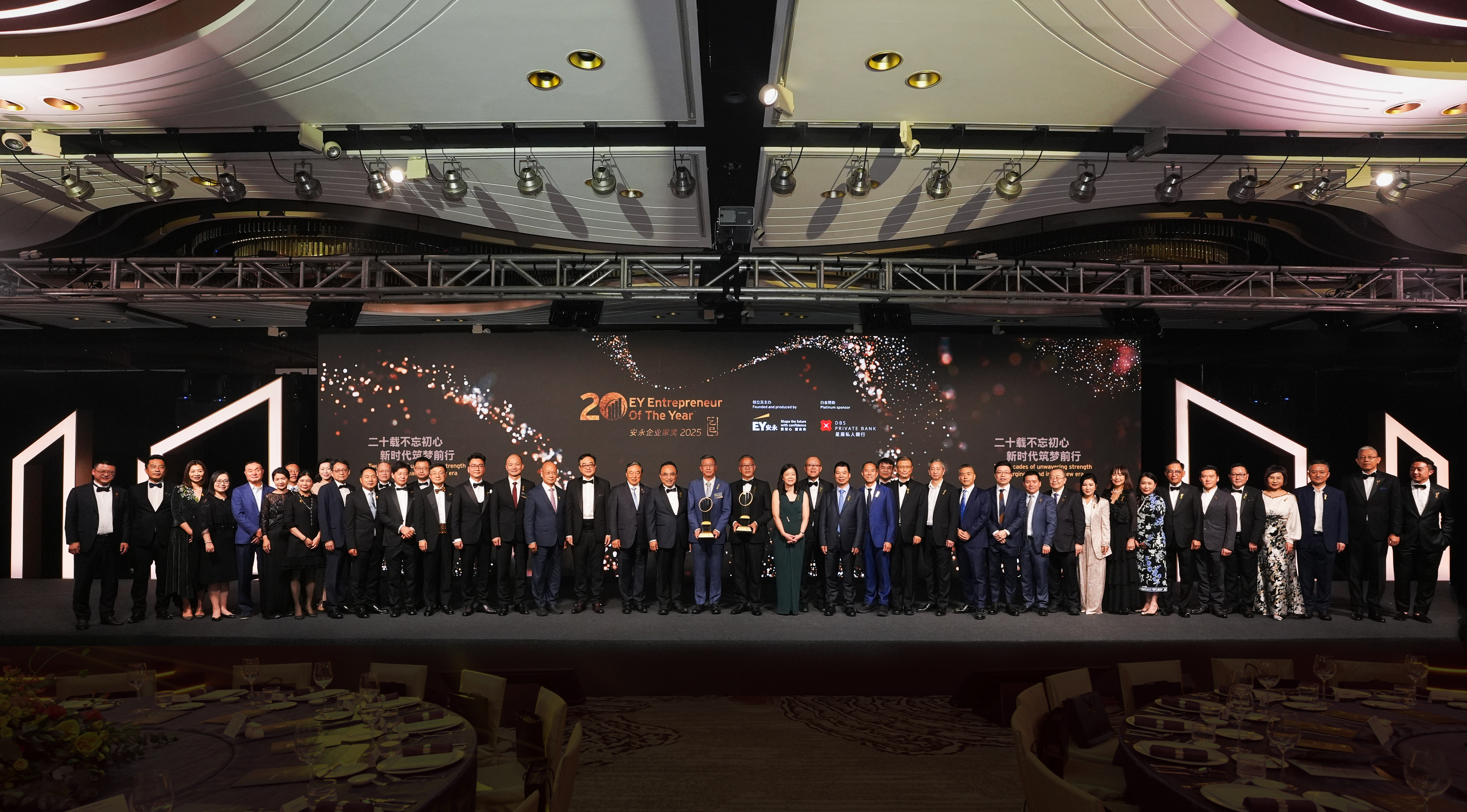
二十载不忘初心,新时代筑梦前行:“安永企业家奖”见证中国商业力量蜕变与崛起
Di Yi Cai Jing· 2025-12-16 05:46
Core Insights - The 20th "Ernst & Young Entrepreneur Award" highlights the evolution of Chinese entrepreneurs from "followers" to "leaders" over the past two decades, showcasing 12 awardees who excel in various fields including life sciences, precision manufacturing, artificial intelligence, and chip design [3][4] - The award serves as a platform for entrepreneurs to exchange ideas and collaborate, aligning with China's economic development goals and the new development philosophy [3][6] Group 1: Award Overview - The theme for this year's award is "Twenty Years of Unwavering Commitment, Building Dreams in the New Era," aimed at recognizing innovative and responsible entrepreneurs who contribute significantly to China's private economy [4][6] - The selection process for the 2025 award began in May and garnered widespread nominations, ultimately recognizing 12 entrepreneurs from mainland China and Hong Kong/Macau [4] Group 2: Notable Awardees - Lu Xianping, founder and CEO of Shenzhen Micron Biomedical Technology Co., received the mainland China award for his pioneering work in developing innovative drugs [4] - Li Peiliang, chairman of Dongjiang Group, was awarded for transforming a small mold factory into a leading global provider of precision injection molding solutions [4] Group 3: Contributions of Private Enterprises - Private enterprises in China contribute over 50% of tax revenue, 60% of GDP, 70% of technological innovation, 80% of urban employment, and 90% of the number of enterprises [5] - In key manufacturing sectors like new energy vehicles, lithium batteries, and photovoltaic products, private enterprises account for more than half of the contributions [5] Group 4: National Strategy and Support - The 14th Five-Year Plan emphasizes accelerating high-level technological self-reliance and leading the development of new productive forces, which is reflected in the practices of this year's award-winning entrepreneurs [6] - The implementation of the Private Economy Promotion Law provides a stable legal environment for private entrepreneurs, allowing them to focus on long-term value creation [6] Group 5: Global Perspective - Chinese entrepreneurs are demonstrating resilience and wisdom in the face of global uncertainties, opting for openness rather than isolation [7] - The award ceremony's location in Hong Kong symbolizes the city's unique position as a bridge between the mainland and the world, facilitating global expansion for Chinese enterprises [7] Group 6: Future Outlook - As China advances in modernization, entrepreneurs will encounter new opportunities and challenges in areas such as technological innovation, green transformation, digital economy, and globalization [8] - The Ernst & Young Entrepreneur Award aims to continue showcasing the stories of entrepreneurs who turn visions into reality, supporting the new development philosophy and mission of the era [8]

“失落”的淄博:从“鲁C”第三城到“万亿城市俱乐部”旁观者
Xin Lang Cai Jing· 2025-12-16 04:40
Core Viewpoint - The city of Zibo, once a prominent industrial hub in Shandong, is facing significant economic challenges and has been overshadowed by other cities in the region as it struggles to adapt to changing economic landscapes [1][3][4]. Historical Context - Zibo was historically a strong industrial city, recognized for its contributions to the chemical, building materials, and machinery sectors, achieving a GDP ranking of 23rd nationally in the early 1990s [3][4]. - By 2011, Zibo became the third city in Shandong to surpass a trillion yuan in industrial output, showcasing its industrial strength [3]. Economic Challenges - In 2018, Zibo's GDP dropped by nearly 150 billion yuan due to statistical adjustments and the elimination of outdated production capacity, causing its ranking within Shandong to fall to 7th place [4]. - The city's GDP for 2023 and 2024 is projected at 456.18 billion yuan and 488.41 billion yuan, respectively, with growth rates lagging behind the provincial average for two consecutive years [4]. - Zibo's economic position is further threatened by neighboring cities like Linyi and Jining, which have shown stronger growth rates and are closing the gap in GDP [5]. Demographic and Regional Pressures - Zibo is experiencing a population decline, with a net outflow of 37,000 residents in 2024, contributing to an aging population with a senior citizen rate of 23.24% [7]. - The "strong provincial capital" strategy in Shandong is enhancing the competitive pressure on Zibo, particularly from Jinan, which is geographically close and easily accessible [7]. Industrial Transformation - Zibo is actively pursuing industrial transformation, focusing on new industrialization with an emphasis on "new materials, smart equipment, new pharmaceuticals, and electronic information" [8]. - By 2024, these four key industries are expected to account for 59.8% of the city's industrial output, reflecting a significant increase from 2020 [8]. - The city is also seeing positive developments in its listed companies, with total revenue of approximately 147.77 billion yuan and a notable profit increase from Inke Medical [8]. Cultural and Economic Development - Zibo is attempting to transition from a "barbecue economy" to a more integrated cultural and tourism economy, with significant revenue growth in key tourist attractions [8]. - The city is developing cultural projects that blend traditional culture with modern experiences, aiming to create new economic growth points [8][9]. Conclusion - Zibo's ongoing transformation is not only crucial for its own development but also serves as a reference for other cities facing similar challenges in transitioning from traditional industrial bases to modern industrial systems [9].
云浮罗定肉桂产业升级,剑指世界贸易中心
Nan Fang Nong Cun Bao· 2025-12-16 03:35
Core Viewpoint - The article highlights the development and significance of the cinnamon industry in Luoding, Guangdong, aiming to establish itself as a global trade center for cinnamon products [1]. Group 1: Industry Overview - Luoding is recognized as the "Hometown of Chinese Cinnamon," with a cultivation history spanning thousands of years, and it has become the largest county-level city in China for the export of cinnamon and cinnamon oil [10][12]. - The total area for cinnamon cultivation in Luoding is approximately 500,000 acres, producing around 20,000 tons of cinnamon bark and 1,100 tons of cinnamon oil annually, accounting for over 50% of the national export volume [11][70]. - The region's unique climatic and soil conditions contribute to the high quality of Luoding cinnamon, which has a high content of cinnamaldehyde, reaching up to 90% [29][36]. Group 2: Economic Impact - The cinnamon industry in Luoding has generated an economic output exceeding 2 billion yuan, with over 100,000 households involved in cinnamon farming, resulting in an average annual net income of about 20,000 yuan per household [68][70]. - The local government is promoting the integration of the cinnamon industry across primary, secondary, and tertiary sectors to support rural revitalization and improve the livelihoods of farmers [14][77]. Group 3: Development Initiatives - Luoding is focusing on enhancing its cinnamon industry by establishing standards, creating a unique industrial distribution center, and moving towards deep processing of cinnamon products [15][76]. - The city aims to develop into the largest deep processing base for cinnamon oil in South China, with a processing capacity of 400 tons annually [75][76]. - Efforts are being made to establish a cinnamon trademark and implement group standards for cinnamon products, with several local enterprises already certified as authentic medicinal materials [78][80]. Group 4: Future Prospects - The local government emphasizes the need to attract leading enterprises and establish a cinnamon import-export trading company to enhance market control and influence [82][84]. - There is a strong focus on product research and development, promoting standardized and large-scale cultivation practices to improve product quality and market prices [86][89].
