
银发经济

Search documents
增强消费品供需适配性 释放经济澎湃动力
Zheng Quan Ri Bao· 2025-11-30 16:22
Group 1 - The core viewpoint of the article emphasizes the implementation plan by six departments to enhance the adaptability of supply and demand in consumer goods, aiming for significant structural optimization by 2027 and a high-quality development pattern by 2030 [1][2] - The plan sets two main goals: to create three trillion-level consumption sectors and ten hundred-billion-level consumption hotspots by 2027, and to establish a mutually reinforcing interaction between supply and demand by 2030 [1][2] - The current consumer market in China is experiencing accelerated upgrades and faster segmentation, with diverse demands for personalized, high-quality, intelligent, and green products, while facing structural contradictions due to oversupply of homogeneous and low-end products [1] Group 2 - The plan focuses on the "silver economy" and children's products, targeting the growing elderly population and increasing birth rates as significant growth opportunities [2] - Key areas highlighted in the plan include smart connected vehicles, consumer electronics, smart wearables, and civilian drones, aligning with the development direction of new productive forces [2] - Cultural elements are integrated into products, with an emphasis on transforming traditional aesthetics and heritage skills into marketable goods, aiming to boost consumer confidence and drive consumption through cultural identity [2][3]
联合国开发计划署就中国“银发经济”发布系列报告
Zhong Guo Xin Wen Wang· 2025-11-30 14:04
Core Insights - The UNDP has released a series of reports on China's "silver economy," emphasizing the need for high-quality development and an inclusive, sustainable aging society [1][2][3] - By the end of 2024, the population aged 65 and above in China is expected to reach 220 million, accounting for 15.6% of the total population, with projections indicating this will rise to 30% by 2050 [1] - The Chinese government plans to implement policies to enhance the welfare of the elderly, with a focus on developing the silver economy [1] Group 1: Reports Overview - The report "Improving the Elderly Care Service System through the Silver Economy" highlights the importance of a robust elderly care service system in addressing aging challenges, advocating for collaboration among government, industry, and society to enhance service quality [1] - The report "Financial Empowerment of China's Silver Economy" identifies key investment opportunities in the elderly care industry, including smart devices and home modifications for the elderly, while emphasizing the need to expand welfare coverage and strengthen economic security for the elderly [2] - The report "Multidimensional Vulnerability Measurement of China's Elderly Population" assesses the overall well-being of the elderly, identifying rural residents and elderly women as the most vulnerable groups, and calls for targeted policies to enhance their resilience [2] Group 2: Expert Insights - The UNDP representatives stress that appropriate policy guidance and effective financing mechanisms can transform the challenges of population aging into opportunities for inclusive growth [3] - There is a unique opportunity for China to turn the trend of increasing longevity into a new driving force for development by investing in families and building resilient elderly care systems [3]
联合国开发计划署发布银发经济系列报告
Zheng Quan Ri Bao Wang· 2025-11-30 12:26
Core Insights - The UNDP has released three reports on China's silver economy, emphasizing the importance of high-quality development in creating an inclusive and sustainable aging society [1][2] - The reports analyze the construction of the elderly care service system, financial empowerment, and the multidimensional vulnerabilities of the elderly population [1] Group 1: Reports Overview - The report "Improving the Elderly Care Service System through Silver Economy Development" highlights the critical role of a robust elderly care service system in addressing aging challenges and the key role of the silver economy in expanding high-quality elderly care services [1] - "Financial Empowerment of China's Silver Economy: Promoting Inclusive and Sustainable Development in an Aging Society" identifies key investment opportunities in China's elderly care industry, including smart devices and home modifications for the elderly, using the SDG Investor Map methodology [1] - "Research on the Multidimensional Vulnerabilities of China's Elderly Population" systematically assesses the overall well-being of the elderly based on the UNDP's multidimensional vulnerability analysis framework [1] Group 2: Event Highlights - The event was hosted by the UNDP and supported by Industrial Securities Co., Ltd., featuring constructive discussions on the development paths of the silver economy [1][2] - Key speakers emphasized that appropriate policy guidance and effective financing mechanisms can transform the challenges of population aging into opportunities for inclusive growth [2] - The event included two thematic discussions focusing on creating a high-quality, inclusive elderly care service ecosystem and exploring sustainable pension financing pathways, with participation from experts in finance and elderly care services [2]
联合国开发计划署发布报告,倡导构建包容可持续的老龄化社会
Sou Hu Cai Jing· 2025-11-30 11:50
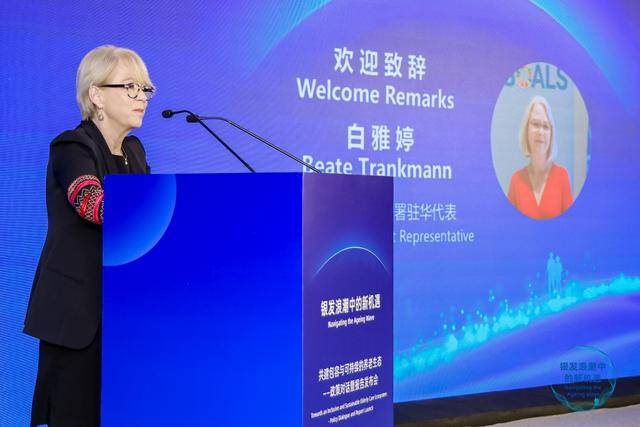
联合国开发计划署(UNDP)驻华代表处11月29日发布三项关于中国银发经济的重要研究系列报告。报 告基于可持续发展目标框架,从养老服务体系建设、金融赋能与老年人口多维脆弱性三个维度开展深入 分析。三份报告表明,促进银发经济高质量发展是构建包容、可持续老龄化社会的基石。 截至2024年底,中国65岁及以上人口已达2.2亿,占总人口比例15.6%,预计到2050年老年人口比例将升 至30%。面对这一结构性变化,中国政府于2024年将发展银发经济提升至国家战略层面,第一次出台以 银发经济为专题的文件——《关于发展银发经济增进老年人福祉的意见》。 联合国开发计划署驻华代表白雅婷。 联合国开发计划署三份报告为系统应对中国人口老龄化挑战提供建议。《依托银发经济发展完善养老服 务体系建设》强调健全的养老服务体系在应对老龄化进程中的核心地位,阐述银发经济在扩大高质量养 老服务中的关键作用。应推动政府、产业与社会各界的协同合作,拓展养老服务供给、提升服务质量, 践行"不让任何一个人掉队"的包容性发展理念。 《金融赋能中国银发经济:推动老龄社会的包容与可持续发展》识别了中国养老产业重点投资机遇,涵 盖智能设备与住宅适老化改造等多 ...

“首发经济”“银发经济”“夜经济”释放新活力 消费新引擎澎湃新动能
Yang Shi Wang· 2025-11-30 05:07
Group 1: Launch Economy in Sichuan - The launch economy refers to the total economic activities of enterprises releasing new products, new business models, and opening flagship stores [1] - In the first three quarters of this year, Sichuan Province attracted a total of 763 flagship stores, with over 80% located in Chengdu, maintaining a leading position nationally [1] - The Dongjiao Memory Cultural Park in Chengdu serves as a significant carrier for the launch economy, transforming a former state-owned factory into a cultural park that integrates commerce, culture, and music [1] Group 2: Visitor Engagement and Revenue - In 2024, the Dongjiao Memory Cultural Park is expected to attract over 17 million visitors, generating over 3 billion yuan in revenue [3] - Since 2025, Chengdu has established over 710 flagship stores and hosted more than 280 launch events, including exhibitions and performances [3] Group 3: Night Economy in Sichuan - Sichuan's consumption vitality is also reflected in the booming night economy, with Chengdu's streets transforming into vibrant night markets [13] - The Neufin Street Night Market has 136 stalls and an average daily foot traffic exceeding 10,000, contributing to an annual consumption increase of approximately 100 million yuan [19] - In Yibin, the night tourism projects have attracted over 5 million visitors, generating over 500 million yuan in tourism consumption [21] Group 4: Senior Economy and Consumption Growth - Sichuan has been enhancing service consumption for key demographics, particularly the elderly, with initiatives like the "Panda Special Train" that has served over 17,000 passengers, 75% of whom are over 60 years old [10] - The Kangyang tourism industry in Panzhihua generated 135 million yuan in 2024, with over 500,000 visitors annually, contributing significantly to the local GDP [12] Group 5: Future Developments - The Sichuan Provincial Department of Commerce plans to introduce special policies to support the night economy, aiming to create influential night consumption benchmarks [24]

多地加速新技术新模式创新应用 增强消费品供需适配性
Yang Guang Wang· 2025-11-30 01:04
Core Insights - The Ministry of Industry and Information Technology and five other departments have issued an implementation plan to enhance the adaptability of supply and demand in consumer goods, aiming for dynamic equilibrium over the next five years [1][2] - A chain store in Chongqing has launched its first "Silver Economy Theme Store," which has been upgraded to cater to the needs of the elderly, including wider aisles and educational opportunities [1] - The implementation plan identifies key tasks to enrich the supply of various consumer products, including baby products, quality student supplies, trendy items, and age-appropriate products [1] Industry Developments - The plan aims to guide enterprises in producing goods that meet consumer preferences, thereby enhancing the quality and pricing of products available to the public [2] - China is the world's second-largest consumer market, with per capita annual consumer spending increasing from 8,000 yuan to 15,000 yuan since 2013, maintaining over 50% of total consumer expenditure [2] - The implementation plan sets two main development goals: to establish three trillion-yuan consumption sectors and ten hundred-billion-yuan consumption hotspots by 2027, and to achieve a high-quality development pattern of mutual promotion between supply and consumption by 2030 [2]
解读:《新银发力量:活力、悦己、得劲——2025快手新银发人群洞察报告》
艾瑞咨询· 2025-11-30 00:06
Core Insights - The "new silver-haired population" aged 45 and above has grown from 460 million in 2020 to 660 million in 2023, becoming a significant driver of the consumption market, shifting from "basic elderly care" to "quality living" [1] - The report by iResearch and Kuaishou reveals that the consumption needs of this demographic are evolving from basic utility to a pursuit of quality and comfort, aligning well with Kuaishou's content and e-commerce ecosystem [1][2] Industry Trends - The consumption scale of the 45 and above demographic in China has exceeded 14 trillion, with a rising consumption ratio year by year, driven by policies like the "Silver Economy 26 Articles" and an increase in life expectancy to 79 years [2] - The new silver-haired market is rapidly expanding, becoming a key force in driving domestic demand [2] Digital Empowerment - Digital platforms like Kuaishou are becoming central to the lifestyle and consumption of the new silver-haired population, who are actively embracing online life [4][5] Demographic Breakdown - The new silver-haired population can be categorized into four groups: Practical, Vitality, Calm, and Zen, each with distinct attitudes and consumption preferences [7][10] - The Vitality group (45% of the population) is the main driver of "self-satisfying consumption," while the Practical group (18.6%) balances family and self, and the Calm group (22.8%) focuses on basic consumption [10] Core Consumption Scenes - Health, travel, and fashion are identified as the three core scenes for the new silver-haired population's "comfortable" lifestyle, with a shift from basic functionality to quality experiences [11][13][15] - Health is the foundation of a comfortable life, with a significant percentage of users engaging with health-related content and making related purchases [13] Travel Preferences - The new silver-haired population shows a strong preference for travel experiences that prioritize comfort and ease, with a notable interest in flexible travel arrangements [15][16] Fashion Consumption - The fashion consumption logic has shifted from durability to aesthetics and comfort, with a high purchasing rate for clothing among the new silver-haired demographic [18] Kuaishou's Ecological Advantages - Kuaishou leverages diverse content formats to engage the new silver-haired population, with a high percentage actively searching for products featured in short videos and live streams [20] - Trust is a critical factor, with users valuing platform certification and user reviews to alleviate purchase concerns [21][28] Future Trends - The market is expected to evolve towards a focus on comfort, satisfaction, and multi-dimensional trust systems, enhancing the overall consumer experience for the new silver-haired population [24][27] - Products and services are shifting from basic functionality to enhanced user experience, with a focus on customization and ease of use [25][26] Conclusion - The pursuit of a "comfortable" lifestyle is a fundamental aspect of the new silver-haired population's consumption behavior, driving the transformation of the silver economy from survival to quality living [29]


重大会议即将召开,定调2026中国经济大方向!事关你我财富走向
Sou Hu Cai Jing· 2025-11-29 23:54
Group 1 - The upcoming Central Economic Work Conference is crucial for determining China's economic direction for 2026, especially as it marks the end of the "14th Five-Year Plan" and the beginning of the "15th Five-Year Plan" [1][3] - The conference will assess the progress of major projects, such as the domestic production of lithography machines, and set economic targets for the coming year, including GDP growth and per capita income [3] - The meeting will focus on the transformation paths for emerging industries and traditional sectors, with particular attention to support policies for artificial intelligence, new energy, and biotechnology [3] Group 2 - China's economy is currently facing significant pressures, including weak domestic demand, a declining real estate market, and external challenges such as trade tensions with the U.S. [5][9] - The consumer price index showed an average year-on-year decline of -0.1% in the first half of 2025, indicating a lack of consumer spending and leading to intensified price competition [5] - Real estate investment fell by 23% year-on-year in October 2025, with housing prices and sales continuing to decline for four consecutive years, impacting consumer confidence [5] Group 3 - The conference will propose macroeconomic policy adjustments, shifting monetary policy from "prudent" to "moderately loose," potentially leading to further interest rate cuts [12][13] - Fiscal policy is expected to be more proactive, with government fund budget expenditures increasing by 15.4% year-on-year in the first ten months of 2025 [14] - Coordination between fiscal and monetary policies will be essential to ensure liquidity and support for infrastructure and technology sectors [16] Group 4 - Expanding domestic demand is a key focus, with strategies aimed at increasing income and reducing burdens on consumers [11][18] - Employment stabilization is prioritized, particularly for small and medium-sized enterprises, which account for over 80% of urban employment [18] - The silver economy is rapidly growing, with predictions that related industries will reach a scale of 19.1 trillion yuan by 2035, indicating a significant investment opportunity [18] Group 5 - The impact of the conference on ordinary people's lives will be significant, with reduced mortgage pressures leading to lower costs for consumer and business loans [19] - The diversification of childcare services will ease the burden on dual-income families, with community childcare options available for under 1,000 yuan per month [19] - The job market will evolve, with high demand for talent in artificial intelligence and new roles emerging in elder care and design for aging populations [21]

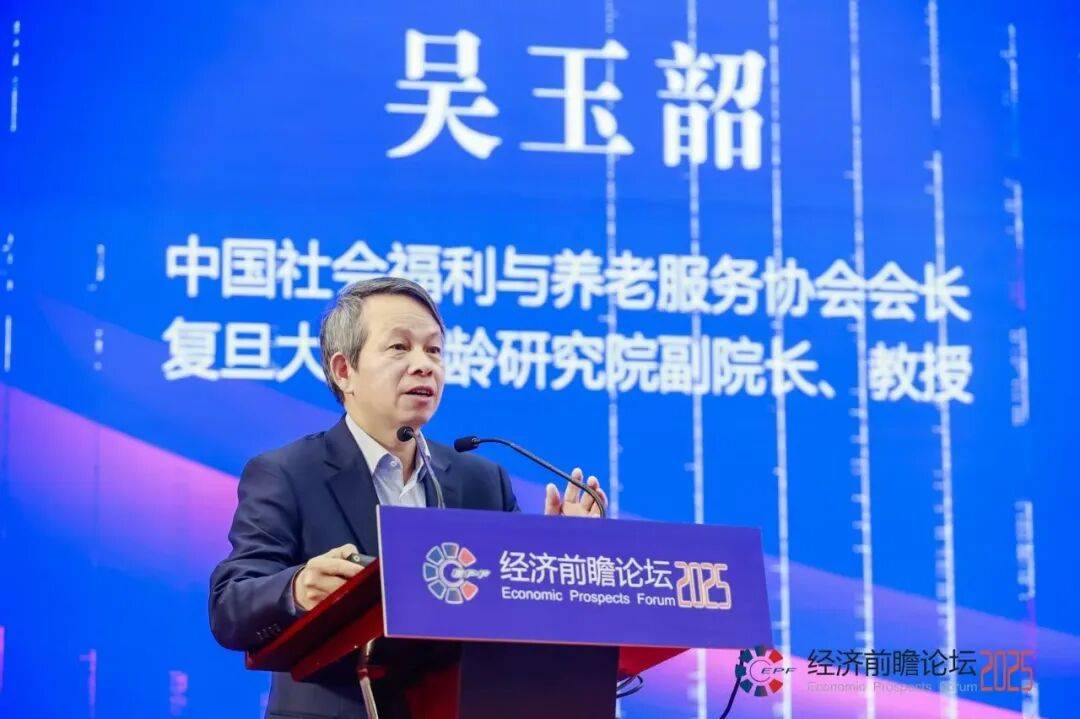
经济前瞻论坛2025丨吴玉韶:六大“转变”绘制“十五五”养老服务新蓝图
Sou Hu Cai Jing· 2025-11-29 13:07
■中国经济时报记者 王丽娟 11月29日,由中国经济时报社主办的经济前瞻论坛2025年会在北京首都宾馆举行。中国社会福利与养老服务协会会长,复旦大学老龄研究院副院长、教授 吴玉韶作《"十五五"养老服务政策与实践发展展望》主题演讲。 吴玉韶在介绍我国老龄化及养老服务发展进程时表示,从2013年养老服务业发展元年以来,经过"十二五""十三五""十四五"三个五年规划的部署,我国养 老服务业从无到有、从小到大、从量到质实现了突破性、跨越式发展,取得了历史性成就。 党的二十届四中全会对"十五五"养老事业作出部署。"'十五五'将是我国进入老龄化社会以来,老龄化发展最快的时期。按中央部署,到2035年中国特色养 老体系成熟成型,'十五五'是体系构建关键期。"他认为。 四是从粗放到精细精准转变。养老服务当前的主要矛盾是供求与需求不"适配"。"十五五"期间,要从"有没有"到"优不优""好不好"转变,在经济面临下行 压力宏观背景下,养老服务政策要从"漫灌"到"滴灌"转变,更加强调精细化和精准化。为此,要重视养老评估的重要性。 五是从信息化到智能化转变。我国养老服务与信息化发展相伴随,从建设信息平台开始,实现了从跟跑、并跑到领跑的 ...
银发经济新趋势白皮书发布:精神文化需求加速升温,产业升级迎来关键窗口
Cai Fu Zai Xian· 2025-11-29 07:59
Core Insights - The white paper titled "New Trends in the Silver Economy: The Spiritual and Cultural Needs of the Middle-aged and Elderly and Industry Development" highlights the expanding spiritual and cultural demands of the "new middle-aged and elderly" demographic in China, driven by recent policies aimed at enhancing the well-being of older adults [1][4] Group 1: Demand and Supply Dynamics - There is a growing demand for spiritual and cultural services among the elderly, yet the supply remains structurally insufficient, with a lack of quality offerings and innovative cultural products [2] - Over half of the respondents rated local spiritual and cultural services as "average," indicating a need for improvement in service quality [2] Group 2: Industry Trends and Innovations - Industry players are actively pursuing content innovation and technological integration in response to rising demand, with organizations like Lihua Education exploring various practices in the cultural service sector [3] - Future innovations in spiritual and cultural services will focus on balancing technology friendliness, content adaptability, and emotional experience [3] Group 3: Future Outlook - The silver economy is expected to continue expanding, with spiritual and cultural consumption becoming a significant growth driver, emphasizing the importance of enhancing life quality and social participation among the elderly [4] - Lihua Education plans to focus on innovation in spiritual cultural services, technology empowerment for the elderly, and the creation of smart elderly care scenarios to improve supply quality [4]