
去美元化

Search documents
1月狂涨69.8%,显著跑赢所有板块
格隆汇APP· 2026-01-27 10:45
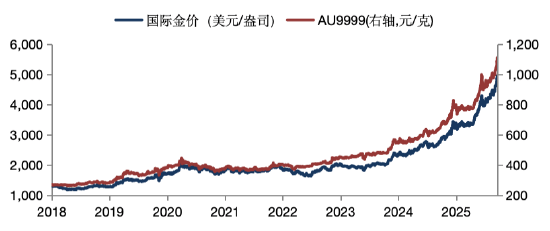
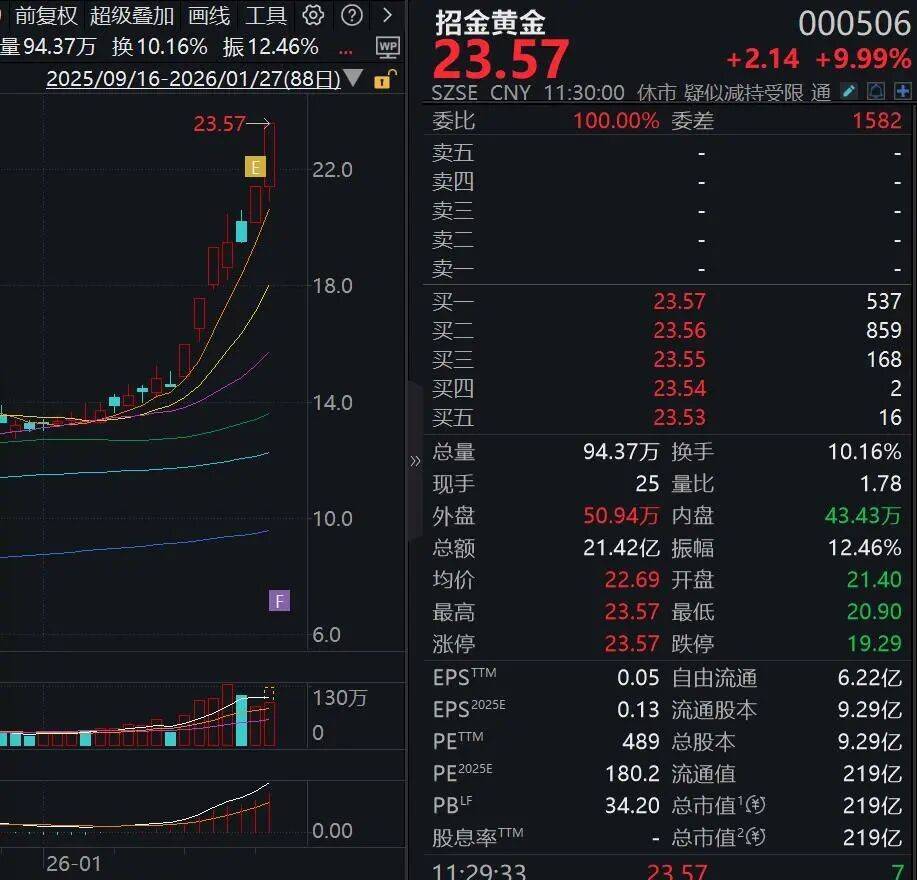
Core Viewpoint - The precious metals market has experienced a historic surge, with silver and gold prices reaching all-time highs due to geopolitical tensions and increased demand from central banks and investors [2][4][11]. Group 1: Precious Metals Performance - As of January 26, 2026, the main silver contract in Shanghai surged by 14%, surpassing 30 yuan per gram, while gold reached 1150 yuan per gram, marking significant increases [2]. - The A-share precious metals sector has risen by 69.8% year-to-date, outperforming all other sectors, while the non-ferrous metals sector increased by 30.85% [2]. - Year-to-date, the Gold Stock ETF (517400) has risen by 38.06%, and the Mining ETF (561330) has increased by 26.89% [2]. Group 2: Underlying Drivers of Precious Metals Surge - The surge in precious metals is driven by escalating geopolitical tensions, particularly actions taken by the Trump administration, including military interventions and withdrawal from international organizations [6][10]. - The ongoing conflict in Ukraine and the geopolitical climate have led to increased global demand for gold as a safe-haven asset, with many countries significantly increasing their gold reserves [11][12]. - A notable trend is the repatriation of gold reserves by various countries, including Germany and several African nations, driven by concerns over the safety of gold stored in the U.S. [12]. Group 3: De-dollarization and Its Impact - The trend of de-dollarization is gaining momentum, with Denmark's decision to sell U.S. Treasury bonds signaling a potential shift among other central banks towards buying gold instead [13]. - The share of U.S. Treasury bonds in global central bank reserves has fallen below 25%, while gold's share has risen to 28.9%, indicating a shift in reserve asset preferences [16]. - A recent survey by the World Gold Council revealed that 95% of central banks plan to increase their gold holdings in 2026, the highest proportion in recent years [17]. Group 4: Silver Market Dynamics - The silver market is experiencing a supply-demand imbalance, exacerbated by export controls from major silver-producing countries, leading to a significant delivery shortfall on the COMEX [20][21]. - As of late January 2026, the deliverable silver inventory on COMEX was only 29% of total inventory, with a delivery gap exceeding 65% [20]. Group 5: Non-Ferrous Metals Performance - The non-ferrous metals sector has also seen substantial growth, with the Mining ETF (561330) recording a 106.11% increase in 2025, making it the top-performing sector [24]. - Prices for various non-ferrous metals, including tin, nickel, and lithium, have shown significant weekly increases, reflecting strong demand [25]. - The ongoing geopolitical tensions have made non-ferrous resources strategic assets, leading to increased control and investment in these sectors by various countries [27]. Group 6: Institutional Outlook - Major investment banks are bullish on gold and non-ferrous metals, with Goldman Sachs raising its 12-month gold price target from $4800 to $5500, citing geopolitical risks and de-dollarization as key drivers [31]. - Morgan Stanley and Bank of America have also adjusted their gold price forecasts upward, indicating a consensus among institutions regarding the bullish outlook for precious metals [31]. - The strong inflow of funds into gold and mining ETFs further supports the positive sentiment in these sectors, with significant net inflows recorded in early 2026 [32].

欧洲资管巨头东方汇理:去美元化浪潮下黄金还有上涨空间
Sou Hu Cai Jing· 2026-01-27 10:41
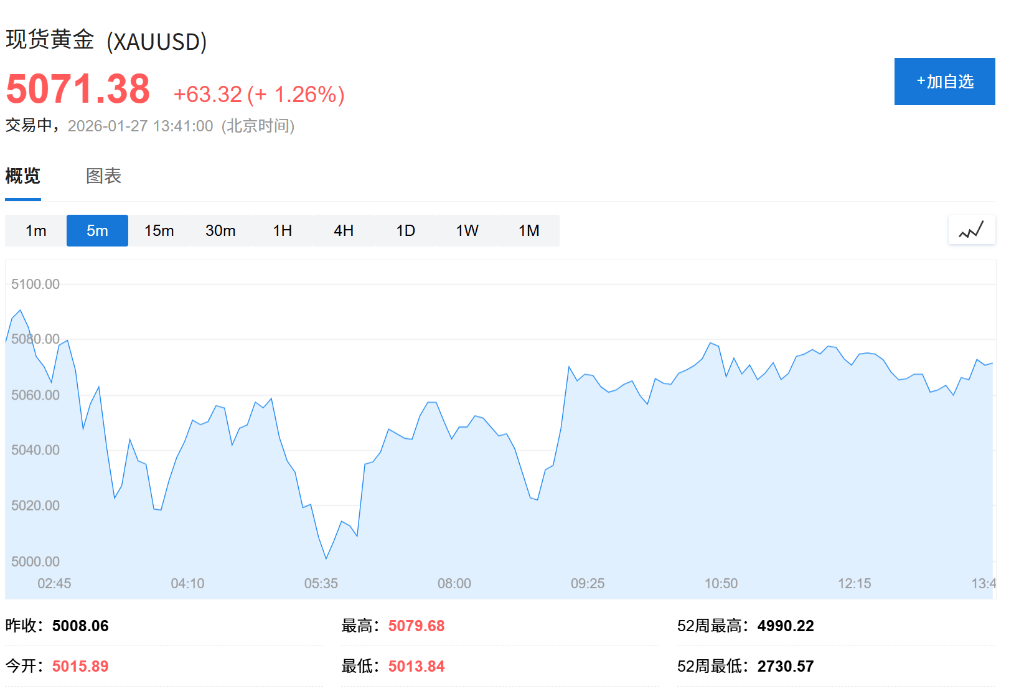
欧洲资管巨头东方汇理资产管理公司1月27日称,随着美国与其他国家日渐疏远,促使许多投资者减持 美元资产并转投黄金,金价有望继续上涨。东方汇理首席投资官Vincent Mortier表示,美国的巨额赤字 和美联储未来政策的不确定性,也是推动资金转向黄金、远离美元的原因之一。 周一突破每盎司5,000美元大关后,金价周二迈向七连涨。过去12个月,金价已累计飙升85%。 Mortier表示,黄金的多数需求来自机构投资者,例如央行和主权财富基金。Mortier称,目前尚无充分 理由投资其他主要货币。 ...
【欧洲资管巨头Amundi称去美元化浪潮下 黄金还有上涨空间】Amundi SA称,随着美国与其他国家日渐疏远,促使许多投资者减持美元资产并转投黄金,金价有望继续上涨。这家欧洲最大资管公司的首席投资官Vincent Mortier表示,美国的巨额赤字和美联储未来政策的不确定性,也是推动资金...
Sou Hu Cai Jing· 2026-01-27 10:32
【欧洲资管巨头Amundi称去美元化浪潮下 黄金还有上涨空间】Amundi SA称,随着美国与其他国家日 渐疏远,促使许多投资者减持美元资产并转投黄金,金价有望继续上涨。这家欧洲最大资管公司的首席 投资官Vincent Mortier表示,美国的巨额赤字和美联储未来政策的不确定性,也是推动资金转向黄金、 远离美元的原因之一。 "过去两年半我们一直在配置黄金,我认为这种操作还可以继续,因为长期来 看,黄金是抵御货币贬值的非常好的手段,也是维持一些购买力的好方法,"他说。(彭博) ...
“不买欧元、不碰日元”,欧洲资管巨头Amundi:去美元化下黄金是最现实的替代品
Sou Hu Cai Jing· 2026-01-27 10:31
27日,Amundi首席投资官Vincent Mortier在接受彭博电视采访时指出,除了地缘政治因素,美国巨额赤字以及美联储未来政策的不确定性,也是 推动资金从美元大规模向黄金转移的关键驱动力。该公司认为,长期来看,黄金是抵御货币贬值和维持购买力的有效工具。 欧洲最大的资产管理公司Amundi表示,随着美元主导地位动摇,投资者正加速削减美元资产并转向黄金,黄金作为当前市场环境下最现实的替代 品,其价格涨势仍有延续空间。 受此避险需求和资产转移的推动,金价在周一历史上首次突破每盎司5100美元大关后,周二迎来连续第七个交易日的上涨。市场数据显示,过去 12个月内黄金价格飙升了85%,而彭博美元指数同期下跌了8.5%。 Mortier特别强调,在当前的全球汇市格局中,其他主要货币均难以构成对美元的有效替代。他直言,当前投资者"可能不想买欧元,而日元正面临 压力",在这种背景下,黄金成为了唯一的替代选择,这一趋势在其客户的资产配置中已表现得尤为明显。 Mortier表示,目前对黄金的大部分需求来自各国央行和主权财富基金等机构投资者。他指出: "我们在过去两年半的时间里一直在配置黄金,我认为这种趋势还会继续。" 机 ...
欧洲资管巨头Amundi称去美元化浪潮下,黄金还有上涨空间
Sou Hu Cai Jing· 2026-01-27 10:28
Core Viewpoint - Amundi SA suggests that as the U.S. distances itself from other countries, many investors are reducing their dollar assets and shifting towards gold, indicating a potential continued rise in gold prices [1] Group 1: Investment Trends - The chief investment officer of Amundi, Vincent Mortier, states that the U.S. deficit and uncertainty regarding Federal Reserve policies are driving funds away from the dollar and towards gold [1] - Over the past two and a half years, Amundi has been allocating investments in gold, which is viewed as a strong hedge against currency depreciation and a means to maintain purchasing power [1] Group 2: Gold Price Movement - Gold prices have recently surpassed the $5,000 per ounce mark and are on track for a seventh consecutive increase [1] - In the last 12 months, gold prices have surged by 85% [1] Group 3: Demand Sources - The majority of gold demand is coming from institutional investors, including central banks and sovereign wealth funds [1] Group 4: Asset Management - Amundi manages approximately €2.3 trillion (around $2.7 trillion) in assets [1]
华安基金:金价历史性站上5000美元大关,全球传统秩序正迎重构
Sou Hu Cai Jing· 2026-01-27 10:16
Core Viewpoint - Gold prices have recently reached historic highs, driven by geopolitical turmoil, a fiscal trust crisis, and ongoing de-dollarization efforts by global central banks [1][2][3] Group 1: Gold Price Trends - London spot gold closed at $4,981 per ounce, a week-on-week increase of 8.3%, while domestic AU9999 gold reached 1,110 yuan per gram, up 7.7% week-on-week [1] - On January 26, gold prices broke the $5,000 per ounce mark for the first time, marking a significant psychological milestone [1] Group 2: Geopolitical Factors - The deterioration of U.S.-European ally relations, highlighted by U.S. tariff threats against eight European allies, has triggered market risk aversion and increased demand for gold [1] - In the Middle East, rising tensions and potential military conflict have escalated, while the Russia-Ukraine situation remains volatile, further increasing global risk premiums and driving investment into gold [2] Group 3: Central Bank Actions - Global central banks continue to purchase gold, with Poland's central bank approving a plan to acquire 150 tons, aiming to increase its reserves to 700 tons [3] - China's central bank has been net buying gold for 14 consecutive months, reflecting a broader trend among central banks to optimize reserve assets and hedge against geopolitical and dollar credit risks [3] Group 4: Market Outlook - The upcoming Federal Reserve meeting is expected to maintain interest rates, which may influence gold prices [4] - In the medium to long term, gold is viewed as a critical hedge against the restructuring of global geopolitical order and sovereign fiscal discipline, with its value likely to be reassessed during this transition [3]
金价飙新高,A股炒贵金属板块自有分寸
Sou Hu Cai Jing· 2026-01-27 10:13
Core Insights - Recent surge in international gold prices, exceeding $5100 per ounce, has led to significant movements in the A-share precious metals sector and a concurrent rise in the banking and insurance sectors [1] - Despite the gold price increase, nearly 4500 stocks underperformed expectations, with trading volume decreasing, indicating a complex market sentiment [1] Group 1: Market Behavior - Investors often fall into the trap of making impulsive decisions based on market fluctuations and news, leading to suboptimal trading outcomes [3] - Emotional responses to market volatility can result in premature exits from positions, causing investors to miss out on potential gains [3] Group 2: Quantitative Analysis - Utilizing quantitative big data can help filter out market noise and identify significant trading signals, allowing for more informed decision-making [6] - Advanced quantitative models can separate different trading behaviors, revealing the true market state and enhancing understanding of market dynamics [6][10] Group 3: Strong Behavior Insights - "Strong behavior" in trading, such as "strong replenishment" and "strong liquidation," indicates significant capital movements and should be closely monitored for strategic insights [10][14] - These strong behaviors reflect planned capital actions and provide clearer operational rhythms, reducing reliance on emotional judgment and speculative news [10][14] Group 4: Data-Driven Decision Making - Transitioning from intuitive trading to data-driven analysis can help investors avoid emotional pitfalls and improve their trading strategies [14] - By leveraging quantitative data, investors can maintain a steady approach in volatile markets, gradually building positive feedback from their investments [14]
任泽平:黄金白银史诗级牛市,还能涨多高?
Sou Hu Cai Jing· 2026-01-27 10:10
Core Viewpoint - The article highlights a historic bull market for gold and silver, with significant price increases driven by geopolitical tensions, de-dollarization, and expansive monetary policies by the Federal Reserve [5][6]. Price Trends - Gold (Au9999) has increased by 47.78% over the past three months, with prices reaching $1,144.45, compared to $861.58 earlier in the year [3]. - In 2025, gold prices surged over 60%, while silver prices rose nearly 150%, marking the strongest annual performance in history [5]. Driving Factors - **Geopolitical Tensions**: The article notes that global instability, including events in Venezuela and trade wars, has heightened demand for gold and silver as safe-haven assets [6]. - **De-dollarization**: The decline in the dollar's share of global foreign exchange reserves from 71.2% to 56.9% over recent years indicates a shift away from the dollar, with central banks increasing their gold holdings [6]. - **Monetary Policy**: The Federal Reserve's extensive monetary easing, including quantitative easing measures, has led to a significant depreciation of the dollar, further boosting gold prices [6]. Silver's Unique Position - Silver is highlighted for its dual role as both an industrial metal and a precious metal, benefiting from increased demand in renewable energy sectors [7]. - The anticipated supply gap of over 100 million ounces in 2026 is expected to amplify silver's price elasticity due to its essential role in high-tech applications [7].
黄金破5000:美元信用崩塌的末日狂欢?
Sou Hu Cai Jing· 2026-01-27 09:36
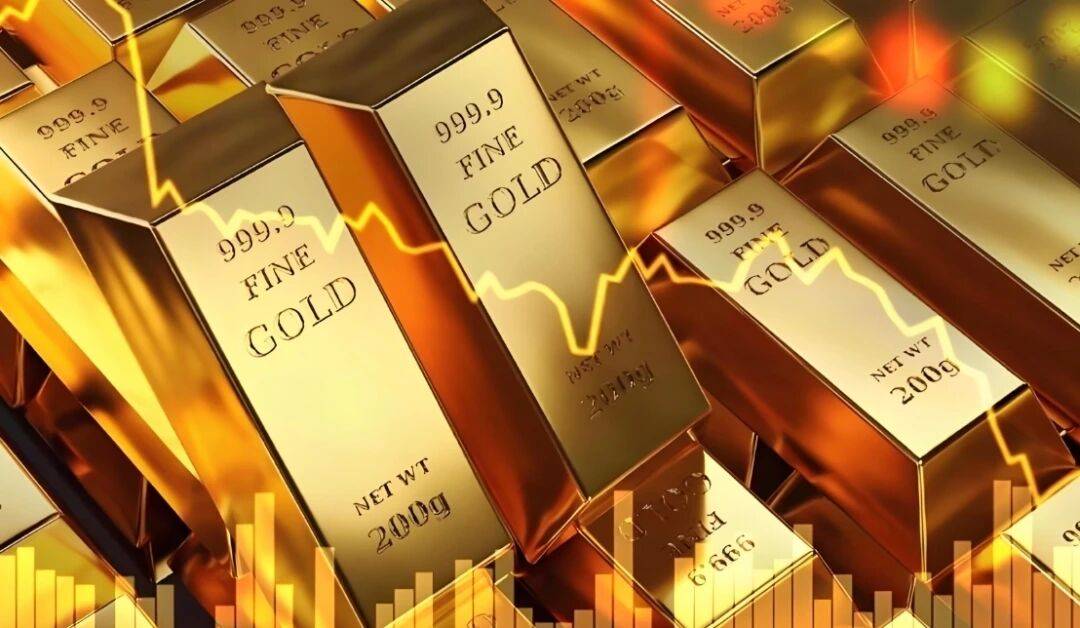
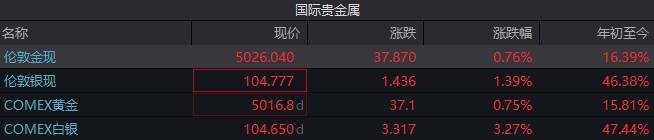
Core Insights - Gold prices have surpassed $5000 per ounce, marking a historic milestone and indicating a strong return of gold as a safe-haven asset amid significant changes in the global monetary system and geopolitical landscape [1][2][3] - The current gold bull market defies traditional logic, with prices rising despite the Federal Reserve's interest rate cuts and a rare simultaneous increase in both gold and the US dollar, suggesting growing skepticism about the dollar's credibility [2][3] Geopolitical and Economic Factors - Geopolitical risks, particularly tensions between the US and Europe over Greenland and escalating conflicts in the Middle East, have driven investors to seek refuge in gold, resulting in record daily price increases [3] - The US federal debt has exceeded $38 trillion, with annual interest payments surpassing $1 trillion, leading to concerns about inflation and the independence of the Federal Reserve, prompting a global shift towards "de-dollarization" [3] Market Dynamics - There has been a significant acceleration in gold ETF inflows, with retail investors contributing to a collective buying momentum, while silver and platinum have seen even more substantial price increases, reflecting heightened speculative sentiment [3] - Some institutions predict that the $5000 mark is just the beginning, with Goldman Sachs raising its price target for gold to $5400 by the end of 2026, while cautioning about valuation risks as the gold market's total value relative to global M2 has reached a historic high [5] Changing Pricing Logic - The pricing logic for gold has fundamentally shifted from being primarily influenced by real interest rates to a re-evaluation of sovereign credit, as US Treasury bonds have become a source of risk, enhancing gold's "super-sovereign" status [5] - Future gold price movements will depend on three key variables: the Federal Reserve's monetary policy, ongoing geopolitical risks, and the evolution of the dollar's credit system [5][6]
西南期货早间评论-20260127
Xi Nan Qi Huo· 2026-01-27 08:54
Report Industry Investment Ratings - Not provided in the given content Core Views of the Report - The macro - economic recovery momentum needs to be strengthened, and monetary policy is expected to remain loose. Treasury bond futures are under pressure, and caution is advised. Stock index volatility centers are expected to gradually rise, and previous long positions can be held. Precious metal market volatility is expected to increase significantly, and it is recommended to exit long positions and wait and see. For various industrial and agricultural products, different trends and investment strategies are analyzed based on their respective fundamentals [6][10][14] Summary by Related Catalogs Treasury Bonds - Last trading day, most Treasury bond futures closed down. The central bank conducted 150.5 billion yuan of 7 - day reverse repurchase operations, with a net withdrawal of 780 million yuan on the day. Due to the current low Treasury bond yields, the steady recovery of the Chinese economy, rising core inflation, and increased risk appetite, Treasury bond futures are expected to face pressure, and caution is needed [5][6] Stock Index - Last trading day, stock index futures showed mixed performance. Domestic economic recovery momentum is weak, but asset valuations are low, and the economy has sufficient resilience. With the increase in market sentiment and incremental funds, the stock index volatility center is expected to gradually rise, and previous long positions can be held [8][9][10] Precious Metals - Last trading day, gold and silver futures rose. The complex global trade and financial environment, the trend of "de - globalization" and "de - dollarization", and the gold - buying behavior of central banks are favorable for the allocation and hedging value of gold. However, due to the recent sharp rise in precious metals and the significant increase in speculative sentiment, market volatility is expected to increase significantly, and it is recommended to exit long positions and wait and see [12][13][14] Steel Products (including Rebar, Hot - Rolled Coil, Iron Ore, Coking Coal, Coke, and Ferroalloys) - **Rebar and Hot - Rolled Coil**: Last trading day, they showed weak oscillations. The real estate industry's downward trend has not reversed, and the market is entering the demand off - season. Although the supply pressure is relieved, the inventory is slightly higher than last year. Prices may continue the weak oscillation, and investors can look for opportunities to buy on dips and manage positions carefully [16] - **Iron Ore**: Last trading day, it slightly corrected. The demand for iron ore is low, the supply situation is complex, and the port inventory is at a high level. The market supply - demand pattern has weakened, but there are signs of stabilizing. Investors can look for opportunities to buy on dips and manage positions carefully [18] - **Coking Coal and Coke**: Last trading day, they slightly rebounded. The production of coking coal is stable, and the demand for coke is weak. The futures have stopped falling and rebounded, but the rebound space may be limited. Investors can look for low - level buying opportunities and manage positions carefully [21] - **Ferroalloys**: Last trading day, manganese silicon and silicon iron contracts fell. The supply of manganese ore is gradually recovering, and the cost is fluctuating in a narrow range at a low level. The overall supply is still in excess, but the short - term supply may be reduced. After the price decline, investors can consider long positions in the low - level range [23][24] Energy (including Crude Oil, Fuel Oil) - **Crude Oil**: Last trading day, INE crude oil rose significantly. Speculators increased their net long positions in crude oil futures and options, the number of active oil and gas rigs increased, and the US imposed new sanctions on Iran. Crude oil is expected to continue rising, and investors can look for long - position opportunities in the main contract [25][26][27] - **Fuel Oil**: Last trading day, it rose significantly. The Asian high - sulfur fuel oil inter - month inverse spread widened, and the market expected short - to - medium - term supply to tighten. Investors can look for long - position opportunities in the main contract [28] Chemicals (including Polyolefins, Synthetic Rubber, Natural Rubber, PVC, Urea, PX, PTA, Ethylene Glycol, Short - Fiber, Bottle Chips, Soda Ash, Glass, Caustic Soda) - **Polyolefins**: The market is expected to be in a supply - demand tight situation this week. Due to rising crude oil prices and some production line overhauls, prices may continue to rise in the short term. The downstream demand is stable, and investors can look for long - position opportunities [29][30] - **Synthetic Rubber**: Last trading day, it rose. It was mainly supported by the rising price of butadiene and high device operating rates, but the weak downstream demand limited the increase. It is expected to show a strong - side oscillation, and attention should be paid to factors such as butadiene price trends and downstream demand recovery [31][32][33] - **Natural Rubber**: Last trading day, it rose. It is expected to show a wide - range oscillation in the short term. The overseas supply is shrinking, and the cost is supported, but the demand is expected to be weak, and the inventory is accumulating [34][35] - **PVC**: Last trading day, it rose. Although it is in the traditional demand off - season, the policy expectation may lead to a strong - side oscillation. In the medium term, capacity clearance and export growth may improve the supply - demand situation. The cost is supported, but the inventory is increasing [36][37][39] - **Urea**: Last trading day, it rose slightly. The short - term price will maintain a strong - side oscillation, mainly driven by export demand and cost support. The supply is increasing, the demand of downstream products is changing, and the inventory is at a certain level [40][41] - **PX**: Last trading day, it rose. The PXN spread and short - process profit are stable, the operating rate is declining, and the cost of crude oil provides support. It is expected to oscillate and adjust in the short term, and investors can participate in the low - level range [42][43] - **PTA**: Last trading day, it rose. The processing fee has rebounded to the average level of previous years, and the upward space may be limited. The supply has little change, the demand is seasonally decreasing, but the cost and market sentiment boost the price. It is expected to oscillate in the short term, with a slight inventory accumulation in January and February [44] - **Ethylene Glycol**: Last trading day, it rose. The supply is shrinking due to increased domestic and overseas device overhauls, but the port inventory is accumulating, and the downstream polyester is in seasonal maintenance. It is expected to have limited upward space in the short term, and investors should operate carefully [45][46] - **Short - Fiber**: Last trading day, it rose. The supply is at a relatively high level, the inventory is at a low level, and it is mainly trading based on the cost - side logic. It is expected to oscillate with the raw material price, and attention should be paid to cost changes and downstream pre - holiday stocking [47] - **Bottle Chips**: Last trading day, it rose. The processing fee has rebounded, the supply is expected to shrink during the Spring Festival, the export is increasing, and it is mainly driven by the cost side. It is expected to oscillate with the cost, and investors can participate cautiously on dips [48][49] - **Soda Ash**: Last trading day, it rose. The fundamental situation is loose, the price is stable for the time being, and it lacks substantial support in the short term. Caution is advised [50][51] - **Glass**: Last trading day, it rose. The fundamental situation is loose, the inventory is increasing, the market demand is weak, but the manufacturers' shipments are good due to pre - holiday stocking. It is expected to oscillate before the Spring Festival, and attention should be paid to the risk of returning to the fundamentals [52][53] - **Caustic Soda**: Last trading day, it rose. The winter seasonal characteristics are significant, with sufficient supply, high inventory, and weak demand. Affected by the alumina price fluctuation, the pre - holiday trading sentiment may fluctuate, but caution is still needed due to the unchanged fundamentals of the middle and lower reaches [54][55] Agricultural Products (including Pulp, Carbonate Lithium, Copper, Aluminum, Zinc, Lead, Tin, Nickel, Soybean Oil, Soybean Meal, Palm Oil, Rapeseed Meal, Rapeseed Oil, Cotton, Sugar, Apples, Pigs, Eggs, Corn & Starch, Logs) - **Pulp**: Last trading day, it fell. The inventory is accumulating, the spot trading is light, the downstream procurement is coming to an end, and the market sentiment is pessimistic. There may be a short - term technical rebound, but rational treatment is needed [56][57] - **Carbonate Lithium**: Last trading day, it fell. The supply is at a high level, the consumption is improving, the inventory is decreasing, and there is strong support for the price. However, the short - term volatility may increase, and risk control is necessary [58][59] - **Copper**: Last trading day, it rose. The US economic data is divided, the Fed's long - term monetary policy is expected to be loose, and the global copper concentrate supply is tight. However, the demand is suppressed by high prices, and the inventory is accumulating. It is expected to adjust at a high level in the short term [60][61] - **Aluminum**: Last trading day, it rose slightly. The alumina market has an oversupply situation, and the electrolytic aluminum supply is inelastic. The high price suppresses the demand, and the inventory is accumulating rapidly. It is expected to adjust at a high level [62][63][64] - **Zinc**: Last trading day, it rose. The domestic refined zinc production is increasing, the demand is in the seasonal off - season, and the inventory is slightly increasing. The price is expected to oscillate and adjust [65][66] - **Lead**: Last trading day, it fell slightly. The supply of lead concentrate is tight, the production capacity of primary lead is restricted, the demand is differentiated, and the inventory is at a low level. The price is expected to maintain an interval oscillation [67][68] - **Tin**: Last trading day, it fell. The supply is generally tight due to the slow resumption of production in Wa State and the crackdown on illegal mines in Indonesia. The demand has certain resilience, and the inventory is decreasing. The price is expected to oscillate strongly, and risk control is needed [69] - **Nickel**: Last trading day, it fell. The global geopolitical situation is tense, the Indonesian nickel quota is reduced, and the cost is rising. However, the stainless - steel consumption is in the off - season, the demand is weak, and the inventory is at a relatively high level. The first - grade nickel is in an oversupply situation [70] - **Soybean Oil and Soybean Meal**: Last trading day, they rose. The Brazilian soybean harvest is accelerating, and the domestic soybean import is slowing down. The supply of soybean is relatively loose, the cost support is weakening, the demand for soybean meal is growing moderately, and the demand for soybean oil is slightly improving. Investors can look for long - position opportunities for soybean meal in the low - cost support range and consider exiting long positions for soybean oil on rallies [71][72] - **Palm Oil**: The Malaysian palm oil futures rose, supported by the price of related oils and crude oil and favorable export data. The domestic palm oil inventory is at a medium level in the past 7 years. Investors can consider long - position opportunities after the price correction [73][74][75] - **Rapeseed Meal and Rapeseed Oil**: The Canadian rapeseed price fell. The Chinese tariff on Canadian rapeseed will be reduced. The domestic rapeseed meal inventory is decreasing, and the rapeseed oil inventory is increasing. Investors can consider closing the spread - widening positions between soybean and rapeseed products [76][77] - **Cotton**: The domestic cotton futures oscillated. The external market cotton price fell. The USDA report is favorable for the market, and the medium - term external cotton price is expected to be strong. The domestic cotton harvest is good, but the inventory increase is lower than expected, and the future supply is expected to be tight. The downstream demand has resilience. The medium - to - long - term cotton price is expected to be strong, but the domestic market is under pressure in the short term. Investors can buy on dips after the price correction [78][79][80] - **Sugar**: The domestic and foreign sugar futures oscillated. India's sugar production is expected to increase, and the domestic market will face the dual supply pressure of domestic new sugar and imported sugar. It is recommended to short on rallies [82][83][84] - **Apples**: The domestic apple futures oscillated weakly. The current inventory is at a low level in recent years, and the new - season apple production and quality have declined. The medium - to - long - term price is expected to be strong, and investors can go long on dips [86][87][88] - **Pigs**: The main contract fell. The supply is expected to be under pressure in the first quarter, and the market is waiting for the marginal change in consumption during the Spring Festival. It is recommended to wait and see [90][91] - **Eggs**: The main contract rose. The egg supply is expected to remain at a relatively high level in January, but the supply - side improvement is emerging. It is recommended to hold positive spreads [92] - **Corn & Starch**: The main contracts of corn and corn starch fell. The northern port inventory is low, the spot price is strong, and the domestic corn is basically in balance of production and demand. The demand for corn starch is slightly improving, but the supply is abundant, and the inventory is at a high level. It is expected to follow the corn market [93][94] - **Logs**: The main contract rose slightly. The supply is shrinking at a high level, the inventory is decreasing, the demand is entering the pre - holiday end, and the cost is rising. The overall supply - demand is tending to be loose, but the cost support is strengthening [95][96][97]