
美元信用体系动摇

Search documents
黄金破5000:美元信用崩塌的末日狂欢?
Sou Hu Cai Jing· 2026-01-27 09:36
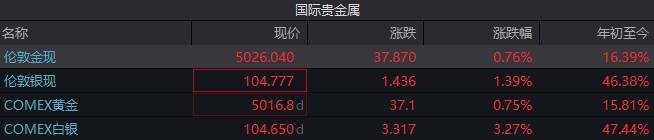
Core Insights - Gold prices have surpassed $5000 per ounce, marking a historic milestone and indicating a strong return of gold as a safe-haven asset amid significant changes in the global monetary system and geopolitical landscape [1][2][3] - The current gold bull market defies traditional logic, with prices rising despite the Federal Reserve's interest rate cuts and a rare simultaneous increase in both gold and the US dollar, suggesting growing skepticism about the dollar's credibility [2][3] Geopolitical and Economic Factors - Geopolitical risks, particularly tensions between the US and Europe over Greenland and escalating conflicts in the Middle East, have driven investors to seek refuge in gold, resulting in record daily price increases [3] - The US federal debt has exceeded $38 trillion, with annual interest payments surpassing $1 trillion, leading to concerns about inflation and the independence of the Federal Reserve, prompting a global shift towards "de-dollarization" [3] Market Dynamics - There has been a significant acceleration in gold ETF inflows, with retail investors contributing to a collective buying momentum, while silver and platinum have seen even more substantial price increases, reflecting heightened speculative sentiment [3] - Some institutions predict that the $5000 mark is just the beginning, with Goldman Sachs raising its price target for gold to $5400 by the end of 2026, while cautioning about valuation risks as the gold market's total value relative to global M2 has reached a historic high [5] Changing Pricing Logic - The pricing logic for gold has fundamentally shifted from being primarily influenced by real interest rates to a re-evaluation of sovereign credit, as US Treasury bonds have become a source of risk, enhancing gold's "super-sovereign" status [5] - Future gold price movements will depend on three key variables: the Federal Reserve's monetary policy, ongoing geopolitical risks, and the evolution of the dollar's credit system [5][6]

金价站上每盎司5100美元 高波动或成贵金属投资常态
Xin Hua Cai Jing· 2026-01-27 01:34
Core Viewpoint - Gold has entered a historic phase with prices surpassing $5,100 per ounce, driven by systemic concerns over the stability of sovereign currency credit systems, evolving from traditional safe-haven trading to a "currency devaluation trade" [1][3] Group 1: Gold Price Trends - International gold prices have seen a significant increase, with a 70% rise in 2025, marking the largest annual increase since the 1979 oil crisis, and a further 15% increase in 2026 [2] - The speed of gold price increases has accelerated, with the time taken to rise from $4,000 to $5,000 being just over three months, compared to longer durations for previous price increases [2] - Analysts indicate that the current gold price dynamics are challenging traditional valuation models, as the dollar's credit foundation is being undermined [5][6] Group 2: Market Drivers - Three main factors are driving the current rise in gold prices: ongoing geopolitical risk premiums, increased uncertainty in U.S. policies, and a weakening dollar due to selling pressure on U.S. Treasuries [3] - The trend of de-dollarization is accelerating, with the dollar's share in global foreign exchange reserves dropping significantly, indicating a shift in global capital markets [4] Group 3: Company Performance - Gold mining companies are experiencing substantial profit increases due to rising gold prices, with companies like Zhaojin Gold and Hunan Gold projecting significant profit growth for 2025 [4] - Major gold mining firms are seeing their stock prices rise sharply, driven by both valuation recovery and performance expectations [4] Group 4: Analyst Predictions - Analysts are raising gold price forecasts, with Goldman Sachs increasing its year-end target from $4,900 to $5,400 per ounce, and Bank of America projecting a target of $6,000 per ounce [6] - Historical patterns suggest that gold prices could continue to rise significantly, with potential targets reaching $6,600 per ounce by 2026 [6] Group 5: Investment Strategy - The current market environment suggests that high volatility in precious metals may become the norm, with prices reflecting strategic capital behavior rather than just fundamental supply and demand [8] - Investors are advised to maintain a cautious approach, particularly in light of potential market corrections and the need for strategic asset allocation [8]
没想到,抓住黄金趋势的方法,竟然这么简单...
雪球· 2026-01-22 13:01
Core Viewpoint - The article discusses the recent surge in gold prices, attributing it to the weakening of the US dollar's credit system and geopolitical tensions, while highlighting the challenges investors face in timing their investments in gold [4][5][8]. Group 1: Reasons for Gold Price Surge - The fundamental reason for the current rise in gold prices is the erosion of the US dollar's credit system, which has been influenced by various geopolitical actions and policies initiated by the Trump administration [4]. - The Danish pension fund AkademikerPension's decision to liquidate US Treasury bonds and Poland's central bank's plan to purchase 150 tons of gold further fueled the demand for gold [2][3]. Group 2: Investor Behavior and Challenges - Many investors have missed opportunities to invest in gold due to fear of high prices and uncertainty about future price movements, leading to a cycle of hesitation [5][8]. - The unpredictability of geopolitical events makes it difficult for investors to forecast trends accurately, which can lead to missed investment opportunities [8][9]. Group 3: Investment Strategy - Gold possesses unique investment attributes as a commodity, currency, and safe-haven asset, making it essential in asset allocation strategies [13][18]. - The article suggests using a systematic approach to asset allocation, such as the "three-part method," to maintain a consistent investment in gold without attempting to time the market [15][18].
金价暴涨至1400元新人直呼难承受
Sou Hu Cai Jing· 2026-01-13 00:47
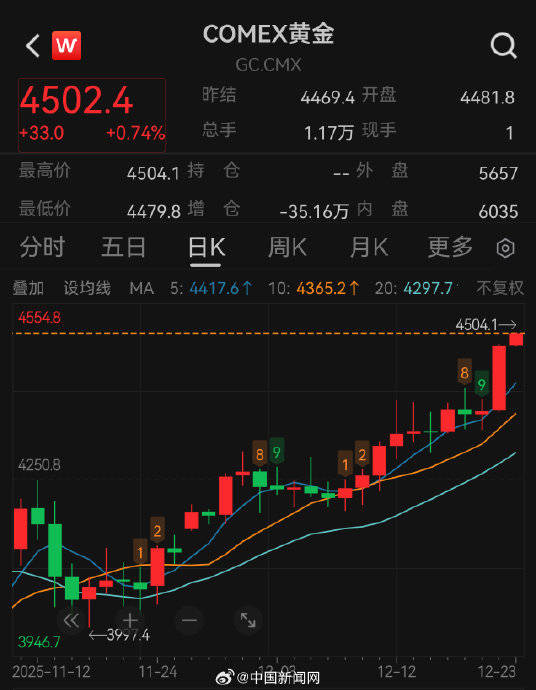
Core Dynamics and Data - Historical Breakthrough: On December 23, 2025, COMEX gold futures first broke $4500/oz, reaching a peak of $4555.1; London spot gold also surged to $4525.83/oz, with a year-to-date increase exceeding 70%, marking the largest annual gain since 1979 [2] - Consumer Transmission: Major brands like Chow Tai Fook and Chow Sang Sang saw a daily increase of 36 yuan in gold jewelry prices, with a reported price of 1411 yuan/gram on December 24, totaling a two-day increase of 44 yuan. The cost of 60 grams of wedding "three golds" skyrocketed from under 40,000 yuan at the beginning of the year to over 80,000 yuan, leading some couples to consider rentals or "gold-plated silver" alternatives [2] Driving Forces Behind the Surge - Monetary Easing Expectations: The Federal Reserve is expected to cut rates by 75 basis points cumulatively in 2025, with the market betting on further cuts in 2026. The decline in U.S. Treasury yields diminishes the dollar's attractiveness, while lower real interest rates reduce the cost of holding gold [3] - Surge in Safe-Haven Demand: - Geopolitical Risks: U.S. sanctions on Venezuelan oil tankers and tensions in the Middle East have heightened risk aversion [4] - De-dollarization: Central banks globally purchased a net 634 tons of gold in the first three quarters, with China increasing its gold reserves for 13 consecutive months, leading to a decrease in the dollar's share of foreign exchange reserves to 56.32% [4] - Technical Buying Pressure: The gold price broke through the resistance level of $4380 set in October, triggering algorithmic trading, with gold ETFs experiencing net inflows for five consecutive weeks [4] Market Divergence and Risk Alerts - Bullish Camp: Central bank gold purchases and an ongoing rate-cut cycle support a bullish outlook, with Goldman Sachs predicting $4900 and JPMorgan forecasting $5055 [5] - Cautious Camp: Concerns over short-term overbought conditions and policy fluctuations, with Citigroup warning of a pullback to $4280-$4300 and economist Guan Qingyou cautioning that rapid price increases may not be beneficial [5] - Historical Lessons: In October, gold prices twice touched $4380 before experiencing a single-day drop of nearly $200 (a 6.3% decline), with the current RSI indicating overbought conditions in the 74-80 range [5] Practical Advice for Ordinary Users - Consumer Pitfalls: - Wedding essentials should prioritize gold jewelry priced by weight in markets like Shenzhen's Shui Bei, avoiding brand premiums of around 30% [6] - Consider refurbishing old gold or opting for "gold-plated silver" alternatives, which are priced at only one-fifth of solid gold [6] - Investment Allocation: - Tools: Gold ETFs (with fees <0.5%) and bank gold savings should be preferred, avoiding high-leverage futures due to frequent liquidations at 80x leverage in October [7] - Strategy: Maintain positions at ≤10% of liquid assets, employing dollar-cost averaging to mitigate high-price risks and avoid chasing prices [7] Future Trend Core Contradictions - Upward Momentum: The erosion of the dollar's credit system is transforming gold from an "anti-inflation tool" to the "ultimate asset against sovereign credit risk," with Morgan Stanley predicting gold prices could challenge $7000-$8000 by 2030 [8] - Downward Risks: If the Federal Reserve's independence is restored or if global economic recovery exceeds expectations, a prolonged bear market for gold similar to the 1980-2000 period could re-emerge [8]


贵金属“超级年”:黄金领跑、白银黑马,2026年走向何方?
Sou Hu Cai Jing· 2026-01-04 14:35
Group 1: Market Overview - The precious metals market experienced a historic surge in 2025, with gold prices rising 70%, silver over 140%, and platinum increasing by 160% [1][3] - On December 24, 2025, gold prices surpassed $4500 per ounce for the first time, reaching a peak of $4531, while silver hit $75.5 per ounce and platinum also saw significant gains [1][5] - The market showed a pattern of stability followed by rapid growth, with key turning points in March and September, leading to a fourth-quarter explosion in prices [3][5] Group 2: Driving Factors - Multiple factors contributed to the surge in precious metal prices, including concerns over the U.S. dollar's credibility and rising sovereign debt [5][7] - Central banks globally continued to purchase gold, with net purchases reaching 634 tons in the first three quarters of 2025, and a record monthly increase of 53 tons in October [5][7] - Geopolitical risks and structural supply-demand imbalances further supported the price increases, particularly in silver due to rising industrial demand [7][9] Group 3: Commodity Analysis - Gold remained a stable investment, achieving a 70% increase, marking its best annual performance since 1990 [9] - Silver outperformed gold significantly, driven by its dual role as both a precious metal and an industrial commodity, with demand from the photovoltaic sector contributing to its rise [9][11] - Platinum showed potential for growth, particularly due to its applications in the hydrogen energy sector, despite challenges from declining demand in traditional automotive catalysts [11] Group 4: Market Impact - The price surge positively impacted upstream mining companies, with many reporting significant revenue and profit growth in 2025 [12][13] - Midstream refining companies faced mixed outcomes, benefiting from increased sales of investment products while also dealing with higher repurchase costs [13] - Downstream jewelry brands encountered both challenges and opportunities, with rising gold prices leading to increased retail prices for gold jewelry [15] Group 5: 2026 Outlook - The precious metals market is expected to experience high volatility and differentiation among commodities in 2026, with continued support for gold prices from central bank purchases and geopolitical uncertainties [17][22] - Silver's performance may be challenged by potential slowdowns in industrial demand, while platinum's future will depend on its unique industrial applications [17][22] - Investors are advised to remain cautious and rational in their participation in the precious metals market, considering the high volatility and historical price levels [19][20]
一夜狂泻!金银高台跳水,发生了什么?
Sou Hu Cai Jing· 2025-12-30 03:05
Core Viewpoint - The recent sharp decline in precious metal prices, including gold and silver, has caused significant panic among investors, driven by increased margin requirements and market speculation [1][4][5]. Price Decline Analysis - The primary trigger for the price drop was the CME Group's decision to raise margin requirements for gold and silver contracts, significantly increasing trading costs for investors [4]. - Prior to the decline, precious metals had experienced substantial price increases, with silver rising by 173% and gold by over 71% since 2025, creating a speculative bubble that was unsustainable [5]. - Market rumors regarding a major bank's potential default due to silver futures positions further exacerbated investor panic, leading to increased selling pressure [6]. Impact on Market Participants - Investors faced severe asset losses, particularly those who bought at high prices, with many accounts experiencing significant reductions in value [8]. - The decline in precious metal prices triggered a domino effect in financial markets, leading to sharp declines in mining company stocks and related ETFs, as well as broader impacts on major stock indices like the S&P 500 and Nasdaq [9]. - The volatility in precious metal prices has raised concerns about macroeconomic expectations, with fears of inflation control and potential deflation affecting market confidence [10]. Future Outlook and Investment Recommendations - Experts suggest that precious metal prices may experience further fluctuations, with potential for excess returns in 2026 due to factors such as a weakening dollar and increased demand for industrial silver [11]. - However, there are warnings about the current overbought conditions in silver, which may lead to a rapid correction or prolonged consolidation [11]. - Investors are advised to maintain a diversified asset allocation strategy and to stay informed about macroeconomic indicators and central bank policies that could influence precious metal prices [12].
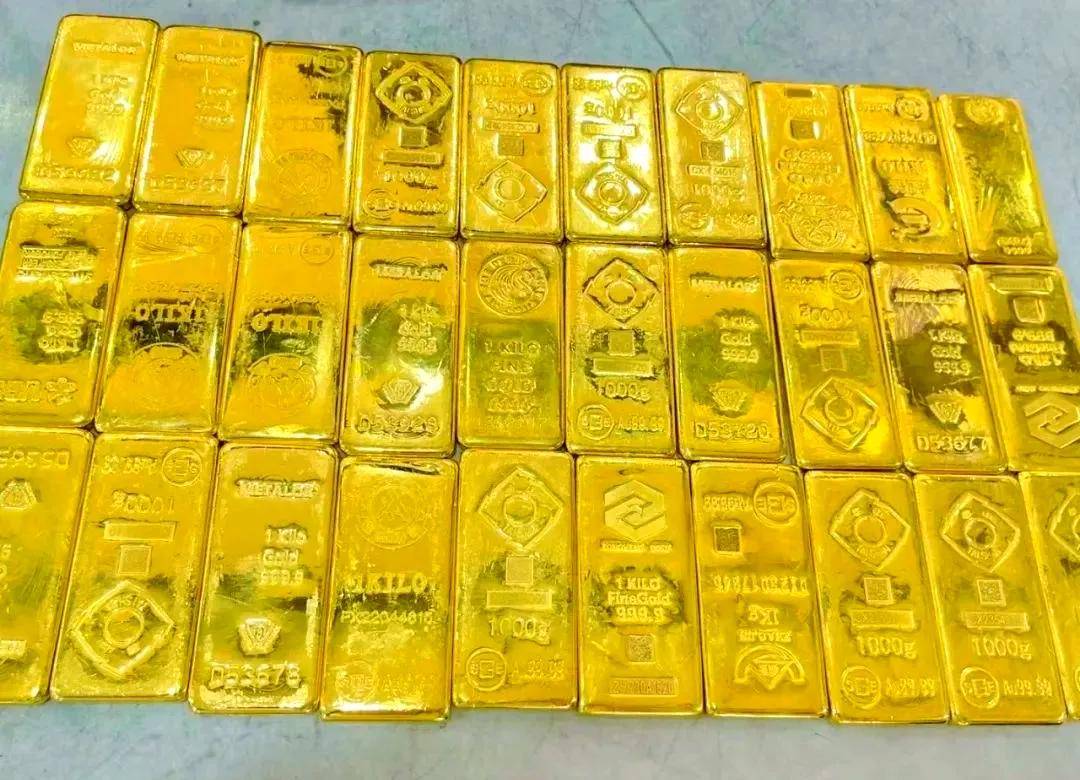
美元信用体系崩塌前奏?多国计划将黄金存在中国,柬埔寨已经选好场地
Sou Hu Cai Jing· 2025-11-07 01:49
Core Viewpoint - Gold is regaining attention as a traditional safe-haven asset amid the instability of the dollar credit system, with countries like Cambodia leading the way by entrusting their gold reserves to China, indicating a potential shift in the global financial landscape [1][2]. Group 1: Gold Reserves and Global Trends - China's gold reserves have increased significantly, with an addition of 351 tons in the first two quarters of this year compared to the same period in 2020, surpassing India's increase of 219 tons over the past five years, showcasing China's growing confidence in the global gold market [2]. - Despite the increase, China's gold reserves remain insufficient compared to developed countries like the U.S. and Germany, suggesting that China will continue to enhance its gold reserves to secure a more prominent position in the global economy [2]. - Cambodia's decision to store its gold reserves in China, backed by strong bilateral trade relations, may inspire other Southeast Asian countries to follow suit, potentially revitalizing China's gold market [2]. Group 2: Geopolitical Implications and Financial Strategy - Cambodia's choice to collaborate closely with China reflects not only economic interests but also a strategic foresight regarding future international dynamics, potentially enhancing Cambodia's influence in regional and global affairs [3]. - China's ambition to become a global gold reserve center aims to create a financial environment independent of the dollar and Western financial systems, which could reshape the global financial order [5]. - The current U.S. government faces challenges such as a potential shutdown and rising inflation, increasing the demand for safe-haven assets like gold, while central banks worldwide continue to purchase gold, signaling a shift away from reliance on the dollar [5]. Group 3: Challenges and Market Dynamics - The rise in gold demand may lead to increased market price volatility, and concerns regarding the transparency of China's gold reserves could hinder its goal of becoming a reserve center [5]. - Geopolitical changes, including wars or major conflicts, could significantly impact gold supply and demand dynamics, making these uncertainties critical variables in the future gold market [7]. - The evolving global financial system is underway, with countries reassessing their gold storage strategies, and Cambodia's early actions may serve as a catalyst for broader changes in the international financial landscape [7].

美元信任崩塌,黄金牛市或成大国博弈长期利器?
Sou Hu Cai Jing· 2025-09-04 09:26
Core Insights - The dominance of the US dollar is weakening, leading to a significant rise in gold prices, which have surpassed $3500 per ounce, marking a historical high [3][10] - Central banks, particularly the People's Bank of China, are increasing their gold reserves as a strategic response to the declining trust in the dollar, with China's reserves reaching 2292 tons by March 2025 [3][6] - The shift towards gold as a safe-haven asset is driven by global economic uncertainties exacerbated by US trade policies, prompting countries to diversify away from dollar-denominated assets [3][10] Summary by Sections Dollar's Decline - The US dollar index experienced a rare drop below 100 in April 2025, causing turmoil in global financial markets [3] - The share of the dollar in global foreign exchange reserves has decreased from 71% in 2000 to 59% currently, indicating a weakening status as a reserve currency [6] Central Bank Actions - Central banks globally purchased a net total of 1045 tons of gold in 2024, with China being a significant contributor to this trend [6] - The increase in gold reserves is aimed at mitigating risks associated with the dollar and optimizing foreign exchange reserve structures [6] Investment Trends - Bridgewater Associates has significantly increased its holdings in gold ETFs, reflecting deep concerns about the traditional monetary system [8] - Individual investors are advised to approach gold investments cautiously, considering past volatility and potential losses in physical gold transactions [10] Market Dynamics - The current gold bull market is seen as a response to a restructuring of the global credit system, driven by uncertainties in the economic landscape [10] - Investing in gold mining stocks, such as Zijin Mining, may offer a more effective way to benefit from rising gold prices while avoiding the challenges of physical gold ownership [10]
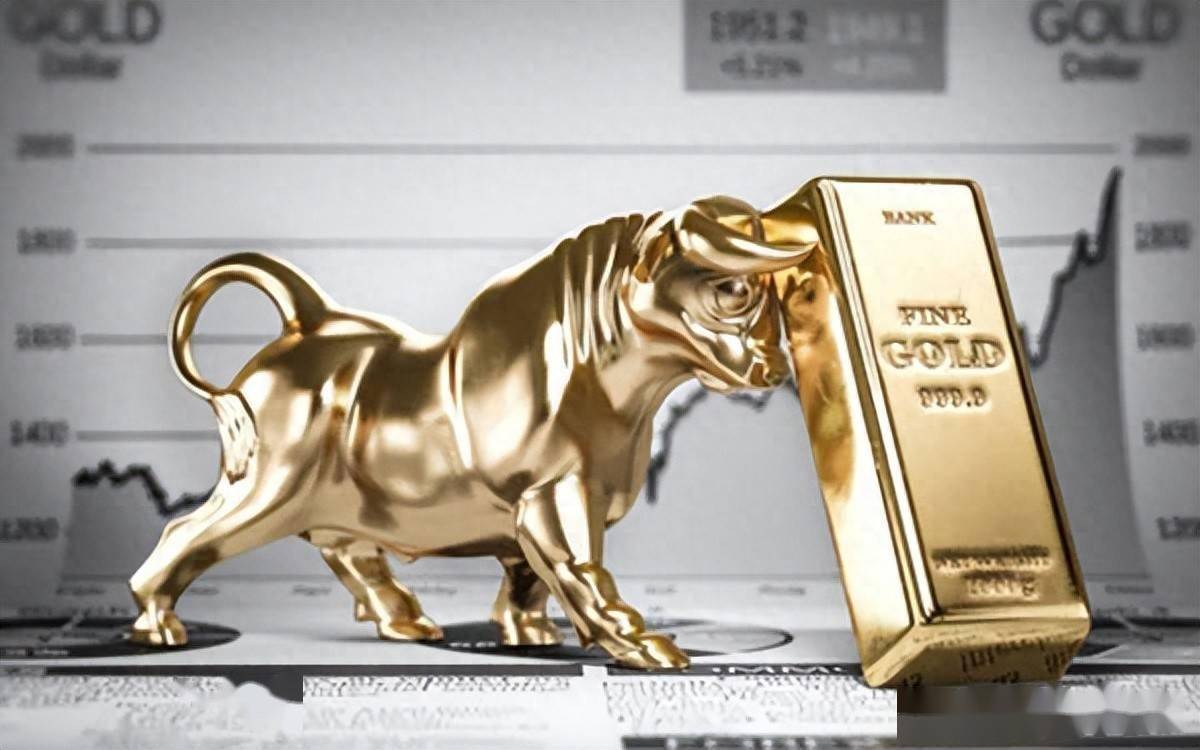
见证历史!金价突破3400美元关口,金饰克价已涨到1039元
2 1 Shi Ji Jing Ji Bao Dao· 2025-04-21 12:19
Group 1 - The core viewpoint of the article highlights the significant rise in gold prices, with spot gold reaching an all-time high of $3,406.653 per ounce, marking a year-to-date increase of over 29% [1][9][23] - The surge in gold prices is attributed to a weakening trust in the US dollar and the international monetary system, driven by US fiscal policies and rising debt levels [9][10] - Central banks in countries like China and India are increasing their gold reserves, contributing to the bullish market for gold [9][10] Group 2 - The price of gold jewelry in China has also seen a historic increase, with major brands like Chow Tai Fook and Lao Miao Gold surpassing 1,000 yuan per gram [5][7] - The volatility in gold prices has led to several ETFs suspending large purchases to manage risks associated with rapid price increases [17][18] - Financial institutions are warning investors about the heightened risks in the gold market, advising caution and rational investment strategies [16][18][19]

