科技创新

Search documents
我国将高水平推进三大国际科技创新中心建设
Xin Hua Wang· 2026-01-27 13:09
2026年,我国将高水平推进三大国际科技创新中心建设,加快建设区域科技创新中心,打造辐射带动区 域高质量发展的创新增长极,因地制宜发展新质生产力。 这是记者从1月26日至27日在京举行的全国科技工作会议上了解到的信息。 据介绍,2025年我国科技创新成果丰硕,科技实力跃上新台阶。其中,国家战略科技力量建设统筹推 进,国家实验室建设取得新进展,科技领军企业加快培育壮大,国家科研机构和高水平研究型大学深化 改革创新。区域科技创新布局更加优化,三大国际科技创新中心建设进入新阶段,区域科技创新中心建 设取得新成效。 科技部部长阴和俊说,"十五五"时期是实现高水平科技自立自强、建成科技强国的关键攻坚期,要以支 撑高质量发展为主题,以加快高水平科技自立自强、引领发展新质生产力为主线,以原创性引领性科技 攻关为主攻方向,统筹发展和安全,加强科技创新全领域布局、全链条部署,持续锻造长板,强化补齐 短板,确保科技强国各项任务落实落地。 2026年是"十五五"开局之年。阴和俊说,将按照党的二十届四中全会战略部署,锚定科技强国目标,统 筹编制好"十五五"科技创新规划,加强基础研究战略性、前瞻性、体系化布局,强化原始创新和关键核 心 ...
2026经济变轨!买房到买矿,全球风口逆转,万亿红利赛道已显现
Sou Hu Cai Jing· 2026-01-27 12:44
Group 1 - The core transformation in wealth discussions has shifted from real estate to resource topics, indicating a significant change in investment focus for ordinary people [1][3] - The traditional reliance on real estate as a wealth vehicle is losing its effectiveness, as the economic growth drivers are changing [5][11] - The old economic model, characterized by investment, export, and consumption, is reaching its limits, necessitating a shift to new growth drivers [9][11] Group 2 - The new growth drivers are identified as technology innovation, green transition, and security assurance, all of which are interconnected and emphasize the importance of resources [13][19] - Technology innovation is evolving from isolated breakthroughs to integrated industry applications, enhancing value creation [15][19] - The green transition is framed as a global resource competition, with critical minerals like lithium, cobalt, and nickel becoming essential for the new energy landscape [19][27] Group 3 - The demand for key minerals is expected to surge due to the ongoing energy transition, leading to a significant supply-demand imbalance [29][31] - Resources are viewed as a dual-value asset, providing both a hedge against economic uncertainty and growth potential during prosperous times [33][39] - Four key resources are highlighted for investment focus in 2026: copper, lithium, cobalt, and rare earth elements, each linked to the new economic drivers [35][37][39] Group 4 - Investment strategies should focus on the entire industrial chain rather than merely speculating on price increases, emphasizing companies with integrated operations and technological advancements [41][43] - The shift from real estate to resource investment reflects a broader change in economic philosophy, prioritizing quality and innovation over mere expansion [43][45] - The ongoing wealth reshuffling is an opportunity for those who can adapt to the new economic landscape and recognize the value of resource investments [45]

2026企业管理年会暨北大国发院商学共创日在京举行
Zhong Guo Jin Rong Xin Xi Wang· 2026-01-27 12:14
新华财经北京1月27日电 日前,由《企业管理》杂志社、《企业家》杂志社和北京大学国家发展研究院 (以下简称北大国发院)主办,企业管理出版社有限公司支持的"2026企业管理年会暨北大国发院商学 共创日"在北京大学承泽园校区举行。会议以"迈进'十五五'——启新思 展新势 开新局"为主题,吸引企 业家、行业专家、学者和媒体代表300余人齐聚一堂,共同探讨企业管理前沿话题与发展趋势。 中国企业联合会、中国企业家协会党委委员、驻会副会长梁彦,中国企业改革与发展研究会第一副会 长、中国一重集团有限公司原党委书记、董事长刘明忠分别致辞。《企业管理》杂志社社长陈静发 布"2025—2026企业管理跨年关键词";《企业家》杂志社社长、《企业管理》杂志社常务副社长王仕斌 发布《企业家》杂志"特别贡献企业家"和"2025年度企业家"名单;《企业管理》杂志社副社长、《企业 家》杂志社副社长帅丹丹发布第十二届"优秀企业管理案例"。 梁彦在致辞中强调,"十五五"开局之年是推动高质量发展的关键阶段,要牢牢把握以科技创新引领新质 生产力发展的时代主线,积极落实国家关于人工智能+、数智化转型和未来产业布局的战略部署。她呼 吁广大企业家争当"科 ...
一家公司、一只基金、近二十年深耕,1250%的累计回报,这位基金经理的长期主义实践
Xin Lang Cai Jing· 2026-01-27 12:12
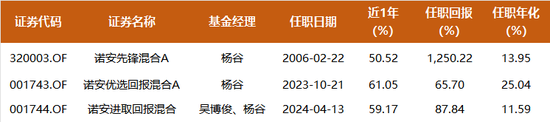
Core Insights - The article highlights the exceptional performance of fund manager Yang Gu, who has managed the Nuon Vanguard Fund for nearly 20 years, achieving an annualized return of approximately 13.3% and a total return of 1153.15% as of December 31, 2025, significantly outperforming the benchmark [3][50][51]. Group 1: Long-term Investment Strategy - Yang Gu exemplifies long-term investment principles, maintaining a consistent focus on quality stocks and demonstrating remarkable discipline in his investment choices [6][53]. - The Nuon Vanguard Fund has received multiple awards for its outstanding long-term performance, including the Golden Bull Fund Award for various time frames [52]. Group 2: Portfolio Management - As of the end of 2025, Yang Gu's managed funds totaled 5.6 billion yuan, allowing for a focused investment strategy [8]. - The fund's portfolio has shown a significant increase in concentration, with the top ten holdings accounting for 51.78% of the fund's assets by the fourth quarter of 2025 [11][58]. Group 3: Stock Selection and Market Positioning - Yang Gu avoids following market trends blindly, focusing instead on independent stock selection, particularly in small and mid-cap growth stocks, which can offer higher growth potential [14][61]. - The top holdings include companies like Jindiaoer and Jin Feng Technology, which have shown substantial price increases, indicating effective stock selection [19][66]. Group 4: Earnings-Driven Growth - The fund's success is attributed to long-term holdings in companies that have significantly increased their market capitalization and earnings, such as Sailun Tire, which saw its stock price rise by approximately 400% since its initial investment [30][70]. - Yang Gu emphasizes that the fund's returns are primarily driven by earnings growth rather than valuation changes [31][72]. Group 5: Diversification Strategy - The Nuon Vanguard Fund employs a diversified approach across various industries, with the top three sectors being semiconductors, specialized equipment, and wind power equipment [35][74]. - This diversification helps manage risk while maintaining a stable net asset value over time, demonstrating the importance of avoiding significant losses in the long run [78]. Group 6: Future Outlook - Yang Gu anticipates that innovation will remain a key theme in 2026, focusing on advancements in manufacturing, AI, and digital economy sectors [84]. - The fund is expected to continue adapting its strategy to capture emerging opportunities while maintaining its long-term investment philosophy [80][86].
官宣!2025年GDP15强省名单落定,3大趋势关乎养老和理财!
Sou Hu Cai Jing· 2026-01-27 11:43
Core Insights - The 2025 GDP rankings reveal a stable yet evolving landscape among the top 15 provinces, indicating regional development trends and implications for investment strategies [1][3] Group 1: Key Rankings and Data - The top 15 provinces by GDP include Guangdong, Jiangsu, Shandong, and Zhejiang, with notable growth rates and nominal GDP figures [4][5] - Guangdong and Jiangsu both exceed 13 trillion in GDP, collectively accounting for over 20% of the national economy, while Shandong and Zhejiang show significant growth rates of 4.87% and 5.04% respectively [6][8] Group 2: Emerging Trends - The traditional dominance of coastal provinces is shifting, with inland provinces like Hubei and Jiangxi showing strong growth driven by technology and innovation [8][9] - Shandong stands out as the only northern province in the top three, demonstrating resilience through industrial transformation and innovation in sectors like offshore wind and biomedicine [9] Group 3: Practical Insights for Investment - High GDP does not equate to safe investment opportunities; provinces with high growth rates may still carry significant risks due to reliance on single industries [11] - Investment strategies should focus on stable industries such as Hubei's optoelectronics and Zhejiang's digital economy, while avoiding high-risk, unsupported high-yield products [11] - For retirement planning, second-tier cities in economically strong provinces offer a balance of quality resources and lower living costs compared to first-tier cities [11]
税收数据显示2025年我国科技创新与产业创新融合发展加快
Zhong Guo Xin Wen Wang· 2026-01-27 09:32
Group 1 - The core viewpoint of the articles highlights the accelerated integration of technological innovation and industrial innovation in China by 2025, showcasing significant growth in strategic emerging industries and improved efficiency in technology transfer [1][2] Group 2 - Strategic emerging industries are experiencing robust growth, with high-tech industry sales revenue projected to increase by 13.9% year-on-year in 2025. Specifically, high-tech manufacturing and high-tech services are expected to grow by 10.1% and 16.6%, respectively. Notable sectors include lithium-ion battery manufacturing, service robots, industrial robots, and biopharmaceuticals, with sales revenue growth rates of 25.1%, 60.7%, 17.4%, and 7.7% respectively [1] - The conversion of scientific and technological achievements is continuously improving, with sales revenue in the scientific research and technical service industry expected to rise by 20.4% year-on-year in 2025. Knowledge-intensive industries are also projected to see a 10.7% increase in sales revenue, indicating a stronger application of technological achievements. The national technology contract transaction amount is expected to grow by 19.1% [1] - The integration of digital technology with the real economy is deepening, with core digital economy industries projected to see a 9.4% increase in sales revenue in 2025. Related sectors such as digital product manufacturing and digital technology application are expected to grow by 9.4% and 13.8%, respectively. Additionally, enterprise procurement of digital technology is anticipated to rise by 9.6%, with manufacturing sector procurement increasing by 10.4% [2] - Traditional industries are accelerating their transformation and upgrading, particularly in automation. The procurement of automation equipment in traditional sectors such as petrochemicals, steelmaking, and ironmaking is expected to increase by 17.3%, 11.7%, and 12.7% year-on-year, respectively [2] - The data reflects solid achievements in China's technological self-reliance and the cultivation of new productive forces, indicating a strong and sustainable internal momentum for high-quality development [2]
代表通道直击 石正兵:真正的科技创新应当“顶天立地”
Nan Fang Du Shi Bao· 2026-01-27 09:24
1月27日,广东省十四届人大五次会议第二场"代表通道"开启。广东省人大代表、广东太力科技集团股 份有限公司董事长石正兵围绕企业经营与创新实践,分享了自身感悟。他表示:"创新既是企业的生命 线,也是服务国家、贡献社会的直接方式。" "真正的科技创新应当'顶天立地'——上可服务国家战略,下可守护人间冷暖。" 从企业研发者到人大代表,石正兵表示,未来他将继续当好政企桥梁,推动更多创新力量融入现代化产 业体系,助力广东高质量发展。 采写:南都N视频记者 叶孜文 赵青 杨伽 出品:南都政务新闻部 广东省人大代表、广东太力科技集团股份有限公司董事长石正兵。 南都N视频记者梁炜培摄。 石正兵所在的企业专注高性能新材料研发二十多年,曾经29次参与国家航天任务。但让他感触最深的, 却是一次来自地面救援一线的"召唤"。"去年西藏地震救援中,许多子弟兵徒手在废墟中搜救,双手在 寒风中刮破划伤。我们立刻把自主研发的柔性新材料制成防刺手套送到前线。"石正兵介绍,这款厚度 仅0.6毫米的材料,既能抵挡刀割针刺,又能防水透气,实现了安全与轻便的完美结合,为一线救援人 员增加了一层安全守护。 这件事情让石正兵敏锐地察觉到,广东包括中山在内的 ...
贵州:科技创新引领新质生产力加快发展
Zhong Guo Xin Wen Wang· 2026-01-27 09:19
在打造先进装备制造产业集群方面,科技创新让贵州逐步从传统工业向智能制造跨越。省政协委员、中 航重机股份有限公司董事长冉兴说,贵州作为中国为数不多具有独立制造飞机能力的省份,拥有深厚的 三线建设底蕴和较为完善的产业配套基础。 贵州省政府工作报告提出,"十五五"时期,贵州将努力实现科技创新水平大幅提高到目标,预期特色优 势产业关键核心技术取得突破。2026年,贵州将坚持以科技创新引领新质生产力发展,持续提升产业竞 争力;推动科技创新和产业创新深度融合,优化提升传统产业,培育壮大新兴产业和未来产业,加快推 动产业体系优化升级。(完) 曾经,贵州的铝土矿越挖越深,矿石里硫、碳等杂质像"牛皮癣"一样难以处理。是选择放弃,还是把路 走通?贵州省人大代表,遵义铝业党委书记、董事长周锋带领团队选择了最难的那条路——自主创新。 他们以科技创新主动求变,抢抓"富矿精开"战略机遇,十年"磨一剑",最终成功"驯服"了含硫15%的铝 土"废矿",一举攻克高蒸排盐、湿法氧化这一行业难题。"最硬的骨头,往往啃下来就是最核心的竞争 力。" 同是面对"富矿精开",在贵州省政协委员、贵州民族大学党委书记吕国富看来,贵州坐拥丰富磷矿,很 多企业想 ...
公募基金重点产品、策略回顾与展望:主动超额延续,固收增强突围
Ping An Securities· 2026-01-27 09:09
证券研究报告 主动超额延续,固收增强突围 ——公募基金重点产品/策略回顾与展望 证券分析师 | 陈 瑶 | 投资咨询资格编号:S1060524120003 | | --- | --- | | 郭子睿 | 投资咨询资格编号:S1060520070003 | | 任书康 | 投资咨询资格编号:S1060525050001 | | 研究助理 | | 高 越 一般从业资格编号:S1060124070014 胡心怡 一般从业资格编号:S1060124030069 2026年1月27日 请务必阅读正文后免责条款 报告摘要 2 • ETF回顾与展望:被动权益基金规模持续扩张,但增速有所放缓。资金流向方面,2025年资金由宽基流向行业主题ETF,具体来看2025年科技主 题ETF资金净流入额居前,其次为金融地产和周期主题ETF,伴随热门主题行情,热门概念主题ETF轮番吸引资金流入。2026年开年以来卫星/商 业航天、有色、AI主题ETF大幅净流入。参考美国共同基金发展历程,ETF发展趋势仍将延续,被动产品仍有发展空间。政策方面,优化了产品 注册与基准设置机制,通过一系列调降费率的举措,助力ETF充分发挥低费率、高透明度的工具 ...
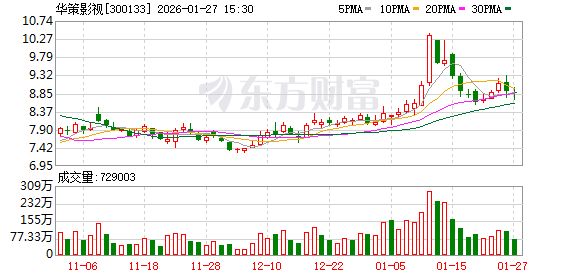
华策影视:公司持续关注并战略性布局符合国家产业政策导向的科技创新领域,积极探索与现有业务的协同机会
Zheng Quan Ri Bao· 2026-01-27 09:08
(文章来源:证券日报) 证券日报网讯 1月27日,华策影视在互动平台回答投资者提问时表示,公司持续关注并战略性布局符合 国家产业政策导向的科技创新领域,积极探索与现有业务的协同机会。 ...