
专利悬崖

Search documents
“美国BD黑拳”VS“30天审批通关”:中国创新药赛道的时间之战丨行业风向标
Tai Mei Ti A P P· 2025-09-15 14:47
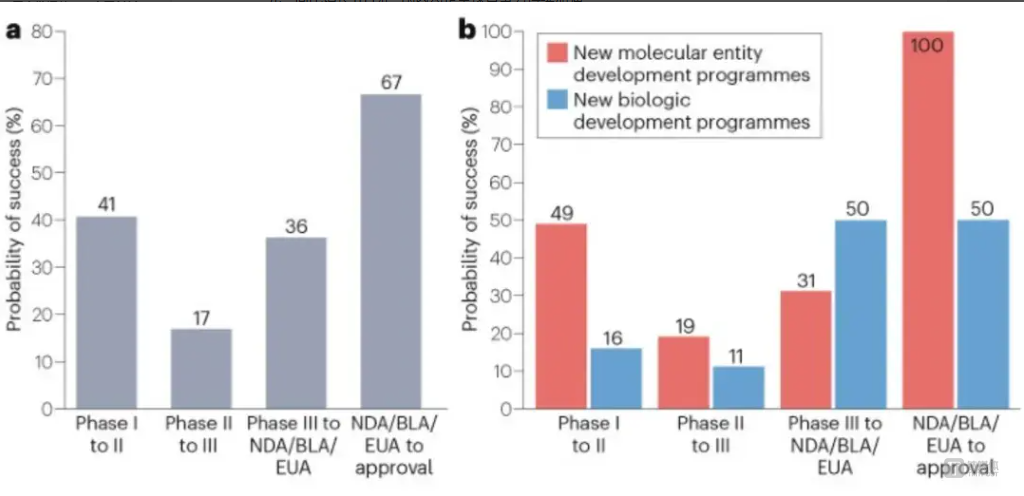
Group 1 - The proposed sanctions by the Trump administration on innovative drugs have caused significant turmoil in the capital market, with the Hong Kong Hang Seng Biotechnology Index dropping by 7% at the opening, affecting leading companies like BeiGene and CSPC Pharmaceutical [1] - The National Medical Products Administration (NMPA) announced a reduction in the review and approval time for clinical trial applications to 30 working days, nearly halving the previous timeline, which has provided reassurance to the anxious market [1][8] - The U.S. aims to cut off the core profit path for Chinese innovative drugs through enhanced CFIUS reviews and increased FDA regulatory costs, while China is responding with accelerated approval processes and synchronized global research submissions [1][4] Group 2 - The Trump administration's draft executive order includes two main provisions targeting the key aspect of BD licensing for Chinese innovative drugs [2] - The first provision expands CFIUS reviews, requiring U.S. pharmaceutical companies to undergo mandatory safety reviews for acquiring rights to Chinese drugs in development, which could lead to longer transaction cycles and increased costs [3] - The second provision mandates more detailed FDA reviews of Chinese clinical data and higher regulatory fees for companies submitting trial data from China, raising the entry barriers for Chinese innovative drugs into the U.S. market [4] Group 3 - Data shows that the success rate for Chinese innovative drugs progressing from Phase I clinical trials to FDA approval is only 1.7%, highlighting the stringent nature of FDA approvals [4][6] - Currently, only two PD-1 inhibitors developed in China have received FDA approval, indicating the challenges faced by Chinese companies in the U.S. market [6] - The proposed U.S. measures may inadvertently strengthen the position of multinational corporations (MNCs) that are increasingly interested in Chinese innovative drugs due to their cost-effectiveness and high return on investment [7] Group 4 - The NMPA's recent policy to expedite clinical trial reviews is expected to significantly shorten the R&D cycle, enhancing China's attractiveness in the global R&D network and improving the bargaining power of local companies in international transactions [9][11] - The policy aims to create a more reliable domestic market as a "base" for innovative drug companies, especially when facing potential obstacles in international markets [9] - By 2025, the number of approved innovative drugs in China is projected to reach 43, with domestic drugs accounting for 93%, indicating a robust growth trajectory in the innovative drug sector [9][10] Group 5 - The Chinese government continues to support the development of innovative drugs through various policies, including the establishment of a comprehensive support system for R&D and payment mechanisms [10] - The introduction of a commercial health insurance directory for innovative drugs aims to provide new payment channels for high-value drugs, addressing the challenges of reimbursement under basic medical insurance [10] - The overall policy framework is designed to create a closed-loop system for the high-quality development of innovative drugs, enhancing clinical accessibility and stabilizing enterprise expectations [10][11]

医药生物行业周报:关注海外地缘扰动,坚定看好国内创新产业链发展-20250915
Donghai Securities· 2025-09-15 09:22
Investment Rating - The report assigns an "Overweight" rating to the pharmaceutical and biotechnology industry, indicating that the industry index is expected to outperform the CSI 300 index by 10% or more over the next six months [34]. Core Insights - The pharmaceutical and biotechnology sector experienced a slight decline of 0.36% from September 8 to September 12, 2025, ranking 29th among 31 industries in the Shenwan index, underperforming the CSI 300 index by 1.74 percentage points. The current PE valuation for the sector is 31.72 times, which is at a historically low level, with a premium of 137% compared to the CSI 300 index [3][11][18]. - The report highlights the potential impact of a proposed executive order by the Trump administration aimed at restricting U.S. pharmaceutical companies from acquiring drug development pipelines from China. This move is seen as a national security priority and could significantly alter the global supply chain dynamics of the U.S. pharmaceutical industry [4][27][28]. - Despite the overall market performance being subdued, sub-sectors such as medical devices, pharmaceutical commerce, and medical services showed relative strength, with respective increases of 2.23%, 1.44%, and 0.51% [3][11]. Market Performance - The pharmaceutical and biotechnology sector has seen a year-to-date increase of 26.80%, ranking 8th among 31 industries, and outperforming the CSI 300 index by 11.88 percentage points. All sub-sectors have recorded gains, with medical services leading at 46.88% [13][19]. - The report notes that 262 stocks (55.27%) in the sector rose, while 201 stocks (42.41%) fell during the last week. The top five gainers included Zhend Medical (41.26%), Haooubo (27.96%), and Jimin Health (25.88%) [25][26]. Industry News - The report discusses the implications of the proposed executive order, which aims to cut off the pipeline of experimental drugs developed in China, affecting treatments for cancer, obesity, heart disease, and Crohn's disease. Major U.S. pharmaceutical companies have relied on low-cost experimental drugs from China to enhance their product lines [4][28][29]. - The report emphasizes that even if the order is enacted, it is likely to face significant legal challenges, which could delay or nullify its implementation. The potential loss from patent cliffs could exceed $236.4 billion, and U.S. companies may miss out on valuable assets if they cannot collaborate with Chinese firms [4][30]. Investment Recommendations - The report suggests focusing on high-performing stocks within the innovative drug chain, as well as quality stocks in medical devices, traditional Chinese medicine, pharmacies, and medical services. Recommended stocks include Teabo Bio, Rongchang Bio, and Betta Pharmaceuticals [5][31][32].
“一纸政令”难阻产业趋势,多家机构仍看好创新药发展
Zhi Tong Cai Jing· 2025-09-12 08:20
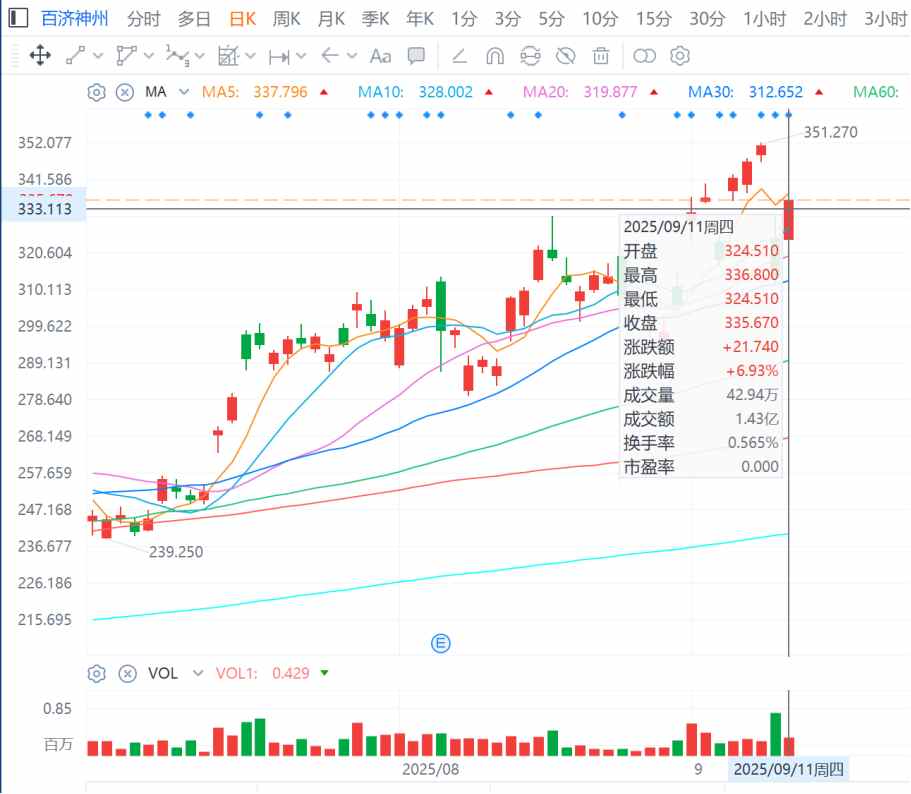
Core Viewpoint - The Trump administration is drafting an executive order to impose strict restrictions on Chinese pharmaceuticals, particularly experimental drugs, aiming to curb the rapid development of China's biotech industry, which may negatively impact the U.S. pharmaceutical supply chain and patient access to innovative therapies [1][4]. Group 1: Market Reaction - Following the news, stocks of various pharmaceutical companies, including BeiGene (ONC.US), Zai Lab (ZLAB.US), Legend Biotech (LEGN.US), Pfizer (PFE.US), AstraZeneca (AZN.US), and GlaxoSmithKline (GSK.US), experienced varying degrees of decline [1]. - BeiGene's stock saw a significant drop of up to 12% during intraday trading on September 10, but rebounded by 6.93% by the close on September 11, indicating a quick recovery in market sentiment [1][3]. Group 2: Policy Implications - The proposed executive order includes three main components: threatening to cut off supply channels for Chinese-developed drugs, imposing stricter scrutiny on U.S. pharmaceutical companies purchasing drugs from Chinese firms, and requiring the FDA to conduct more rigorous reviews and charge higher regulatory fees [4]. - The policy may inadvertently harm U.S. multinational pharmaceutical companies (MNCs) as nearly 200 drugs, including 69 blockbuster drugs with annual sales exceeding $1 billion, are set to lose patent protection, leading to a potential $115 billion patent cliff by 2035 [5]. Group 3: Industry Perspectives - Analysts suggest that the proposed restrictions may backfire, as they could limit U.S. biopharmaceutical companies' access to Chinese assets and innovation, which are crucial for maintaining competitive pricing and addressing patent expirations [7][9]. - Major pharmaceutical companies like Pfizer, Merck, and AstraZeneca have voiced support for Chinese biotech firms, recognizing their role in providing cost-effective solutions and rapid delivery capabilities [7]. Group 4: Future Outlook - Despite the recent market volatility, the innovative drug sector remains a favored investment area, with reports indicating that the Hong Kong innovative drug sector turned profitable for the first time in the first half of the year [9]. - Analysts from various firms, including Southwest Securities and CITIC Securities, expect continued growth in the A-share and Hong Kong pharmaceutical sectors, driven by innovation and internationalization [9][10]. - The potential executive order's feasibility is questioned, with some analysts believing it may not be implemented due to existing U.S. pharmaceutical policies [10][11].
“封杀”中国创新药?全球大药企“第一个不答应”
Hua Er Jie Jian Wen· 2025-09-12 02:16
Core Viewpoint - The White House is drafting an executive order that may impact Chinese pharmaceutical and biotech companies' business expansion with U.S. firms, potentially imposing stricter reviews on innovation drug licensing [1][2]. Group 1: Market Impact - The short-term impact on market sentiment is expected to be greater than the actual damage to China's innovative drug industry or commercial development trends [1]. - Global pharmaceutical companies are facing a "patent cliff" risk and urgently need high-quality Chinese assets to strengthen their product pipelines [1][2]. Group 2: Challenges and Responses - It is technically challenging to prohibit patent transactions for Chinese innovative drugs, as many companies can utilize intermediaries for commercial development [2]. - Global pharmaceutical firms are under dual pressure from the U.S. Inflation Reduction Act (IRA) and significant patent cliff risks, particularly after 2027, making the next 1-2 years a critical period for enhancing product pipelines [2]. Group 3: Long-term Outlook - Despite potential short-term adjustments due to tariffs and other factors, the long-term growth outlook for China's biotech sector remains optimistic [3]. - Even if the executive order is implemented, the actual damage to Chinese biotech companies' commercial development is expected to be minimal, although negative sentiments from U.S. policymakers may lead to short-term market volatility [3]. - The trend of foreign licensing of Chinese assets is likely to be difficult to halt, indicating a sustained interest in China's biotech sector [3].
创新药及产业链:加速全球化,产业链复苏
2025-09-11 14:33
Summary of Key Points from Conference Call Records Industry Overview - The global pharmaceutical industry is facing a "patent cliff," with over 40% of revenues affected for many multinational companies, creating opportunities for Chinese innovative drug companies to introduce their assets [1][3][4] - The Chinese innovative drug sector is experiencing a diverse globalization path, including overseas expansion, business development, and joint ventures, with significant collaboration with regions like Europe, Southeast Asia, and the Middle East [1][5] Company Performance - **Hengrui Medicine**: Achieved a revenue growth of 15.88% and a net profit growth of 29.67% in the first half of the year, with expectations for further performance improvement in the second half [1][7] - **Kangfang Biotech**: Reported a revenue increase of 49.20% in the first half of the year, with promising data from its API12 presented at WCLC and ongoing global clinical trials for AK104 [1][8] Market Dynamics - The innovative drug sector showed healthy performance in the first half of the year, with significant contributions from products entering the medical insurance list, enhancing profit margins for companies like Kangfang Biotech, Hengrui Medicine, and others [1][6] - The domestic CRO (Contract Research Organization) industry is entering a new phase after adjustments, with a recovery in overseas demand and a clear trend of Chinese innovative drugs moving into late-stage clinical trials [3][10][11] Future Trends and Drivers - The core driving force for Chinese innovative drugs going global is their breakthrough global competitiveness, particularly in next-generation immunotherapy and antibody-drug conjugates (ADCs) [2][12] - The domestic CRO industry is expected to benefit from sustained global innovation demand, increased R&D spending, and the internationalization of Chinese innovative drugs [12] Geopolitical Impact - Geopolitical factors have influenced the Chinese CRO industry, with concerns arising from U.S. regulations, but these have been alleviated over time as companies enhance their core capabilities and expand overseas [13] Notable Companies and Products - **Innovative Products**: - **Sinda's PD-L1 monoclonal antibody**: Demonstrated promising survival data for patients with solid tumors, indicating a broad international market potential [19] - **Gree Pharmaceutical's GLP-1 drugs**: Showed favorable clinical data with significant market potential due to expected weight loss effects [20][21] - **Leading CDMO Companies**: Companies like WuXi AppTec reported a 21% revenue growth and a 102% increase in net profit, benefiting from the ADC industry and overseas expansion [3][14] Conclusion - The Chinese innovative drug sector is poised for growth, driven by strong performance metrics, a favorable global market environment, and strategic international collaborations. The ongoing developments in clinical trials and product launches are expected to further enhance the competitive landscape for these companies [1][9][22][23][24]


底部夯实,寻求“拐点、成长”共振
ZHONGTAI SECURITIES· 2025-09-10 13:14
Investment Rating - The report maintains an "Accumulate" rating for the industry [5] Core Insights - The pharmaceutical and biotechnology industry is expected to experience a turning point and growth resonance, with a focus on the resilience of the raw material drug sector amidst various macro and micro factors [7][10] - The industry is characterized by a significant number of listed companies, totaling 494, with a total market value of 77,409.20 billion and a circulating market value of 70,487.38 billion [2] Summary by Sections Industry Overview - The report analyzes 47 representative raw material drug companies, indicating that despite pressures on revenue, the profit margins are showing improvement, reflecting the industry's resilience [10] - The average revenue growth rate for the 47 companies in the first half of 2025 was -5.38%, while the average growth rate of non-recurring net profit was 14.43% [10][12] Financial Performance - Key companies such as Xinhecheng, Aoruite, Tianyu Co., Meinuohua, and others have achieved over 10% growth in revenue and non-recurring net profit [10] - The report highlights that the non-recurring net profit of Xinhecheng increased significantly by 70.50% year-on-year in the first half of 2025 [10] Market Trends - The report notes that the prices of major raw materials are currently at low levels, particularly for certain categories like sartans and heparins, with expectations for gradual price recovery as excess capacity is cleared [7][10] - The investment strategy for the second half of the year focuses on identifying companies that are at a turning point in their existing business while also exploring new growth opportunities [7][10] Company Recommendations - The report suggests focusing on companies such as Tianyu Co., Sitaly, Tonghe Pharmaceutical, Meinuohua, Xianju Pharmaceutical, and Puluo Pharmaceutical for potential investment opportunities [7][10]



梁杏:创新药迎“政策支持+业绩兑现+风险偏好”三轮驱动
Mei Ri Jing Ji Xin Wen· 2025-09-08 01:54
Core Viewpoint - The key driving factors for the innovative drug market this year can be summarized as "policy support + performance realization + risk appetite" [1] Performance Realization - The basic premise for performance realization is the surge in licensing transactions, known as BD, where innovative drug companies sell their intellectual property, creating significant potential for future performance release [1] - The supply-demand relationship is driven by the "patent cliff" faced by large pharmaceutical companies in the U.S., where the expiration of patents leads to a surge in generic drugs, causing a sharp decline in revenues for these companies [1][2] - Chinese biopharmaceutical companies have accumulated a wealth of innovative drug patents since 2016, which can be sold to U.S. companies, forming a complementary supply-demand relationship [2] - Many innovative drugs are not sold domestically due to high R&D costs and initial high prices, leading companies to sell their intellectual property to recover initial investments [2] Policy Support - Two significant policies are highlighted: the inclusion of 37 expensive innovative drugs into commercial insurance, which may eventually lead to inclusion in national insurance, and the expedited review and approval process for clinical trials, reducing the timeline to 30 working days [3] - These policies are expected to shorten the R&D cycle for pharmaceutical companies, allowing for quicker capital recovery and potentially extending the lifecycle of their products [3] Risk Appetite - The stock market has shown a "slow bull" trend since mid-June, which has positively influenced the risk appetite for the innovative drug sector [3][4] - The innovative drug index has seen a 98% increase this year, with the sustained risk appetite contributing to the continuation of this trend [4] Investment Opportunities - Current main areas for BD licensing include dual antibodies and ADC, while AI drug development and gene therapy are seen as potential hotspots [4] - Investors are advised to consider ETFs for exposure, with options for high elasticity or stable investments available [4]
南方基金叶震南:港股回调是短期情况 未来三到四年将是中国创新药的甜蜜期
Zhi Tong Cai Jing· 2025-09-02 23:21
Group 1 - The Hong Kong stock market is currently experiencing a favorable environment due to scarcity and liquidity easing, leading to a significant increase in market risk appetite [1] - The recent pullback in the Hong Kong stock market is viewed as a short-term situation, with a focus on corporate earnings, operational status, and asset quality during the half-year reporting period [1] - The Chinese innovative drug sector is expected to enter a "sweet period" over the next three to four years, driven by continuous policy optimization and strong support for innovative drug products [1] Group 2 - The global pharmaceutical industry is facing a "patent cliff" from 2024 to 2028, prompting a need for companies to replenish their pipelines, which aligns with the favorable conditions for Chinese innovative drugs [2] - The competitive landscape in the pharmaceutical industry is shifting from price competition to differentiation and precise positioning, with an emphasis on "true innovation" [2] - Short-term performance of innovative drugs has not yet scaled, and key catalysts are expected to occur in the fourth quarter, indicating a current information vacuum [2]
益诺思20250813
2025-08-13 14:53
Summary of the Conference Call for Yinos Company Overview - Yinos is positioned as the innovation technology source for China National Pharmaceutical Group, benefiting from internal business cooperation within the group [2][7] - The company has a strategic reserve of experimental monkey resources, ensuring stable supply of core materials [2][8] - Yinos is one of the few companies in China with GLP certifications from China, OECD, and FDA, indicating strong international service capabilities [2][10] Key Points and Arguments - **Growth from National Pharmaceutical Group**: New orders from clients within the group are expected to grow by 26.3% year-on-year in 2024, highlighting Yinos's strategic position and growth potential [2][7] - **Market Position in Ampoules**: Yinos is a leading player in the domestic ampoule market, with a market share of 6.8% in non-clinical safety evaluation, ranking third [3] - **Revenue from Innovative Drugs**: Over 90% of Yinos's revenue comes from innovative drugs, having assisted in nearly 200 first-in-class drug research services [4] - **CRO Industry Growth**: The global CRO market is expected to grow at a compound annual growth rate (CAGR) of nearly 11% in the coming years, driven by rising R&D costs and the need for cost-effective solutions [12][14] Financial Performance - Despite a challenging CXO industry leading to price wars, Yinos has maintained growth in business volume, with clinical CRO revenue expected to grow by 27.2% in 2024, reaching nearly 50 million yuan [6] Strategic Initiatives - **Resource Stability**: Yinos has established a breeding and feeding facility for experimental monkeys, with a book value of approximately 25 million yuan by the end of 2024 [2][8] - **Management Team**: The management team consists of experienced drug evaluation experts, enhancing the company's service quality [9] Industry Trends - **Impact of Patent Cliffs**: The upcoming patent cliffs are expected to lead to significant revenue losses for multinational pharmaceutical companies, prompting them to seek new innovations through mergers and licensing [13] - **Support for Innovation**: The Chinese government has implemented policies to support the development of innovative drugs, including the reactivation of the STAR Market for unprofitable biotech companies [17][19] Future Outlook - **Market Potential**: The domestic innovative drug market is projected to grow significantly, with the proportion of approved innovative drugs increasing from 0.2% in 2018 to 10.4% in 2024 [16] - **Valuation and Risks**: Yinos is projected to achieve a target price of 51.45 yuan based on a 52x P/E ratio, with risks including industry slowdown, regulatory changes, and raw material price fluctuations [25] Conclusion Yinos is well-positioned for future growth within the pharmaceutical industry, leveraging its strategic partnerships, innovative capabilities, and supportive government policies to capitalize on emerging market opportunities.
跨国药企上半年“成绩单”出炉
Guo Ji Jin Rong Bao· 2025-08-13 11:49
Group 1: Industry Overview - Major multinational pharmaceutical companies (MNCs) have reported their performance for the first half of 2025, with Johnson & Johnson leading with revenues of $45.636 billion, followed by Roche and Merck [1][2] - Nearly 200 drugs are expected to lose patent protection in the coming years, including at least 69 blockbuster drugs with annual sales exceeding $1 billion, leading to an estimated cumulative sales loss of over $300 billion for MNCs [2][3] - The competitive landscape among the top ten pharmaceutical companies remains intense, with close revenue figures among companies ranked fourth to eighth [2] Group 2: Company Performances - Johnson & Johnson reported a revenue of $45.636 billion for the first half of 2025, a year-on-year increase of 4.1%, driven by its innovative pharmaceuticals and medical technology segments [3] - Merck's total revenue was $31.335 billion, a decline of 2% year-on-year, with significant drops in its China revenue, which fell by 70% to $1.075 billion [4] - Eli Lilly achieved a remarkable revenue growth of 41%, reaching $28.286 billion, with its weight loss drug Mounjaro seeing an 85% increase in sales [5][6] - AstraZeneca reported a revenue of $28.045 billion, an 11% increase, with its China revenue growing by 5% to $3.515 billion, making it the top performer in the Chinese market [7] Group 3: Market Dynamics - The competition for the title of "King of Drugs" is intensifying, with Eli Lilly's two weight loss drugs nearing the sales figures of Novo Nordisk's semaglutide [6] - MNCs are increasingly focusing on the Chinese market, with a notable increase in collaborations with domestic innovative pharmaceutical companies, resulting in 52 outbound deals in the first half of 2025 [7][8] - The growth rates of MNCs in China are shifting, with some companies like Merck experiencing significant declines in sales, while others like AstraZeneca and Eli Lilly are capitalizing on the market opportunities [8]


