价值竞争

Search documents
A股市场总体活跃 证券公司总资产达到14.5万亿元
Zhong Guo Jing Ji Wang· 2025-12-07 07:50
Core Viewpoint - The Chinese securities industry is focusing on enhancing compliance and risk management while transitioning from price competition to value competition, aiming to create internationally influential benchmark institutions and specialized service providers [1][2] Group 1: Compliance and Risk Management - The China Securities Regulatory Commission (CSRC) emphasizes the importance of safety and development as the industry's bottom line, urging institutions to strengthen compliance and risk awareness [1] - Institutions are required to improve corporate governance and employee management, clarify responsibilities, and prevent internal interference [1] - Key risks such as financing, margin trading, off-market activities, credit, liquidity, and compliance need to be monitored proactively [1] Group 2: Market Performance and Structural Optimization - The A-share market has been active this year, with market capitalization surpassing 100 trillion yuan since August, indicating reasonable quantitative growth and effective qualitative improvement [2] - Total assets of securities companies have reached 14.5 trillion yuan, with net assets around 3.3 trillion yuan, reflecting growth rates of over 60% and 40% respectively over the past four years [2] - The industry structure is continuously optimizing, with notable cases like the merger of Guotai Junan and Haitong Securities demonstrating initial success in achieving synergies [2] Group 3: Institutional Development and Market Opening - Smaller institutions are focusing on niche markets and achieving breakthroughs, while foreign institutions are accelerating their domestic business expansion [2] - The capital market is further opening up, with 11 foreign wholly-owned or controlling companies currently operating in China [2]
中泰证券:包装水行业转向价值竞争 头部品牌凭产品矩阵与响应能力抢占先机
智通财经网· 2025-12-06 23:59
Core Insights - The packaging water industry is shifting from a price war to a value war, driven by increasing consumer demand for product quality and specific consumption scenarios [1][6] - The market size for China's packaging water (excluding large packages over 8L) is projected to reach 224.23 billion yuan by 2025, with a year-on-year growth of 3% [1] - Leading brands like Nongfu Spring hold a significant market share of 33%, while regional brands like Quan Yang Quan are also showing strong growth due to geographical advantages [1][6] Industry Trends - The competition in the packaging water industry is becoming more multifaceted, with a clear distinction in performance among leading brands and regional players [1] - The price index for packaging water has shown a slight decline, with manufacturers adopting "price for volume" strategies during peak seasons [2] - High-end water products are experiencing rapid growth, with the number of new products priced above 10 yuan expected to increase by 42% in 2025 [2] Channel Dynamics - The channel landscape for packaging water has changed significantly, with specialized channels showing a GMV growth of 13.8% from January to July 2025, while modern channels have seen a decline of 14.2% [3] - Brands are increasingly focusing on discount store channels and developing specialized products to capture market share [3] Future Outlook - The focus on product value and health trends is expected to continue, with consumers seeking functional enhancements in packaging water [4] - The competition is anticipated to shift towards resource-based factors, particularly water sources, as the core competitive advantage in the industry [5] Investment Recommendations - Companies are advised to pay attention to leading brands like Nongfu Spring, which are well-positioned to respond quickly to market demands [6] - Regional brands like Quan Yang Quan are also recommended for their potential to leverage local advantages in the competitive landscape [6]



证监会主席吴清重磅发言:行业机构要从价格竞争转向价值竞争
Sou Hu Cai Jing· 2025-12-06 11:58
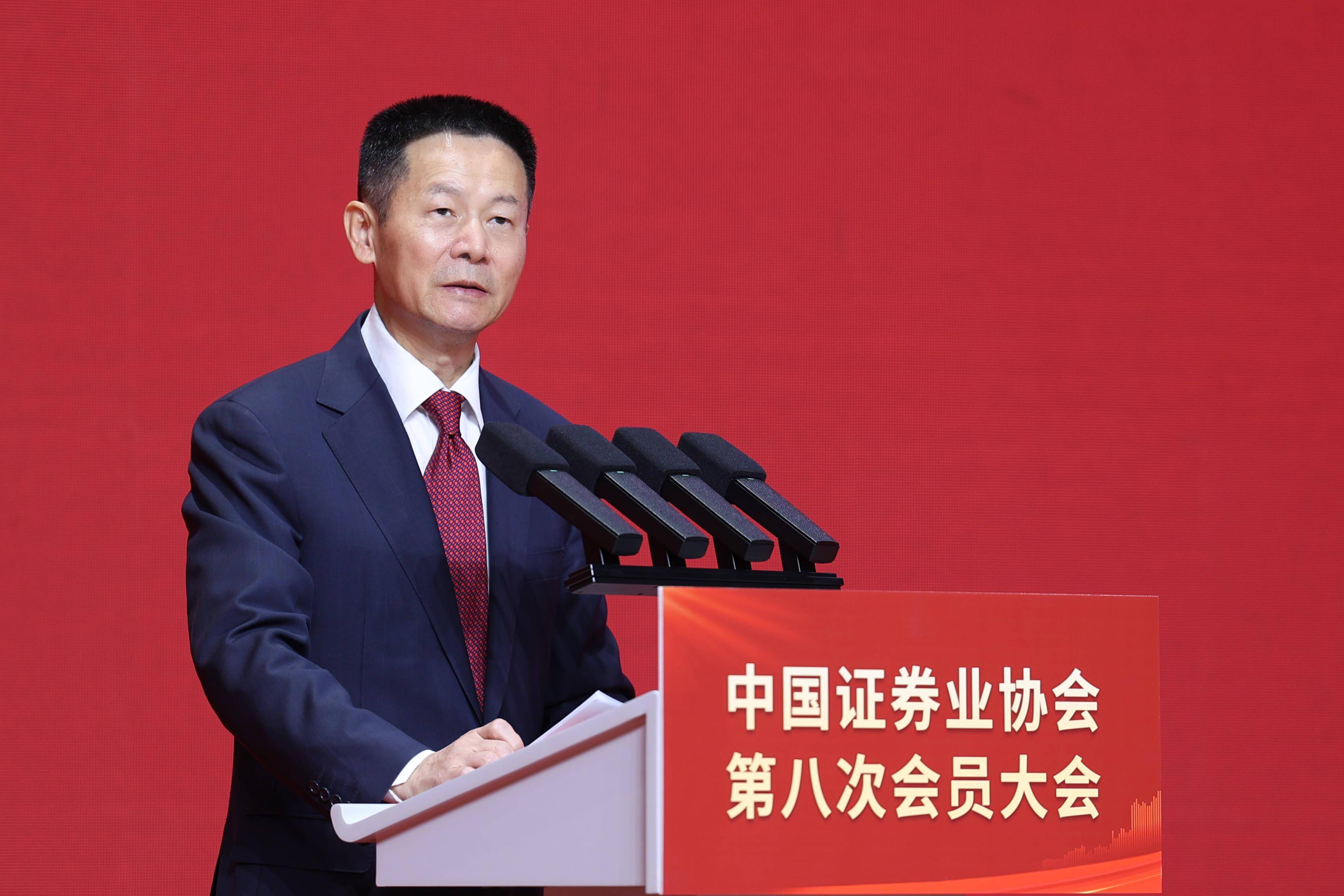
在中国证券业协会第八次会员大会上,证监会主席吴清作了重磅发言,提到行业机构需立足自身资源禀赋,从价格竞争转向价值竞争。头部机构应增强资源 整合能力,力争形成若干家具有国际影响力的标杆机构;中小机构需聚焦细分领域、特色业务与重点区域,深耕细作打造 "小而美" 的精品服务商。 以下为证监会官网发布的吴清发言稿。 各位会员代表、各位来宾,同志们: 大家好!很高兴参加中国证券业协会第八次会员大会,我谨代表中国证监会,对大会的召开表示热烈祝贺,向与会的各位代表和全行业同仁致以诚挚的问 候!党的二十届四中全会着眼于中国式现代化全局,对金融强国建设和资本市场高质量发展作出了重要部署。证券机构是资本市场上连接投融资各方最重要 的桥梁纽带,对于市场功能发挥和生态完善至关重要。下面,我重点围绕推进证券行业高质量发展,同大家作个交流。 一、充分肯定近年来证券行业发展取得的成绩 第二,要在更好服务投资者、助力居民资产优化配置方面强化使命担当。当前我国居民资产中股票基金等资产合计占比约15%,大致相当于美国30年前水 平。伴随经济和人口结构转型,叠加利率中枢下移和国际金融格局变化,资产管理和财富管理服务的需求和潜力巨大。证券公司和行业 ...

吴清:适度拓宽券商资本空间与杠杆上限
财联社· 2025-12-06 08:21
Core Viewpoint - The article emphasizes the need for the securities industry in China to shift from price competition to value competition, focusing on resource integration and the development of specialized services [1] Group 1: Industry Development - The chairman of the China Securities Regulatory Commission (CSRC), Wu Qing, highlighted that leading institutions should enhance their resource integration capabilities to form several internationally influential benchmark institutions [1] - Smaller institutions are encouraged to focus on niche markets, specialized services, and key regions to create "small but beautiful" premium service providers [1] Group 2: Regulatory Framework - The regulatory framework will strengthen differentiated supervision, optimizing evaluation indicators for high-quality institutions and appropriately expanding capital space and leverage limits to improve capital utilization efficiency [1] - For small and foreign institutions, differentiated regulatory policies will be explored to promote specialized development, while strict regulation will be enforced on problematic institutions [1] Group 3: Service Provision - Securities companies and investment institutions are urged to adapt to the evolving landscape in equity investment, price discovery, and risk management [1] - They should provide rich and precise wealth management services tailored to different risk preferences, scales, and timeframes, aiming for mutual growth and shared economic participation with investors [1]

吴清:适度拓宽券商资本空间与杠杆上限,从价格竞争转向价值竞争
Sou Hu Cai Jing· 2025-12-06 08:00
Core Viewpoint - The chairman of the China Securities Regulatory Commission, Wu Qing, emphasized the need for the industry to shift from price competition to value competition, focusing on resource integration and the development of internationally influential benchmark institutions [1] Group 1: Industry Strategy - Leading institutions should enhance their resource integration capabilities to form several internationally influential benchmark institutions [1] - Smaller institutions are encouraged to focus on niche markets, specialized services, and key regions to create "small but beautiful" premium service providers [1] Group 2: Regulatory Framework - The regulatory framework will strengthen differentiated supervision, optimizing evaluation indicators for high-quality institutions and appropriately expanding capital space and leverage limits to improve capital utilization efficiency [1] - For smaller and foreign institutions, differentiated regulatory policies will be explored to promote specialized development [1] - Strict regulation will be enforced on problematic institutions in accordance with the law [1] Group 3: Investment Services - Securities firms and investment institutions are expected to adapt to the evolving landscape in equity investment, price discovery, and risk management [1] - Securities firms should provide a rich and precise wealth management service tailored to different risk preferences, scales, and timeframes, aiming for mutual growth and shared economic benefits with investors [1]
证监会主席吴清:适度拓宽券商资本空间与杠杆上限 从价格竞争转向价值竞争
Ge Long Hui· 2025-12-06 07:40
Core Viewpoint - The chairman of the China Securities Regulatory Commission (CSRC), Wu Qing, emphasized the need for the industry to shift from price competition to value competition, focusing on resource integration and the development of benchmark institutions with international influence [1] Group 1: Industry Development - Leading institutions should enhance their resource integration capabilities to form several benchmark institutions with international influence [1] - Smaller institutions are encouraged to focus on niche markets, specialized services, and key regions to create "small but beautiful" boutique service providers [1] Group 2: Regulatory Framework - The regulatory framework will strengthen differentiated supervision, optimizing evaluation indicators for quality institutions and appropriately expanding capital space and leverage limits to improve capital efficiency [1] - For smaller and foreign institutions, differentiated regulatory policies will be explored to promote specialized development [1] - Strict legal supervision will be applied to problematic institutions [1] Group 3: Wealth Management Services - Securities firms and investment institutions are expected to adapt to the evolving landscape in equity investment, price discovery, and risk management [1] - Securities firms should provide a rich and precise wealth management service tailored to different risk preferences, scales, and timeframes, aiming for mutual growth and shared economic benefits with investors [1]
3037家说倒就倒,传统超市撑不住了?盒马、奥乐齐们把客流抢光?
Sou Hu Cai Jing· 2025-12-04 17:11
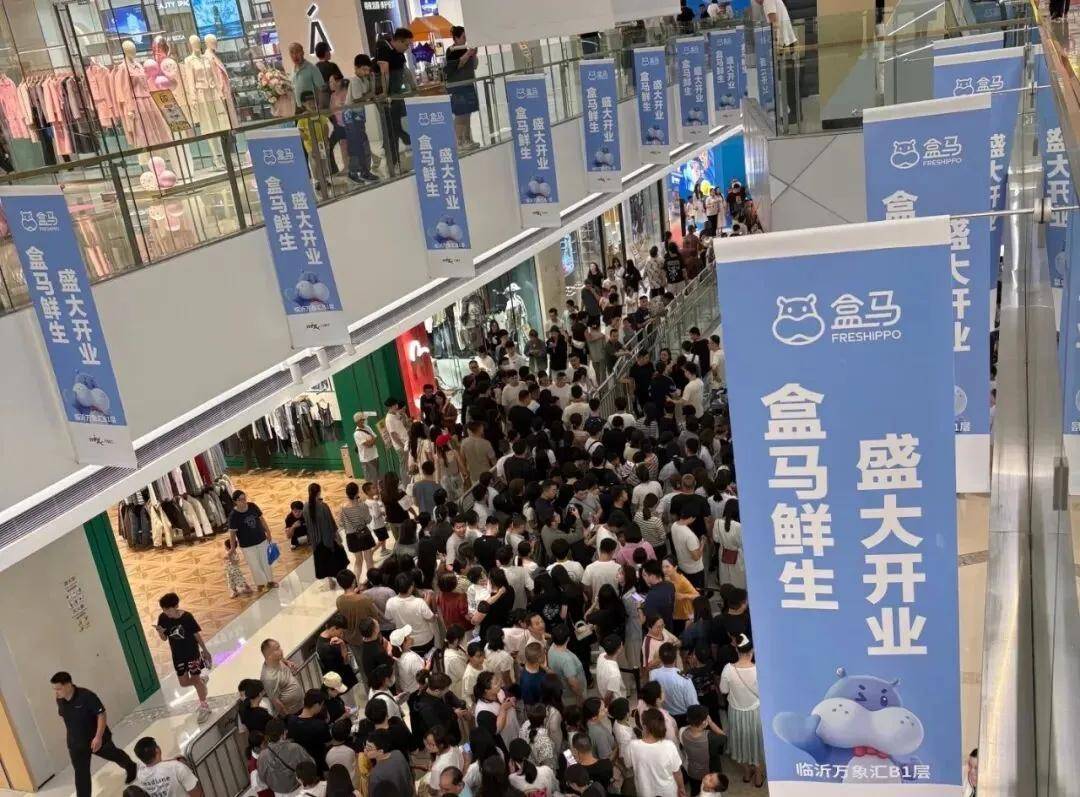
如果说十年前逛商场是一种休闲,那么如今逛商场更像是在见证一场工业文明的更替。 走进任何一座城市的商业中心,你会发现一个越来越明显的现象: 曾经占据整层楼、灯火通明、购物车堆满入口的传统大超市正在不断消失,沃尔玛、永辉、世纪华联等熟悉的名字一个接一个撤离。 而与此同时,盒马、奥乐齐、京东七鲜、山姆会员店甚至本土新零售品牌却在快速扩张? 势头之猛几乎是在用"接盘旧址"的方式宣告时代的主角已经换人了。 最讽刺的是,人们从来没有不需要买菜买肉买零食,但却越来越不愿意走进传统超市消费。 同样的城市、同样的食物需求、同样的家庭结构,却产生了完全不同的流量走向。 这不是一场短期行情,而是一场关于商业逻辑和消费意识全面更新的社会现象。 传统超市的衰退并不是因为"卖东西",而是因为"卖法不对"。 多数人误以为传统超市衰落是因为消费降级,顾客没钱了,不逛了。 但真正的问题根本不是经济,而是体验。 消费者从未停止购买日用品,只是不愿再接受传统超市的购物模式。 今天的人去超市不是"需要买东西",而是"希望买得省心、买得划算、买得有意义"。 而传统超市的核心逻辑却仍停留在"货上够多、渠道够全、品牌够大"这一套。 大面积货架、冗余陈列、 ...
茶饮咖啡业从跑马圈地到售卖体验感,资本重燃信心
Di Yi Cai Jing· 2025-12-03 13:36
Core Insights - The tea and coffee industry has experienced rapid growth, with six brands already listed on the capital market, while many unlisted brands operate thousands of stores, leading to intense competition [1][2] - The industry is transitioning from a phase of market expansion to one focused on value competition and operational efficiency, particularly for tea brands, while coffee brands are expected to focus on scale [2][5] Industry Trends - The market is witnessing a shift from aggressive expansion and price wars to maximizing store resources and consumer engagement during peak hours [2][3] - Brands are exploring new product offerings, such as breakfast items, to enhance store utilization during off-peak hours [3][4] - Companies are increasingly focusing on creating unique consumer experiences through multi-sensory engagement rather than relying solely on taste [3][4] Market Projections - The coffee market in China reached a size of 623.5 billion yuan in 2023, with expectations to exceed 1 trillion yuan by 2025 and 1.39 trillion yuan by 2029 [5][6] - The ready-to-drink tea market is projected to surpass 300 billion yuan by 2025, with hundreds of brands emerging [5] - Industry experts predict that milk tea will become a significant global representative of Chinese culture, with a comprehensive innovation upgrade in the supply chain [5][6] Investment Sentiment - Despite a slowdown in investment activity in recent years, there is renewed confidence in the tea and coffee sectors, with expectations of new listings and market growth [5][6] - The number of investment projects has decreased significantly, but the outlook for the industry remains positive, with predictions of six new listed companies in the next 5-10 years [6]
外卖大战成底色试金石,美团-W以低战损交出韧性答卷
Zhi Tong Cai Jing· 2025-12-03 09:33
Core Insights - The third quarter witnessed unprecedented competition in the food delivery and instant retail sectors, with major players Meituan, Alibaba, and JD.com collectively spending nearly 80 billion yuan, reaching a record high of approximately 44.4 billion yuan in a single quarter [1] - Meituan's revenue grew by 2% year-on-year to 95.5 billion yuan, but it recorded an adjusted net loss of 16 billion yuan due to increased subsidies in the restaurant sector [1] - Despite the losses, Meituan demonstrated resilience and maintained a significant market share, indicating the effectiveness of its competitive barriers in the local lifestyle sector [1][2] Financial Performance - Meituan's adjusted net loss in Q3 was 16 billion yuan, while its local business revenue was 67.447 billion yuan, significantly higher than Alibaba's instant retail revenue of 22.9 billion yuan [2] - Meituan's loss ratio was maintained at 1:2.5 to 1:2.8 compared to Alibaba, meaning for every 1 yuan lost by Meituan, Alibaba's instant retail business lost 2.5 to 2.8 yuan [2] - Meituan's daily active users (DAU) grew over 20% year-on-year, with transaction users surpassing 800 million, indicating strong user engagement [3] Market Dynamics - Alibaba signaled a strategic retreat by planning to significantly reduce investments in its instant retail segment, reflecting inefficiencies in its subsidy model [4] - The shift from a "price war" to a "service war" is expected to benefit companies like Meituan that have established long-term competitive barriers [5] - Regulatory policies aimed at curbing "low-price subsidies" are pushing the industry towards a focus on service quality and efficiency [5] Business Expansion - Meituan's new business segment saw a revenue increase of 15.9% to 28 billion yuan, with operating losses narrowing to 1.3 billion yuan [6] - The international expansion of Meituan's Keeta brand has shown promising results, with successful entries into Qatar, Kuwait, and the UAE, and a pilot operation launched in Brazil [6] Conclusion - The intense competition has tested Meituan's defensive capabilities, with a low loss ratio reflecting its operational resilience and long-term competitive advantages [7] - Alibaba's strategic shift acknowledges Meituan's strength as a market leader, indicating a transition to a new competitive landscape focused on service rather than price [7]

再破纪录!中国快递年业务量首超1800亿件
Huan Qiu Wang· 2025-12-02 03:45
Core Insights - The Chinese express delivery industry has achieved a historic milestone, with annual business volume surpassing 180 billion packages as of November 30, 2023, reflecting the robust vitality of the Chinese consumer market and the resilience of the logistics industry [1][4] Industry Growth - The express delivery business volume has grown from 9.2 billion packages in 2013 to over 1.8 billion packages in 2023, marking a significant transformation in industry development quality [1][2] - The industry experienced a brief slowdown in 2022 but rebounded strongly in 2023, completing 1,320.7 million packages [1][2] Technological Innovation - The process of delivering the 1.8 billionth package showcased the high level of automation in the industry, with significant advancements in technology integration across various stages of delivery [2] - Innovations include the use of robots in warehousing, AI models in sorting, and drones and autonomous vehicles in last-mile delivery, all contributing to enhanced efficiency and reduced costs [2] Economic Support - The growth of the express delivery industry is supported by favorable macroeconomic policies and the ongoing development of a unified national market, which has stimulated demand and production [4] - The industry has become a crucial driver for consumption, domestic demand expansion, and economic stability [4] Profit Recovery - The express delivery industry is transitioning from a "price war" phase to a "value competition" phase, with profit margins recovering as companies focus on service quality [4][5] - In the first three quarters of 2023, six out of seven listed express delivery companies reported year-on-year revenue growth, with notable increases in net profit for major players like SF Express and Shentong Express [4] Market Dynamics - Research indicates that the industry is effectively curbing harmful competition, with improvements in per-package revenue across various companies [5] - The focus is shifting towards enhancing service quality rather than solely competing on price, indicating a more sustainable competitive landscape [5]