
数字消费

Search documents
我国连续13年 位居全球最大网络零售市场
Zheng Quan Shi Bao· 2026-01-14 17:30
Core Insights - The national e-commerce work conference held on January 13-14 emphasized four key areas for development by 2026: strengthening top-level design, enhancing development capabilities, creating a favorable ecosystem, and expanding open cooperation [1][2] Group 1: E-commerce Development Environment - Since the 14th Five-Year Plan, the e-commerce development environment has continuously improved, with the Ministry of Commerce and local departments implementing various policies to boost digital consumption, rural e-commerce, and cross-border e-commerce, injecting strong momentum into the construction of a unified national market [1] - The overall scale of digital consumption has exceeded 23.8 trillion yuan, making China the world's largest online retail market for 13 consecutive years [1] - The integration of digital and real economies has deepened, with over 1,500 industrial e-commerce matching events covering nearly 10,000 enterprises, effectively empowering traditional industry upgrades [1] Group 2: Social and Economic Impact - The social benefits of e-commerce have been continuously enhanced, with related employment exceeding 78 million and express delivery business volume growing at an average annual rate of nearly 20% [1] - The scale of software and information services related to cloud computing and big data has rapidly increased, demonstrating significant contributions during pandemic prevention and control efforts [1] - E-commerce has become a new driving force for cultivating new productive forces and plays an active role in building a new development pattern [1] Group 3: Strategic Goals for the 15th Five-Year Plan - The 15th Five-Year Plan period is crucial for achieving socialist modernization, with 2026 marking the beginning of this phase [2] - The conference highlighted the importance of integrating domestic economic work with international economic and trade struggles, focusing on high-quality development, high-level openness, and efficient governance in e-commerce [2] - Key strategies include strengthening party leadership, driving innovation, optimizing the development environment, and expanding open cooperation for inclusive and win-win outcomes [2]
我国连续13年位居全球最大网络零售市场
Xin Lang Cai Jing· 2026-01-14 11:36
记者从商务部了解到,"十四五"以来,我国持续推进电子商务高质量发展,连续13年位居全球最大网络 零售市场。据介绍,"十四五"以来,我国围绕数字消费、农村电商、跨境电商等领域,出台一系列政策 措施,为构建全国统一大市场注入强劲动力。数字消费整体规模超23.8万亿元。数实融合不断深化,组 织超1500场产业电商对接活动,有效赋能传统产业升级,助力线上线下联动互促。开放合作稳步拓 展,"丝路电商"伙伴国增至36个,先行区创建任务顺利推进。社会效益不断提升,相关就业人数超7800 万,带动快递业务量年均增长近20%,云计算、大数据等相关软件信息服务业规模快速增长。(央视新 闻) ...
发布28条政策促进消费和服务业联动发展 上海:优化汽车贷款流程 放宽申请条件
Zhong Guo Zheng Quan Bao· 2026-01-13 21:03
Group 1 - The core viewpoint of the article is the introduction of 28 policy measures by the Shanghai Municipal Government to enhance service quality and boost consumption across six key sectors: finance, information services, transportation, cultural and entertainment services, life services, and inspection and certification [1][3] Group 2 - In the financial sector, the measures encourage innovation in financial products tailored to new consumption trends, such as holiday, night, nostalgic, and anime economies, and include personal consumption loan interest subsidies and optimized auto loan processes [1][2] - In transportation services, the government supports airlines in launching new international routes and developing luxury tourism trains, as well as enhancing airport commercial layouts to create composite consumption scenarios [2] - In the cultural and entertainment sector, there is a focus on promoting the gaming and esports industry, supporting the development of original IP games, and incentivizing quality micro-short film content creation [2] Group 3 - The next steps involve ensuring the effective implementation of the measures by coordinating service supply with consumer demand, promoting digital, green, and intelligent consumption, and enhancing service quality [3] - The government aims to create a favorable environment for sustained consumption growth by implementing fiscal and financial support policies and improving service quality management and brand building [3]
促进服务业提质、消费扩容 上海发布28条举措
Xin Lang Cai Jing· 2026-01-13 19:50
Core Insights - Shanghai has released a set of 28 specific measures aimed at enhancing service quality and boosting consumption, focusing on the dual approach of optimizing supply and expanding demand [1][4] - The measures target six key sectors: finance, information services, transportation, cultural and entertainment services, life services, and inspection and certification, which together account for approximately 60% of the city's service industry value added [1][3] Group 1: Financial Services - The measures propose four initiatives to innovate financial products and services, including enhancing personal consumer finance services and supporting insurance product innovation [1] - The Shanghai government emphasizes that financial services play a crucial role in stimulating industry and activating consumption, with growing demand for diverse financial services in areas like wealth management and commercial insurance [1] Group 2: Platform Economy - The measures support the innovation and development of comprehensive platform enterprises, such as e-commerce and life service platforms, while promoting healthy competition and regulating pricing practices [2] - Encouragement is given to platform enterprises to enhance quality consumption through brand promotion activities and support for quality merchants, aiming to shift focus from price competition to quality competition [2] Group 3: Cultural and Entertainment Sectors - The measures aim to enhance the supply of cultural and entertainment offerings, promote the spillover effects of sports events, and support the development of the gaming and esports industries [3] - The focus is on creating a synergistic effect between cultural tourism and commercial exhibitions, thereby expanding consumption and improving service quality [3] Group 4: Economic Development Implications - The policy is seen as significant for exploring high-quality economic development paths, aiming to create a virtuous cycle of supply upgrading, consumption boosting, and industry income growth [4] - It seeks to cultivate new growth drivers, stimulate digital consumption, and enhance the internal dynamics of the economy through events and exhibitions [4]
上海发布28条新政促消费
第一财经· 2026-01-13 10:11
Core Viewpoint - The article discusses the recent measures introduced by Shanghai to enhance the quality of the service industry and stimulate consumption, emphasizing a strategic shift from short-term stimulus to long-term systemic development [3][5]. Group 1: Policy Measures - Shanghai has issued 28 policy measures aimed at optimizing supply and expanding consumption to foster new growth points in service supply and consumer demand [3][5]. - The focus of the new policies is on systemic linkage, emphasizing quality competition on the supply side to enhance service industry value and stimulate consumption [3][6]. Group 2: Economic Context - Since 2025, Shanghai's service industry has shown a positive growth trend, with a 5.9% increase in value added and a 5% rise in retail sales of consumer goods, both surpassing national averages [5][6]. - The measures aim to address challenges such as supply structure lagging behind consumption upgrades and the need for better integration of service and consumption sectors [5][6]. Group 3: Key Industries - The policies target six key sectors: finance, information services, transportation, cultural and entertainment services, life services, and inspection and certification, which together account for about 60% of Shanghai's service industry value added [7][8]. - The integration of these sectors is expected to create a closed-loop policy chain that enhances service consumption [7]. Group 4: Financial Innovation - The new policies emphasize the integration of consumption scenarios with consumer finance, supporting the development of financial products tailored to needs such as elderly care and wealth management [8]. - E-commerce platforms are encouraged to shift from price competition to quality competition, driving traffic to offline and quality consumption [8]. Group 5: Cultural and Entertainment Sector - The measures include initiatives to enhance the supply of cultural and entertainment services, such as supporting high-quality exhibitions and sports events, which have shown significant demand growth [9]. - For instance, a recent exhibition in Shanghai attracted over 2.77 million visitors and generated over 760 million yuan in revenue, significantly boosting overall city consumption [9]. Group 6: Institutional Support - The policies aim to strengthen institutional support by transitioning from policy support to a dual-driven approach of "institution + market," focusing on regulatory standards and credit systems to foster sustainable development [10]. - Key initiatives include enhancing brand certification, improving standard systems, and strengthening inspection and testing services to boost consumer confidence [10]. Group 7: Implementation and Coordination - The Shanghai government plans to ensure effective implementation of the measures by coordinating service supply with consumer demand and creating a conducive environment for policy support [12][13]. - Emphasis is placed on cross-departmental collaboration to avoid policy fragmentation and to establish a dynamic evaluation mechanism to monitor the effectiveness of the policies [13].

汇正财经参与2026中国首席经济学家论坛年会,热议资本市场新年开局机遇
Cai Fu Zai Xian· 2026-01-13 08:17
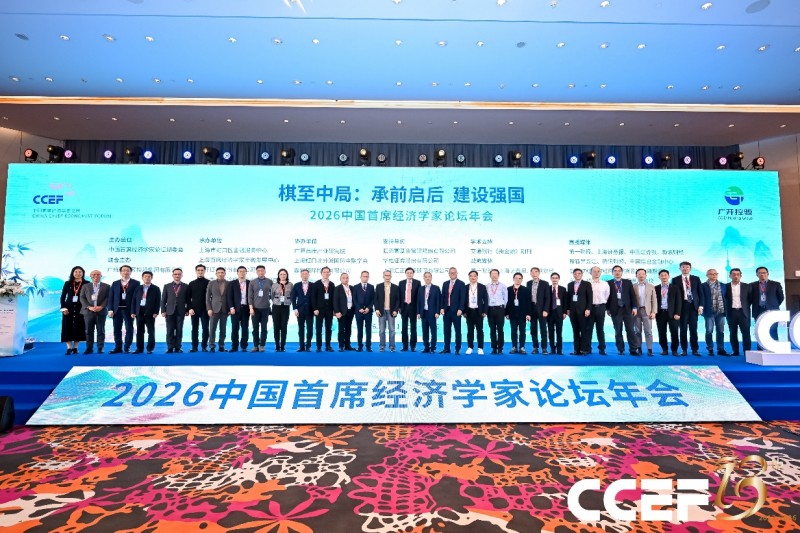
Group 1 - The China Chief Economist Forum annual conference was held in Shanghai, focusing on the theme "Chess in the Middle Game: Building a Strong Nation" with participation from over 50 chief economists and more than 500 experts from various sectors [1] - The forum highlighted the need for China to provide stability to the global economy through its own stable development, as global growth is expected to remain low and uneven [3] - A significant shift in China's financial structure is occurring, with a decrease in the proportion of indirect finance and an increase in direct finance [3][4] Group 2 - The forum discussed the necessity of gradual monetary easing, including interest rate cuts, to guide the economy towards stability and recovery [4] - The development of AI is seen as crucial for creating a complete industrial ecosystem that can transform substantial capital investments into economic value [5] - Predictions for 2026 include the emergence of significant economic bubbles, particularly in gold and AI, driven by technological advancements and resource needs [6][8] Group 3 - The core themes of China's 14th Five-Year Plan emphasize domestic demand, technology, and openness, aiming to establish a unified national market and promote technological breakthroughs [9] - Digital consumption is identified as a key growth area for China's economy, with substantial potential for expansion during the 14th Five-Year period [10] - The forum served as a platform for discussing high-quality development paths for the capital market, with insights aimed at helping investors navigate current market conditions [12][13]
刚刚,上海宣布大利好
中国基金报· 2026-01-13 03:52
Core Viewpoint - Shanghai's government has released 28 measures to enhance the quality and efficiency of the service industry and stimulate consumption, focusing on optimizing supply and expanding demand to achieve mutual empowerment and progress [5][12]. Group 1: Background and Considerations - The measures are in response to the 20th National Congress's call to expand domestic demand and the Central Economic Work Conference's emphasis on boosting consumption and service industry capacity [5]. - In the first three quarters of 2025, the service industry's added value grew by 5.9%, and retail sales of consumer goods increased by 5%, both surpassing national averages [5]. - The measures aim to create new growth points in service supply and consumption demand, promoting high-quality development in the service sector [6]. Group 2: Key Measures - The focus is on six key sectors: finance, information services, transportation, cultural and entertainment services, life services, and inspection and certification, which together account for about 60% of the city's service industry value [7]. - Financial services will be enhanced to support diverse consumer needs, including the development of new financial products tailored to various consumption scenarios [7][13]. - E-commerce platforms will be encouraged to shift from price competition to quality competition, driving offline consumption and enhancing consumer experience [7][16]. Group 3: Transportation and Cultural Services - Transportation services will be improved to connect various consumption scenarios, enhancing the overall consumer experience and reducing travel costs [8][17]. - Cultural and entertainment offerings will be expanded, including support for high-quality exhibitions and events that drive significant economic impact [9][19]. - The gaming and esports industry will be developed further, with initiatives to support high-level competitions and foster a robust ecosystem [9][20]. Group 4: Life Services and Quality Improvement - Life services will be enhanced to improve quality and convenience, including initiatives for home care, elderly care, and healthcare services [10][22]. - The government will support the transformation of home service companies into employee-based models, enhancing service quality and providing insurance for service personnel [22][23]. - Medical services will be diversified, promoting high-end healthcare and encouraging the development of specialized insurance products [23][24]. Group 5: Brand and Standards Enhancement - The measures will strengthen brand certification and establish a robust standard system to enhance consumer trust and service quality [11][24]. - The inspection and certification industry will be supported to improve service capabilities, focusing on high-demand sectors such as food and cosmetics [11][25]. - A consumer credit system will be developed to promote transparency and trust in the marketplace [11][26]. Group 6: Support and Talent Development - The government will enhance financial support for service providers, ensuring effective use of fiscal resources to stimulate growth [27][28]. - Talent attraction initiatives will be implemented to draw skilled professionals to the service and consumption sectors, fostering innovation and development [28][29]. - Statistical monitoring will be improved to assess the effectiveness of policies and optimize measures for service industry growth [28].
商务部部署2026年内外贸工作:提振消费仍是首位
Hua Xia Shi Bao· 2026-01-12 11:53
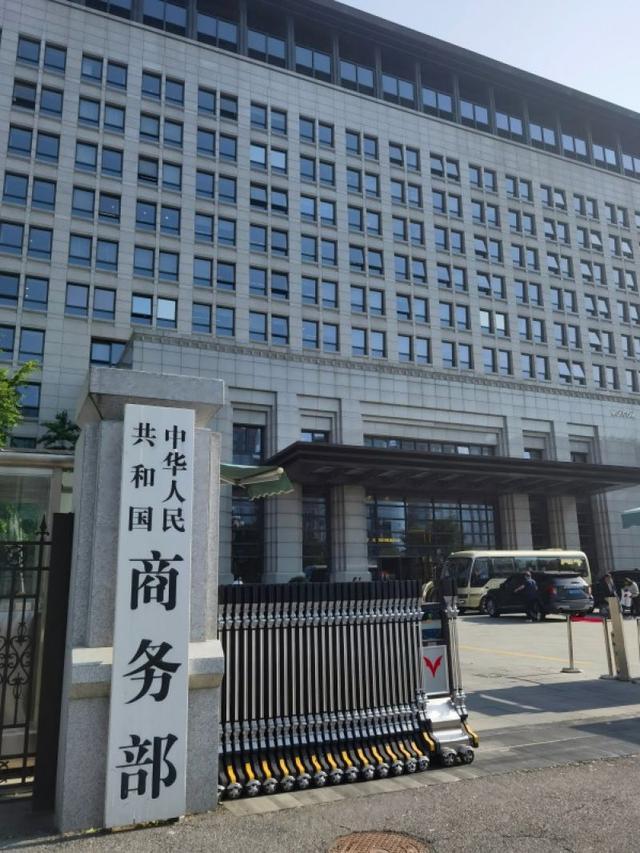
Group 1: Economic Growth and Consumer Spending - In the first year of the 14th Five-Year Plan, consumption is highlighted as the main driver of economic growth, with a focus on implementing special actions to boost consumption and creating the "Buy in China" brand [2][4] - By 2026, it is anticipated that retail sales will return to a growth rate of around 4%, supported by strong consumer sentiment and government policies aimed at increasing current income and income expectations [3][4] - The emphasis on new consumption formats, driven by advancements in technology such as AI and robotics, is expected to stimulate consumer spending in innovative ways [5] Group 2: Trade and Foreign Investment - The 2026 agenda includes promoting trade innovation, optimizing goods trade, and encouraging service exports, with a focus on digital and green trade [6][7] - A new revised Foreign Trade Law will take effect on March 1, 2026, formalizing previous reforms and indicating China's commitment to opening up international service trade [6] - Efforts to attract foreign investment will include enhancing the domestic market environment and aligning with international trade rules, which is expected to renew foreign interest in the Chinese market [7]
“稳”有支撑,“进”有动力,潜力释放!中国经济高质量发展步履铿锵
Yang Shi Wang· 2026-01-12 04:45
Group 1: Consumption and Trade Development - In 2026, China will implement special actions to boost consumption, promote trade innovation, and gradually expand the autonomous opening of the service sector [1][5] - The focus will be on cultivating new growth points in service consumption, optimizing the old-for-new consumption policy, and enhancing the international consumption environment [1] - The development of digital, green, and health consumption will be prioritized to stimulate consumption in lower-tier markets [1] Group 2: Foreign Investment and Trade Integration - China aims to create new advantages in attracting foreign investment and will expand the autonomous opening of the service sector [8] - The country will optimize and upgrade goods trade, significantly develop service trade, and encourage service exports [5] - Innovations in digital and green trade will be promoted to facilitate the integration of trade and investment [5] Group 3: Agricultural Development and Rural Revitalization - The Ministry of Agriculture and Rural Affairs will prioritize grain production to ensure stable supply of grain and important agricultural products [10][13] - A new round of actions to enhance grain production capacity will be implemented, aiming for a target of 1 trillion jin of grain [13] - Efforts will be made to consolidate and expand poverty alleviation achievements, transitioning to a normalized and precise assistance phase [15] Group 4: Energy Sector Outlook - The 2026 energy economic forecast indicates that high-innovation fields such as hydrogen energy, new energy vehicle batteries, and photovoltaic components will maintain high levels of interest [19] - There is potential for collaborative development in nuclear power and biomass energy [19] Group 5: Corporate Financing - In 2025, over 2,300 enterprises financed more than 10.1 trillion yuan in the interbank market, effectively reducing financing costs and supporting the transformation of private enterprises [21]
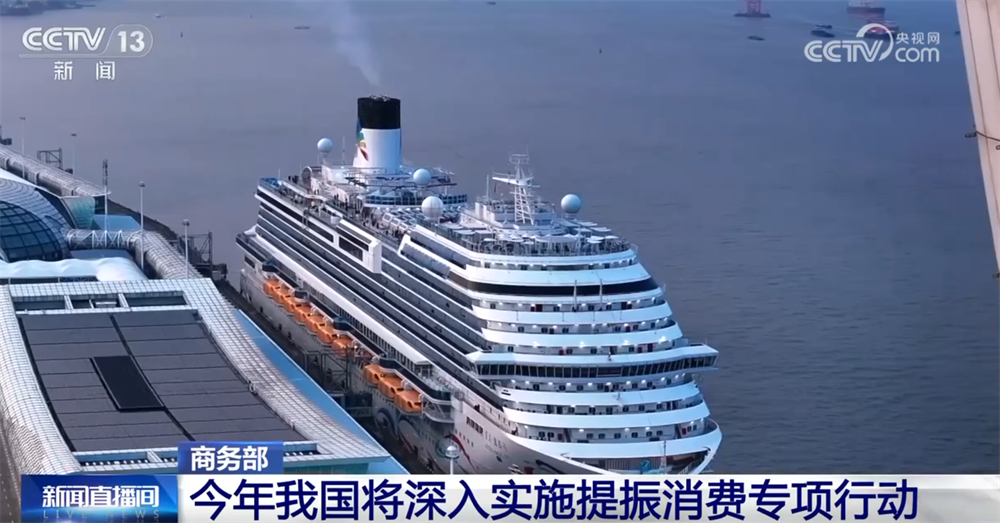
全国商务工作会议:优化消费品以旧换新政策实施
Cai Jing Wang· 2026-01-12 02:41
Core Insights - The national business work conference held from January 10 to 11 emphasizes eight key areas for the national business system to focus on by 2026 [1] Group 1: Consumer Spending - The first priority is to implement special actions to boost consumption, creating the "Buy in China" brand. This includes accelerating the cultivation of new growth points in service consumption and releasing the potential of service consumption [1] - The policy for replacing old consumer goods with new ones will be optimized to promote the expansion and upgrading of product consumption [1] - The development of an international consumption environment is highlighted, along with the promotion of digital, green, and health consumption to stimulate the vitality of the lower-tier market [1] Group 2: Market and Distribution System - The second focus is on improving the modern market and distribution system, advancing the construction of a unified national market [1] - Strengthening institutional guarantees and optimizing facility carriers are essential for promoting innovation in the retail industry [1] - The modern commercial circulation system will be enhanced, and pilot city construction will be further advanced, along with the integration of domestic and foreign trade [1] Group 3: Trade Innovation - The third area is to promote trade innovation and establish the "Export China" brand [1] - There will be an emphasis on optimizing and upgrading goods trade while significantly developing service trade and encouraging service exports [1] - Innovations in digital and green trade will be pursued to promote the integration of trade and investment [1]