
数智技术

Search documents
湖北5.8万家工业企业上云 占总数近六成
Zhong Guo Chan Ye Jing Ji Xin Xi Wang· 2025-09-05 01:19
Core Insights - Hubei Province is experiencing a significant digital transformation in its manufacturing sector, with key metrics indicating progress in automation and digital tool adoption [1][2] Group 1: Digital Transformation Metrics - As of June, the CNC rate for key processes in large-scale industrial enterprises in Hubei reached 69.7%, ranking 7th nationally [1] - The penetration rate of digital R&D design tools in large-scale industrial enterprises is 90.7%, placing Hubei 6th in the country [1][2] - The number of industrial enterprises utilizing cloud services has reached 58% of the total, with 58,000 companies adopting cloud technology [1] Group 2: Policy and Strategic Initiatives - Hubei has implemented a series of plans such as the "Manufacturing Digital Transformation Implementation Plan" and "Hubei Digital Economy Promotion Measures" to support industrial digitalization [1] - The province is focusing on a phased approach to digital transformation, moving from "expansion" to "quality improvement" during the 14th Five-Year Plan period [1] Group 3: Sector-Specific Developments - In the primary sector, Hubei is enhancing the digitalization and intelligence of agricultural machinery and facilities, establishing smart farms and demonstration bases [1] - In the secondary sector, Hubei has certified 113 enterprises under the integration management system, ranking 2nd nationally, and has 55 factories listed in the national 5G factory directory [2] - In the tertiary sector, Hubei is building supply chain platforms in key industries, serving over 200,000 SMEs with a transaction volume exceeding 200 billion [2] Group 4: Future Plans - The Hubei Economic and Information Technology Department plans to continue advancing the digital, networked, and intelligent evolution of traditional industries to provide robust support for development [2]
永福股份(300712.SZ):目前未从事固态电池的研发与生产
Ge Long Hui· 2025-09-04 13:12
Core Viewpoint - Yongfu Co., Ltd. (300712.SZ) is not currently engaged in the research and production of solid-state batteries but offers a variety of energy storage solutions across different technological routes, including solid-state batteries, lithium iron phosphate batteries, sodium-ion batteries, flow batteries, supercapacitors, flywheel energy storage, and hydrogen storage [1] Group 1: Energy Storage Solutions - The company focuses on two main core areas in its energy storage business: comprehensive energy storage solutions and digital energy storage products [1] - The comprehensive energy storage solutions cover various application scenarios, including generation side, grid side, and user side, providing diverse technological routes such as centralized, decentralized, hybrid, AC direct connection, and DC direct connection topologies, with grid-structured solutions being industry-leading [1] - The digital energy storage products integrate advanced technologies such as power monitoring, big data, artificial intelligence, IoT, and 5G, creating three main product systems: intelligent monitoring systems, power big data platforms, and virtual power plant platforms [1] Group 2: Innovation and Development - The company is committed to continuous research and innovation to maintain the advanced nature of its energy storage technology solutions and products, aiming to meet higher customer demands [1]

面向数智时代构建出版学自主知识体系
Huan Qiu Wang Zi Xun· 2025-08-29 13:49
Core Viewpoint - The digital intelligence era profoundly impacts knowledge production, dissemination, consumption, and service methods, reshaping the traditional publishing industry and prompting a renewal of knowledge concepts and theoretical paradigms [1][2]. Group 1: Industry Transformation - The integration of digital, networked, and intelligent technologies is transforming the publishing industry's value chain and ecosystem, with generative artificial intelligence liberating knowledge production while raising copyright and ethical concerns [2][3]. - Technologies such as AR, VR, and MR enhance the immersion and interactivity of publications, while big data and cloud computing improve the efficiency and precision of information dissemination [2][3]. - The shift from traditional print-based publishing to digital, intelligent, immersive, and large-scale publishing is creating opportunities for process reengineering and resource optimization, facilitating deep integration and high-quality development in the publishing sector [2][3]. Group 2: Knowledge System Construction - The construction of an autonomous knowledge system in publishing is essential for the development of the discipline and serves the national cultural development mission [2][3]. - Publishing plays a foundational role in building China's autonomous knowledge system, as it is a key carrier of human thought and knowledge, facilitating knowledge dissemination, cultural inheritance, and value guidance [3][4]. - The integration of technologies like big data, cloud computing, and artificial intelligence enables the establishment of resource libraries and dissemination projects that support the construction of a leading and contemporary autonomous knowledge system [3][4]. Group 3: Theoretical Framework - The rapid evolution of technology necessitates a systematic theoretical response to the changes in publishing practices, requiring the extraction of experiences, summarization of rules, and elevation of concepts to form a systematic and promotable theoretical knowledge system [3][4]. - The academic system of publishing should focus on key areas and deepen local theoretical innovation, adapting to the changes brought by digital technologies and reshaping the relationships among publishers, authors, and readers [4][5]. Group 4: Methodological Approaches - The construction of a publishing knowledge system should balance the dialectical relationship between adherence to tradition and innovation, as well as between inheritance and development [7][8]. - Emphasizing the social benefits of publishing, the industry should enhance research on deep integration and thematic publishing to provide intellectual support for social development [7][8]. - The industry should explore collaborative mechanisms between academia and the publishing sector to enhance resource sharing, team building, and teaching reform, ultimately fostering new productive forces in the publishing field [8].
数智赋能 绿色低碳---2024长三角绿色转型发展论坛顺利召开
Guan Cha Zhe Wang· 2025-08-29 13:21
Group 1 - The forum focused on the theme "Digital Intelligence Empowerment for Green and Low-Carbon Development," emphasizing the role of technological innovation in transforming industries towards sustainability [1][5] - The Shanghai Municipal Economic and Information Commission introduced the "Green and Low-Carbon Transition Action Plan (2024-2027)," aiming to cultivate key green low-carbon industries and promote sustainable high-quality economic development [2][3] - Experts and representatives shared experiences on the application of digital technologies in driving the green low-carbon industry transformation, highlighting the role of China Unicom's digital transformation services in supporting the region's green transition [3][4] Group 2 - The forum included discussions on leveraging digital technology, intelligent systems, and green finance platforms to explore technical pathways for green transformation in Shanghai and the Yangtze River Delta [4][5] - A joint initiative titled "Green Yangtze River Delta, Low-Carbon Future" was launched during the forum, promoting collaborative efforts towards sustainable development [6] - The event attracted nearly 200 participants from various government agencies, research institutions, and green low-carbon industry representatives, fostering a collaborative environment for knowledge sharing and innovation [5][6]

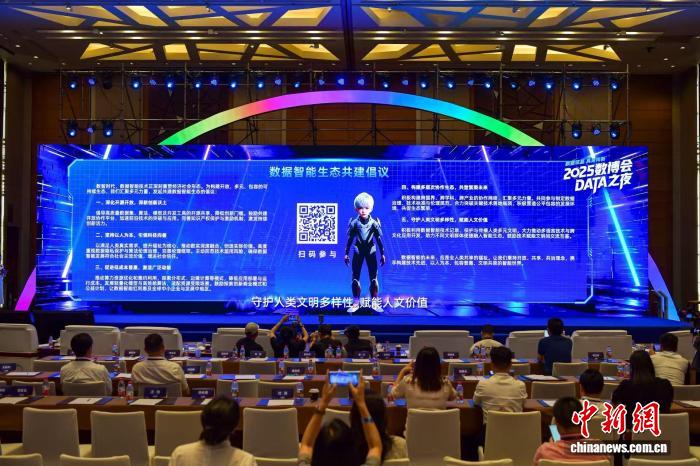
“数据筑基 具身向新” “2025数博会·DATA 之夜”举行
Zhong Guo Xin Wen Wang· 2025-08-29 06:24
Core Insights - The "2025 Data Expo - DATA Night" showcased various embodied intelligent devices, highlighting advancements in the industry and fostering dialogue among experts [1][3] - The event aimed to create a platform for collaboration among government, industry, academia, research, and application sectors, focusing on the development of the data intelligence ecosystem [1][3] - Key speakers included prominent academics who discussed trends in data intelligence technology and its impact on industry transformation [1][3] Group 1 - The event featured innovative demonstrations of humanoid robots, quadruped robots, and smart electric vehicles, emphasizing the cutting-edge nature of embodied intelligence [1] - A signing ceremony between People's Daily and Guizhou Big Data Group was held to deepen cooperation in the big data sector, aiming to drive industrial innovation [3] - The "Data Intelligence Ecosystem Co-construction Initiative" was launched to unite industry forces in creating an open, shared, and innovative data intelligence ecosystem [3] Group 2 - The event also integrated local cultural elements, showcasing Guizhou's unique cuisine and cultural achievements, enhancing the experience for attendees [5] - Highlights included Guizhou's ambition to become a world-class tourist destination and the promotion of its four major cultural projects [5]

融合创新 构建数字出版新图景——写在第十五届中国国际数字出版博览会开幕之际
He Nan Ri Bao· 2025-08-27 23:39
Group 1 - The core theme of the 15th China International Digital Publishing Expo is "Integration of Digital and Real, Intelligent Winning Future," focusing on the evolution of the publishing industry through technology [1][2] - The expo features six major exhibition areas, including digital publishing units from central ministries, local publishing units, and international cooperation, along with numerous forums and live events [1][2] - The event marks the first time the expo is held in Henan, reflecting the province's commitment to advancing digital publishing and fostering a competitive publishing environment [2][3] Group 2 - The integration of digital technology in publishing is exemplified by the AR picture book "Journey to the West: Chinese Mythical Creatures Illustrated," showcasing new pathways for reading experiences [2][3] - The simultaneous hosting of the expo and the Fourth National Reading Conference in Henan aims to enhance the visibility of digital publishing and promote diverse reading methods [4] - Attendees can experience immersive digital content, such as XR films and intelligent database searches, highlighting the shift towards a more accessible and engaging reading culture [5]
促进高质量充分就业(深入学习贯彻习近平新时代中国特色社会主义思想·学习《习近平经济文选》第一卷专家谈)
Ren Min Ri Bao· 2025-08-21 22:13
Group 1: Importance of Employment - Promoting high-quality and full employment is a new positioning and mission for employment work in the new era [2] - Employment is fundamental to people's livelihood and is crucial for economic and social development [1][2] Group 2: Current Employment Situation - In the first half of the year, 6.95 million new urban jobs were created, achieving 58% of the annual target [3] - The urban survey unemployment rate was 5.0% in June, unchanged from the previous year [3] Group 3: Structural Employment Challenges - The transition from old to new growth drivers has increased structural unemployment, with mismatches between labor skills and job requirements [4] - The aging population and the difficulty of older workers in adapting to new job demands exacerbate structural employment issues [4] Group 4: Impact of Technology on Employment - The widespread application of digital technologies has disrupted traditional job demands, leading to a reduction in low-skill jobs [5][6] - While technology creates new job opportunities, the pace of skill enhancement among the workforce lags behind technological advancements [6] Group 5: Policy Recommendations for Employment - Focus on key areas to expand job opportunities and implement employment-first strategies [7] - Support businesses in maintaining and expanding jobs to effectively respond to external challenges [8] Group 6: Industry Development and Employment - Developing employment-friendly industries and promoting industrial upgrades are essential for creating high-quality jobs [9] - The integration of new employment forms, such as platform and gig economies, is crucial for job creation [10] Group 7: Collaborative Policy Framework - Strengthening policy coordination across various sectors is necessary to enhance both the quality and quantity of employment [11][12] - Employment policies should align with industrial and regional policies to create more high-quality job opportunities [12] Group 8: Labor Rights and Employment Services - Improving labor rights protection for new employment forms and enhancing public employment services are vital for safeguarding workers' rights [13] - Establishing a comprehensive evaluation system for employment quality can help assess the effectiveness of employment policies [13] Group 9: Investment in Human Capital - Increasing investment in human capital is essential for matching workforce skills with industry needs [14] - Developing a lifelong vocational training system and optimizing the labor development environment are key to enhancing employment quality [14]
中电建协:我国电源与电网建设呈现规模扩张与结构优化并进态势
2 1 Shi Ji Jing Ji Bao Dao· 2025-08-15 08:02
Core Insights - In 2024, major power companies in China completed investments of 1.8178 trillion yuan, representing a year-on-year increase of 13.9% [1] - The total installed power generation capacity reached 3.35 billion kilowatts, with a year-on-year growth of 14.6% [2] - The application of intelligent technologies in the power construction industry has become widespread, enhancing safety and efficiency [2] Investment Overview - Total investment in power generation projects was 1.2094 trillion yuan, up 13.2% year-on-year, while investment in grid construction reached 608.4 billion yuan, increasing by 15.3% [1] - Renewable energy investments included 447.8 billion yuan in solar power (up 1.9%) and 316.3 billion yuan in wind power (up 10.9%) [1] Installed Capacity Details - Hydropower capacity reached 440 million kilowatts, growing by 3.6%, while solar power saw a significant increase of 45.4% to 890 million kilowatts [2] - Coal-fired power capacity was 1.19 billion kilowatts, with a growth of 2.6%, while gas-fired power capacity increased by 13.9% to 140 million kilowatts [2] Company Performance - Overall revenue for power survey and design companies was 430 billion yuan, with a net profit margin of 3.8%, down 0.2 percentage points [3] - Revenue for thermal and hydropower construction companies reached 679.8 billion yuan, with a net profit margin of 1.5%, down 0.3 percentage points [3] Human Resource Efficiency - Power survey and design companies reported an average revenue per employee of 4.697 million yuan, up 8.3%, while net profit per employee was 181,000 yuan, up 3.4% [4] - In contrast, thermal and hydropower construction companies saw a decline in net profit per employee to 51,000 yuan, down 3.8% [5] Future Outlook - The power generation and grid construction sectors are expected to continue expanding in scale while optimizing structure during the 14th Five-Year Plan period [6] - The industry is anticipated to maintain strong growth through market reforms, technological innovation, and upgrades in the industrial chain [6]
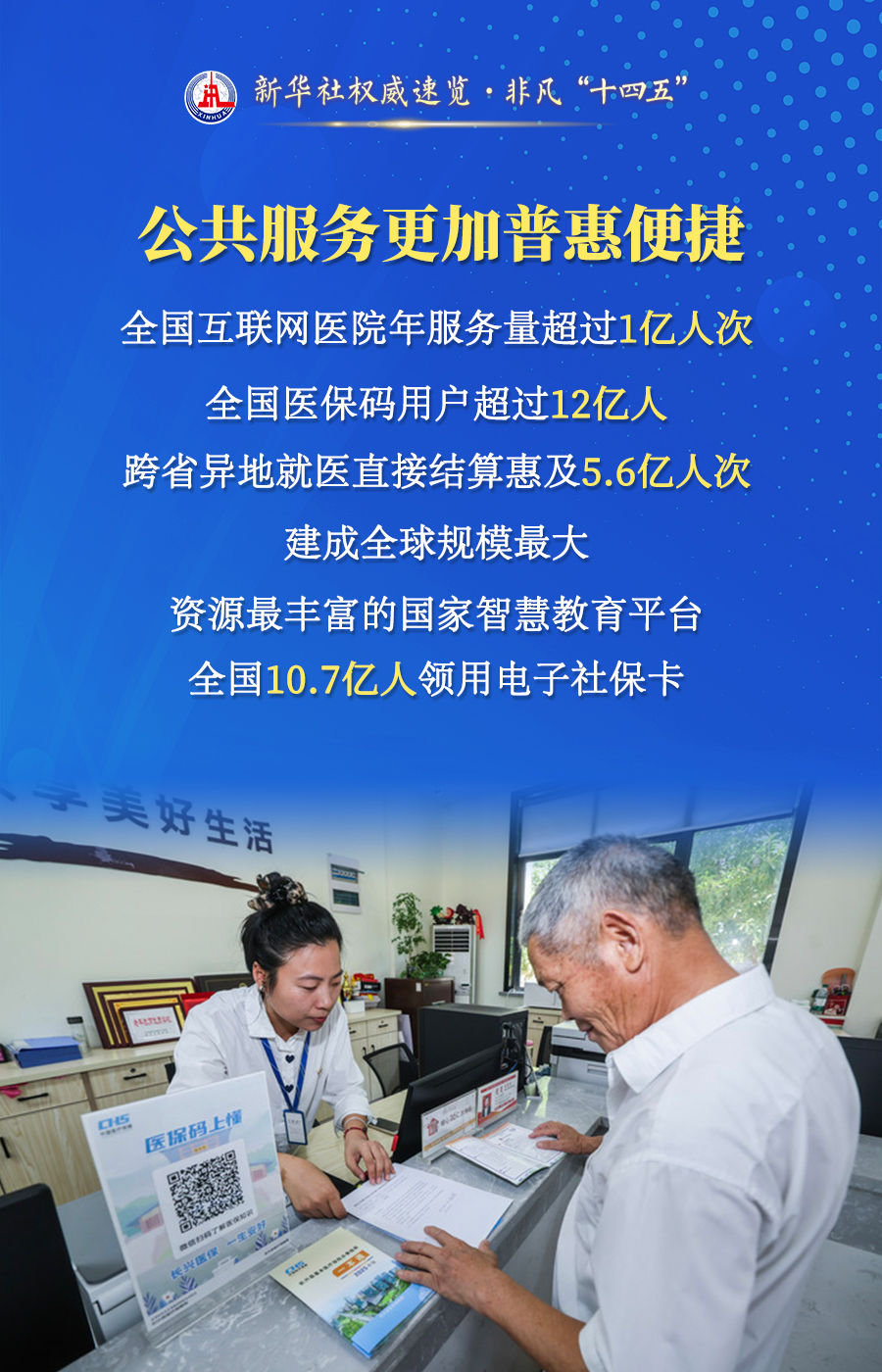
新华社权威速览·非凡“十四五”|用得上用得起用得好:数字服务惠及更多百姓
Xin Hua She· 2025-08-14 12:28
新华全"十四五"时期,我国数智技术加速应用,网民数量达到11.23亿人,互联网普及率达到79.7%,人们的生产生活方式以及社 会治理方式都发生了深刻改变。用得上、用得起、用得好的数字服务,正惠及亿万普通群众。 新华社权威速览 ·非凡 策划:令伟家 键式"老人求助等服务 即时零售、智能网联汽车、微短剧等 数字消费新业态新产品 不断涌现 信/支付宝扫 新华社权威速览 ·非 社会治理更加精准高效 政务服务"一网通办"纵深推进 "高效办成一件事"应用场景日益丰富 "接诉即办"市民热线数据加速整合利用 城市运行"一网统管"持续深化 "一网通享"效能提升 公共服务 数字生活更加美好智能 全国5A级景区数字化改造完成率达1 "指尖可达" 统筹:曹建礼 文案:黄南希 制作:刘一菲(实习) ...
构建新质生产力背景下的职业教育传播范式
Xin Hua Ri Bao· 2025-08-11 22:58
当前,在新一轮科技革命和产业变革的推动下,我国正处在新质生产力迅猛发展期。习近平总书记指 出,新质生产力"以劳动者、劳动资料、劳动对象及其优化组合的跃升为基本内涵,以全要素生产率大 幅提升为核心标志,特点是创新,关键在质优,本质是先进生产力。"在新质生产力发展背景下,产业 对一线技能人才的知识能力、素质等要求显著提升,职业教育作为培养高素质技术技能人才的教育类 型,育人的指向和内涵也随之进阶升级。在这一社会背景和技术条件下,构建职业教育传播新范式,将 职业教育的理念、价值、成果等精准有效传递给外界,可以提升职业教育的吸引力、改变社会认知、促 进资源整合,实现以高质量的职业教育培养出既有"匠心"又能创新的"新质"技能人才,服务新质生产力 发展。 多元主体协同,放大传播声量。构建新质生产力背景下的职业教育传播范式要整合多元主体力量,打破 主体间的目标、认知、利益等壁垒,既各司其职又合作互动,凝聚合力,建设传播共同体。一方面,要 明确共同体构成和各自功能定位,切实提高政府职业教育主管部门的政策牵引力、职业院校的内容生产 力、企业协同力、媒体传播力;另一方面,由政府通过顶层设计、资源协调和制度保障来建设共同体, 并由 ...