日元贬值

Search documents
日本,将损失超2万亿日元
中国能源报· 2025-11-23 03:53
Group 1 - The reduction in Chinese tourists is expected to result in losses exceeding 2 trillion yen for Japan, significantly impacting the tourism industry and local economies [1] - If the current state of Japan-China relations persists for over a year, the consumption loss from Chinese tourists could exceed 2 trillion yen, even without considering the 2.6 trillion yen figure [1] Group 2 - The Japanese government's economic stimulus plan, amounting to approximately 21.3 trillion yen, is likely to have counterproductive effects in the current inflationary environment [2] - Fiscal stimulus during inflation, as opposed to deflation, is expected to exacerbate yen depreciation and increase prices [4] Group 3 - Rising long-term interest rates, driven by the government's reliance on issuing additional bonds to cover spending gaps, will further cool the Japanese economy [5] - The increase in long-term interest rates will amplify the negative effects on the economy, highlighting the drawbacks of relying on bond issuance due to insufficient fiscal sources [7]


日本发出“最强烈警告”
中国基金报· 2025-11-23 02:06
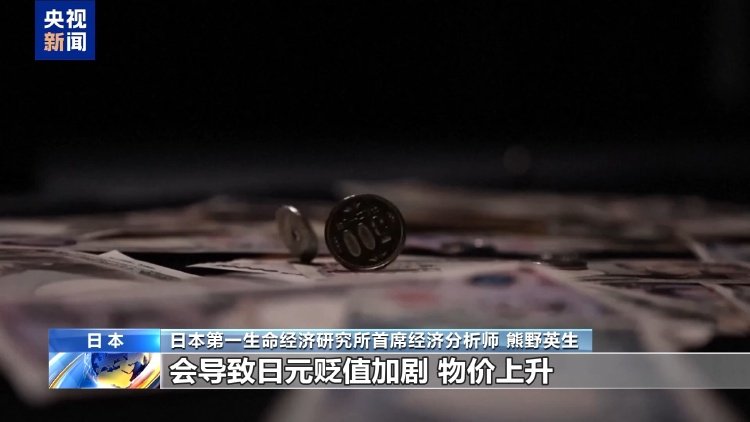
Group 1 - The Japanese yen is experiencing rapid depreciation against the US dollar, raising concerns from the Japanese Finance Minister, who described the situation as "very one-sided and rapid" [2] - The depreciation of the yen is increasing import costs, impacting ordinary households and small businesses in Japan [2] - The Japanese government is closely monitoring the situation and may intervene based on a prior joint statement with the US if conditions worsen [2] Group 2 - A significant reduction in Chinese tourists could lead to losses exceeding 2 trillion yen for Japan, severely impacting the tourism industry and local economies [3] - The deterioration of Japan-China relations, particularly due to political statements, is expected to negatively affect personnel exchanges and tourism [3] Group 3 - The Japanese government has approved a comprehensive economic policy package worth approximately 21.3 trillion yen, but this fiscal stimulus may have counterproductive effects in the current inflationary environment [4] - Fiscal stimulus during inflation could exacerbate yen depreciation and lead to rising prices [4] Group 4 - Rising long-term interest rates, driven by the government's reliance on additional bond issuance to cover spending gaps, are expected to further cool the Japanese economy [6] - The dependence on bond issuance highlights the challenges in securing fiscal resources, leading to adverse economic effects [6]

日本发出“最强烈警告”
Zhong Guo Ji Jin Bao· 2025-11-23 01:46
Core Viewpoint - The recent rapid depreciation of the Japanese yen against the US dollar has raised significant concerns for the Japanese economy, particularly regarding the rising costs of imported goods affecting households and small businesses [1] Group 1: Economic Impact - The depreciation of the yen is described as "very one-sided and rapid," indicating a severe and ongoing trend that is causing economic pressure [1] - The rising costs of imported goods due to the yen's depreciation are impacting ordinary families and small enterprises in Japan [1] Group 2: Government Response - Japanese Finance Minister Shunichi Suzuki has expressed deep concern over the yen's depreciation and indicated that the government is closely monitoring the situation [1] - If the situation worsens, Japan may take intervention measures based on a previously signed joint statement between Japan and the US [1] Group 3: External Factors - Potential future travel or export restrictions from China could further impact the Japanese economy and increase downward pressure on the yen [1]
日本专家:中国游客锐减将致日本损失超2万亿日元
Yang Shi Xin Wen Ke Hu Duan· 2025-11-22 22:36
Group 1 - The Japanese Prime Minister's remarks regarding Taiwan have damaged the political foundation of Sino-Japanese relations, severely worsening the atmosphere for personnel exchanges between the two countries [2] - Japanese economic experts predict that a significant reduction in the number of Chinese tourists could lead to losses exceeding 2 trillion yen for Japan [2] - If the current state of Sino-Japanese relations persists for over a year, the consumption from Chinese tourists could decrease by more than 2 trillion yen, which would have a substantial impact on Japan's tourism industry and local economies [2] Group 2 - The Japanese government has finalized a comprehensive economic policy package amounting to approximately 21.3 trillion yen [3] - Conducting fiscal stimulus during a period of inflation may have adverse effects, according to economic analysts [5] - Rising long-term interest rates, driven by the government's reliance on issuing additional national bonds, will further cool down the Japanese economy [6][8]
经济民生双承压下 日本再遭高市妄为之“祸”
Yang Shi Xin Wen Ke Hu Duan· 2025-11-22 05:54
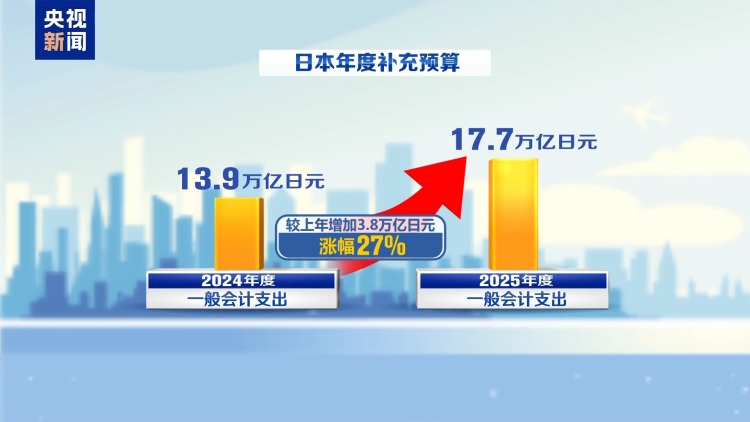
Group 1 - Japan's inflation problem is worsening, with the core consumer price index (CPI) rising by 3.0% year-on-year in October, marking a continuous increase for 50 months [16][18][24] - The Japanese government has approved a record economic stimulus package amounting to approximately 21.3 trillion yen (about 965.6 billion RMB), with the 2025 supplementary budget expected to reach 17.7 trillion yen, a 27% increase from the previous year [2][6] - Concerns about Japan's fiscal deterioration are growing, as the government relies on issuing additional national bonds to cover spending gaps, leading to market skepticism regarding the government's fiscal credibility [4][10][12] Group 2 - The Japanese economy has contracted for the first time in six quarters, with a 0.4% decrease in real GDP in Q3 2025, translating to an annualized decline of 1.8% [14] - The depreciation of the yen is exacerbating inflationary pressures, as it increases import prices, which in turn affects domestic prices [25][28] - The economic measures proposed by the government are seen as short-term solutions that do not address the underlying structural issues of the economy, such as high national debt and declining labor productivity [29][31]
持续贬值!日本发出“最强烈警告”
Sou Hu Cai Jing· 2025-11-21 14:10
Core Viewpoint - The Japanese Finance Minister, Katsunobu Kato, issued a strong warning regarding the rapid depreciation of the yen, indicating the possibility of intervention in the foreign exchange market due to the alarming trend [1][3]. Group 1: Yen Depreciation Concerns - The yen has been depreciating rapidly against the US dollar, recently falling to around 157 yen per dollar, which is causing economic pressure in Japan, particularly affecting the costs for importers and impacting households and small businesses [3]. - Kato expressed deep concern over the "one-sided and rapid" movement of the yen against the dollar, marking this statement as the strongest warning since the depreciation began [3]. Group 2: Economic Impact and Future Outlook - The depreciation of the yen is expected to increase costs for imported goods, which could further strain the Japanese economy [3]. - There are concerns that potential travel or export restrictions from China could exacerbate the situation, leading to increased downward pressure on the yen [5]. - Factors such as weakened inbound demand and a slowing economy may prevent the Bank of Japan from considering interest rate hikes, adding to the depreciation pressure on the yen [5].

通胀高企叠加日元贬值 日本央行12月或“被迫”行动
Xin Hua Cai Jing· 2025-11-21 04:35
新华财经北京11月21日电(崔凯)日本总务省21日公布的数据显示,10月剔除生鲜食品价格后的核心消 费者物价指数(CPI)同比上涨3.0%,较9月的2.9%进一步加速,连续第35个月高于日本央行设定的2% 通胀目标。 食品价格持续走高是推动通胀上行的主要因素。作为高度依赖进口资源的经济体,日本在日元急剧贬值 背景下,进口成本显著上升,并进一步传导至国内物价,尤以食品和能源领域表现突出。总务省指出, 自2022年4月以来,该核心通胀指标始终处于或高于2%的目标水平。 这一数据进一步强化了市场对日本央行短期内推进货币政策正常化的预期。日本央行此前已多次强调, 为确保物价稳定,有必要逐步退出超宽松政策框架。 同日,在国会听证会上,日本央行行长植田和男明确表示,日元持续疲软可能进一步推高国内通胀。他 指出,由于日元贬值抬升进口成本,企业当前更倾向于同步上调工资与产品价格,从而强化了汇率波动 向物价的传导效应。植田强调,相较以往,汇率对通胀的影响正变得"更为显著",央行必须对此保持高 度警惕。 (文章来源:新华财经) 值得注意的是,审议委员小枝淳子近日亦发表偏鹰派言论,凸显日本央行内部对通胀风险的担忧正在上 升。尽管副 ...
【环球财经】日本对美出口连续7个月同比下降
Xin Hua Cai Jing· 2025-11-21 03:26
Core Insights - Japan's exports to the United States have been declining for seven consecutive months since April 2023, primarily due to U.S. tariff policies [1] - In October, Japan's exports to the U.S. fell by 3.1% year-on-year to 1.75 trillion yen (approximately 15.7 billion USD), with significant declines in automotive, semiconductor manufacturing equipment, and pharmaceuticals [1] - The trade deficit has persisted for four months, with October's trade deficit reaching 231.8 billion yen, despite an overall export increase of 3.6% to 9.7663 trillion yen [1] Export Performance - The decline in exports to the U.S. is largely attributed to a 7.5% decrease in automotive exports, a 49.6% drop in semiconductor manufacturing equipment, and a 30.8% reduction in pharmaceuticals [1] - Automotive exports remain the largest factor contributing to the ongoing decline in Japan's exports to the U.S. [1] Trade Deficit Context - The continuous decline in exports to the U.S. has led to a trade deficit, which is a significant factor in the depreciation of the yen [1] - Exports to Asia and the European Union have increased, helping to offset some of the losses from U.S. exports [1]
【环球财经】10月日本物价涨幅继续扩大
Xin Hua Cai Jing· 2025-11-21 02:40
Core Insights - Japan's core Consumer Price Index (CPI) excluding fresh food rose by 3.0% year-on-year in October, marking the 50th consecutive month of increase, indicating a continued expansion in price levels [1] - The October CPI increase surpassed the previous month's rate of 2.9%, with a month-on-month rise of 0.4%, reflecting a broader trend of rising prices [1] - Key contributors to the price increase include higher costs for household durable goods, hotel accommodation, and automobile insurance [1] Detailed Summary - The core CPI reached 112.1 in October, with a year-on-year increase of 3.0% [1] - The rise in prices was driven by significant increases in specific categories: - Ordinary japonica rice prices saw a year-on-year increase of 39.6% - Chocolate and coffee bean prices rose by 36.9% and 53.4% respectively - Hotel accommodation costs increased by 8.5% year-on-year [1] - Concerns are growing among media and experts regarding the impact of active fiscal policies and loose monetary policies on the depreciation of the yen, which may further exacerbate inflation in Japan [1]
日本财务相:“当然可以考虑”干预日元贬值
日经中文网· 2025-11-21 02:33
Group 1 - The Japanese Finance Minister, Katayama, expressed concerns about the recent depreciation of the yen, describing it as "very one-sided and rapid," which raises worries [2][4] - Katayama indicated that appropriate measures will be considered based on the situation, emphasizing that currency intervention is certainly an option to address excessive volatility in the foreign exchange market [2][4] - The joint statement from September highlighted that currency intervention is regarded as an appropriate response to excessive fluctuations or disorderly depreciation/appreciation [4] Group 2 - Katayama stressed the importance of exchange rates reflecting economic fundamentals and maintaining stable fluctuations [4]