
高股息资产

Search documents
国企红利ETF(159515)红盘蓄势,高股息资产在市场避险情绪下凸显防御属性
Xin Lang Cai Jing· 2025-11-27 03:20
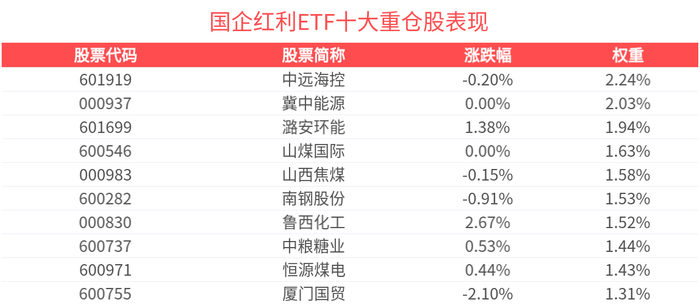
Core Viewpoint - The article highlights the performance of the China Securities State-Owned Enterprises Dividend Index and the attractiveness of dividend stocks in the current market environment, particularly in the context of rising risk aversion and the potential for policy support in the fourth quarter [1][2]. Group 1: Index Performance - As of November 27, 2025, the China Securities State-Owned Enterprises Dividend Index increased by 0.20%, with notable gains from stocks such as LUXI Chemical (+2.67%) and Western Mining (+2.66%) [1]. - The National Enterprise Dividend ETF (159515) rose by 0.09%, with a turnover rate of 1.75% and a transaction volume of 771,300 yuan [1]. Group 2: Market Conditions - Entering the fourth quarter, there is significant profit-taking pressure, coupled with increased volatility in overseas markets, leading to a decline in equity risk appetite [1]. - The dividend style of investment is becoming more attractive due to the stability of leading companies and strong dividend certainty, especially during periods of heightened volatility in popular sectors [1]. Group 3: Investment Appeal - According to Debon Securities, dividend stocks are appealing in the current market due to their high dividend yield and defensive characteristics, particularly as funds shift towards high-dividend assets amid fluctuating expectations regarding U.S. Federal Reserve interest rate cuts [1]. - The China Securities State-Owned Enterprises Dividend Index comprises 100 listed companies selected for their high cash dividend yields and stable dividends, reflecting the overall performance of high-dividend securities among state-owned enterprises [1]. Group 4: Top Holdings - As of October 31, 2025, the top ten weighted stocks in the China Securities State-Owned Enterprises Dividend Index accounted for 17.08% of the index, with notable companies including COSCO Shipping Holdings and Jizhong Energy [2].

红利国企ETF(510720)连续4日净流入超2亿元,市场关注高股息资产防御属性
Sou Hu Cai Jing· 2025-11-26 03:28
Group 1 - The dividend sector is currently attractive for allocation due to its high dividend yield and defensive attributes amid rising market risk aversion [1] - Recent market fluctuations influenced by the Federal Reserve's interest rate cut expectations have led funds to flow towards high-dividend assets [1] - The performance of commodity prices and corporate dividend distributions will be key areas of focus moving forward, as volatility or policy-driven changes could enhance the defensive value of the dividend sector [1] Group 2 - The Dividend State-Owned Enterprise ETF (510720) tracks the State-Owned Dividend Index (000151), which selects stocks with high dividend characteristics, stable dividend distributions, and good liquidity, primarily covering traditional sectors like finance, energy, and industry [1] - The Dividend State-Owned Enterprise ETF (510720) has consistently paid dividends every month since its listing, achieving 19 consecutive months of dividends, making it one of the few ETFs to do so [1] - Investors are encouraged to consider buying on dips for this ETF, given its consistent dividend payout history [1]
年内港股公司合计回购金额逾1500亿港元
Zheng Quan Ri Bao· 2025-11-25 16:45
Group 1 - The core viewpoint of the articles highlights the significant increase in share buybacks among Hong Kong-listed companies, indicating confidence in future prospects and helping to stabilize investor sentiment [1][2][3] - As of November 25, 2023, 247 Hong Kong companies have repurchased a total of 6.769 billion shares, amounting to approximately 154.415 billion HKD, with 90 companies repurchasing around 8.333 billion HKD since November [1][2] - Major companies leading the buyback activities include Tencent Holdings, HSBC Holdings, and AIA Group, with buyback amounts of 64.143 billion HKD, 30.257 billion HKD, and 17.693 billion HKD respectively [2] Group 2 - The buyback activities are concentrated in sectors such as financial services, information technology, consumer staples, healthcare, and energy, with notable participation from the information technology sector [1][2] - The average daily buyback amount during the week of November 18-24 exceeded 20 million HKD per company, with a peak of 55 companies initiating buybacks on November 21 [3] - Smaller companies are also engaging in buybacks, with examples like Weitai Medical repurchasing approximately 3.6415 million HKD worth of shares [3] Group 3 - The Hong Kong stock market has shown improved liquidity, with the average daily trading volume reaching a record high of 286.4 billion HKD in Q3 2023, and September's daily average surpassing 300 billion HKD [4] - Analysts predict a dual opportunity in the Hong Kong market, focusing on high dividend assets and technology growth sectors, particularly those related to AI, as the market is expected to undergo a new round of valuation recovery [5] - The structural shift towards technology driven by AI is anticipated to be a key theme in the market, with expectations of a rebalancing between technology and cyclical sectors [5]
港股通红利ETF广发(520900)放量上涨,连续6周获得资金净申购
Xin Lang Ji Jin· 2025-11-25 04:20
Core Viewpoint - The article highlights the increasing attractiveness of dividend assets in the current volatile market, emphasizing the benefits of the Guangfa Hong Kong Stock Connect Dividend ETF (520900) as a tool for investors seeking stable returns [2][4]. Group 1: Market Environment - The A-share market experienced a significant rise, with the Guangfa Hong Kong Stock Connect Dividend ETF (520900) showing a 0.65% increase and a trading volume of 39.94 million yuan as of November 25 [1]. - From October 13 to November 21, the ETF saw continuous net subscriptions for six weeks, with its circulating scale increasing from 1.581 billion yuan to 1.852 billion yuan, representing a growth rate of 17.14% [1]. Group 2: Dividend Strategy - The current macroeconomic environment supports the effectiveness of dividend strategies, with the 10-year government bond yield dropping from 3.2% in 2021 to 1.75% as of November 3, 2025, marking a historical low for risk-free rates [2]. - The anticipated annual dividend amount for A-shares in 2024 is projected to reach a record high of 2.34 trillion yuan, driven by policies encouraging companies to enhance dividend payouts [2]. Group 3: Investment Opportunities - The Hong Kong market benefits from both domestic economic fundamentals and global capital flows, with an AH premium rate of 120.12, indicating significant value for dividend stocks [3]. - The year-end period is seen as an optimal time for reallocating to dividend strategies, as institutional investors often adjust their portfolios to secure annual returns [3]. Group 4: ETF Details - The Guangfa Hong Kong Stock Connect Dividend ETF (520900) was established on June 26, 2024, with an annual management fee of 0.50% and a custody fee of 0.10% [6]. - The ETF tracks the CSI National New Hong Kong Stock Connect Central Enterprise Dividend Index, focusing on high-dividend state-owned enterprises, with the top three sectors being oil and petrochemicals (29.7%), telecommunications (21.2%), and transportation (13.5%) [7].
煤炭行业周报(11月第4周):日耗偏低累库,关注高股息资产-20251124
ZHESHANG SECURITIES· 2025-11-24 08:20
Investment Rating - The industry rating is "Positive" [1] Core Viewpoints - The coal sector has seen a decline, underperforming the CSI 300 index by 1.9 percentage points, with a weekly drop of 5.67% as of November 21, 2025 [2] - Short-term coal consumption is low, leading to an increase in social inventory, but it remains below last year's levels. There is a need to ensure supply while releasing production safely [5][29] - The report anticipates a gradual balance in supply and demand in the fourth quarter, with coal prices expected to rise steadily, targeting 850 CNY/ton [5][29] Summary by Sections Coal Market Performance - As of November 21, 2025, the average daily coal sales from monitored enterprises were 7.53 million tons, a week-on-week increase of 1.2% but a year-on-year decrease of 2.7% [2] - The total coal inventory (including port storage) was 24.61 million tons, up 1.3% week-on-week but down 19% year-on-year [2][6] Price Trends - The price index for thermal coal (Q5500K) was stable at 698 CNY/ton, while the imported thermal coal price index was 944 CNY/ton, also unchanged [3] - The price of coking coal at major ports showed a decline, with the main coking coal price at 1,790 CNY/ton, down 2.2% week-on-week [4] Investment Recommendations - The report suggests prioritizing investments in high-dividend thermal coal companies, specifically mentioning China Shenhua, Shaanxi Coal, and others [5][29] - Focus on coking coal companies such as Huabei Mining and Shanxi Coking Coal, as well as coking companies with improved profits like Jinneng Technology and others [5][29]



帮主郑重:市场急跌反现黄金坑,三条主线布局年末行情!
Sou Hu Cai Jing· 2025-11-24 03:41
Group 1 - The recent adjustment in the A-share market saw the Shanghai Composite Index drop nearly 4% in a week, with the ChiNext Index falling over 6%, affecting more than 4,900 stocks [1][3] - External factors such as the cooling of interest rate cut expectations from the Federal Reserve, renewed debates over the AI bubble, and geopolitical tensions have contributed to the market downturn, impacting global risk assets [3] - Despite the market's decline, institutional investors have been actively buying, with over 70 billion yuan net inflow into stock ETFs in the past week, indicating confidence among smart money [3] Group 2 - Current valuation of the Shanghai Composite Index is around 13.6 times, approaching a "reasonable" level, suggesting that further declines could present buying opportunities [3] - Market sentiment indicators have dropped to yearly lows, and the financing guarantee ratio has returned to early August levels, indicating that panic selling may have subsided [3] - Long-term investors are advised to focus on undervalued assets, particularly in sectors like domestic computing power, innovative pharmaceuticals, and industries benefiting from supply-demand improvements due to "anti-involution" policies [4] Group 3 - Companies that can leverage China's manufacturing advantages for global pricing power are expected to thrive, with predictions that 2026 will be a significant year for Chinese enterprises going global [4] - High-dividend assets are recommended as a stabilizing force in a volatile market, with attention on cyclical dividends (coal, chemicals) and potential dividends (railways, environmental protection) [4] - Analysts predict a "low volatility slow bull" market for A-shares in 2026, with Goldman Sachs estimating a 30% upside for the Chinese stock market by 2027 [4]
解答当前市场的五个关键问题
表舅是养基大户· 2025-11-23 13:36
Core Viewpoint - The article discusses the recent downturn in global markets, highlighting the temporary failure of negative correlation among diverse assets, and raises five key questions regarding potential market rebounds, Federal Reserve interest rate decisions, AI market bubbles, and structural opportunities in the A-share market [1][6]. Group 1: Market Performance - The U.S. stock market experienced its second worst performance in November, only behind March of the same year [3]. - In the A-share and Hong Kong markets, the Hang Seng Tech Index and the ChiNext Index both recorded their worst monthly performance of the year [4]. Group 2: Key Questions - The article poses five critical questions for discussion: 1. Will there be a rebound after the recent market drop? 2. Will the Federal Reserve lower interest rates in December? 3. Is there a bubble in the AI sector? 4. Are there still structural opportunities in the A-share market? [6] Group 3: Market Rebound Potential - Following a significant drop, there is a possibility of a rebound in the upcoming week, influenced by dovish comments from a key Federal Reserve official, which raised expectations for interest rate cuts [8][10]. - Several upcoming events, including the release of U.S. core PCE inflation data and earnings reports from major companies like Alibaba and Meituan, could impact market sentiment [11][12][13]. Group 4: Federal Reserve Interest Rate Decisions - The New York Fed President indicated that there is room for further adjustments to the federal funds rate, suggesting a potential interest rate cut in December [15][16]. - Market expectations for a December rate cut surged from 30% to nearly 70% following the dovish remarks [17]. Group 5: AI Market Bubble - The article presents a mixed view on whether there is a bubble in the AI sector, noting that while leading companies have reasonable valuations, concerns about high capital expenditures and unclear long-term returns persist [24][25]. - The performance of Bitcoin and its divergence from gold prices indicate a complex market environment, with significant volatility affecting liquidity [23][27]. Group 6: Structural Opportunities in A-share Market - There are still structural opportunities in the A-share market, driven by low interest rates, industry growth, and a shift in household wealth [31]. - However, the article emphasizes that the recent adjustments in the A-share market have not been sufficient, indicating ongoing risks [32]. Group 7: Investment Strategies - The article suggests maintaining core positions in high-dividend assets and focusing on sectors benefiting from industrial upgrades, such as high-end manufacturing and AI [31]. - It also advises investors to manage expectations regarding potential drawdowns in equity investments, as fluctuations of 10-20% are considered normal [40].

申万宏源交运一周天地汇:VLCC再创新高,俄油出口显著下滑,关注年度策略5年维度全球交运复盘
Shenwan Hongyuan Securities· 2025-11-22 13:26
Core Insights - The report highlights a significant increase in VLCC (Very Large Crude Carrier) freight rates, reaching a new high, driven by a notable decline in Russian oil exports, which has created additional demand for oil transportation from the Middle East to India and China [3][4] - The report suggests a positive outlook for the transportation sector, particularly in shipping and aviation, with recommendations for specific companies such as China Merchants Energy and COSCO Shipping Energy [3][4] - The report emphasizes the importance of monitoring seasonal trends in freight rates, particularly the potential for a "not-so-dull" off-season from December to February [3] Industry Overview - The transportation index has decreased by 5.00%, underperforming the CSI 300 index by 1.23 percentage points, with the express delivery sector showing the smallest decline at -2.75% and the public transport sector experiencing the largest drop at -9.35% [4][11] - The shipping sector has shown mixed performance, with the Baltic Dry Index increasing by 5.67% while the coastal dry bulk freight index fell by 3.47% [4][11] - The report notes that the average freight rate for VLCCs has risen by 5% week-on-week, reaching $126,371 per day, with the Middle East to Far East route hitting a new high of $138,144 per day [3][4] Shipping Sector Insights - The report indicates that the average freight rate for the fourth quarter is approaching $99,000 per day, marking it as one of the highest quarterly averages in history [3] - The decline in Russian oil exports has been significant, dropping from nearly 4 million barrels per day to around 3 million barrels per day, which has increased demand for oil from the Middle East [3][4] - The report also highlights the recovery of chartering activities following the Bahri conference, with shipowners beginning to control capacity due to tightening supply [3] Aviation Sector Insights - The report discusses the unprecedented challenges in the aircraft manufacturing supply chain, with an aging fleet expected to persist over the next 5-10 years, leading to constrained supply [3] - It anticipates a significant improvement in airline profitability as capacity is allocated to international routes, suggesting a potential golden era for airlines [3] - Recommendations include major airlines such as China Eastern Airlines and Spring Airlines, which are expected to benefit from these trends [3] Express Delivery Sector Insights - The express delivery industry is entering a new phase of competition, with three potential scenarios outlined: price recovery leading to utility-like profitability, continued competitive pressure, or higher-level consolidation [3] - Companies such as Shentong Express and YTO Express are highlighted as having strong potential due to their competitive advantages and market positioning [3] High Dividend Stocks in Transportation - The report lists high dividend yield stocks in the transportation sector, including Bohai Ferry with a yield of 8.08% and China Railway with a yield of 3.95% [21] - The focus on high dividend stocks is seen as a stable investment strategy amidst market fluctuations [21]





一周跌没6%,创业板跌出‘黄金坑’?这份抄底攻略请收好
Sou Hu Cai Jing· 2025-11-22 03:24
Core Viewpoint - The recent stock market decline, particularly in the ChiNext index which fell over 6%, presents a buying opportunity for value investors rather than a cause for panic [1] Group 1: Market Conditions - The global market is experiencing significant downturns, with the Nasdaq down 2.7% and the Nikkei index down over 3.4% [1] - In the A-share market, over 4,900 stocks have declined, indicating a widespread sell-off [1] Group 2: Reasons for the Decline - The decline is attributed to three main factors: weakening faith in technology stocks, tight liquidity due to a strong dollar and foreign capital outflow, and a pervasive sense of panic among investors [3][4] Group 3: Investment Opportunities - Many quality companies have been "wrongly killed" in this market downturn, leading to significantly lower valuations and increased safety margins for investors [4] - Key sectors to consider for investment include: - AI and semiconductors, driven by domestic substitution policies - New energy sectors such as energy storage and wind power, which continue to show high industry vitality - Military industry, characterized by stable orders and strong defensive qualities [4] - High dividend assets in sectors like banking, electricity, and public utilities are also recommended for their low valuations and ability to provide stability in volatile markets [4]

红利板块本周震荡调整,恒生红利低波ETF(159545)获资金持续布局
Sou Hu Cai Jing· 2025-11-21 11:40
Core Insights - The market experienced a collective adjustment today, with the dividend sector showing relatively smaller declines, particularly the Hang Seng Dividend Low Volatility ETF (159545), which saw net subscriptions exceeding 20 million units throughout the day [1] - Over the week, the CSI Dividend Low Volatility Index fell by 2.3%, the Hang Seng Stock Connect High Dividend Low Volatility Index decreased by 3.0%, the CSI Dividend Value Index dropped by 3.1%, and the CSI Dividend Index declined by 3.7% [1][3] - E Fund is currently the only fund company offering all dividend ETFs at low fee rates, with management fees set at 0.15% per year for products like the Hang Seng Dividend Low Volatility ETF (159545) and others [1] Index Performance - The weekly performance of various indices shows: - CSI Dividend Index: -3.7% - CSI Dividend Low Volatility Index: -2.3% - Hang Seng Stock Connect High Dividend Low Volatility Index: -3.0% - CSI Dividend Value Index: -3.1% [3] - The dividend yields for these indices are as follows: - CSI Dividend Index: 4.2% - CSI Dividend Low Volatility Index: 4.0% - Hang Seng Stock Connect High Dividend Low Volatility Index: 5.8% - CSI Dividend Value Index: 4.1% [3] ETF Tracking and Fees - There are currently six ETFs tracking the CSI Dividend Index, seven tracking the CSI Dividend Low Volatility Index, four tracking the Hang Seng Stock Connect High Dividend Low Volatility Index, and one tracking the CSI Dividend Value Index [4] - The low fee products have a management fee of 0.15% per year and a custody fee of 0.05% per year [4] Historical Performance - The historical performance of the indices over various time frames shows: - Year-to-date performance: CSI Dividend Index: -0.5%, CSI Dividend Low Volatility Index: +3.6%, Hang Seng Stock Connect High Dividend Low Volatility Index: +21.0%, CSI Dividend Value Index: +2.6% [6] - One-year performance: CSI Dividend Index: +4.6%, CSI Dividend Low Volatility Index: +9.4%, Hang Seng Stock Connect High Dividend Low Volatility Index: +28.3%, CSI Dividend Value Index: +8.1% [6]
