
ESG投资

Search documents
南方基金亮相第十九届金博会 以金融赋能书写公募新篇章
Zhong Guo Jing Ji Wang· 2025-11-19 02:53
本届金博会恰逢个人养老金制度实施三周年,南方基金重点展出了覆盖一二三支柱的完备养老金融体系 以及推动第三支柱个人养老金产品创新的具体实践。在个人养老金方面,南方基金已推出涵盖养老目标 日期型、养老目标风险型、养老指数型等多种类型的个人养老金产品矩阵,覆盖2030年到2060年等主要 日期的一系列产品。同时,南方基金作为首批通过中国结算个人养老系统验收测试和首批上线个人养老 金业务的基金管理人,至今已有十余只产品纳入个人养老金产品名录,以技术、产品与服务驱动推动养 老三支柱建设走深走实。 展会现场,南方基金以"专业+趣味"的沉浸式体验,让金融服务更具温度。全运会"大湾鸡"周边、智能 互动机器人与"阿梦"人形玩偶成为展区焦点,吸引众多观众驻足。南方基金通过多媒体展示与专业顾问 讲解,帮助观众直观理解基金产品的特点。此外,展区还设有趣味互动游戏,在轻松氛围中向投资者传 递长期投资、价值投资理念,助力提升投资者金融素养,让金融服务更贴近大众需求。 11月19日,以"产业金融新高地,科创赋能向未来"为主题的第十九届深圳国际金融博览会在深圳会展中 心盛大启幕。作为国内首批规范的基金管理公司,南方基金精彩亮相本次金博会,围 ...
中证2000 ESG基准指数等2条指数将于11月19日发布
Zheng Quan Ri Bao Wang· 2025-11-18 13:07
本报讯 (记者毛艺融)11月18日,中证指数有限公司官网公告称,将于2025年11月19日正式发布中证2000ESG基准指数和 中证2000ESG领先指数,为市场提供多样化业绩基准与投资标的。 中证2000ESG基准指数从中证2000样本中剔除各中证一级行业内ESG分数最低的20%的上市公司证券,选取剩余证券作为 指数样本,反映与中证2000指数相匹配的ESG投资业绩基准。 中证2000ESG领先指数从中证2000样本中选取ESG分数最高的600只上市公司证券作为指数样本,表征中证2000指数样本 中中证ESG评价结果较优的上市公司证券的表现。 (编辑 李家琪 张昕) 图片来源:中证指数有限公司官网; ...

富时罗素CEO Fiona Bassett:未来6到12个月 欧洲主权财富基金和养老基金或增加中国配置
Zhong Guo Ji Jin Bao· 2025-11-17 16:35
Group 1: Core Insights - FTSE Russell anticipates that European sovereign wealth funds and pension funds may increase their allocation to China in the next 6 to 12 months, viewing China as an independent asset class rather than just part of emerging markets [1][6] - Global investors are shifting from defensive cash and short-duration bonds to risk assets, including developed and emerging market equities and bonds, with a notable flow of new funds into Chinese and Greater China assets [2][6] - The upgrade of Vietnam's market from frontier to secondary emerging market status by FTSE Russell is expected to facilitate easier access for global investors, although the impact on other emerging markets is minimal [1][8] Group 2: European Investor Concerns - European institutional investors are facing a complex environment shaped by structural, macroeconomic, and regulatory challenges, including high stock valuations, interest rate uncertainty, and geopolitical tensions [4] - There is a growing interest among European asset managers in diversifying their portfolios away from overexposed positions in the US and Europe, with a focus on China's leadership in technology and artificial intelligence [6][4] Group 3: Investment Trends - The demand for Chinese indices, particularly those focused on technology, artificial intelligence, and electric vehicles, is increasing among global investors, with significant inflows into products like the Invesco China Technology ETF [7] - The transition of Vietnam to a secondary emerging market is expected to attract approximately $1 to $1.5 billion in passive fund inflows, with active management inflows projected to be 4 to 5 times that amount [9][8] Group 4: ESG Investment Evolution - There is a notable shift in investor behavior towards more integrated and thematic approaches to ESG investing, with a focus on understanding how ESG factors impact investment returns [11] - Regulatory frameworks in Europe, such as the Corporate Sustainability Reporting Directive (CSRD), are enhancing corporate disclosure standards, which is crucial for ESG investment transparency [11]
富时罗素CEO Fiona Bassett:未来6到12个月,欧洲主权财富基金和养老基金或增加中国配置
中国基金报· 2025-11-17 16:00
Group 1 - The core viewpoint is that global investors are shifting from defensive cash and short-duration bonds to risk assets, including developed and emerging market stocks and bonds, with a notable increase in interest towards Chinese assets [2][5][10] - FTSE Russell's CEO anticipates that European sovereign wealth funds and pension funds may increase their allocation to China in the next 6 to 12 months, viewing China as an independent asset class rather than just part of emerging markets [2][11] - The upgrade of Vietnam's stock market to secondary emerging market status by FTSE Russell is expected to facilitate global investors' access to the Vietnamese market, although the impact on other emerging markets is minimal [2][14][18] Group 2 - European institutional investors are currently facing challenges such as high stock valuations, interest rate uncertainty, geopolitical tensions, and internal pressures like weak growth prospects and regulatory fragmentation [8][9] - There is a growing interest among European asset managers in diversifying their portfolios by increasing allocations to China, particularly in sectors like technology and advanced manufacturing [11][12] - The demand for Chinese indices, especially those focused on technology and artificial intelligence, is rising among global investors, indicating a strong interest in China's growth potential [12][13] Group 3 - The transition of Vietnam to a secondary emerging market is expected to attract significant passive and active fund inflows, estimated at $1-1.5 billion, with around 30 stocks likely to be included in the indices [18] - The ongoing evolution of investor behavior towards ESG and climate considerations reflects a shift from simple ESG fund investments to more integrated and thematic approaches [20] - Despite some negative headlines, there is a substantial and ongoing inflow of capital into the ESG investment space, underscoring the long-term value and market demand for sustainable investments [20]

聚焦气候变化|COP30净零排放图集
Refinitiv路孚特· 2025-11-17 06:03
Core Insights - 95% of countries failed to submit new Nationally Determined Contributions (NDCs 3.0) by the UN's February deadline, but major emitters have set 2035 targets, covering 71% of G20 emissions [1] - G20 countries with targets are expected to increase annual emissions reductions from -0.5% to -0.7% (2023-2030) to -2.6% to -3.5% (2030-2035), achieving an additional 13% to 18% reduction over five years [1] Transformation Risk Analysis - Over 70 countries have submitted or announced new 2035 targets despite geopolitical tensions, including major emitters like China, Russia, and Brazil, while the U.S. has withdrawn [3] - The new 2035 targets align with a global temperature increase forecast of 2.2–2.3°C, slightly better than the 2.4°C forecast under NDCs 2.0, but still above the Paris Agreement goal [3] - The acceleration in global emissions reduction is primarily driven by large emerging economies, with some countries like the UK and Australia committing to faster decarbonization, while others like Canada and Japan show slower rates [3] Physical Risk Analysis - By mid-century, climate physical disasters could put an additional 500 million people and $20 trillion GDP at high risk, with a total of 839 million people and $28.3 trillion GDP facing risks by 2050 [3] - Major cities like Tokyo, New York, and Shanghai will see increased exposure to climate risks, with over 80% of Japan's GDP and population facing typhoons at least once every ten years [3] - By 2050, over 327 million people will face extreme heat conditions, and 670 regions will experience severe water stress, impacting health and economic productivity [3] Implications for Investors - Investors must understand how government emission commitments reshape global growth trajectories and asset valuations, as climate physical risks increasingly challenge markets and economies [6] - The report provides detailed risk mapping and forecasts, translating macro climate models into actionable investment decisions [6] - The unique application of the implied temperature rise (ITR) metric offers a clear benchmark for assessing countries' climate goals against the Paris Agreement [8]

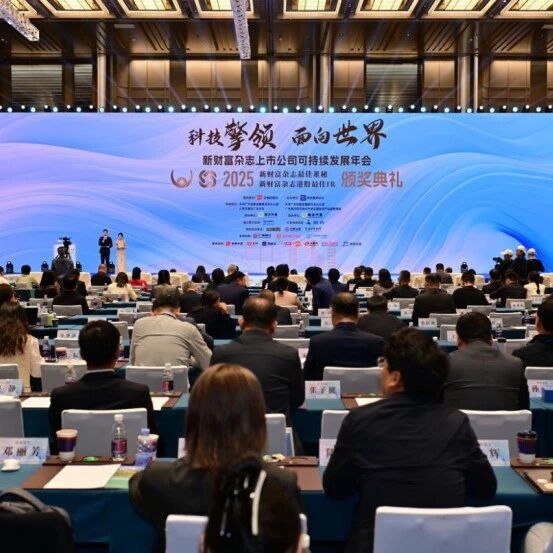
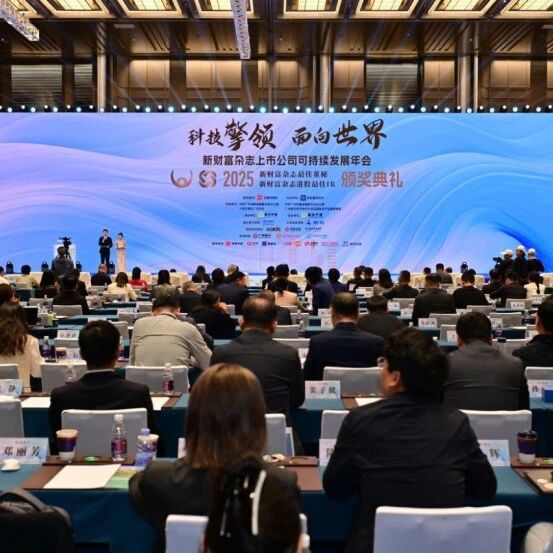
璀璨盛典,荣耀见证!2025新财富杂志上市公司可持续发展年会暨最佳董秘颁奖典礼在广州南沙成功举办
证券时报· 2025-11-13 04:16
Core Viewpoint - The conference emphasized the importance of sustainable development and high-quality growth in the capital market, focusing on technology-driven innovation and transparent governance as key factors for listed companies to thrive in a changing global landscape [2][3]. Group 1: Conference Overview - The "2025 New Wealth Magazine Sustainable Development Annual Conference" was held in Guangzhou Nansha, gathering over 400 industry elites, including regulatory officials, top industry experts, and executives from listed companies [1]. - The event featured awards for over 300 "Best Secretaries," 50 "Best Representatives," and more than 100 "Best IR" teams, highlighting excellence in corporate governance and investor relations [26][28]. Group 2: Key Themes and Discussions - The conference focused on three critical areas for listed companies: innovation-driven strategies, enhanced corporate governance, and leveraging regional strategies to seize opportunities in the Greater Bay Area [3]. - Discussions included the integration of artificial intelligence, emerging industries, green development, and international expansion, providing a platform for exploring new growth paths in the current economic cycle [17][21]. Group 3: Economic Insights - Guangzhou's financial sector achieved a value-added of 304.9 billion yuan in 2024, with a year-on-year growth of 3.9%, positioning it as the fourth city in China to surpass 300 billion yuan in financial value [10]. - The Greater Bay Area's economy reached 14 trillion yuan, marking significant progress in building a world-class city cluster [13]. Group 4: Future Initiatives - The "New Wealth Magazine Hong Kong Star Plan" was launched to create a comprehensive platform for value dissemination and research collaboration for companies listed in Hong Kong [29]. - The second edition of the Best Hong Kong Company Awards will commence, aimed at promoting high-quality development among Chinese companies listed in Hong Kong [31]. Group 5: Environmental Responsibility - The conference adhered to low-carbon principles and achieved carbon neutrality, reflecting a commitment to sustainable development and responsible practices within the capital market [33].
璀璨盛典,荣耀见证!2025新财富杂志上市公司可持续发展年会暨最佳董秘颁奖典礼在广州南沙成功举办
券商中国· 2025-11-13 02:03
Core Viewpoint - The conference emphasizes the importance of sustainable development and high-quality growth in the capital market, focusing on technology-driven innovation and transparent governance as key factors for listed companies to thrive in a changing global landscape [3][4][12]. Group 1: Event Overview - The "2025 New Wealth Magazine Sustainable Development Conference" was held in Guangzhou Nansha, gathering over 400 industry elites, including regulatory officials, top industry experts, and executives from listed companies [1][3]. - The event featured awards for over 300 "Best Secretaries," 50 "Best Agents," and more than 100 "Best IR Teams" in Hong Kong, highlighting excellence in corporate governance and investor relations [1][39][42]. Group 2: Key Themes and Discussions - The conference focused on sustainable development, high-quality growth, and the integration of technology and industry, addressing topics such as artificial intelligence, emerging industries, and green development [23][34]. - Discussions included the role of AI in enhancing corporate communication and operational efficiency, with insights on how companies can leverage AI for better investor engagement and decision-making [32][37]. Group 3: Economic Insights - Guangzhou's financial sector achieved a value-added output of 3,049 billion yuan in 2024, marking a 3.9% year-on-year growth, positioning it as the fourth city in China to surpass 3 trillion yuan in financial output [12]. - The Guangdong-Hong Kong-Macao Greater Bay Area's economic total reached 14 trillion yuan, reflecting significant progress in building a world-class city cluster [16][19]. Group 4: Strategic Initiatives - The conference launched the "New Wealth Magazine Hong Kong Star Program," aimed at providing a comprehensive platform for value dissemination and research collaboration for companies listed in Hong Kong [42]. - A new salon and "Secretary's Home" were established to facilitate ongoing high-level exchanges, promoting deep integration of capital, industry, and regional economies [21].
2025北京金融街中外交流活动:三大领域成中长期资本未来合作的重点方向
Jing Ji Guan Cha Wang· 2025-11-12 05:04
Group 1 - The event "Long-term Capital Global Asset Management and China's Opportunities" was successfully held in Beijing, focusing on structural opportunities in the Chinese market amid global economic transformation [1] - The event was co-hosted by the Financial Street Cooperation Development Council and IPEM Asia, with participation from various domestic and international financial institutions [1] - Keynote speeches were delivered by prominent figures including the district mayor of Xicheng District and the director of the Financial Research Institute of the People's Bank of China [1] Group 2 - Discussions highlighted that China's market, characterized by its large economy, comprehensive industrial chain, and ongoing financial opening policies, is becoming a key choice for global long-term capital allocation [2] - Participants noted that despite uncertainties in the global financial market, China's economic resilience and the low volatility of RMB assets provide unique risk diversification and stable return opportunities [2] - Future areas of focus for medium to long-term capital cooperation include ESG investment, technological innovation, and industrial upgrading [2]

2025北京金融街中外交流活动成功举办 共话全球资产管理与中国机遇
Zheng Quan Ri Bao Wang· 2025-11-11 10:40
Core Insights - The event focused on "Long-term Capital Global Asset Management and Opportunities in China," emphasizing structural opportunities in the Chinese market amid global economic transformation [1][2] - Discussions highlighted China's large economic scale, comprehensive industrial chain, ongoing financial opening policies, and innovation in high-tech and green finance as key factors attracting global long-term capital [1][2] Group 1: Global Capital and China - Global sovereign capital and investment institutions are increasingly viewing China as a significant option for long-term allocation due to its economic resilience and high-quality development path [2] - The low volatility of RMB assets is seen as providing unique risk diversification and stable returns in global asset portfolios [2] Group 2: Future Directions and Collaboration - ESG investment, technological innovation, and industrial upgrading are identified as key areas for medium to long-term capital cooperation [2] - The event served as a platform for enhancing cooperation consensus and boosting international capital confidence in the Chinese market, laying a solid foundation for deeper cross-border capital collaboration [2] Group 3: Organizational Role - The event is part of the "2025 Financial Street Forum Series" and reflects the efforts of the Financial Street Cooperation Development Council's International Cooperation Committee to promote international financial exchanges [2] - The International Cooperation Committee aims to build cross-border platforms, deepen international exchanges, and promote resource sharing, becoming a crucial support for the internationalization of Financial Street [2]
信用债市场周观察:信用债ETF将持续吸引资金流入
Orient Securities· 2025-11-11 01:11
Group 1 - The core view of the report indicates that credit bond ETFs will continue to attract capital inflows, with a notable recovery in liquidity observed in October [5][8] - The total circulation scale of credit bond ETFs has approached 500 billion yuan, significantly surpassing that of interest rate bond ETFs, reflecting a strong market sentiment [5][8] - The report anticipates that the credit bond ETF's discount rate may further compress, although transitioning to a premium without a major market event remains challenging [5][10] Group 2 - The report highlights that the issuance volume of credit bonds has increased, with a net financing of 92 billion yuan recorded, indicating a positive shift in the financing landscape [29][30] - The average coupon rates for newly issued AAA and AA+ rated bonds have decreased, with the average rates at 2.07% and 2.27% respectively, showing a downward trend in financing costs [29][30] - The credit spreads across various grades have narrowed, particularly for longer maturities, with significant compressions observed in the AA grade [32][34]