
反内卷

Search documents
高增长潜力的新能源赛道,31股获机构扎堆看好
Zheng Quan Shi Bao· 2026-01-04 00:33
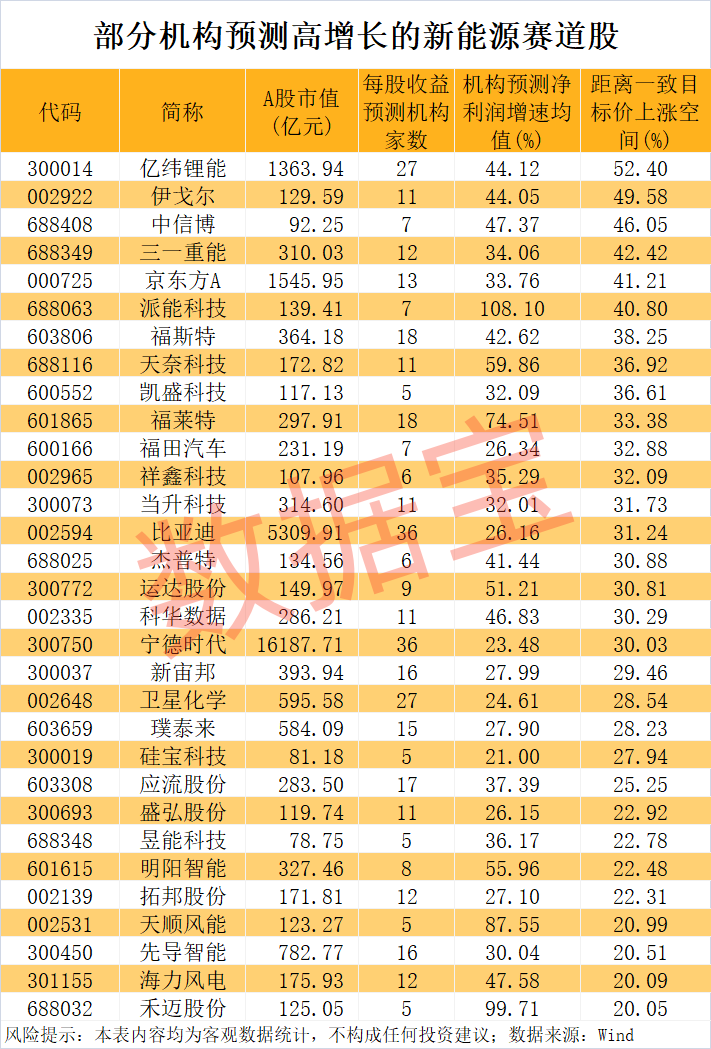
Core Insights - The rapid expansion of AI data centers, combined with the "anti-involution" trend, is expected to create new opportunities in the renewable energy sector by 2026 [1] Group 1: Policy and Regulatory Developments - The National Development and Reform Commission and the National Energy Administration aim for renewable energy generation to account for approximately 30% of total power generation by 2030 [2] - By 2035, a new type of power grid platform will be established, enhancing the optimization of power resources and supporting the stable operation of the power system [2] Group 2: Market Growth and Trends - The "14th Five-Year Plan" indicates that non-fossil energy will gradually become the main energy supply, marking a significant transformation in the energy supply structure [3] - The global demand for electricity is expected to expand exponentially due to the booming AI data centers and the acceleration of global electrification [3] Group 3: Investment Opportunities - A report from Citigroup highlights that transformer and large-scale energy storage systems (ESS) may become critical bottleneck assets in supporting the expansion of AI data centers [3] - Various institutions have released strategies for 2026, expressing optimism for the renewable energy sector, particularly in upstream materials like graphite anode materials and lithium hexafluorophosphate [3] Group 4: High-Growth Stocks - A total of 64 stocks in the renewable energy sector are projected to have a net profit growth rate exceeding 20% in both 2026 and 2027 [5] - Among these, 31 stocks have an upside potential of over 20% based on the comparison of their closing prices on December 31, 2025, with the target prices predicted by institutions [5] Group 5: Specific Stock Insights - EVE Energy is expected to have a price increase potential of 52.4%, driven by the launch of a new cylindrical battery project and improvements in profitability through energy storage and solid-state batteries [7] - Igor's stock has a potential increase of 49.58%, benefiting from the scaling of overseas production and new growth opportunities in the data center sector [7] - The rolling P/E ratio for Satellite Chemical is the lowest at 9.71, with ongoing development of immersion liquid cooling solutions for various applications [8][9]







全球资本涌入中国,摩根大通2026重大预测,四大主线牛市将至?
Sou Hu Cai Jing· 2026-01-03 20:17
Core Viewpoint - Morgan Stanley's latest report indicates that while China's economic growth may slow down, the risks remain manageable, with the CSI 300 index expected to experience a fourth wave of rebound and four key themes to watch for investment opportunities in 2026 [1][3]. Economic Outlook - Morgan Stanley predicts a "slowdown in growth but controllable downside risks" for China's economy in 2026, supported by three key dimensions: increased policy support, emerging productivity investments in high-end manufacturing and technology, and a rebound in competition dynamics across industries [3]. - The firm's China Macro Sentiment Indicator (QMI) serves as a barometer for the market, showing a recovery trend that aligns with the stock market's bottoming characteristics [3]. Industry Analysis - Morgan Stanley categorizes 36 Chinese industries into four stages: expansion, recovery, slowdown, and contraction, noting a gradual decrease in the number of industries in the slowdown phase and an increase in those in expansion and recovery [5]. - The report anticipates a strong momentum for the CSI 300 index, with historical rebounds showing over 90% gains from previous lows, and sets three target levels for the current rebound: approximately 30% to 4500 points, 55% to surpass 5000 points, and 70% nearing 6000 points [5]. Investment Themes - The first key theme is "anti-involution," focusing on industries transitioning from price and scale competition to quality and efficiency competition, particularly in sectors with severe losses [8][10]. - The second theme revolves around AI infrastructure supply chains, driven by significant capital expenditure increases from leading U.S. cloud service providers, which will benefit Asian supply chains, especially in data center and energy storage systems [11][13]. - The third theme highlights the international competitiveness of Chinese companies, drawing parallels with Japan's historical performance, emphasizing sectors like new energy vehicles, consumer electronics, and AI hardware [15]. - The fourth theme addresses K-shaped consumption patterns in China, where high-end markets are recovering while low-end sectors show signs of improvement, particularly in food and beverage [16][18].
多晶硅期货狂飙,空头遭逼仓后巨亏
Jing Ji Guan Cha Bao· 2026-01-03 13:36
Core Insights - The "anti-involution" trend has significantly driven the multi-crystalline silicon futures market, with prices surging over 85% since June 2025, reaching a peak of 63,000 yuan/ton [1][15] - Market dynamics shifted due to policy expectations and increased capital inflow, leading to a substantial rise in futures prices [2][3] - Despite an overall supply surplus in the industry, the futures prices continued to rise, raising questions about the underlying market logic [2][3] Group 1: Market Dynamics - The multi-crystalline silicon futures market experienced a dramatic price increase from around 31,000 yuan/ton in June 2025 to over 63,000 yuan/ton by December 2025, marking a significant recovery from earlier lows [1][15] - The establishment of a storage platform and industry self-regulation initiatives have been pivotal in changing market expectations and driving prices higher [3][4] - The market saw a shift in trading logic in November 2025, with a significant reduction in warehouse receipts leading to increased bullish sentiment [2][3] Group 2: Investor Behavior - Many investors, particularly those holding short positions, faced severe losses as prices surged, with one investor reporting losses of up to 1.3 million to 1.5 million yuan [10][12] - The volatility in the market has led to a psychological impact on traders, with some choosing to exit positions under extreme pressure [7][10] - The market's structural shortage of deliverable goods has exacerbated the situation for short sellers, limiting their ability to correct price discrepancies through physical delivery [11][12] Group 3: Future Outlook - Analysts predict that the multi-crystalline silicon industry may continue to face a supply-demand imbalance, with supply growth expected at 3.7% and demand potentially decreasing by 10% in 2026 [16] - The market is expected to remain volatile, with ongoing debates about the effectiveness of policy measures and their impact on pricing mechanisms [16] - The ability of the industry to maintain profitability will hinge on whether costs can be effectively passed through to the end market, particularly in the context of solar module pricing [16]
多晶硅期货狂飙,空头遭逼仓后巨亏
经济观察报· 2026-01-03 04:20
Core Viewpoint - The article discusses the significant rise in the price of polysilicon futures, which increased over 85% from around 31,000 yuan/ton to a peak of 63,000 yuan/ton, despite a perceived oversupply in the physical market, raising questions about the underlying drivers of this trend [2][18]. Group 1: Market Dynamics - The polysilicon futures market experienced a dramatic turnaround starting in July 2025, with prices rising sharply from 31,000 yuan/ton to approximately 55,000 yuan/ton within a month, marking a more than 70% increase [7]. - The "anti-involution" movement, which began gaining traction in mid-2024, aimed to curb excessive competition and promote industry self-discipline, significantly altering market expectations and contributing to the price surge [5][6]. - By late 2025, the market faced a structural shortage of deliverable polysilicon, as most available products did not meet delivery standards, leading to increased pressure on short sellers and supporting higher futures prices [14]. Group 2: Investor Sentiment and Behavior - Many investors entered the polysilicon futures market amid rising prices, but those betting against the trend faced significant losses, with one investor reporting a total loss of 13 to 15 million yuan due to the extreme volatility [12]. - The market saw a mix of optimism and fear, with some investors believing that the establishment of a polysilicon storage platform would provide price support, while others remained skeptical due to high inventory levels [17]. - The futures market's volatility was exacerbated by rumors of production limits and the establishment of a storage platform, which created a challenging environment for short sellers [9][10]. Group 3: Regulatory and Structural Changes - The Guangzhou Futures Exchange implemented stricter risk control measures, including increasing margin requirements and transaction costs, to manage the volatility in the polysilicon futures market [15]. - The establishment of a polysilicon production integration and acquisition platform by major industry players was seen as a potential stabilizing factor for prices, although concerns about high inventory levels persisted [17]. - Analysts predict that the polysilicon industry will continue to face a supply-demand imbalance in 2026, with supply growth expected at 3.7% and demand potentially decreasing by 10% due to shifts in policy focus [18].

疯狂的多晶硅期货
Jing Ji Guan Cha Wang· 2026-01-03 04:12
Core Viewpoint - The "anti-involution" trend has significantly driven the multi-crystalline silicon futures market, leading to a price surge of over 85% within six months, with prices reaching a peak of 63,000 yuan/ton [1][14]. Group 1: Market Dynamics - Since July 2025, the multi-crystalline silicon futures market has experienced a dramatic price increase, starting from around 31,000 yuan/ton and quickly surpassing 50,000 yuan/ton within a month [1]. - By December 30, 2025, the main contract "2605" was reported at 57,890 yuan/ton, marking a significant increase compared to the low of 31,000 yuan/ton in late June [14]. - The market has seen a notable rise in participation, with more traders entering the multi-crystalline silicon futures market as prices continued to climb [1]. Group 2: Influencing Factors - The "anti-involution" policy has emerged as a core driving factor for the multi-crystalline silicon futures market, with policy expectations and capital inflow creating a resonance that pushed prices higher [2]. - In late November 2025, a shift in market logic occurred due to a significant reduction in warehouse receipts, which fueled bullish sentiment and led to a price breakout [2]. - The establishment of a "silicon material storage platform" has been a key catalyst for the market's turnaround, transitioning from rumors to tangible actions [3]. Group 3: Supply and Demand Issues - Despite an overall surplus in industry capacity, the futures prices have continued to rise, raising questions about the underlying supply-demand dynamics [2]. - The actual supply of deliverable multi-crystalline silicon is limited, as most circulating goods do not meet delivery standards, creating structural shortages that support futures prices [10][11]. - The recent establishment of a multi-crystalline silicon capacity integration and acquisition platform has been viewed as a potential support for prices when they drop to certain levels [13]. Group 4: Future Outlook - Analysts predict that the multi-crystalline silicon industry may continue to experience a long-term capacity clearing pattern, with supply growth expected at around 3.7% and demand potentially decreasing by 10% due to shifts in focus towards energy storage [15]. - The pricing logic is evolving from cost competition to a test of the entire industry's profit coordination ability, with the actual transaction prices in the component segment being a critical indicator of sustainable trends [15].
回望2025:PTA最值得关注的6个时刻
Xin Lang Cai Jing· 2026-01-03 00:41
Group 1 - The article discusses significant events affecting PTA prices in 2025, highlighting the impact of the US-China trade war, geopolitical conflicts, and market dynamics on PTA pricing [1][2][4] - In April, PTA prices dropped to a four-year low of 4016 yuan/ton due to a 34% tariff imposed by the US, leading to a total tariff of 54% on Chinese goods and a significant decline in demand [1] - A rebound in PTA prices occurred in May after the US and China made progress in trade negotiations, resulting in the cancellation of 91% of tariffs and a price recovery of over 600 points [1] - The "Israel-Iran conflict" in June caused a spike in PTA prices due to rising crude oil costs, but prices corrected after a ceasefire was reached [1] - By September, the chemical sector faced a downturn as supply outstripped demand, leading to a collective price drop for chemical products, including PTA [2] - A meeting was held in October to address the issue of excessive competition in the PTA and bottle-grade polyester slice industries, aiming to stabilize the market and improve supply-demand dynamics [2] - In December, expectations for PTA improved as production slowed, leading to a significant rebound in prices and increased trading activity [4]

创出多项历史新高!2025期货业关键词,有这些!
证券时报· 2026-01-03 00:34
Core Viewpoint - The Chinese futures market is experiencing significant growth and transformation in 2025, marked by a historic increase in funding and client equity, innovative business models, and a shift towards high-quality development [1][3]. Funding Growth - In 2025, the total funding in the futures market surpassed 2 trillion yuan, with client equity also exceeding this milestone, reflecting a growth of over 30% compared to the end of 2024 [3]. - The trading volume reached 8.117 billion contracts and a turnover of 67.545 trillion yuan, with year-on-year increases of 14.74% and 20.19% respectively [3]. Product Expansion - The futures market has expanded its product offerings, with a total of 164 futures and options listed by the end of November 2025, including 18 new products such as aluminum alloy and pure benzene [5]. - New products have filled gaps in risk management tools for key raw materials, enhancing the market's service to the real economy [4][5]. Value Creation and Competition - The concept of "anti-involution" has emerged as a key theme, promoting healthy competition focused on value creation rather than price wars [7]. - New regulations have been introduced to curb unfair competition practices, fostering a shift towards service quality and professional value [7]. Industry Integration - The futures industry is increasingly integrating with the real economy, with a record number of companies announcing hedging strategies, indicating a shift from basic hedging to more complex risk management approaches [9][10]. - The demand for price risk management has risen significantly, leading to a transformation in the role of futures companies from mere brokers to comprehensive risk management service providers [10]. Rise of Proprietary and Asset Management - The overall profit of the futures industry increased, with proprietary trading and asset management becoming significant growth drivers, contributing to a net profit of 10.316 billion yuan, a 17.67% increase year-on-year [12][13]. - The scale of private asset management products reached 375.548 billion yuan, marking a 19.48% growth compared to the end of 2024 [12]. Internationalization - The futures market is advancing in internationalization, with the number of futures and options available to qualified foreign institutional investors expanding to 107 [16]. - The market has seen a 14% increase in effective clients, with notable growth in foreign clients, indicating a deeper integration into the global financial system [16]. Technological Empowerment - The industry is embracing advanced technologies such as big data and AI, enhancing its core competitiveness and service capabilities [18][19]. - AI is transforming trading execution and client services, making professional services more accessible and efficient [19]. Capital Increase Wave - A significant capital increase wave has occurred in the futures industry, with major brokerages leading the way, reflecting a restructuring of the industry landscape [21][22]. - The capital advantages of leading firms have been further enhanced, with top companies accounting for over 60% of net capital in the industry [22]. Market Differentiation - The futures market in 2025 has shown significant differentiation, with stark contrasts in performance across various commodity sectors, influenced by geopolitical factors and market dynamics [24]. - The performance of precious metals has been particularly strong, while traditional sectors like black commodities and agriculture have lagged, highlighting the need for refined risk management strategies [24]. Regulatory Improvements - The regulatory framework for the futures industry has been strengthened with new rules addressing various aspects such as internet marketing and risk management, promoting a more standardized development [26][27]. - Enhanced regulations aim to facilitate quality development in the industry, ensuring a safer and more effective market environment [27].

2025年医疗保障领域10大热词,点击查看——
Sou Hu Cai Jing· 2026-01-02 12:40
Core Insights - The year 2025 marks significant advancements in China's healthcare security system, showcasing resilience and a focus on people's health amidst modernization efforts [1] Group 1: Multi-layered Medical Security System - The "1+3+N" framework emphasizes a multi-layered medical security system, including a unified medical insurance information platform, basic medical insurance, major illness insurance, and support for commercial health insurance [2] - Reimbursement rates for inpatient expenses under employee and resident medical insurance have reached approximately 80% and 70%, respectively, with improvements in outpatient services [2] Group 2: Dual Drug Catalogs - The introduction of the "dual catalog" system for basic medical insurance and commercial health insurance marks a significant step in defining the boundaries of coverage, facilitating access to innovative drugs [3] - In 2025, the basic medical insurance catalog added 114 new drugs, with 50 being innovative drugs, achieving a negotiation success rate of 88% [3] Group 3: Provincial Coordination - The push for provincial coordination in basic medical insurance aims to enhance fairness and sustainability, with 20 provinces already advancing this initiative [5] - The focus is on optimizing fund management and ensuring uniform policy implementation across regions [5] Group 4: Anti-Competition Measures - The "anti-involution" strategy aims to stabilize drug pricing and maintain quality by preventing irrational price competition in the pharmaceutical industry [6][7] - Mechanisms have been introduced to ensure fair pricing and enhance clinical selection in drug procurement [7] Group 5: Real-World Research - Real-world research (RWS) has been established as a key tool for evaluating the comprehensive value of drugs and medical technologies, aiming to support sustainable fund management [8] - The National Medical Insurance Administration is developing a nationwide evaluation system to integrate real-world data into decision-making processes [8] Group 6: Long-term Care Professionals - The introduction of long-term care professionals aims to strengthen the workforce for long-term care services, with over 3,500 candidates participating in certification exams across multiple provinces [10] - The long-term care insurance system has expanded to cover nearly 300 million people, benefiting over 3.3 million individuals with disabilities [10] Group 7: Maternity Insurance System - The maternity insurance system aims for "no out-of-pocket" expenses for childbirth within policy coverage, with 2.55 billion people enrolled in the program [11] - Efforts are underway to include more demographics, such as flexible workers and migrant workers, into the maternity insurance coverage [11] Group 8: Drug Traceability Codes - The implementation of drug traceability codes has led to the collection of 39.885 billion codes, enhancing consumer protection and combating counterfeit drugs [13] - By July 2025, all medical institutions will be required to implement full traceability for drug sales [13] Group 9: Three-Settlement Reform - The "three-settlement" reform aims to streamline payment processes in the healthcare sector, significantly reducing the payment cycle for pharmaceutical companies [14] - The initiative includes immediate, direct, and synchronized settlements to enhance service efficiency for patients [14] Group 10: Medical Service Pricing Guidelines - The establishment of national medical service pricing guidelines aims to standardize pricing across provinces, addressing discrepancies and improving service quality [16] - The National Medical Insurance Administration has issued 36 batches of guidelines, with plans to complete 40 by 2026 [16]

头部私募2026年新展望:A股牛市仍在进程中 但驱动逻辑可能转向
Zheng Quan Shi Bao Wang· 2026-01-02 10:56
Core Viewpoint - The private equity industry in China has concluded its annual performance for 2025, with expectations for 2026 indicating a shift in market dynamics from liquidity-driven growth to fundamentals-driven growth [1] Group 1: Market Outlook - Leading private equity firms such as Freshwater Spring Investment, Star Stone Investment, Xuanyuan Investment, Qinghe Spring Capital, and Together Capital believe that the A-share bull market is still ongoing [1] - The driving logic of the market is expected to gradually transition from liquidity to fundamentals, indicating a different rhythm compared to previous years [1] Group 2: Investment Opportunities - The investment opportunities for 2026 are anticipated to focus on themes such as overseas expansion, artificial intelligence, anti-involution, and domestic demand [1] - The difficulty of stock selection is expected to increase, but the value of allocation remains significant [1]
A股牛市仍在进程中!头部私募2026年新展望
Zheng Quan Shi Bao Wang· 2026-01-02 10:52
Core Viewpoint - The private equity firms believe that the A-share bull market is ongoing, with a shift from liquidity-driven to fundamentals-driven growth expected in 2026, leading to increased stock selection difficulty and continued investment opportunities in areas such as overseas expansion, artificial intelligence, anti-involution, and domestic demand [1][7]. Group 1: Market Outlook - Starstone Investment indicates that the main driver for the stock market's upward trend in 2025 was the valuation uplift due to a loose liquidity environment, with the current stock-to-bond ratio still showing relative attractiveness for equity assets [2]. - Yuan Investment notes that the historical ratio of A-share total market value to household savings suggests that the bull market has not yet concluded, with the current ratio around 0.65, indicating potential for further market growth [2]. - Clear River Capital highlights a significant shift in the underlying logic of the A-share market, with improving free cash flow and increasing dividend and buyback ratios, projecting a market dividend rate exceeding 40% in 2025 [2]. Group 2: Investment Opportunities - The private equity firms identify key investment opportunities in 2026, focusing on overseas expansion, artificial intelligence, anti-involution, and domestic demand [7][8]. - Clear River Capital emphasizes that the 2026 market will likely see a transition to earnings-driven growth, with historical data suggesting that while index valuations may rise moderately, earnings growth could average 23%, leading to substantial index returns [5]. - Starstone Investment sees potential in traditional industries with reasonable valuations, expecting improvements in supply-demand dynamics and profitability due to ongoing structural reforms and policy support [6]. Group 3: Economic Drivers - Yuan Investment anticipates that the economic recovery in 2026 will be driven by domestic price recovery, with policies aimed at "anti-involution" potentially leading to improved price indicators [4]. - Clear River Capital expects that the actual GDP will remain resilient in 2026, with ongoing efforts to expand domestic demand and moderate inflation recovery [5]. - Starstone Investment draws parallels to past supply-side reforms, suggesting that the focus on quality and efficiency will enhance industry supply and profitability [6].