
市值管理

Search documents
市值一哥盘中跳水!农业银行终结14连阳 专家:阶段性调整
2 1 Shi Ji Jing Ji Bao Dao· 2025-10-23 07:47
Core Viewpoint - Agricultural Bank of China (ABC) experienced a dramatic trading day on October 23, with its stock price reaching a historical high before a significant drop, ending the day down 1.24% after a 14-day rally that saw a cumulative increase of over 20% since September 25 [2][3]. Group 1: Stock Performance - ABC's stock price has increased by 56.35% year-to-date, outperforming other major state-owned banks such as ICBC (18.05%), CCB (11.49%), and BOC (4.08%) [3]. - The total market capitalization of ABC has risen to 2.71 trillion yuan, surpassing ICBC's 2.59 trillion yuan, making it the highest market cap company in A-shares [3]. - As of October 23, ABC's price-to-book (P/B) ratio reached 1.04, marking a significant recovery from a long period of being below 1, and is one of only two banks in the A-share market with a P/B ratio above 1 [3][4]. Group 2: Market Analysis - Analysts suggest that the recent price drop is a normal phase of adjustment after a rapid increase, with expectations for ABC's stock to stabilize in the future [2][5]. - The strong performance of ABC is attributed to its stable operations and lower exposure to real estate market fluctuations, leading to better performance compared to other banks [5]. - The recovery of ABC's P/B ratio above 1 is seen as a milestone that could positively influence the entire banking sector [6]. Group 3: Financial Performance - For the first half of 2025, ABC reported operating revenue of 369.94 billion yuan, a year-on-year increase of 0.85%, and a net profit attributable to shareholders of 139.51 billion yuan, up 2.7%, leading the growth among state-owned banks [6]. - As of June 30, 2025, ABC's non-performing loan (NPL) ratio was 1.28%, a decrease of 0.02 percentage points from the beginning of the year, with a provision coverage ratio of 295%, the highest among comparable peers [6].



市值一哥盘中跳水!农业银行终结14连阳,专家:阶段性调整
2 1 Shi Ji Jing Ji Bao Dao· 2025-10-23 07:47
对于农行今日盘中跳水一事,著名经济学家盘和林向21财经·南财快讯记者表示,此前农行涨势较为迅 猛,回调属于意料之中的事情,今天股价跳水属于阶段性调整,后续农行股价走势可能会逐步走稳。 前海开源基金首席经济学家杨德龙同样认为,近期市场出现调整,在此情况下,估值低,分红率较高的 农行契合了一部分追求稳定回报投资者的需求。而农行近期的连续走强,已累积了一定的获利盘,在板 块轮动行情下,盘中回调也属正常。 事实上,将周期拉长,今年以来,农业银行股价涨幅已达56.35%,而同期工行、建行、中行、交行、 邮储银行的股价涨幅分别为18.05%、11.49%、4.08%、-2.49%和10.83%,农业银行股价表现显著跑赢其 他国有大行,成为当之无愧的"领涨者"。 10月23日,市值超2万亿元的农业银行(601288.SH/01288.HK)在A股市场上演戏剧性一幕。当日开 盘,农业银行盘中涨幅一度超过2%,股价继续创出历史新高,然而随后出现大幅跳水。截至收盘,农 业银行报7.99元/股,下跌1.24%,日K线收阴,终结了14连阳。 在此之前,农业银行上涨行情可谓气势如虹。自9月25日以来,农业银行股价实现了14连阳,累计涨 ...

国有上市公司市值回升 市值管理成国企“必答题”
Zheng Quan Ri Bao· 2025-10-23 00:47
Core Viewpoint - The recent implementation plan for boosting consumption in Guangzhou emphasizes the importance of state-owned listed companies' market value management to stabilize investor return expectations [1][2]. Group 1: Policy and Regulatory Framework - The China Securities Regulatory Commission issued the "Guidance on Market Value Management for Listed Companies," and the State-owned Assets Supervision and Administration Commission (SASAC) released opinions to enhance market value management for central enterprises [1][2]. - The SASAC has included market value management in the performance assessment of central enterprise leaders, indicating a strong regulatory push towards improving the investment value of state-owned enterprises [1][2]. Group 2: Market Impact and Statistics - As of October 22, 2023, state-owned listed companies account for 26.81% of A-share companies, with a total market capitalization of 47.98 trillion yuan, representing 45.43% of the total market [2][5]. - State-owned companies are projected to contribute over 60% of the total dividend payout in 2024, amounting to approximately 1.5 trillion yuan [2][5]. Group 3: Corporate Actions and Performance - In 2023, state-owned listed companies disclosed 1,087 merger and acquisition deals, reflecting an 8.6% year-on-year increase, and announced mid-year dividends totaling 5,135.46 billion yuan, which is 77.25% of the total mid-year dividends disclosed by A-share companies [4][5]. - The total market value of state-owned listed companies has increased by 13.32% compared to the end of last year, with the number of companies trading below their net asset value decreasing by 46 [5][6]. Group 4: Market Sentiment and Investor Confidence - Strengthening market value management for state-owned companies is seen as a way to stabilize investor expectations and enhance consumer confidence [2][3]. - Experts suggest that the recent policies and the establishment of market value management systems signal positive developments, boosting market confidence and leading to a recovery in valuations for state-owned enterprises [6][7]. Group 5: Best Practices in Value Management - Companies are encouraged to focus on improving their core business quality and to establish a sustainable value growth mechanism rather than engaging in short-term speculation [7]. - Effective market value management should involve transparent governance, continuous innovation, and clear communication of the company's strategic logic and future plans to investors [7].
市值管理成国企“必答题”
Zheng Quan Ri Bao· 2025-10-22 22:58
Group 1 - The core viewpoint emphasizes the importance of value management for state-owned listed companies in China, which is seen as a crucial task for enhancing market stability and investor confidence [1][2][3] - As of October 22, 2023, there are 1,458 state-owned listed companies in China, accounting for 26.81% of the A-share market, with a total market capitalization of 47.98 trillion yuan, representing 45.43% of the total market [2][5] - The total market capitalization of state-owned listed companies has increased by 13.32% compared to the end of last year, indicating a recovery in their market value [5][6] Group 2 - The implementation of the "Value Management Guidelines" and related policies aims to improve the management quality of state-owned enterprises and enhance their operational efficiency and profitability [2][4] - State-owned companies are recognized as the main contributors to dividends in the A-share market, with a projected total dividend payout of 1.5 trillion yuan in 2024, accounting for over 60% of the total market dividends [2][5] - The focus on value management is expected to stabilize investor expectations and enhance consumer confidence, thereby stimulating overall economic activity [3][5] Group 3 - The guidelines require listed companies to establish value management systems and plans, particularly for those with long-term undervaluation issues [4][6] - State-owned companies are actively engaging in mergers and acquisitions, dividend distributions, and share buybacks to improve their quality and investment value [5][6] - Effective value management should prioritize sustainable growth and transparency, ensuring that market participants understand the company's strategic direction and financial health [6]
以日为鉴
Hu Xiu· 2025-10-22 21:27
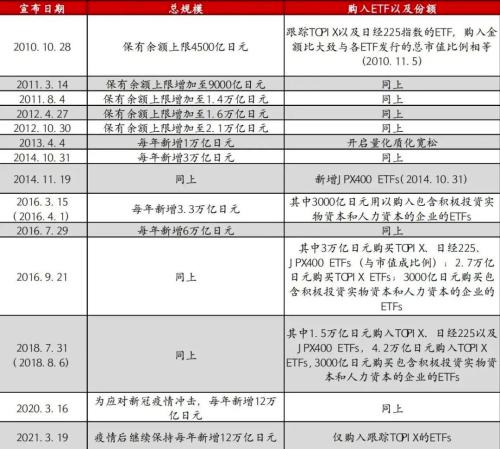
Core Insights - The article discusses the phenomenon of increased bank deposits in China, with a total increase of 12.73 trillion yuan in the first three quarters, and a significant surge of 2.96 trillion yuan in September alone, reversing a previous downward trend [1] - It draws parallels between the current low-interest environment in China and Japan's "lost decades," suggesting that despite low returns, individuals prefer to hold cash and deposits due to a lack of confidence in riskier assets [2][17] - The article highlights the performance of Japan's Nikkei 225 index, which has seen substantial growth since its historical low in 2009, driven by the Bank of Japan's aggressive ETF purchasing strategy [5][9] Group 1: Bank Deposits and Economic Behavior - In the first three quarters, individuals increased their bank deposits by 12.73 trillion yuan, with a notable rise of 2.96 trillion yuan in September, indicating a shift in savings behavior [1] - The current interest rates for bank deposits are very low, with savings accounts yielding between 0.05% and 0.2%, and fixed-term deposits around 1% [1] - This situation mirrors Japan's experience during its prolonged low-interest period, where citizens opted for cash and deposits due to a lack of investment confidence [2][17] Group 2: Japanese Market Insights - The Nikkei 225 index has shown remarkable recovery, rising from a low of 7,054 points in March 2009 to 48,580.44 points in October 2023, reflecting a compound annual growth rate of over 10% for those who invested in related ETFs [2][5] - The Bank of Japan's unique approach of purchasing ETFs has played a crucial role in stabilizing and boosting the stock market, with the central bank's holdings now representing about 7% of the total market capitalization [5][9] - Japan's economic recovery has been characterized by a shift from growth to returns, with significant contributions from export-oriented companies benefiting from a weaker yen [9][11] Group 3: Investment Strategies and Comparisons - The article suggests that Chinese investors could learn from Japan's experience by considering investments in domestic ETFs, particularly in the context of low-interest rates [4][23] - The structure of the Chinese stock market, particularly the CSI 300 index, reflects a similar evolution as Japan's, with a focus on financial, real estate, and emerging technology sectors [23][25] - The Chinese ETF market has surpassed Japan's, indicating a growing acceptance and potential for further investment in index funds among retail investors [31]
专访田轩:构建长效激励制度 培育耐心资本生态
2 1 Shi Ji Jing Ji Bao Dao· 2025-10-22 14:56
Core Insights - The Chinese capital market is undergoing significant reforms as it transitions from the "14th Five-Year Plan" to the "15th Five-Year Plan," focusing on deepening institutional reforms and fostering "patient capital" for high-quality investment and financing [1][2] Group 1: Progress in Capital Market Reforms - The capital market has achieved notable progress in foundational institutional construction during the "14th Five-Year Plan," particularly with the comprehensive implementation of the registration system, which has fundamentally reshaped the market ecology [3][4] - Key breakthroughs include the transition to a registration-based issuance system, systematic innovation in merger and acquisition mechanisms, and the rigid enforcement of delisting regulations, which have collectively improved market efficiency [3][4] Group 2: Challenges in Balancing Investment and Financing - Despite advancements, the market faces challenges in achieving a high-quality dynamic balance between investment and financing, including structural barriers for long-term capital entry and a lack of maturity in market ecology [4][5] - The current investor structure is characterized by a high proportion of individual investors and short-term trading funds, which complicates the realization of value investment principles [4][5] Group 3: Recommendations for Reform - Recommendations for reform include optimizing policies for long-term capital entry, relaxing investment restrictions for social security and insurance funds, and enhancing the functionality of multi-tiered capital markets [5][6] - Emphasis is placed on improving information disclosure quality and corporate governance, as well as increasing delisting efficiency to encourage companies to focus on core competencies [5][6] Group 4: Enhancing Corporate Governance and Investor Returns - The implementation of the new "National Nine Articles" has led to significant improvements in corporate governance structures and investor return mechanisms, including enhanced cash dividend stability [7][8] - However, deep-seated contradictions remain, such as formalized governance mechanisms and uneven shareholder returns, necessitating the establishment of a market value management assessment system [7][8] Group 5: Attracting Long-term Foreign Capital - The Chinese capital market's significant advantages in attracting long-term foreign capital include its large market size and ongoing economic growth potential [10][11] - To further enhance attractiveness, continued reforms are needed to improve market transparency, strengthen intellectual property protection, and optimize the investment environment [10][11] Group 6: Cross-border Regulatory Cooperation - The establishment of a resilient risk monitoring and cross-border regulatory cooperation system is essential for effectively mitigating external shocks [12] - Recommendations include enhancing macro-prudential management frameworks for cross-border capital flows and improving collaboration with regulatory agencies in major economies [12]
燕京啤酒:公司高度重视价值创造和市值管理
Zheng Quan Ri Bao Wang· 2025-10-22 14:11
Core Viewpoint - Yanjing Beer reported a positive financial performance for the first three quarters of 2025, indicating growth in revenue and profit metrics, while emphasizing its commitment to value creation and market management [1] Financial Performance - The company achieved operating revenue of 1,343,282.98 thousand yuan, representing a year-on-year increase of 4.57% [1] - The total profit reached 240,360.16 thousand yuan, showing a year-on-year growth of 36.18% [1] - The net profit attributable to shareholders was 177,045.53 thousand yuan, with a year-on-year increase of 37.45% [1] Strategic Focus - The company is focused on value creation and market capitalization management, exploring effective ways to enhance investment value [1] - The stock price is influenced by various factors including macroeconomic conditions, market environment, and investor risk appetite [1] - The company plans to continue systemic reforms to build a multi-dimensional value creation system and enhance management efficiency [1]

中国重汽:公司一直以来重视市值管理
Zheng Quan Ri Bao· 2025-10-22 11:39
Group 1 - The company emphasizes the importance of market value management and actively engages with investors through various channels [2] - The company conducts on-site research visits and holds conference calls to discuss industry trends and corporate strategies with investors [2] - The company aims to enhance value consensus among investors through in-depth communication [2]


甘肃能化(000552) - 000552甘肃能化投资者关系管理信息20251022
2025-10-22 09:20
Group 1: Coal Business Overview - The company operates 11 coal production mines with an approved annual capacity of 23.14 million tons, including a reserve capacity of 1.8 million tons/year [2][3] - Main coal products include coking coal and thermal coal, with specific mines producing low-sulfur, low-ash, high-calorific value coking coal [3] - Internal coal consumption for power and chemical plants is projected to be nearly 12 million tons/year, subject to changes based on coal quality and source structure [3] Group 2: Power Generation Business - The company’s main operating power plant, Baiyin Thermal Power, has two 350MW supercritical coal-fired units, achieving low coal consumption and significant profitability in the first half of the year due to falling coal prices [4] - The New District Thermal Power project includes two 350MW units with a designed annual output of 3.302 billion kWh and is currently in preparation for startup [4][5] - The Qinyang Coal Power project plans to build two 660MW ultra-supercritical units with a designed annual output of 7 billion kWh, currently under construction [5] Group 3: Chemical Business - The Liu Chemical project is in trial operation, producing ammonia, urea, and other chemicals, with production volumes adjustable based on market demand [6] - The controlling shareholder's subsidiary, Jinchang Chemical, is in trial operation with similar processes, and the company plans to address potential competition issues post-completion [6] Group 4: Profit Distribution - The company has implemented a stable profit distribution policy, with 18 cash dividends totaling 3.2 billion yuan (including 150 million yuan in share buybacks) over the past 17 years [7] - Future plans include maintaining a robust dividend policy to provide consistent cash returns to investors [7] Group 5: Financing Situation - The company has established strong relationships with local banks for traditional credit financing, benefiting from favorable lending policies and low interest rates [8] - Current projects are funded through self-raised capital, bank loans, and strategic investors, with specific projects utilizing raised funds [8] Group 6: Market Value Management - The company’s stock price has been below the net asset value per share for 10 consecutive months, prompting a focus on market value management strategies to enhance company valuation [9]

山河智能:公司股价表现受到宏观经济等多种因素的影响
Zheng Quan Ri Bao Zhi Sheng· 2025-10-22 09:13
Core Viewpoint - The company's stock performance is influenced by various factors including macroeconomic conditions, policy environment, market conditions, and industry fundamentals [1] Group 1: Company Strategy - The company aims to improve development quality, steadily enhance operational efficiency, and increase profitability to boost value creation capabilities [1] - The company will strengthen investor communication and information disclosure to actively convey its investment value to the outside world [1]
