
对等关税

Search documents
中国停止采购后,日本要买美国大豆?美方拒发签证,耿爽火力全开
Sou Hu Cai Jing· 2025-05-02 07:39
Group 1 - China has ceased purchasing U.S. soybeans and corn since mid-January, indicating a strong response to U.S. tariff policies [1][3] - In response to reduced imports from the U.S., China has increased agricultural purchases from Brazil, signing a contract for 2.4 million tons of soybeans to ensure domestic supply stability [3][5] - The U.S. soybean industry is urging the Trump administration to negotiate with China to protect American farmers' interests, as ongoing tariffs could severely harm U.S. agriculture [5] Group 2 - Japan is considering increasing its imports of U.S. soybeans to negotiate trade agreements with the U.S., despite already relying on U.S. soybeans for 65% of its total imports [5][6] - The refusal of the U.S. to issue visas to Chinese diplomats has been criticized by China, highlighting the political tensions and the impact on international relations [6][7] - The U.S. has a high rejection rate of visa applications from the Chinese UN delegation, which has affected China's participation in key discussions [6]

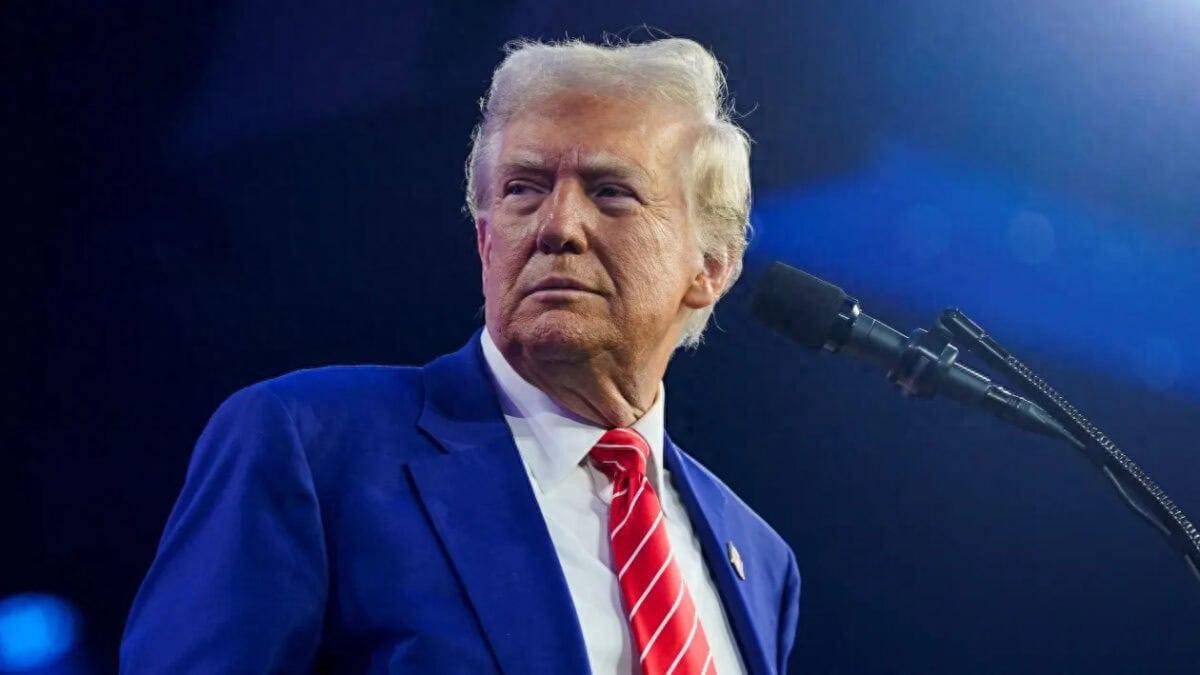
特朗普“认输”了?中方开出3大条件,美国只能用“弃台”来换?
Sou Hu Cai Jing· 2025-05-02 04:02
Group 1 - The Trump administration is reportedly pressuring other countries to limit trade with China in exchange for tariff exemptions, showcasing a unilateral approach to trade negotiations [1] - The U.S. has imposed tariffs under the guise of "reciprocity," which has been criticized as a form of economic coercion and unilateral bullying [1][4] - The U.S. military is heavily reliant on Chinese exports for critical materials, such as gallium and germanium, which are essential for advanced military technology like the F-35 fighter jet [3] Group 2 - China's response to U.S. tariffs has included significant retaliatory measures, impacting U.S. agricultural markets, particularly with a 25% tariff on soybeans leading to an 18% drop in prices [3] - The Chinese government has issued strong statements regarding the need for equal dialogue with the U.S. and has set clear conditions for negotiations, including respect for China's sovereignty [6] - There is a growing sentiment within the U.S. political landscape questioning the importance of Taiwan, indicating a potential shift in U.S. foreign policy towards the region [8]
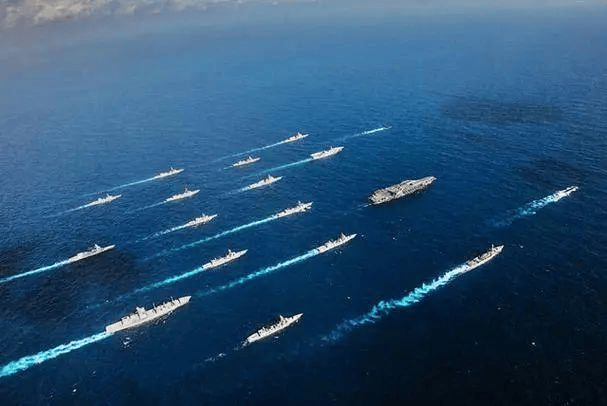
台湾社会“疑美”民意上升
Xin Hua Wang· 2025-05-02 02:22
美国布鲁金斯学会最新发布的报告称,台湾民众对美国可靠性的认同度持续下滑,认为美国形象"正 面"的受访者比例大降20.8个百分点,认为美国"不可信"或"非常不可信"的比例较上次调查增加13.9个百 分点。 洪奇昌认为,受关税政策冲击,台湾社会"疑美"民意上升是必然的。在台湾对美持续加大投资的形势 下,美国仍要对台加征高关税,自然引发岛内对美国产生疑虑。 新华社台北4月30日电(记者杨晓静、刘斐)连日来,台湾多家机构举行座谈会,探讨美国政策"不可预 测"及所谓"对等关税"等给台湾带来的影响。专家学者普遍认为,美方的种种作为,令台湾社会"疑 美"民意上升。 台湾"对外关系协会"29日举办的座谈会上,岛内学界、涉外事务相关人士普遍认为,美国当前的政 策"让世界陷入混乱"。 台湾产经建研社理事长洪奇昌表示,美国政府对外发起的关税战撕裂全球经济体系,也严重影响美国信 誉,而大陆的应对则更加理性、负责。 台湾东吴大学教授林碧炤表示,美国政府抛出的所谓"对等关税"直接冲击台湾股市、外销订单、货物进 口等多个领域,影响到每个人的切身利益,导致岛内"疑美"民意上升。 台湾机构民调发现,民众担心美国关税政策影响台湾经济,也对民进党 ...
多方在WTO重申维护多边贸易体系,中方回应
第一财经· 2025-05-01 12:58
Core Viewpoint - The article emphasizes the critical importance of agriculture in the upcoming WTO Ministerial Conference (MC14) in March 2026, highlighting the need for tangible progress in agricultural negotiations due to the fragile global food security situation [3][4]. Group 1: Agricultural Negotiations and Global Food Security - WTO members reaffirmed that agriculture remains a priority, especially in light of the alarming global food security status [3]. - The FAO Food Price Index averaged 127.1 points in March 2025, a 6.9% increase year-on-year, driven primarily by rising meat and vegetable oil prices [3]. - The increase in the vegetable oil price index was 3.7% month-on-month and 23.9% year-on-year, attributed to strong global import demand [3]. Group 2: Concerns Over Trade Practices - China expressed concerns about the impact of "countervailing tariffs" imposed by certain members, which undermine WTO foundations and disrupt global economic order [7][8]. - The Chinese delegation criticized the U.S. for its unilateral and protectionist measures, arguing that such actions harm developing countries and threaten the success of MC14 [8][10]. - Canada and Australia echoed similar sentiments, warning against actions that could weaken existing trade rules and emphasizing the need for a rules-based trading system [12][13]. Group 3: Diverse Perspectives from Member States - The EU highlighted the urgent need for practical solutions to address global food security, particularly in sub-Saharan Africa, where a significant portion of the world's food-insecure population resides [13]. - India raised concerns about the existing subsidy rules favoring developed countries and called for more flexible agricultural support mechanisms to ensure food security and livelihoods [14]. - Russia advocated for updating agricultural rules to enhance food availability and affordability, stressing the importance of considering the interests of all market participants [12].
多方在WTO重申维护多边贸易体系,中方:所谓“对等关税”破坏WTO基础|独家
Di Yi Cai Jing· 2025-05-01 12:01
中方表示,对当前一个成员通过征收所谓的"对等关税"破坏WTO基础、违反WTO规则和扰乱全球经济 秩序的情况表示关切。 2026年3月,世贸组织(WTO)将在喀麦隆雅温得举行第十四届部长级会议(MC14),各方希望能在 该会议上能切实推进农业谈判。 所谓"对等关税"破坏WTO基础 此次,中方表示,对当前一个成员通过征收所谓的"对等关税"破坏WTO基础、违反WTO规则和扰乱全 球经济秩序的情况表示关切。 中方表示,这些措施将对发展中国家造成巨大伤害,也将给MC14成功蒙上阴影。中方指出,在此背景 下,各成员应携手应对挑战。 这是2天内中方第二次在WTO作出这一表述。 第一财经从权威信源处获悉,当地时间30日,WTO成员在相关会议上重申,农业仍是重中之重。同 时,鉴于全球粮食安全状况"脆弱得令人震惊",并考虑到当前动荡的国际和贸易环境,各成员方强调需 要在第MC14上取得切实进展和务实成果。 根据联合国粮食及农业组织发布的粮农组织食品价格指数显示,2025年3月,粮农组织食品价格指数平 均为127.1点,比去年同期高出6.9%。其中主要上涨因素来源于肉类及植物油价格。譬如,3月粮农组织 植物油价格指数3月环比上涨3 ...
美国滥施关税影响初现——2025年4月PMI分析|宏观经济
清华金融评论· 2025-05-01 09:11
Core Viewpoint - The article highlights the impact of tariffs on China's manufacturing sector, as indicated by a decline in the Purchasing Managers' Index (PMI) and other economic indicators, while also noting government responses to stabilize the economy [3][4][7]. Economic Indicators - In April 2025, China's manufacturing PMI dropped to 49.0%, down from 50.5%, signaling a contraction in the manufacturing sector [4]. - The construction business activity index was at 51.9%, a decrease of 1.5 percentage points from the previous month, while the services business activity index was at 50.1%, down 0.2 percentage points [4]. - The production index fell to 49.8% from 52.6%, and the new orders index decreased to 49.2%, with new export orders plummeting to 44.7%, reflecting significant demand contraction [4][5]. Tariff Impact - The article notes that the effects of tariffs are fully transmitted to manufacturing enterprises, with a substantial year-on-year decrease of 45% in container orders shipped from China to the U.S. by mid-April [5]. - The export container price index for the route from China to the U.S. West Coast fell by 9.7% month-on-month [5]. Price Trends - The PMI price index saw a significant decline, with the factory price index at 44.8% and the raw material purchase price index at 47.9%, both down from previous levels [5]. - Commodity prices also fell, with Brent crude oil averaging $64.37 per barrel (down 11%), LME copper at $9,487.5 per ton (down 5.5%), and iron ore futures at 709 yuan per ton (down 6.7%) [5]. Inventory and Procurement - The procurement volume index dropped to 46.3% from 51.8%, indicating a significant reduction in purchasing activity [6]. - Raw material inventory index decreased to 47.0%, and finished goods inventory index fell to 47.3%, reflecting a contraction in inventory levels [6]. Import Trends - The import PMI recorded 43.4%, down 4.1 percentage points, influenced by reduced imports from the U.S. due to retaliatory tariffs and decreased demand for foreign goods [6]. Government Response - The Politburo meeting signaled three key strategies: maintaining flexible domestic reserve policies, emphasizing stability in employment and market expectations, and accelerating the implementation of existing policies [7]. - The government is expected to expedite the issuance and use of bonds, focusing on technology, consumption, and foreign trade [7]. Investment Outlook - The article suggests a favorable outlook for sectors related to new productive forces and consumer sectors supported by policy, advocating for a "dumbbell strategy" combining dividends and hard technology [8]. - A potential reduction in reserve requirements by 25-50 basis points and a possible interest rate cut of around 20 basis points in the coming months are anticipated, with 10-year government bond yields expected to drop to 1.5% [8].
日本央行行长植田和男:包括我在内的委员会成员普遍认为,对等关税不会出现任何极端。
news flash· 2025-05-01 06:53
日本央行行长植田和男:包括我在内的委员会成员普遍认为,对等关税不会出现任何极端。 ...
国际油价重挫!美股道指连跌三月,啥情况?
证券时报· 2025-05-01 00:40
Core Viewpoint - International oil prices experienced a significant drop, influenced by signals from Saudi Arabia indicating a willingness to accept lower oil prices, alongside disappointing U.S. economic data [1][12]. Economic Data Summary - The ADP report indicated that U.S. private sector employment increased by only 62,000 in April, the smallest gain since July 2024, significantly below the expected 115,000 and the previous month's 155,000 [5]. - Average wages grew by 4.5% year-over-year, slightly slowing from March, while job switchers saw a wage increase from 6.7% to 6.9% [7]. - The U.S. GDP contracted at an annualized rate of 0.3% in Q1, a stark contrast to the average growth rate of about 3% over the past two years, attributed to companies stockpiling imports to avoid rising costs [7]. Stock Market Performance - On the last trading day of April, the Dow Jones Industrial Average rose by 141.74 points (0.35%) to 40,669.36, while the Nasdaq Composite fell by 14.98 points (0.09%) to 17,446.34, and the S&P 500 increased by 8.23 points (0.15%) to 5,569.06 [3][4]. - For April, the Dow and S&P 500 both recorded declines of 3.17% and 0.76%, respectively, marking their third consecutive month of losses, while the Nasdaq saw a slight increase of 0.85% [4]. Oil Market Dynamics - International oil prices saw a sharp decline, with Brent crude dropping nearly 4% and WTI crude falling over 4% during trading [1][9]. - Saudi Arabia's potential policy shift suggests a move towards increasing production and expanding market share, moving away from previous strategies of significant production cuts [12]. - OPEC+ announced an increase in production by 411,000 barrels per day starting in May, which is higher than market expectations, indicating a flexible approach to adjust production based on market conditions [12][13].
中国代表:美“对等关税”和歧视性补贴政策严重破坏世贸规则
news flash· 2025-04-30 17:52
中方表示,"产能过剩"不存在统一公认的判断标准或测算方法,供需不平衡是常态、绝对的。在经济全 球化背景下,一国产能和产品不只是供应本国市场,而是基于比较优势参与全球贸易与市场竞争。美国 的芯片、飞机、大豆,德国和日本的汽车都大量出口。美国等成员炒作"产能过剩"违反市场经济规律和 全球化逻辑,本质是担心自己的竞争力和市场占有率,以"产能过剩"为借口制造焦虑,抹黑打压中国, 为自身采取单边主义、保护主义措施寻找拙劣的借口。 中方强调,中国产业发展和中国产品竞争优势不是补贴的结果,而是源于不断技术创新、协同发展。中 国高度重视贸易政策合规工作,持续确保包括补贴政策在内的贸易政策符合世贸组织规则,积极履行补 贴通报等透明度义务,坚定维护多边贸易体制。 中方指出,美国"对等关税"扰乱全球贸易,损害发展中成员利益,中国则是全球贸易增长"稳定器",始 终坚定站在发展中成员一边。美国之所以在产能问题上反复指责抹黑中国,将中国描述成"威胁",根本 原因是美国始终坚持"零和博弈"和"美国优先",只在乎自己的利益,不相信可以通过经贸合作获得共 赢。 中国代表:美"对等关税"和歧视性补贴政策严重破坏世贸规则 同时,中方在该委员会"美 ...