
人工智能(AI)

Search documents
利空突袭!甲骨文深夜暴跌!科技股遭遇猛烈抛售
Zheng Quan Shi Bao Wang· 2025-12-12 00:46
Group 1 - The core viewpoint of the news is that the U.S. stock market is experiencing a significant shift, with a sharp sell-off in technology stocks, particularly Oracle, which saw a drop of over 16% during trading due to disappointing cloud revenue and substantial capital expenditure plans [1][3] - Oracle's second fiscal quarter report revealed adjusted revenue of $16.1 billion, below market expectations of $16.21 billion, and cloud sales grew by 34% to $7.98 billion, also slightly below forecasts [3] - The market is reacting to concerns about the return on investment in AI and the risks associated with debt financing, leading to a rotation of funds from tech stocks to cyclical and value sectors, pushing the Dow Jones and S&P 500 to record highs [1][6] Group 2 - Following Oracle's report, the stock market saw a widespread decline in chip-related tech stocks, with companies like Arm, Intel, and Nvidia experiencing significant drops [4] - The CEO of Oracle, Clay McGork, addressed concerns about high capital expenditures, stating that the company expects to raise less than the previously estimated $100 billion for AI project funding [4] - Analysts suggest that the market's concerns regarding Oracle and the overall AI investment landscape are justified, as companies have committed trillions to AI, but the outcomes remain uncertain [4] Group 3 - The Federal Reserve's recent decision to lower the benchmark interest rate by 25 basis points has influenced market sentiment, with investors interpreting the Fed's stance as cautious regarding inflation while acknowledging weak employment [6][7] - The market is currently focused on a rotation towards small-cap and cyclical stocks, indicating a bet on a rebound in global economic growth [6] - Future expectations suggest that the Fed may continue to lower rates in 2026, with a potential pause in January and the next rate cut possibly occurring in March [7]

盘后从涨4%到跌5%!博通Q4业绩超预期背后发生了什么?AI芯片销售将翻倍 净利飙升97%,但下季度........
美股IPO· 2025-12-11 23:38
博通第四财季营收和利润齐创最高纪录,分别同比增近30%和40%;第一财季营收指引增速持平上季,AI芯片收入较市场预期高近20%。博通公布将本 财年季度股息提高10%,全年股息由此创历史新高。CEO称积压了价值730亿美元的AI产品订单,又说这是"最低值",称第四财季从Anthropic获得110 亿美元订单,但警告因AI产品销售,总利润率在收窄。博通股价盘后先一度涨4%,后转跌,曾跌超5%。 英伟达的挑战者、ASIC芯片大厂博通又一次用季度业绩和指引显示,人工智能(AI)数据中心设备的需求有多爆表,它正在给博通近期的业绩带来爆 炸式的增长。但积压的AI订单规模未达到投资者期望。 博通公布的上一财季营业收入和盈利均较此前一季加速增长,和提供的本财季营收指引均高于华尔街预期。受益于AI基建热潮中所需的定制AI芯片热 销,博通上财季AI芯片收入增长超过70%,较前一季的增速提高超过10个百分点。博通还预计本财季的AI芯片收入将翻倍劲增,大超市场预期。 博通首席财务官(CFO)Kirsten Spears同时公布,将本财年、即2026财年的季度股息大幅上调10%至0.65美元/股,年度股息由此达到公司史上最高 水平2 ...



利空突袭!深夜,暴跌!
券商中国· 2025-12-11 23:27
美东时间12月11日,美股三大指数走势分化,以科技股为主的纳指走低,道指则持续走高,截至收盘,道指大涨1.34%,标普500指数涨0.21%,均创出收盘历史新 高;纳指跌0.25%。 有分析指出,由于甲骨文的财报令投资者对AI投资前景心存疑虑,进而引发了科技股的抛售潮。 其中,甲骨文盘中一度暴跌超16%,截至收盘,跌幅仍达10%,总市值蒸发超688亿美元(约合人民币4900亿元)。 美股市场风格突变! 隔夜美股市场,科技股遭遇猛烈抛售,甲骨文盘中一度暴跌超16%,美股芯片股全线下挫。消息面上,甲骨文最新财报中疲软的云收入和巨额的资本支出计划,重 燃市场对人工智能(AI)投资回报率和债务融资风险的担忧。 资金从科技股流出,涌入对经济和利率更敏感的周期性和价值板块,从而推动道指、标普500指数双双创下历史新高。有分析指出,美股市场仍受益于美联储会议 结果及美联储主席鲍威尔的讲话。鉴于经济与就业仍面临下行压力,预计美联储或将在2026年继续降息。 科技巨头暴跌 | 最高: 201.99 | 今开: 190.62 | 成交量: 1.00亿股 | 换手:3.51% | | --- | --- | --- | --- | ...

遏制AI滥用,韩国要求对AI广告进行“显著标识”
Huan Qiu Shi Bao· 2025-12-11 22:48
Group 1 - The South Korean government mandates that advertisers must prominently label ads created using artificial intelligence (AI), with new regulations set to take effect in early 2026 [1] - The rise of deceptive ads using deepfake technology, featuring fake experts or celebrity endorsements, has prompted the government to take action to curb this trend [1] - The government plans to impose fines for violations and will require that all AI-generated, edited, or uploaded images and videos be marked as "AI produced," with strict enforcement measures for compliance [1] Group 2 - The proliferation of AI technology has sparked discussions about its impact on the advertising industry, with several major advertising firms in South Korea facing closure or restructuring [2] - Experts indicate that while AI has improved advertising production efficiency, the current challenges in the advertising sector are primarily due to economic downturns, reduced consumer spending, and a strong dollar, rather than AI itself [2] - The government aims to enhance regulations against AI misuse, including stricter penalties for exploitative crimes using deepfakes and a rapid review mechanism for harmful ads, requiring regulatory bodies to complete reviews within 24 hours [2]
How Broadcom could be boosted by Google's in-house chips
Youtube· 2025-12-11 18:58
Hi, Kelly. Well, analysts do expect the chipmaker to beat and raise. Honestly, everyone is incredibly bullish on this company, and that's because of surging demand specifically for custom chips it makes for Google.That momentum helps explains why Broadcom, you said shares are down today, but if you look at it over just a two-month period, shares have jumped 25% while Nvidia essentially flatline. You can see down negative 2%. But these particular chips, they're called TPUs or tensor processing units and they ...
a16z 年度预测:2026 年,AI 创业的新机会都在垂直行业,AI 产品会走向定制化
Founder Park· 2025-12-11 12:56
Core Insights - The article discusses the predictions for the AI industry in 2026, highlighting that AI will evolve from merely an efficiency tool to a transformative force across various sectors, including industrial manufacturing, enterprise software, and personal experiences [3]. Group 1: Infrastructure and Data Management - "Agent Native" infrastructure will become essential, focusing on the handling of unstructured and multimodal data, which presents significant entrepreneurial opportunities [6][8]. - Companies face challenges with data entropy, as 80% of internal knowledge exists in unstructured formats, leading to inefficiencies in AI applications [7][9]. - The future infrastructure must adapt to handle massive concurrent requests from AI agents, requiring a redesign of control systems to manage complex task coordination [11][12]. Group 2: Consumer AI Products - The focus of consumer AI products will shift from "help me" to "see me," emphasizing deeper user understanding and connection rather than just task completion [19]. - AI will enhance user retention by creating products that resonate with users on a personal level, leading to stronger engagement [19][20]. Group 3: Vertical Industry Opportunities - The majority of AI market opportunities will lie outside Silicon Valley, particularly in traditional vertical industries such as manufacturing and logistics [31]. - AI applications in vertical sectors will evolve from information processing to collaborative models, enhancing efficiency and decision-making [32]. Group 4: Financial and Healthcare Innovations - Financial institutions will face pressure to upgrade their systems to AI-native infrastructures, which will significantly enhance operational efficiency and data integration [35]. - A new consumer segment, "Healthy MAUs," will emerge in healthcare, focusing on proactive health monitoring and personalized services [36]. Group 5: New Business Models and Educational Institutions - AI will shift business models from cost reduction to revenue enhancement, with companies leveraging AI to optimize decision-making and improve client outcomes [23]. - The first AI-native university is expected to emerge, focusing on real-time learning and adaptive systems, preparing graduates for a workforce increasingly integrated with AI [53][56]. Group 6: Future of Interaction and Content Creation - The interaction with AI will evolve to a "no prompt box" model, where AI proactively assists users based on observed behavior rather than requiring explicit commands [27]. - Video content will transform into immersive environments, allowing users to engage interactively rather than passively [44][46]. Group 7: Automation and Workflow Optimization - AI will automate repetitive tasks in cybersecurity, allowing professionals to focus on higher-value activities [41]. - The simplification and parallelization of workflows will enable employees to manage multiple tasks seamlessly, enhancing overall productivity [39].
有克制的“价”“量”双宽——12月FOMC会议点评
一瑜中的· 2025-12-11 12:19
Core Viewpoint - The December FOMC meeting resulted in a 25 basis point rate cut to a target range of 3.5%-3.75%, aligning with market expectations, while the Fed's tone remained neutral to slightly hawkish [2][20] Group 1: Interest Rate Decisions - The Fed's decision to cut rates by 25 basis points was anticipated, with 3 out of 12 FOMC members opposing the cut, indicating internal dissent [20] - The dot plot indicates only one rate cut is expected next year, which is below market pricing of two cuts [3][12] - The Fed's economic outlook is described as "Goldilocks," with upward revisions to GDP growth forecasts for 2025-2028 and downward revisions to inflation forecasts for the same period [6][21] Group 2: Economic Projections - GDP growth forecasts for Q4 of 2025, 2026, 2027, and 2028 are now projected at 1.7%, 2.3%, 2.0%, and 1.9% respectively, compared to previous estimates of 1.6%, 1.8%, 1.9%, and 1.8% [21] - Core PCE inflation forecasts for the same periods are adjusted to 3.0%, 2.5%, 2.1%, and 2.0%, down from 3.1%, 2.6%, 2.1%, and 2.0% [21] Group 3: Balance Sheet Management - The Fed is restarting "Reserve Management Purchases" (RMP) to maintain adequate reserve levels, with a purchase scale of $40 billion per month starting this December [14][35] - RMP is distinct from quantitative easing (QE), as it involves purchasing short-term Treasury securities to manage liquidity rather than a broad monetary policy shift [15][16] Group 4: Market Reactions - Following the FOMC meeting, the stock market saw gains, with the Dow Jones Industrial Average rising by 1.05%, and the S&P 500 increasing by 0.67% [38] - The dollar index fell by 0.6% to 97.24, while yields on 10-year and 2-year Treasury bonds decreased [38]

连姥姥都在问DeepSeek!一位AI六小龙掌门的反思与进击
Di Yi Cai Jing· 2025-12-11 12:18
Core Insights - The emergence of DeepSeek has significantly impacted MiniMax and other large model companies, prompting reflections on their performance and strategic choices [2][4] - MiniMax is focusing on a technology-driven approach rather than a purely monetization-driven strategy, recognizing the importance of sustainable growth in the AGI space [4][9] - The AI talent pool in China is a critical advantage, with a notable increase in the proportion of top AI researchers from China, which is expected to drive future breakthroughs [7][8] Group 1: Company Challenges and Strategies - MiniMax faced challenges early on, including financial difficulties due to the collapse of Silicon Valley Bank, which affected payroll [1] - The company has implemented a stock option incentive program, offering employees between hundreds of thousands to millions of dollars based on their contributions [3] - The team has learned to improve its capabilities in response to challenges, emphasizing morale-boosting strategies and financial incentives to maintain motivation [2] Group 2: Market Dynamics and Future Outlook - The number of large model companies is expected to decrease next year, as many well-funded and experienced players have exited the market [8] - Despite the competitive landscape, MiniMax believes that there is still room for various models to coexist, each with unique strengths and weaknesses [8] - The future of the AI industry is seen as distinct from the internet era, with the core product being the model itself, and the key competitive advantage being imagination and persistence [9]

OpenAI 宣布紧急状态:全力推进 ChatGPT;冯提莫复播,直播间破十万;马斯克可能成为人类首位万亿富豪|极客早知道
Sou Hu Cai Jing· 2025-12-11 12:10
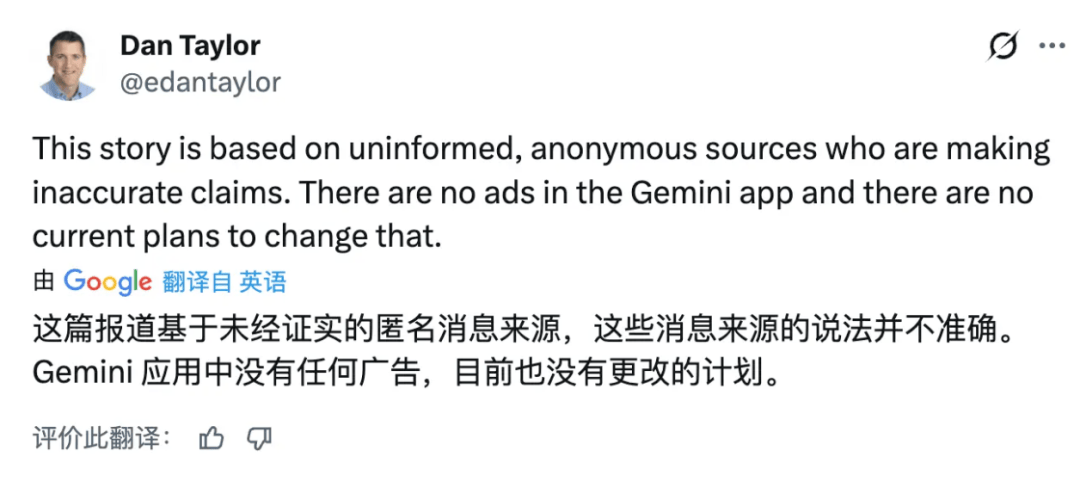
Group 1: OpenAI's Strategic Shift - OpenAI has declared a "red alert" status, pausing all other projects to focus on saving ChatGPT due to increased competition from Google's Gemini 3 model [1] - CEO Sam Altman has decided to temporarily abandon the goal of achieving Artificial General Intelligence (AGI) and instead prioritize user preferences to ensure ChatGPT's relevance [1] - OpenAI plans to restart previous training methods to regain its leading position in important evaluation rankings [1] Group 2: Upcoming Product Launch - OpenAI is set to release the GPT-5.2 model, aiming to improve its standing among programming and business clients, despite internal requests for more development time being denied [2] Group 3: Google Advertising Denial - Google has firmly denied reports that its Gemini application will introduce advertising by 2026, stating that the claims are based on unverified anonymous sources [3][4] - The company emphasized that there are currently no plans to incorporate ads into Gemini, despite previous media speculation [4][5] Group 4: SpaceX Valuation Impact - If SpaceX successfully lists at a valuation of $1.5 trillion, Elon Musk's wealth could exceed $952 billion, significantly increasing from his current net worth of $460.6 billion [5][6] - Musk's stake in SpaceX, approximately 42%, would see its value rise from $136 billion to over $625 billion if the listing occurs at the projected valuation [5] Group 5: ChatGPT and Adobe Integration - OpenAI is integrating more third-party applications into ChatGPT, allowing users to access Adobe's creative tools like Photoshop directly within the chat interface [6] - Users can perform various image editing tasks through Photoshop, although some advanced features are not yet supported [6] Group 6: Australian Social Media Ban - Australia has implemented a ban on social media access for individuals under 16, making it the first country to enforce such a strict regulation [11] - Major platforms affected include Facebook, Instagram, TikTok, and YouTube, with penalties for non-compliance reaching up to AUD 49.5 million [11] Group 7: Xiaomi's AI Education Clarification - Xiaomi clarified that recent job postings related to AI education were misinterpreted, stating that the roles are focused on enhancing existing products rather than entering the AI education sector [12] Group 8: New Automotive Launch - Lantu Motors has launched its new sedan, the Lantu Chasing Light L, with prices starting at 279,900 yuan, offering various owner service benefits [15] - The vehicle features advanced technology and a hybrid power system, with a focus on performance and user experience [15][17] Group 9: Apple Delivery Service - Apple has introduced a three-hour delivery service in mainland China, allowing for free shipping on certain products, including iPhones and iPads [18][20] - Customers must place orders within specific hours to qualify for the expedited delivery service [20]



有克制的价量双宽:12月FOMC会议点评
Huachuang Securities· 2025-12-11 12:08
Group 1: Interest Rate Changes - The FOMC lowered the interest rate by 25 basis points to a target range of 3.5%-3.75%, aligning with market expectations[1] - The dot plot indicates a forecast of one rate cut in both next year and the year after, but there is significant disagreement among members[3] - There were 2 dissenting votes against the rate cut, with 6 out of 19 participants supporting no rate cut[3] Group 2: Economic Projections - The Fed raised its GDP growth forecasts for Q4 2025-2028 to 1.7%, 2.3%, 2.0%, and 1.9% respectively, compared to previous estimates of 1.6%, 1.8%, 1.9%, and 1.8%[1] - Core PCE inflation forecasts for the same period were adjusted to 3.0%, 2.5%, 2.1%, and 2.0%, down from 3.1%, 2.6%, 2.1%, and 2.0%[1] - The Fed's assessment of downside risks to growth has decreased, while the outlook for unemployment risks has also improved[21] Group 3: Quantitative Easing Measures - The Fed announced the restart of "Reserve Management Purchases" (RMP) to maintain adequate reserve levels, starting at a pace of $40 billion per month[5] - This RMP is a technical operation aimed at increasing liquidity in the money market, distinct from traditional quantitative easing (QE)[13] - The current asset purchase scale is smaller than previous QE measures, with the Fed's balance sheet at approximately $6.6 trillion compared to $3.8 trillion in 2019[7] Group 4: Market Reactions - Following the FOMC meeting, U.S. stock markets rose, the dollar index fell, and U.S. Treasury yields declined[35] - The futures market adjusted expectations for rate cuts next year from 2 to approximately 2.24 times, with the year-end policy rate forecast decreasing from 3.159% to 3.082%[35]