制度型开放

Search documents
上海前滩国际经济组织集聚区已入驻组织数达23家
Xin Hua Cai Jing· 2025-06-19 07:34
2025年国际经济组织活动月期间,各家国际经济组织将聚焦经贸、科技、金融、生物医药、人工智能等 当下全球前沿热点领域,精心策划并组织开展超过50场高规格、高品质的活动,搭建起联通世界、共创 机遇的广阔平台,推动产业升级与变革,助力浦东在制度型开放的道路上加速前行,跃上国际合作的新 高度。国际经济组织活动月也成为了展示浦东开放包容姿态、彰显国际经济活力的重要窗口。 自2021年7月前滩国际经济组织集聚区揭牌以来,浦东深入推进落实国际经济组织集聚计划(GOC), 截至目前,已有46家国际经济组织在浦东安家落户,覆盖国际经贸规则、全球资源配置、生物医药、先 进技术、国际仲裁等关键领域。这些组织积极发挥桥梁纽带作用,为浦东乃至上海深度参与全球经济治 理开辟了广阔通道,为扩大国际经济合作搭建了优质平台,更为助力上海"五个中心"建设注入了强大动 力。 新华财经上海6月19日电(记者杨有宗)记者从2025年浦东新区国际经济组织活动月启动仪式上获悉, 今年以来,前滩区域已成功吸引了国际制药工程学会、先进医疗技术协会、国际药物信息协会、材料性 能与防护协会等4家新组织入驻,集聚区入驻组织数达到23家,占全区总量50%。 下一步 ...
商务部谈CPTPP申请准备情况
news flash· 2025-06-19 07:27
Core Viewpoint - The Chinese government is well-prepared for its application to join the CPTPP, having conducted in-depth analysis and assessments of the agreement since its formal application in September 2021 [1] Group 1: Preparation for CPTPP Membership - The Chinese side has made preparations for market access in areas such as goods trade, services trade, investment, and government procurement [1] - Extensive communication has been conducted with CPTPP member countries to demonstrate China's commitment, capability, and actions to meet the high standards of the agreement [1] - China has initiated pilot programs in designated free trade zones and ports to align with CPTPP rules [1] Group 2: Future Steps and Expectations - The next steps involve actively aligning with international high-standard economic and trade rules, while steadily expanding institutional openness [1] - Continued in-depth communication with CPTPP members will be pursued to advance the membership process [1] - There is an expectation for CPTPP members to expedite China's accession process, supporting multilateralism and free trade to inject more certainty and momentum into global economic development [1]
中国自贸试验区加力制度创新
Zhong Guo Xin Wen Wang· 2025-06-19 06:42
Core Viewpoint - The article emphasizes the acceleration of institutional innovation in China's Free Trade Zones (FTZs) as a key strategy to enhance economic openness and align with international high-standard trade rules [1][2]. Group 1: Institutional Innovation - The People's Bank of China and the State Administration of Foreign Exchange announced a package of foreign exchange innovation policies to be implemented in FTZs [1]. - The Chinese government has reiterated the importance of institutional innovation in FTZs during various meetings, aiming to leverage the Shanghai FTZ's experience to align with international trade standards [1][2]. - The FTZs are seen as critical hubs for connecting domestic and international economic cycles, with a focus on creating replicable reform experiences for broader national reforms [2]. Group 2: Policy Measures and Outcomes - In 2023, the State Council issued a comprehensive plan to align with international high-standard trade rules, focusing on seven areas, including the expansion of service trade, with 80 specific measures proposed [2]. - As of March 2023, the 80 pilot measures have largely been implemented, leading to significant institutional innovations and the establishment of advanced experiences and typical cases [2]. - In the first quarter of this year, the total import and export volume of FTZs reached 2 trillion yuan, reflecting a year-on-year growth of 2.2% [2]. Group 3: Future Directions - The Ministry of Commerce plans to benchmark against high-standard agreements like CPTPP and DEPA, aiming for broader and deeper institutional opening-up trials in service trade and cross-border data flow [3]. - Future efforts in FTZs should encourage integrated exploration, transitioning from single-field policy trials to comprehensive institutional innovations, thereby generating broader development momentum [3].
陆家嘴论坛发布多项重磅金融举措,国新证券解读政策亮点
Huan Qiu Wang· 2025-06-19 01:43
Group 1 - The People's Bank of China announced eight major financial opening measures, including the establishment of an interbank market trading report library and the development of offshore bonds [1] - The National Financial Regulatory Administration plans to release an action plan to support the construction of Shanghai as an international financial center, encouraging innovation in technology finance and cross-border finance [1][2] - The China Securities Regulatory Commission emphasized accelerating the implementation of key measures for capital market opening by optimizing the QFII system and enhancing foreign investment participation [1][2] Group 2 - The report from Guoxin Securities highlights the focus on financial governance and open cooperation amid global economic changes, aiming to enhance China's voice in global financial governance while preventing systemic risks [2] - The regulatory authorities are promoting a three-pronged approach of institutional opening, optimizing the business environment, and aligning with international rules to create a new pattern of openness [2][3] - The capital market is undergoing profound structural changes, with listed companies becoming the main force in technological innovation, contributing significantly to R&D investment [3]

金融监管总局、上海市政府,联合发布“27条”!
券商中国· 2025-06-18 12:40
Core Viewpoint - The article discusses the joint issuance of the "Action Plan to Support the Construction of Shanghai International Financial Center" by the Financial Regulatory Bureau and the Shanghai Municipal Government, outlining 27 specific measures to accelerate the development of Shanghai as an international financial hub [1][2]. Group 1: Financial Institution Aggregation - The plan emphasizes the need to promote the aggregation of financial institutions in Shanghai, enhancing the financial service functions [2]. - It encourages national banks to establish financial asset investment companies in Shanghai and supports foreign financial institutions in playing a larger role [2]. Group 2: Financial Services to the Real Economy - The initiative aims to improve the quality and efficiency of financial services to the real economy, focusing on technology finance, carbon finance, inclusive finance, pension finance, and digital finance [2][3]. - It seeks to establish Shanghai as an international green finance hub, promoting carbon finance-related business [2][7]. Group 3: Regulatory Enhancements - The plan calls for improving the forward-looking risk management capabilities of financial institutions in Shanghai, promoting sound operations [3]. - It emphasizes a prudent regulatory approach, supporting financial innovation trials in key areas such as service to the real economy and opening up [3][4]. Group 4: Policy Support and Talent Development - The action plan includes measures to enhance policy support, improve financial professional service levels, and strengthen the integration of party building with business [3]. - It aims to attract and cultivate high-level financial talent in Shanghai [3]. Group 5: Focus Areas for Financial Innovation - The regulatory body plans to establish a financial innovation regulatory mechanism, focusing on key areas such as service to the real economy and international openness [4]. - It aims to expand financial institutional openness by exploring cross-border loan businesses in the Shanghai Free Trade Zone [5]. Group 6: Synergy with Technology Innovation - The plan supports the linkage between the Shanghai International Financial Center and the International Technology Innovation Center, exploring financial service models suitable for technology enterprises [6]. Group 7: International Carbon Finance - The initiative encourages financial institutions in Shanghai to support the construction of a carbon trading market and participate in international carbon pricing [7].


重磅新政落地!金融监管总局、上海市政府联合发布,涉及27条举措
Jin Rong Shi Bao· 2025-06-18 12:29
Core Viewpoint - The release of the "Action Plan to Support the Construction of Shanghai International Financial Center" aims to enhance Shanghai's competitiveness and influence as a global financial hub through a series of practical measures [1] Group 1: Key Measures and Initiatives - The "Action Plan" outlines 27 specific measures focusing on five areas: promoting the aggregation of financial institutions, enhancing service functions, expanding institutional openness, improving regulatory standards, and refining policy support [1] - Shanghai has become a leading city in global financial markets, with 1,782 licensed financial institutions, of which about one-third are foreign institutions [3] - The plan emphasizes the need for commercial banks to increase support for the construction of the Shanghai International Financial Center through dedicated institutions and authorizations [3] Group 2: Financial Services and Innovation - The plan aims to enhance the quality of financial services to promote high-quality economic development, particularly in technology innovation and green finance [4] - Shanghai is encouraged to develop as an international green finance hub, supporting carbon trading markets and expanding carbon finance-related businesses [4] - The plan also focuses on promoting inclusive finance, pension finance, and digital finance [4] Group 3: Internationalization and Regulatory Framework - The "Action Plan" aims to enhance the internationalization of Shanghai's financial sector by optimizing cross-border financial services and promoting the development of an international reinsurance center [6] - As of April, the Shanghai International Reinsurance Registration Trading Center has registered 99 institutions and transacted nearly 1.6 billion yuan in premiums [6] - The plan includes measures to improve regulatory standards and risk management capabilities of financial institutions in Shanghai [7] Group 4: Risk Management and Safety - The "Action Plan" emphasizes the importance of balancing openness with safety, aiming to prevent systemic financial risks while promoting high-level financial openness [7] - It calls for enhancing the risk management capabilities of financial institutions and establishing a financial risk prevention and disposal mechanism in Shanghai [7] - The plan also supports the integration of party building with business operations to improve financial service levels [7]
制度型开放构建跨境金融新生态闭环
Huafu Securities· 2025-06-18 10:55
Group 1 - The report highlights a significant shift towards "institutional opening" in cross-border financial policies, moving from traditional "policy incentives" to a more integrated system that aligns China's financial market rules with international standards [2][12][10] - Key policies announced include the establishment of an interbank market transaction reporting system, a digital RMB international operation center, and personal credit institutions, which collectively aim to create a robust foundation for financial reform [10][12][11] - The report emphasizes the importance of balancing openness with risk control, utilizing tools such as offshore bonds and foreign exchange futures to enhance cross-border financial operations while ensuring risk management [2][12][10] Group 2 - Continuous deepening of capital market reforms is noted, addressing core issues such as financing difficulties for unprofitable tech companies and the lack of long-term capital [2][15][16] - The introduction of a new tier on the Sci-Tech Innovation Board aims to facilitate the listing of unprofitable companies, alongside six additional reform measures to enhance the financing environment for early-stage and hard-tech enterprises [15][16][10] - The report outlines a comprehensive approach to improve the capital market structure, increase the weight and influence of the tech sector, and provide a strong financial engine for China's technological revolution and industrial transformation [16][15][10] Group 3 - Future investment opportunities are suggested in high-growth sectors such as domestic computing power industrial mother machines and national defense industries, driven by precise policy support and global technological resonance [3][23] - The report also indicates a focus on offshore and digitalization trends within financial openness and cross-border innovation, particularly for brokerage firms and banks [3][23]
新质金融体系的蓝图构建与未来展望:评陆家嘴金融论坛“一行两局一会”负责人讲话
Huafu Securities· 2025-06-18 10:55
Group 1 - The report highlights the launch of a series of strategic and practical policy measures by key financial department leaders during the Lujiazui Forum on June 18, 2025, aimed at constructing a new financial system characterized by technology empowerment, institutional openness, structural optimization, and risk control [2][8] - The forum's theme, "Financial Opening and Cooperation in the Global Economic Change and High-Quality Development," reflects a critical moment in the global economic landscape and technological revolution [2][8] - The new financial system is positioned to lead transformation in China's financial landscape, emphasizing the importance of digital infrastructure and regulatory frameworks [9][10] Group 2 - The report outlines eight key policies announced by the People's Bank of China, focusing on enhancing digital financial infrastructure and governance, including the establishment of a trading report database and the internationalization of the digital renminbi [9] - The financial regulatory authority emphasizes a "dual-directional" financial ecosystem, advocating for rule alignment with international standards and expanding foreign investment participation in various financial sectors [10][12] - The report discusses the capital market's role in supporting technological innovation, highlighting reforms such as the expansion of the Sci-Tech Innovation Board and the introduction of new listing standards for innovative companies [13] Group 3 - The report emphasizes the resilience of the foreign exchange market, supported by a stable economic environment and active cross-border investments, which are crucial for ongoing reforms and openness [14] - It notes the collaborative nature of the new financial system, integrating technology, openness, reform, and stability as core components [15][17] - The report concludes that the policies released during the Lujiazui Forum signal a strong commitment to building a new financial system that prioritizes technology, institutional openness, and support for the real economy, particularly in technological innovation [18]
中时深度 | 破界与重构:国家级经开区向“新”而行
Sou Hu Cai Jing· 2025-06-18 05:44
Core Viewpoint - The national-level economic and technological development zones (referred to as "development zones") are at a critical juncture for "second entrepreneurship," focusing on institutional innovation to reshape core competitiveness and achieve high-quality economic development in China [2][3][8]. Group 1: Development Zones Overview - Since the establishment of the first 14 national-level development zones in 1984, the number has grown to over 230, covering all 31 provinces, with a total economic output continuously increasing [2][3]. - By 2024, the total number of economic and technological development zones is expected to reach 232, contributing a regional GDP of 16.9 trillion RMB, with 8.5 million high-tech enterprises, accounting for 18.3% of the national total [21]. Group 2: Institutional Innovation and Market Reforms - The recently approved "Work Plan for Deepening Reform and Innovation of National Economic and Technological Development Zones" indicates a fundamental shift in the development logic of these zones, emphasizing the need for institutional innovation to enhance competitiveness [8][10]. - Experts suggest that development zones must increase their institutional openness and foster new business models and dynamics to adapt to the growth of new productive forces [9][10]. Group 3: Differentiation and Collaboration with Free Trade Zones - There is a need for differentiated development strategies between development zones and free trade zones to avoid homogenization and promote collaborative industrial ecosystems [14][15]. - The dual-zone linkage is seen as a crucial strategy for integrating domestic and international markets, enhancing the overall effectiveness of both development zones and free trade zones [15][16]. Group 4: Challenges and Future Directions - Current challenges include insufficient market-driven operations and the need for a shift from government-led to market-driven development models [12][13]. - Experts emphasize the importance of establishing a market-oriented industrial access mechanism and optimizing policy support to foster innovation and growth in emerging industries [10][11].
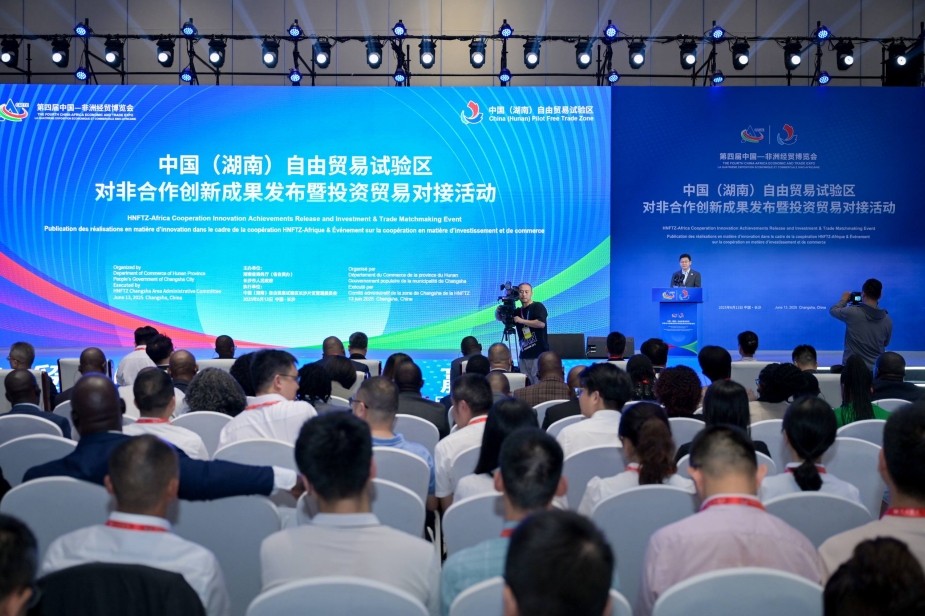
湖南自贸区对非合作成果发布:从货物贸易迈向制度型开放
Yang Shi Wang· 2025-06-17 08:45
Core Insights - The Changsha area is the only free trade zone in China focusing on non-trade cooperation as a primary task, leveraging national platforms for deepening China-Africa economic and trade cooperation [1][3] - Since its establishment in 2020, the Changsha area has seen average annual growth in foreign trade and foreign direct investment at 10.6% and 18.9% respectively, with non-trade activities achieving an impressive average annual growth of 141% [1] Group 1 - The Hunan Free Trade Zone is a core platform for deepening economic cooperation with Africa, actively exploring new cooperation models in trade, investment, finance, standards, market access, and customs [3] - Multiple innovative cooperation results were announced, including the launch of a digital trade platform and the establishment of a mineral product testing laboratory in Tanzania [3][5] - Key projects signed during the event include a chromium mining and transportation equipment project in Zimbabwe and a regional overseas warehouse project for remanufactured engineering machinery [5] Group 2 - The event marked a significant shift in cooperation from "goods trade" to "institutional openness" between Hunan and Africa, indicating a deeper level of engagement [5]