
食品安全

Search documents
网友称正新鸡排有大量的生蛆,最新回应来了
21世纪经济报道· 2025-05-16 06:20
Core Viewpoint - The article highlights a food safety incident involving Zhengxin Chicken Chop, where a customer reported finding maggots in chicken legs purchased from a store, leading to public outrage and investigations by local authorities [1][2]. Group 1: Incident Details - A video surfaced showing maggots in chicken legs from Zhengxin Chicken Chop, prompting a response from the store staff who claimed the customer returned the product later in the day and that they had already reported the incident to the police [1]. - The local market supervision bureau confirmed they received complaints and are currently investigating the matter [1]. Group 2: Public Reaction - The incident quickly gained traction on social media, trending as the top topic, with many users expressing disgust and vowing not to purchase from the brand again, while some others shared their recent positive experiences [2]. Group 3: Previous Safety Concerns - This is not the first time Zhengxin Chicken Chop has faced scrutiny over food safety. In July of the previous year, a former employee reported unsanitary conditions, including fly contamination and improper oil usage in a store in Ganzhou City [4][8]. - The local market supervision bureau conducted a special inspection following these allegations, emphasizing that food establishments must adhere to strict hygiene standards [8]. Group 4: Company Background and Expansion - Zhengxin Chicken Chop was founded by Chen Chuanwu in 1995, initially producing frozen foods before transitioning to a fast-food model in 2000, focusing on chicken chops and other popular snacks [9]. - The company experienced rapid expansion, growing from under 1,000 stores in 2015 to over 10,000 by 2017, and surpassing 20,000 stores by 2019 [10]. - However, after 2021, the pace of new store openings slowed significantly, with reports of numerous closures. As of January 2022, the number of stores was reported at 25,000, but by December 2023, it had decreased to approximately 11,619, indicating a reduction of over 10,000 stores in less than two years [10].

盒马,又出事!
Zhong Guo Jing Ying Bao· 2025-05-16 05:52
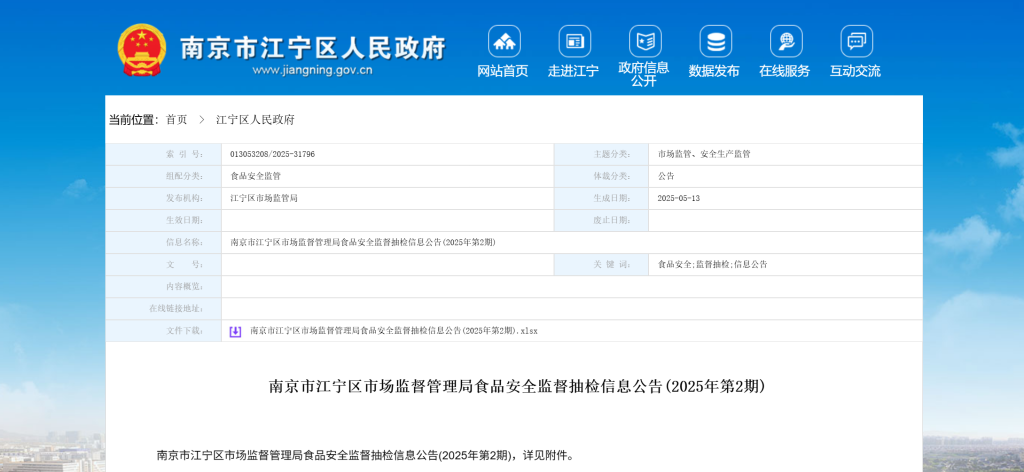
Group 1 - The Jiangning District Market Supervision Administration in Nanjing announced the results of food safety inspections, revealing that out of 524 food samples tested, 520 were compliant while 4 were found to be non-compliant [1] - The non-compliant products included ready-to-eat green heart kiwi sold by Hema, which contained chlorpyrifos at 0.085 mg/kg, exceeding the national food safety standard of 0.05 mg/kg [1][2] - Chlorpyrifos is a common growth regulator that can cause toxicity, cancer, and damage to the liver and nervous system if consumed excessively [2] Group 2 - Hema's official customer service stated that they would investigate the situation with suppliers and address any customer concerns regarding the affected batch of products [3] - Previous reports indicated that Hema's antibiotic-free eggs were found to have excessive veterinary drug residues, raising consumer concerns [3][5] - The eggs from Xiaocheng Egg Industry were reported to contain 15.5 μg/kg of dimetridazole and 13.0 μg/kg of methoxyfenozide, which did not meet national food safety standards [5] Group 3 - The egg supplier, Xiaocheng Egg Industry, claimed that a third-party retest showed the products were compliant, but no parties have requested a formal retest of the initial findings [6] - Antibiotic-free eggs are preferred by health-conscious consumers and are marketed as having no antibiotic residues, thus meeting higher safety standards [7] - Hema's antibiotic-free fresh eggs are priced at 17.9 yuan per box for 30 eggs, highlighting their marketing strategy to emphasize "0 antibiotics" and other quality assurances [7]
正新鸡排回应被曝“鸡腿大量生蛆”!网友:前两天刚吃了…
Bei Jing Shang Bao· 2025-05-16 05:46
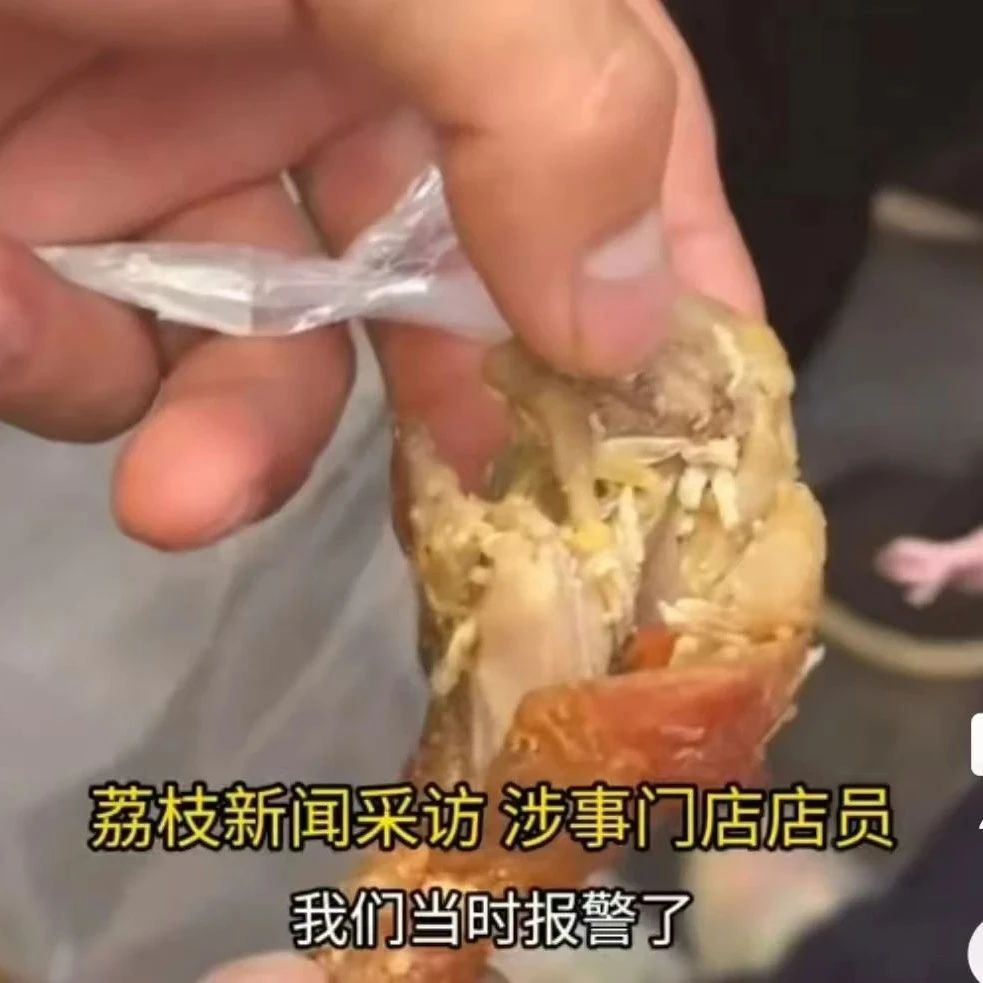
Core Viewpoint - Recent allegations of food safety issues at Zhengxin Chicken have surfaced, with a viral video showing maggots in chicken legs purchased by a customer, leading to widespread public outrage and calls for investigation [1][2]. Company Background - Zhengxin Chicken was founded by Chen Chuanwu, known as the "King of Snacks," in 1995, initially producing and distributing frozen foods before transitioning to a snack shop model in 2000 [7]. - The brand gained rapid popularity due to its unique flavors and affordable prices, leading to significant expansion, with the number of stores growing from under 1,000 in 2015 to over 20,000 by 2019 [8]. Recent Incidents - The company has faced previous food safety allegations, including reports of unsanitary conditions such as fly contamination and improper oil usage in its kitchens [4][6]. - The local market supervision bureau has initiated an investigation into the recent complaints regarding the alleged presence of maggots in food products [1][6]. Store Count and Business Performance - Zhengxin Chicken's store count peaked at 25,000 in January 2022, but recent data indicates a significant decline, with the number of stores dropping to approximately 11,619 by December 2023, representing a reduction of over 10,000 stores in less than two years [8].

五芳斋卷入“蜜枣粽创可贴”事件,去年营收净利双双下滑
Xin Jing Bao· 2025-05-16 03:48
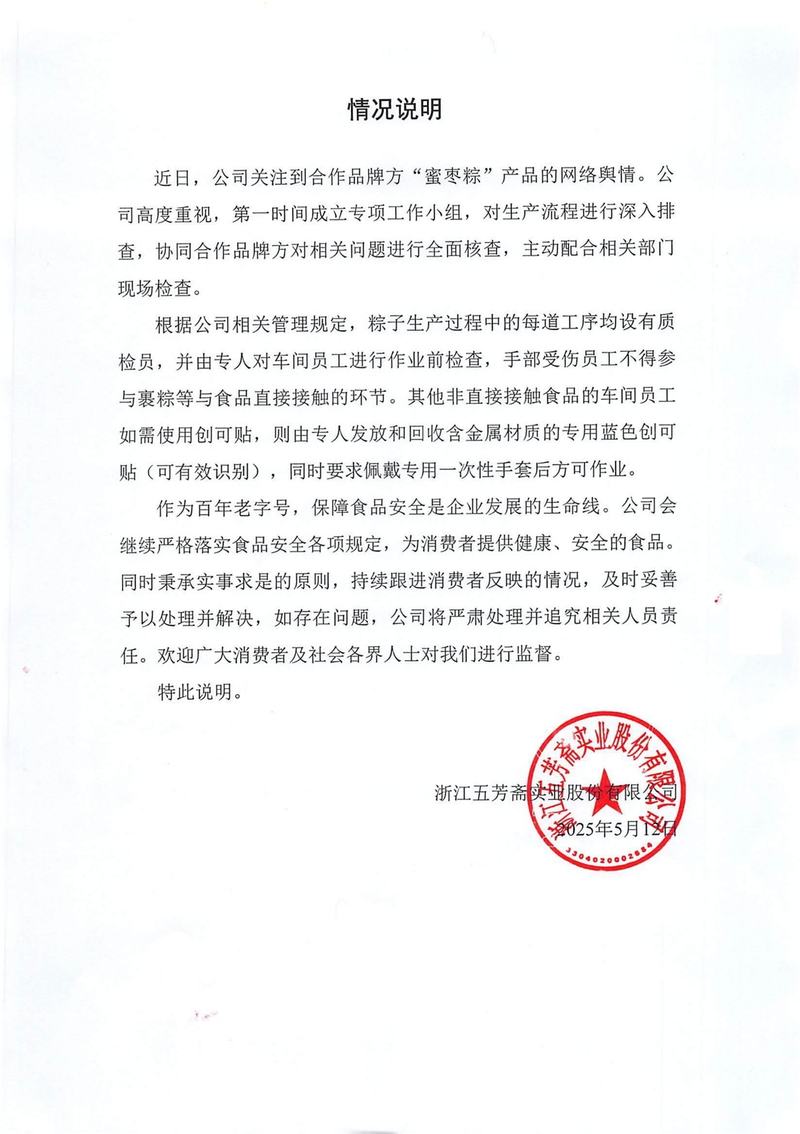
Core Viewpoint - The incident involving "Honey Date Sticky Rice Dumpling" has raised concerns about the reputation of Wufangzhai, which is a major player in the sticky rice dumpling market, especially as the Dragon Boat Festival approaches [1][8]. Company Response - Wufangzhai has announced that it will conduct a thorough investigation in collaboration with its partners and will cooperate with relevant authorities for on-site inspections [1][3][5]. - The company has established a special task force to address the situation and ensure compliance with food safety regulations [3][5]. Financial Performance - Wufangzhai's latest financial report indicates a decline in both revenue and net profit for 2024, with revenue at 22.51 billion yuan, down 14.57% year-on-year, and net profit at 1.42 billion yuan, down 14.24% year-on-year [9][10]. - The sticky rice dumpling segment, which accounts for over 70% of Wufangzhai's revenue, also experienced a significant decline, with revenue from this segment at 15.79 billion yuan, down 18.64% year-on-year [9][10]. Market Context - The sticky rice dumpling market is relatively stable, with demand peaking during the Dragon Boat Festival, but Wufangzhai's reliance on this product may pose risks to its overall performance [10]. - The company has been exploring diversification strategies, including international expansion and a focus on high-quality partnerships, to mitigate risks associated with its core product line [10].

2025年中国汤圆行业市场政策、产业链、发展现状、竞争格局及发展趋势研判:市场竞争十分激烈[图]
Chan Ye Xin Xi Wang· 2025-05-16 01:42
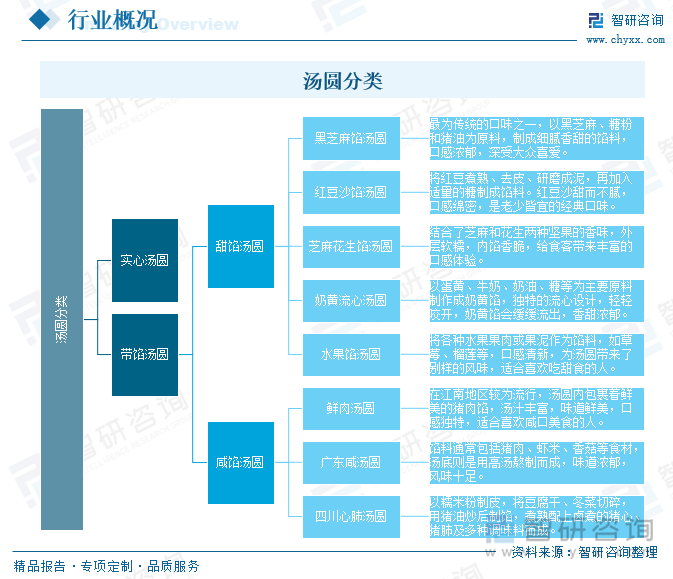
Core Insights - The demand for Tangyuan in China is projected to reach 2.626 million tons in 2024, with a market size of 44.64 billion yuan, and an average product price of approximately 17.0 yuan per kilogram [1][9]. Market Policy - The Chinese government has implemented various policies to enhance food safety and quality management in the Tangyuan industry, creating a favorable environment for its development [4][6]. Industry Chain - The Tangyuan industry consists of upstream suppliers of raw materials (glutinous rice, fillings), midstream production and processing, and downstream consumers including restaurants, schools, and households [7]. Competitive Landscape - The Tangyuan market is highly competitive with key players including Sanquan Foods, Zhengzhou Si Nian Foods, and Anjij Foods, which hold significant market shares due to their strong brand presence and diverse product lines [14][16][18]. Development Trends - Future trends in the Tangyuan market indicate a diversification of flavors, with innovative options such as chocolate and fruit, as well as healthier products with low sugar and high fiber content gaining popularity [20].


专访陈林:“三位一体”合作经济是通往共同富裕的现实路径
Xin Jing Bao· 2025-05-15 10:22
Core Viewpoint - The "three-in-one" cooperative economy model, initiated in Zhejiang, aims to integrate production, supply, and credit services to enhance agricultural efficiency and support farmers, with significant recognition and implementation at the national level [1][2][4]. Group 1: Historical Context and Development - In January 2006, Xi Jinping proposed the "three-in-one" cooperative economy concept, which was piloted in Zhejiang, particularly through the efforts of Chen Lin, who played a crucial role in its development [1]. - The model gained national attention, with the Central Government emphasizing its importance in various policy documents, including the 2017 and 2021 Central No. 1 documents, which called for the strengthening of farmer cooperatives and comprehensive cooperation [1][2]. Group 2: Challenges and Solutions - During the nationwide promotion of the "three-in-one" model, some regions experienced "deformation" and "diminution" of the original concept, prompting Chen Lin to publish a book addressing these issues and proposing solutions [2][4]. - Chen Lin highlighted the importance of focusing on the needs of farmers rather than bureaucratic divisions, advocating for a cooperative approach that integrates various sectors to enhance agricultural productivity [6][8]. Group 3: Financial Implications - The cooperative economy is seen as a mechanism to ensure financial security and support farmers' income, with the potential to address the challenges posed by traditional financial systems that often overlook small farmers [16][27]. - The upcoming implementation of the "Food Security Law" emphasizes the role of new agricultural entities, such as family farms and cooperatives, in enhancing food production capabilities and ensuring farmers' interests [16]. Group 4: International Comparisons and Lessons - International examples, such as the success of agricultural cooperatives in the U.S. and Japan, illustrate the effectiveness of cooperative models in maintaining market stability and supporting farmers' interests [22][23]. - The cooperative model is essential for creating a robust agricultural sector in China, enabling farmers to negotiate better terms with larger market players and ensuring food security [23].

那些买东西会看食品标签的人,看的究竟是什么?
Zhong Guo Xin Wen Wang· 2025-05-15 03:04
Core Points - The article emphasizes the increasing importance of food label literacy among consumers to make healthier dietary choices [1] - It provides practical tips for understanding food labels, focusing on ingredient rankings, nutritional ratios, and key components to monitor [2][3] Group 1: Understanding Food Labels - The ranking of ingredients in the ingredient list indicates their quantity in the product, with the first few items being the most significant [2] - Consumers should pay attention to the nutritional composition, particularly the NRV% (Nutrient Reference Value), which indicates the percentage of daily nutrient intake provided by 100 grams or milliliters of the food [2][3] - The new national food safety standards require clearer labeling of sugar and saturated fat content, allowing consumers to make informed choices about low-sugar, low-saturated fat, and low-salt foods [3][4] Group 2: Enhanced Labeling Standards - The updated food labeling standards improve the readability and organization of information, making it easier for consumers to find relevant details [5] - Digital food labels are encouraged, allowing consumers to scan QR codes for additional information, which is particularly beneficial for those with vision difficulties [6] - The new regulations mandate clear labeling of production and expiration dates, enhancing consumer awareness [7] Group 3: Allergen Information and Misleading Claims - The new standards require the prominent display of at least eight major allergens on packaging, improving safety for individuals with food allergies [8] - Misleading claims such as "0 additives" are being addressed, allowing consumers to make more rational decisions regarding food additives [9][10] Group 4: Nutritional Guidelines - The article references dietary guidelines that suggest limiting daily added sugar intake to no more than 50 grams, ideally under 25 grams, and controlling saturated fat intake to below 10% of total energy [3][4] - It provides specific thresholds for labeling products as "sugar-free," "low-sugar," "calorie-free," and "low-calorie," ensuring transparency in nutritional claims [10][11][12][13][14] Group 5: Consumer Awareness and Tips - Consumers are encouraged to develop skills to identify misleading terms on food labels, such as "whole grain" or "deep-fried," which may not accurately reflect the product's healthiness [15][16] - Understanding food labels equips consumers with the knowledge to select healthier options, promoting better dietary habits [15]
英国坚持拒绝进口美国激素喂养牛肉,英国还拒绝购买美国使用激素处理的鸡肉。(华盛顿邮报)
news flash· 2025-05-14 12:59
英国坚持拒绝进口美国激素喂养牛肉,英国还拒绝购买美国使用激素处理的鸡肉。(华盛顿邮报) ...
盒马鲜生被曝!
Jing Ji Guan Cha Bao· 2025-05-14 07:51
Group 1 - The Shandong Provincial Market Supervision Administration announced the results of a food safety inspection program called "You Order, I Inspect," which involved testing 99 batches of food samples across 12 categories [1][2] - The inspection revealed that the "clean and antibiotic-free fresh eggs" sold by Qingdao Hema Network Technology Co., Ltd. were found to contain residues of Dimetridazole (15.5 μg/kg) and Methoxyfenozide (13.0 μg/kg), which do not comply with national food safety standards [2] - Dimetridazole is an anti-parasitic drug used for treating poultry diseases, while Methoxyfenozide is an antibacterial agent; both substances pose potential health risks if consumed in excess over time [2] Group 2 - Qingdao Hema Network Technology Co., Ltd. opened its first store in Central Shandong on December 28, 2024, marking its expansion in the region [3] - Shandong Xiaomachi Egg Industry Co., Ltd., the producer of the eggs in question, was established on July 12, 2018, and is located in Feixian County, Linyi City, Shandong Province [3]
北京启动餐饮食品安全“夏安”行动,重点瞄准烧烤、凉菜、冷饮
Xin Jing Bao· 2025-05-14 07:29
Core Viewpoint - The Beijing Municipal Market Supervision Administration has launched a "Summer Safety" special action for food safety in the catering industry, focusing on enhancing the responsibility of operators and conducting targeted inspections in key areas such as barbecue meat products and food safety checks [1][2][3]. Group 1: Special Actions and Inspections - The special action will run from now until the end of August, emphasizing the responsibility of catering service operators and conducting inspections in four key areas [1]. - Market supervision departments will implement targeted inspections on chain restaurants, famous brands, and eateries near tourist attractions using a combination of "QR code checks" and non-on-site inspections [3]. - A service-oriented law enforcement model will be adopted, focusing on prevention, with a strict approach to serious violations while encouraging compliance for minor infractions [3]. Group 2: Food Safety Self-Inspection - All catering enterprises are required to conduct self-inspections to identify and rectify food safety issues, focusing on areas such as environmental hygiene, personnel management, and food storage [2]. - The market supervision departments will provide detailed compliance guidelines to help operators improve their food safety management levels [2]. Group 3: Specific Focus Areas - A special inspection will be conducted on barbecue meat products to combat the use of substandard or unverified meat, with a focus on verifying purchase documents and storage conditions [4]. - The initiative includes public participation in food safety supervision, encouraging citizens to report violations through designated hotlines [4]. Group 4: Health Management and Hygiene Standards - Catering service units must implement daily health checks for staff, ensuring no injuries or contagious diseases are present [6]. - The cleanliness of dining areas and kitchens is emphasized, with specific requirements for maintaining hygiene and preventing pest infestations [8]. - Safety protocols during food preparation must be followed, including the separation of raw and cooked foods and proper temperature maintenance in refrigeration [10].