
数智化转型

Search documents
水滴信用企业大数据智慧赋能银行证券保险借贷等金融机构
Sou Hu Cai Jing· 2025-05-08 10:04
Group 1 - The financial industry is undergoing a profound transformation driven by data, with institutions like banks, securities, insurance, and lending accelerating their digital transformation through enterprise-level big data [1][5] - Traditional financial services face multiple pressures including outdated risk control, weak customer reach, and high operational costs, leading to increased customer churn and inefficiencies [5] - Waterdrop Credit's enterprise big data solution provides a comprehensive "data collection-governance-modeling-application" system, offering three core capabilities: real-time decision-making data support, intelligent risk control warning models, and scenario-based service support [5][7] Group 2 - In the banking sector, enterprise big data is used to establish intelligent credit risk control and anti-fraud systems, evolving from credit assessment to ecological operation [7] - In the securities industry, enterprise big data supports the development of risk intelligent research systems and investor risk analysis systems, enhancing quantitative investment and compliance management [7] - In the insurance sector, enterprise big data facilitates the creation of customer identification systems and online claim processes, enabling dynamic risk control and pricing support [7]

六大民营连锁药房2024年财报观察:增长“降温”,盈利“遇阻”,行业在困境中谋变
Hua Xia Shi Bao· 2025-05-08 09:13
Core Insights - The chain pharmacy industry in 2024 is experiencing a significant slowdown, transitioning from a rapid expansion phase to one of reduced growth and declining profitability [2][3] - Six major private chain pharmacies reported revenue growth of less than 10%, with the highest being 8.01%, a stark contrast to previous years where many exceeded 20% [2] - Only Yifeng Pharmacy managed to achieve net profit growth, while the other five companies faced varying degrees of decline [2][5] Revenue and Profitability - Yifeng Pharmacy reported a revenue of 24.062 billion yuan with a net profit growth of 8.26%, becoming the only company to grow in a challenging environment [5] - Dazhenlin achieved the highest revenue of 26.497 billion yuan but saw a net profit decline of over 20% [5] - Laobaixing maintained a sales figure of 22.357 billion yuan, but its profits nearly halved [5] - Regional players like Shuyupingmin reported a loss of nearly 200 million yuan, while Jianzhijia's profits plummeted by about 70% [5] Store Expansion and Closure - Despite the overall industry challenges, the number of stores for major chain pharmacies continued to grow, with Dazhenlin adding 2,479 stores, Yifeng adding 1,434, and Laobaixing adding 1,703 [7] - The total number of closed pharmacies reached 25,114 in the first three quarters of 2024, with a growing trend in closures [5][6] Industry Challenges - The industry faces significant pressures from tightened healthcare policies, increased online competition, and changing consumer spending habits [3][8] - The competitive landscape has intensified, leading to price wars and promotional battles that compress profit margins [8] - Regulatory changes, such as stricter healthcare cost controls and increased compliance requirements, have further strained profitability [8][10] Strategic Responses - Companies are focusing on digital transformation and optimizing business structures to enhance efficiency and customer service [12] - Diversification into health products, beauty items, and health management services is becoming a strategic priority [12] - The integration of online and offline sales and services is seen as essential for future success, although it requires significant investment [12]






海信美的达成战略合作,贾少谦、方洪波现身
Sou Hu Cai Jing· 2025-05-08 07:23
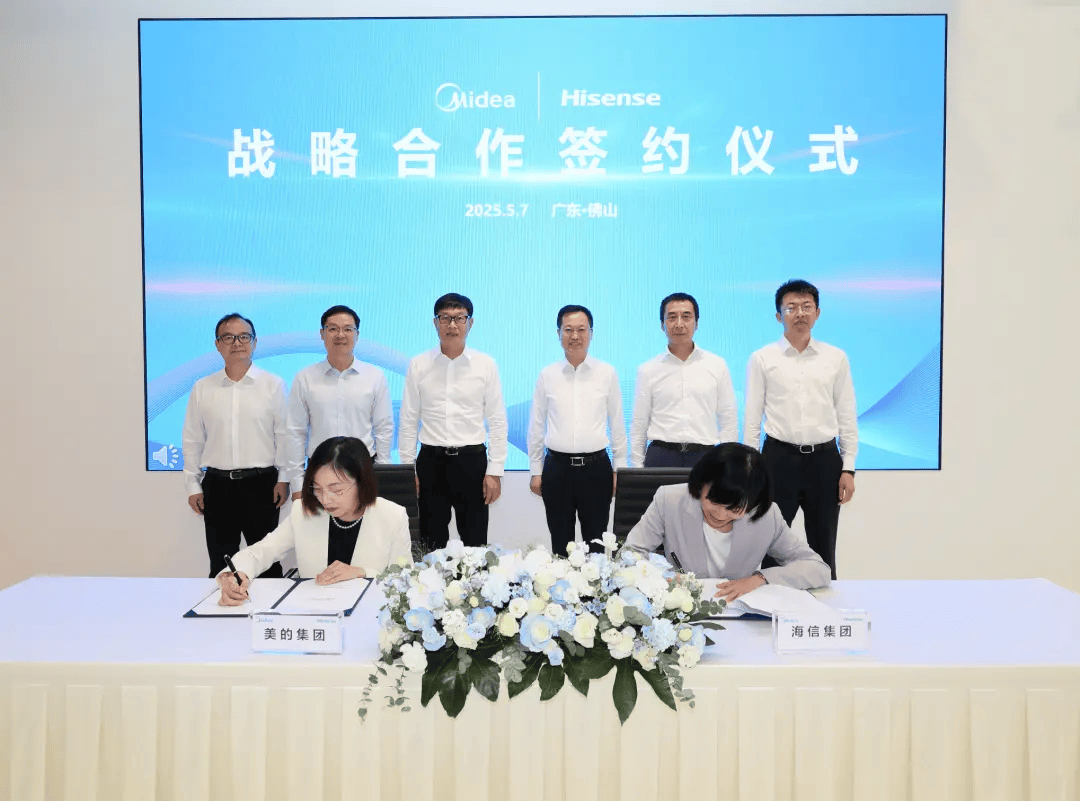
Core Insights - Hisense Group and Midea Group have signed a strategic cooperation agreement to deepen collaboration in AI applications, advanced manufacturing, and smart logistics [1][3] - The partnership aims to enhance digital transformation through the development of a shared digital platform and AI application ecosystem, improving operational efficiency for both companies [3] Group 1: Strategic Collaboration - The cooperation will focus on the deep application of AI in manufacturing and logistics, aiming to boost market competitiveness and provide digital empowerment to upstream and downstream partners [3] - Key areas of collaboration include green factory construction, industrial internet applications, and global capacity layout, promoting a shift from "Made in China" to "Created in China" [3] Group 2: Consumer Benefits - The partnership is expected to yield tangible benefits for consumers by creating a more efficient warehousing network and delivery system in the smart logistics sector, enhancing production logistics coordination and supply chain optimization [3] - Improved product delivery efficiency and customer satisfaction are anticipated outcomes of this collaboration [3] Group 3: Industry Impact - The collaboration aims to build a more resilient and innovative industrial ecosystem by leveraging each company's strengths in technology research and development, market channels, and supply chain management [3] - This initiative is positioned to drive high-quality development in the Chinese home appliance industry [3]


海信美的达成战略合作,双方将联合攻关核心技术
Feng Huang Wang· 2025-05-08 05:10
在产业升级方面,双方计划围绕绿色工厂建设、工业互联网应用以及全球产能布局等重点领域展开协 作。通过联合攻关核心技术、共同探索先进工艺,海信与美的将共同推动中国制造向中国创造的转变, 为行业树立数字化转型标杆。 对于消费者而言,此次合作也将带来实质性红利。双方将在智慧物流领域构建更高效的仓储网络和配送 体系,实现生产物流协同和供应链优化,有望大幅提升产品交付效率和用户满意度。 凤凰网科技讯(作者/于雷)5月8日,海信集团与美的集团(000333)昨日正式签署战略合作协议,双 方将在AI应用、全球先进制造、智慧物流等多个领域展开深度合作。此次合作标志着国内两大家电巨 头将通过数字化平台开发、AI智能体应用以及工业互联网建设等举措,共同深化数智化转型进程。 美的集团副总裁兼CFO钟铮与海信集团副总裁兼海信家电(000921)集团董事长高玉玲作为双方代表完 成签约。美的集团董事长兼总裁方洪波、海信集团董事长贾少谦等高层领导悉数出席。 随着AIGC技术的快速迭代与发展,全球家电行业正面临前所未有的变革机遇。据悉,海信与美的将重 点推动AI智能体在制造与物流等领域的深度应用,通过打造共享的数字化平台和AI应用生态,全面提 ...
每经品牌100指数年度运行报告(上篇):踏浪前行,屡创新高!
Mei Ri Jing Ji Xin Wen· 2025-05-07 12:38
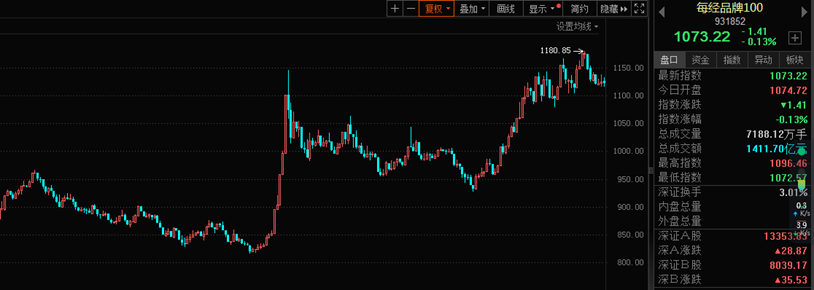
Core Insights - The "New National Nine Policies" emphasize market value management and dividend regulation, promoting valuation recovery for undervalued state-owned enterprises, while highlighting the importance of "new productive forces" for the growth of technology companies [1] - The "Everyday Brand 100 Index" has seen significant growth, achieving a maximum annual increase of 17.37% and reaching new highs [1][3] Market Performance - The Everyday Brand 100 Index reached a new high of 1181 points, marking a strong performance in its third year despite a complex international environment [2] - The index experienced a significant rebound, rising from 820 points to 1146 points in just ten trading days, reflecting a nearly 40% increase following the introduction of the "924" policy [2][3] Economic Indicators - Key economic indicators such as industrial production, fixed asset investment, and retail sales growth have been below expectations, leading to increased market concerns about corporate profitability [2] - The index's performance has outpaced major A-share indices, demonstrating strong investment elasticity and resilience against risks [5] Valuation Metrics - As of May 7, the Everyday Brand 100 Index had a price-to-earnings (P/E) ratio of 9.5 and a price-to-book (P/B) ratio of 1.17, which are significantly lower than the benchmark indices [7] - The index's valuation advantage is evident, as it remains below the P/E ratios of the Shanghai 50 and CSI 100 indices, as well as the Hang Seng Technology Index [7] Component Stocks - The Everyday Brand 100 Index includes leading companies across various sectors, with significant weightings in Tencent, Alibaba, and Kweichow Moutai, among others [9][10] - The index spans A-shares, Hong Kong stocks, and U.S. stocks, with A-shares accounting for 49.07% and Hong Kong stocks 47.23% of the index [9] Future Outlook - The index is expected to continue its stable operation above the 1000-point mark, with potential for further brand value and valuation increases as component companies enhance their competitive strengths [6] - The rise of domestic AI models and digital transformation is anticipated to reshape brand value and growth logic for listed companies, contributing to the index's growth potential [13]





纺织业的AI变迁
3 6 Ke· 2025-05-07 12:29
Core Insights - The textile industry is undergoing a significant transformation driven by AI technology, which enhances production efficiency and meets modern consumer demands for personalization and sustainability [3][5][20] Group 1: AI Integration in Textile Production - The Sewbot can produce an Adidas T-shirt in just 22 seconds, significantly faster than the traditional method which took a day [1] - AI technology has been gradually integrated into the textile industry over the past 40 years, evolving from basic applications to advanced automation [2][6] - The introduction of machine learning and advanced machine vision has improved defect detection in textiles, achieving over 98% accuracy in automated quality control [8][10] Group 2: Industry Challenges and Transformation - The textile industry faces challenges such as environmental regulations, labor shortages, and rising raw material costs, necessitating a shift towards digitalization and sustainability [3][20] - The "Textile Industry Quality Improvement Implementation Plan (2023-2025)" aims for 70% of large textile enterprises to achieve digital transformation by 2025 [3] Group 3: Consumer Demand and Market Trends - Modern consumers are seeking personalized, fast-fashion products, pushing the industry towards brand-oriented, intelligent, and high-end transformations [5][19] - Companies like Wan Shi Li are leveraging AI to create a flexible supply chain, enabling rapid production cycles and customization [19] Group 4: Environmental Impact and Sustainability - AI-driven technologies are facilitating a green transformation in the textile industry, with innovations like the GBART digital dyeing technology achieving 99% water savings and eliminating wastewater [20][22] - The shift towards AI in production is expected to reduce human labor in factories, as machines take over more tasks [22][23]
AI领航制造行业新篇,携手华为共赢数智未来
Sou Hu Cai Jing· 2025-05-07 11:56
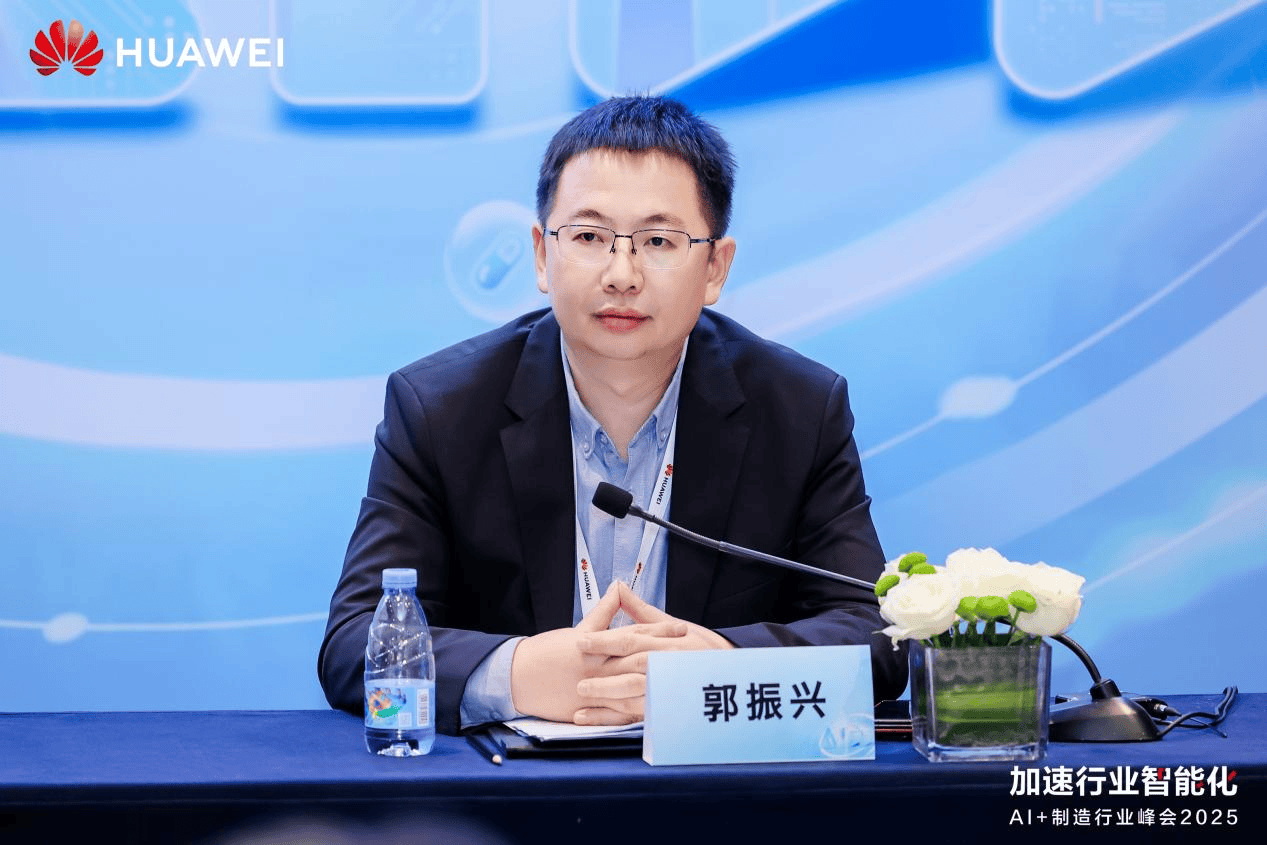
Core Insights - The Huawei AI + Manufacturing Industry Summit 2025 was successfully held in Guangzhou, focusing on the integration of AI technologies into the manufacturing sector to reduce costs and enhance efficiency [1] - AI is seen as a significant driver for cost reduction and innovation in the manufacturing industry, creating new survival rules for enterprises [2][4] Group 1: AI's Role in Manufacturing - AI technology is penetrating various stages of manufacturing, including R&D, production, and supply chain management, leading to improved market insights, optimized product design, and enhanced production efficiency [4] - The integration of AI with IoT and cloud computing is automating and smartening production processes, significantly increasing factory agility and productivity [4][6] Group 2: Infrastructure and Data Management - The construction of new infrastructure is essential for the digital transformation of the manufacturing industry, facilitating data flow and resource optimization [6][7] - Huawei emphasizes breaking down "data silos" through unified standards, which is crucial for data-driven production decisions [7] Group 3: Collaborative Efforts and Solutions - Huawei collaborates with industry partners to develop comprehensive solutions that address the diverse AI computing needs across various sectors, including automotive, semiconductor, and biopharmaceuticals [8] - The company has created over 20 solutions across seven major scenarios, aiming to enhance the digital transformation capabilities of enterprises [8] Group 4: Future Vision - Huawei aims to accelerate the intelligent transformation of the manufacturing industry, positioning itself as a key player in driving innovation and development [9]
居然智家(000785):数智化转型表现亮眼,静待主业调改效能释放
Huafu Securities· 2025-05-07 10:01
Investment Rating - The investment rating for the company is "Buy" [7][21]. Core Views - The company has shown impressive performance in its digital transformation and is awaiting the release of efficiencies from its main business adjustments [4]. - In 2024, the company achieved a revenue of 12.97 billion yuan, a year-on-year decrease of 4.04%, and a net profit attributable to shareholders of 770 million yuan, down 40.8% year-on-year [3]. Financial Performance Summary - The leasing and management business generated a revenue of 5.54 billion yuan, down 13.8% year-on-year, while the franchise management business earned 430 million yuan, down 15.0% year-on-year, primarily due to rental and management fee reductions to support merchants [5]. - The product sales business achieved a revenue of 6.3 billion yuan, an increase of 13.8% year-on-year, with the company's smart home segment generating over 6.33 billion yuan in sales, a growth of 43.4% year-on-year [6]. - The gross profit margin for 2024 was 27.35%, a decrease of 6.8 percentage points year-on-year, influenced by rental reductions [6]. - The company expects net profits for 2025-2027 to be 840 million yuan, 930 million yuan, and 1.03 billion yuan, respectively, with growth rates of 9.3%, 10.1%, and 11.1% [7]. Strategic Initiatives - The company is actively innovating its market strategies, including a new store cooperation model and a "one store, two systems" recruitment strategy, which has improved recruitment rates by 5.3% [5]. - The company has expanded its digital marketing services and international presence, opening two stores in Cambodia and Macau, achieving a recruitment rate of over 97% [6]. Valuation Metrics - The current stock price corresponds to a PE ratio of 24X for 2025 [7]. - The company maintains a debt-to-asset ratio of 57.07% and a net asset value per share of 3.28 yuan [7].

宁水集团(603700)2025年第一季度业绩点评:经营稳健 AI生态持续深化
Xin Lang Cai Jing· 2025-05-07 02:28
Core Viewpoint - The company's performance is overall stable, with Q1 2025 revenue of 266 million yuan, a year-on-year increase of 5.85%, and a net profit attributable to shareholders of 28 million yuan, a year-on-year increase of 141.62%, primarily due to the disposal of subsidiaries [2] - The original controlling shareholder has terminated the concerted action relationship, resulting in a change of actual controllers to Zhang Shihua and Zhang Lin, while the shareholding proportions remain unchanged [2] Business Development - The company has made significant progress in its AI ecosystem and digital transformation, successfully deploying the DeepSeek large model localization system and building a specialized knowledge base matrix, which supports a multi-model integrated intelligent customer service knowledge platform [3] - The platform has adopted a multi-model collaborative architecture, integrating mainstream large models such as DeepSeek, Tongyi Qianwen, and Baidu Wenxin, enhancing AI applications in smart operations, decision-making, services, and hardware across various sectors [3] Financial Projections - Revenue projections for 2025 to 2027 are 1.709 billion, 1.979 billion, and 2.329 billion yuan, representing year-on-year growth rates of 13.9%, 15.8%, and 17.7% respectively, with net profits of 62 million, 73 million, and 88 million yuan, reflecting year-on-year growth rates of 18.3%, 17.7%, and 20.5% respectively [4] - The estimated price-to-earnings ratio for 2026 is 31.37 times based on the closing price on April 29, 2025 [4] Investment Outlook - The company is expected to maintain steady growth and continue its digital transformation, leading to a sustained "buy" rating [5]

中国石化:以数智化转型提升行业竞争力
Zhong Guo Hua Gong Bao· 2025-05-07 02:25
Core Viewpoint - The global refining industry is undergoing a profound transformation towards digitalization, with companies achieving over 15% improvement in production efficiency and a 10% reduction in forecasting errors through smart factory initiatives [1] Group 1: Technology Application - Since initiating its AI special plan in 2017, Sinopec has progressively implemented digital technologies in the refining sector, achieving a 50% increase in weighing efficiency and a 70% reduction in workforce through smart inspection systems [2] - The 5G smart warehousing has enhanced storage capacity by 40% to 60%, and these technologies have been expanded to over 20 refining enterprises after successful pilot testing [2] - Sinopec is collaborating with Royal Dutch Shell to exchange technical experiences in building digital twin systems for real-time production optimization, with plans to pilot this technology in three refining enterprises by 2025 [2] - The company has launched the "Jingzhe" data governance toolkit to address challenges in data isolation, inconsistent standards, and quality control within the petrochemical industry [2] Group 2: Management Transformation - Digital transformation is driving innovation in management models, with Sinopec establishing a unified AI platform that connects 22 refining enterprises and has developed over 150 intelligent applications, saving approximately 200 million yuan annually in information technology costs [3] - Sinopec is exploring a "build-manage-integrate" digital twin model for new projects, collecting over 500,000 equipment data points during the construction phase to support future intelligent operations [3] - The company is also adapting digital technologies to improve the human factor in operations, having localized a virtual training system in collaboration with BASF to train new employees [3] Group 3: Future Outlook - The digital transformation in the global refining industry is still in its early stages, and Chinese refining companies need to enhance international exchanges and absorb advanced experiences to support this transition [4] - Approximately 60% of refining enterprises face shortcomings in data governance, with data silos being common; Sinopec plans to develop a large model for the refining industry by 2025 to address these issues [4] - Successful applications of technologies like digital twins require robust modeling and optimization, and Sinopec is establishing a team of 50 core model experts to maintain and optimize key process models across the group [4] Group 4: Strategic Commitment - Sinopec is committed to continuous exploration and practice in digital transformation, aiming for systematic changes across strategy, organization, and culture to accelerate the new industrialization process and transition from a "petrochemical giant" to a "petrochemical powerhouse" [5]
