
人造太阳

Search documents
万亿级能源革命来袭!可控核聚变6大龙头强势崛起,谁能问鼎能源之王
Xin Lang Cai Jing· 2025-09-26 14:26
Group 1 - China Fusion Energy Company announced the construction of the "China Circulation No. 4" experimental device in Shanghai, marking the entry into the "superconducting era" of nuclear fusion research [1] - The National Development and Reform Commission and the Energy Administration issued the "Implementation Opinions on Intelligent Development of Controlled Nuclear Fusion," emphasizing the use of AI technology to create intelligent control systems for plasma steady-state operation [1][3] Group 2 - The global competition in nuclear fusion is intensifying, with China's BEST project starting assembly two months ahead of schedule, while the US Helion company signed a global first nuclear fusion power purchase agreement with Microsoft for delivery in 2028 [4] - Japan has updated its "Fusion Energy Innovation Strategy," advancing its commercialization target to 2040, with predictions of over 10 demonstration reactors entering construction by 2035 [4] Group 3 - Wangzi New Materials, through its subsidiary Ningbo Xinyong, has broken international monopolies to become the only domestic producer of nuclear fusion pulse capacitors, with a product lifecycle of 100,000 cycles, supplying the BEST device [5] - Western Superconducting is the only company globally with full-process production capabilities for low-temperature superconducting materials, serving as the exclusive supplier of superconducting wire for the ITER project in China [6][7] - Hezhong Intelligent has overcome three major technical challenges in manufacturing fusion reactor vacuum chambers, achieving 100% domestic production for the BEST project [8] - China National Heavy Machinery Corporation successfully manufactured a thousand-ton TF coil box for the CRAFT project, recognized for its capabilities in large component formation [9] - Antai Technology, a core supplier for the EAST device, contributed to a world record of 1,056 seconds of long pulse operation with its tungsten-copper composite components [10] - A joint venture with an academic team is focusing on Z-pinch hybrid reactor technology, covering major domestic devices and demonstrating significant cost advantages [11]


《东方时空》聚焦可控核聚变竞逐 中国冲刺人类终极能源
Ge Long Hui· 2025-09-26 10:07
Core Insights - The article discusses China's advancements in controlled nuclear fusion, highlighting the progress made in the context of the "14th Five-Year Plan" and the "dual carbon goals" [2][3] Industry Developments - By 2025, significant progress has been made in China's controlled nuclear fusion research, with milestones such as the "East Super Ring" achieving plasma stability at 1 million degrees Celsius for 1066 seconds and the "China Circulation No. 3" reaching dual temperatures of 1.17 million degrees for atomic nuclei and 1.6 million degrees for electrons [5][7] - The controlled nuclear fusion industry chain in China is taking shape, involving upstream raw material production, midstream equipment manufacturing, and downstream technology enterprises and research institutions [7] Technological Pathways - Chinese research institutions and companies are exploring multiple technical routes for nuclear fusion, including the "deuterium-tritium" and "hydrogen-boron" pathways, aiming for breakthroughs in controllability and stability [8][10] - The "deuterium-tritium" route, led by national teams like the Chinese Academy of Sciences and China Nuclear Group, focuses on controlled fusion reactions for sustainable energy output [10] - The "hydrogen-boron" route, proposed by New Energy Group, emphasizes cost-effectiveness and safety, with the potential for high efficiency in energy generation [10][12] Collaborative Efforts - The dual-track approach of national teams and enterprises is fostering a collaborative environment to advance the "artificial sun" project, with significant contributions from both sectors [14] - The emergence of "super factories" and "super equipment" in the controlled nuclear fusion field is exemplified by New Energy's "Xuanlong 50U," which has achieved several international firsts in plasma discharge and magnetic field conditions [15] Talent and Ecosystem Development - Strengthening talent exchange and ecological cooperation is crucial for technological upgrades, with New Energy establishing an international and diverse research team and collaborating with over 70 top research institutions across four continents [17] - The ongoing exploration of fusion energy technology, which began in the mid-20th century, continues to be a focal point, with expectations that the maturation of China's nuclear fusion industry will accelerate ecological cooperation and attract more scientific talent [17]

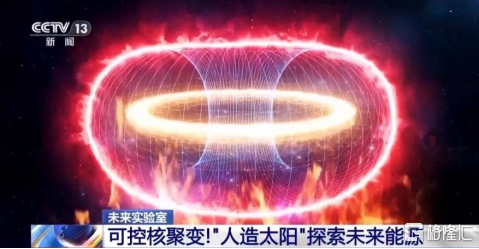
磁约束版可控核聚变还面临三大技术挑战
Jie Fang Ri Bao· 2025-09-23 08:52
Core Insights - Controlled nuclear fusion, often referred to as "artificial sun," is approaching commercialization as a clean energy solution, with significant advancements in technology and capital investment [1][2] - The ITER project is a key international initiative in nuclear fusion research, with experts emphasizing its potential to address energy and carbon emission challenges [1] - China is focusing on compact magnetic confinement fusion using high-temperature superconducting materials, aiming to accelerate the development of fusion engineering experimental reactors [2] Group 1: Technology and Development - The main raw materials for fusion energy are isotopes of hydrogen, deuterium, and tritium, which produce helium as a byproduct, posing no radioactive pollution [1] - The primary technical routes for achieving controlled nuclear fusion include magnetic confinement, inertial confinement, and magnetic inertial confinement, with the "tokamak" being the mainstream device for magnetic confinement [1] - China has achieved significant milestones in fusion research, including the "Chinese Circulation No. 3" experimental device reaching temperatures of 117 million degrees Celsius for atomic nuclei and 160 million degrees Celsius for electrons [2] Group 2: Challenges and Collaborations - China Fusion Company faces three main scientific and technical challenges: stable self-sustaining operation of burning plasma, high-energy neutron bombardment and high-heat-load materials, and tritium breeding and self-sustaining cycles [3] - The company is collaborating with various institutions, including Shanghai Jiao Tong University and Shanghai Electric Group, to form a fusion innovation consortium to tackle these challenges [3] - Shanghai's government is committed to supporting the establishment of a fusion energy innovation alliance to facilitate the transition from laboratory research to engineering and commercialization [3]
中国西电(601179.SH):具备向核电行业供应相关输配电装备的资质和能力
Ge Long Hui· 2025-08-14 08:15
Group 1 - The company confirmed its involvement in contributing to the "artificial sun" project, indicating its capabilities in supplying relevant power transmission and distribution equipment to the nuclear power industry [1]

手把手教你点亮“人造太阳”,先从电源说起……
市值风云· 2025-08-13 10:15
Core Viewpoint - The article discusses the critical role of nuclear fusion power systems in achieving stable and controlled nuclear fusion, likening it to a "heart" and "brain" of a fusion reactor, essential for maintaining the high-temperature plasma necessary for fusion reactions [4][5][6]. Summary by Sections Nuclear Fusion Power System - The nuclear fusion power system is a specialized high-performance power source that precisely controls the plasma in fusion reactions, which can reach temperatures exceeding 100 million degrees Celsius [5][6]. - Successful ignition of nuclear fusion requires three key conditions: high temperature, high density, and long energy confinement time, collectively referred to as the "fusion triple product" [6]. Types of Power Sources - There are two main types of nuclear fusion power sources: magnetic power sources and heating power sources [7]. - Magnetic power sources generate strong magnetic fields to suspend the high-temperature plasma, while heating power sources raise the plasma temperature to the required levels [7][10]. Performance Requirements - The power systems must meet stringent performance criteria, including voltage fluctuation control within 3%, response times under 0.3 milliseconds, and strong interference resistance [8]. Market Potential - The market for nuclear fusion power systems is projected to exceed 5 billion, based on current investment in fusion projects, with costs for fusion reactors ranging from 3 to 10 billion for a 1000MW scale [12][16]. - The domestic market is expected to grow further with the development of various fusion projects, including BEST, STAR, and others, with significant investments planned [13][14]. Industry Challenges and Opportunities - The nuclear fusion power sector faces challenges such as high operational demands on heating power sources and the need for advanced electronic components [16]. - The industry is still in its early stages, with a focus on technological advancements and the establishment of supply chains for specialized power systems [17]. Key Companies - The article identifies several key companies involved in the nuclear fusion power sector, highlighting their roles in the development and supply of necessary technologies and components [18].

全球聚变行业爆发式增长,多家A股公司宣布入局
2 1 Shi Ji Jing Ji Bao Dao· 2025-08-09 09:20
Core Insights - The establishment of China Fusion Energy Company marks a significant milestone in China's efforts to commercialize nuclear fusion energy, with over 10 billion yuan in investments from major energy firms and capital institutions [2][11] - The global fusion industry has seen explosive growth, with total investments reaching $9.766 billion, a 414% increase since 2021, indicating strong investor confidence and technological advancements [4] - The competition in the fusion energy sector is intensifying, with significant breakthroughs in China's fusion projects and international collaborations accelerating the path to commercialization [5][7] Investment and Market Dynamics - China Fusion Energy Company is positioned as a national strategic player, with investments from key state-owned enterprises and private capital, reflecting a robust investment structure [11][12] - The supply chain for nuclear fusion is maturing, with several A-share listed companies entering the supply chain, indicating a growing interest in the fusion energy sector [14][15] - The fusion industry is expected to enter a critical decade, with many companies planning to operate commercial demonstration plants by 2035 [8][10] Technological Advancements - Major advancements in China's fusion devices have been reported, including record plasma confinement times and temperature achievements, positioning the country as a leader in plasma technology [5][6] - Internationally, significant projects like ITER and commercial agreements for fusion energy procurement are paving the way for the practical application of fusion technology [7][8] Future Outlook - The timeline for commercial fusion energy is becoming clearer, with expectations that the first fusion power plant could be operational by 2030 [7][8] - The integration of AI and high-temperature superconductors is expected to further accelerate the development of fusion technology, enhancing feasibility and cost-effectiveness [16]



打响“逐日之战”,“人造太阳”商业化提速
2 1 Shi Ji Jing Ji Bao Dao· 2025-08-08 12:50
Core Viewpoint - The establishment of China Fusion Energy Company marks a significant milestone in China's efforts to commercialize nuclear fusion energy, supported by major state-owned and private enterprises, indicating a shift from speculative interest to long-term industrial investment in fusion energy [1][7]. Investment and Market Growth - The global fusion industry has seen explosive growth over the past five years, with total investments reaching $9.766 billion, a 414% increase since 2021, reflecting heightened investor confidence and technological advancements [2]. - The report indicates that the fusion industry is attractive due to its potential for energy security and clean energy, despite historical challenges in technology investment [2]. Technological Advancements - Significant breakthroughs in China's nuclear fusion technology have been achieved, with major devices like EAST and the Chinese Circulation No. 3 reaching record operational parameters, positioning China as a leader in plasma confinement technology [3]. - The first compact fusion energy experimental device, BEST, is set to complete construction by 2027, aiming to demonstrate fusion power generation [3]. Private Sector Involvement - Private enterprises in China, such as New Hope, have made notable advancements in fusion technology, achieving high-density plasma discharge, marking a step towards commercializing hydrogen-boron fusion [4]. - Internationally, projects like ITER and agreements between tech giants and fusion startups indicate a global acceleration in fusion commercialization [5]. Future Projections - The period from 2030 to 2035 is recognized as critical for the commercialization of fusion energy, with many companies planning to operate demonstration power plants during this timeframe [5][6]. - Industry experts predict that the first fusion power generation could occur in China by 2030, highlighting the urgency and potential of fusion energy [5]. Capital and Structural Support - The fusion industry in China is supported by a combination of national strategic capital, local industrial capital, and private innovation capital, with significant investments made by major state-owned enterprises [7][8]. - Local investments in projects like BEST have increased the capital scale significantly, indicating strong regional support for fusion energy initiatives [8]. Supply Chain Development - The maturation of the fusion supply chain is seen as a crucial factor in advancing fusion energy projects, with several companies entering the supply chain and contributing to the development of essential components [10]. - The focus on upstream materials and equipment is expected to drive demand across the industry as fusion technology progresses from validation to engineering implementation [11]. Synergistic Technologies - The convergence of AI and high-temperature superconductors with fusion technology is anticipated to accelerate the development of fusion energy, enhancing both feasibility and economic viability [11].
赌上国运的技术!中国核聚变突破403秒大关,全球能源洗牌倒计时!
Sou Hu Cai Jing· 2025-08-05 07:19
Core Insights - The recent achievement of sustaining nuclear fusion for 403 seconds by the EAST project in China marks a significant milestone towards harnessing clean energy through controlled nuclear fusion [2][3][5] - This breakthrough mimics the energy production of stars, utilizing nuclear fusion, which combines atomic nuclei under extreme conditions to release vast amounts of energy [2][3] - The potential of nuclear fusion as a clean energy source could revolutionize the global energy landscape, making energy production cheaper and more sustainable, thus eliminating reliance on fossil fuels [5] Summary by Sections Nuclear Fusion Technology - Nuclear fusion involves combining atomic nuclei at extremely high temperatures, starting from over a hundred million degrees Celsius, to release energy [3] - The EAST project has successfully contained a superheated plasma within a magnetic confinement system, achieving stability for 403 seconds, which is crucial for future continuous energy output [3] Implications for Energy Production - The successful containment of plasma for extended periods is a critical step towards achieving sustainable nuclear fusion energy, which could lead to a new era of clean energy [3][5] - If the challenges of maintaining a self-sustaining plasma state are overcome, it could unlock a virtually limitless source of clean energy, fundamentally changing energy consumption and production [5] Future Prospects - The achievement of 403 seconds is seen as a precursor to further advancements in nuclear fusion technology, with the potential to significantly extend burn times and increase power output [3][5] - The implications of successful nuclear fusion technology could lead to a dramatic shift in energy costs and environmental impact, making current energy sources like coal and oil obsolete [5]
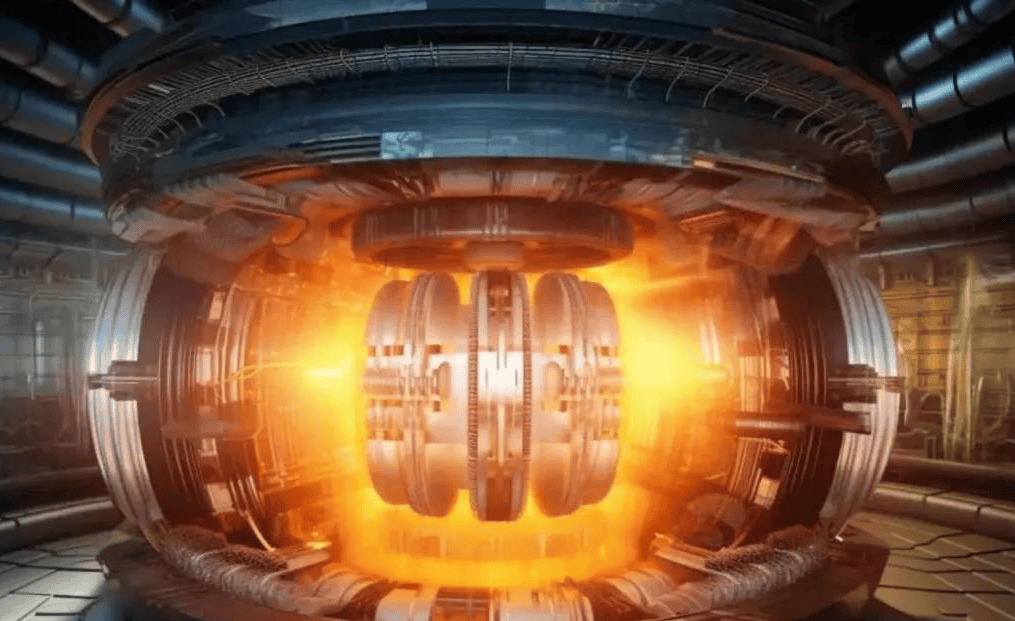
中国聚变公司成立,“人造太阳”要来了
3 6 Ke· 2025-08-04 23:16
Group 1 - The establishment of China Fusion Energy Co., Ltd. in Shanghai marks a significant step in the commercialization of China's "artificial sun" project, with a total investment of 11.492 billion yuan from seven state-owned enterprises [1] - The global competition in the controllable nuclear fusion industry is accelerating, with countries like Germany, Japan, and the UK making substantial investments in fusion energy research [3][4] - Nuclear fusion is considered a potential ultimate energy source, with the energy released from fusion of deuterium in seawater being equivalent to the total energy of all oil on Earth [4][6] Group 2 - The fuel for fusion energy, such as deuterium from seawater, is abundant and poses minimal radioactive hazards, making it a promising energy source for the future [7] - The potential of fusion energy could reshape various sectors, including industry, agriculture, and even address freshwater scarcity through cost-effective desalination [9][11] - The global race for fusion energy has seen significant advancements, with countries like the US and China making notable progress in their respective fusion projects [17][20] Group 3 - The formation of China Fusion Energy Co. is a strategic move in the national energy strategy, transitioning from a laboratory-based approach to a market-oriented model [23] - The company has a registered capital of 15 billion yuan, with investments from major state-owned enterprises, indicating a comprehensive support system for the commercialization of fusion energy [23][29] - Shanghai's role as a financial and trade center, along with its existing industrial ecosystem, positions it as a crucial hub for the development of fusion energy technologies [25][26]
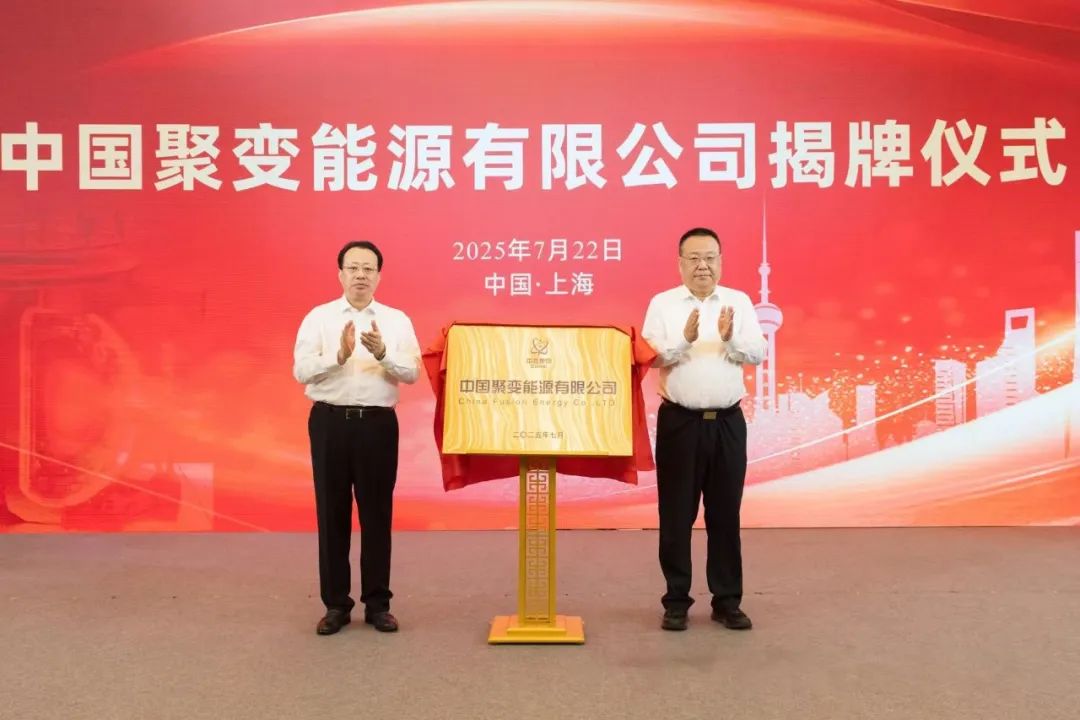
环保及公用事业行业周报:可控核聚变,人类距离“人造太阳”还有多远?-20250804
Guotou Securities· 2025-08-04 15:14
Investment Rating - The report maintains an investment rating of "Leading the Market - A" [6] Core Insights - The fusion energy industry is experiencing a "race-like development" with significant capital influx, as it is viewed as a long-term solution for clean and stable energy [1] - Approximately 50 private fusion companies globally have raised over $9 billion, with several projects aiming for grid connection by around 2035 [1] - The commercial vision of fusion energy is driving intense competition among governments and enterprises in technology, capital, and policy [1] Summary by Sections 1. Fusion Energy Development - The fusion energy sector is transitioning from scientific research to engineering validation and industrial promotion, with notable advancements in both domestic and international projects [1][2] - In the U.S., Commonwealth Fusion Systems (CFS) has partnered with Google to optimize fusion control and has established the largest fusion power purchase agreement globally [1] - Helion Energy plans to construct the world's first fusion power plant, aiming to supply 50 MW to Microsoft's data center by 2028 [1] 2. Market Performance - The report notes that from July 19 to August 1, the Shanghai Composite Index rose by 0.72%, while the public utilities index fell by 2.34% [3] 3. Industry Dynamics - China's fusion energy industry is driven by a collaboration between state-owned enterprises and private companies, forming a multi-faceted research and development ecosystem [2] - The "national team" focuses on large Tokamak devices, while private enterprises are accelerating commercialization through modular and miniaturized technologies [2] 4. Investment Portfolio and Recommendations - The report suggests focusing on key players in the thermal power sector, such as Sheneng Co., Zhejiang Energy, and Anhui Energy, which are expected to perform well despite slight coal price increases [13] - In the green energy sector, it recommends quality operators like Fuzhou Energy and Zhongmin Energy, as well as virtual power plants like Hekang New Energy and Guoneng Rixin [13] - For gas companies, it highlights the importance of monitoring domestic gas pricing policies and suggests focusing on national gas companies like China Gas and upstream-downstream integrated firms like Jiufeng Energy and Xin'ao Co. [13] 5. Pricing Trends - In August 2025, the average transaction price for electricity in Jiangsu was 393.8 RMB/MWh, up 0.72% from the benchmark price, while in Guangdong, it was 372.32 RMB/MWh, down 17.81% [11] - The average price of thermal coal in the Bohai Rim region was reported at 665 RMB/ton, with coal inventories at key power plants increasing slightly [11] 6. Future Outlook - The report anticipates that by 2050, China will achieve commercial fusion power stations, with significant advancements expected in the 2030s [44][46]