品牌转型

Search documents
60岁霸总跳团舞,“美特斯邦威们”艰难自救
3 6 Ke· 2025-09-24 11:27
Core Viewpoint - The article discusses the recent efforts of Metersbonwe and its founder Zhou Chengjian to revitalize the brand through innovative marketing strategies, including live streaming and a new retail model, amidst ongoing financial struggles and industry challenges [1][12][26]. Company Overview - Zhou Chengjian, the founder of Metersbonwe, returned to the company in January 2024 after a seven-year hiatus, aiming to reverse the brand's declining fortunes [3][12]. - Metersbonwe has faced significant financial difficulties, with a cumulative loss of nearly 3.2 billion yuan since 2015, and only one year of positive net profit during that period [3][12]. Marketing and Sales Strategies - The brand's recent live streaming event on Douyin attracted over 200,000 viewers and resulted in a stock price surge, indicating a positive market response to Zhou's return [3][12]. - Metersbonwe has implemented a "5.0 new retail model," integrating online and offline sales through promotional vouchers and live streaming, which has generated over 100 million yuan in sales within 40 days of its launch [11][12]. Financial Performance - Despite the new strategies, Metersbonwe's financial performance remains concerning, with a 49.79% year-on-year decline in total revenue for 2024, amounting to 681 million yuan, and a net loss of 195 million yuan [12][16]. - In the first half of 2025, the company reported a revenue of 227 million yuan, down 45.23% from the previous year, and a net profit of 993,000 yuan, a decrease of 87.07% [12][16]. Industry Context - Metersbonwe is not alone in its struggles; other brands like Semir and Yishion are also facing challenges in adapting to changing consumer preferences and market dynamics [17][21]. - The article highlights the broader trend of traditional casual wear brands grappling with the need for transformation in response to evolving consumer behavior and competition from fast fashion and e-commerce [26].



太平鸟转型阵痛:2025年上半年业绩双降、业绩承压 渠道表现与运营效率均难容乐观
Xin Lang Zheng Quan· 2025-09-24 09:51
Core Insights - Taiping Bird is undergoing a painful transformation period due to dual challenges of industry changes and internal adjustments [1][2] - The company is experiencing a decline in both revenue and net profit in the first half of 2025, with major brands showing varying degrees of decline [1] - Despite an increase in gross margin through higher product prices and strict discount control, operational efficiency and cost management remain unresolved issues [1] Strategic Positioning Challenges - Taiping Bird is attempting to shift from a "fast fashion" model to a "quality fashion" positioning, which has led to short-term pain [2] - The introduction of higher-priced new product lines aims to target the middle-class consumer group, but the brand lacks sufficient depth and a distinct aesthetic system to support its premium pricing in the high-end market [2] - The company's diversified brand layout may dilute its overall competitiveness compared to competitors focused on niche markets, resulting in a challenging "neither high nor low" positioning [2] Channel Adjustments and Efficiency Challenges - The company has been optimizing its channel structure by closing many underperforming stores while promoting a "superstore" model in key commercial areas [3] - Although these large stores provide brand exposure and sales growth, their high operational costs and initial investments pose a risk of "inefficient large stores" if single-store growth does not outpace area expansion [3] - Online sales have also declined, indicating a need for improvement in digital operations and online marketing amidst the rapid growth of content and social e-commerce [3] - The ongoing decrease in inventory turnover efficiency highlights potential optimization areas in product planning, supply chain management, and sales forecasting [3] - The transformation journey for Taiping Bird is expected to be challenging, with the effectiveness of its strategies in product innovation, channel restructuring, and digital transformation yet to be validated [3]

宗馥莉再“断腕”:半年两次大调整,波及中层及基层
Hu Xiu· 2025-09-18 08:32
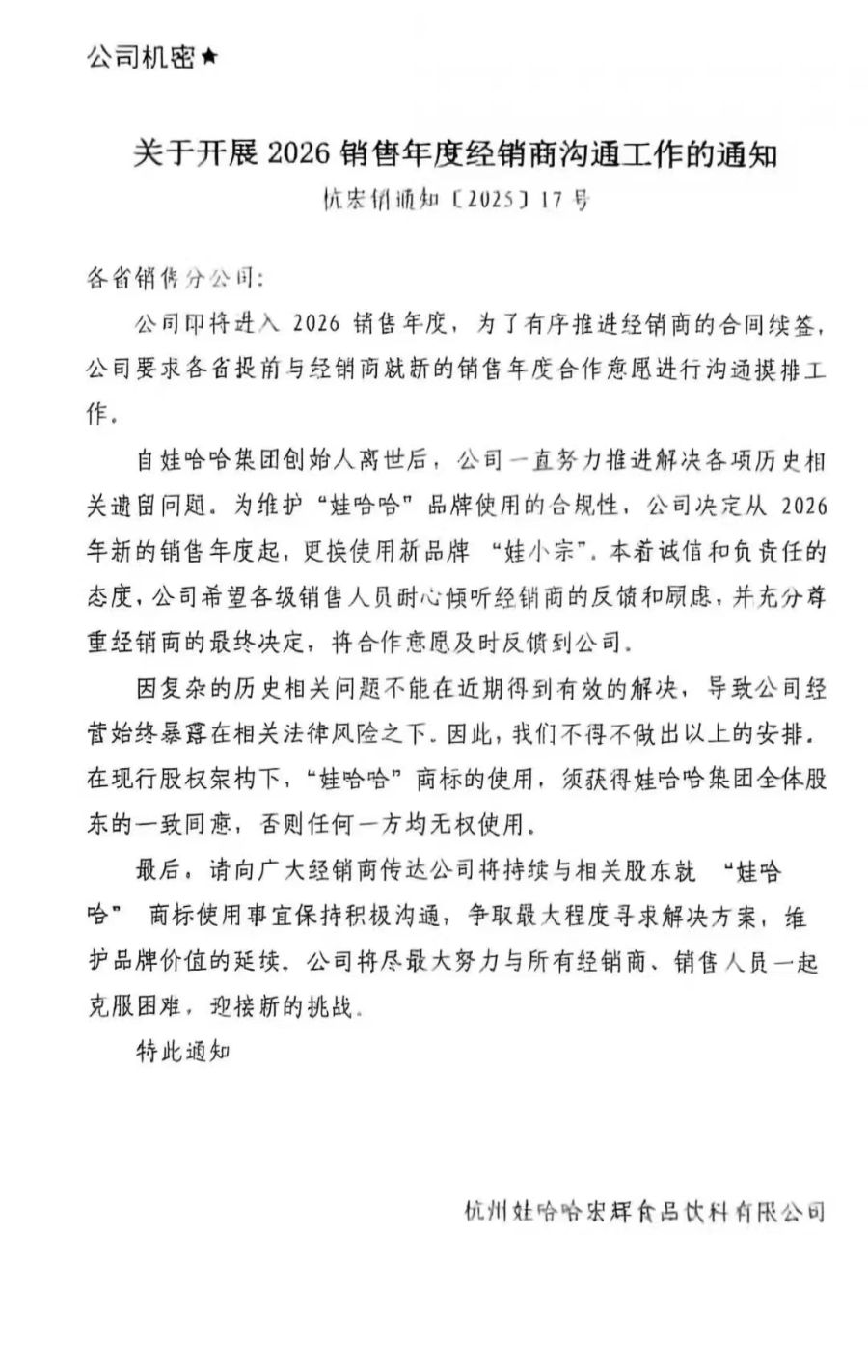
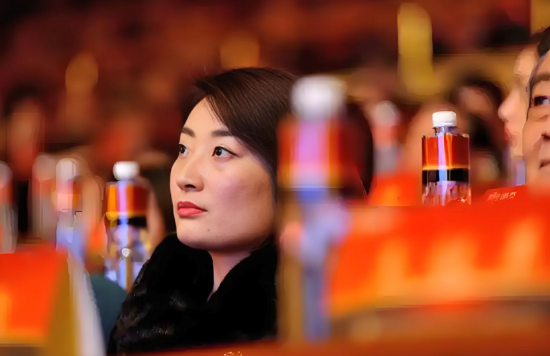
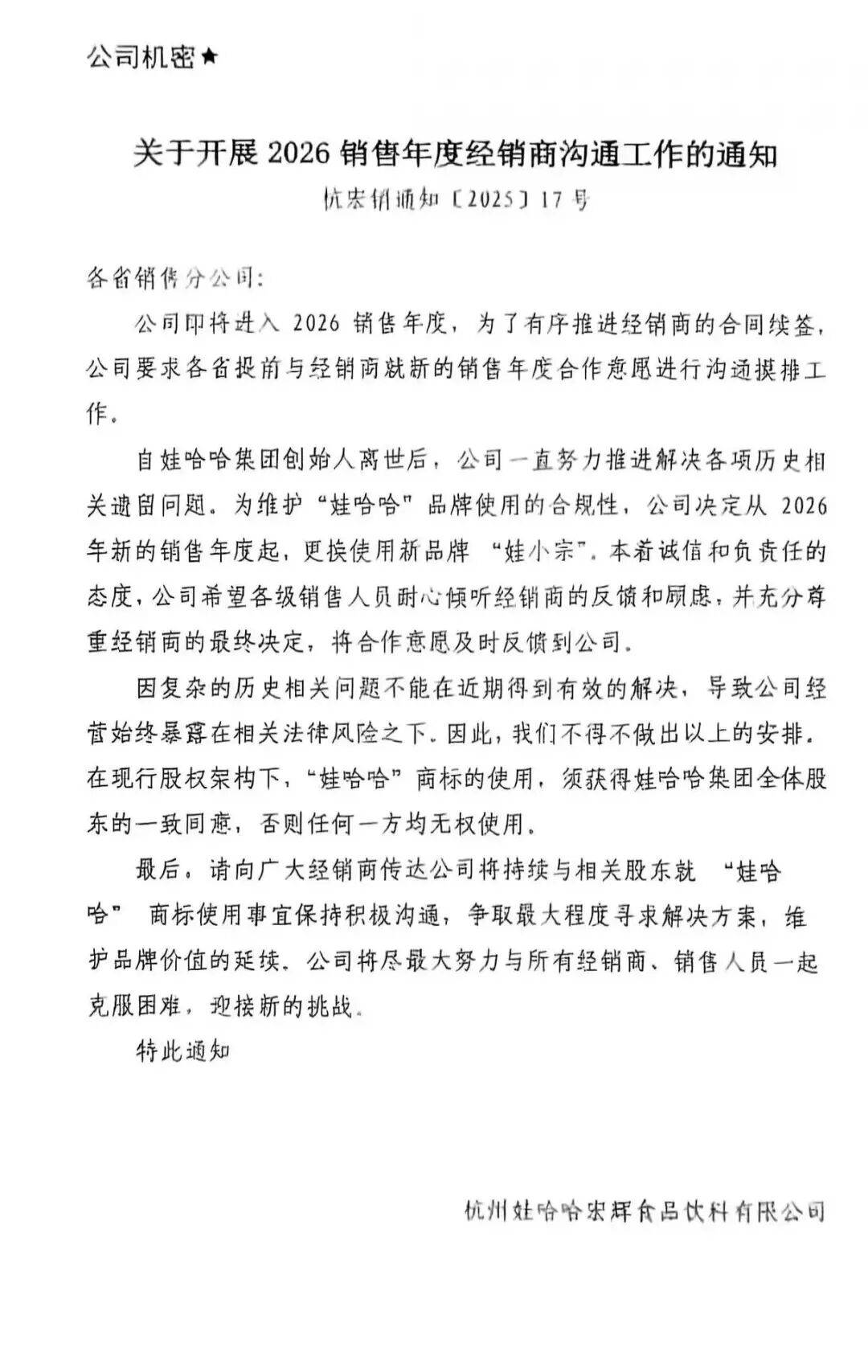
Core Viewpoint - Wahaha is planning to change its brand name to "Wawaizong" starting from the 2026 sales year due to compliance issues related to the "Wahaha" trademark, which has raised concerns internally about the potential risks associated with this decision [2][6][17]. Group 1: Brand Change and Compliance Issues - The decision to change the brand name is seen as a critical move for the company's survival, as it aims to address historical compliance issues that have exposed the company to legal risks [8][17]. - The current trademark ownership structure complicates the use of the "Wahaha" brand, requiring unanimous consent from all shareholders for its use [10]. - Previous attempts to transfer the trademark to a subsidiary were unsuccessful due to the need for shareholder approval [11]. Group 2: Internal Restructuring - Since the appointment of Zong Fuli, Wahaha has undergone significant internal reforms, including two major rounds of personnel changes within six months [3][19]. - In April, the company issued eight dismissal notices affecting many mid-level managers, followed by further adjustments in July that impacted regional managers across multiple areas [4][19]. - There have been reports of salary reductions and job relocations for long-term employees, leading to dissatisfaction and increased turnover [22][24]. Group 3: Market Performance and Future Outlook - Wahaha's sales have reportedly declined compared to previous years, raising concerns about the company's future performance [23]. - Zong Fuli has expressed a desire to lead the company to new heights, but the current challenges may hinder this ambition [24].
宗馥莉再“断腕”:半年两次大调整,波及中层及基层 | BUG
Xin Lang Ke Ji· 2025-09-18 06:15
Core Viewpoint - Wahaha is planning to change its brand name to "Wah Xiaozong" starting from the 2026 sales year to ensure compliance with brand usage, which has raised concerns internally about the decision being a "dangerous gamble" that is critical to the company's survival [2][4][12]. Brand Change Decision - The decision to change the brand name is attributed to unresolved historical issues that expose the company to legal risks, necessitating this change [6][12]. - The current ownership structure complicates the use of the "Wahaha" trademark, requiring unanimous consent from all shareholders for its use [6][12]. Internal Restructuring - Since the appointment of Zong Fuli, Wahaha has undergone significant internal reforms, including two major personnel adjustments within six months [12][14]. - In April, the company issued eight dismissal notices affecting many mid-level managers across various regions [12][14]. - In July, further adjustments were made to the sales market, resulting in the dismissal or replacement of regional managers in twelve areas [14]. Employee Impact - There have been reports of salary reductions and job relocations for many long-term employees, leading to dissatisfaction and increased turnover [16]. - Employees have experienced changes in contracts that result in lower compensation and reduced severance pay [16]. Market Performance - Wahaha's sales have reportedly declined compared to previous years, indicating potential challenges in maintaining market position amid internal and external pressures [16].
债务压力不减,威富集团再卖子品牌
Bei Jing Shang Bao· 2025-09-17 14:06
Core Viewpoint - VF Corporation is selling its workwear brand Dickies to Bluestar Alliance for $600 million to alleviate its significant debt burden, with the transaction expected to be completed by the end of 2025 [1][4]. Group 1: Financial Situation - As of March 29, 2025, VF Corporation's outstanding debt is approximately $4 billion, and debt repayment obligations may significantly impact its business and financial condition [4]. - The sale of Dickies is part of VF Corporation's strategy to reduce net debt levels and is seen as a necessary move given the company's serious debt crisis [4][6]. - Dickies has experienced a revenue decline of 14% in fiscal year 2025 and 15% in fiscal year 2024 [6]. Group 2: Brand Analysis - Dickies is a well-known American brand that has been recognized for its durability and authenticity, distributing in 55 countries [4]. - The brand has a strong presence in the domestic market, with good sales performance across online and offline channels [5]. - Analysts suggest that the sale of Dickies reflects VF Corporation's need to convert assets into cash and reduce leverage, aligning with rational choices during high-debt periods [6][10]. Group 3: Market Trends and Strategic Shifts - VF Corporation has been adjusting its brand portfolio in response to market trends, having previously acquired Dickies for $820 million in 2017 and sold other brands to focus on high-growth opportunities [7][9]. - The global trend towards casual and streetwear has slowed down, impacting VF Corporation's revenue, which fell by 10% to $10.5 billion in fiscal year 2024 [9]. - The company is now emphasizing professional outdoor attributes in its branding strategy, moving away from purely trendy labels [10][11]. Group 4: Future Outlook - VF Corporation's "Reinvent" plan aims to improve North American performance, achieve brand transformation, and strengthen its balance sheet [11]. - Recent financial reports indicate that the company's restructuring efforts are beginning to show positive results, with total revenue stabilizing at $1.8 billion in the first quarter of fiscal year 2026 [12]. - Analysts recommend that VF Corporation focus on building a strong main brand to support future growth and cash flow [12][13].


宗馥莉又放大招
创业家· 2025-09-17 10:11
Core Viewpoint - The article discusses the potential rebranding of Wahaha to "Wah Xiaozong" starting in the 2026 sales year, highlighting the internal power struggle and strategic moves by Zong Fuli, the successor of the late founder Zong Qinghou, to gain greater control over the brand and its assets [4][10][16]. Group 1: Brand Transition - The decision to change the brand name to "Wah Xiaozong" is seen as a move to maintain compliance and possibly to assert control over the brand amidst complex ownership structures [5][10]. - The Wahaha trademark currently belongs to Wahaha Group, which has a complicated shareholding structure involving multiple stakeholders [12][11]. - Zong Fuli's attempts to transfer the trademark to her own company were halted after media exposure, indicating the challenges she faces in gaining full control [14][16]. Group 2: Distributor Concerns - A significant majority of Wahaha distributors (99%) are reportedly unwilling to adopt the new brand "Wah Xiaozong," fearing it will not sell well [28][29]. - Distributors express concerns about the viability of the new brand, citing past experiences with Zong Fuli's previous brand, KellyOne, which struggled in the market [31][36]. - The current dissatisfaction among distributors is exacerbated by high sales targets set by the company, leading to a loss of confidence in the brand [38][42]. Group 3: Financial Implications - The brand value of Wahaha is estimated at 91.187 billion yuan, making the potential shelving of the brand a significant concern for all stakeholders involved [16]. - Distributors report low profit margins, with net profits around 2% to 3%, making it difficult for them to sustain their businesses under current conditions [42][46]. - The pressure from increased sales targets has led to some distributors abandoning their roles, further destabilizing the distribution network [44][48].

跟娃哈哈“分家”?宗馥莉“娃小宗”开大
3 6 Ke· 2025-09-16 09:18
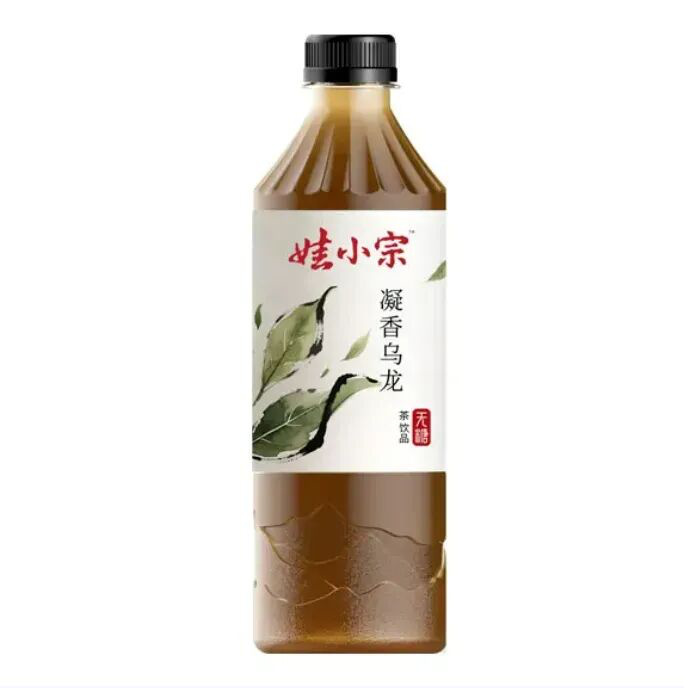
Core Viewpoint - The article discusses the strategic shift of Wahaha under the leadership of Zong Fuli, who is transitioning to a new brand "Wah Xiaozong" starting from the 2026 sales year due to legal compliance issues surrounding the use of the Wahaha brand [2][5][6]. Group 1: Brand Transition - Zong Fuli's "Zong Sheng" enterprises will officially adopt the new brand "Wah Xiaozong" from the 2026 sales quarter [2]. - The decision to change the brand is driven by the need to maintain compliance with brand usage regulations, as the current ownership structure requires unanimous consent from all shareholders to use the Wahaha trademark [6]. - The first major product under the new brand, a sugar-free oolong tea, was launched but did not perform well in the market, indicating challenges in brand recognition [12]. Group 2: Shareholder Dynamics - The largest shareholder of Wahaha is a state-owned enterprise holding 46%, while Zong Fuli holds 29.4%, complicating her ability to make unilateral decisions regarding the brand [6]. - The ongoing legal disputes with half-siblings over inheritance and trust rights have further complicated the situation for Zong Fuli, impacting her strategic plans [2][6]. Group 3: Market Position and Challenges - Wahaha's brand value is significant, with estimates around 911.87 billion yuan, making it a major player in the Chinese beverage market [9]. - Despite the brand's strength, the transition to "Wah Xiaozong" is seen as a temporary measure to address legal issues rather than a long-term strategy [10]. - The company faces challenges in rebuilding trust with distributors and reshaping consumer perceptions of the new brand [14]. Group 4: Financial Performance - Recent reports indicate a decline in Wahaha's sales, with current figures at 80% of last year's peak performance [15]. - Zong Fuli acknowledged the pressures faced by the fast-moving consumer goods industry and the need for strategic adjustments to meet performance targets [16]. - The company is focusing on core beverage operations and has begun to eliminate underperforming distributors to streamline operations [16].

追踪:宗馥莉豪赌“娃小宗”走上不归路
Sou Hu Cai Jing· 2025-09-15 03:17
Core Points - The company has decided to change its brand name to "Wah Xiaozong" starting from the new sales year in 2026 to ensure compliance with brand usage following the founder's passing [1][3] - The internal document indicates a sense of urgency and determination in the decision-making process, as reflected in the phrase "have no choice" [3] Ownership Structure - The ownership of Hangzhou Wahaha Group is complex, with state-owned capital holding 46%, Zong Fuli holding 29.4%, and an employee stock ownership plan holding 24.6% [3] - The presence of state-owned capital complicates major decisions such as trademark usage, requiring consent from other stakeholders [3] Business Autonomy and Transformation - The "Hongsheng System" enterprises, controlled by Zong Fuli, aim to use the new brand to escape the constraints of equity disputes and trademark controversies, allowing for greater business autonomy and transformation [4] - The launch of "Wah Xiaozong" is expected to gain attention and recognition due to its similarity to "Wahaha," providing a strategic advantage [4] Challenges Ahead - The new brand faces significant challenges, including a potential public break with state-owned capital, which could lead to operational difficulties if support is lost [4] - There is a risk of consumer backlash against Zong Fuli, which may affect sales of "Wah Xiaozong" products [4] - Building market presence and trust for the new brand will require considerable time and effort amidst fierce competition [4]
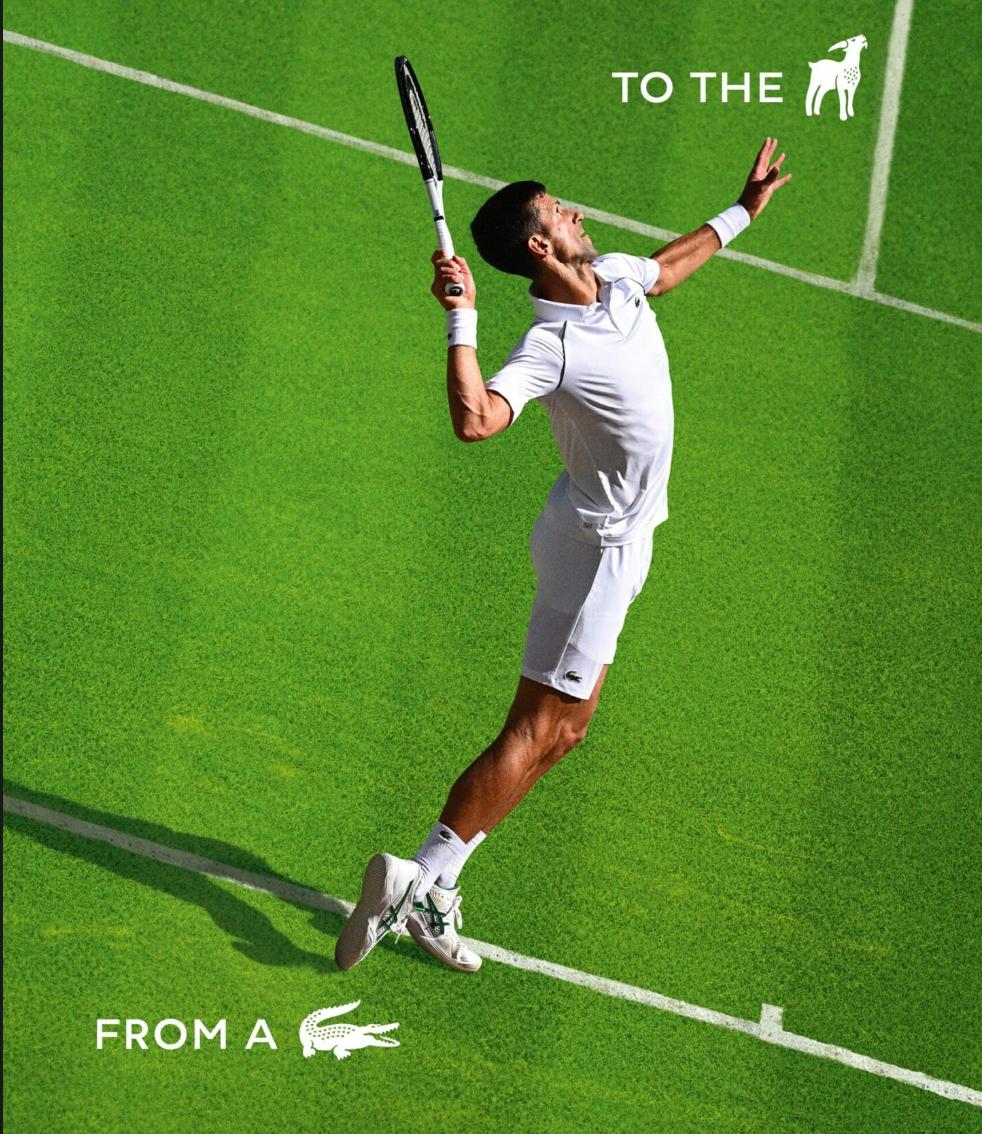
92年鳄鱼“换标”山羊,Lacoste为冲40亿欧拼了
3 6 Ke· 2025-09-15 00:46
Group 1 - Lacoste has made a bold marketing move by changing its iconic green crocodile logo to a goat, symbolizing "the GOAT (Greatest of All Time)" in tribute to tennis legend Novak Djokovic, but the actual impact has not been ideal [1][9][10] - The brand has designed a special jacket for Djokovic for the US Open, featuring a world map and colored tennis balls representing his achievements in Grand Slam tournaments, which has drawn attention to Lacoste's deep ties with tennis [3][5] - Despite the logo change and the launch of the "From Crocodile to the GOAT" limited capsule collection, the simplistic design has faced criticism from fans, and the high price point of 1390 yuan for the polo shirt has deterred many [10][12][13] Group 2 - Lacoste has been closely associated with tennis since its founding in 1933 by René Lacoste, a former tennis champion, and has maintained partnerships with major tennis events and players, including Djokovic [5][7] - The brand aims to expand its presence in the North American market, targeting a projected sales figure of approximately 400 million USD in 2024, while also enhancing its brand visibility through partnerships and new store openings [18][19] - In China, Lacoste is focusing on direct sales and e-commerce, having recently won a trademark infringement case, which allows for greater market expansion, including the opening of a full-category concept store in Shanghai [19] Group 3 - Lacoste has undergone significant management changes, with Thierry Guibert stepping down after a decade as CEO, during which the brand's annual sales grew from approximately 1 billion euros in 2015 to nearly 3 billion euros in 2024, with a target of reaching 4 billion euros by 2028-2030 [22][26] - The new CEO, Eric Vallée, faces challenges from both the previous CEO's strong performance and the overall decline in the luxury goods market, as reports indicate a potential decrease in global luxury sales by 2% to 5% by 2025 [30][31]
“娃哈哈”商标争议?宗馥莉或启用新品牌“娃小宗”,半年前注册
2 1 Shi Ji Jing Ji Bao Dao· 2025-09-14 08:53
Group 1 - The core point of the article is that Wahaha Group, led by its head Zong Fuli, is planning to launch a new brand "Wah Xiaozong" starting from the 2026 sales year, following the founder's passing and ongoing issues related to the historical brand usage [1][3][7] - An internal document from Hangzhou Wahaha Honghui Food and Beverage Co., Ltd. indicates that the company is working to resolve historical issues and will seek the consent of all shareholders for the use of the "Wahaha" trademark [1][6] - The document, dated September 12, 2023, is confirmed by multiple companies under the control of Hongsheng Beverage Group, indicating that the new brand initiative is legitimate and not fabricated [3][6] Group 2 - The "Wahaha" trademark, valued at over 90 billion, has been subject to controversy, with the Wahaha Group applying for the transfer of 387 trademarks to Hangzhou Wahaha Food Co., Ltd. as of January 21, 2025 [7] - The company has indicated that due to uncertainties in the trademark transfer process, it is preparing to launch a new proprietary brand, which aligns with the introduction of "Wah Xiaozong" [7] - The "Wah Xiaozong" trademark application was filed by Hongsheng Beverage on February 19, 2025, covering various categories including beverages and food, with multiple registrations following in subsequent months [7]