
成本控制

Search documents
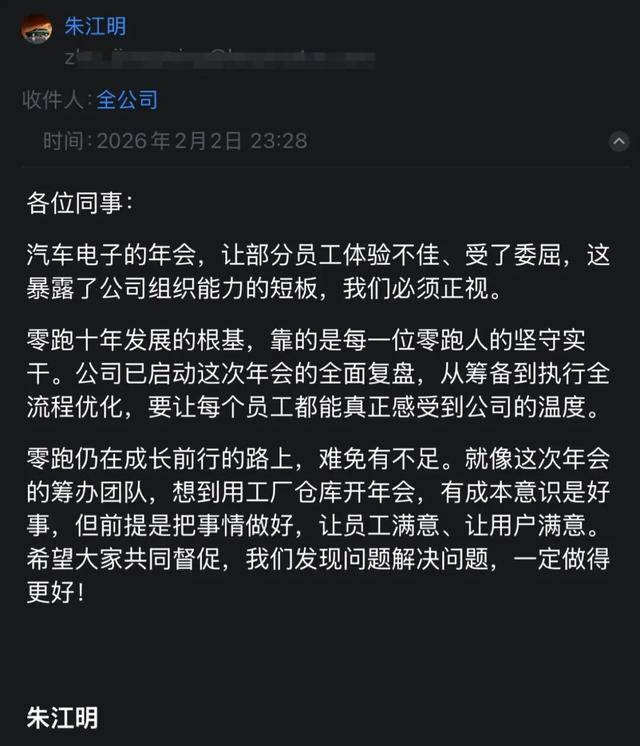
员工被要求自带干粮参加年会,零跑汽车董事长深夜发邮件道歉
Sou Hu Cai Jing· 2026-02-03 13:11
Core Viewpoint - The recent controversy surrounding Leap Motor's annual meeting highlights significant organizational shortcomings, prompting the company's leadership to acknowledge issues and commit to improvements [4][7]. Group 1: Event Overview - Leap Motor's annual meeting, held on January 30, faced backlash from employees who criticized the experience as "ridiculously poor," citing issues such as lack of food, inadequate facilities, and poor weather conditions [3]. - Employees were advised to bring their own food, and the event took place in a factory warehouse without air conditioning, leading to discomfort [3]. Group 2: Management Response - In a letter to employees on February 2, CEO Zhu Jiangming admitted the shortcomings and emphasized the need to address organizational weaknesses, stating that cost control should not compromise employee satisfaction [4]. - The company has initiated a comprehensive review of the event planning and execution processes to ensure a better experience for employees in the future [4]. Group 3: Public Reaction - The public response to the incident was mixed, with some employees defending the company by clarifying that certain criticisms were exaggerated, mentioning that prizes included high-value items like iPhone 17 and DJI products [5]. - Zhu Jiangming's candid acknowledgment of the issues and commitment to improvement received positive feedback from rational observers, indicating a recognition of the company's accountability [5]. Group 4: Implications for the Company - This incident serves as a pressure test for Leap Motor, which aims to become a leading player in the electric vehicle market by 2025, highlighting the importance of balancing cost efficiency with employee experience [7]. - The challenge for the company, as well as many startups, is to develop a more empathetic organizational culture while maintaining a focus on practical and efficient growth strategies [7].


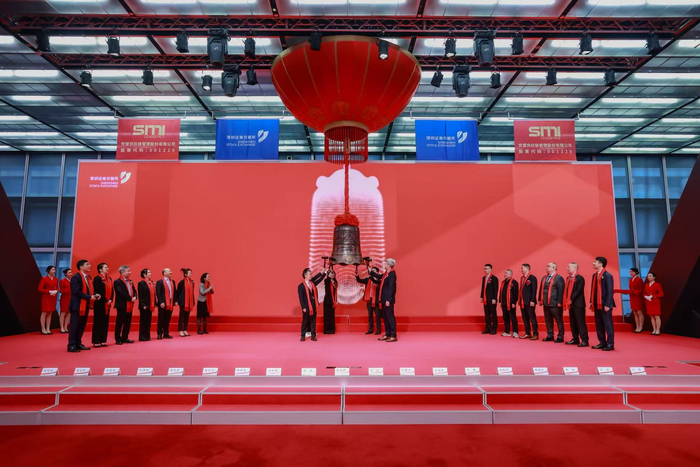
世盟股份登陆深交所主板 资本赋能跨国制造物流高质量发展
Zheng Quan Ri Bao Zhi Sheng· 2026-02-03 10:41
Core Viewpoint - Shimon Supply Chain Management Co., Ltd. has officially listed on the Shenzhen Stock Exchange, marking a new phase of dual-driven development in capital markets and industry growth [1][8] Company Overview - Shimon focuses on the supply chain logistics needs of multinational manufacturing enterprises, providing customized, integrated, and embedded logistics solutions [5][6] - The company has established strong partnerships with leading firms in various manufacturing sectors, including automotive and packaging, and has built a solid industry reputation [5] Financial Performance - Shimon's revenue is projected to grow from 808 million yuan in 2022 to 1.028 billion yuan in 2024, with a compound annual growth rate (CAGR) of 12.8%, significantly above industry averages [6] - Net profit is expected to increase from 112 million yuan in 2022 to 170 million yuan in 2024, with a CAGR of 23.6%, indicating strong profitability and resilience [6] Industry Context - The logistics industry in China is transitioning from scale growth to quality and efficiency enhancement, with a projected market size of 24,099 billion yuan by 2024 [7] - More manufacturing companies are outsourcing logistics to specialized firms to focus on core business operations, which is expected to drive demand for Shimon's services [7] Strategic Development - The funds raised from the IPO will be used for core business upgrades, network optimization, and information technology enhancements, aiming to elevate service capabilities [1][8] - Shimon aims to expand its domestic service network while actively pursuing overseas market opportunities to enhance its global supply chain logistics capabilities [8]
中粮科技(000930) - 中粮科技:000930中粮科技投资者关系管理信息20260202②
2026-02-03 08:16
Group 1: Business Overview - The company operates in three main business segments: - Fuel ethanol business accounts for approximately 44% of revenue, with a production capacity of 1.3 million tons and a market share of 32%-40% in a domestic market of about 3 million tons per year [1][2] - Food raw materials business contributes around 20%-30% of revenue, focusing on customized sweetener solutions for leading food and beverage companies [2][3] - Biobased new materials business is a strategic emerging segment expected to start production in Q1 2026, leveraging existing corn deep processing capacity [3][4] Group 2: Competitive Landscape - Fuel ethanol is categorized as biomass energy, with no direct competition from coal-based ethanol due to regulatory restrictions [3][4] - Long-term demand for fuel ethanol remains stable, driven by the coexistence of fuel and new energy vehicles and regulatory requirements for gasoline quality [4][5] - The company aims to maintain its market position by building a comprehensive cost advantage through technology upgrades, diversified raw material sourcing, and optimized internal management [5][6] Group 3: Regional Strategies - In Northeast China, the company focuses on cost reduction and efficiency improvements through personnel optimization and major technological upgrades [6][7] - The company is adapting its competitive strategy in the starch and MSG sectors by shifting focus from low-value products to high-margin offerings [7][8] Group 4: Innovation and Future Prospects - The company has a three-step strategy for its core health sweetener product, allulose, with plans for market expansion and collaboration with leading food and beverage companies [8][9] - The company anticipates that high-value products like flavored syrups will see increased revenue share as market demand grows [9] - The progress of the lactide project has been delayed due to site relocation and necessary adjustments, but the long-term outlook remains positive [9] Group 5: Raw Material Management - The company employs risk management strategies, including hedging, to manage procurement costs and mitigate price volatility risks, particularly for corn [9]

中粮科技(000930) - 中粮科技:000930中粮科技投资者关系管理信息20260202③
2026-02-03 08:16
Group 1: Fuel Ethanol Business Overview - Fuel ethanol is one of the three core businesses of the company, accounting for 44%-45% of total revenue, making it a significant source of income and profit [1] - The company has a production capacity of 1.3 million tons of fuel ethanol, with a market share of approximately 32%, indicating a solid industry position [1] - The company has established long-term stable partnerships with oil and petrochemical enterprises, resulting in mature sales channels [1] Group 2: Cost Advantages in Fuel Ethanol - The company utilizes diversified raw materials, including corn and cassava, and integrates low-cost cassava resources from Southeast Asia to optimize procurement costs [2] - A nationwide layout of production bases in Northeast China, Anhui, and Guangxi significantly reduces logistics costs and regional operational losses [2] - Continuous investment in technological upgrades and personnel optimization enhances operational efficiency and reduces costs [2] Group 3: Industry Trends and Competition - The fuel ethanol industry is undergoing structural adjustments, with a trend towards the elimination of inefficient production capacity due to market changes and price fluctuations [2] - Future competition will focus on cost control, refined management, and comprehensive service capabilities, favoring companies with cost advantages and compliance [2] - The industry concentration is expected to increase as less competitive companies exit, benefiting leading enterprises [2] Group 4: Future Planning and Strategic Focus - The food raw materials business will focus on strengthening core operations, enhancing value, expanding regions, and optimizing layouts [3] - The company plans to invest in starch sugar business expansion, upgrade food raw material production lines, and develop bio-based industry projects [3] - The company has established a risk management mechanism to mitigate the impact of commodity price fluctuations on profitability [3] Group 5: Financial Management and Asset Planning - The company will prioritize investments in core business development, shareholder returns, and financial structure optimization [3] - Cash reserves will be used to support main business growth, maintain stable cash dividends, and optimize debt structure [3] - Asset impairment is primarily due to inventory depreciation, influenced by the cyclical nature of raw material procurement [3]
黄山旅游20260202
2026-02-03 02:05
黄山旅游 20260202 摘要 2025 年黄山旅游客群结构中,亲子团体占比 40%,银发族占 20%,年 轻人占 20%,散客比例显著增加至 90%以上,主要客源地为安徽、江 苏、上海和浙江,广州、福建和南京等地游客量有所增加。该数据对调 整营销策略,如亲子游产品设计、老年人优惠套餐等具有重要参考价值。 杭衢高铁开通将缩短长三角地区到达时间,利好周边游和周末游,可能 显著提升客流。投资者应关注高铁开通后的客流增长数据,评估其对公 司营收的实际影响,并关注公司针对高铁沿线市场的营销策略。 公司计划通过酒店改造提升和新增供给提高游客量和消费水平,北海宾 馆改造完成后将增加山上酒店供给。投资者应关注酒店改造进度和入住 率提升情况,评估其对公司盈利能力的贡献。 花山迷窟和太平湖目前处于亏损状态,审批状态未定,未来计划增加体 验性项目以改善盈利状况。投资者应关注审批进展和项目落地情况,评 估其扭亏为盈的可能性。 公司将加强私域流量建设,通过数据化和大数据手段进行精准营销,减 少对大平台流量的依赖。投资者应关注私域流量建设的成效,评估其对 降低营销成本和提高客户忠诚度的影响。 Q&A 请介绍一下黄山旅游近期的情况及未 ...

生猪养殖板块业绩预告的线索
2026-02-03 02:05
Summary of the Livestock Farming Industry Conference Call Industry Overview - The livestock farming industry is currently facing widespread losses, with sales prices around 11.5 yuan per kilogram, while some companies have costs exceeding 13.5 yuan, leading to losses of 220-240 yuan per pig [1][2] - Despite profitability, Muyuan Foods only earns 10 yuan per pig, maintaining costs around 11.4 yuan per kilogram [1][2] - Significant cost disparities exist among companies, with differences of 1.5-2 yuan per kilogram [1][3] - The industry is expected to see continued differentiation in profitability in Q1 2026, with some companies profitable and others incurring losses [1][5] Financial Performance - In 2021-2022, the industry incurred losses of 40.2 billion yuan, with Muyuan Foods earning 20 billion yuan, while the other 13 companies collectively lost 60 billion yuan [1][7] - From 2023-2025, the industry is projected to achieve a profit of 14 billion yuan, with Muyuan contributing 30 billion yuan, while the other 13 companies will collectively lose 16.4 billion yuan [1][7] - Over the 2021-2025 period, the industry will have a total loss of 26.2 billion yuan, with Muyuan contributing 50 billion yuan, while the other 13 companies will have a combined loss of 76.3 billion yuan [1][8] Cost Trends - The overall cost in the industry is expected to decline in 2025, with specific companies showing significant reductions: - Wen's from 12.7 yuan to 12 yuan - Muyuan from 12.8 yuan to 11.4 yuan - New Hope from 13.5 yuan to 13.2 yuan - These reductions are attributed to improvements in feed and management efficiency [1][6] Future Expectations - The livestock farming industry is likely to see an increase in overall asset-liability ratios, with some companies adjusting their breeding stock to cope with ongoing losses and anticipated cost reductions [1][5] - Companies that have made provisions for impairment and adjusted breeding stock are better prepared for future uncertainties [1][5] Investment Insights - Investors should focus on low-cost, high-efficiency companies that can sustain profitability, while exercising caution with long-term loss-making and high-debt companies [3][9] - A flexible, multi-dimensional approach to valuation is recommended to accurately reflect the operational status and risk levels of these companies [3][9]

Alliance Resource Partners(ARLP) - 2025 Q4 - Earnings Call Transcript
2026-02-02 16:02
Financial Data and Key Metrics Changes - For Q4 2025, adjusted EBITDA was $191.1 million, up 54.1% from Q4 2024 and up 2.8% sequentially from Q3 2025 [4] - Net income attributable to ARLP in Q4 2025 was $82.7 million, or $0.64 per unit, compared to $16.3 million, or $0.12 per unit, in Q4 2024 [4] - Total revenues were $535.5 million in Q4 2025, down from $590.1 million in Q4 2024, primarily due to lower coal sales and transportation revenues [5] Business Line Data and Key Metrics Changes - Average coal sales price per ton for Q4 2025 was $57.57, a 4% decrease year-over-year and a 2.1% decrease sequentially [6] - Total coal production in Q4 2025 was 8.2 million tons, compared to 6.9 million tons in Q4 2024 [6] - In the Illinois Basin, coal sales volumes were 6.5 million tons in Q4 2025, down approximately 2% compared to both Q4 2024 and Q3 2025 [7] - In Appalachia, coal sales volumes were 1.7 million tons in Q4 2025, down from 1.8 million tons in Q4 2024 [8] Market Data and Key Metrics Changes - The oil and gas royalty segment achieved total revenue of $56.8 million in Q4 2025, up 17.2% year-over-year [11] - BOE volumes increased 20.2% year-over-year and 10% sequentially in Q4 2025 [11] - Total liquidity as of December 31, 2025, was $518.5 million, including $71.2 million in cash [13] Company Strategy and Development Direction - The company anticipates overall coal sales volumes for 2026 to increase to 33.75 million tons - 35.25 million tons, despite reduced sales volumes at the Mettiki Mine [14] - Contracting activity for 2026 is robust, with over 93% of expected volumes already committed and priced [14] - The company remains committed to investing in its oil and gas royalties business and pursuing disciplined growth in this segment [17] Management's Comments on Operating Environment and Future Outlook - Management highlighted strong contracting activity and a favorable supply-demand dynamic as utilities opt for longer-term agreements [19] - The company noted that coal's value to the grid is increasingly recognized, especially during extreme weather events [26] - Management expects demand growth driven by data centers and industrial development, which will support coal pricing [25] Other Important Information - The company ended Q4 2025 with 1.1 million tons of coal inventory, an increase compared to previous quarters [10] - The anticipated impact of reduced sales volumes at Mettiki is reflected in the 2026 guidance, with potential impairment evaluations planned for Q1 2026 [10] Q&A Session Summary Question: What does it take to get to the high or low end of your price per ton guidance? - Management indicated that most remaining tons to be sold are in the Illinois Basin, with potential upside depending on customer contract flexibilities [34] Question: What would it take for Alliance to increase production? - Management stated that no new units are planned, but productivity improvements are expected to drive growth [40] Question: Any thoughts on modeling equity method investments going forward? - Management suggested a lower run rate of around $3 million per quarter for equity investment income moving forward [43] Question: How should we think about quarterly sales cadence in 2026? - Management expects Q1 2026 to be the lowest sales quarter, with gradual improvement anticipated in subsequent quarters [49] Question: How do you expect export sales to compare to 2025 levels? - Management noted that export sales are limited, focusing primarily on domestic customers due to higher netbacks [51]

2025年报业绩预告开箱(六):百亿巨亏连环爆,AI与创新药继续领跑
市值风云· 2026-02-02 10:24
Core Viewpoint - The article highlights the performance forecast of various A-share listed companies, indicating a significant divergence in earnings growth across different sectors, driven by technological advancements, cost control, and industry cycles [4][62]. Group 1: Companies with Strong Earnings Growth - **New Yisheng (300502.SZ)**: Expected net profit of 9.4 billion to 9.9 billion, a year-on-year increase of 231.24% to 248.86%, driven by rising demand for high-speed optical modules due to global computing power investments [6]. - **Han's Laser (688256.SH)**: Expected net profit of 1.85 billion to 2.15 billion, turning from a loss of 0.452 billion in the previous year, benefiting from the increasing demand for AI computing power [8]. - **Zhongji Xuchuang (300308.SZ)**: Expected net profit of 9.8 billion to 11.8 billion, a year-on-year increase of 89.50% to 128.17%, supported by strong investment in computing infrastructure [10]. - **Runze Technology (300442.SZ)**: Expected net profit of 5 billion to 5.3 billion, a year-on-year increase of 179.28% to 196.03%, primarily due to non-recurring gains from public REITs issuance [12]. - **CITIC Securities (601995.SH)**: Expected net profit of 8.542 billion to 10.535 billion, a year-on-year increase of 50% to 85%, driven by steady growth in core business segments [15]. Group 2: Companies with Earnings Below Expectations - **Great Wall Motors (601633.SH)**: Expected net profit of 9.912 billion, a year-on-year decrease of 21.71%, impacted by increased marketing expenses and intense competition [34]. - **GAC Group (601238.SH)**: Expected net profit of -8 billion to -9 billion, turning from a profit of 0.824 billion in the previous year, due to fierce competition and adjustments in product structure [36]. - **GCL-Poly Energy (002506.SZ)**: Expected net profit of -0.89 billion to -1.29 billion, turning from a profit of 0.068 billion, affected by structural supply-demand issues in the photovoltaic industry [38]. - **Boli Tianheng (688506.SH)**: Expected net profit of -1.1 billion, turning from a profit of 3.708 billion, due to increased R&D expenses [39]. - **Daiyue City (000031.SZ)**: Expected net profit of -2.7 billion to -2.1 billion, continuing losses from the previous year, influenced by asset impairment provisions [42]. Group 3: Industry Trends - **Technological Breakthroughs**: Industries driven by technology, such as AI and innovative pharmaceuticals, are showing strong growth, with companies like New Yisheng and Rongchang Bio leading the way [62][63]. - **Cost Control**: The energy and manufacturing sectors are experiencing a clear divide, with companies like Datang Power benefiting from lower coal prices and effective cost management [64]. - **Downward Pressure from Industry Cycles**: The real estate, agriculture, and photovoltaic sectors are under significant pressure, with companies like Vanke and Tianbang Food facing substantial earnings declines [65][66].






单车成本飙涨7000元,今年汽车公司还打得动价格战吗?
Xin Lang Cai Jing· 2026-02-01 05:42
智通财经记者 | 周姝祺 2026年伊始,中国车市需求复苏乏力,汽车公司仍深陷以价换量的泥潭之中。而在远离展厅的供应链深处,一场更具杀伤力的成本风暴在同步酝酿。铜、 铝、碳酸锂等关键原材料与存储芯片价格齐涨,正进一步挤压本就微薄的利润空间,让汽车制造这门生意变得愈发艰难。 根据瑞银投资银行向智通财经提供的研报数据,受2026年初刺激措施退坡、购置税恢复与大宗商品成本上涨的三重挑战冲击,预计一辆普通的中型智能化电 动汽车的成本涨幅高达4000至7000元。 在大多数成熟工业行业,大幅度的成本上涨通常会转嫁至终端售价。但在竞争淘汰出清、需求偏弱的当下中国电动汽车市场,涨价几乎等同于让出份额。整 车厂或被迫自行消化成本,或层层转嫁至上游供应商。在利润和现金流之间,一场围绕成本控制的博弈正在全行业展开。 汽车公司本轮承受的成本上涨,并不完全来自熟悉的矿山等上游资源端,而是被人工智能爆发引发的算力和数据中心需求外溢所推高。富国银行在研究报告 中指出,数据中心和人工智能应用需求激增,正推高全球存储芯片供需缺口,汽车制造商面临新的成本压力和潜在的供应中断风险。 对于整车企业而言,存储芯片早已成为智能汽车的底层配置,广泛嵌入 ...

ArcBest(ARCB) - 2025 Q4 - Earnings Call Transcript
2026-01-30 15:32
Financial Data and Key Metrics Changes - Consolidated revenue for the fourth quarter was $973 million, down 3% year-over-year [14] - Non-GAAP operating income from continuing operations was $14 million, compared to $41 million last year [14] - Adjusted non-GAAP earnings per share were $0.36, down from $1.33 in the fourth quarter of 2024 [14] Business Line Data and Key Metrics Changes - Asset-Based LTL shipments increased 2% year-over-year, averaging about 20,000 shipments per day [7] - Revenue for the Asset-Based segment was $649 million, flat on a per-day basis [15] - Asset-Light segment revenue was $354 million, a daily decrease of 5% year-over-year [17] - Non-GAAP operating results for Asset-Light were break-even for the quarter, an improvement from a $17 million loss in 2024 [18] Market Data and Key Metrics Changes - Daily shipments in January increased 3% year-over-year, with weight per shipment increasing 5% [16] - In January, Asset-Light daily revenue increased 6% year-over-year, with shipment growth of 13% led by Managed Solutions [19] Company Strategy and Development Direction - The company focuses on three pillars: growth, efficiency, and innovation, aiming to deliver premium service and maintain a customer-first mindset [5][6] - The company is advancing initiatives outlined at the Investor Day to achieve long-term targets and deliver greater shareholder value [6] - Investments in technology and optimization projects are expected to enhance operational efficiency and customer service [10][12] Management's Comments on Operating Environment and Future Outlook - Management acknowledged the ongoing freight recession and market volatility but expressed confidence in the company's strategic direction and ability to navigate challenges [5][20] - The company anticipates a typical seasonal increase in operating ratio but expects it to be better than historical averages due to a softer fourth quarter [17] - Management remains focused on maintaining yield discipline and managing costs to position the company for sustainable long-term profitability [20] Other Important Information - The company welcomed new independent directors to strengthen its board [7] - The company returned over $86 million to shareholders through share repurchases and dividends in 2025 [22] - The balance sheet remains strong with approximately $400 million in available liquidity [22] Q&A Session Questions and Answers Question: Follow-up on January trends and tonnage - Management noted that January was impacted by strong winter storms, affecting shipment dynamics and tonnage levels [25][27] Question: Mix normalization and competitive dynamics - Management indicated that the mix of business has been influenced by the ongoing freight recession and that they are focused on managing profitability [32][33] Question: January trends and industry-wide dynamics - Management clarified that January trends were influenced by specific dynamics within the company, but the overall industry is experiencing similar weather impacts [38] Question: Competitive pricing environment - Management stated that pricing discipline remains rational in the market, with less bid activity from customers being a positive sign [85] Question: Insights from new COO on Asset-Light business - The new COO expressed confidence in the growth of the Asset-Light business and the company's strong foundation in Managed Solutions [88]
