
换电模式

Search documents
破局野蛮生长,电动车充电桩行业竞争进入下半场
2 1 Shi Ji Jing Ji Bao Dao· 2025-05-27 07:57
Core Viewpoint - The Chinese charging industry is undergoing a technological revolution, shifting from a "price war" to a value-driven approach, with a focus on improving charging efficiency and safety standards [1][2]. Industry Development - The overall scale of charging infrastructure in China has evolved from non-existence to a balanced development of slow and fast charging, transitioning towards high-quality growth [1]. - The Ministry of Transport and ten other departments have set goals for 2027 and 2035 to enhance the integration of transportation and energy sectors, establishing a collaborative development mechanism [1][6]. Technological Advancements - The year 2024 is seen as a watershed moment for the charging industry, with significant price drops in charging modules and the introduction of mandatory CCC certification for charging equipment [2]. - Major players like BYD and Huawei have introduced megawatt-level fast charging technologies, which are expected to redefine the power ceiling for charging [3]. Safety Concerns - As charging power demands increase, especially for electric vehicles and other electric transport, safety and reliability challenges are emerging [5]. - The industry faces multiple risks, including fire hazards and emergency response difficulties in unattended scenarios, prompting the need for comprehensive safety solutions [5]. Market Opportunities - The electric heavy truck market is projected to see significant growth, with sales expected to reach 82,000 units in 2024, marking a 140% year-on-year increase [5][6]. - The demand for specialized charging infrastructure, such as fast charging and battery swapping stations, is rising due to the unique operational characteristics of heavy trucks [7]. Competitive Landscape - The charging industry is experiencing fierce competition, with price wars impacting profitability and leading to a focus on technological upgrades and market restructuring [8]. - Despite advancements in fast charging technology, there are concerns about the current capacity of fast-charging batteries to support large-scale electric vehicle deployment [8]. Challenges in Infrastructure - The construction of ultra-fast charging stations faces economic, technical, and infrastructural challenges, including high equipment costs and low utilization rates [9]. - The lack of unified technical standards and compatibility issues among different stakeholders is hindering the development of a cohesive charging network [9]. Recommendations for Development - Experts suggest establishing a collaborative ecosystem for public ultra-fast charging services, emphasizing the need for efficient use of existing infrastructure rather than blind expansion [10].

宁德时代强势加码 换电赛道迎新变局
Zheng Quan Shi Bao· 2025-05-26 18:06
Core Viewpoint - The entry of CATL into the battery swapping market has significantly energized the sector, leading to strategic partnerships and a clearer business model for battery swapping services [2][3][5]. Group 1: Strategic Partnerships and Market Dynamics - CATL has formed strategic partnerships with major players like NIO and Sinopec to develop a comprehensive battery swapping service network, aiming to build at least 500 swapping stations by 2025, with a long-term goal of 10,000 stations [3][5]. - The company has launched 10 new battery swapping models in collaboration with several automakers, indicating a strong push into the consumer market beyond just commercial vehicles [4][5]. - The market sentiment towards battery swapping has shifted positively, with automakers now actively seeking partnerships, reflecting a growing acceptance of the model [3][5]. Group 2: Policy and Market Support - The Chinese government has been supportive of battery swapping, with policies encouraging its development since 2020, including the establishment of national standards and tax incentives for battery swapping vehicles [6][7]. - The battery swapping model is gaining traction among consumers, with over 80% of new users at NIO opting for battery-as-a-service (BaaS) and battery swapping options [7][8]. Group 3: Industry Challenges and Standardization - Despite the positive developments, the battery swapping industry faces challenges such as high initial investment costs and a lack of standardization across different vehicle brands, which hinders scalability [5][9]. - CATL is working to address these challenges by introducing standardized battery sizes and collaborating with NIO to unify industry standards, which could enhance the feasibility of battery swapping [9][10]. Group 4: Future Outlook and Innovations - The battery swapping model is expected to evolve, with predictions that it will penetrate lower-tier vehicle markets, making it accessible to a broader consumer base [7][8]. - The upcoming implementation of new battery safety standards is anticipated to drive more automakers towards adopting battery swapping, as it allows them to mitigate risks associated with battery development [7][8]. Group 5: Financial Services and Market Expansion - The financial services related to battery swapping are still developing, with current insurance models not fully accommodating the battery-as-a-service approach, which could limit cost advantages for consumers [11][12]. - CATL is exploring battery insurance options to reduce costs for consumers, indicating a proactive approach to enhancing the overall battery swapping ecosystem [12].

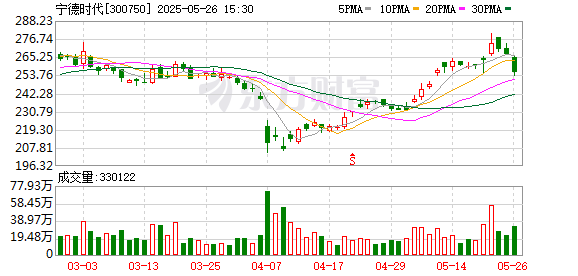
智能网联汽车ETF(159872)表现活跃,政策加码车联网示范区建设加速
Xin Lang Cai Jing· 2025-05-23 02:34
Group 1 - The smart connected vehicle ETF (159872.SZ) increased by 0.33%, with its associated index CS Vehicle Networking (930725.CSI) rising by 0.09% [1] - Major component stocks such as BYD rose by 2.05%, Aerospace Science and Technology by 2.22%, and CATL by 0.88%, reflecting a positive market sentiment towards the new energy vehicle and smart connected industry chain [1] - According to the latest survey by the China Passenger Car Association, the narrow passenger car retail market is expected to reach approximately 1.85 million units this month, representing a year-on-year growth of 8.5% and a month-on-month increase of 5.4% [1] Group 2 - Galaxy Securities noted that satellite communication is being integrated into high-level autonomous driving emergency link systems, particularly in western and high-speed scenarios, complementing 5G and vehicle-road collaboration [2] - The domestic policy continues to support "smart connected vehicles" and "vehicle-road collaboration," accelerating the construction of national smart connected vehicle demonstration zones and driving demand for vehicle communication [2] - The battery swap model, represented by CATL, enhances efficiency by reducing vehicle energy consumption and battery replacement costs, with applications in vehicle networking infrastructure such as NIO's battery swap stations [2]


宁德时代,企图用换电解决一个“重量级”难题
远川研究所· 2025-05-21 12:25
Core Viewpoint - The article discusses the value of battery swapping models in the electric vehicle industry, highlighting both explicit and implicit benefits, and emphasizes the importance of standardization for widespread adoption, particularly in the heavy-duty truck sector [1][4][9]. Group 1: Explicit and Implicit Value of Battery Swapping - The explicit value of battery swapping includes faster battery replacement (5 minutes), reduced purchase barriers, and alleviation of concerns regarding battery lifespan [1][4]. - Implicit benefits include lower land usage, higher power capacity utilization, reduced impact on the power grid, and enhanced social externalities [1][4]. - The battery swapping model has been recognized in government reports and has attracted investments from companies seeking optimal solutions, such as CATL [1][4]. Group 2: Heavy-Duty Truck Market Dynamics - Battery swapping is essential for heavy-duty trucks due to their operational characteristics, allowing for a 30%-50% reduction in initial purchase costs compared to traditional fuel trucks [4][5]. - The efficiency of battery swapping allows heavy-duty trucks to achieve full charge in 5 minutes, comparable to LNG refueling, while traditional charging methods take significantly longer [4][5]. - The unified management of batteries in a swapping model can extend battery life and reduce maintenance costs, enhancing the overall lifecycle value of the batteries [5][6]. Group 3: Standardization and Network Effects - The article emphasizes that battery standardization is crucial for expanding battery swapping from closed to open scenarios, enabling interoperability across different brands and regions [9][12]. - The current market for battery swapping in heavy-duty trucks is limited, with only about 15% of trucks utilizing this model in long-haul logistics, primarily due to fragmented standards [12][31]. - Achieving a unified battery standard is essential for creating a nationwide efficient energy network, which would facilitate the widespread adoption of battery swapping [12][32]. Group 4: CATL's Role and Future Prospects - CATL has been proactive in developing solutions for the heavy-duty truck market, launching standardized battery packs and comprehensive battery swapping solutions [17][19]. - The company aims to establish a network of 300 battery swapping stations in key regions by 2025, with a long-term goal of creating a national battery swapping network covering major logistics routes [26][31]. - The successful implementation of battery swapping could lead to significant cost savings for operators and contribute to the broader goal of carbon neutrality in the transportation sector [20][32].

宁德时代最大的短板是没有短板
晚点Auto· 2025-05-20 13:00
Core Viewpoint - CATL is recognized as a leading company in the battery industry, often referred to as "Ning Wang" in the capital market, due to its ability to turn market concepts into reality. The company recently completed a secondary listing in Hong Kong, raising approximately 45 billion USD, and its market capitalization reached 1.41 trillion HKD, surpassing BYD in momentum [2][3]. Group 1: Company Performance and Market Position - CATL's revenue for Q1 2025 was 847 billion CNY, with a net profit of approximately 140 billion CNY, achieving a record net profit margin of 17.6% [7]. - The company held over 50% market share in China and over 30% globally in 2021, with its largest customer, Tesla, experiencing a 50% annual sales growth at that time [8]. - Despite facing challenges, CATL's global market share continues to grow, with one in three electric vehicles worldwide equipped with CATL batteries [8][11]. Group 2: Strategic Challenges and Competitive Landscape - CATL has faced criticism for its pricing power, with some automakers feeling squeezed by its dominant position. The company has maintained high profit margins, often above 20%, while competitors engage in price wars [18][22]. - The shift in the market towards lower-cost lithium iron phosphate batteries has posed challenges for CATL, which has historically focused on higher-end battery technologies [28]. - The competition from BYD has intensified, particularly in the under 200,000 CNY electric vehicle market, where BYD's sales growth has outpaced CATL's [25]. Group 3: Future Growth and Innovation - CATL is exploring new business avenues, including battery swapping and the development of solid-state batteries, which are seen as crucial for the company's long-term growth [40][46]. - The company has committed to significant R&D investments, with over 700 billion CNY spent in the past decade, aiming to maintain its technological edge [45]. - CATL's leadership emphasizes the importance of continuous improvement and innovation to transition from a leading company to a great company, with a focus on becoming a key player in the global energy landscape [42][44].

宁德时代加码重卡换电,能否实现反转?
高工锂电· 2025-05-19 11:21
Core Viewpoint - The article discusses the competitive landscape of energy replenishment methods in the new energy vehicle sector, particularly focusing on the challenges and advancements in battery swapping and ultra-fast charging technologies [3][11]. Group 1: Battery Swapping Technology - CATL has launched a new generation of battery swapping solutions aimed at improving operational efficiency for electric heavy-duty trucks, allowing battery replacement in 5 minutes, with plans to reduce this to under 3 minutes in the future [3][6]. - The new battery swapping system is designed to address the challenges of long charging times and the need for high energy capacity in heavy-duty trucks, which are essential for logistics operations [3][5]. - CATL's battery swapping model significantly lowers the initial purchase costs for operators, as they only need to pay for battery rental and swapping services, avoiding costs related to battery degradation and maintenance [5][6]. Group 2: Market Projections and Strategies - CATL aims to establish a nationwide battery swapping network covering approximately 150,000 kilometers of major highways and provincial roads by 2030, which is expected to serve around 80% of the heavy-duty truck capacity in China [6]. - The penetration rate of new energy heavy-duty trucks has surpassed 20% and is entering a rapid growth phase, with CATL predicting that the market penetration will reach 50% within the next three years [6]. Group 3: Competitive Landscape - Other battery manufacturers, such as Guoxuan High-Tech and Huawei, are also exploring battery swapping solutions, with Guoxuan introducing a rapid swapping system and Huawei developing ultra-fast charging technologies [7][8]. - Huawei's ultra-fast charging technology, capable of delivering up to 1.5 MW of power, poses a significant challenge to the battery swapping model, as it offers a more cost-effective solution for operators [7][10]. - The competition between battery swapping and ultra-fast charging technologies is intensifying, with manufacturers showing a tendency to adopt a hybrid approach that combines both methods [10][11].

技术驱动、政策引领、市场响应 换电生态圈加速共建共享
Zheng Quan Ri Bao· 2025-05-11 16:27
Core Insights - The rise of electric vehicles (EVs) is driving a new wave of infrastructure development centered around battery swapping, with major players like CATL, NIO, and Sinopec intensifying their efforts in this sector [1][2][3] - The Chinese government is promoting battery swapping as a key strategy to accelerate the transition of the energy system, supported by policies, technological innovations, and collaborative efforts across the industry [1][3][4] Industry Developments - CATL aims to establish 1,000 self-built battery swapping stations by the end of 2025, with a long-term goal of 30,000 stations through societal collaboration [2][3] - NIO leads the passenger vehicle market with over 3,200 battery swapping stations and is collaborating with CATL on standardizing battery specifications and sharing swapping networks [3][4] - The commercial vehicle sector is emerging as a new growth area for battery swapping, with significant cost advantages over traditional fuel vehicles [3][4] Technological Integration - Battery swapping stations are being recognized for their potential to integrate energy and transportation, acting as virtual power plants by managing energy loads and facilitating grid interactions [4][5][6] - The development of integrated energy stations that combine solar power generation, energy storage, charging, and battery swapping is underway in several provinces, enhancing the flexibility of clean energy utilization [6] Challenges and Opportunities - The high capital investment and long payback periods associated with battery swapping stations pose significant challenges for operators [7][8] - Standardization issues in battery specifications and interfaces hinder the widespread adoption of battery swapping technology, necessitating a unified approach to industry standards [9][10] - Government initiatives are being implemented to support the construction of battery swapping infrastructure, indicating a favorable regulatory environment for future growth [9][10]

宁德时代(300750):一季度业绩表现出色 全球市场拓展顺利
Xin Lang Cai Jing· 2025-05-09 02:40
Core Viewpoint - The company reported strong performance in Q1 2025, with significant year-on-year growth in net profit despite a seasonal decline in revenue [1][2]. Financial Performance - In Q1 2025, the company achieved revenue of 84.7 billion yuan, representing a year-on-year increase of 6.2% but a quarter-on-quarter decrease of 17.7% [1][2]. - The net profit attributable to shareholders reached 13.96 billion yuan, showing a year-on-year growth of 32.9% and a quarter-on-quarter decline of 5.3% [1][2]. - Operating cash flow remained strong at 32.9 billion yuan, with cash and cash equivalents exceeding 320 billion yuan at the end of the period [1]. Market Dynamics - The company's U.S. business accounts for a small proportion of total shipments, and it has proactively prepared for changes in trade policies, minimizing direct impacts on performance [3]. - In the European market, the company saw a year-on-year increase in power battery sales, with market share rising from 17% in 2021 to 38% in 2024, maintaining the leading position [3]. - Emerging markets in the Middle East and Australia are experiencing rapid growth in energy storage demand, driven by renewable energy and AI data centers [3]. New Business Developments - The company is making progress in the battery swapping ecosystem, planning to build 1,000 battery swapping stations in 2025 [4]. - Collaborations with major companies like Sinopec and NIO aim to establish a nationwide battery swapping network [4]. - The commercial vehicle market is showing strong growth, with the company capturing over 70% of the domestic market share for new energy commercial power batteries [4]. Investment Outlook - The company is positioned as a global leader in lithium battery technology, with a comprehensive market layout and strong cost control advantages [5]. - Profit forecasts for 2025, 2026, and 2027 are maintained at 66.26 billion, 79.73 billion, and 92.36 billion yuan, respectively, with corresponding PE ratios of 16.3, 13.6, and 11.8 [5]. - The global demand for lithium batteries is expected to continue growing, particularly in Europe and emerging markets, supporting the company's positive outlook [5].
宁德时代:一季度业绩表现出色,全球市场拓展顺利-20250509
Ping An Securities· 2025-05-09 02:40
Investment Rating - The report maintains a "Strong Buy" rating for the company, expecting the stock to outperform the market by over 20% within the next six months [11]. Core Views - The company reported strong performance in Q1 2025, achieving revenue of 84.7 billion yuan, a year-on-year increase of 6.2%, and a net profit attributable to shareholders of 13.96 billion yuan, up 32.9% year-on-year [3][6]. - The company is expanding its global market presence, particularly in Europe, where its market share in the power battery sector has increased from 17% in 2021 to 38% in 2024 [6]. - The company is actively developing new business models, including battery swapping and commercial vehicle power batteries, which are expected to drive future growth [7]. Summary by Sections Financial Performance - In Q1 2025, the company achieved a revenue of 84.7 billion yuan, with a year-on-year growth of 6.2% and a quarter-on-quarter decline of 17.7%. The net profit attributable to shareholders was 13.96 billion yuan, reflecting a year-on-year increase of 32.9% [3][6]. - The operating cash flow remained strong at 32.9 billion yuan, with cash and cash equivalents exceeding 320 billion yuan at the end of the quarter [3]. Market Expansion - The company has seen significant growth in its battery sales, exceeding 120 GWh in Q1 2025, with a year-on-year increase of over 30%. The energy storage segment accounted for nearly 20% of total sales [6]. - The company is focusing on expanding its battery swapping network, planning to build 1,000 battery swap stations by 2025, and has signed strategic agreements with major partners to enhance its market presence [7]. Future Projections - The company forecasts a net profit of 66.26 billion yuan for 2025, with expected growth rates of 30.3% and 19.9% for 2026 and 2027, respectively [5][9]. - The report anticipates continued growth in global lithium battery demand, particularly in Europe and emerging markets, which will benefit the company's market position [7].
宁德时代(300750):一季度业绩表现出色,全球市场拓展顺利
Ping An Securities· 2025-05-09 02:24
Investment Rating - The report maintains a "Strong Buy" rating for the company, indicating an expected stock performance that will exceed the market by more than 20% within the next six months [11]. Core Insights - The company reported strong performance in Q1 2025, achieving revenue of 84.7 billion yuan, a year-on-year increase of 6.2%, and a net profit attributable to shareholders of 13.96 billion yuan, up 32.9% year-on-year [3][6]. - The company is expanding its global market presence, particularly in Europe, where its market share in the power battery sector has increased from 17% in 2021 to 38% in 2024 [6]. - The company is actively developing new business models, including battery swapping and ultra-fast charging technologies, which are expected to drive future growth [7]. Summary by Sections Financial Performance - In Q1 2025, the company achieved a revenue of 84.7 billion yuan, with a year-on-year growth of 6.2% and a quarter-on-quarter decline of 17.7% due to seasonal factors [3][6]. - The net profit for the same period was 13.96 billion yuan, reflecting a year-on-year increase of 32.9% and a quarter-on-quarter decrease of 5.3% [3][6]. - The operating cash flow remained strong at 32.9 billion yuan, with cash and cash equivalents exceeding 320 billion yuan at the end of the quarter [3]. Market Expansion - The company has seen significant growth in its battery sales, exceeding 120 GWh in Q1 2025, with a year-on-year increase of over 30% [6]. - The company is focusing on emerging markets such as the Middle East and Australia, where demand for energy storage is rapidly increasing [6]. Future Projections - The company forecasts a net profit of 66.26 billion yuan for 2025, with expected growth rates of 30.3% and 19.9% for 2026 and 2027, respectively [5][9]. - The projected revenue for 2025 is 460.7 billion yuan, with a gross margin of 24.3% [5][9]. Strategic Initiatives - The company plans to build 1,000 battery swapping stations by 2025 and has signed strategic agreements with major partners to enhance its battery swapping network [7]. - The company is also investing in ultra-fast charging technology, aiming to lead in this segment with its new battery products [7].