
数字孪生技术

Search documents
对话清华大学教授曲小波:自主式避障将成为飞行汽车解决安全问题的主流路线
Zhong Guo Jing Ying Bao· 2025-09-18 22:39
Core Viewpoint - The low-altitude economy, particularly the development of flying cars (eVTOL), is gaining significant attention due to safety concerns and its potential as a new growth engine for the economy [1][2]. Group 1: Safety and Technology - Safety is the primary rule for flying cars, with electric drive systems allowing for redundancy through multiple rotors, enhancing stability and safety during flight [2][3]. - Flying cars can operate in high-density urban environments due to their vertical take-off and landing capabilities, making them suitable for future urban air transport [2]. - The industry is exploring distributed drive systems to improve safety redundancy, with pure electric and hybrid power sources being the main types of propulsion [3][4]. Group 2: Market Development and Challenges - The flying car industry is still in its early stages in China, facing challenges such as short flight range, limited operational scenarios, and safety assurance [3][4]. - The high cost of flying cars, currently over 10 million RMB, poses a significant barrier to entry, with the industry needing to achieve economies of scale to reduce prices [4][5]. - There is potential for cost reduction through the integration of automotive industry advantages, which could lower manufacturing costs and improve efficiency [4][5]. Group 3: Future Outlook - If the "aggregation" approach is effectively implemented, the price of flying cars could drop to around 1 million RMB for smaller models, with larger models priced between 1 million and 1.5 million RMB [5]. - By 2030, flying cars are expected to achieve large-scale commercial application, making them accessible to ordinary consumers [5].
我国自主研发多功能海洋工程船进入总装集成阶段
Zhong Guo Xin Wen Wang· 2025-09-18 10:19
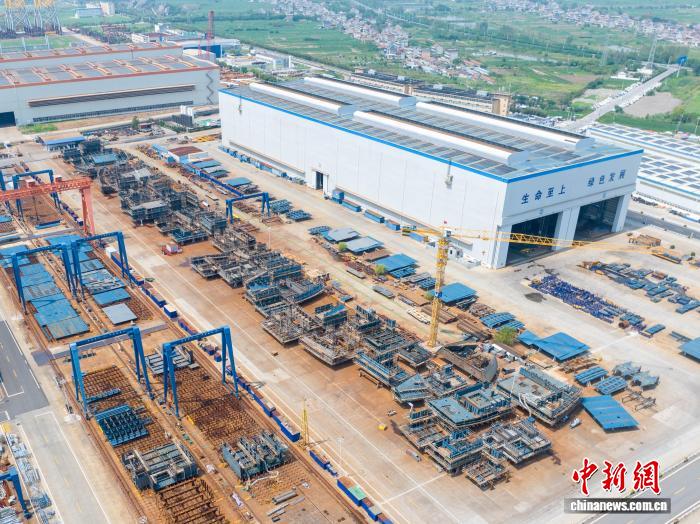
Core Viewpoint - The development of a multifunctional offshore engineering vessel by China is a significant advancement for the country's offshore engineering industry, providing essential equipment support for various marine operations [1][3]. Group 1: Project Overview - The multifunctional offshore engineering vessel has completed segmental construction in Jiangsu and is now in the total assembly integration phase [1]. - The total investment for the vessel's construction is approximately 500 million RMB [3]. - The vessel is designed with a length of 126 meters, a width of 28 meters, and a deck area of about 2000 square meters, equipped with a 400-ton nearshore crane and advanced power systems [3]. Group 2: Technical Features - The vessel integrates multiple functions including marine engineering development, construction, maintenance, repair, and emergency response, making it an indispensable asset in offshore engineering [3]. - It can carry a 3000-ton cable reel, underwater robots (ROVs), saturation diving equipment, and underwater trenching machines, showcasing its comprehensive operational capabilities [3][4]. - The project employs modular construction techniques, dividing the main hull into three sections and 93 prefabricated segments for efficient assembly [3][4]. Group 3: Innovation and Precision - The project utilizes digital twin technology for 3D modeling and simulation, enhancing the precision of assembly and installation processes [4]. - The vessel's assembly achieved a 100% success rate for the first positioning of the bow section, with dimensional tolerances under 4 millimeters, indicating advanced precision control [4]. - The company has established a specialized fleet of 19 vessels, including notable ships like the "Ocean Oil 201" and "Blue Whale 7500," leading in marine structure installation and underwater operations in Asia [5].


建设新业态试点城市有助于引领消费升级
Zheng Quan Ri Bao· 2025-09-17 16:25
Core Viewpoint - The recent policy measures announced by the Ministry of Commerce and nine other departments aim to expand service consumption, emphasizing the development of new consumption formats, models, and scenarios to stimulate economic growth and enhance consumer experiences [1][2]. Group 1: Policy Measures and Economic Impact - The policy encourages the development of new consumption scenarios that integrate business, travel, culture, and sports, aiming to cultivate new leading enterprises in consumption [1]. - The new economic development momentum index for 2024 is projected at 136.0, reflecting a 14.2% increase from 2023, indicating robust growth in new industries and business models [1]. Group 2: Collaboration and Implementation - Successful implementation of new consumption formats requires collaboration between government and enterprises, with the government providing supportive policies and enterprises focusing on enhancing consumer experiences [2]. - Criteria for selecting pilot cities will consider factors such as consumption resilience, scenario capacity, and expected policy execution strength, with cities like Beijing, Shanghai, Chengdu, and Hangzhou being potential candidates [2]. Group 3: Strategies for Smaller Cities - Smaller cities are encouraged to focus on specialized and innovative paths, leveraging local resources to create unique consumption experiences and enhance service consumption [2][3]. - Strategies for smaller cities include exploring differentiated markets, such as developing local agricultural product experiences and utilizing digital technologies to create virtual consumption scenarios [3].
发酵设备:西尔曼AMF-101生物培养系统开放试用申请
合成生物学与绿色生物制造· 2025-09-16 09:07
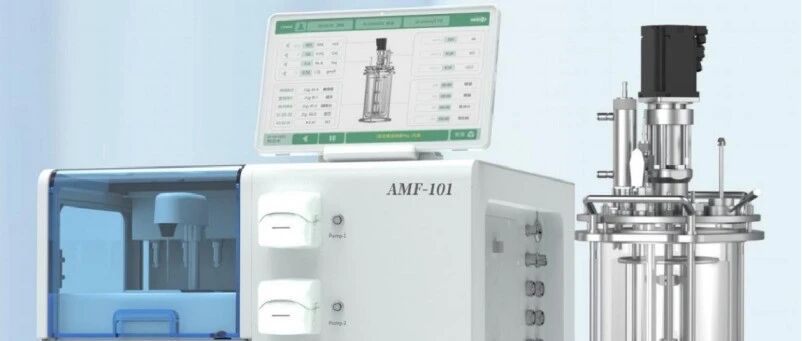
Core Viewpoint - The article emphasizes the trend of intelligent, automated, and green development in microbial fermentation technology, highlighting the integration of advanced technologies for efficient fermentation process control and optimization [4]. Group 1: Intelligent Fermentation Equipment - The current trend in intelligent research-grade microbial fermentation tanks is towards automation and real-time monitoring of parameters such as temperature, pressure, pH, and dissolved oxygen, enabling remote monitoring and operation [4]. - The fermentation tanks are equipped with features like automatic feeding, pH adjustment, and data recording and analysis, providing a comprehensive solution for fermentation processes [4]. - IoT technology is utilized for remote data transmission and cloud storage analysis, while machine learning and big data analytics are employed to predict potential issues during fermentation [4]. Group 2: Features of Xierman Research-grade Fermentation Systems - The systems integrate sterile automatic sampling pathways for online biochemical detection and intelligent closed-loop control [8]. - New optical technology is used for online optical density (OD) detection, allowing dynamic adjustment of feeding strategies [8]. - High-performance ARM chip design enables precise cultivation control [8]. - Wireless mobile platforms allow for flexible spatial control [8]. - Self-developed digital sensors work in deep intelligent collaboration with the reactor [8]. - The systems feature a flexible PID intelligent control algorithm, customizable parameters, and the ability to save configuration templates for easy operation [8]. - Data curves can be selected for multiple parameters and batch comparisons, with export capabilities [8]. - The systems support four-level user management and audit tracking, compliant with FDA 21CFR Part11 [8]. - Connectivity to mobile apps and Xierman software platform facilitates remote control and experimental design [8]. - The equipment is domestically produced, ensuring quick after-sales service and comes with all necessary components for immediate use [8]. Group 3: Xierman Technology's Commitment - Xierman is dedicated to providing high-quality biological cultivation solutions for the life sciences sector, aiming to accelerate research progress and product market entry [7]. - The company focuses on understanding the importance of biological cultivation and strives to offer stable and reliable biological cultivation instruments and equipment [7].
杏北油田的“智变密码”
Ke Ji Ri Bao· 2025-09-16 01:36
Core Insights - The Daqing Oilfield is undergoing a digital transformation, leveraging smart technologies to enhance production efficiency, safety, and intelligence [1][2] - The implementation of digital twin technology and AI-driven solutions has significantly improved operational efficiency and reduced manual labor [2][3] Group 1: Digital Transformation - The Daqing Oilfield's digital innovation base integrates digital twin technology, allowing for real-time monitoring and management of 14,043 oil-water wells and 482 metering stations, reducing inspection time from 1 hour to just 12 seconds [1] - The introduction of video image recognition technology has increased the efficiency of instrument calibration by 20%, with a stable accuracy rate of over 95% [2] - A communication expansion module has enabled compatibility for over 300 older devices, achieving a 98% compatibility rate and expanding data collection capacity from 30 to 100 data points per module, saving 5.2 million yuan in equipment replacement costs [2] Group 2: AI and Talent Development - The "Xingbei Xiaozhi" AI model has provided over 72,000 effective answers to employee queries regarding production issues, acting as a portable AI expert for staff [2] - The digital innovation base has developed over 30 digital solutions, resulting in three patent conversions and generating economic benefits exceeding 80 million yuan [2] - The base trains over 2,000 personnel annually through an "AI + practical training" model, fostering a new generation of skilled workers adept in digital operations [3]
走近大国重器 | 海底“挖掘手”
Zhong Yang Ji Wei Guo Jia Jian Wei Wang Zhan· 2025-09-15 00:32
Core Viewpoint - The successful launch of the "Tongjun" and "Junguang" dredging vessels marks a significant advancement in China's maritime engineering capabilities, showcasing the country's self-reliance in developing large-scale dredging equipment and technology [7][19]. Industry Overview - China's marine economy has rapidly developed, with the marine production value exceeding 10 trillion yuan, driving the growth of the port and channel infrastructure dredging market [9]. - The trend in domestic port construction is towards larger and deeper projects, necessitating advanced dredging technologies [9]. Vessel Specifications - The "Tongjun" and "Junguang" vessels have a maximum dredging depth of 120 meters and a mud hold capacity of 35,000 cubic meters, capable of raising a standard soccer field by 5 meters with a single load [14]. - Both vessels are equipped with a heavy-duty dredging head and high-pressure water systems, allowing them to excavate hard soil and weakly weathered rock [14][15]. Technological Innovations - The vessels feature an intelligent dredging operation system that allows for automated control, enabling a single crew member to manage operations efficiently [18]. - The implementation of digital twin technology provides real-time visualization of underwater conditions, enhancing operational precision [18]. Construction Achievements - The simultaneous construction of these two vessels in a 300,000-ton dock is a global first, demonstrating advanced modular construction techniques and digital management [19]. - The construction process involved over 2,000 workers and utilized a digitalized dock system to ensure precision and efficiency [19]. Future Applications - The vessels are expected to play a crucial role in various complex operations, including deep-water port dredging, underwater pipeline construction, and marine resource extraction [19].

海康威视助力杭瑞高速疏通易堵高速隧道
Zheng Quan Ri Bao Zhi Sheng· 2025-09-13 04:12
Core Viewpoint - Hikvision has implemented a "3D Holographic Visualization Safety Driving System" to alleviate congestion in the 5.7 km section of the Haide Tunnel, which is a critical passage for a million-population area, especially during holidays [1][2]. Group 1: System Implementation and Functionality - The 3D Holographic System utilizes digital twin technology to model the tunnel and surrounding areas, integrating cameras for event detection, violation capture, congestion alerts, video linkage, and event tracing [1]. - The system has significantly reduced the time to detect incidents to as fast as 5 seconds and improved the average incident response time from 10 minutes to 3 minutes [1]. Group 2: Impact on Traffic Management - The system allows for efficient management of key vehicles and driving behaviors, enabling staff to quickly query event details and manage resources, thus forming a closed-loop response system [2]. - The successful implementation of the system has made smooth traffic flow in the Haide Tunnel a norm, showcasing an innovative achievement in traffic management and serving as a model for tunnel management nationwide [2]. - With over 1,000 new tunnels being added annually, the practice at Haide Tunnel demonstrates that leveraging technology in traffic management is crucial for addressing operational challenges and enhancing safety efficiency [2].

CNESA储能生态对接会:储能+智能制造(珠三角专场)报名开启
中关村储能产业技术联盟· 2025-09-11 05:42
Core Viewpoint - The energy storage industry is transitioning from large-scale expansion to high-quality development, driven by policy improvements, market demands, and technological advancements [2]. Group 1: Policy and Market Dynamics - The implementation of policies like Document 136 is enhancing the market mechanisms for the energy storage industry, leading to higher standards for manufacturing efficiency and standardization [2]. - Continuous growth in new energy installations and increasing flexibility demands in the power system are pushing energy storage manufacturing towards higher precision and efficiency [2]. Group 2: Technological Integration - The integration of AI, big data, and automation technologies is providing new possibilities for overcoming existing bottlenecks in energy storage manufacturing [2]. - The first ecological matchmaking meeting by the Zhongguancun Energy Storage Industry Technology Alliance aims to deepen the integration of energy storage and intelligent manufacturing, focusing on technological advancements and practical applications [2]. Group 3: Conference Details - The "Energy Storage + Intelligent Manufacturing" conference will be held on October 10, 2025, at the Shenzhen XWANDA R&D Base, organized by the Zhongguancun Energy Storage Industry Technology Alliance [4]. - Key discussion topics include breakthroughs in battery cell manufacturing, the role of AI in optimizing material ratios, and the application of digital twin technology in production processes [4][5]. Group 4: Sustainable Manufacturing - The analysis of intelligent manufacturing technologies highlights their role in reducing energy consumption and carbon emissions during the energy storage production process [6]. - Exploring the "intelligent manufacturing + circular economy" model aims to enhance resource utilization efficiency throughout the lifecycle of energy storage products [6].


2025年中国高压直流输电系统行业产业链全景、行业发展现状及未来趋势研判:HVDC技术赋能多元场景,数据中心800V HVDC市场成为行业重点发展方向[图]
Chan Ye Xin Xi Wang· 2025-09-08 00:52
Core Viewpoint - China's High Voltage Direct Current Transmission System (HVDCS) has become a core technology for building a new energy system, leveraging its advantages in long-distance and high-power transmission. The market for HVDC is projected to reach 89.2 billion yuan in 2024 and exceed 300 billion yuan by 2028, driven by the expansion of wind and solar power installations and the explosive demand for AI computing power [1][7]. Industry Overview - HVDCS utilizes direct current for high-power, long-distance electricity transmission, converting three-phase alternating current to direct current and back again, enabling efficient and stable energy transfer [2]. - The industry has developed a complete upstream and downstream industrial system, focusing on raw materials, equipment manufacturing, and system integration, with major investments from state-owned enterprises [4]. Market Size and Growth - The HVDC market in China reached 89.2 billion yuan in 2024, a 42.3% increase year-on-year, and is expected to surpass 300 billion yuan by 2028 [7]. - The demand for 800V HVDC technology is anticipated to surge, particularly in the context of AI data centers, with the market projected to grow from 2 billion yuan in 2028 to 6.4 billion yuan by 2030, reflecting a compound annual growth rate of 47% [1][8]. Industry Chain - The HVDCS industry chain includes upstream raw materials, midstream equipment manufacturing, and downstream operation by major power grid companies, facilitating large-scale applications in long-distance transmission and renewable energy integration [4]. Competitive Landscape - The industry is characterized by a concentration of market share among state-owned enterprises like China Xidian and TBEA, while private companies and foreign firms compete in niche areas [10]. - China Hengtian Electric holds a 28% market share, benefiting from partnerships with leading internet companies in the AI data center sector [10]. Development Trends - The industry is expected to see technological advancements, with a shift towards 800V high-voltage platforms and silicon carbide devices, enhancing system efficiency and reliability [11]. - The application scenarios for HVDC are diversifying, including cross-border energy interconnections and industrial microgrids, creating a multi-billion market for related services [12]. - Chinese HVDC companies are transitioning to a global operational model, focusing on technology, standards, and capital, with exports expected to rise to 40% by 2030 [13][14].


赛力斯(601127):盈利持续高增、产业链加速升级,高端产品稳居行业领先
Western Securities· 2025-09-03 10:42
Investment Rating - The report maintains a "Buy" rating for the company [5][10] Core Views - The company continues to experience high growth in profitability, with a significant increase in net profit by 81.03% year-on-year for the first half of 2025, despite a 4.06% decrease in total revenue due to declining automobile sales and product mix [1][2] - The company's high-end product series, particularly the "Wenjie" models, have solidified its position in the premium market, with over 14.7 million units delivered in the first half of 2025 and an average selling price exceeding 400,000 yuan [1][2] Financial Performance Summary - For the first half of 2025, total revenue was 624.02 billion yuan, with a net profit of 29.41 billion yuan [1] - In Q2 2025, total revenue reached 432.55 billion yuan, marking a 12.4% year-on-year increase, while net profit grew by 56.09% to 21.93 billion yuan [1] - The company sold a total of 198,600 vehicles in the first half of 2025, including 172,100 new energy vehicles [1] Research and Development - The company has significantly increased its R&D investment by 154.9% year-on-year, resulting in a total of 6,826 authorized patents, a 19.8% increase [2] - The implementation of digital twin technology in the company's super factory has enhanced operational efficiency, covering 90% of business processes [2] Revenue and Profit Forecast - The company is projected to achieve revenues of 1925.3 billion yuan, 2211.4 billion yuan, and 2595 billion yuan for the years 2025, 2026, and 2027, respectively [2] - Expected net profits for the same years are 97.7 billion yuan, 129.7 billion yuan, and 155.5 billion yuan [2] Key Financial Metrics - The company is expected to have an EPS of 5.98, 7.94, and 9.52 for the years 2025, 2026, and 2027, respectively [4] - The projected P/E ratios for the same years are 24.6, 18.5, and 15.4 [4]
