
数智技术

Search documents
银行业人工电话客户满意度达99.46%
Ren Min Ri Bao· 2025-08-07 22:40
本报北京8月7日电 (记者赵展慧)中国银行业协会7日发布的《中国银行业客服中心与远程银行发展报 告(2024年)》显示:2024年,银行客服中心与远程银行人工电话平均接通率达94.18%,较2023年提 高1.3个百分点,人工电话客户满意度达99.46%,已连续4年高于99%,服务范围已覆盖手机APP、电 话、微信、短信、视频、邮件、微博等全渠道。 报告显示,2024年客服中心与远程银行智能技术综合使用率提升至93%,较2023年提高1个百分点;已 有31%的客服中心与远程银行开始探索应用大模型技术。数智技术成为推动银行业更好服务消费者和自 身高质量发展的重要动力。 《 人民日报 》( 2025年08月08日 06 版) (责编:白宇、卫嘉) 关注公众号:人民网财经 ...


中银协发布报告 银行业人工电话客户满意度达99.46%
Ren Min Ri Bao· 2025-08-07 22:39
(文章来源:人民日报) 报告显示,2024年客服中心与远程银行智能技术综合使用率提升至93%,较2023年提高1个百分点;已 有31%的客服中心与远程银行开始探索应用大模型技术。数智技术成为推动银行业更好服务消费者和自 身高质量发展的重要动力。 本报北京8月7日电 (记者赵展慧)中国银行业协会7日发布的《中国银行业客服中心与远程银行发展报 告(2024年)》显示:2024年,银行客服中心与远程银行人工电话平均接通率达94.18%,较2023年提 高1.3个百分点,人工电话客户满意度达99.46%,已连续4年高于99%,服务范围已覆盖手机APP、电 话、微信、短信、视频、邮件、微博等全渠道。 ...
运用系统思维做好“加减乘除”,推动生态产品价值实现
Zhong Guo Huan Jing Bao· 2025-08-04 23:11
Core Viewpoint - Accelerating the realization of ecological product value is a crucial path for transforming ecological advantages into economic advantages, which is essential for the construction of a beautiful China [1] Group 1: Supply Optimization - The realization of ecological product value requires enhancing the supply capacity and system construction of ecological products to form a high-quality and sustainable supply foundation [2] - Key to optimizing supply is increasing both the quantity and quality of high-quality ecological products, ensuring integrated protection and systematic governance of ecological resources [3] - A multi-dimensional supply system should be established, featuring diverse types and levels of ecological products, transitioning from a single and extensive supply to a diversified and refined one [3] Group 2: Cost Reduction - To efficiently convert visible ecological product value into economic value, it is essential to reduce various costs in the transaction process and streamline the value conversion channels [4] - This involves standardizing transaction processes, breaking down information barriers, and enhancing market transaction convenience to stimulate market vitality [5] Group 3: Digital Empowerment - In the digital age, data resources are a new production factor for ecological resource management and value realization, with digitalization and intelligence being key levers for enhancing conversion efficiency [6] - Utilizing digital technologies can amplify the value of ecological products, creating a robust digital infrastructure to support comprehensive and precise ecological assessments [6][7] Group 4: Institutional Barriers - The realization of ecological product value faces institutional and mechanism-related obstacles that need to be addressed through institutional restructuring and mechanism innovation [8] - A unified management coordination mechanism for ecological products should be explored to streamline the entire process from rights confirmation to value conversion, enhancing policy coherence and effectiveness [8]
在太阳岛,感受“新”风——写在2025企业家太阳岛年会主论坛开幕之际
Xin Hua Wang· 2025-08-03 02:01
Group 1 - The 2025 Entrepreneurs' Sun Island Annual Conference is held in Harbin from August 2 to 4, focusing on "New Quality Productivity: New Manufacturing, New Consumption, New Ecology" to promote high-quality development and revitalization in Northeast China [1][5] - The establishment of the Heilongjiang Ice and Snow Tourism Development Promotion Association marks a shift from individual efforts to collective development in the ice and snow industry, with dozens of companies participating in the formulation of industry standards [2] - The Harbin Matier Cultural Tourism Investment Group integrates key IPs like Ice and Snow World and Sun Island Snow Expo to create a year-round consumption scene, utilizing technology to enhance visitor experiences [2] Group 2 - The North China Agricultural Group showcases a digital management model in agriculture, leading to a significant increase in income for farmers and a 20% rise in premium rates for high-quality agricultural products [2][4] - The "Nine Treasures and Eighteen Products" brand represents the transformation of traditional agriculture in Heilongjiang, focusing on rare and high-quality forest products [3] - The "Yumi Shuo" brand utilizes an innovative e-commerce model to achieve over 15 million yuan in online sales within six months, benefiting thousands of farmers [3] Group 3 - The annual conference serves as a national platform for dialogue among entrepreneurs, emphasizing the importance of new quality productivity and its role in the comprehensive revitalization of Northeast China [5] - The integration of digital technology in agriculture is seen as a key driver for modernization, with a focus on attracting talent back to rural areas [4] - The promotion of local cultural elements in product design, such as the white birch juice brand, reflects a shift towards cultural and ecological branding in Northeast China [4]
中国互联网协会黄澄清:数智技术是产业升级的核心驱动力
Guang Zhou Ri Bao· 2025-07-26 12:41
Core Viewpoint - The 2025 China Internet Conference emphasizes the acceleration of digital and intelligent development, highlighting the importance of smart technology as a core driver for industrial upgrading and the development of new productive forces [1]. Group 1: Policy Guidance - The conference suggests that policy should lead the way in establishing a solid foundation for digital and intelligent development, focusing on areas like artificial intelligence and 6G technology [1]. - It calls for continuous improvement of the policy system and top-level design to attract capital, talent, and technology, aiming to seize technological advantages [1]. - The alignment of strategic layouts with the goals of building a strong network and digital China is essential for finding development opportunities within policy dividends [1]. Group 2: Innovation and Technology - The conference highlights the need for increased R&D investment and the establishment of a collaborative innovation system involving universities and research institutions to overcome technological bottlenecks [2]. - Emphasis is placed on strengthening independent research and addressing critical areas that hinder progress, referred to as "choke points" [2]. - The establishment of a technology ethics framework is necessary to balance innovation vitality with risk prevention, ensuring alignment with national strategies and social ethics [2]. Group 3: Empowerment and Integration - The conference advocates for leveraging digital technology to enhance the deep integration of real and digital sectors, encouraging industries to utilize smart technology for transformation and upgrading [2]. - Focus areas include cloud computing, big data, and artificial intelligence, aimed at optimizing supply chains and enhancing competitiveness [2]. - The goal is to improve production processes, innovate business models, and increase the resilience of industrial chains, leading to quality enhancement and cost reduction [2].

(活力中国调研行)数智技术拓宽青海农牧特产销路
Zhong Guo Xin Wen Wang· 2025-07-24 11:56
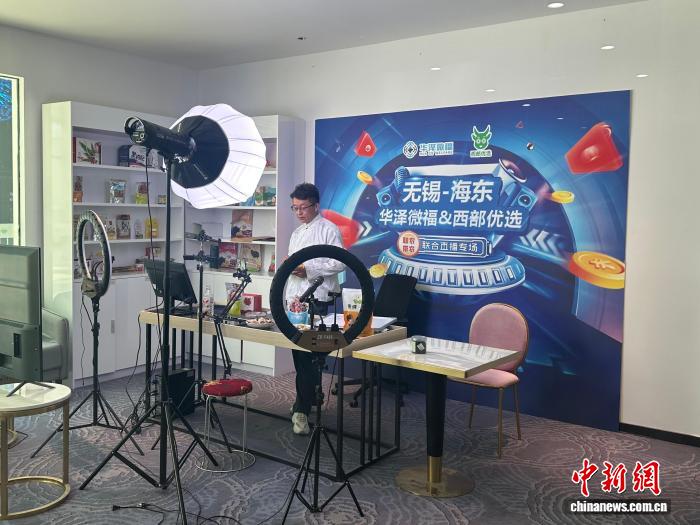
Core Viewpoint - The integration of digital technology is significantly enhancing the sales channels for Qinghai's agricultural and pastoral specialty products, addressing long-standing challenges in logistics and market access [3][4]. Group 1: Digital Transformation - The establishment of the Qinghai Agricultural and Animal Husbandry Product Trading Center in May 2020 aims to leverage digital technology to promote local enterprises and expand sales channels [4]. - The "Western Selection" digital trading platform has been launched to provide free e-commerce operations, market promotion, and sales channel connections for over 2,600 agricultural enterprises in the province [4][6]. Group 2: Sales Performance - Since the operation of the "Western Selection" platform in July 2021, over 20,000 specialty agricultural products have been listed, with a cumulative transaction value exceeding 1.3 billion RMB [6]. - The trading center is actively exploring international markets, with products like red and black goji berries and quinoa noodles exported to over ten countries in the Middle East and Southeast Asia in 2023 [6]. Group 3: Logistics and Market Connectivity - The trading center is constructing a bulk logistics system and has partnered with several domestic courier companies to reduce logistics costs for member enterprises [4]. - The use of big data, artificial intelligence, and the Internet of Things is facilitating the connection between highland specialty products and major markets in eastern China, enhancing the distribution of Qinghai products [4][6].
数智技术赋能我国服务外包提质转型
Xin Hua She· 2025-07-23 12:21
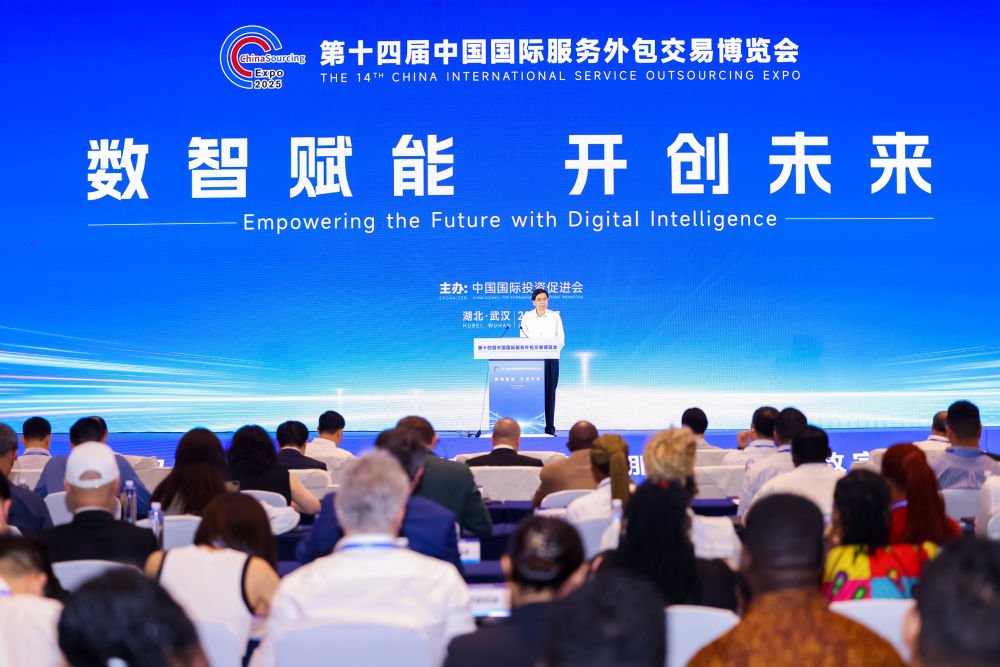
Group 1 - The 14th China International Service Outsourcing Trade Fair was held in Wuhan from July 23 to 25, focusing on the theme "Empowering the Future with Digital Intelligence" [1][3] - Experts at the forum indicated that the service outsourcing industry in China is accelerating its transformation towards digitalization and intelligence, driven by innovations in artificial intelligence, big data, and cloud computing [1][3] - The integration of service outsourcing and the digital economy has deepened, becoming a significant force in promoting service trade growth [3] Group 2 - In 2024, the execution amount of service outsourcing by Chinese enterprises is projected to reach 22,197 billion RMB, representing a year-on-year growth of 13.3% [3] - High value-added and high-tech service sectors, such as information technology R&D services and design services, are expected to see execution amounts of 3,891 billion RMB and 3,446 billion RMB, with year-on-year growth rates of 17.3% and 19.1%, respectively [3] - The service outsourcing industry is increasingly applying digital technologies across various sectors of the national economy, supporting the development of new business models such as artificial intelligence and smart manufacturing [3] Group 3 - The China International Service Outsourcing Trade Fair is the only national professional exhibition in the service outsourcing field [3] - The event invited institutions and enterprises from traditional offshore markets like the US, Europe, and Japan, as well as emerging offshore markets along the Belt and Road Initiative, particularly in ASEAN and the Middle East [3] - Research reports such as the "2025 China Digital Services and Service Outsourcing Development Report" and the "2025 China-Japan IT Service Business Cooperation Development Report" were released to enhance the international influence of the "China Service" brand [3]
电气化铁路装上“数智引擎”
Ke Ji Ri Bao· 2025-07-21 00:40
Core Insights - The modernization of railway transportation in China is significantly marked by the electrification of railways, with a current electrification rate of 75.8% as of the end of 2024, totaling over 120,000 kilometers of electrified railways out of 162,000 kilometers of operational railway [1][6] Group 1: Electrification and Technological Advancements - The "Four Electrifications" (communication, signaling, power, and traction power supply) are crucial for modern railway development, serving as the power source and nerve center for high-speed rail [1][6] - The introduction of a new standardized contact network system in 2015 has simplified the components and installation processes, reducing the number of arm components by 39%, thread pairs by 57%, and types of fastening torque by 50%, enhancing stability and integration [2][6] - The development of the contact network tunnel automatic positioning measurement instrument has improved installation efficiency and accuracy, utilizing laser sensors for real-time distance measurement [3][5] Group 2: Adaptability and Performance in Extreme Conditions - China's electrified railways are advancing towards higher speeds and are designed to adapt to extreme environmental conditions, including high altitude, temperature, and humidity [6][10] - The Lalin Railway, the highest electrified railway globally, has implemented various technological innovations to ensure safe and stable operations in challenging environments, including unmanned control systems [6][10] Group 3: Smart Operations and Maintenance - The establishment of a smart operation and maintenance big data platform has significantly enhanced the efficiency of railway maintenance, achieving a 20% reduction in operational costs and failure rates, and extending the lifespan of components by 20% [7][8] - The introduction of a high-speed railway 4C visual intelligent analysis system has transformed the detection of contact network defects, increasing the detection rate of potential issues by tenfold and improving analysis efficiency by over 20% [8][9] - The auxiliary monitoring system for traction substations has integrated various subsystems for intelligent inspection and operational decision support, enhancing safety and efficiency in maintenance operations [9]

用好数智技术强化城市安全韧性
Jing Ji Ri Bao· 2025-07-17 22:08
Core Viewpoint - The central urban work conference emphasizes the need to innovate urban governance concepts, models, and methods, leveraging digital technologies such as the internet, big data, cloud computing, artificial intelligence, and blockchain to transform and upgrade urban governance [1][2]. Group 1: Internet-Driven Governance - Internet technology supports the construction of an interconnected governance network, facilitating the transition of offline services to online platforms, with new governance service models like "no-contact approval" and "one-stop processing" becoming widely adopted [1]. - By May 2025, over 1.08 billion users are expected to be registered on the national integrated government service platform, with more than 90% of provincial administrative licensing matters processed online [1]. Group 2: Big Data-Driven Governance Innovation - Big data technology enables the creation of a "holographic map" of urban operations, enhancing scientific, precise, and holistic governance [2]. - The city of Fuzhou has improved its emergency response efficiency for drainage and flood control by over 50% since 2017, thanks to a foundational map covering key water systems [2]. Group 3: Artificial Intelligence in Governance - Various AI models are deeply integrated into urban governance, transforming the underlying logic of digital development and information systems [2]. - The introduction of 70 "AI civil servants" in Shenzhen's Futian District has led to a 90% reduction in document review time and an overall efficiency increase of over 20% [2]. Group 4: Blockchain-Driven Governance Structure Optimization - Blockchain technology introduces a new trust mechanism for data and information exchange, ensuring data integrity and traceability through a consensus mechanism [3]. - The shift in urban governance models towards cross-regional and cross-spatial collaboration is necessary to address increasing risks and challenges [3]. Group 5: Strategies for Urban Governance Modernization - The integration of smart technologies is essential for enhancing urban governance efficiency, focusing on key areas such as urban planning, community governance, traffic management, and ecological environment [4]. - Emphasizing grassroots governance, the need for collaborative efficiency is highlighted, with a focus on integrating resources from various departments to enhance community participation [4]. - The development of a blockchain-based government application platform is crucial for advancing urban governance from data sharing to value trust [4][5].
1200家企业参展第三届“链博会” 用“链”诠释中国与世界的紧密关系
Zheng Quan Ri Bao· 2025-07-16 16:39
Core Insights - The third China International Supply Chain Promotion Expo (Chain Expo) opened in Beijing with the theme "Linking the World, Creating the Future" [1] - The expo features six major supply chain categories, showcasing global cooperation in industry and supply chains [1] - Over 65% of participating companies are from the Fortune Global 500 and industry leaders, with a total of 1,200 companies represented [2] Industry Highlights - The advanced manufacturing chain exhibition showcased a full industry chain from R&D to high-end equipment manufacturing, highlighting low-altitude economy and robotics [3] - The green agriculture chain presented a clear "from farm to table" logic, while the health life chain covered a full lifecycle service from birth to elderly care [3] - The expo serves as a bridge for international cooperation, allowing companies to share experiences and explore collaboration opportunities [4] Regional Cooperation - The expo expanded participation from various provinces, showcasing regional strengths in supply chains [5] - A significant focus was on AI and digital technology, with events like the "Smart Chain Global" conference planned during the expo [5] - Companies from Hubei demonstrated their capabilities in humanoid robotics, showcasing applications in various sectors [6] Innovation and New Technologies - The expo featured over 230 first-time exhibitors and more than 100 new products and technologies, marking a 10% increase from the previous year [7] - Innovation is emphasized as a core aspect of the expo, with companies seeking partnerships and solutions to drive strategic emerging industries [7]