智能化转型

Search documents
“这将是我们2026年的主战场”,孟晚舟发布华为新年致辞
新华网财经· 2025-12-30 03:22
12月30日上午,华为官方公众号发布了轮值董事长孟晚舟的2026年新年致辞《追风赶月莫停留,平芜尽处是春山》。 在致辞中,孟晚舟表示, 人工智能技术正加速与行业知识融合,从单点效率提升转向对企业核心业务的系统性价值重构。这场转变不仅是 技术的迭代,更是从组织架构、业务流程到企业文化的一次深刻变革。 在2026年华为将聚焦的主战场中,孟晚舟提到了 强化行业垂直作战、构建开源开放的鲲鹏昇腾生态、繁荣鸿蒙生态以及重构AI数据中心多 个方面。 "从战略方向到战场胜利的这条道路,遍布暗礁与险阻,但我们别无选择,唯有迎难而上。"孟晚舟说。 致辞 全文 如下: 追风赶月莫停留,平芜尽处是春山 ——2026年新年致辞 轮值董事长 孟晚舟 时光的潮水正漫过2025的岸线,回望这一年的忙碌与奔赴,那些深浅不一的足迹,正是我们奋力向前的最好见证: 在撒哈拉沙漠南缘,网优工程师穿梭在44℃高温、红土飞扬的街头,厘清网络症结; 在大西洋的七级风浪中,光网专家克服严重晕船,和客户一起定位故障、恢复通信; 在海拔4300米的雪域高原,服务团队缺氧不缺精神,冒着零下15℃的严寒调试光储系统,把绿色电源送入千家万户; 在凌晨4:30的客户机房 ...


【从企业订单看产业发展新动能】5分钟下线一台装载机!硬核实力加持订单接不停
Xin Lang Cai Jing· 2025-12-29 19:18
Core Viewpoint - Guangxi Liugong Machinery Co., Ltd. has launched Smart Butler 2.0, leveraging AI for equipment lifecycle management, driving the industry's intelligent transformation [1] Group 1: Industry Transformation - The construction machinery industry is accelerating its transition towards high-end, intelligent, and green solutions, with increasing customer demands for precision and efficiency in equipment operation [1] - Liugong is evolving from a traditional equipment manufacturer to a provider of smart green equipment and technical solutions, enhancing its production capabilities and order intake [1] Group 2: Smart Manufacturing Enhancements - Liugong's intelligent factory features advanced automation, including robotic arms and automated guided vehicles (AGVs), significantly improving safety, product quality, work environment, and production efficiency [2] - The factory has achieved a production efficiency increase of 27% and a capacity increase of 18% due to the implementation of smart manufacturing solutions [3] Group 3: Market Performance - In the first half of the year, Liugong's domestic sales of new energy equipment grew by over 260%, with the company holding the top market share in electric loaders [3] - International sales in the first half of the year nearly matched the total sales of the previous year, with a growth of over 200%, particularly in high-end markets like Europe [3] Group 4: Customer-Centric Innovations - Liugong developed a dual-function electric loader for an Indian client, showcasing its commitment to customer needs and problem-solving capabilities [4] - The company emphasizes a principle of addressing challenges directly and efficiently, leading to improved product performance and customer satisfaction [6] Group 5: Commitment to Electrification and Automation - Liugong has delivered over 40 electric devices to a major client, enhancing production support and green logistics [6] - The company is focused on integrating electrification, intelligence, and automation technologies, establishing a comprehensive electric product line to meet diverse operational needs [6][7] Group 6: Global Competitive Strategy - Liugong aims to strengthen its position in high-end markets by offering a series of intelligent, digital, and lifecycle cost-optimized products, enhancing after-sales support for improved customer service [7] - The company is committed to building a sustainable ecosystem for electrification through global collaboration and innovative marketing strategies [7]

新股消息 | 镁伽科技港股IPO招股书失效
智通财经网· 2025-12-29 12:04
Group 1 - The core viewpoint of the news is that Megatech Co., Ltd. has submitted its Hong Kong IPO application, which will expire after six months on December 25 [1] - Morgan Stanley, Huatai International, Deutsche Bank, and Jianyin International are the joint sponsors for the IPO [1] Group 2 - Megatech is a leading provider of autonomous intelligent agents in the field of robotics technology applications in China [2] - The company focuses on enhancing productivity and driving innovation in smart laboratories and intelligent manufacturing scenarios [2] - Megatech's proprietary technology in automation and AI allows its multifunctional autonomous agents to independently complete complex tasks, freeing human resources to focus on high-value work [2]

一年制“非转海”天津试水 航运紧缺岗位添“快通道”
Zhong Guo Xin Wen Wang· 2025-12-29 10:05
Core Viewpoint - The article discusses the structural contradiction in China's maritime workforce, where the number of registered seafarers is increasing, yet there is a significant shortage of key positions globally, prompting the introduction of a one-year training program for non-maritime graduates to fill the gap [1][2]. Group 1: Industry Context - As of the end of 2024, the total number of registered seafarers in China is projected to reach 2.0358 million, a year-on-year increase of 2.7%, with 970,100 being maritime crew members [1]. - Despite the growth in registered seafarers, a global shortage of maritime personnel persists, with an estimated shortfall of 56,000 management-level crew members by 2027 and a potential gap of 89,500 by 2026 according to the International Maritime Organization [1]. Group 2: Training Program Details - Tianjin Maritime Vocational College has launched a one-year training program for third mates and third engineers, targeting non-maritime college graduates, with the first cohort consisting of 35 students, 18 of whom hold bachelor's degrees or higher [2]. - The program is designed to be more aligned with industry needs, focusing on a "fast-track" approach to training that emphasizes practical skills and reduces the time required for training without compromising standards [2][3]. Group 3: Curriculum and Training Methodology - The curriculum is structured into theoretical and practical phases, with a focus on essential skills required for maritime operations, described as a "surgical operation" to eliminate less relevant content [2][3]. - Simulation training is a key component, allowing students to experience various maritime scenarios, such as adverse weather conditions and emergency situations, to prepare them for real-life challenges [3]. Group 4: Skills Development and Industry Needs - The program addresses the need for improved English communication skills and familiarity with international regulations, which are critical for seafarers in global operations [4]. - The curriculum includes training on dual-fuel systems and other modern maritime technologies to ensure graduates are equipped for the industry's transition towards greener and smarter operations [4]. Group 5: Career Path and Advancement - After completing the training and passing the national maritime exam, students will need to gain practical experience at sea to qualify for appropriate certification, with a typical path requiring 12 months of sea service to obtain a third mate certificate [5]. - The one-year program is seen as a flexible addition to traditional three- and four-year training systems, potentially accelerating the transition from classroom to deck for new entrants in the maritime workforce [5].
专精特新筑基,双轨战略破局:西普尼(02583)利润倍增的科技消费升级之路
智通财经网· 2025-12-29 08:40
Core Viewpoint - The company, Shenzhen Xipuni Precision Technology Co., Ltd., has announced a positive profit forecast for 2025, projecting a net profit exceeding RMB 90 million, significantly higher than the approximately RMB 49 million in 2024, indicating a transformation in its financial fundamentals and a more resilient growth trajectory [1][12] Group 1: Profit Growth Drivers - The profit growth is attributed to two main factors: an increase in jewelry sales revenue and an improvement in the gross margin of watch sales [1] - The company has shifted its growth drivers from reliance on gold prices and single product categories to a more sustainable and controllable endogenous growth model through structural optimization [2] Group 2: Strategic Business Model - Xipuni's dual-track model of "Own Brand (OBM) and Design Manufacturing (ODM)" has proven to be resilient and strategically flexible, maximizing manufacturing capabilities and diversifying market risks [4] - The OBM segment, centered around the brand "Xipuni (HIPINE)," has strengthened the company's value moat through continuous brand building and partnerships, enhancing brand premium and supporting improved gross margins [4][5] Group 3: Cost Optimization and Product Innovation - The enhancement of gross margins in watch sales reflects improved product value, brand premium, and cost control, driven by high-end product offerings and advanced manufacturing techniques [2][3] - The company's unique gold hardening technology and efficient manufacturing processes have led to cost optimization and increased production efficiency, allowing for a reduction in the gold material cost percentage [3] Group 4: Future Growth Strategies - The company is focusing on smart technology and international expansion, having launched a smart gold watch in collaboration with Huawei, which has shown significant revenue growth potential [7] - Xipuni has successfully entered the Malaysian market, leveraging its unique product offerings to tap into cultural and consumer trends in Southeast Asia and the Middle East [7][8] Group 5: Market Positioning and Brand Enhancement - The company's successful IPO in September 2025 has significantly increased brand visibility and credibility, providing resources for strategic initiatives and enhancing consumer trust [9][10] - The brand's transition from being industry-known to publicly recognized has strengthened its market position, particularly in online sales channels, which are expected to become a new growth engine [10] Group 6: Macro Economic Context - The international gold market has experienced a significant bull market in 2025, with gold prices rising over 70%, which has reinforced consumer perception of gold as a core asset [11] - This macroeconomic environment presents both challenges and opportunities for the company, as it seeks to position its products as valuable, technology-driven consumer goods [11][12] Group 7: Conclusion - The positive profit forecast signifies a breakthrough in the company's strategic transformation from a traditional manufacturer to a technology-driven consumer goods company with a strong brand and diversified product matrix [13] - This development reflects the management's strategic foresight and execution capabilities, indicating a clear path for continued growth through innovation and market expansion [13]
创新驱动化工仓储物流业绿色转型 ——访扬州恒基达鑫国际化工仓储有限公司总经理李伟
Zhong Guo Hua Gong Bao· 2025-12-29 07:17
"这项技术看起来是小改进,但解决了大问题。"李伟介绍说,使用新结构后,设备故障率和维护成本明 显降低,油气回收效率显著提升。该专利已产生实际市场价值——山东顺鑫港务有限公司经过实地考 察,已正式签约引进该项技术,用于其码头油气回收系统升级。 在技术创新的基础上,李伟大力推进仓储作业的智能化转型。在她的推动下,公司率先引入先进的PLC 控制系统,实现对货物接收、仓储管理、发货配送全流程的精准控制与高效调度。这套系统如同企业 的"智能大脑",使作业流程标准化、可视化,大大提升了操作精度和管理效能。 "安全是化工仓储企业的生命线,智能化建设和体系化管理必须双轮驱动。"李伟强调。公司依据交通运 输企业安全生产标准化一级要求,融合ISO9001、ISO14001及ISO45001等国际标准,全面修订了安全管 理制度,构建起一体化生产安全管理体系。这套体系将智能化监控数据与风险管理流程深度融合,实现 了风险超前预警、过程精准管控。 沿着扬州化工园区的长江岸线,一片现代化仓储区映入眼帘:整齐的储罐、繁忙的码头,以及智能化的 作业系统高效运转。这里就是扬州恒基达鑫(002492)国际化工仓储有限公司所在地——长江下游重要 的 ...

农行陕西分行高效支持传统产业绿色转型升级
Zheng Quan Ri Bao Wang· 2025-12-29 05:51
Core Viewpoint - Agricultural Bank of China Shaanxi Branch is focusing on supporting the green and low-carbon transformation of the energy and chemical industries, particularly coal chemical industry, as a key initiative for high-quality local economic development by 2025 [1] Group 1: Financial Support Initiatives - As of November 2025, Agricultural Bank of China Shaanxi Branch has approved loans for key coal transformation projects amounting to 25.15 billion yuan, with 8.122 billion yuan disbursed [1] - The Yulin Chemical Phase II project, a key national energy development project, received a total of 10 billion yuan in fixed asset loans and 5 billion yuan in preliminary project loans from Agricultural Bank of China Shaanxi Branch, marking the first approval of such financing by a state-owned bank [2] - Agricultural Bank of China Yulin Branch has provided 1.407 billion yuan in loans for the construction of the Yulin Chemical Phase II project and has established 21 special accounts for migrant workers' wages, facilitating wage payments for 950 individuals [2] Group 2: Comprehensive Financial Services - Agricultural Bank of China Shaanxi Branch is committed to providing comprehensive financial support across the entire industry chain, including project financing, supply chain finance, and bond underwriting [3] - The bank is expanding the applicability of traditional products like project loans and fixed asset loans to support the construction of smart factories and digital workshops, enhancing automation and information levels in production operations [3] - In terms of green development, the bank is focusing on financing projects related to environmental upgrades, carbon capture, and near-zero wastewater discharge, helping companies reduce carbon emissions and achieve clean production [3]

赛力斯盘中涨超4% 旗下海外品牌DFSK进军埃及市场
Zhi Tong Cai Jing· 2025-12-29 03:25
赛力斯(601127)(09927)盘中涨超4%,截至发稿,涨3.34%,报108.2港元,成交额7183.65万港元。 公开资料显示,截至目前,DFSK的产品已经覆盖了70多个国家和地区,全球销售服务网点超过1000 个。DFSK此次进入埃及市场,不仅扩大了其全球业务版图,也显示了其在全球新能源汽车领域的影响 力和竞争力。通过在埃及市场的布局,DFSK将进一步推动其新能源和智能化产品在全球的普及和应 用。 消息面上,近日,赛力斯集团副总裁康波在微博上宣布,集团旗下海外品牌DFSK在埃及开罗胡夫金字 塔旁举行了新品发布会,标志着DFSK正式进入埃及市场。此次发布会展示了战略车型E5Plus及两款全 新产品,是DFSK在海外深耕20年后,全面开启新能源化、智能化转型的重要里程碑。 ...

AI重塑“牙刷之都” ——杭集牙刷企业智能化转型样本观察
Zhong Guo Zheng Quan Bao· 2025-12-28 21:11
Core Insights - The toothbrush industry in Hangji, China, is undergoing a significant transformation towards smart manufacturing, integrating AI into product design and quality control processes [1][6]. Group 1: Product Design Innovation - Companies are leveraging AI to enhance product design, making it more aligned with market demands. For instance, a toothbrush designed for students was created using AI insights, resulting in a popular product on major platforms [2][3]. - The design process has become more efficient, with AI reducing the time from concept to final design from one to two months to a much shorter period [3]. Group 2: Quality Control Enhancements - AI-driven visual inspection systems have been implemented in production lines, significantly improving the detection of defects in toothbrushes, ensuring that only high-quality products proceed to the next stages of production [4]. - The automation of quality control processes has minimized human error and increased production efficiency [5]. Group 3: Smart Manufacturing Developments - New smart factories are being established, featuring advanced control systems and automated logistics, which enhance operational efficiency and product traceability throughout the manufacturing process [6][7]. - Traditional manufacturing facilities are also undergoing smart upgrades, with automation leading to significant cost savings, such as a reduction of nearly 7 million yuan in labor costs in packaging alone [7]. Group 4: Future Directions - The local government is promoting the creation of "waste-free factories" and encouraging companies to transition from product manufacturers to providers of comprehensive oral health solutions, including personalized services [8].

新华网:东风汽车新能源年度销量突破100万辆
Xin Hua Wang· 2025-12-26 10:38
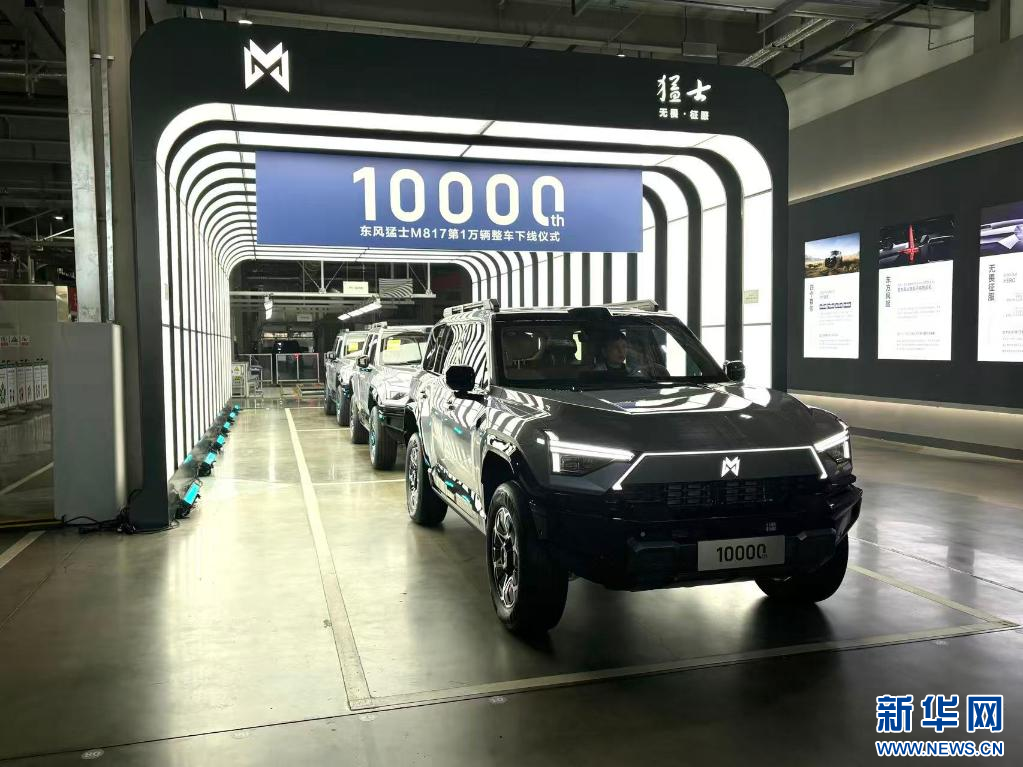
Core Viewpoint - Dongfeng Motor has achieved its goal of selling 1 million new energy vehicles by 2025, marking significant progress in the transformation of the automotive industry towards new energy and intelligent connectivity in Wuhan, Hubei [1][2] Group 1: Company Achievements - The first 10,000 units of the new energy off-road vehicle, Mengshi M817, have rolled off the production line, indicating increasing market recognition for the Mengshi brand [2] - Dongfeng Motor's new energy vehicle sales are projected to exceed 1 million units in 2025, representing a year-on-year growth of 22% [2] - The company has established a diverse new energy brand matrix, including multiple sub-brands such as Lantu, Mengshi, Yipai, and Namo, covering high-end, mainstream, and economical vehicle markets [1] Group 2: Market Performance - Sales of Mengshi are expected to grow nearly threefold, while Lantu's sales are anticipated to double, with new energy and self-owned brands being the main drivers of sales growth [2] - Self-owned brand sales are projected to surpass 1.5 million units, with a year-on-year increase of 12%, accounting for 63% of total sales [2] Group 3: Industry Context - Dongfeng Motor is one of China's three major state-owned automotive groups, with a history dating back to 1969, and has production bases in multiple cities including Shiyan, Xiangyang, Wuhan, and Guangzhou [2] - The company is accelerating its transition towards electrification, connectivity, and intelligence in the automotive sector [2]