
消费者权益保护

Search documents
中消协将加大消费监督力度
Xin Lang Cai Jing· 2026-01-01 18:45
(来源:光明日报) 转自:光明日报 本报北京1月1日电 记者王海磬从中国消费者协会第六届理事会第三次会议获悉,2026年中消协将加强 消协组织建设、提升投诉处理效能,强化消费教育引导、推动绿色可持续消费,加大消费监督力度、助 力消费环境优化,发挥维权枢纽作用、促进社会协同共治,奋力实现"十五五"消费者权益保护工作良好 开局。 2025年,中消协带领全国消协组织围绕"共筑满意消费"年主题,认真落实中消协六届二次会议确定 的目标任务,有力有效履行法定职责,积极参与消费环境建设,助力消费政策更加积极、消费纠纷 【下载黑猫投诉客户端】化解更加高效、消费知识传播更加多元、消费维权社会共治效能更加显著,消 费者权益保护工作取得新进展。 会议要求,狠抓消费政策实施,联动开展3·15金秋购物节公益活动,发布《中国消费者绿色消费指 南》,狠抓消费纠纷化解,狠抓消协组织建设,推进健全各级消协组织,打造忠诚干净担当的新时代消 协干部队伍。 ...
多维构建消费者权益保护新生态 阳光财险获评“年度杰出消费者权益保护企业”
Cai Jing Wang· 2025-12-31 13:32
Core Viewpoint - The company emphasizes consumer rights protection as a strategic priority, achieving recognition as the "Outstanding Consumer Rights Protection Enterprise" in the 2025 financial industry awards due to its comprehensive approach to consumer protection [1] Group 1: Strategic Integration of Consumer Protection - The company integrates consumer rights protection into its top-level design, linking it with strategic planning and party organization assessment mechanisms [2] - It has revised over a hundred regulations to establish a consumer protection mechanism covering the entire process from product development to claims [2] - A dedicated consumer protection fund has been established to support educational and assistance initiatives, reinforcing the institutional and cultural foundation for consumer rights protection [2] Group 2: Transparency and Information Disclosure - The company has developed a comprehensive information disclosure system covering pre-sale, in-sale, and post-sale processes to ensure consumer awareness and choice [3] - Information is presented clearly through multiple channels, with special attention to vulnerable groups such as the elderly and foreigners [3] - A regular self-inspection mechanism is in place to ensure the accuracy and accessibility of information, with significant data disclosed through annual reports and other channels [3] Group 3: Financial Education Initiatives - The company has established a regular educational outreach mechanism, allocating specific funds for financial education separate from brand promotion [4] - Over 4,900 educational activities were conducted in 2024, significantly increasing frequency and impact [4] - Innovative use of technology, such as GPT, has been employed to create educational content, merging technology with traditional culture and financial education [4] Group 4: Complaint Handling and Governance - The company has implemented a "one-stop" complaint handling scheme, categorizing cases for efficient processing and achieving 100% closure through a cloud customer service center [5] - A dynamic monitoring system tracks key performance indicators, and a rapid approval channel for complex cases has been established [5] - The company employs a monthly ranking system for consumer protection leaders to enhance accountability and performance [5] Group 5: Inclusive and Innovative Services - The company provides tailored services for special groups, including the elderly, new citizens, and disabled individuals, demonstrating a commitment to equitable and inclusive financial services [6] - New products such as electric vehicle replacement insurance and return shipping insurance have been launched to align with consumer trends [7] - The company is shifting from passive claims to proactive risk management, utilizing technology to reduce consumer risks at the source [7] Group 6: Industry Leadership and Standardization - The company has taken on industry responsibilities by sharing its best practices and has led the development of national standards for complaint handling in the insurance sector [8] - It has participated in the creation of service standards for elderly consumers and has contributed to self-regulatory rules for consumer suitability in the insurance industry [8] - Since 2022, the company has conducted numerous training sessions to share advanced consumer protection concepts and management experiences with the industry [8]
上海市地方金融管理局:印发《上海市小额贷款公司消费者权益保护工作指引》等三项配套制度
Xin Lang Cai Jing· 2025-12-31 06:57
Core Viewpoint - The Shanghai Municipal Financial Management Bureau has issued three guidelines to regulate small loan companies, focusing on consumer rights protection, internet platform information reporting, and financial product investment, aiming to ensure the healthy and orderly development of the industry [1][39]. Group 1: Consumer Rights Protection Guidelines - The guidelines aim to standardize the operations of small loan companies, protect consumer rights, and maintain a fair market environment [41][42]. - Small loan companies are required to fulfill their responsibilities in consumer rights protection, ensuring compliance, transparency, and service quality [42][43]. - A collaborative governance system involving internal governance, industry self-regulation, financial management, and social supervision will be established to enhance consumer rights protection [42][43]. Group 2: Work Mechanism and Management Requirements - Small loan companies must integrate consumer rights protection into their governance and corporate culture, with the board of directors being the ultimate responsible entity [43][44]. - Companies are required to develop a comprehensive management system for consumer rights protection, covering all business lifecycle stages from product design to complaint handling [44][45]. - Regular training on consumer rights protection must be conducted, with performance evaluation systems incorporating consumer satisfaction metrics [45]. Group 3: Behavior Norms - Marketing practices must be standardized, ensuring consumers have the option to refuse or unsubscribe from marketing communications [46]. - Companies must provide clear and accurate information about loan products, including risks, in an easily understandable manner [46][47]. - Contracts must be transparent, with essential terms highlighted to ensure consumers are fully informed before signing [47]. Group 4: Dispute Resolution - A robust consumer complaint handling system must be established, with clear channels for consumers to submit complaints [50][51]. - Companies are encouraged to resolve disputes through negotiation, mediation, or arbitration, and must respond to complaints within fifteen working days [51][52]. - A record-keeping system for complaints must be maintained for at least five years to ensure accountability [51]. Group 5: Supervision and Management - Local financial management departments will enhance supervision of consumer rights protection through both off-site and on-site inspections [55][56]. - Companies that violate consumer rights or refuse to cooperate with protection efforts may face penalties or be referred to law enforcement [55][56]. - Compliance with consumer rights protection guidelines will be a key factor in the regulatory rating of small loan companies [56]. Group 6: Internet Platform and Product Information Reporting Guidelines - Small loan companies must report information about their internet platforms and loan products to local financial management departments [59][60]. - Companies are required to submit detailed information about their products, including interest rates and fees, to ensure transparency [60][61]. - Any changes to reported information must be updated within ten working days to maintain accurate records [63][64].
中消协召开第六届理事会第三次会议 明确2026年重点工作
Xin Lang Cai Jing· 2025-12-30 17:07
会议指出,一年来,中消协深入贯彻党的二十大和二十届历次全会精神,带领全国消协组织围绕"共筑 满意消费"年主题,认真落实中消协六届二次会议确定的目标任务,有力有效履行法定职责,积极参与 消费环境建设,助力消费政策更加积极,消费纠纷 【下载黑猫投诉客户端】化解更加高效,消费知识 传播更加多元,消费维权社会共治效能更加显著,消费者权益保护工作取得新进展。 会议要求,要狠抓消费政策实施,联动开展3·15金秋购物节公益活动,发布《中国消费者绿色消费指 南》;狠抓消费纠纷化解,进一步推进消协315平台建设和应用;狠抓消协组织建设,推进健全各级消 协组织,打造忠诚干净担当的新时代消协干部队伍。 来源:中国青年报客户端 中国青年报客户端北京12月30日电(中青报·中青网记者 魏婉)记者今天从中国消费者协会获悉,中消 协第六届理事会第三次会议29日在北京召开。 会议指出,2026年是"十五五"开局之年,中消协要围绕中心、服务大局,守正创新、勇于担当。加强消 协组织建设、提升投诉处理效能,强化消费教育引导、推动绿色可持续消费,加大消费监督力度、助力 消费环境优化,发挥维权枢纽作用、促进社会协同共治,奋力实现"十五五"消费者权益保 ...
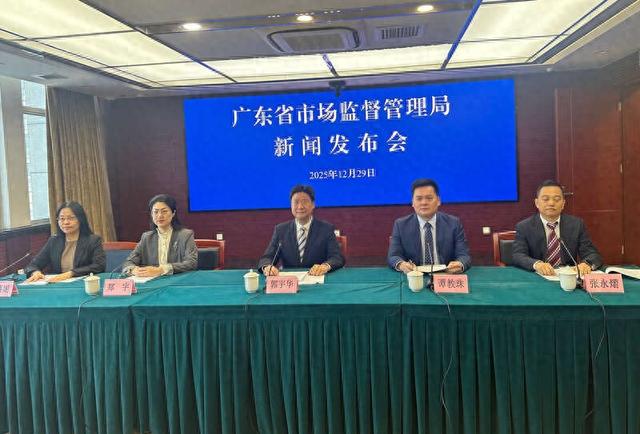
“十四五”期间,广东省经营主体净增长648.6万户
Xin Lang Cai Jing· 2025-12-30 17:06
Core Insights - Guangdong Province has seen a net increase of 6.486 million business entities during the 14th Five-Year Plan period, maintaining the highest total number of business entities, enterprises, private enterprises, and foreign-invested enterprises in the country [1][3]. Group 1: Business Environment and Regulations - The province has fully implemented the new Company Law and promoted "one-stop service" and "one license for all," allowing businesses to complete applications in one form within one day, effectively stimulating business vitality [3]. - Guangdong has pioneered the tax clearance "commitment system" and improved the market exit mechanism through the establishment of a system for the deregistration of businesses [3]. - The province has strengthened the rigid constraints of fair competition review and established a joint meeting system involving legislative bodies, achieving full coverage of fair competition review mechanisms at provincial, municipal, and county levels [3]. Group 2: Quality and Standards - The product quality compliance rate in Guangdong's manufacturing sector exceeds 94%, with initiatives for national standardization innovation and the implementation of a leading standards action to accelerate the construction of an advanced standards system [3]. - During the 14th Five-Year Plan period, Guangdong led or participated in the revision of 1,881 international standards, 11,600 national standards, and published 1,550 local standards, along with 2,324 new public measurement standards [3]. Group 3: Consumer Protection and Intellectual Property - The market supervision department has advanced consumer rights protection initiatives, including the formulation of the Guangdong Consumer Rights Protection Regulations and the implementation of the "Top Ten Actions for Safe Consumption," aimed at optimizing the consumer environment [4]. - The department handled 15.238 million consumer complaints, recovering economic losses of 3.66 billion yuan for consumers [4]. - Guangdong has addressed 20,000 intellectual property cases during the 14th Five-Year Plan period, with fines totaling 370 million yuan, and maintains the highest rankings in key indicators such as valid invention patents and PCT international patent applications [4].

盯住“关键人”!银监法修订草案公开
Zhong Guo Jing Ying Bao· 2025-12-30 16:44
Core Viewpoint - The draft amendment to the Banking Supervision Law aims to address regulatory gaps and risk points in the banking sector by expanding the regulatory scope to include new types of licensed financial institutions and enhancing oversight of major shareholders and actual controllers [1][2]. Regulatory Scope Expansion - The draft amendment includes financial holding companies, wealth management companies, and consumer finance companies under its regulatory framework, thereby unifying regulatory standards and eliminating disputes regarding applicability [2][3]. - It extends supervision to major shareholders and actual controllers to combat issues such as improper control and related-party transactions that have led to significant risks in the banking sector [2][3]. Risk Management and Resolution - The amendment improves the risk resolution framework by introducing new measures for restructuring and takeover, clarifying the conditions and procedures for these actions, and establishing a mechanism for early corrective actions [4]. - It mandates the establishment of a system for handling banking emergencies, requiring collaboration among various governmental departments to ensure timely and effective responses to banking crises [4]. Consumer Protection - The draft emphasizes the protection of consumer rights by defining the supervisory responsibilities of financial regulatory bodies in this area, including the establishment of dispute resolution organizations and prohibiting misleading advertising and illegal fees [5]. - It also increases penalties for violations, broadening the scope of accountability to include employees, major shareholders, and actual controllers, thereby addressing the issue of low deterrent effects from past penalties [5].
镇江外卖商家辱骂学生后续:店铺被大量差评、有买家仍遭攻击、品牌方道歉、门店停业整改
Yang Zi Wan Bao Wang· 2025-12-30 15:16
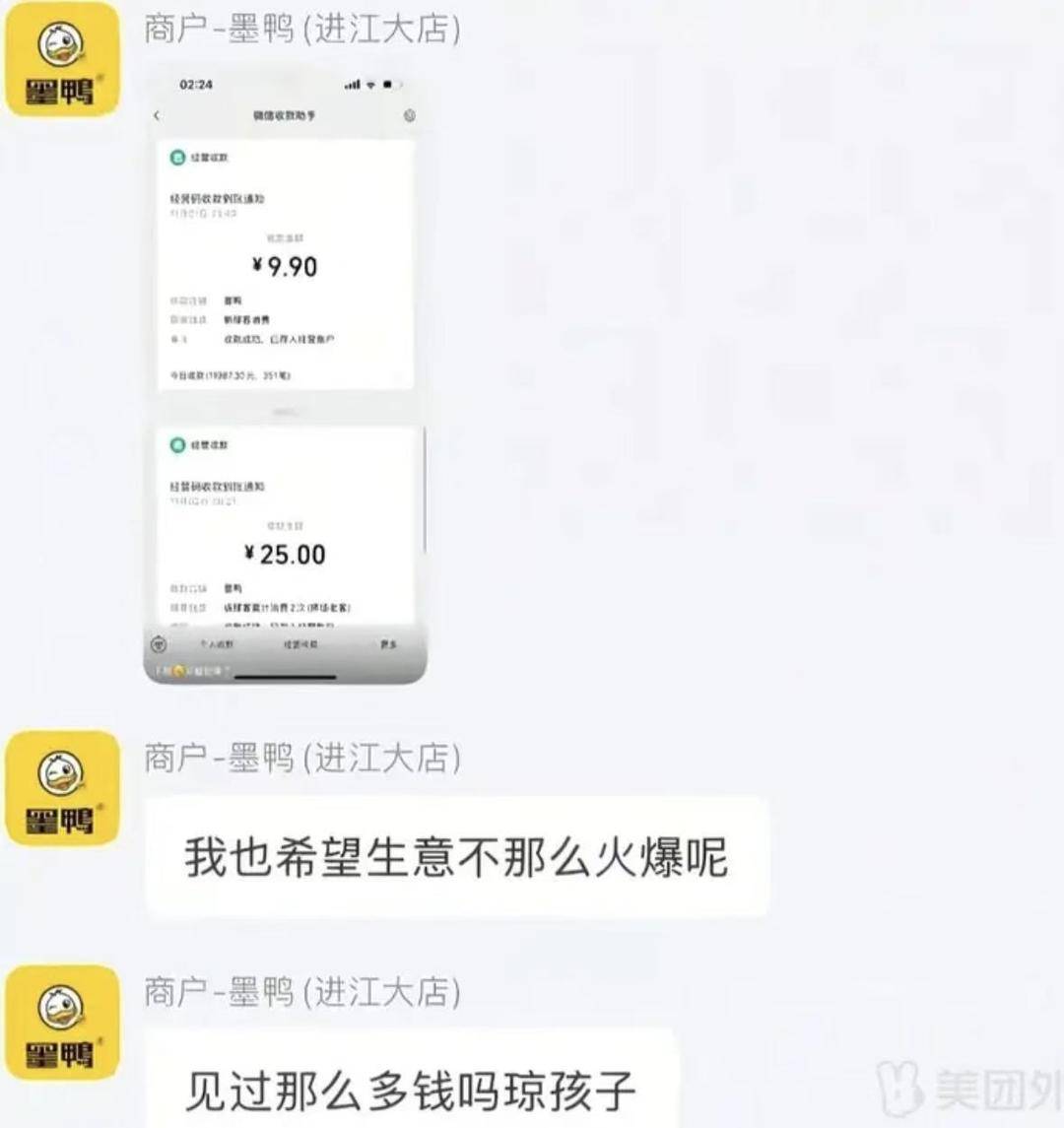
Core Viewpoint - A university student in Jiangsu faced verbal abuse from a food delivery merchant after requesting a refund for cold food, leading to public outrage and negative reviews of the store [1][4]. Group 1: Incident Details - The student ordered a meal for 30 yuan, which was cold and inedible, prompting a refund request that resulted in abusive messages from the merchant [1]. - The merchant's derogatory comments included insults about the student's academic status and personal background [1]. - The student provided evidence of the incident, including order screenshots and message records, which led to the exposure of the involved store,墨鸭黑鸭王镇江江苏大学店 [1]. Group 2: Customer Feedback - The store had only four reviews on the delivery platform, with many negative comments indicating fear of retaliation for leaving bad reviews [2]. - Customers reported various issues with their orders, including incorrect items and poor service, leading to widespread dissatisfaction [4]. Group 3: Company Response - On December 28, the brand management company, 安徽墨鸭, issued an apology and outlined corrective actions taken in response to the incident, including employee termination and a temporary closure for rectification [4]. - The company also stated that the store would be placed under increased scrutiny, with penalties for any future violations [4].
狠抓消费维权,中消协定调“十五五”开局之年重点工作方向
Xin Jing Bao· 2025-12-30 12:18
新京报讯(记者陈琳)中国消费者协会于12月29日在京召开第六届理事会第三次会议,全面总结年度工作 成果,并明确2026年"十五五"开局之年的重点工作方向。 市场监管总局党组书记、局长,中国消费者协会会长罗文在会上作工作报告。他指出,过去一年,中消 协围绕"共筑满意消费"主题,在化解消费纠纷、普及消费知识、推动社会共治等方面取得新进展。 狠抓纠纷化解:重点推进"消协315平台"建设与应用,提升投诉处理效能。 狠抓组织建设:推动各级消协组织健全发展,打造专业化维权队伍。 会议强调,中消协将加强消费监督、引导绿色消费、促进社会协同共治,奋力实现"十五五"消费者权益 保护工作的良好开局。 会议明确,2026年将以"狠抓"为主线,推动消费者权益保护工作迈上新台阶。 狠抓政策实施:将联动开展"3.15金秋购物节"公益活动,发布《中国消费者绿色消费指南》。 ...
工行郑州分行:深耕消保赋能民生 筑牢金融服务暖心防线
Xin Lang Cai Jing· 2025-12-29 13:44
【大河财立方 记者 徐曼丽 通讯员 李欣】2025年,工商银行郑州分行坚定践行"金融为民"初心使命,将 消费者权益保护深度融入经营发展全链条,以机制建设为根基、风险防控为抓手、问题化解为核心、宣 教普及为支撑,全方位提升消保工作质效,切实保障金融消费者合法权益,为高质量发展筑牢消保暖心 防线。 "建机制、强管控、广宣教、促创新" 夯实消保工作根基 源头防范业务风险 夯实消保工作根基 源头防范业务风险 另外,该行将消保工作作为日常经营重点,创新设立"委屈奖"关怀一线员工。全面推广智慧消保审查系 统,从源头杜绝不适配销售、虚假宣传等问题。紧盯春节、"3·15"等重要节点,发布多期次风险提示, 开展年度专项业务检查,覆盖机制建设、消保审查等关键环节,构建前瞻性风险防控体系。 "优化投诉、精准宣教、包案接访" 提升纠纷化解效能 厚植全员消保文化 工商银行郑州分行推行分层分类处理机制,为基层减负赋能,通过实际措施提升处理质效。严格落 实"首问负责制",畅通网点公示电话、行长热线等响应渠道,及时化解问题。聚焦重点领域强化源头治 理。积极运用新时代"枫桥经验",引入三方调解机制,多元化解矛盾。 同时,该行围绕"3·15"、 ...

男子充值爱奇艺25年会员遇退费难 官方:退款流程已启动
Xin Lang Cai Jing· 2025-12-28 14:15
Group 1 - A recent incident involving a man from Henan who charged a 25-year membership on iQIYI has drawn public attention due to difficulties in obtaining a refund [1] - iQIYI has acknowledged the refund request and initiated a verification process to ensure the refund is directed to the correct account [1] - The service agreement states that VIP membership fees are non-refundable once activated, categorizing them as virtual services rather than prepayments or deposits [2] Group 2 - Legal experts argue that clauses excluding consumer refund rights in standard contracts may be deemed invalid under consumer protection laws [3] - The lawyer highlighted that the 25-year membership duration exceeds typical consumer expectations, and consumers should be supported in their requests for contract termination due to changes in circumstances [4] - Consumers are advised to be cautious when selecting long-term prepaid packages and to review refund policies and service change terms before making payments [5]
