自动化

Search documents
盛宝2026年惊世预言:金价冲上1万美元、量子运算将导致加密货币崩跌
Ge Long Hui A P P· 2025-12-04 08:23
Group 1 - The core prediction for 2026 by Saxo Bank is that quantum computing will rapidly break most digital standards, leading to a collapse of security promises for emails, bank transfers, crypto wallets, and enterprise systems, causing investment funds to flee from cryptocurrencies and subsequently traditional finance [1] - As a result of the predicted collapse in security, bank customers are expected to withdraw deposits and move into safe assets like silver and gold, with gold prices projected to reach $10,000 [1] - Another prediction is that China's gold reserves will surpass those of the United States, and the offshore yuan will be partially backed by gold, allowing holders to exchange "gold yuan" for physical gold, which will strengthen the yuan against the dollar [1] Group 2 - Saxo Bank anticipates that a new global currency system centered in Asia will be established, providing Gulf oil-producing countries and Southeast Asian central banks with exchange quotas for "gold for yuan" [1] - The winners of this scenario will include gold prices and the offshore yuan, which is expected to reach 5 against the dollar, while U.S. Treasury bonds will be sold off by foreign investors, leading to a decline in the dollar's dominance [1] - Additionally, Saxo Bank predicts that AI development will encounter significant issues, with companies realizing that the hidden costs of automation are higher than expected, triggering a comprehensive crisis that could cost trillions to resolve [1]
外资,正稳健加仓中国股票
Zhong Guo Zheng Quan Bao· 2025-12-04 04:36
Core Viewpoint - Morgan Stanley's 2026 outlook for China's economy and stock market indicates a significant shift in global investors' perception, moving from a market lacking clear growth potential to one rich in growth opportunities, particularly in sectors like AI, new consumption, automation, and biotechnology [1][2]. Group 1: Foreign Investment Trends - Foreign investment sentiment towards the Chinese market is improving, with expectations for continued inflows in 2026 following a substantial valuation recovery in 2025 [2]. - The MSCI China Index has shown significant valuation recovery, marking a milestone for A-shares and Hong Kong stocks, leading to a renewed interest from global investors [2]. - Passive funds have seen a notable increase in inflows, while active funds remain cautious, with less than 5% of their global investment capacity allocated to Chinese stocks [3]. Group 2: Positive Economic Changes - Three positive changes in the Chinese economy have emerged since the "9·24" policy shift: 1. Enhanced policy responsiveness, with a focus on development and flexible adjustments [4]. 2. Resilience and innovation among Chinese enterprises, showcasing advancements in AI, smart vehicles, and biopharmaceuticals [4]. 3. A shift in global investor focus from dollar assets to diversified allocations, with a growing interest in China's tech innovations [4]. Group 3: Policy and Infrastructure Investment - The 2026 fiscal policy is expected to prioritize infrastructure investments in new areas such as underground pipeline renovations and green transition projects, driven by carbon reduction goals [5]. - Increased support for consumption through measures like birth subsidies and social security enhancements reflects a flexible and rich policy toolbox [5]. Group 4: Market Dynamics and Investment Strategy - The market's driving logic is set to change in 2026, with a completed valuation recovery and a stable, reasonable valuation level that can attract new capital [7]. - The anticipated easing of global liquidity, including three expected interest rate cuts by the Federal Reserve in the first half of 2026, will support stock assets [7]. - Investment strategies should focus on high-growth sectors aligned with China's long-term development, such as high-end manufacturing, AI, and biotechnology, while also including quality dividend-paying sectors like insurance [7].
Mettler-Toledo(MTD) - 2025 FY - Earnings Call Transcript
2025-12-03 16:32
Financial Data and Key Metrics Changes - The company reported a strong third quarter with core industrial business growing 10% organically, exceeding previous guidance of high single digits [5][6] - The overall guidance for 2026 indicates low- to mid-single-digit growth for both core industrial and product inspection segments, with organic growth potentially closer to low single digits [15][17] - Gross margins are expected to decline by about 200 basis points in Q4 due to tariffs, with operating margins down approximately 130 basis points [56][57] Business Line Data and Key Metrics Changes - The core industrial segment comprises 25% of global business, with 60% of that sold into core end markets like pharma and food manufacturing [4][5] - Product inspection, which accounts for about 15% of global business, has shown strong performance, particularly in food manufacturing, which constitutes 70% of that segment [7][9] - The lab segment experienced 4% growth in Q3, with bioproduction and bioprocessing performing well, while liquid handling faced challenges [26][29] Market Data and Key Metrics Changes - Strong double-digit growth was observed in the Americas and Europe, with China showing its first growth in the industrial business in two years [6][12] - The company noted that emerging markets now account for 17% of sales, slightly larger than China, indicating a shift in market dynamics [72] Company Strategy and Development Direction - The company is focusing on enhancing solutions through automation and digitalization, which aligns with customer needs for improved processes [5][12] - Recent acquisitions are aimed at strengthening the franchise and expanding service offerings, particularly in product inspection [19][20] - The company is cautiously optimistic about onshoring trends benefiting its pharma and biopharma segments, with a significant portion of exposure in QA/QC labs [45][49] Management's Comments on Operating Environment and Future Outlook - Management expressed cautious optimism regarding the operating environment, acknowledging ongoing uncertainties but expecting gradual improvement throughout the year [17][41] - The company is preparing for potential benefits from reshoring trends, although actual purchasing may take time to materialize [53][70] - Management highlighted the importance of agility and adaptability in navigating challenges, particularly in response to tariffs and currency fluctuations [60][62] Other Important Information - The service business is seen as a growth opportunity, with a significant installed base that could yield higher service revenues [37][39] - The company is investing in R&D and growth initiatives while maintaining a balanced approach to cost management [75] Q&A Session Summary Question: What is the outlook for the industrial piece going into 2026? - Management expects low- to mid-single-digit growth for both core industrial and product inspection segments, with cautious positioning due to market uncertainties [15][17] Question: Can you elaborate on the recent acquisitions? - The acquisitions are strategic bolt-ons aimed at enhancing market access and service offerings, particularly in product inspection [19][20] Question: How is the company addressing the impact of tariffs? - The company has implemented measures to mitigate tariff impacts, with expectations of a modest benefit from potential tariff reductions in Switzerland [62][64] Question: What is the outlook for the biopharma market? - Management is cautiously optimistic, noting that while some customers are ready to invest, others remain in a wait-and-see mode due to ongoing uncertainties [41][43] Question: How does the company view the academic and government markets? - The company expects soft conditions in the academic and government sectors but anticipates easier comparisons in the coming year [55]

Mettler-Toledo(MTD) - 2025 FY - Earnings Call Transcript
2025-12-03 16:30
Financial Data and Key Metrics Changes - The company reported a strong third quarter with core industrial business growing 10% organically, exceeding expectations of high single-digit growth [3][4] - The overall guidance for next year anticipates low- to mid-single-digit growth for both core industrial and product inspection segments, with organic growth potentially closer to low single digits [13][14] Business Line Data and Key Metrics Changes - Core industrial business constitutes 25% of global business, with 60% of that sold into core end markets like pharma and food manufacturing [2][3] - Product inspection accounts for about 15% of global business, with 70% of that sold to food manufacturing companies [5][6] - The lab segment experienced 4% growth in Q3, with strengths in bioproduction and bioprocessing, while liquid handling faced challenges [23][27] Market Data and Key Metrics Changes - Strong double-digit growth was observed in the Americas and Europe, with a slight growth in China, marking the first growth in the industrial business in China in two years [4][5] - The company noted that emerging markets now account for 17% of sales, slightly larger than China [68] Company Strategy and Development Direction - The company is focusing on enhancing solutions through automation and digitalization, which aligns with customer needs for process optimization [3][10] - Recent acquisitions are aimed at strengthening the franchise and increasing direct market access, particularly in the service business [18][19] Management's Comments on Operating Environment and Future Outlook - Management expressed cautious optimism regarding the operating environment, acknowledging ongoing uncertainties but expecting gradual improvement throughout the year [14][40] - The company is well-positioned to benefit from onshoring trends, particularly in the pharma and biopharma sectors, which constitute a significant portion of their business [41][43] Other Important Information - The company is experiencing headwinds from tariffs, with a projected gross margin decline of about 200 basis points due to these tariffs [52][56] - The Swiss tariffs are expected to decrease, which may provide a modest benefit to next year's guidance [58][59] Q&A Session Summary Question: What is the outlook for the industrial piece going into 2026? - Management indicated low- to mid-single-digit growth expectations for both core industrial and product inspection segments, with cautious positioning due to market uncertainties [13][14] Question: How are recent acquisitions expected to impact the business? - Acquisitions are seen as strategic moves to strengthen the franchise and enhance service offerings, with expected benefits in the service business [18][19] Question: What is the company's view on the biopharma market? - Management noted improved headlines but maintained a cautious outlook, expecting some customers to remain in a wait-and-see mode regarding investment commitments [39][40] Question: How does the company plan to address tariff impacts? - The company has implemented measures to mitigate tariff impacts and expects a modest benefit from the reduction of Swiss tariffs in the upcoming year [56][58]
精线技术的发展趋势
Sou Hu Cai Jing· 2025-12-03 15:43
Core Insights - The article discusses the significant role of precision wire technology across various industries, highlighting its impact on manufacturing efficiency and product quality [3][4][5]. Industry Applications - In manufacturing, precision wire technology enhances production efficiency and product quality by reducing human error through automation [3]. - The aerospace sector benefits from precision wire technology due to its high standards for quality and safety, ensuring that every component meets design specifications [3]. - In the electronics industry, precision wire technology is crucial for the production of circuit boards and components, enabling miniaturization and high integration of consumer electronics [4]. - The automotive industry utilizes precision wire technology in the production of electronic components and sensors, contributing to the development of intelligent manufacturing systems [5]. Future Trends - Precision wire technology is evolving towards green manufacturing, minimizing waste and environmental impact through optimized production processes [8]. - The future development of precision wire technology will focus on smart, automated, and sustainable practices, leveraging advancements in artificial intelligence and the Internet of Things [8]. - The technology is expected to continue driving transformation across various sectors, promoting high-quality development and resource efficiency [8].


摩根士丹利:明年底沪深300指数目标4840点
Shang Hai Zheng Quan Bao· 2025-12-03 13:47
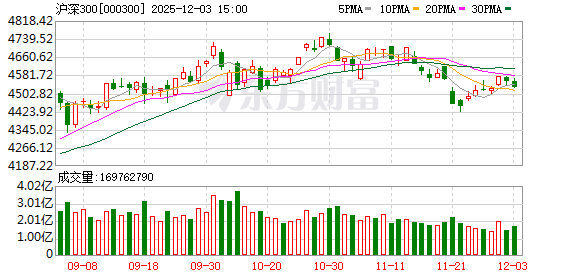
三是,随着市场对美元资产"一枝独秀论"祛魅,全球资金对中国资产配置兴趣回升。同时,国内资金开 始从定期存款向多元理财配置转变,保险和银行资管等机构开始"真金白银"入市。 在邢自强看来,全球流动性环境趋于宽松将支持风险资产表现,预计2026年上半年美联储将会有三次降 息,分别在1月、4月和6月进行,这为全球风险资产创造了有利环境。 12月2日,摩根士丹利举办线下媒体圆桌分享会,摩根士丹利中国首席经济学家邢自强和摩根士丹利中 国首席股票策略师王滢讨论了2026年中国经济和股市策略。 中国股市进入"估值结构性修复"过程 王滢认为,中国股市已经进入了"估值结构性修复"的过程。"今年A股、港股,包括全球机构投资人追 踪最为紧密的明晟中国指数,在估值上取得了非常大程度的修复。尤其港股恒生指数和明晟中国指数, 市盈率修复超30%。"她说。 摩根士丹利表示,随着市场对美元资产"一枝独秀论"祛魅,全球资金对中国资产配置兴趣回升,中国股 市重新被定义为"有成长性的市场"。该机构小幅上调了中国股票指数目标,将2026年12月沪深300指数 的目标点位定为4840点,并表示"明晟中国指数12个月前瞻市盈率在12至13倍之间是合理的" ...

A股,突发!“吹哨人”,突传重磅!
券商中国· 2025-12-02 06:50
Group 1 - The A-share market experienced a significant adjustment after a six-day rally, with a notable decline in individual stocks, indicating potential internal structural issues rather than external risk factors [1][2] - A report from Morgan Stanley, referred to as "吹哨人," suggests that 2026 earnings may fall below market consensus expectations, which could be influencing market sentiment [1][3] - Despite the bearish outlook from Morgan Stanley, some foreign analysts remain optimistic about the A-share market, predicting a rebound in 2026 [1][3] Group 2 - The market's rebound momentum weakened on December 2, with over 80 sectors, including home appliance components and energy metals, experiencing declines of over 1% [2] - The report from Morgan Stanley indicates a median growth expectation for earnings of about 6-7%, significantly lower than the market consensus of 15% [3] - Analysts from Daiwa Bank express optimism for sectors such as artificial intelligence, semiconductors, and pharmaceuticals, predicting that domestic demand will play a larger role in driving growth in 2026 [3]

21书评︱以人为本的“机器换人”
2 1 Shi Ji Jing Ji Bao Dao· 2025-12-02 05:01
Core Insights - China has become the world's largest market for industrial robots since 2013, with a significant annual increase in installation volume, leading to a robot density of 392 units per 10,000 people by 2022, indicating a high level of automation in manufacturing [1] - The book by Professor Xu Yi explores the impact of automation on laborers, including the challenges they face and strategies to cope with technological encroachment [1][2] - The development of "appropriate technology" is suggested as a way to create diverse technologies that are tailored to local conditions, promoting labor-intensive solutions rather than capital-intensive ones [5][7] Summary by Sections Automation and Labor Market - The rise of automation, AI, and other technologies poses significant challenges to the labor market, prompting a need for reflection on the motivations behind the relentless pursuit of these technologies by capital [2] - The role of the state is emphasized in balancing the threats posed by technology to society and exploring diverse technological advancements that can enhance productivity while benefiting the public [2] Appropriate Technology - "Appropriate technology" is defined as technology designed to fit local environmental, cultural, and economic conditions, often favoring labor-intensive methods [5] - Examples include solar cooking devices in Africa that utilize locally available materials and a universal nut sheller that significantly increases efficiency for nut farmers, demonstrating the potential of low-cost, environmentally friendly solutions [6] Considerations for China's Technological Development - China, as a populous nation, is advised against fully adopting "unmanned" technologies, as the efficiency advantages of automation may diminish over time [7] - The diversity of China's geography and culture necessitates the development of varied technologies that respect local characteristics and prevent the homogenization of modernization [7] - The importance of incorporating laborers' wisdom and participation in technology development is highlighted, suggesting that their experiences can lead to innovative and sustainable solutions [8]

趋势研判!2025年全球矿山运输设备行业全景分析:自动化、电力驱动、节能环保等方向是行业发展的必然趋势[图]
Chan Ye Xin Xi Wang· 2025-12-02 01:21
Core Insights - The mining transportation equipment market is experiencing significant growth, with the market size expected to increase from 172.9 billion yuan in 2020 to 226.3 billion yuan in 2024, representing a growth in market share from 29.49% to 30.72% of the overall mining equipment sector [1][3][4]. Industry Definition and Classification - Mining equipment is specialized machinery used for mineral extraction, processing, and exploration, categorized into excavation equipment and transportation equipment, with the latter being crucial for transporting ore, waste, and personnel within mining sites [2][3]. Current Development Status - The demand for mining transportation equipment is rising due to the need for more efficient and reliable material transfer systems between mines and processing plants, with projections indicating a market size of 241.6 billion yuan by 2025 [3][4]. Industry Chain - The upstream of the mining transportation equipment industry includes raw materials like steel and non-ferrous metals, as well as core components such as hydraulic systems and electrical control systems. The midstream involves manufacturing and integration of transportation equipment, while the downstream applications span coal mining, metal mining, and large-scale construction [5][6]. Competitive Landscape - The global mining transportation equipment market features prominent international manufacturers such as Hitachi Construction Machinery, Komatsu, and Liebherr, while domestic players include SANY Heavy Industry, Shandong Mining Machinery, and XCMG [7][8]. Development Trends - The industry is moving towards automation, electric drive systems, and environmentally friendly solutions, with a focus on sustainable development and reduced environmental impact through the use of green conveyor belts and equipment [10].



新芝生物,发布5款仪器新品
仪器信息网· 2025-12-01 09:07
Core Viewpoint - On November 20, 2025, New Zhi Biological launched five new products focusing on automation, integration, precision, and intelligence to enhance laboratory efficiency and reliability [1][10]. Product Summaries - The TGC-100 Microbial Growth Curve Analyzer addresses challenges in detecting large volume and high concentration microbial samples, supporting real-time monitoring of 36 samples without dilution [3]. - The SCIENTZ-CFS Ultrasonic Bacterial Turbidity Counter integrates ultrasonic dispersion and turbidity measurement, significantly reducing manual operation errors and providing standardized "one-stop" service for bacterial suspension preparation [5]. - The SCIENTZ08-I ID Non-contact Ultrasonic DNA Fragmentation Device is designed for second-generation sequencing DNA samples, allowing for non-contact processing to prevent contamination and improve consistency and throughput [6]. - The RDI-2000 Real-time Degassing and Liquid Separation System, which was previewed on October 24, combines degassing, liquid separation, temperature control, and dissolved oxygen monitoring to address bubble interference in nanopore sequencing [7]. - The Silent Ultrasonic Cleaning Machine operates at noise levels below 55 decibels, maintaining a quiet laboratory environment while providing efficient cleaning, extraction, and emulsification functions [8]. Industry Insights - The newly launched products reflect the continuous deepening of domestic scientific instrument manufacturers in niche application areas, emphasizing the importance of automation, integration, precision, and intelligence in laboratory sample processing and testing [10].