
量子技术

Search documents
日本将把人工智能列入6大战略技术领域
Xin Lang Cai Jing· 2025-11-25 06:35
Core Viewpoint - Japan plans to designate six fields as "national strategic technologies," including artificial intelligence, advanced robotics, quantum technology, semiconductors and telecommunications, biotechnology and healthcare, nuclear fusion, and space, aiming to prioritize research funding and tax incentives to attract private investment [1] Group 1 - The Japanese government aims to support sectors critical to economic growth [1] - The initiative is designed to enhance private sector investment in strategic technology areas [1]
A股高开,贵金属板块走强
Di Yi Cai Jing Zi Xun· 2025-11-25 02:15
2025.11.25 本文字数:562,阅读时长大约1分钟 09:28贵金属板块盘初走强,四川黄金、中金黄金涨超3%,晓程科技、山金国际、湖南白银等跟涨。 09:25 A股开盘丨创业板指高开1.42% 上证指数涨0.36%,深证成指涨0.85%,创业板指涨1.42%。 | મ્દ્રક | | 内日图 | 现价 | 消费 | 涨跌幅 | | --- | --- | --- | --- | --- | --- | | 000001 | 上证指数 | | 3850.57 | 5.01 | 0.36% | | 399001 | 深证成指 | W | 12692.09 c | 107.00 | 0.85% | | 399006 | 创业板指 | m/ | 2970.73 c | 41.69 | 1.42% | 睁大你们的双眼,握紧你们的手机! 作者 |一财阿驴 09:29优必选低开2.3%,此前公告称,拟折让逾一成配售新股筹31亿港元。 盘面上,科技股集体反弹,存储芯片、CPO概念涨幅居前,中际旭创涨超4%;量子技术、光伏、贵金 属板块反弹;AI应用端多数回调,军工、地产、农业板块小幅下跌。 09:22 港股开盘丨恒 ...


A股高开,贵金属板块走强
第一财经· 2025-11-25 02:07
Market Overview - The A-share market opened with the ChiNext index rising by 1.42%, the Shanghai Composite Index up by 0.36%, and the Shenzhen Component Index increasing by 0.85% [4][5]. - The Hong Kong stock market also opened positively, with the Hang Seng Index jumping 0.9% and the Hang Seng Tech Index rising by 1.43% [7][8]. Sector Performance - The technology sector showed a collective rebound, with storage chips and CPO concepts leading the gains, particularly Zhongji Xuchuang which rose over 4% [6]. - Precious metals sector strengthened, with companies like Sichuan Gold and Zhongjin Gold increasing by over 3% [3][6]. - AI application stocks mostly retreated, while military, real estate, and agriculture sectors experienced slight declines [6]. Company News - UBTECH Robotics opened down by 2.3% after announcing a plan to issue new shares at a discount of over 11% to raise HKD 3.1 billion [3][7].





滚动更新丨A股三大指数集体高开,存储芯片、CPO概念涨幅居前
Di Yi Cai Jing· 2025-11-25 01:40
盘面上,科技股集体反弹,存储芯片、CPO概念涨幅居前,中际旭创涨超4%;量子技术、光伏、贵金 属板块反弹;AI应用端多数回调,军工、地产、农业板块小幅下跌。 09:22 港股开盘丨恒指跳空高开0.9% 盘面上,科技股集体反弹,存储芯片、CPO概念涨幅居前。 09:29 优必选低开2.3%,此前公告称,拟折让逾一成配售新股筹31亿港元。 09:28 贵金属板块盘初走强,四川黄金、中金黄金涨超3%,晓程科技、山金国际、湖南白银等跟涨。 09:25 A股开盘丨创业板指高开1.42% 上证指数涨0.36%,深证成指涨0.85%,创业板指涨1.42%。 | 代码 | 名称 | 两日图 | 现价 | 涨跌 | 涨跌幅 | | --- | --- | --- | --- | --- | --- | | 000001 | 上证指数 | 15 | 3850.57 c | 13.81 | 0.36% | | 399001 | 深证成指 | 25 | 12692.09 c | 107.00 | 0.85% | | 399006 | 创业板指 | Wh | 2970.73 с | 41.69 | 1.42% | 恒指跳空高开0.9% ...

韧性创新稳定开放 国内外机构看好中国经济前景
Yang Shi Xin Wen Ke Hu Duan· 2025-11-24 00:31
近期,多家国内外机构发布2026年度策略报告。各家金融机构报告显示,明年中国经济将延续稳健增长 态势。 多家机构对2026年中国经济走势形成积极共识,认为在政策支持、结构升级与潜力释放的多种利好叠加 之下,经济将持续稳健上升。 光大证券首席宏观分析师 赵格格:在超大规模市场和强大产业体系的协同作用下,我国还有较大的经 济增长潜力与提质升级空间,宏观政策工具箱储备充足。 外资机构普遍预测,明年中国经济将在政策支持下保持稳健增长。摩根士丹利认为,在适度的宽松政 策、渐进的再平衡以及有节制的"反内卷"措施下,2026年中国经济将温和增长。瑞银预计2026年国内将 施行更加精准的政策支持,经济活动整体将保持韧性。 瑞银财富管理投资总监办公室亚太经济学家 菲利普·怀亚特:比如为企业提供能源成本方面的优惠或补 贴,面向消费者的补贴;对首套房购房者的支持等,这些都属于"定向支持"。 此外,"十五五"规划建议也令外资机构充满信心。高盛认为,规划建议体现了中国将进一步提升先进制 造业竞争力,提振出口的决心和能力。基于此,高盛上调了对中国出口增速和实际GDP增速的预测。 与此同时,内需市场的潜力正加速释放。随着一系列促消费、惠民 ...
测量精度优于心电图,量子技术能否撬开千亿级医疗市场
Di Yi Cai Jing· 2025-11-23 10:35
Core Insights - Quantum measurement technology with ultra-high sensitivity to weak magnetic fields is playing a role in medical diagnostics, particularly in detecting early signs of diseases through subtle magnetic field changes in the human body [1][2] - The application of "quantum + medical" technology has attracted investor attention, with discussions on the integration of quantum precision measurement and medical diagnostics at the recent 2025 Quantum Technology and Industry Conference [1] Industry Overview - The domestic market for biological magnetic technology devices has begun to see clinical validation in major hospitals for diagnosing cardiovascular diseases such as myocardial ischemia and heart failure, although pricing details have not yet been disclosed [2] - The potential market for cardiovascular diseases in China is estimated to be in the hundreds of billions, with 330 million patients, including over 10 million with coronary heart disease [2] - The medical device market in China has grown from over 200 billion yuan in 2018 to nearly 400 billion yuan in 2023, with projections to exceed 600 billion yuan by 2030, indicating a significant opportunity for quantum biological magnetic technology [2] Technological Development - The development of superconducting biological magnetic technology, including devices like magnetocardiograms and magnetoencephalograms, has been in progress for 20 years and is nearing commercialization [1] - Despite the promising applications, the high cost and complexity of biological magnetic technology currently limit its use as a routine clinical examination method [3] - Future advancements in high-temperature superconducting technology and the reduction in costs of quantum sensors are expected to make magnetocardiogram devices more affordable and widely applicable in clinical settings [3]
视频丨韧性、创新、稳定、开放 国内外机构看好中国经济增长前景
Yang Shi Xin Wen Ke Hu Duan· 2025-11-23 07:23
Core Viewpoint - Multiple domestic and foreign institutions predict that China's economy will continue to show steady growth in 2026, supported by policy measures, structural upgrades, and the release of potential [1][3][4] Group 1: Economic Growth Predictions - Foreign institutions generally forecast that China's economy will maintain steady growth in 2026 due to policy support [3] - Morgan Stanley anticipates moderate growth driven by appropriate easing policies and gradual rebalancing [3] - UBS expects more precise policy support to enhance economic resilience [3] Group 2: Structural and Policy Support - The chief macro analyst at Everbright Securities highlights significant growth potential and quality upgrade space in China's economy due to its vast market and strong industrial system [4] - UBS emphasizes targeted support measures such as energy cost subsidies for businesses and consumer incentives [6] - Goldman Sachs has raised its forecasts for China's export growth and real GDP growth, citing the "14th Five-Year Plan" as a confidence booster for advanced manufacturing competitiveness [6] Group 3: Trade and Domestic Demand - The dual drivers of foreign trade and domestic demand are crucial for high-quality economic growth, with exports remaining a core support force [7] - Analysts from CITIC Securities predict stronger overall exports in 2026 compared to 2025, with a focus on mid-to-high-end manufacturing competitiveness [9] - The potential of the domestic market is accelerating, with consumer and livelihood policies expected to play a key role in expanding domestic demand [9] Group 4: Innovation and Stability - Analysts identify "innovation" as a key theme for the economy in 2026, with a shift from traditional factor-driven growth to technology-driven growth [14] - The IMF representative notes that expanding consumption is a priority for the government, contributing to high-quality growth [11] - UBS economists highlight the stability of domestic policies as a solid foundation for innovation and a crucial guarantee for steady economic progress [18][20] Group 5: Open and Sustainable Development - The concept of institutional openness in finance, particularly in RMB internationalization and capital market openness, is seen as a positive factor for economic vitality [22] - The emphasis on green finance and support for high-tech industries is expected to enhance the overall economic landscape [22]

中国经济增长科创“引擎”动力足 前沿技术集中涌现形成独有“加速度”
Yang Shi Wang· 2025-11-23 03:59
Group 1 - The core viewpoint of the article is that financial institutions in China and abroad perceive the economy as resilient in 2025, with expectations for innovation-driven growth in 2026 [1][4] - The shift in China's economic growth model is moving from traditional factor-driven to technology innovation-driven, with a focus on practical applications of cutting-edge technologies like AI, quantum technology, and biotechnology [4][8] - The broad coverage of Chinese innovation is expected to enhance the living standards of its citizens and provide a much-needed boost to the global economy [11] Group 2 - The stability of domestic policies is seen as a solid foundation for the implementation of innovation and an important guarantee for the steady progress of the Chinese economy [13] - The term "stability" is highlighted as crucial, as government policies ensure that incentive measures facilitate continuous industrial transformation, particularly in the AI value chain [15] - The keywords "openness" and "sustainability" are emphasized in the financial sector, particularly regarding the internationalization of the RMB and the opening of capital markets, which are expected to invigorate the economy [18][19]
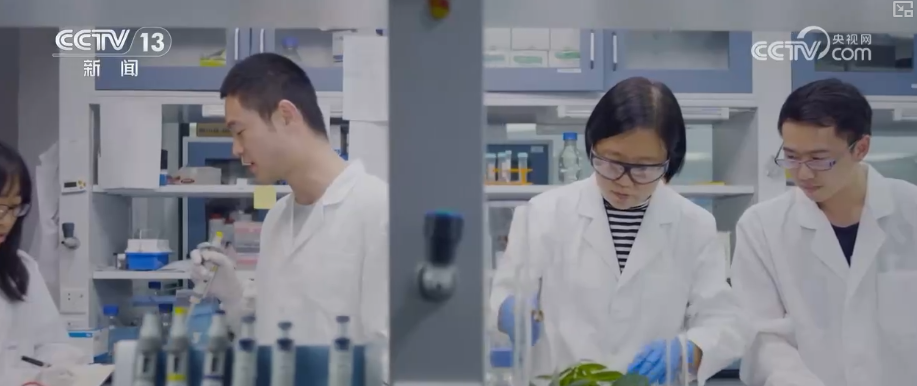
韧性、创新、稳定、开放 国内外机构看好中国经济增长前景
Yang Shi Wang· 2025-11-23 03:19
Core Viewpoint - Multiple domestic and foreign institutions have released strategy reports for 2026, indicating that China's economy will continue to show steady growth next year [1][2]. Economic Growth Outlook - There is a positive consensus among various institutions regarding China's economic trajectory in 2026, driven by policy support, structural upgrades, and the release of potential [2]. - Morgan Stanley predicts moderate growth for China's economy in 2026 under a backdrop of appropriate easing policies and gradual rebalancing [2]. - UBS expects more precise policy support in 2026, contributing to resilient economic activity [2]. Export and Manufacturing Resilience - Exports remain a core support for economic growth, with strong resilience observed in manufacturing and exports [3]. - Analysts from various institutions believe that China's "going global" strategy will further enhance profit growth opportunities for enterprises [3]. Domestic Demand and Consumption - The potential of the domestic market is accelerating, with a series of consumption-boosting policies expected to play a key role in expanding domestic demand [4]. - The rise of new consumption sectors is injecting fresh momentum into economic growth, with a focus on brands gaining market recognition and expanding overseas [5]. Key Economic Themes - Resilience, innovation, stability, and openness are identified as key themes for the Chinese economy [6]. - The shift from traditional factor-driven growth to technology-driven growth is highlighted, with a focus on emerging technologies like AI and quantum technology [6][7]. - The stability of domestic policies is seen as a solid foundation for innovation and a crucial guarantee for steady economic progress [8]. Financial Sector Insights - Institutional openness and sustainable development concepts are viewed as vital for the continuous vitality of China's economy in the context of open cooperation [9].

法拉第效应中光的磁场作用揭示
Ke Ji Ri Bao· 2025-11-21 00:45
Core Insights - The research team from Hebrew University of Jerusalem published a paper revealing that the magnetic field of light plays a direct role in the Faraday effect, challenging the long-held belief that only the electric field of light is significant [1][2]. Group 1: Research Findings - The study theoretically confirms that the oscillating magnetic field of light directly contributes to the formation of the Faraday effect, indicating that light can influence matter through its magnetic properties [1]. - The Faraday effect, discovered by Michael Faraday in 1845, involves the rotation of the polarization direction of light as it passes through a material in a constant magnetic field. The new research highlights the previously overlooked contribution of light's magnetic field [1]. - The research utilized the Landau-Lifshitz-Gilbert equation to conduct precise calculations, demonstrating that the magnetic field of light can induce magnetic moments within materials, similar to the effects of a static magnetic field [1]. Group 2: Experimental Predictions - Calculations predict that using magnetic materials like gadolinium gallium garnet in repeated Faraday experiments could show that the magnetic contribution of light to the Faraday effect can reach up to 17% for visible light and as high as 70% for infrared light [2]. - This finding suggests that the interaction between light and matter occurs not only through the electric field but also through the magnetic field, which has been underappreciated historically [2]. - Igor Rozhansky from the University of Manchester commented that the computational results are compelling and warrant further experimental validation, indicating potential new methods for scientists to control the internal spins of materials [2].