
产业升级

Search documents
泡沫罩里的创新密码:京东工业与江荆消防携手破局 小小改进降成本赢得新市场
Zhong Guo Zhi Liang Xin Wen Wang· 2025-12-04 11:19
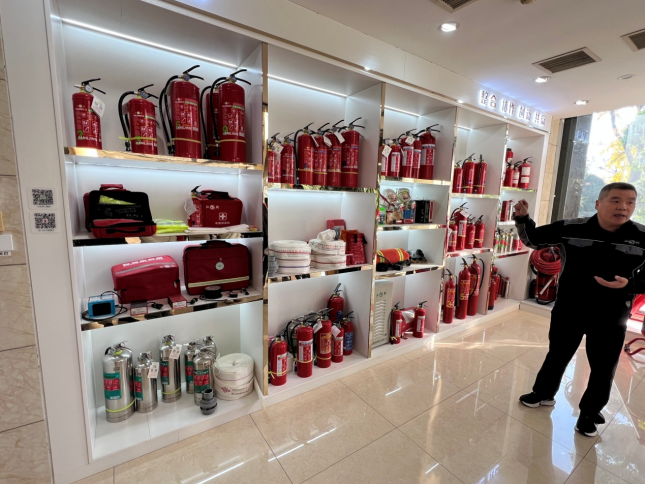
Core Insights - The collaboration between JD Industrial and Jiangjing Fire Protection highlights the importance of packaging innovation in addressing customer complaints and enhancing product quality [3][5][15] Group 1: Packaging Innovation - Jiangjing Fire Protection faced complaints regarding the packaging of fire extinguishers, particularly issues like dents, rust, and damaged pressure indicators during online sales [5][6] - Traditional packaging methods were inadequate for online sales, leading to customer dissatisfaction and increased return rates [5][6] - JD Industrial provided a solution by suggesting a foam cover that not only protects the product but also simplifies the production process and reduces costs [6][8][9] Group 2: Customer-Centric Approach - The partnership with JD Industrial allowed Jiangjing Fire Protection to shift its innovation focus from purely technical improvements to addressing customer pain points, such as packaging [9][15] - JD Industrial analyzed customer feedback and identified key concerns, leading to the development of a tailored packaging solution that significantly reduced complaint rates [6][9] Group 3: Strategic Collaboration - Jiangjing Fire Protection became a dedicated production line for JD Industrial's private brand "Huixiang," which enhances customer trust and increases repurchase rates [11][12] - The collaboration model between JD Industrial and manufacturing firms emphasizes stable orders and clear demand forecasts, enabling manufacturers to invest in automation and process innovation [12][13] - This partnership not only improves operational efficiency but also helps in differentiating products in a competitive market, leading to cost reductions for customers [12][13]


大幅跑赢!新核心资产崛起
格隆汇APP· 2025-12-04 10:54
Core Viewpoint - The article emphasizes the performance of the CSI A500 index, which has significantly outperformed its peers in 2025, achieving a year-to-date increase of 18.5%, surpassing the Shanghai Shenzhen 300 (15.5%) and the Shanghai Composite 50 (10.8%) [4][14]. Group 1: Market Trends and Investment Opportunities - The year 2025 is pivotal for China's economic growth, transitioning towards high-tech manufacturing, green energy, and digital services [5]. - Key sectors such as high-end equipment, new energy, new materials, biomedicine, and information technology align with the national strategy of "new quality productivity" and are receiving direct support from fiscal, industrial, and financial policies [6]. - Foreign capital is increasingly concentrated in "new core asset" sectors that align with China's long-term economic transformation, reversing previous volatility patterns [7]. Group 2: Sector Performance and Fund Flows - Significant net inflows are observed in leading sectors like electrical equipment (new energy), electronics, and biomedicine, while traditional sectors like food and beverage, home appliances, and finance see relatively flat or negative inflows [8]. - Active management equity funds are increasing their allocation to CSI A500 component stocks, indicating a systematic shift towards this index [9]. Group 3: ETF and Investment Tools - The total scale of CSI A500-related ETFs has reached 193.94 billion [10]. - The CSI A500 ETF (159338) has a year-to-date increase of 20.84% and a total scale of 21.664 billion, indicating strong market recognition [11][12]. Group 4: Performance Metrics - The CSI A500 index shows higher earnings elasticity, with a cumulative profit growth of 1.67% and a quarterly growth of 3.81% for the first three quarters of 2025, while the technology sector's quarterly profit growth reached 30.1% [13]. - The CSI A500 index has a balanced industry distribution, with approximately 50% in traditional value sectors and 50% in emerging growth sectors, contributing to its strong performance [14]. Group 5: Valuation Insights - The current valuation of the CSI A500 index is at a TTM P/E ratio of 16.4, positioned at the 69.23 percentile historically, indicating a reasonable valuation relative to its growth prospects [18]. - Compared to global growth indices like the Nasdaq and S&P 500, the CSI A500 offers a relatively attractive valuation, suggesting long-term investment potential amidst favorable liquidity conditions [20]. Group 6: Future Outlook - The ongoing structural transformation of the Chinese economy presents significant investment opportunities, with a focus on balancing portfolio styles to enhance long-term returns [21]. - The CSI A500 ETF is positioned as a high-quality investment vehicle for those looking to capitalize on China's economic transition, offering a balanced exposure to both traditional giants and high-growth potential "hidden champions" [22].

2026年资本市场将真正成为服务实体经济、推动产业升级的核心引擎
Sou Hu Cai Jing· 2025-12-04 07:35
Core Insights - The global capital markets are expected to undergo structural changes by 2026, driven by domestic financial market developments, particularly in market capitalization management and mergers and acquisitions [1] Group 1: Market Capitalization Management - By 2026, market capitalization management will evolve from a passive compliance tool to a core strategy for companies to actively build long-term value [2] - The shift is influenced by a restructuring of traditional valuation systems and a deepening regulatory focus on enhancing the quality of listed companies, alongside a transition from retail to institutional investor dominance [2] - Companies will need to engage more deeply with media and develop personalized investor relations to effectively communicate their strategic value and align market demands with corporate strategies [2] Group 2: Mergers and Acquisitions - Mergers and acquisitions will transition from mere scale expansion to becoming a key method for companies to construct industrial ecosystems and achieve leapfrog development [3] - This shift is driven by ongoing policy incentives, urgent strategic upgrades, and opportunities arising from global supply chain restructuring due to geopolitical tensions [3] - The focus of M&A activities will increasingly target "hard technology" sectors such as semiconductors, computing power, and artificial intelligence, facilitating both scale expansion and the establishment of technological barriers [3] Group 3: Role of Local State-owned Enterprises - Local state-owned enterprises are expected to transition from being financial investors to becoming industrial organizers by 2026 [4] - This strategic shift involves acquiring control of listed companies to attract high-quality firms with core technologies or market channels, thereby enhancing regional economic resilience and competitiveness [4] - The new model of capital empowerment linked to industrial introduction will help local governments overcome traditional investment challenges, promoting a more integrated industrial ecosystem [4] Group 4: Specialized M&A Funds - Specialized M&A funds focusing on specific technology sectors or industrial chain segments are anticipated to emerge, facilitating resource integration and governance optimization [5] - These funds will create a pool of high-quality acquisition targets, driving the refined restructuring of industrial chains and enhancing the capital market's role in supporting the real economy and industrial upgrades [5]
10%的提升带来10万亿增量,“十五五”居民消费率大有可为
21世纪经济报道· 2025-12-04 05:47
Core Viewpoint - The upcoming Central Economic Work Conference is expected to release a more proactive macro policy tone, with a focus on boosting domestic demand as a key area of attention [1] Group 1: Economic Goals and Consumer Rate - The "Suggestions" document includes "significantly improving the resident consumption rate" as a major goal for economic and social development [1] - China's resident consumption rate is projected to be approximately 39.9% of GDP in 2024, significantly lower than the 50%-70% range seen in developed countries [1][5] - A 10 percentage point increase in the resident consumption rate could generate over 10 trillion yuan in economic growth [2][5] Group 2: Structural Shortcomings and Potential Growth - The current resident consumption rate in China is about 40%, which is 10-30 percentage points lower than that of developed countries, particularly in service consumption [5][6] - If the resident consumption rate increases by 10 percentage points, it could lead to a consumption increment of 13.5 trillion yuan, equivalent to 53.2% of the total export value in 2024 [5][6] Group 3: Policy Recommendations and Measures - The "Suggestions" propose various measures to boost consumption, including enhancing public service spending, increasing the supply of quality consumer goods and services, and promoting service consumption [8][11] - Investment in human capital is emphasized as a new development stage, focusing on improving education, social security, and healthcare [8][9] Group 4: Long-term Strategies for Consumption Growth - Experts suggest that enhancing resident consumption rates requires a focus on increasing disposable income, improving social security systems, and fostering a unified national market [12][13] - The government plans to issue special bonds for consumer goods replacement programs, with a scale of 150 billion yuan in 2024, increasing to 300 billion yuan in 2025 [11]

“十五五”宏观经济展望—不畏浮云遮望眼(PPT) (1)
2025-12-04 04:47
Summary of Key Points from the Conference Call Industry Overview - The conference call focuses on the macroeconomic outlook for China during the "15th Five-Year Plan" period, emphasizing trade dynamics and internal demand trends [4][40]. Core Insights - **Trade Resilience**: Despite ongoing trade frictions, China's exports are expected to remain resilient due to companies actively exploring new markets. The trade surplus is projected to maintain a high level, with an anticipated increase of 22% year-on-year [4][7]. - **Currency Outlook**: The stability of the Renminbi (RMB) is seen as a foundational strength for China's export sector. The RMB is expected to appreciate, potentially reaching 6.8 against the USD by the end of next year [4][37]. - **Internal Demand Shift**: A turning point in domestic demand is anticipated around mid-2026, with economic growth expected to show a pattern of lower growth initially followed by a rebound [4][40]. - **Policy Focus**: The "15th Five-Year Plan" emphasizes building a modern industrial system, with significant efforts directed towards technological innovation and industrial upgrades. The policy shift aims to balance demand-side measures to stimulate internal consumption [4][47]. Trade Dynamics - **US-China Trade Relations**: The trade balance with the US has been negatively impacted by tariffs, with a year-on-year decline of 19.1% in the trade surplus with the US. In contrast, exports to non-US regions have expanded by 17% year-on-year [7][10]. - **Long-term Trade Surplus**: China's trade surplus is expected to continue growing, with projections indicating it could exceed $1 trillion by 2025, despite a declining share of imports from the US [10][8]. - **Historical Context**: Drawing parallels with Japan's trade dynamics post-1986, it is suggested that China may maintain a high trade surplus for an extended period despite trade tensions [10][24]. Currency and Financial Flows - **RMB Exchange Rate**: The RMB has not fully reflected the strong trade surplus in its exchange rate, with a noted appreciation of 2.2% against the USD despite a significant drop in the trade surplus with the US [16][37]. - **Capital Flows**: Since 2022, there has been a notable increase in capital outflows from China, driven by the inversion of interest rate differentials between China and the US. This has led to a significant net outflow in the financial account [20][21]. - **Exporters' Behavior**: There is an estimated $1 trillion in unconverted foreign exchange earnings from exporters, which, if settled, could further support RMB appreciation [29][30]. Economic Growth Projections - **Growth Targets**: Various institutions project China's GDP growth during the "15th Five-Year Plan" to average around 4.8%, with a focus on high-quality development alongside reasonable quantitative growth [46][44]. - **Investment Trends**: Investment demand is weakening, particularly in infrastructure and real estate, with a shift towards optimizing existing assets rather than expanding capacity [53][54]. Policy Implications - **Fiscal and Monetary Policy**: The fiscal policy is expected to remain expansionary, with a focus on welfare spending. Monetary policy may see a slight easing, with potential interest rate cuts anticipated in response to economic conditions [62][57]. - **Consumer Spending**: The government aims to enhance consumer spending, with a target for service consumption to reach 46.1% of total consumption by 2024, reflecting a shift towards service-oriented economic growth [47][48]. Conclusion - The macroeconomic outlook for China during the "15th Five-Year Plan" indicates a complex interplay of trade resilience, currency dynamics, and internal demand shifts, with significant policy implications for future growth and investment strategies [4][62].

金田股份:铜加工全球龙头打破“天花板”
Xin Lang Cai Jing· 2025-12-04 04:40
Core Viewpoint - Jintian Co., Ltd. has achieved excellence in copper processing through unwavering focus and resilience, continuously opening new avenues in high-end copper alloys and rare earth permanent magnet materials, which are accelerating entry into cutting-edge sectors such as new energy vehicles, chip computing, low-altitude aircraft, and robotics [2][9] Group 1: Company History and Philosophy - The company has a strong commitment to manufacturing, with its chairman stating that they have never considered leaving the manufacturing sector since its establishment 39 years ago [3][10] - Jintian Co., Ltd. has never reported a loss in its 39-year history, demonstrating a long-term commitment to steady growth and resilience in the manufacturing industry [10] - The company has undergone three significant strategic transformations: entering copper processing in 1987, completing a shareholding reform in 2001, and listing on the Shanghai Stock Exchange in 2020 [10] Group 2: Current Position and Production Capacity - Jintian Co., Ltd. is now one of the global leaders in copper processing, with a projected total copper production ranking first in the world in 2024 [11] - The annual production capacity of rare earth permanent magnet materials has reached 9,000 tons, with plans to increase to 13,000 tons after the completion of the second phase of the Baotou base project [11] Group 3: Technological Advancements - The company has invested hundreds of millions in upgrading its recycled copper processes, achieving a purity level of 99.99%, which is close to the industrial metallurgy limit [12] - Jintian Co., Ltd. has become one of the few companies to achieve a full industry chain closure in recycled copper, from recovery to purification and deep processing [12] - The company’s recycled copper products have seen a sales increase of over 60% year-on-year, entering the supply chains of international enterprises in high-end consumer electronics and the automotive industry [12] Group 4: Market Strategy and Future Growth - To break through the "ceiling" of copper processing, the company aims to expand its market while enhancing product quality and customer structure [13] - Jintian Co., Ltd. is focusing on high-end manufacturing clients, establishing partnerships with major technology manufacturers and green energy companies across North America, Europe, and Southeast Asia [14] - The company aspires to develop into a world-class base for copper products and advanced materials, emphasizing professionalism, platformization, intelligence, internationalization, and sustainability [14]

成交额2.85亿元!港股央企红利ETF(513910)近1月日均成交额同类产品领先!近十个交易日净流入5.12亿元!
Mei Ri Jing Ji Xin Wen· 2025-12-04 03:33
Core Viewpoint - The State-owned Assets Supervision and Administration Commission (SASAC) emphasizes the goal of strengthening and optimizing state-owned capital during the "14th Five-Year Plan" period, aiming to enhance the core functions and competitiveness of central enterprises, which is expected to lead to systematic improvements in profitability and dividend capacity for these enterprises [1][2]. Group 1: Market Performance - The China Hong Kong Stock Connect Central Enterprise Dividend Index (931233) decreased by 0.12% as of December 4, 2025 [1]. - Among the constituent stocks, China Overseas Macro Group (00081) led with a gain of 1.28%, while China Nonferrous Mining (01258) experienced the largest decline at 2.15% [1]. - The Hong Kong Central Enterprise Dividend ETF (513910) rose by 0.12%, with the latest price at 1.66 yuan [1]. Group 2: Strategic Insights - The SASAC's focus on strengthening state-owned capital is expected to provide a long-term growth foundation for related enterprises, enhancing their profitability and shareholder returns [2]. - Central enterprises in the Hong Kong market are characterized by low valuations and high dividend yields, making them attractive under the current macroeconomic environment [2]. - The recent policy direction towards improving performance and shareholder returns is likely to lead to valuation increases and sustained cash returns for these assets [2]. Group 3: Trading Activity - The Hong Kong Central Enterprise Dividend ETF has seen significant trading activity, with an average daily transaction volume of 421 million yuan over the past week, ranking first among comparable funds [2].
银行业2026年的业务增长点及对投资的映射
2025-12-04 02:21
Summary of Key Points from Conference Call Industry Overview - **Industry**: Banking Sector - **Forecast Year**: 2026 Core Insights and Arguments 1. **Loan Structure Predictions for 2026**: - Real estate loans are expected to maintain a stable proportion - Manufacturing loans will benefit from high-end manufacturing and industrial upgrades - Technology finance loans are anticipated to grow significantly but come with risks - Wealth management focusing on high-net-worth clients is identified as a major growth area [1][3][4] 2. **Financial Policy Focus for 2026**: - The core of financial policy will support the development of new productive forces, with a focus on technology finance - A bottom-line thinking approach will be maintained to prevent systemic financial risks, with potential policy easing if economic or real estate markets face pressure [4][5] 3. **Investment Opportunities in Banking**: - Bank stocks are characterized by weak cyclical attributes, expected to continue in 2026 - High-quality regional rural commercial banks, large banks, and banks with a significant proportion of high-net-worth clients are seen as more competitive in technology, manufacturing, and wealth management sectors [6] 4. **Infrastructure Loan Outlook for 2026**: - Infrastructure loans are expected to rebound, supported by a 500 billion policy financial tool and the rapid growth of new infrastructure projects like clean energy [7] 5. **Manufacturing Loan Resilience**: - Manufacturing loans are projected to remain resilient, supported by the "15th Five-Year Plan" emphasizing high-end manufacturing and traditional industry upgrades [8] 6. **Challenges and Opportunities in Technology Finance**: - Technology finance is a key development area with high growth potential, but banks must manage associated risks effectively [9][15] 7. **Trends in Wealth Management**: - High-net-worth clients are identified as the main source of opportunities in wealth management, with a trend of resident deposits flowing into the stock market expected to continue [2][10] 8. **Trends in Infrastructure Investment**: - Traditional infrastructure projects are expected to continue a slow decline, while new infrastructure areas like AI and clean energy will see strong demand [11] 9. **Manufacturing Export Outlook**: - Manufacturing exports are expected to be supported by market structure adjustments, with a moderate slowdown in growth anticipated [12] 10. **Financial Support for New Industrialization**: - Measures include increasing support for traditional industry upgrades and green finance, with banks required to include new industrialization in their long-term strategies [14] Additional Important Insights - **Real Estate and Consumption Outlook**: - The real estate market is expected to remain stable, with potential policy measures to stabilize the market if necessary [17] - Consumer performance in 2025 is described as generally weak, with a need for significant policy support to improve consumption rates [20][21] - **Impact of New Internet Loan Regulations**: - New regulations affecting internet loans with interest rates above 24% may pose risks to certain market segments, particularly in lower-tier markets [22] - **Investment Targets for 2026**: - Quality regional rural commercial banks and certain urban banks are highlighted as promising investment targets, with average dividend yields exceeding 4% for A-shares and around 5% for H-shares [23]
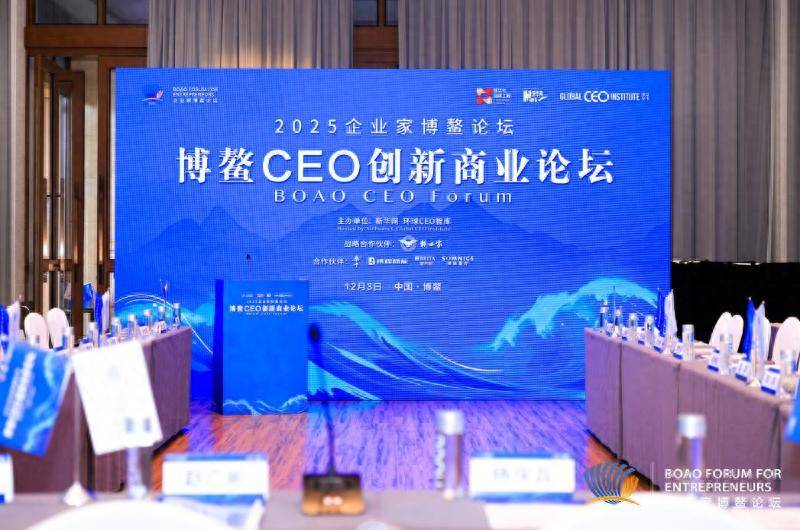
探寻品牌升维之道 构建产业融合生态 博鳌CEO创新商业论坛举办
Sou Hu Cai Jing· 2025-12-04 01:40
Core Insights - The forum focused on the theme of "Brand Strategy and Industrial Upgrading in the New Landscape of Going Global" amidst global economic restructuring [1] - It aimed to explore the path of brand elevation and global strategic advancement for industries in the context of a new global framework [3] Group 1: Brand Development - Chinese enterprises need to transition from "Made in China" to "Global Brands," overcoming challenges related to brand strength despite large company sizes [4] - The COO of Ctrip shared that their international expansion has two phases: first, providing management services to Chinese companies going abroad, and second, offering services to local enterprises [6] - The chairman of a medical technology company emphasized the need for a shift from selling products to improving treatment methods and providing long-term services [6] Group 2: Collaborative Strategies - The forum highlighted the importance of collective efforts among Chinese enterprises, advocating for a shift from "going it alone" to "collective win-win" strategies through collaborative innovation [7] - The CEO of a Chinese liquor company discussed the need for cultural adaptation and localized marketing strategies to overcome challenges in international markets [9] - A technology executive noted that the era of relying on single products is over, and emphasized the importance of breaking down barriers and fostering an ecosystem for sustainable growth [9] Group 3: Ecosystem and Value Creation - The core of brand globalization is value co-creation, and the key to industrial breakthroughs lies in ecological competition and cooperation [10] - Future competition will be based on ecosystems, where companies must learn to collaborate while also competing [10] - The forum served as a platform for practical insights, addressing the challenges of globalization and the need for localized strategies in various markets [10]
江西于都招商引资为纺织服装产业注入新动能
Zhong Guo Zhi Liang Xin Wen Wang· 2025-12-04 01:07
Core Insights - The 2025 Jiangxi Textile and Apparel Week and the 6th Jiangxi (Ganzhou) Textile and Apparel Industry Expo have opened, with a total of over 4 billion yuan in high-quality cooperation projects signed [1] - The signed projects cover the entire textile and apparel industry chain, including women's wear, sportswear, wool sweaters, and key supporting areas such as fabric production, intelligent manufacturing, and washing equipment development [1] - These projects aim to transform the local industry from a traditional "single processing" model to an integrated model of "design + production + support + sales," enhancing the industrial capacity and solidifying Yudu's position as a core hub for the textile and apparel industry in Ganzhou [1] Industry Advantages - The robust development of the textile and apparel industry in Yudu County is supported by multiple advantages, including its strategic location at the intersection of Jiangxi, Fujian, and Guangdong provinces, which facilitates logistics [2] - The county has a labor force of over 300,000 workers in the textile and apparel sector, providing stable employment for enterprises [2] - Yudu has established industrial parks and innovation design centers, along with favorable policies such as tax reductions, factory subsidies, and talent recruitment to support enterprise development [2] Innovative Investment Attraction - Yudu County has adopted an innovative investment attraction model, utilizing a combination of traditional and new methods, including leveraging leading enterprises to attract upstream and downstream supporting companies [3] - The county has sent 13 professional investment teams to key textile and apparel regions, conducting over 20 promotional events and visiting more than 150 companies to attract investment [3] - Local officials emphasize the importance of project tracking services to ensure signed projects are quickly implemented and operational, while also enhancing the functionality of industrial platforms to attract more high-quality resources [3]