
数字经济

Search documents
扩内需政策效果显现,2025年12月CPI超预期增长
Hua Xia Shi Bao· 2026-01-10 04:12
Group 1 - The core consumer demand is increasing, leading to a rise in the Consumer Price Index (CPI) for December, which increased by 0.2% month-on-month and 0.8% year-on-year, exceeding market expectations [2][3] - The core CPI, excluding food and energy, rose by 1.2% year-on-year, indicating stable domestic demand [2][4] - The Producer Price Index (PPI) showed a month-on-month increase of 0.2% and a year-on-year decrease of 1.9%, with the decline narrowing due to improved supply-demand structures [5][6] Group 2 - Prices of communication tools, maternal and infant products, entertainment durable goods, and household appliances increased by 1.4% to 3.0% month-on-month, reflecting the effectiveness of consumption-boosting policies [3][4] - Food prices rose by 1.1% year-on-year, contributing significantly to the CPI increase, while pork prices decreased by 1.7% due to sufficient supply [4][5] - The prices of durable goods showed overall improvement, with household appliances rising by 1.4% month-on-month, marking a historical high [4][5] Group 3 - The energy prices decreased by 0.5%, with gasoline prices falling by 1.2% due to international oil price fluctuations [4][5] - The prices in the coal mining and washing industry and coal processing rose by 1.3% and 0.8% respectively, continuing a five-month upward trend [5][6] - New production capacities in digital economy-related industries are driving price increases, with significant rises in prices for external storage devices (15.3%) and biomass liquid fuels (9.0%) [6]


物价温和回升背后,有哪些积极变量?
2 1 Shi Ji Jing Ji Bao Dao· 2026-01-10 02:10
Group 1 - The consumer price index (CPI) in China increased by 0.8% year-on-year in December 2025, marking the highest growth since March 2023, driven by effective domestic demand policies and increased consumption during the New Year holiday [1] - The core CPI, excluding food and energy prices, rose by 1.2% year-on-year, indicating sustained consumer recovery momentum [1] - The industrial producer price index (PPI) showed a month-on-month increase, with the year-on-year decline narrowing, reflecting improvements in industrial production and pricing [1] Group 2 - The service sector and quality consumer goods prices have been steadily rising, with service prices increasing for eight consecutive months, indicating a shift in consumer spending from basic to quality-oriented products [2] - Prices in the digital economy sector, such as external storage devices, rose by 15.3% year-on-year, while biomass liquid fuel prices increased by 9%, showcasing the structural support for industrial prices from new productive forces [2] - The overall price recovery is supported by the optimization of demand structure and industrial upgrades, reflecting new growth momentum in the market [2] Group 3 - Policies aimed at reducing "involution" competition and building a unified national market are positively impacting PPI recovery, with prices in previously over-competitive sectors like coal and lithium batteries showing a continuous narrowing of year-on-year declines [3] - The significant year-on-year drop in pork prices by 14.6% in December is a major factor pulling down food prices and overall CPI, while international oil prices are expected to influence domestic fuel prices [3] - The recovery pace of the real estate market will also affect overall domestic demand and is a key variable in determining the price level [3] Group 4 - The internal recovery momentum is expected to dominate, promoting a continued moderate increase in prices, supported by macro policies and ongoing industrial upgrades [4] - Policies such as trade-in programs are anticipated to effectively boost consumer demand, with CPI and core CPI likely to continue their moderate upward trend [4] - The supply-demand relationship in the industrial sector is expected to improve, driven by the growth of the digital economy and green industries, leading to a potential year-on-year positive PPI by the second half of 2026 [4]
驭浪逐新,奋进在“未来”已来的征途上
Xin Lang Cai Jing· 2026-01-09 22:53
Core Insights - The article highlights the advancements in technology and innovation in Jiangsu, showcasing two significant projects: the deep-sea test ship "Future" and the national major scientific infrastructure for future networks [1][6]. Group 1: Deep-Sea Test Ship "Future" - The "Future" ship is a green intelligent technology test vessel, measuring 110.8 meters in length and with a full load displacement of 7,000 tons, designed for deep-sea operations [1][2]. - It features a modular design that allows for the flexible installation of various equipment, including manned and unmanned submersibles, breaking traditional limitations of test vessels [2][3]. - The ship's moon pool system enables real-time testing of equipment at depths of 1,000 to 3,000 meters, significantly shortening the equipment maturity cycle by allowing simultaneous research and testing [3][4]. Group 2: Future Network Infrastructure - The future network facility in Nanjing has been officially put into operation, featuring over 55,000 kilometers of optical transmission lines connecting hundreds of nodes across 40 cities, forming a nationwide "super nerve network" [4][5]. - The facility demonstrates significant efficiency improvements, such as reducing the data transmission time for the "China Sky Eye" from 699 days to 1.64 hours, and achieving a cross-domain collaborative training efficiency of 98% [4]. - The infrastructure supports advanced applications, including remote surgeries and artificial intelligence, with a computing power exceeding 100,000 P, showcasing Jiangsu's commitment to core technology development [4][5]. Group 3: Overall Technological Advancement - The developments in both projects reflect Jiangsu's dedication to long-term research and innovation, emphasizing the importance of persistence and commitment in achieving technological breakthroughs [5][6]. - The article underscores that technology is not just a distant concept but a tangible force that benefits people's lives and empowers industries, indicating a bright future for Jiangsu's high-quality development [6].
产教深融合,筑造新工匠:江苏经贸职业技术学院产教融合新实践
Yang Zi Wan Bao Wang· 2026-01-09 12:53
Core Insights - Jiangsu Economic and Trade Vocational College has successfully recommended four industry experts for the 2025 vocational education industry professor selection, reflecting the institution's commitment to integrating education with industry needs [1] - The college emphasizes the importance of industry-education integration as a lifeline for high-quality development, aligning closely with Jiangsu's "775" modern service industry development blueprint [1] Group 1: Talent Development and Industry Integration - The college adopts a dynamic adjustment mechanism to align talent training with market needs, focusing on key areas such as e-commerce, smart logistics, and artificial intelligence [2] - Collaborations with leading companies like Suning and Softcom have led to the establishment of industry academies, allowing students to engage in real-world projects, generating over 30 million yuan in direct GMV in the past two years [2] Group 2: Innovative Educational Models - The college has transitioned from traditional internships to a "value co-creation" model, creating a new educational paradigm that includes building physical academies in partnership with companies [3] - The establishment of a provincial-level university technology park serves as a practical training ground, where students gain hands-on experience in a real business environment, ensuring a seamless connection between education and industry demands [3] Group 3: Industry Standards and Research Collaboration - Faculty members collaborate with industry experts to develop technical standards and provide services to small and medium enterprises, enhancing the practical skills of students through real accounting practices [4] Group 4: Outcomes of Integration Efforts - The college has achieved significant results in talent development, with students winning over 50 national awards in competitions and maintaining a graduate employment rate above 98% [5] - The institution has established stable partnerships with over 400 companies, creating 10 industry academies and more than 200 off-campus internship bases, with total corporate investment nearing 100 million yuan [5] Group 5: Faculty and Resource Optimization - Over 85% of professional teachers are dual-qualified, with a substantial number having experience in leading companies, enhancing the educational experience with real industry insights [6] Group 6: Future Development Plans - The college aims to deepen and expand its industry-education integration through digital empowerment and the establishment of a smart platform for precise talent demand forecasting [7] - Plans include strengthening the role of the city-level industry-education integration consortium and providing high-quality vocational training to over 30,000 individuals annually [7]
数字经济板块1月9日涨2.72%,星环科技领涨,主力资金净流入56.53亿元
Sou Hu Cai Jing· 2026-01-09 09:21
证券之星消息,1月9日数字经济板块较上一交易日上涨2.72%,星环科技领涨。当日上证指数报收于 4120.43,上涨0.92%。深证成指报收于14120.15,上涨1.15%。数字经济板块个股涨跌见下表: 以上内容为证券之星据公开信息整理,由AI算法生成(网信算备310104345710301240019号),不构成 投资建议。 从资金流向上来看,当日数字经济板块主力资金净流入56.53亿元,游资资金净流出52.81亿元,散户资 金净流出3.71亿元。数字经济板块个股资金流向见下表: ...


齐鲁跃过10万亿
Zhong Guo Jing Ying Bao· 2026-01-09 09:09
Core Viewpoint - Shandong Province is projected to surpass a GDP of 10 trillion yuan by 2025, becoming the third province in China and the first in Northern China to achieve this milestone, indicating its significant role as an economic growth engine in the region [1][11]. Economic Performance - In the first 11 months of 2025, Shandong's industrial added value increased by 7.7%, with 36 out of 41 industries experiencing growth, reflecting a growth rate of 87.8% [2][8]. - The total retail sales of consumer goods reached 3.81 trillion yuan, growing by 5.2%, which is 1.2 percentage points higher than the national average [4][11]. - The total import and export volume reached 3.19 trillion yuan, with a growth of 4.6%, also exceeding the national average [4][11]. Investment Trends - Fixed asset investment in Shandong decreased by 6.8%, but industrial investment grew by 3.5%, indicating a shift towards quality and structural upgrades [3][11]. - Investment in clean energy sectors, such as electricity and heat production, surged by 31.6%, with clean power investments growing by 38% [3][11]. Consumption Dynamics - Upgraded consumer goods, such as communication devices and cultural office supplies, saw retail sales growth of 28.2% and 20.7%, respectively [4][11]. - Online retail sales reached 218.29 billion yuan, growing by 16.7%, significantly outpacing the national average [4][11]. Trade and Export - Exports of "new three items" (new energy vehicles, lithium batteries, solar batteries) have maintained double-digit growth, highlighting a shift in trade structure [4][11]. - Trade with countries involved in the Belt and Road Initiative reached 2.04 trillion yuan, accounting for 64.1% of Shandong's total trade [4][11]. Urban Development - Shandong's economic growth is supported by a tiered urban development strategy, with cities like Qingdao, Jinan, and Yantai leading the way in GDP growth [5][11]. - The province has 13 cities ranked among the top 100 in the country, indicating strong regional economic resilience [2][11]. Industrial Structure - The agricultural sector remains robust, with a total output value of 896.35 billion yuan, growing by 4.3% [8][11]. - The industrial sector's added value increased by 7.7%, with significant contributions from the chemical, automotive, and aerospace industries [9][11]. - The service sector's added value reached 42.14 trillion yuan, growing by 6.1%, making it a key driver of economic growth [9][11]. Digital Economy and Innovation - The digital economy is expected to exceed half of the total economic output, with a notable increase in high-tech industries [9][11]. - Shandong has the highest number of national-level industrial internet platforms, totaling 46, indicating a strong focus on digital transformation [9][11].
数字人民币专题:应用场景空间广阔,2.0时代将加速发展
Xin Lang Cai Jing· 2026-01-09 09:01
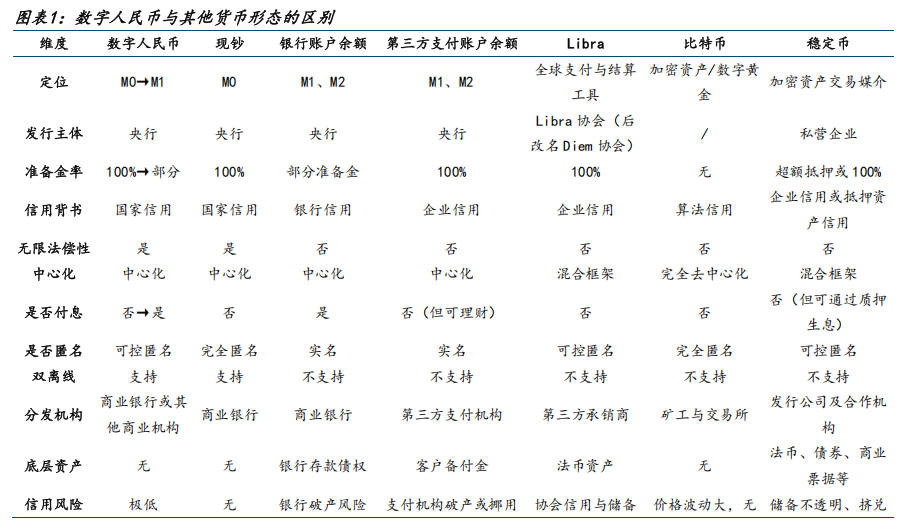
Development Overview - Digital Renminbi is a digital form of legal currency issued by the central bank, characterized by legal tender status, security, high convenience, and programmability [1] - As of November 2025, Digital Renminbi has processed a total of 3.48 billion transactions, with a cumulative transaction amount of 16.7 trillion yuan [1][24] - The dual-layer operational system involves the central bank issuing Digital Renminbi and designated operating institutions providing exchange and circulation services [1][19] Future Outlook - The necessity of developing sovereign digital currencies is highlighted due to risks posed by cryptocurrencies and global stablecoins [2] - Approximately 130 countries, accounting for 98% of the global economy, are exploring digital versions of their currencies, with many in advanced development stages [2][28] - Digital Renminbi is expected to enhance the efficiency of monetary policy transmission and support the internationalization of the Renminbi [2][26] Industry Chain - The issuance layer focuses on technologies such as digital encryption, network security, and identity authentication, which are crucial for ensuring transaction data integrity and user privacy [4] - The circulation layer requires banks and third-party payment institutions to upgrade their systems to accommodate Digital Renminbi [4] - The application layer involves upgrading payment terminals and digital wallets to facilitate the use of Digital Renminbi [4] Investment Recommendations - Digital Renminbi plays a significant role in promoting the internationalization of the Renminbi and has numerous application scenarios both domestically and internationally [4] - The demand for technological upgrades and software/hardware modifications across the issuance, circulation, and application layers presents opportunities for relevant technology and product providers [4]

沪指16连阳站上4100点 A股还能涨多久?
Xin Lang Cai Jing· 2026-01-09 08:21
高盛在最新报告中明确提到,中国股票市场到2027年末有望实现38%的涨幅。摩根大通将中国市场的评 级上调至"超配",认为中国市场估值仍处于合理区间,且国际投资者仓位较轻。摩根士丹利小幅上调了 中国股票指数目标,预测2026年12月沪深300指数目标点位为4840点。瑞银将MSCI中国指数2026年年末 目标设定为100点,较当前水平存在约14%的上涨空间,同时将恒生指数目标设定为30000点。 1月9日,沪指高开高走收盘突破4100点,刷新2015年7月底以来新高,日K线录得16连阳;深成指涨超 1%,创业板指数上涨0.77%。沪深两市成交额3.12万亿,较上一个交易日放量3224亿,时隔73个交易日 后再度站上3万亿大关,历史第五次突破3万亿。 从板块来看,AI应用概念走强,引力传媒5天4板,粤传媒、易点天下、博瑞传播、国新健康等多股涨 停。商业航天概念反复活跃,鲁信创投11天9板,巨人索具2连板。全市场超3900只个股上涨,连续2日 超百股涨停。 近两个月,多家外资机构密集发布了2026年市场展望。其中,高盛、摩根大通、摩根士丹利、瑞银等知 名机构表达了对中国资产的乐观预期。 瑞银财富管理投资总监办公室( ...
指数上涨多空分歧加大!各凭本事赚钱,还有哪些投资机会?
Sou Hu Cai Jing· 2026-01-09 07:48
Group 1 - The market adjustment is attributed to the fragile market structure, macro disturbances, and industry divergences, suggesting that investors should avoid single attribution and linear extrapolation [1] - The current liquidity environment is expected to remain loose until the first quarter of next year, with a trend of "deposit migration" likely to continue under a low-interest-rate backdrop [1] - Key sectors for net inflow include domestic software, military industry, new energy vehicles, non-ferrous metals, and gaming [1] Group 2 - The brokerage sector has underperformed compared to the Shanghai Composite Index despite showing growth in Q3 reports, raising questions about its future prospects [3] - The year 2026 is anticipated to open up opportunities for the securities industry, supported by favorable policies and a reasonable liquidity environment [3] - Key investment focuses include leading securities firms aiming for international competitiveness, mid-sized firms with potential, and companies benefiting from improved industry competition and wealth management recovery [3] Group 3 - A wave of state-owned enterprises is entering the capital market, focusing on core business and strategic new layouts, indicating a clear path for high-quality development of state capital [4] - The next phase is expected to emphasize capital operations in advanced fields such as new materials, biopharmaceuticals, and digital economy, with spin-off listings becoming a significant trend [4] Group 4 - The demand for the energy storage industry is projected to remain high in 2026 due to ongoing global energy transition trends and significant project plans in major markets [6] - The strong demand for household and industrial storage persists, driven by ongoing electricity shortages in emerging markets [6] Group 5 - The short-term market trend is strong, with significant inflow of incremental capital and a strong profit-making effect [8] - The number of stocks rising outnumbers those falling, indicating a positive market sentiment [9] Group 6 - The Shanghai Composite Index is experiencing a strong rally, with expectations that even during high-level corrections, capital will continue to enter the market [10] - The AI glasses industry is expected to transition from exploration to scaled growth, benefiting from technological innovation and product iteration [10] - The banking sector is seeing increased research interest, particularly among city and rural commercial banks, with a focus on net interest margin trends and asset quality changes for 2025 and 2026 [10]
宏观经济专题研究:张图看大宗品开年狂欢
Guoxin Securities· 2026-01-09 07:35
Group 1: Market Trends - The global commodity market has entered a structural uptrend since late 2025, led by industrial and precious metals, while traditional cyclical products have shown lackluster performance[1] - LME copper prices surged from under $8,000/ton to over $13,000/ton, a cumulative increase of over 60%, despite the US manufacturing PMI remaining in a contraction zone of 48.2%-48.3%[2] - The divergence between commodity prices and manufacturing demand indicates a decoupling from traditional manufacturing cycles, driven by geopolitical uncertainties and supply chain security concerns[16] Group 2: Demand Dynamics - The current market features extreme differentiation among commodities, with indicators like the copper-oil ratio exceeding two standard deviations, reflecting a fundamental shift in global economic growth models[3] - The transition from a traditional growth model centered on real estate and infrastructure to a digital economy model focused on "computing power + electricity" is creating new demand chains for commodities[3] - Major tech companies are expected to maintain over 20% capital expenditure growth in AI infrastructure, significantly impacting demand for conductive materials like copper and silver[31] Group 3: Future Outlook and Risks - The commodity market is entering a new paradigm driven by "computing power + security," where geopolitical risks create a safety premium, enhancing the financial attributes of commodities[4] - Short-term risks include potential price corrections for certain commodities that have surged too quickly, possibly overextending future demand expectations[4] - Economic indicators show a decline in fixed asset investment at -2.6% year-on-year, while retail sales and exports have shown modest growth of 1.3% and 5.9% respectively[7]