
绿色金融

Search documents
以创新为楫,破服务之浪: 成都银行荣膺“最佳创新服务城商行”
Di Yi Cai Jing· 2025-11-26 12:29
Core Insights - Chengdu Bank won the "Best Innovative Service City Commercial Bank" award at the "2025 First Financial Value List (CFV)" ceremony, highlighting its achievements in financial services and innovation [1][2] - The award signifies Chengdu Bank's commitment to high-quality development through innovation, particularly in the context of digital finance and inclusive finance [1][2] Group 1: Financial Services and Innovation - Chengdu Bank, established in 1996 and listed in 2018, is the first listed bank in Sichuan Province and the eighth city commercial bank listed on A-shares in China [2] - The bank has integrated its development into national and regional strategies, providing over 1 trillion yuan in credit to the Chengdu-Chongqing economic circle over the past five years, with a projected 300 billion yuan for major projects in 2024 [2][3] - Chengdu Bank has supported over 28 billion yuan in rail transit and TOD projects in 2024, contributing to significant infrastructure developments [2] Group 2: Industry Focus and Support - The bank focuses on industrial collaboration in sectors such as electronic information, aerospace, green low-carbon, and health, providing over 15 billion yuan in credit to more than 200 core technology enterprises in Sichuan [3] - Chengdu Bank has pioneered cultural and creative finance, establishing the first specialized branch in the Midwest and launching innovative products like "Cultural Creative Pass" and the first asset-backed note (ABN) project backed entirely by copyrights [3] Group 3: Financial Innovation Practices - Chengdu Bank has actively engaged in the "Five Major Financial Articles" initiative, demonstrating how finance can drive local economic development through innovative measures [4] - The bank established a technology branch in 2009, creating a specialized team and products to support technology finance, becoming a hub for innovation in Sichuan [4] - In green finance, Chengdu Bank has launched various products such as "green bonds" and "carbon emission rights pledge loans," increasing credit support for clean energy and environmental protection [4] Group 4: Inclusive and Elderly Finance - The bank has developed diverse financial products for the elderly, enhancing services through partnerships with communities and institutions, and utilizing big data and AI for personalized services [5] - Chengdu Bank has introduced products tailored for small and medium-sized enterprises, such as "Growth Loan" and "Cultural Creative Pass," streamlining processes and reducing costs to promote inclusive finance [5] - The recognition as the "Best Innovative Service City Commercial Bank" reflects both an honor and a responsibility, positioning Chengdu Bank as a model for transformation in the city commercial banking sector [5]
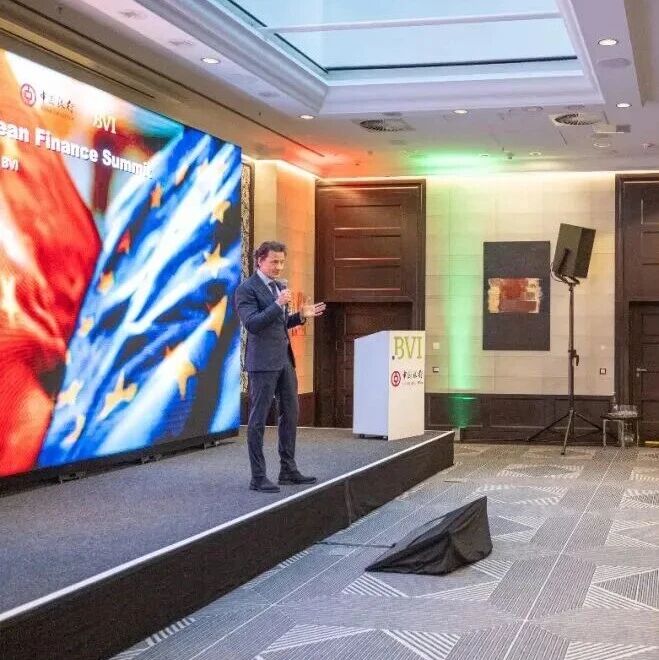
中国证券投资基金业协会出席中欧金融峰会并致辞
中泰证券资管· 2025-11-26 11:33
Core Viewpoint - The article highlights the significance of the "Capital Connectivity - New Silk Road of Financial Investment" conference held in Frankfurt, emphasizing the deepening financial cooperation between China and Europe, particularly in the context of the 50th anniversary of diplomatic relations between China and Germany [2][4]. Group 1 - The China Securities Investment Fund Industry Association participated in the conference, which was co-hosted by the German Federal Association of Investment and Asset Management (BVI) and the Bank of China, with nearly 200 representatives from the asset management industry, banks, exchanges, and regulatory bodies from both regions [2]. - The BVI President, Richter, expressed the importance of the conference as a timely opportunity to enhance communication and cooperation between Chinese and European financial sectors, aiming to build a solid bridge for dialogue and collaboration [2][6]. - The Association's leadership promoted the spirit of the 20th National Congress of the Communist Party of China, highlighting the long-term positive trend of the Chinese economy and the role of the fund industry in supporting the real economy and innovation [4]. Group 2 - Participants agreed on the solid foundation and immense potential for China-Europe financial cooperation, focusing on practical collaboration in capital market connectivity, green finance, and digital finance [6]. - There is a shared expectation among representatives to strengthen exchanges in cross-border product innovation, risk management, and investor services, exploring new growth points in asset management cooperation [6]. - During the visit, the Association engaged with Allianz Investment, Deutsche Börse Group, and DWS Group to discuss the development of the asset management industry in both countries, investment opportunities in China, and internationalization of asset management companies [8].

湖州样本:从碳中和银行到虚拟电厂,如何“点绿成金”?
2 1 Shi Ji Jing Ji Bao Dao· 2025-11-26 10:03
Core Viewpoint - The article discusses the development and implementation of green finance in Huzhou, China, highlighting its role in supporting the green transformation of industries and addressing technological and funding challenges [3][5]. Group 1: Green Finance Initiatives - Huzhou has been a pioneer in green finance, becoming one of the first national pilot zones for green finance reform in 2017, with a focus on practical applications of green finance concepts [3][5]. - The establishment of the "Digital Green Finance" system aims to enhance the efficiency of green finance by integrating various data sources to support financial institutions in identifying and funding green projects [9][10]. Group 2: Virtual Power Plant Development - Wu Xing Guo Kong Digital Energy has developed a virtual power plant that integrates distributed energy resources, benefiting from 840 million yuan in loans from local financial institutions [5][6]. - The virtual power plant acts as an aggregator, matching renewable energy generation with local consumption, thus facilitating more efficient energy management [5][6]. Group 3: Carbon Accounting and Green Certificates - The company has implemented a system for distinguishing between green and conventional electricity, which is crucial for industries with specific green energy requirements [7][9]. - Green certificates are issued to companies based on their consumption of renewable energy, which can be traded on a green electricity certificate trading platform [7][9]. Group 4: Financial Data Engine and Support Systems - The "Financial Data Engine" developed by Huzhou integrates government, credit, and third-party data to help financial institutions better assess and support green projects [10][11]. - A regional "Transformation Financial Support Activity Directory" has been established, outlining 106 transformation technologies or pathways for key industries [11][12]. Group 5: Risk Management and Client Profiling - The development of a "Transformation Financial Client Profile" system allows for precise identification of enterprises with potential for low-carbon transformation, enhancing risk management and service support [12][13]. - Huzhou aims to achieve carbon peak by 2028 and carbon neutrality by 2058 for all banking operations, reflecting a commitment to sustainable finance [13].


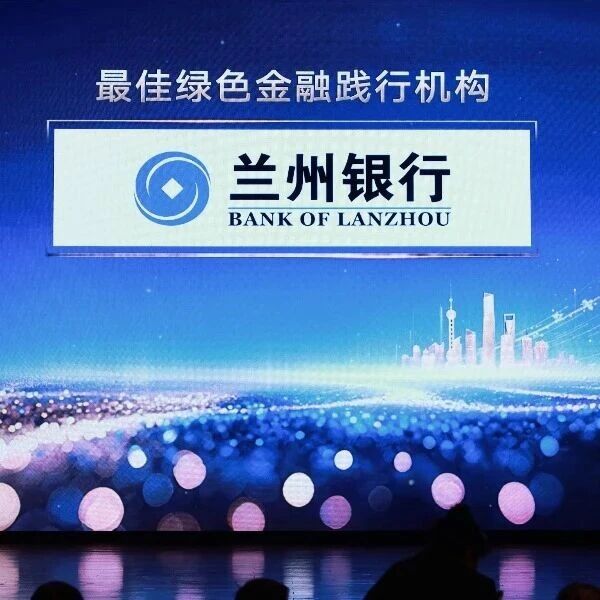
扎根甘肃、向绿而行——兰州银行荣膺CFV“2025年度最佳绿色金融践行机构”
第一财经· 2025-11-26 09:52
Core Viewpoint - The article highlights the recognition of Lanzhou Bank as the "Best Green Finance Practicing Institution" at the 2025 First Financial Value Annual Conference, emphasizing its innovative practices in green finance and its role in promoting regional economic transformation towards a low-carbon model [1][2]. Group 1: Green Finance Strategy - Lanzhou Bank has integrated "green" into its strategic framework, focusing on green finance as a key area for development, optimizing organizational structure, business processes, and resource allocation to support high-quality growth [5][6]. - The bank has established a comprehensive mechanism for promoting green finance, ensuring that green standards and environmental risk assessments are embedded in project approval and management processes [5][6]. Group 2: Financial Support and Growth - The scale of green loans at Lanzhou Bank has seen significant growth, with the balance increasing from 4.88 billion yuan in 2021 to 18.197 billion yuan by September 2025, representing a 273% increase over four years [6]. - The bank has actively supported 78 green projects with a total of 9.855 billion yuan in green loans, making green finance a crucial element in optimizing the bank's credit structure [6]. Group 3: Carbon Reduction Initiatives - Lanzhou Bank has utilized carbon reduction support tools to issue loans totaling 289 million yuan, achieving a weighted average interest rate of 3.6%, which resulted in an annual carbon reduction of 104,200 tons of CO2 equivalent [7]. - The bank's initiatives have notably supported projects like waste heat recovery, contributing to cost reduction and efficiency improvements for enterprises while aiding regional energy structure optimization [7]. Group 4: Support for Renewable Energy - As a key player in supporting the renewable energy sector in Gansu, Lanzhou Bank has provided 2.739 billion yuan in credit to nine renewable equipment manufacturing companies, enhancing financing efficiency through a comprehensive service model [9]. - The bank has facilitated significant projects, including a 600 million yuan loan for a solar technology company and a 700 million yuan loan for an energy storage system production line, demonstrating its commitment to rapid project implementation [9]. Group 5: Future Directions - Moving forward, Lanzhou Bank aims to deepen innovation in green finance products and services, enhance the identification of green projects, and improve environmental risk management capabilities [10]. - The bank is committed to building a replicable green finance development model that supports regional characteristics and contributes to China's modernization efforts [10].
中信保诚资产管理有限责任公司获评2025“值得托付金融机构·年度保险资管公司”
Jing Ji Guan Cha Wang· 2025-11-26 08:49
Group 1 - The "11th Asset Management Summit and Trustworthy Financial Institutions Ceremony" was successfully held in Beijing, focusing on the theme "Asset Management Towards Excellence: Smartly Initiating a New Journey" [1] - The event gathered over a hundred guests, including representatives from financial regulatory bodies, leaders of top asset management institutions, academic authorities, and industry experts, to analyze the transformation paths of the asset management industry under global economic changes [1] - China’s asset management industry is entering a critical phase of high-quality development, with a shift in competition logic from scale expansion to quality enhancement, emphasizing compliance, product innovation, and ecological collaboration as key competitive indicators [1] Group 2 - CITIC Prudential Asset Management has maintained strong operational performance since its establishment, with total assets under management nearing 370 billion as of the end of Q3 2025, serving a diverse client base including insurance institutions, banks, and high-net-worth clients [2] - The company is actively exploring new avenues in the green finance sector, leveraging its unique advantages to focus on environmental protection, renewable energy, and energy-saving industries, providing stable and long-term financing support for green projects [2] - In the digital finance sector, the company is applying AI models to investment decision-making and has initiated the construction of four major platforms to enhance investment returns [2] Group 3 - The "Trustworthy Financial Institutions" selection process was conducted by a professional review panel, evaluating institutions based on compliance, core asset management capabilities, financial technology innovation, green finance practices, and social responsibility [3] - The evaluation involved multiple rounds of data verification, field research, and cross-validation to identify exemplary cases that contribute to the real economy and align with national strategies [3] - Moving forward, CITIC Prudential Asset Management will continue to focus on innovation and core business areas while strengthening its compliance and risk control systems to support national strategies and achieve sustainable growth [3]
五矿证券荣获“2025中国证券业投资银行君鼎奖”两大奖项
Zheng Quan Shi Bao Wang· 2025-11-26 05:44
Core Insights - Five Mining Securities won two awards at the "2025 China Securities Investment Banking Summit Forum," including "2025 China's New Investment Bank" and "2025 China's Service for Central and State-owned Enterprises Projects" [1][2] Group 1: Achievements and Recognition - The company has been deeply involved as a financial advisor in several strategically significant capital operation projects, establishing benchmark cases in the industry [1] - In the field of serving central and state-owned enterprises, Five Mining Securities has assisted in the establishment of China Salt Lake Group and helped Zhongtung High-tech integrate its industrial chain resources [1] Group 2: Business Development and Strategy - Five Mining Securities is focusing on optimizing its business structure and innovating service models, achieving breakthroughs in key areas such as technology finance, green finance, and inclusive finance [2] - The company ranked 6th in the industry for the amount of major asset restructuring transactions for technology enterprises in 2024, and it led the industry in the scale and number of bonds underwritten for small and micro enterprises in the first three quarters of 2025 [2] - The awards received are seen as authoritative recognition of the company's transitional achievements in industrial investment banking [2] - The company aims to leverage opportunities in capital market reforms and deepen its core strategy of "integration of industry and finance," focusing on serving the reform of central and state-owned enterprises and creating value for the real economy [2]
纳入国企考核体系!事关并购重组,广东出大招
Sou Hu Cai Jing· 2025-11-26 04:54
Core Viewpoint - The Guangdong Provincial Financial Management Bureau has released an "Action Plan" to support enterprises in the Guangdong-Hong Kong-Macao Greater Bay Area in conducting industrial chain integration and mergers and acquisitions, aiming to enhance the competitiveness and sustainability of these enterprises by optimizing their industrial chain layout and promoting transformation and upgrading [1][2]. Group 1: Financial Support for Mergers and Acquisitions - The plan encourages listed companies to utilize various payment tools such as shares, targeted convertible bonds, and cash for mergers and acquisitions, attracting more social capital and enhancing sustainable development capabilities [2][3]. - It emphasizes the establishment of industrial merger funds by listed companies, focusing on key links in the industrial chain, and enhancing collaboration among regulatory bodies to support significant integration projects [2][3]. Group 2: Strengthening State-Owned Enterprises - The plan explores incorporating mergers, asset revitalization, and other activities into the performance evaluation system for state-owned enterprises, promoting flexible use of financing tools like targeted placements and acquisition loans [3]. - It aims to enhance internal resource integration within state-owned enterprises and improve asset securitization levels through various methods such as asset restructuring and equity swaps [3]. Group 3: Capital Market Development - The plan proposes broadening direct financing channels in the capital market, supporting technology-driven enterprises to list on various boards, and encouraging companies listed in Hong Kong to also list on the Shenzhen Stock Exchange [5][4]. - It supports the issuance of green bonds and other sustainable financing products to facilitate the green transformation of enterprises [5]. Group 4: Cross-Border Integration - The plan encourages the establishment of cross-border merger funds with Hong Kong and Macao capital, optimizing mechanisms for qualified foreign and domestic limited partners to support integration projects [6]. - It promotes the use of RMB for cross-border mergers and acquisitions and supports banks in providing foreign exchange risk hedging products [6]. Group 5: Investment Fund System - The plan outlines the creation of a provincial government investment guidance fund system to support mergers and acquisitions, encouraging social capital participation in various investment funds [8]. - It highlights the importance of government investment funds in addressing key technological challenges and enhancing the self-sufficiency of critical core technologies in industries [8]. Group 6: Collaboration with Financial Institutions - The plan aims to attract more large financial institutions to establish investment companies and funds in Guangdong, enhancing the financing environment for enterprises [9]. - It emphasizes leveraging the strengths of large financial institutions to provide diverse financial products and services tailored to the needs of enterprises at different development stages [9].
华夏银行广州分行:廿六载奋楫湾区 勇立潮头开新局
Cai Fu Zai Xian· 2025-11-26 03:36
Core Viewpoint - Huaxia Bank's Guangzhou Branch has evolved over 26 years, focusing on sustainable development and supporting high-quality economic growth in Guangdong through various financial initiatives [1] Group 1: Technology Finance - The bank has established a special team for technology finance, creating a whitelist and green approval channels for innovative enterprises [2] - Innovative products like intellectual property pledge loans and investment-loan linkage have been introduced to support asset-light tech companies [4] - As of mid-November, the loan balance for technology enterprises has increased by 44.59% compared to the beginning of the year [4] Group 2: Green Finance - Green finance has been elevated to a strategic level, with a comprehensive service system covering green credit, green bonds, and ESG investment [5] - The bank launched its first "Sui Carbon" platform inclusive financing business, providing a credit loan of 1.5 million yuan to specialized tech enterprises [5] - Collaborations with international organizations like the World Bank and Asian Development Bank have involved over 3 billion yuan in funding for green projects [7] Group 3: Inclusive Finance - The bank supports the private economy, small and micro enterprises, and rural areas through tailored financial products like "Motorcycle Parts Loan" [8] - The "Assist Farmers Loan" product has been customized for agricultural services, with agricultural loans growing at a rate of 33.4% as of September [8] Group 4: Pension Finance - The bank has developed a three-in-one model for pension finance, including personal pension accounts and elder service financial products [9] - Initiatives like the "Silver Economy Breakfast Meeting" have reached over 6,000 elderly individuals, enhancing financial services for seniors [9] Group 5: Digital Finance - A dedicated digital finance department has been established, with over 2.4 billion yuan allocated to various industries through digital financial products [10] - The bank has introduced innovative digital products like "Carbon Quota Pledge Financing" and "Railway Freight Loan" to support enterprises [11] - As of mid-November, the bank has added nearly 3 billion yuan in corporate loans, supporting cross-border operations for companies [11]

为绿色项目出海提供风险保障
Jin Rong Shi Bao· 2025-11-26 02:25
Core Insights - The successful export of wind power equipment by Envision Energy is supported by significant financial backing from China Export & Credit Insurance Corporation (Sinosure), which provided a $100 million guarantee and helped enhance the company's internal risk management system [1] - Sinosure has been actively involved in supporting green finance initiatives since 2016, focusing on sectors such as energy conservation, green energy, and green transportation, and has developed a diversified insurance scheme to support Jiangsu enterprises in international markets [1][2] - In 2023, Sinosure's support for green trade and project insurance has reached $42.77 billion, showcasing the growing importance of green finance in international projects [2] Financial Support and Risk Management - Sinosure has tailored insurance solutions for various projects, including a customized overseas investment insurance plan for a digital energy company entering the U.S. market and an innovative full credit letter payment model for a solar power project in Ghana [2][3] - The company has developed a comprehensive financing insurance solution that integrates multiple products, helping projects secure approximately $200 million in financing at lower costs than market rates [3] - Sinosure has established a dynamic risk assessment system to provide customized services such as credit investigation and industry risk analysis, acting as a "frontline" for overseas risk management for enterprises [3][4] Project Highlights - The successful financing of a nickel material production line project in Morocco marks a significant achievement for Sinosure, enabling the establishment of a renewable materials base that will supply materials for nearly one million electric vehicles [3] - The project involved collaboration with seven banks from China, Europe, and Africa to provide stable and reliable long-term financing support, addressing challenges related to complex business contracts and financing coordination [4]
碳核算与数字化 将成为绿色金融重要抓手
Jin Rong Shi Bao· 2025-11-26 02:11
《中共中央关于制定国民经济和社会发展第十五个五年规划的建议》明确提出,积极稳妥推进和实现碳 达峰。"十五五"时期,我国的"双碳"战略将进入从制度夯基向体系深化的关键阶段,绿色金融作为支持 碳减排的重要工具将发挥日益重要的作用。 "十四五"时期,绿色金融体系与政策建设成果显著。在即将迎来国内"碳排放总量与强度双控"的背景 下,构建统一、透明、可比且高效的碳核算体系,已成为提升国家治理能力和促进资源要素配置优化的 关键基础,还关系到绿色金融能否有效引导资本流向绿色生产力,而数字化正成为赋能碳核算与绿色金 融发展的重要抓手。 "十四五"时期:绿色金融支持"双碳"目标成效显著 "十四五"时期,我国"双碳"顶层制度全面铺展,成效显著。截至"十四五"末,我国的可再生能源装机接 近22亿千瓦,构建起全球最大、发展最快的可再生能源体系;工业、交通、城乡建设等领域碳达峰实施 方案出台,重点领域碳达峰步伐加快;经济社会全面绿色转型顶层设计发布,绿色与可持续发展进一步 深化。在这一进程中,绿色金融快速发展,助力经济社会绿色转型。 绿色金融顶层设计更新。中国人民银行等七部门发布《关于进一步强化金融支持绿色低碳发展的指导意 见》,从标 ...